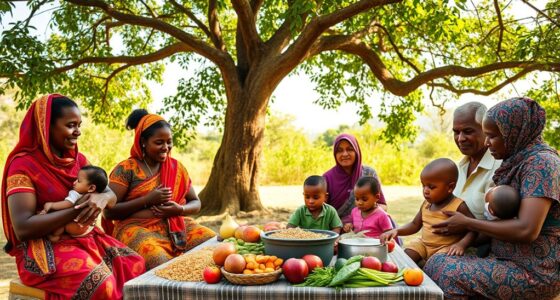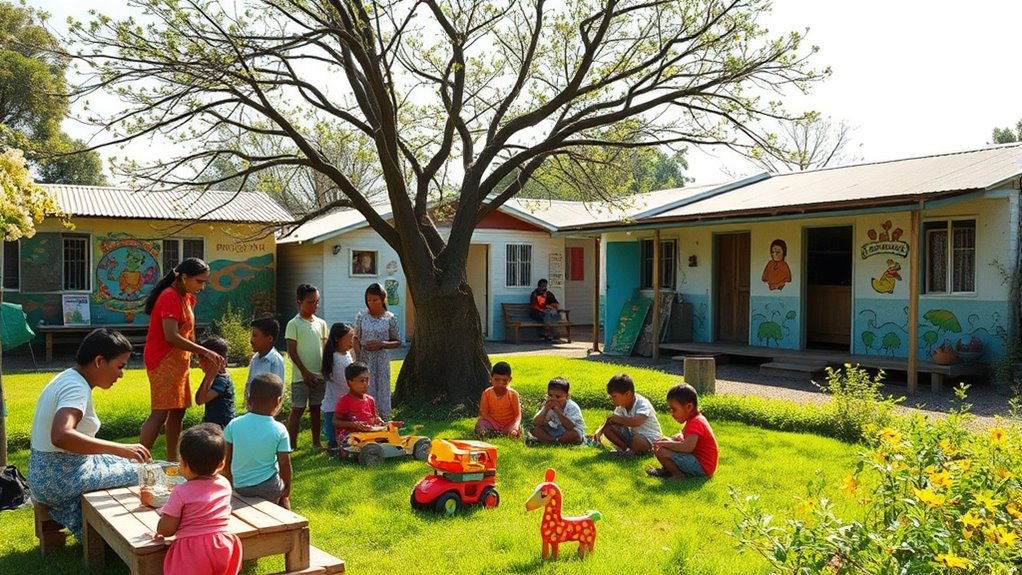

Community-based childcare models worldwide focus on using local resources, traditions, and community involvement to provide accessible and affordable early childhood care. They strengthen local engagement, foster cultural relevance, and build a sense of ownership among families and caregivers. These programs often face challenges like funding sustainability but find innovative solutions through local fundraising and social enterprises. If you explore further, you’ll discover how these models adapt to diverse settings and guarantee high-quality care rooted in culture.
Key Takeaways
- Community-based childcare models promote local engagement, cultural relevance, and affordable access for families worldwide.
- Many programs rely on community resources and volunteer staff to sustain services and foster ownership.
- Challenges include funding instability, maintaining quality, and expanding services without consistent financial support.
- Strategies such as local fundraising, social enterprises, and community-driven support enhance program sustainability.
- Successful models incorporate local traditions and recruit culturally aligned caregivers to build trust and acceptance.

Community-based childcare models have gained popularity because they offer accessible and affordable options for families while fostering local engagement. By relying on community resources and local participation, these models create a sense of ownership that benefits both children and caregivers. However, implementing these programs isn’t without its hurdles. One of the main issues you might encounter is sustainability challenges. Funding can be inconsistent, especially when programs depend heavily on government grants or donations. Without steady financial support, maintaining quality and expanding services becomes difficult. Additionally, training and retaining qualified staff pose ongoing concerns. Community volunteers or part-time workers often fill roles, which can impact the consistency and quality of care. To counter these issues, many communities are exploring innovative funding mechanisms, like local fundraising events or social enterprise models. These strategies can bolster financial stability, ensuring programs remain operational and effective over the long term. Moreover, incorporating elements of historic farmhouses and local traditions into childcare environments can enhance cultural relevance and community acceptance. Cultural adaptations also play a vital role in the success of community-based childcare. When you introduce a new model into different regions, you need to take into account local customs, beliefs, and practices. For example, in some cultures, extended family members traditionally care for children, so formal childcare might need to complement, rather than replace, these existing systems. Understanding cultural norms helps tailor programs to meet the specific needs of each community, increasing acceptance and participation. This includes customizing curriculum content, caregiving methods, and even the physical setup of childcare centers to reflect local traditions. By respecting and integrating cultural elements, you foster trust and encourage greater community buy-in. Furthermore, cultural adaptations can influence staffing and training approaches. In some communities, caregivers who share the same language and cultural background as the children are more effective. By recruiting locally and providing culturally sensitive training, you improve the quality of care and ensure children feel comfortable and understood. This approach also helps bridge gaps between formal childcare systems and traditional caregiving practices, creating a harmonious blend that benefits everyone.
Frequently Asked Questions
How Do Community Models Adapt to Different Cultural Contexts?
You adapt community models to different cultural contexts through cultural adaptations and active community engagement. By understanding local traditions, values, and childcare practices, you tailor programs to meet community needs. Engaging local families and leaders guarantees relevance and support, fostering trust and participation. This approach allows the model to respect cultural differences while providing effective, inclusive childcare that resonates with the community’s unique social fabric.
What Funding Sources Sustain Community-Based Childcare Programs?
You’ll find that community-based childcare programs often rely on private grants and philanthropy for funding. These sources are vital because they provide essential financial support, helping sustain and expand services. Many programs also seek government subsidies and local fundraising efforts, but private grants and philanthropy usually play a pivotal role in ensuring long-term stability and growth, especially in underserved areas where public funding might be limited.
How Are Staff Trained and Supported in These Models?
You receive training through hands-on methods like workshops, mentoring, and peer learning, ensuring staff stay skilled and confident. Support for staff well-being is a key focus, with programs offering regular supervision, mental health resources, and opportunities for professional growth. These training methods empower you to deliver quality care, and the emphasis on staff well-being helps prevent burnout, keeping you motivated and effective in your community-based childcare role.
What Are the Long-Term Impacts on Children’s Development?
Think of your child’s development as a garden that flourishes through nurturing soil. These community-based models spark paradigm shifts, fostering social skills, emotional resilience, and cognitive growth. In the long run, children experience positive developmental outcomes, becoming adaptable, confident, and empathetic individuals. By providing consistent support and enriching environments, you set the stage for lifelong success, ensuring your child’s potential blooms fully over time.
How Do Community Models Address Inclusivity for Children With Special Needs?
Community models promote inclusivity for children with special needs by implementing inclusive practices and adaptive strategies. You’ll find that these programs actively adapt activities and environments to meet individual needs, ensuring every child feels valued and supported. By fostering collaboration among staff, families, and specialists, community models create welcoming spaces that encourage participation and development for all children, helping them thrive regardless of their abilities.
Conclusion
By embracing community-based childcare models, you weave a tapestry of support that strengthens families and fosters resilience. These models aren’t just services; they’re the roots of a healthier, more connected society. Imagine a world where every child’s future blooms from the care and trust shared within communities—proof that when we nurture others, we nurture ourselves. Together, you hold the power to transform lives, turning collective hope into lasting change.