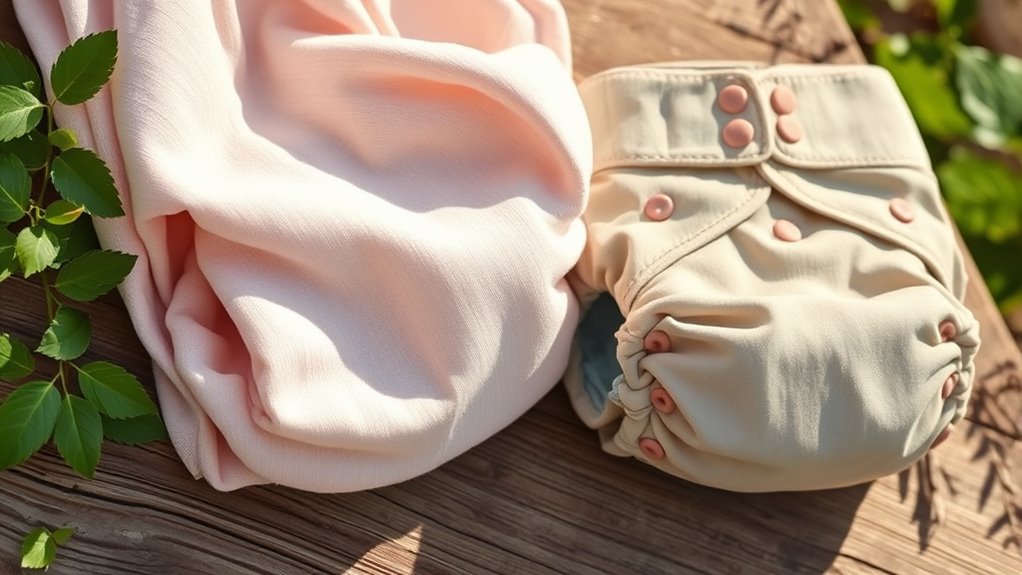

Eco-friendly diapering options like cloth and hybrid diapers provide a sustainable alternative to disposables, helping you reduce landfill waste and lower your family’s environmental impact. Cloth diapers, made from organic fabrics like cotton or bamboo, can be reused many times, saving money and resources. Hybrid diapers combine a washable outer shell with removable inserts, offering convenience and eco-friendliness. Keep exploring to discover how to choose, care for, and make these options work best for your family.
Key Takeaways
- Cloth diapers, made from organic cotton, bamboo, or hemp, are reusable and reduce landfill waste.
- Hybrid diapers feature a reusable outer shell with removable, eco-friendly inserts, offering customization and convenience.
- Both options minimize chemical exposure compared to disposables, promoting healthier skin and ecosystems.
- Proper care involves rinsing, eco-friendly washing, and air drying to maintain diaper longevity.
- Regular use and routine laundering make cloth and hybrid diapers cost-effective and environmentally sustainable.
Understanding Cloth and Hybrid Diapers
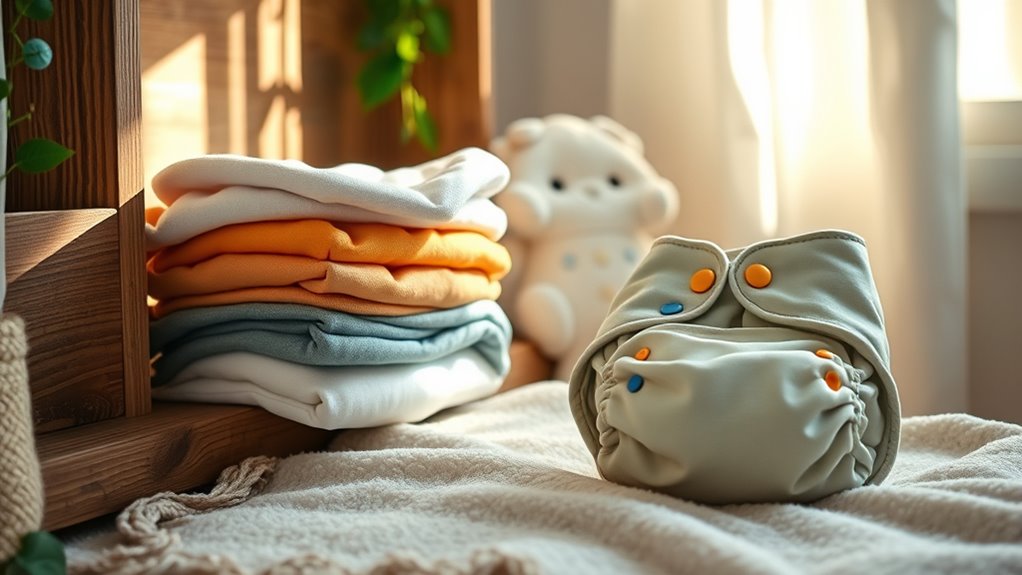
Have you ever wondered how cloth and hybrid diapers compare to disposable options? Cloth diapers are reusable, made from natural fabrics like cotton or bamboo, and can be washed after each use. They come in various styles, such as prefolds, pockets, and all-in-ones, making them versatile and customizable. Hybrid diapers combine features of cloth and disposables; they typically have a washable outer shell with a removable, absorbent insert. This setup offers the convenience of disposables with the eco-friendliness of cloth. Both options reduce waste and exposure to chemicals found in many disposables. While they require more initial investment and cleaning, they can be cost-effective long-term and are better for the environment. Understanding these options helps you choose a diapering method aligned with your values and lifestyle. Incorporating modern toilet technology can also enhance your bathroom experience, making diapering and other routines more efficient and eco-friendly.
Environmental Benefits of Eco-Friendly Diapering
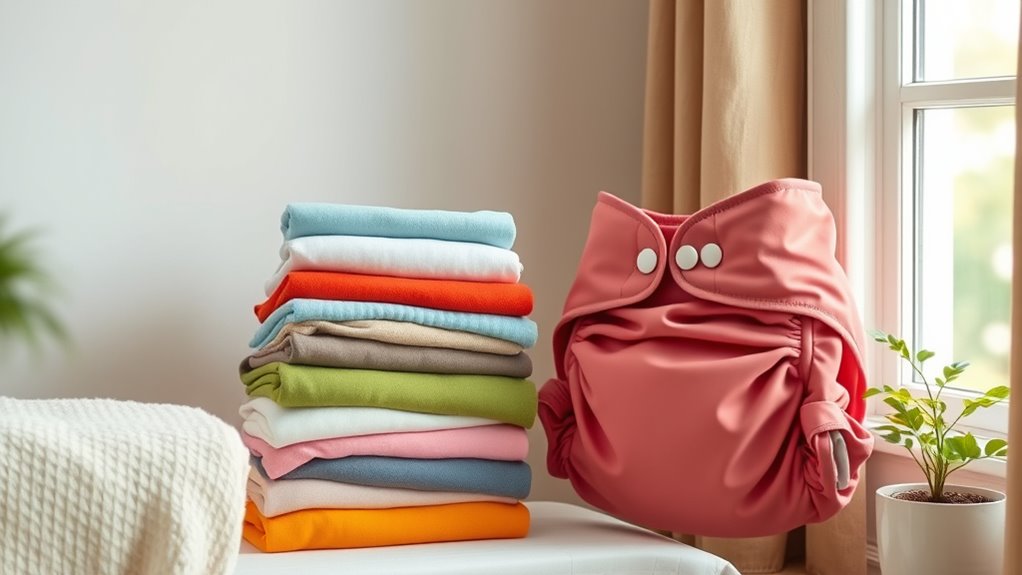
Choosing eco-friendly diapering options considerably reduces your environmental impact by minimizing waste and conserving resources. Cloth and hybrid diapers generate markedly less landfill waste compared to disposables, which take hundreds of years to decompose. By reusing diapers, you decrease the demand for raw materials like plastics and synthetic fibers, reducing the pollution from manufacturing processes. Eco-friendly diapers also often use fewer chemicals and dyes, lowering the risk of environmental contamination and protecting ecosystems. Additionally, many cloth and hybrid options are made from sustainable or organic materials, further lessening your carbon footprint. Supporting efficient payment solutions in purchasing these products can streamline your shopping experience and ensure secure transactions. Overall, choosing these options supports a healthier planet by reducing waste, lowering pollution, and conserving natural resources, making eco-friendly diapering a responsible choice for environmentally conscious families.
Cost Savings With Reusable Options

Switching to reusable diapers can save you money in the long run by lowering your overall expenses. You’ll also cut down on waste disposal fees, since fewer disposables end up in landfills. Over time, these savings can make eco-friendly diapering a smart financial choice. Additionally, using cloth options reduces environmental impact by decreasing reliance on disposable products, which contribute to landfill waste.
Lower Long-Term Expenses
Reusable diapers may require a higher upfront investment, but over time, they can substantially lower your overall diapering costs. Unlike disposable options, you won’t need to continually buy new packs, which adds up quickly. With reusable diapers, you invest once in quality cloth or hybrid systems and reuse them for multiple children or years. This means fewer trips to the store and less money spent on new supplies. Additionally, many reusable diapers are durable and can last through multiple diapering phases, further reducing costs. While initial expenses may seem high, the long-term savings become clear as you avoid recurring purchase costs. Over time, these savings can make reusable diapers a more economical choice for your family’s budget. Plus, choosing eco-friendly options helps reduce waste and environmental impact.
Reduced Waste Disposal Fees
Opting for reusable diapers can considerably reduce your waste disposal fees. Since cloth and hybrid diapers generate less waste than disposables, you pay less to your local waste management services. Many facilities charge based on the volume or weight of trash, so decreasing the amount you throw away directly lowers your bills. Plus, reusable diapers are durable and can be washed multiple times, reducing the frequency of trash pickups and disposal costs. You also cut down on packaging waste from disposable diapers, which further lessens your environmental impact. Over time, these savings add up, making reusable options not only eco-friendly but also budget-friendly. Additionally, understanding the contrast ratio of your diapering setup can help you choose materials that reflect light effectively, improving visibility and monitoring during changes. By choosing cloth or hybrid diapers, you contribute to less waste and enjoy lower waste disposal fees, saving money in the long run.
Types of Cloth Diapers and Their Features

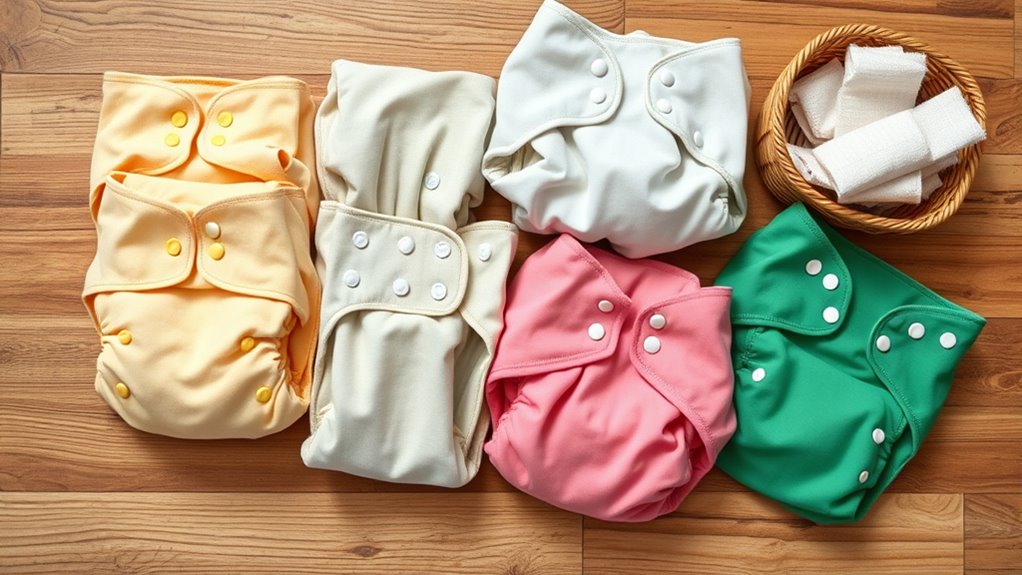
Are you curious about the different types of cloth diapers and what makes each one unique? There are several options to contemplate. Prefold diapers are versatile and affordable, featuring multiple layers of fabric that you fold and secure with a cover. Fitted diapers come with elastic and fasteners, offering a snug fit without a waterproof layer. Pocket diapers have a waterproof shell and an inner pocket for absorbent inserts, making them easy to customize. All-in-one diapers combine the waterproof cover and absorbent layers into one piece, simplifying use. Hybrid diapers allow you to swap out absorbent inserts while using a waterproof cover repeatedly. Each type offers different advantages based on your needs, preferences, and lifestyle. Choosing the right one depends on your comfort level, washing routine, and budget. Selecting the appropriate diaper style can also impact your overall diapering routine and convenience.
How Hybrid Diapers Work and Their Advantages
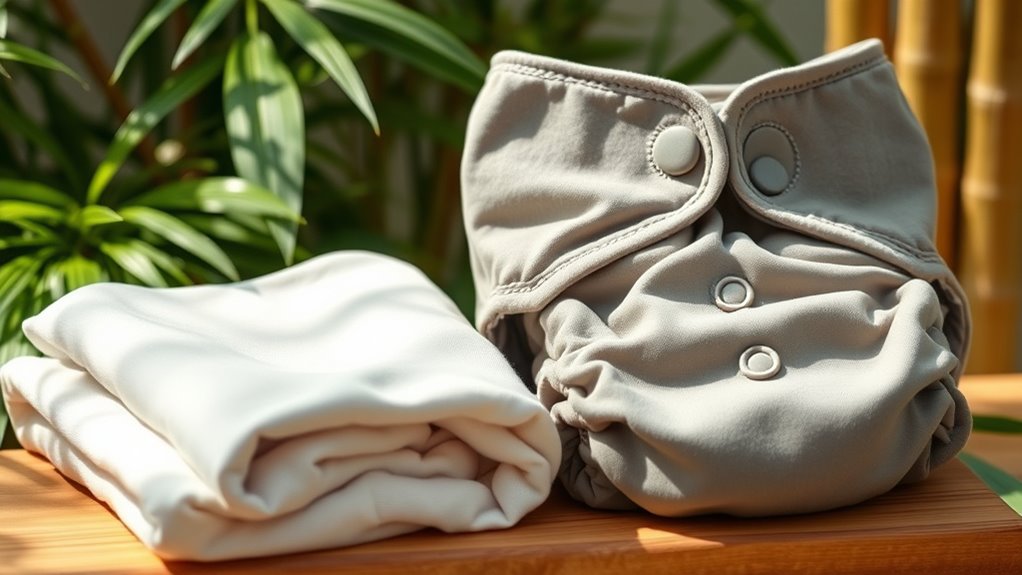
Ever wonder how hybrid diapers combine convenience and sustainability? They feature a waterproof outer shell paired with removable, absorbent inserts. You can choose disposable inserts when you’re on the go or cloth inserts for everyday use at home. This flexibility makes hybrids adaptable to your lifestyle and reduces waste compared to fully disposable options. The outer shell is reusable, so you only replace the inserts, saving money over time. Hybrids are easy to use: you snap in or lay the insert inside the shell, then change the insert as needed. They’re breathable, helping to prevent diaper rash, and many brands offer eco-friendly, biodegradable inserts. Overall, hybrids give you the convenience of disposables with the environmental benefits of cloth, making them a versatile, sustainable diapering choice. Smart marketing strategies can help you share the benefits of eco-friendly diapering options with more parents seeking sustainable solutions.
Tips for Transitioning to Reusable Diapers
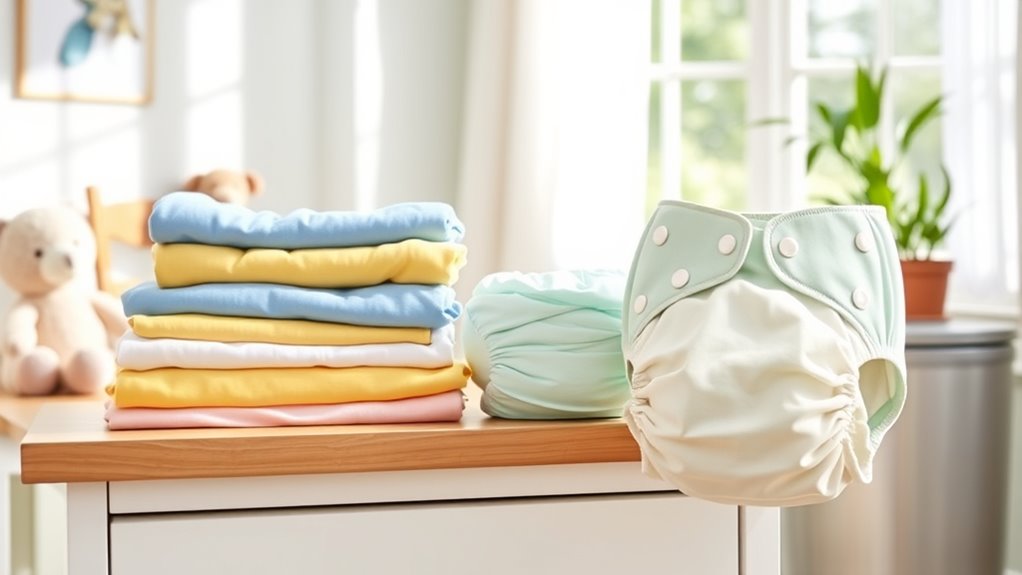
Shifting to reusable diapers can seem intimidating at first, but taking small, manageable steps makes the process smoother. Start by gradually introducing cloth diapers during daytime hours to build familiarity. Wash a small stash of diapers at first to avoid feeling overwhelmed and learn your preferred cleaning routine. Invest in a variety of sizes and styles to find what fits your baby best. Keep extra inserts and accessories handy to simplify changes. Join online groups or local communities for support and advice, which can boost your confidence. Remember, float mounting textile art is a technique that can be adapted to create unique and professional displays of your diapering journey, enhancing your confidence in this new routine. Keep in mind, consistency is key—use them regularly to get comfortable. Don’t endeavor for perfection right away; it’s normal to experience some trial and error as you adjust. With patience, reusable diapering will become a natural part of your routine.
Proper Care and Maintenance of Cloth and Hybrid Diapers
Proper care and maintenance are essential to keep your cloth and hybrid diapers in ideal condition and guarantee they function effectively for your baby. Regular washing removes waste and prevents odors, while proper drying maintains absorbency and fabric integrity. Always rinse dirty diapers promptly before washing, and use a gentle, eco-friendly detergent in warm water. Avoid fabric softeners and bleach, which can damage fabrics. Store soiled diapers in a dry pail or wet bag until wash day. To prolong their lifespan, occasionally strip the diapers if buildup occurs. Proper drying, whether air drying or tumble drying on a low setting, is crucial to avoid damage from high heat. Additionally, monitoring the fabric type helps ensure you follow the appropriate care instructions to maintain their longevity and effectiveness. Here’s a quick guide:
| Step | Action | Tips |
|---|---|---|
| Rinse & Prewash | Remove solids & rinse | Use cold water |
| Main Wash | Wash with detergent | Use warm water, no softeners |
| Drying | Air dry or tumble dry | Avoid high heat |
Overcoming Common Challenges With Eco-Friendly Diapering
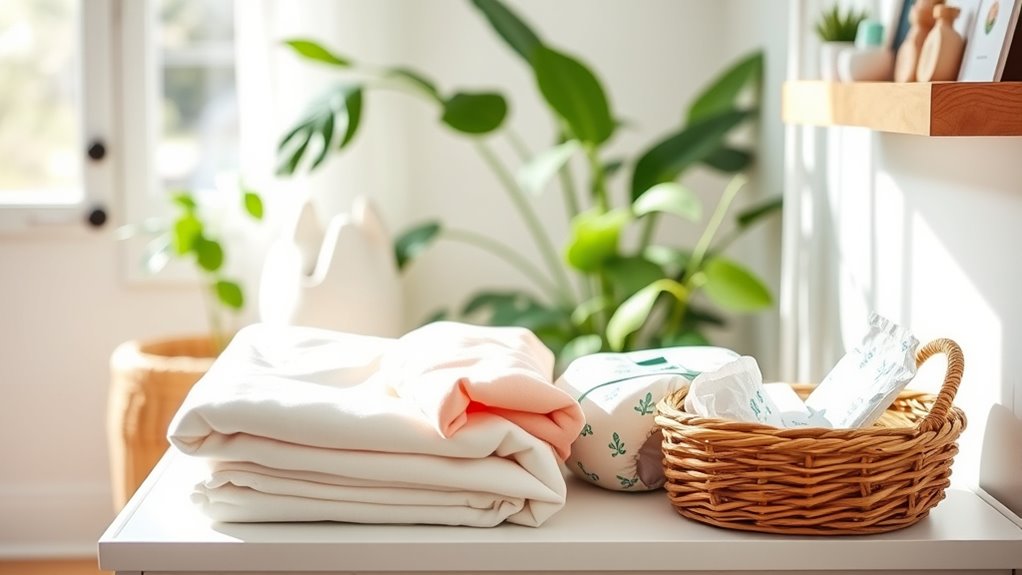
While eco-friendly diapering offers many benefits, it also presents some common challenges that can seem intimidating at first. One hurdle is managing laundry, especially with cloth diapers, which require regular washing and proper drying to stay clean and odor-free. You might worry about the time and energy involved, but establishing a routine simplifies the process. Finding the right fit can also be tricky, as not all diapers work for every baby or family. Don’t hesitate to experiment with different styles or brands until you find what works best. Storage can be another concern, especially when traveling or away from home. Planning ahead and having a dedicated diaper bag with supplies helps keep things organized and manageable. Learning about modern cloth diapering techniques can also make the process easier and more efficient. With a little patience and planning, these challenges become manageable, making eco-friendly diapering a sustainable choice.
Making Eco-Friendly Diapering Work for Your Family
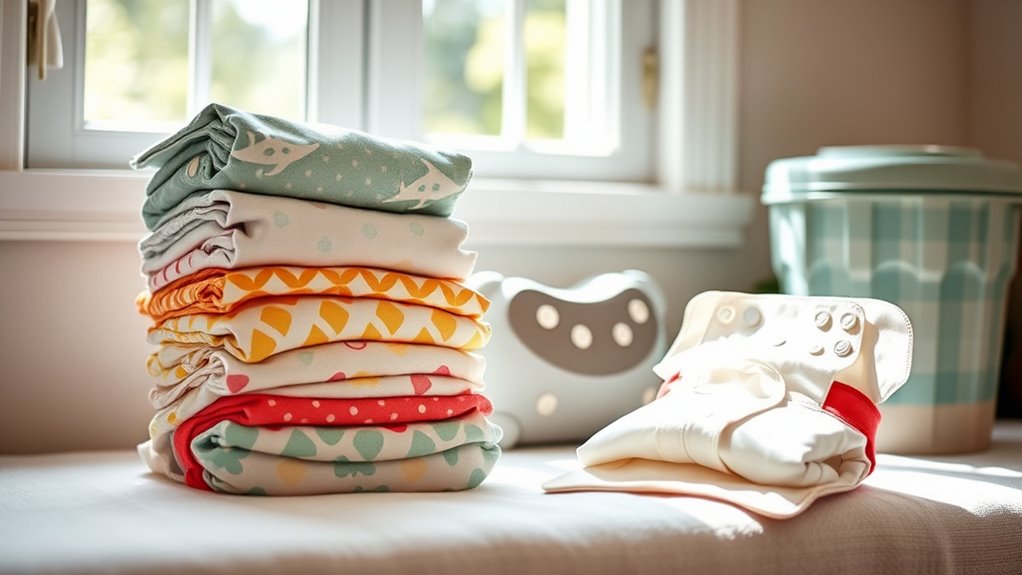
To make eco-friendly diapering work for your family, focus on simplifying your laundry routines by setting specific days for washing cloth diapers. Choosing sustainable materials can also lessen your environmental impact while keeping your baby comfortable. Additionally, managing costs wisely ensures you stay within your budget without sacrificing eco-conscious choices.
Simplify Laundry Routines
Simplifying your laundry routine is key to making eco-friendly diapering manageable. To streamline the process, set a regular schedule—doing laundry every 2-3 days prevents buildup and saves time. Invest in a dedicated diaper pail or wet bag to contain odors and minimize trips to the laundry room. Using a pre-rinse cycle or cold soak can reduce stains and improve cleaning efficiency. Here’s a quick comparison to help you decide:
| Tip | Benefit |
|---|---|
| Pre-rinse or soak | Removes stains and reduces detergent residue |
| Designated pail/bag | Keeps laundry organized and odor-free |
| Regular schedule | Prevents laundry pile-up and eases workload |
Sticking to a simple routine keeps diaper laundry manageable and eco-friendly.
Choose Sustainable Materials
Choosing sustainable materials for your cloth diapers is one of the best ways to minimize your environmental impact. Look for fabrics like organic cotton, bamboo, hemp, or Tencel, which are grown without harmful chemicals and require less water. These materials are durable, breathable, and gentle on your baby’s skin, making them a practical choice. Avoid synthetic fabrics like polyester, which shed microplastics and consume more energy during production. When selecting diapers, check for certifications such as GOTS (Global Organic Textile Standard) to ensure eco-friendly practices. By choosing natural, sustainable fabrics, you help reduce pollution, conserve resources, and promote healthier ecosystems. Your mindful material choices can make a significant difference in creating a truly eco-friendly diapering routine.
Manage Costs Effectively
Managing the costs of eco-friendly diapering requires some strategic planning, but it’s entirely doable with a few smart choices. First, consider buying in bulk—this reduces per-diaper costs and minimizes trips to the store. Second, invest in quality diapers that last through multiple washes; they might cost more upfront but save money long-term. Third, repurpose and resell diapers or accessories when your baby outgrows them; this helps recoup some expenses. Additionally, mixing cloth and hybrid options can lower overall costs while maintaining eco-friendliness. Staying organized and sticking to a routine prevents unnecessary purchases. With these approaches, you can enjoy eco-friendly diapering without breaking the bank, making it a sustainable choice for your family’s budget and the environment.
Frequently Asked Questions
Are Eco-Friendly Diapers Suitable for Overnight Use?
You might wonder if eco-friendly diapers are good for overnight use. The good news is, many are designed to handle longer wear and keep your baby comfortable all night. Look for options with high absorbency and breathable materials. Cloth and hybrid diapers often come with extra inserts or overnight-specific layers. With the right choice, you can guarantee your baby stays dry and cozy, all while being eco-friendly.
How Do I Choose the Right Size for My Baby?
Did you know babies typically outgrow diapers every 2-3 months? To choose the right size, measure your baby’s waist and weight regularly. Look for a diaper that fits snugly without pinching or leaving gaps, ensuring comfort and leak protection. Check sizing charts from brands, as sizing can vary. Remember, a well-fitting diaper helps prevent leaks and keeps your baby comfortable, making diaper changes easier for both of you.
Can I Use Cloth or Hybrid Diapers With a Diaper Rash?
You can absolutely use cloth or hybrid diapers even if your baby has a diaper rash. Just make sure to choose diapers made of gentle, breathable materials like cotton or bamboo, and change them frequently to keep the skin dry. Avoid fragrances or harsh chemicals, and give your baby’s skin some time to breathe without a diaper when possible. If the rash persists, consult your pediatrician for advice.
Are There Eco-Friendly Diapering Options for Babies With Sensitive Skin?
Imagine your baby’s delicate skin as a soft, untouched canvas, craving gentle care. You’ll find eco-friendly diapering options like organic cotton cloth or bamboo hybrids that soothe sensitive skin while reducing environmental impact. These breathable, natural fabrics help prevent irritation and rashes. By choosing eco-conscious diapers, you’re not only protecting your little one’s skin but also nurturing the planet, creating a healthier, more sustainable future for your family.
How Do I Handle Laundry When Traveling?
When traveling, laundry can seem tricky, but it’s manageable with a plan. Pack a small, portable wash bag and eco-friendly detergent suitable for sensitive skin. After wearing, rinse cloth or hybrid diapers with cold water, then wash them in a local laundromat or hotel laundry service. Dry them thoroughly, preferably in sunlight to naturally disinfect. This way, you keep your baby’s skin safe and stay eco-conscious on the go.
Conclusion
Switching to cloth or hybrid diapers is like planting a seed for a greener future. Not only will you cut down on waste and save money, but you’ll also create a healthier environment for your little one. With a little effort and care, eco-friendly diapering can become second nature—your family’s small step towards a big change. Embrace this journey, and watch how your choices bloom into a sustainable, happy future for all.