📊 Full opportunity report: IEP Negotiation Rehearsal Simulator For Parents on IdeaNavigator AI — validation score, market gap, and execution plan.

Turn the school run and nap time into listening time
- Thousands of audiobooks, podcasts and originals
- Listen on your phone, tablet or Echo — also offline
- Cancel anytime
TL;DR
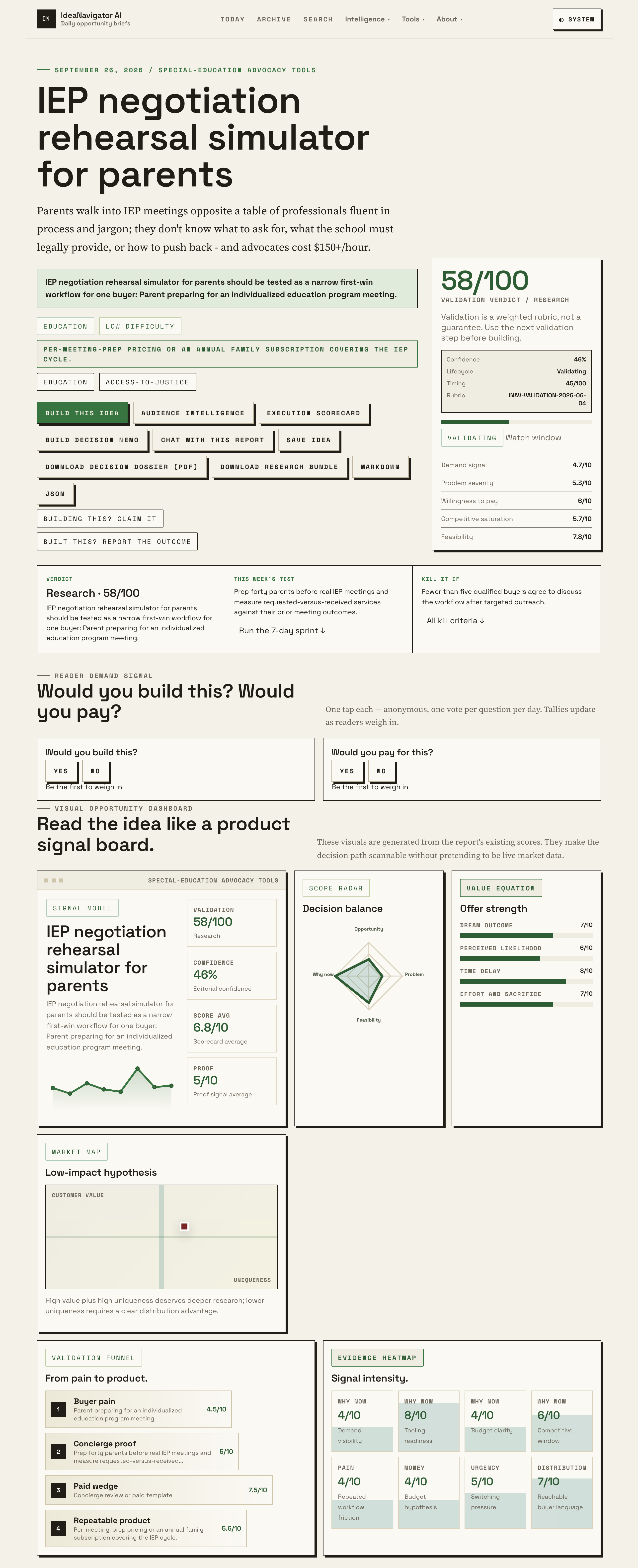
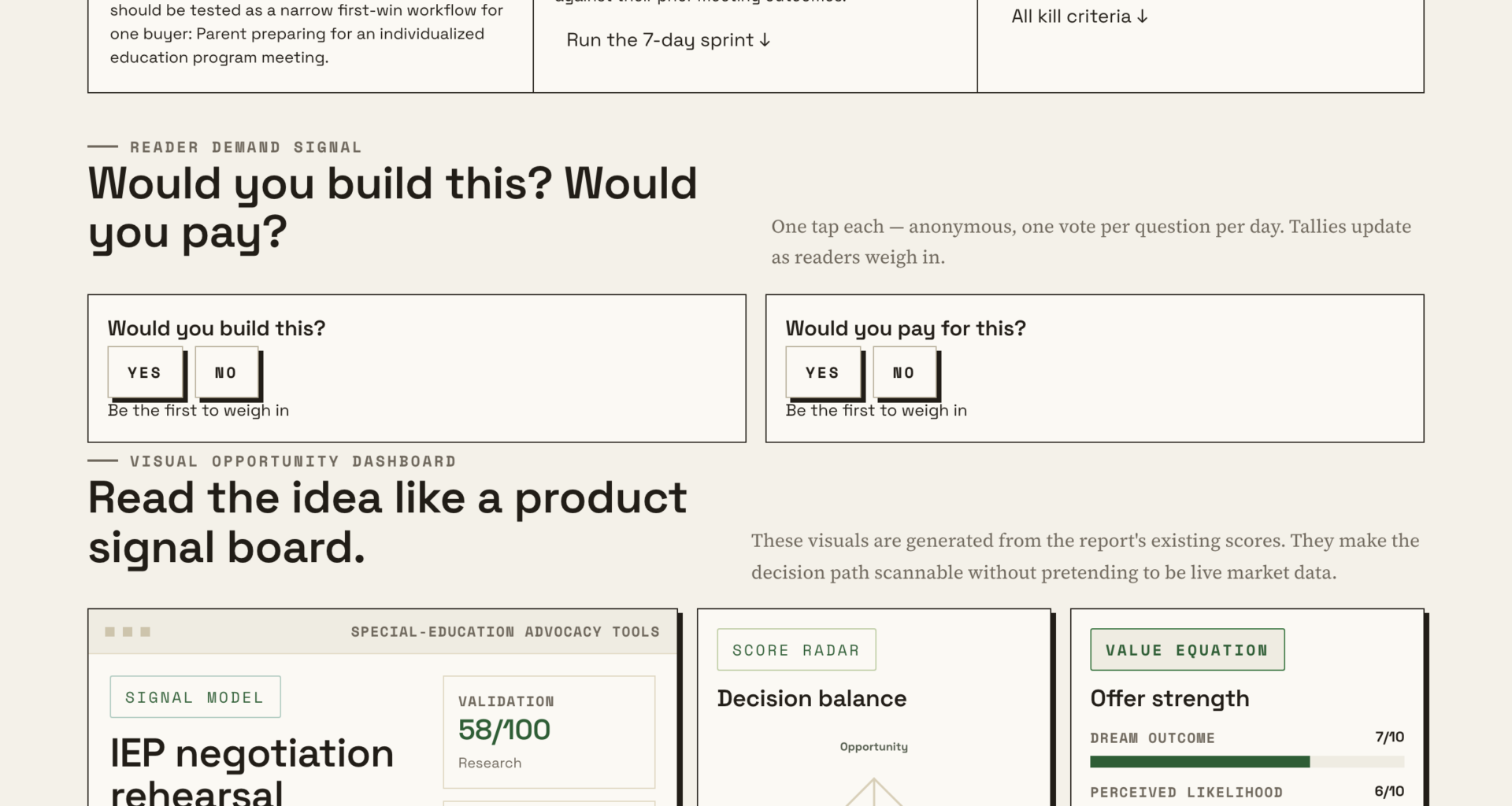
IdeaNavigator AI describes a proposed IEP negotiation rehearsal simulator for parents preparing for school meetings. The concept would explain uploaded documents, help create requests and simulate pushback, but no product launch or outcome data are reported.
Preparing Parents for IEP Meetings
If developed and tested, a rehearsal tool could give parents a lower-cost way to organize questions and practice explaining what support they are seeking. The potential value is especially tied to preparation: families would have a structured way to review existing documents and rehearse responses before sitting down with school staff. The proposal does not establish that role-play would change meeting outcomes or that generated legal explanations would be accurate for each family’s circumstances. Those questions matter because parents could rely on the tool when discussing services and educational supports. Its practical value would depend on clear limits, reliable explanations and evidence from real meetings, including whether requests translate into services received.How the Proposed Tool Would Work
An IEP is a plan for a student who qualifies for special education services under U.S. education law. Meetings can involve families and school personnel discussing evaluations, goals, supports and services. The concept focuses on preparing a parent for that negotiation, rather than replacing the meeting or providing an advocate in person. The proposal argues that language-model role-play is now capable of simulating a realistic discussion, while rising identification rates and tighter district resources may make preparation more relevant. It supplies no dates, enrollment figures, district examples or supporting data for those broader claims, so they remain rationale for the idea rather than independently documented findings here. The suggested first version is deliberately narrow: one user, a parent preparing for an upcoming meeting. It would use the family’s existing IEP and evaluation reports to create a preparation session, then rehearse possible exchanges with school representatives.Evidence and Legal Accuracy
No launch, named developer, pricing schedule or completed pilot is reported. It is unclear how the simulator would verify legal explanations, handle state-specific rules, protect sensitive student records or respond when uploaded documents are incomplete. The proposal also gives no results showing whether parents who rehearse obtain different services than they did previously. The suggested comparison of requested and received services for 40 parents could offer an initial measure, but the plan does not specify how prior outcomes would be recorded or how differences among students and school districts would be accounted for. No conclusions about effectiveness can be drawn before such evidence exists.A Forty-Parent Pilot Proposed
The next step described is to prepare 40 parents before actual IEP meetings and track what services they request and receive, comparing those results with their earlier meeting outcomes. The proposal does not say whether a team has been assembled, when a pilot would begin or whether families have been recruited. Any future test would need to show how the tool handles legal and privacy questions as well as whether rehearsal helps parents prepare. Until a pilot or product release is reported, the simulator remains a proposed workflow rather than an established service.Key Questions
Is the IEP rehearsal simulator available now?
No release or availability date is reported. The simulator is described as a proposed product concept.
What would parents do with the tool?
They would upload a current IEP and evaluation reports, review plain-language explanations and a suggested request list, then practice a simulated meeting with potential pushback.
Does the proposal show that the simulator improves services received?
No outcome evidence is reported. Comparing requested and received services for 40 parents is proposed as a way to begin testing the idea.
Would the simulator replace an education advocate?
The proposal describes meeting preparation and role-play, not a replacement for an advocate or legal adviser. It does not specify how users would be directed to professional help when needed.
Source: IdeaNavigator AI
Fall Picks
fall essentials
As an affiliate, we earn on qualifying purchases.