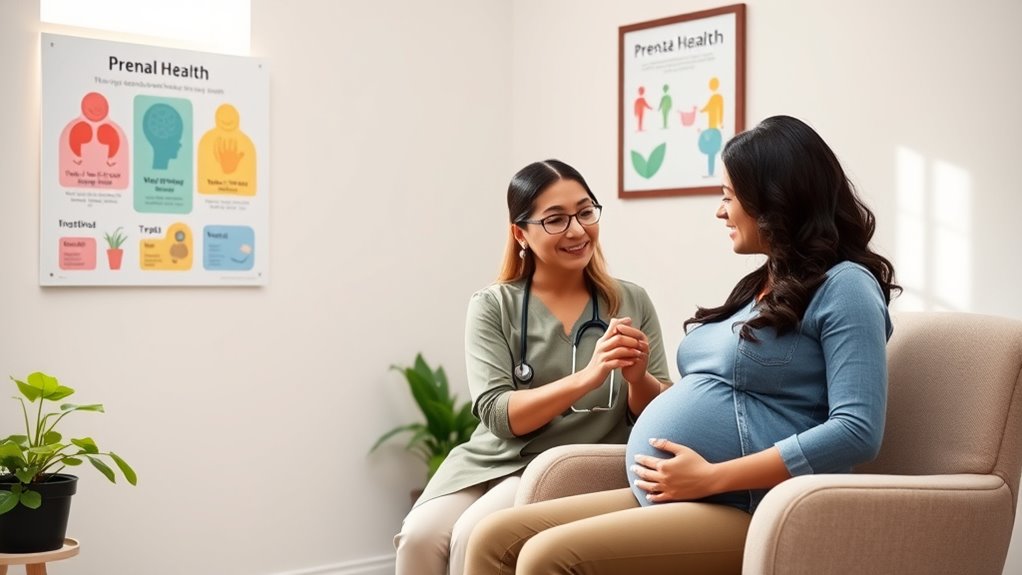

Integrating mental health services into prenatal and postnatal care helps you provide extensive support, ensuring early detection and intervention for issues like depression and anxiety. You can establish standardized screening protocols and incorporate mental health assessments into routine visits, making care more holistic. Training your staff to handle mental health conversations with empathy fosters trust and reduces stigma. Building strong referral networks and embedding mental health tools into workflows makes support seamless. Continue exploring how to implement these strategies effectively.
Key Takeaways
- Implement standardized mental health screening protocols during routine prenatal and postnatal visits.
- Train healthcare providers in empathetic communication and cultural competency for mental health discussions.
- Foster multidisciplinary collaboration among obstetricians, mental health professionals, and social workers.
- Integrate mental health assessments into electronic health records for seamless workflow and tracking.
- Develop referral networks with community resources to ensure timely, specialized mental health support.

Integrating mental health services into existing healthcare systems is essential for providing holistic care and improving patient outcomes. When it comes to prenatal and postnatal care, this integration becomes even more critical, as mental health substantially impacts both mother and baby. To do this effectively, you need to establish clear screening protocols that can identify mental health concerns early in pregnancy and after childbirth. These protocols should be standardized across clinics and tailored to the specific needs of pregnant and postpartum women. Regular screening helps catch issues like depression, anxiety, or postpartum mood disorders before they escalate, ensuring timely intervention. But simply having protocols isn’t enough—you must also invest in extensive staff training. Your healthcare providers need to understand how to administer screenings properly, interpret results accurately, and approach sensitive conversations with empathy and confidence. Well-trained staff can create a safe environment where women feel comfortable sharing their mental health concerns without fear of judgment or stigma. This training should include education on the common signs of mental health issues during pregnancy and postpartum, cultural competency, and referral pathways for specialized care. As you implement these practices, it’s indispensable to foster a multidisciplinary approach that involves obstetricians, nurses, mental health professionals, and social workers working together seamlessly. This collaboration ensures that mental health assessments are integrated into routine prenatal and postnatal visits rather than treated as an afterthought. Additionally, integrating mental health services into existing healthcare workflows can streamline access and reduce barriers for women seeking help. For example, incorporating mental health screenings into electronic health records allows providers to track progress over time and facilitates coordinated care. You should also provide ongoing training opportunities to keep staff updated on the latest screening tools and intervention strategies. Making sure your team feels confident and knowledgeable about mental health care promotes proactive engagement and reduces stigma. Furthermore, creating a referral network connected with community mental health resources guarantees that women receive specialized support when needed. The goal is to normalize mental health discussions within prenatal and postnatal visits, making it a routine part of care. Incorporating evidence-based approaches, such as mental health screening protocols, can enhance the effectiveness of these efforts. When you prioritize staff training and implement robust screening protocols, you’re taking essential steps toward a more integrated, patient-centered healthcare system. This approach not only benefits mothers by addressing their mental health needs but also positively influences the health and development of their babies, setting the stage for healthier families and communities.

Prenatal Development Anatomical Chart
Shows and describes the fertilization and implantation process.
As an affiliate, we earn on qualifying purchases.
As an affiliate, we earn on qualifying purchases.
Frequently Asked Questions
How Can Mental Health Screenings Be Seamlessly Incorporated Into Routine Visits?
You can seamlessly incorporate mental health screenings into routine visits by using standardized screening protocols that are quick and easy to administer. Engage patients actively by explaining the importance of mental health for their overall well-being, encouraging honest responses. Incorporate screenings into existing checklists or questionnaires, and train staff to recognize signs of mental health issues. This approach guarantees consistent, effective screening without disrupting the flow of care.
What Training Do Healthcare Providers Need to Address Perinatal Mental Health?
You’d think provider education and skill development come naturally, but ironically, many overlook the need for specialized perinatal mental health training. You should get thorough training in screening tools, trauma-informed care, and cultural sensitivity. This guarantees you can confidently identify and support mental health issues during pregnancy and postpartum. By sharpening these skills, you’ll better serve your patients, making mental health care a routine, seamless part of their prenatal and postnatal visits.
How Can Telehealth Improve Access to Mental Health Services During Pregnancy?
You can improve access to mental health services during pregnancy by leveraging telehealth, especially through remote consultations that let you connect with providers from home. Digital therapeutics also offer convenient, evidence-based tools to manage mental health. These options reduce barriers like transportation or childcare, ensuring you receive timely care, support, and guidance throughout your pregnancy, no matter where you are.
What Funding Options Support Integrated Mental Health and Prenatal Care Programs?
You can tap into grant programs and insurance coverage to fund integrated mental health and prenatal care. Grants from federal agencies and foundations support innovative programs, while insurance policies may cover mental health services if properly documented. Combining these funding options ensures thorough care, making mental health support accessible during pregnancy. By leveraging grants and insurance, you can develop sustainable programs that prioritize both mental and physical health for mothers and babies.
How Do Cultural Differences Influence Mental Health Screening and Treatment Strategies?
You should prioritize cultural sensitivity when designing mental health screening and treatment strategies, as it helps you understand diverse beliefs and practices. By respecting cultural differences, you can reduce stigma, making women more comfortable to seek help. Tailoring approaches to align with cultural values encourages trust and engagement, ensuring more effective mental health support during prenatal and postnatal care. This approach fosters inclusivity and improves overall maternal mental health outcomes.
postnatal depression assessment kits
As an affiliate, we earn on qualifying purchases.
As an affiliate, we earn on qualifying purchases.
Conclusion
By weaving mental health into prenatal and postnatal care, you’re building a foundation as solid as a mother’s love, ensuring every heartbeat counts. Like a lighthouse guiding ships safely home, integrated services illuminate the path through stress and uncertainty. When you embrace this holistic approach, you’re not just caring for a new life—you’re nurturing hope, strength, and resilience. Together, you create a future where mental well-being and new beginnings shine bright, guiding every mother safely ashore.

Medication Administration: A Guide for Unregulated Healthcare Providers
As an affiliate, we earn on qualifying purchases.
As an affiliate, we earn on qualifying purchases.
electronic health record mental health modules
As an affiliate, we earn on qualifying purchases.
As an affiliate, we earn on qualifying purchases.