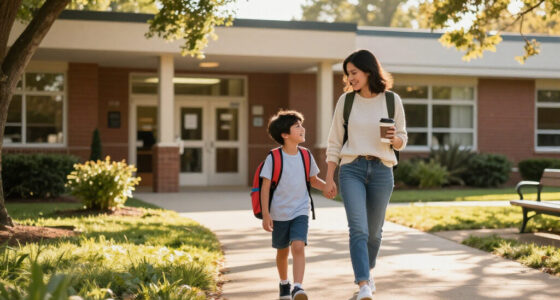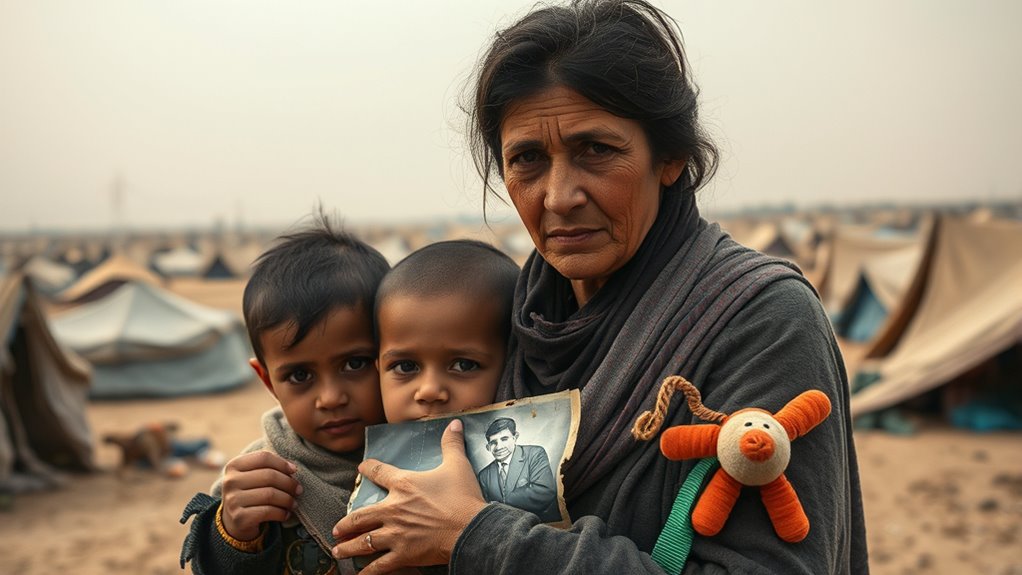

In conflict zones and displacement settings, you must navigate daily challenges like insecurity and disrupted routines, which impact your child’s development. Building resilience involves creating routines, providing emotional support, and celebrating small wins to foster hope. Your support and stability give your children a safety net, helping them cope amid chaos. Showing flexibility and expressing love strengthen family bonds. Continuing will offer practical strategies to help you nurture your children through these difficult times.

Turn the school run and nap time into listening time
- Thousands of audiobooks, podcasts and originals
- Listen on your phone, tablet or Echo — also offline
- Cancel anytime
Key Takeaways
- Building routines and normalcy helps children maintain stability amidst chaos in conflict zones.
- Emotional support and open communication strengthen children’s resilience and sense of security.
- Family and community networks provide essential safety, shared responsibilities, and emotional reassurance.
- Parent flexibility and creative emotional activities foster adaptability and hope in displaced children.
- Supporting parental capacity and nurturing hope are vital for children’s mental health and future resilience.

Living in conflict zones forces parents to navigate daily challenges that most people can’t imagine, often under constant threat and uncertainty. You’re faced with situations where safety is never guaranteed, and the stability needed for normal childhood development is disrupted. In such environments, fostering child resilience becomes essential. Resilience isn’t just about bouncing back from adversity; it’s about helping your child develop strength, adaptability, and hope amid chaos. You can do this by creating routines where possible, maintaining a sense of normalcy, and providing emotional support. Even in the most unstable circumstances, small acts—like comforting your child, listening to their fears, and celebrating small achievements—can help them build resilience.
Building resilience in children through routines, emotional support, and small acts amid conflict and chaos
Family support plays a crucial role in this process. When you come together as a family, you create a safety net that offers emotional stability for your children. Sharing responsibilities, maintaining open communication, and expressing love and reassurance help reinforce a sense of security. It’s important to acknowledge that your own stress affects your children, so taking care of your mental health becomes part of supporting them. You might find that involving other family members or community networks strengthens your collective resilience. In conflict zones, community support systems often step in where formal resources are limited, providing shared childcare, emotional counseling, or simple companionship. These networks can be lifelines that help you and your children cope better with ongoing disruptions.
As a parent in such environments, you need to adapt quickly and remain flexible. You may need to find alternative ways to guarantee your children’s safety and well-being, whether through makeshift schooling, storytelling, or engaging in activities that promote emotional expression. Encouraging your children to share their feelings and fears helps them process trauma and feel heard. Your consistent presence and reassurance are essential in fostering their resilience. Remember, your strength and unwavering support serve as a powerful example, teaching your children that despite the turmoil, they can endure and thrive. Even amid displacement, maintaining family routines and support systems provides a foundation of stability that nurtures their growth.
Additionally, understanding the importance of family support and community networks can help you better navigate the ongoing challenges. Ultimately, your role as a parent in conflict zones is about more than just survival; it’s about nurturing hope, strength, and resilience in your children. Your dedication to supporting them through every challenge helps shape their capacity to face an uncertain future. By fostering resilience and leaning on family support, you give your children the best chance to adapt and flourish despite the hardships around you.
Products Worth Considering

LEGO Boost Creative Toolbox 17101 Fun Robot Building Set and Educational Coding Kit for Kids

LEGO Technic Ducati Panigale V4 R Motorcycle 42107 Building Set

LEGO Art Hokusai The Great Wave Building Set (31208)
As an affiliate, we earn on qualifying purchases.
Frequently Asked Questions
How Do Parents Maintain Cultural Traditions During Displacement?
You can uphold cultural traditions during displacement by actively teaching your children about your heritage, sharing stories, and practicing customs whenever possible. Engaging with community groups that celebrate your culture helps reinforce tradition continuity. Preserving language, cooking traditional dishes, and participating in cultural events also support cultural preservation. These efforts ensure your children stay connected to their roots, fostering a sense of identity and resilience amid challenging circumstances.
What Are Effective Communication Strategies for Parents in Conflict Zones?
You should prioritize clear, age-appropriate communication, using digital literacy tools to stay connected and informed. Practice conflict resolution by encouraging open dialogue, listening actively, and validating your child’s feelings. Use technology wisely to share cultural traditions and maintain bonds, while setting boundaries to guarantee safety. Keep conversations honest yet reassuring, helping your child feel secure despite the chaos around you. This approach builds trust and resilience during challenging times.
How Can Parents Access Mental Health Support for Their Children?
You can access mental health support for your children through telehealth access, which connects you with mental health professionals remotely, making it easier in conflict zones. Additionally, participating in peer support programs lets you share experiences and gain advice from other parents facing similar challenges. These resources help you guarantee your child’s emotional well-being, even amid difficult circumstances, fostering resilience and recovery during uncertain times.
What Role Do Community Networks Play in Supporting Displaced Families?
Community networks play a essential role in supporting displaced families by strengthening social cohesion and fostering community resilience. You can rely on these networks for emotional support, shared resources, and practical assistance, which help ease the challenges of displacement. They create safe spaces where families connect, exchange information, and build trust, empowering you to navigate uncertain circumstances more effectively and ensuring you and your children feel less isolated amid difficult times.
How Do Displacement and Conflict Impact Parent-Child Attachment?
Imagine a fragile thread stretching between you and your child, suddenly snapped by conflict and displacement. These upheavals cause attachment disruptions, making it hard to build trust. Trauma bonding can form, keeping you tethered to past fears. The chaos clouds your ability to nurture securely, leaving emotional scars. Your bond may weaken, but with patience and support, you can rebuild that connection, restoring safety and love amidst the turmoil.
Conclusion
Just as Odysseus navigated treacherous waters, you face the challenges of parenting amid conflict and displacement. Your resilience shapes the future amidst chaos, echoing the timeless hope that even in darkness, light can emerge. Remember, every act of love and patience is a beacon guiding your children through adversity. Like the phoenix rising from ashes, your strength keeps hope alive—proof that even in the hardest times, nurturing can forge a brighter tomorrow.