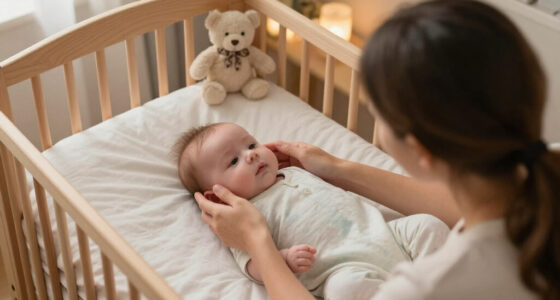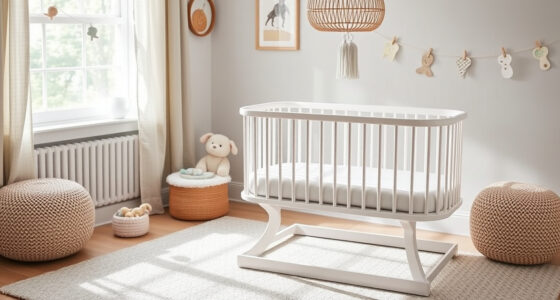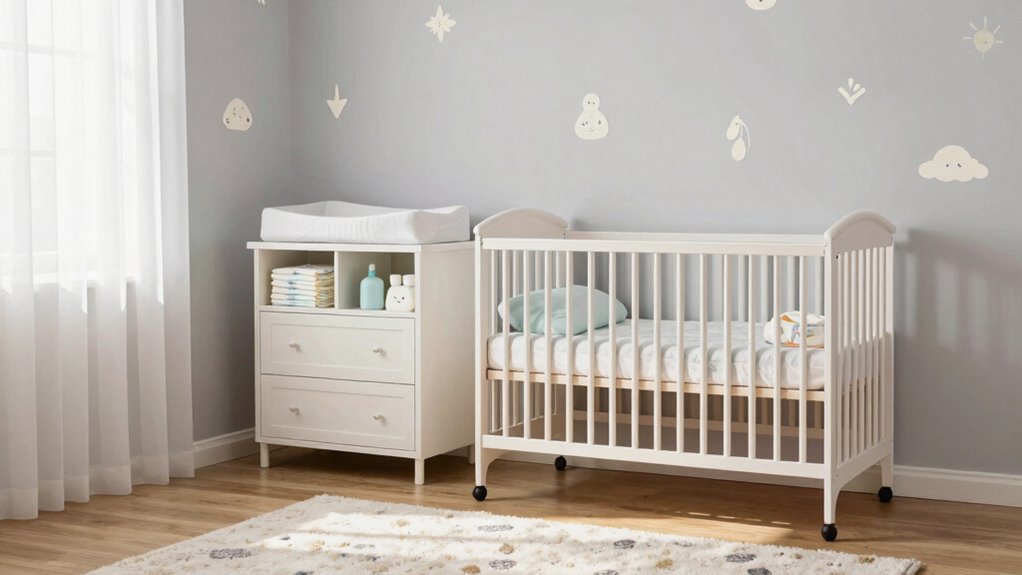

To set up your baby’s sleep space without chaos, prioritize safety by using a firm, clear crib away from hazards like cords and blinds, and keep the area free of soft bedding and toys. Organize gear with labeled bins or shelves, and create a calming environment with gentle lighting and soothing sounds. Establish a consistent bedtime routine and keep the nursery clutter-free. If you want to learn more tips to ensure peaceful nights, keep exploring this guide.

Turn the school run and nap time into listening time
- Thousands of audiobooks, podcasts and originals
- Listen on your phone, tablet or Echo — also offline
- Cancel anytime
Key Takeaways
- Position the crib away from windows, cords, and hazards to ensure safety and minimize disturbances.
- Keep the nursery organized with designated storage for clothes, toys, and essentials to reduce clutter.
- Create a calming environment using soft lighting, white noise, and soothing decor to promote peaceful sleep.
- Establish a consistent bedtime routine and simple nursery rules to reinforce sleep cues and reduce chaos.
- Maintain optimal room temperature, proper airflow, and safe sleep practices for a secure, comfortable sleep space.
As an affiliate, we earn on qualifying purchases.
Learn Safe Sleep Guidelines for Your Baby
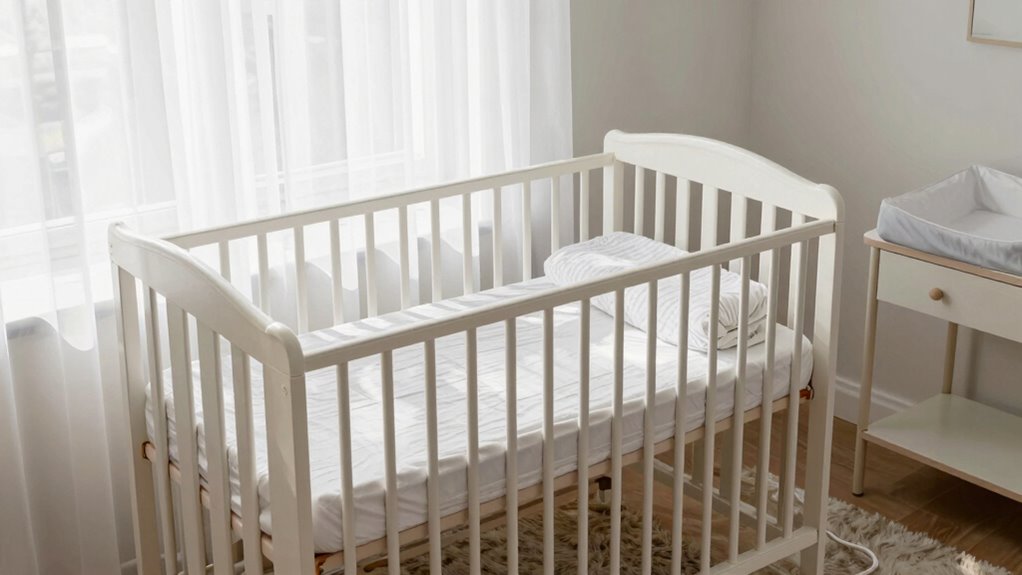
To make certain your baby sleeps safely, it’s essential to follow established guidelines that reduce the risk of Sudden Infant Death Syndrome (SIDS). Safe sleep practices include placing your baby on their back for every sleep, on a firm sleep surface, such as a mattress in a safety-approved crib or bassinet. Keep the sleep area free of soft bedding, pillows, stuffed animals, and bumper pads, which can pose suffocation hazards. Ensure the room is at a comfortable temperature to prevent overheating. Avoid smoking around your baby, and always use a sleep surface that meets safety standards. Additionally, maintaining a safe sleep environment is crucial for your baby’s well-being. Following sleep position recommendations helps reduce risks and promotes healthier sleep habits. Prioritizing baby sleep safety helps create a secure environment, giving your little one the best chance for restful, safe sleep every night. Regularly checking your baby’s sleep area for hazards and appropriate sleep setups can further enhance their safety and comfort. Incorporating appropriate sleep aids such as breathable sleep sacks can also help prevent accidental suffocation. It is also beneficial to stay informed about early warning signs of sleep issues, so you can address potential concerns promptly.
As an affiliate, we earn on qualifying purchases.
Choose the Best Spot for Your Baby’s Sleep Space
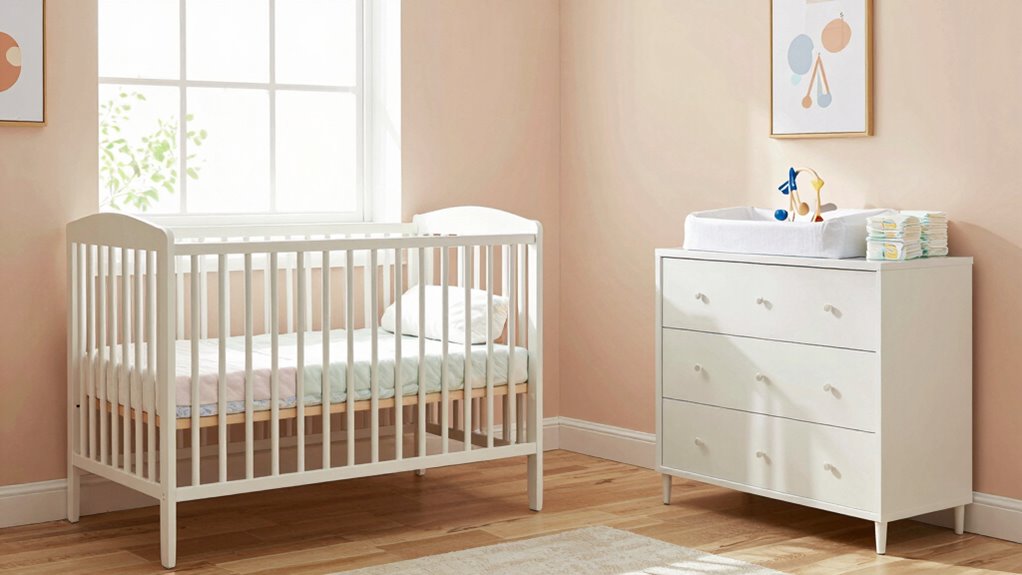
Choosing the right spot for your baby’s sleep space is essential for their safety and comfort. Start by considering these key factors:
- Keep the crib away from windows, cords, and blinds to prevent hazards.
- Choose a quiet, low-traffic area to minimize noise and disturbances.
- Ensure good airflow and avoid drafts for a comfortable sleeping environment.
- Think about nursery decor and furniture placement—position the crib away from dressers or shelves that could pose a risk.
- Additionally, consider the climate control methods used in your nursery setup to create a calming environment that promotes healthy sleep patterns. Using environmentally friendly materials and techniques can also contribute to a healthier space for your baby. Proper ventilation systems can help maintain consistent temperature and humidity levels, enhancing comfort and safety. Incorporating air quality monitors can further ensure a safe and optimal sleep environment.
As an affiliate, we earn on qualifying purchases.
Organize Baby Gear for a Calm, Clutter-Free Nursery
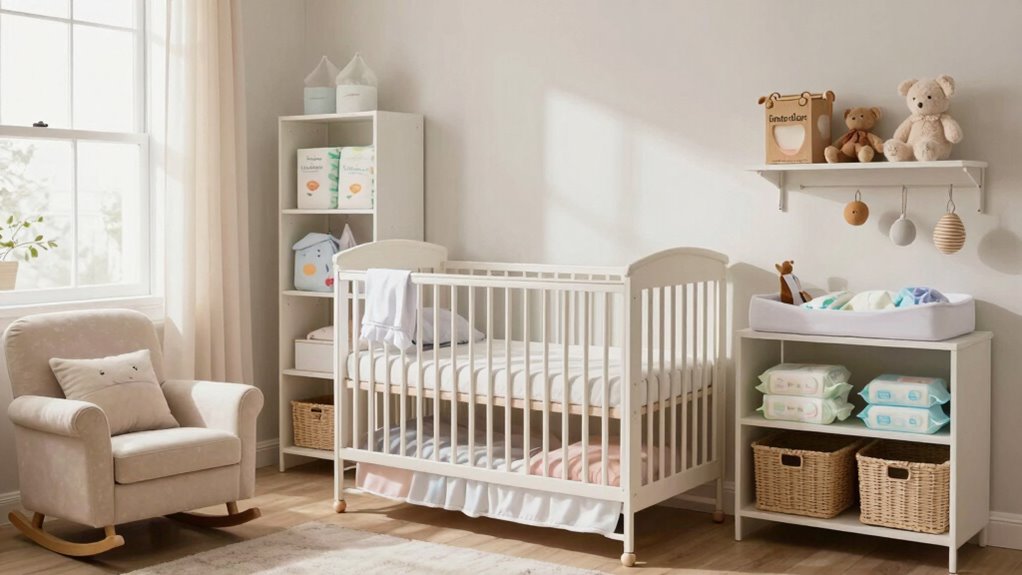
Creating a calm, clutter-free nursery begins with organizing your baby gear thoughtfully. Start by grouping similar items and assigning designated spaces. Use toy storage solutions like bins or baskets to keep toys accessible yet tidy. Incorporate decor ideas that double as storage, such as wall-mounted shelves or storage ottomans. To keep everything in order, consider using the following system:
| Storage Area | Purpose |
|---|---|
| Closet | Clothes, blankets |
| Drawer | Diapers, wipes |
| Shelves | Books, decor, toys |
| Under Crib | Extra bedding, seasonal items |
| Wall Hooks | Hats, bags, accessories |
This approach reduces clutter and creates a peaceful environment for both you and your baby. Additionally, integrating sound healing science principles, like gentle calming sounds, can further promote a serene nursery atmosphere. Incorporating organized storage techniques can also make daily routines smoother and more enjoyable. Using essential oils for relaxation, such as lavender or eucalyptus, can enhance the calming environment of the nursery. For added tranquility, consider incorporating calming scents to support a restful sleep space. Utilizing tracking gear like sound monitors or GPS devices can help you keep an ear on your baby from anywhere, adding an extra layer of peace of mind.
nursery organization storage bins
As an affiliate, we earn on qualifying purchases.
As an affiliate, we earn on qualifying purchases.
Set Up a Safe and Comfortable Baby Bed
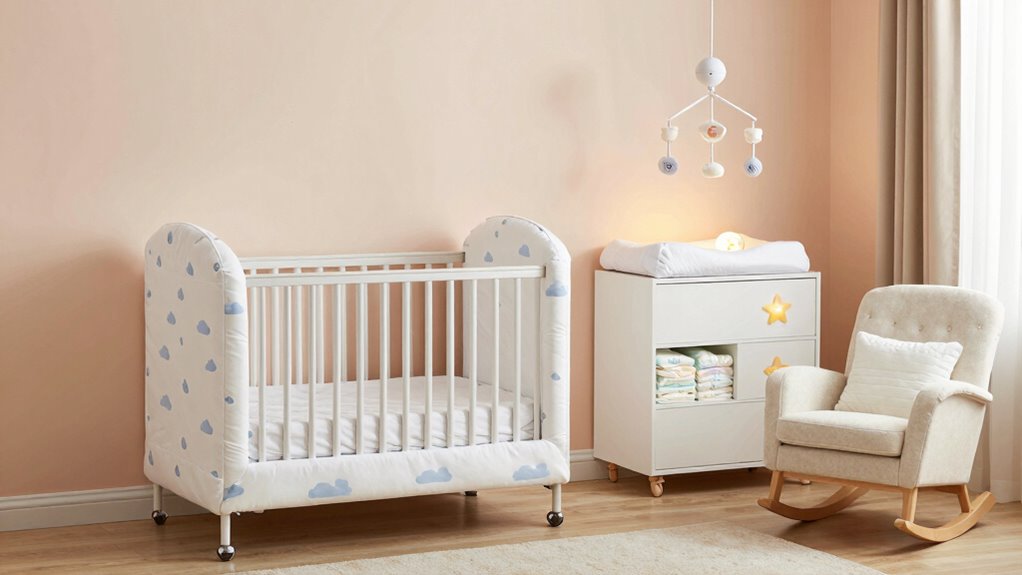
Creating a safe and cozy baby bed is essential for peaceful sleep. Choose firm, well-fitting bedding to reduce suffocation risks and keep the sleeping area free of loose blankets or toys. By prioritizing safety and comfort, you’ll help your baby rest soundly and securely. Incorporating a free floating design can also promote better airflow around the baby, enhancing safety and comfort. Utilizing water-based solutions in the nursery, such as humidifiers or aquatic-themed decor, can create a calming environment that promotes relaxation and better sleep.
Safe Sleep Environment
Setting up a safe and comfortable sleep environment for your baby is essential for their well-being. To create this space, consider these key points:
- Keep the crib free of loose bedding, pillows, and stuffed animals to reduce suffocation risks.
- Use a firm mattress with a fitted sheet to support healthy sleep and align with sleep training practices.
- Choose nursery decor that’s calm and soothing, avoiding bright colors or busy patterns that can overstimulate.
- Ensure the room temperature stays between 68-72°F to promote safe sleep conditions.
- Incorporate toxin-free materials and finishes in the nursery to minimize exposure to harmful chemicals and create a truly safe environment.
- Regularly check for safe sleep guidelines to ensure the setup remains optimal as your baby grows.
- Be mindful of nursery safety standards to prevent potential hazards and maintain a secure sleep space.
- Consider integrating smart locks and security features to ensure the nursery remains safe and secure when you’re away, especially if the space is shared. Additionally, staying informed about childproofing best practices can help you address potential safety concerns proactively.
Comfortable Bedding Choices
Choosing the right bedding is essential for your baby’s safety and comfort. Focus on selecting bedding materials that are breathable, hypoallergenic, and free of loose parts or decorations. The mattress comfort plays a key role in ensuring restful sleep, so pick a firm, well-fitting mattress that provides proper support. To illustrate, consider this comparison:
| Feature | Recommended Choice | Why |
|---|---|---|
| Bedding materials | Cotton, bamboo, or breathable fabrics | Reduce risk of overheating |
| Mattress comfort | Firm, snug-fitting mattress | Prevent suffocation risks |
Avoid soft bedding, pillows, or bulky blankets that could pose suffocation hazards. Prioritize safety and comfort to create a cozy, secure sleep environment for your baby.
Create a Soothing Atmosphere With Lighting and Sound
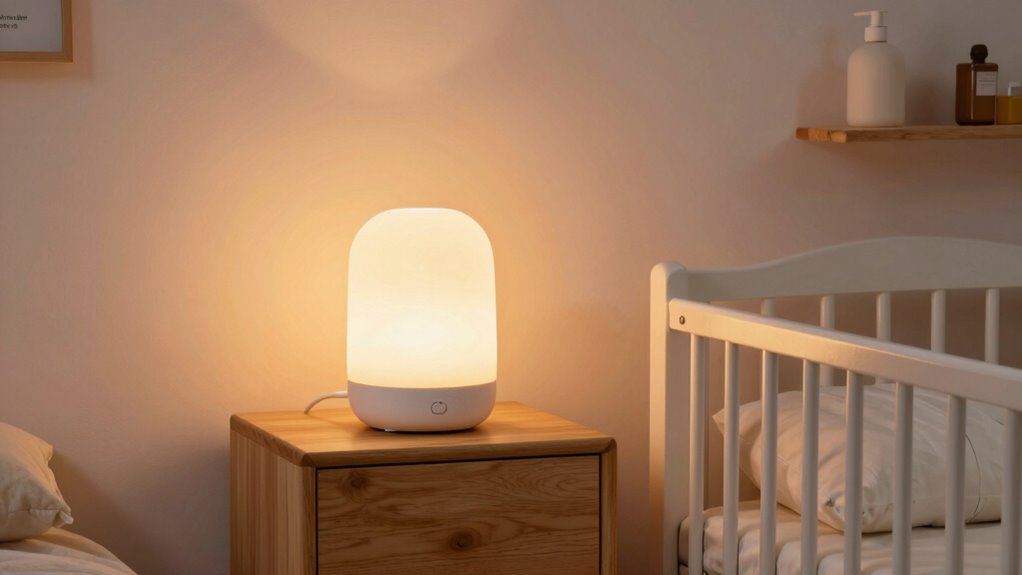
You can create a calming environment by choosing soft lighting that gently illuminates the room without overstimulating your baby. Incorporate gentle sound options, like white noise or lullabies, to help your little one relax and fall asleep peacefully. By balancing lighting and sound carefully, you set the perfect scene for restful nights.
Soft Lighting Choices
Soft lighting plays an essential role in creating a calming environment in shared rooms. It helps signal to your baby that it’s time to wind down, making bedtime smoother. Consider these options to optimize your lighting setup:
- Use nighttime ambient lights that emit a gentle glow, avoiding harsh brightness.
- Install dimmer switches to adjust light levels easily, creating the perfect low-light atmosphere.
- Opt for warm-colored bulbs to promote relaxation and comfort.
- Keep lights minimal and indirect, avoiding glare that can overstimulate your baby.
Gentle Sound Options
Incorporating gentle sounds alongside soft lighting can substantially enhance a calming environment in shared rooms. White noise machines create a consistent, soothing background that masks household sounds, helping your baby feel secure. Lullaby melodies, whether from a music box or a playlist, promote relaxation and signal bedtime. Keep the volume low to avoid overstimulation, and opt for continuous, gentle sounds rather than sudden loud noises. Combining these sound options with dim, soft lighting helps establish a predictable, tranquil atmosphere that encourages your baby to settle easily. Consistency is key—using the same sounds and lighting cues every night reinforces a sleep routine. This thoughtful setup fosters a peaceful space where your baby can rest peacefully amidst shared room dynamics.
Establish Bedtime Routines and Nursery Rules
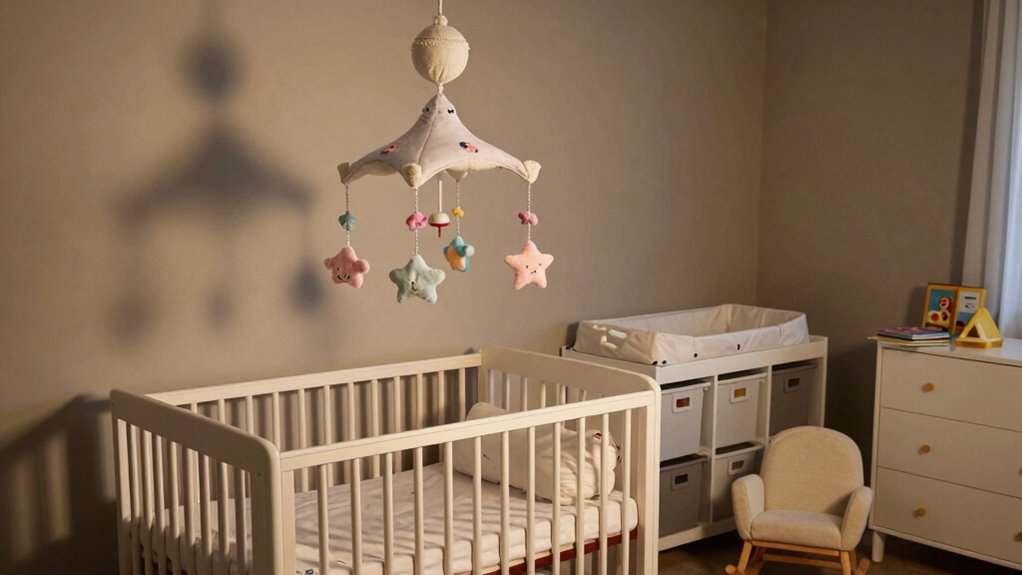
Establishing consistent bedtime routines and clear nursery rules helps your child feel secure and understand expectations. A predictable routine signals that sleep time is near, easing progressions and reducing resistance. To create effective bedtime routines and nursery rules, consider these steps:
- Stick to a set bedtime each night to build consistency.
- Follow a calming sequence, like reading a book or singing softly.
- Keep nursery rules simple, such as no playing after lights out.
- Reinforce rules with gentle reminders and praise.
Troubleshoot Common Nursery Setup and Sleep Challenges
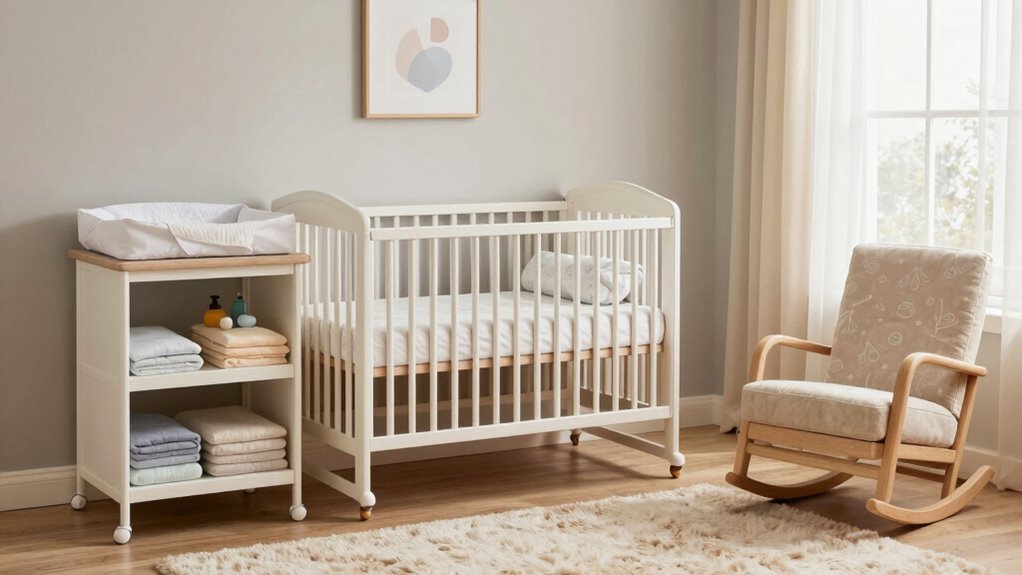
Many common nursery setup and sleep challenges stem from environmental factors or inconsistent routines that can disrupt your child’s ability to settle peacefully. To troubleshoot, examine your nursery decor—ensure it’s calming, clutter-free, and free of distractions. Proper baby proofing tips are essential; check for hazards like cords or sharp edges. Sometimes, noise or lighting issues cause disruptions. Use a white noise machine or blackout curtains to create a consistent sleep environment. Here’s a quick checklist:
| Issue | Solution | Tips |
|---|---|---|
| Disruptive noise | White noise or soft music | Keep volume consistent |
| Bright lighting | Use blackout curtains | Dim lights before bed |
| Unsafe nursery setup | Baby proof thoroughly | Secure furniture, outlets |
Addressing these factors fosters a peaceful sleep space, reducing common challenges.
Frequently Asked Questions
How Do I Prevent My Baby From Climbing Out of the Crib?
To prevent your baby from climbing out of the crib, guarantee crib safety by using a firm, well-fitted mattress and avoiding drop-side cribs. Baby proofing the area with secure rails and removing any tempting objects helps. You can also lower the mattress as your baby grows and starts to climb. Consistently reinforce boundaries and consider shifting to a toddler bed when they’re ready to keep them safe and comfortable.
What Are the Best Storage Solutions for Small Nursery Spaces?
You should maximize your small nursery space with smart storage solutions like storage bins and wall shelves. Use storage bins to organize toys, clothes, and essentials, keeping them out of sight but easily accessible. Wall shelves save floor space and display cute decor or books. Combining these options helps you stay organized, makes the room feel larger, and guarantees everything has a designated spot, making nursery setup stress-free.
How Can I Make the Nursery More Visually Stimulating yet Calming?
You can transform your nursery into a sensory wonderland that’s both visually stimulating and calming. Use soft pastel nursery decor paired with gentle, nature-inspired patterns to create a soothing atmosphere. Add textured elements like plush rugs or fabric wall hangings for sensory stimulation without chaos. Incorporate calming lighting, such as dimmable lamps, and gentle mobiles with soft colors to engage your baby’s senses while keeping the space peaceful and inviting.
When Should I Transition My Baby to a Toddler Bed?
You should shift your baby to a toddler bed when they’re around 18 months to 3 years old, depending on their size and development. Keep crib safety in mind, ensuring the new bed has guardrails and is sturdy. Watch for signs of readiness, like climbing out or showing interest in a “big kid” bed. Timing varies, but prioritizing safety and your child’s independence helps make a smooth switch.
How Do I Handle Sibling Jealousy Over Shared Nursery Space?
To handle sibling jealousy over shared nursery space, you should address sibling rivalry by fostering open communication and understanding. Set clear sharing boundaries, such as designated quiet zones and individual personal spaces, to help each child feel secure. Encourage positive interactions and celebrate each child’s uniqueness. Regularly spend quality time with each sibling individually, reinforcing that their needs matter and reducing jealousy over shared space.
Conclusion
Creating a peaceful, organized nursery isn’t just about space—it’s about setting gentle routines and nurturing calm. When you thoughtfully arrange your baby’s sleep environment, you craft a haven where dreams can softly drift. Small touches, like soothing sounds and cozy lighting, weave a quiet rhythm for restful nights. Trust your instincts and enjoy this tender chapter. With patience and care, your nursery becomes a gentle retreat, guiding your little one toward sweet, peaceful slumber.
Halloween Picks
halloween
As an affiliate, we earn on qualifying purchases.