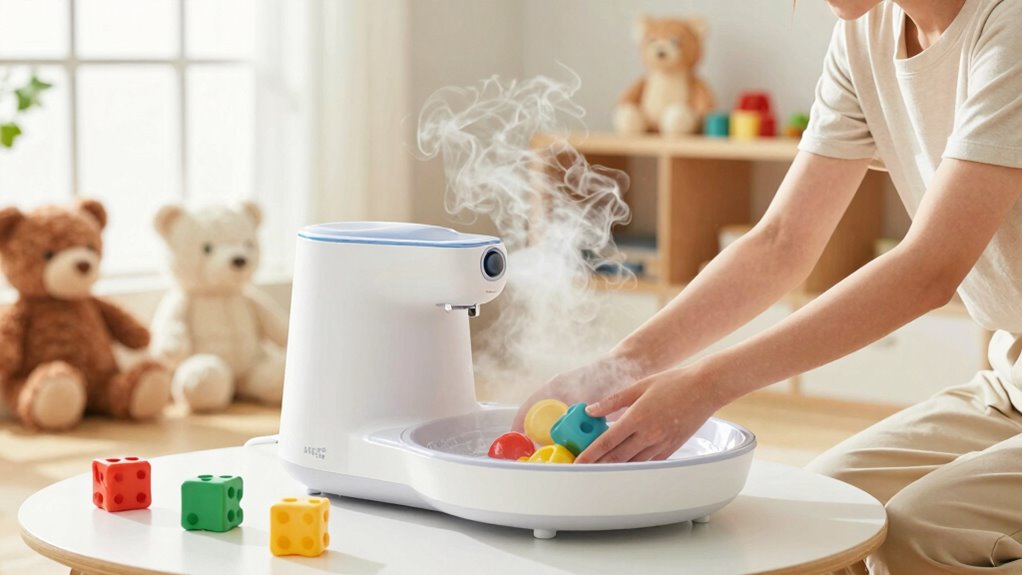
To safely sanitize toys without harsh chemicals, use natural household items like vinegar, baking soda, hydrogen peroxide, and tea tree oil. For plastic and rubber toys, wash with warm soapy water then disinfect with diluted vinegar or hydrogen peroxide. Fabric toys should be washed thoroughly, and wooden toys wiped with a damp cloth. Storing toys properly and avoiding excessive cleaning helps maintain hygiene. Keep going to discover effective tips for parents to keep toys germ-free naturally.
Key Takeaways
- Use natural disinfectants like vinegar, hydrogen peroxide, and tea tree oil for safe toy sanitation.
- Clean toys based on material: wash plastic and rubber with soap and disinfectants; machine wash fabric toys.
- Store toys properly in dry, labeled containers to prevent dust and bacterial buildup.
- Wipe high-touch surfaces regularly with natural solutions to maintain hygiene between deep cleanings.
- Replace worn or damaged toys every few years and consider professional cleaning for heavily soiled items.
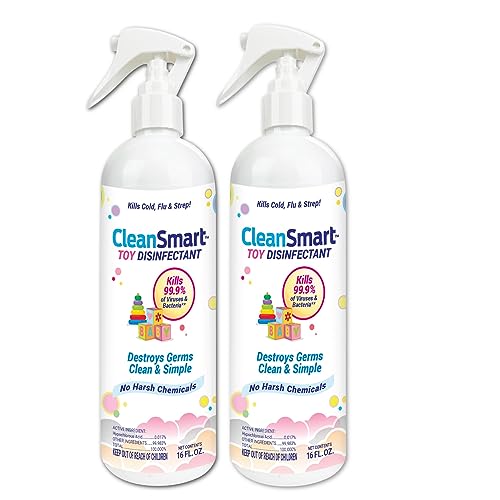
CleanSmart Toy Disinfectant Spray Kills 99.9% of Viruses and Bacteria, Rinse Free, 16 oz Bottle, (Pack of 2)
HIGHLY EFFECTIVE AND APPROVED for sanitizing DAY CARE CENTERS in all 50 states
As an affiliate, we earn on qualifying purchases.
As an affiliate, we earn on qualifying purchases.
Why Safe Toy Cleaning Matters for Your Child’s Health

Keeping your child’s toys clean is essential because they frequently put toys in their mouths and touch them with their hands. This habit increases the risk of transferring germs, bacteria, and viruses, which can affect child health. Using harsh chemicals to clean toys may seem effective, but it can compromise chemical safety, exposing your child to toxic residues. Choosing gentle, non-toxic cleaning methods helps protect your child’s developing immune system and prevents potential allergic reactions. Safe toy cleaning guarantees that surfaces are sanitized without introducing harmful substances. Being aware of chemical safety when cleaning toys ensures you minimize exposure to hazardous residues. Incorporating natural cleaning agents can further enhance safety and reduce chemical exposure. Additionally, selecting appropriate cleaning tools can improve the effectiveness of your safe cleaning routines. Understanding the importance of toxic chemical reduction can motivate you to choose safer cleaning options for your child’s environment. By prioritizing chemical safety, you reduce the chance of accidental poisoning or skin irritation, supporting overall well-being. Taking extra precautions by understanding the impact of chemical residues can help ensure your child’s environment remains safe and healthy. Ultimately, safe cleaning habits create a healthier environment where your child can play, explore, and grow securely.

ATTITUDE Baby & Kids Toy Cleaner Spray, EWG Verified, Multi-Surface Cleaner for Toys, High Chairs & Play Areas, Naturally Derived, Vegan, Unscented, 27.1 Fl Oz
EWG VERIFIED : This EWG Verified baby toy cleaner is made with clean ingredients that meet the Environmental…
As an affiliate, we earn on qualifying purchases.
As an affiliate, we earn on qualifying purchases.
How to Safely Sanitize Toys Using Household Items
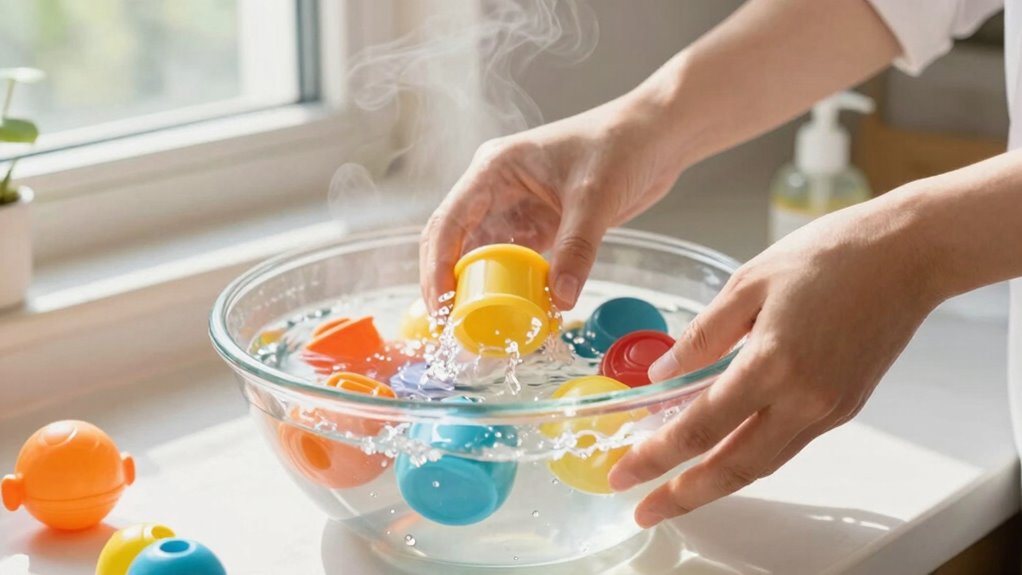
To safely sanitize your child’s toys with household items, start by selecting effective and gentle solutions like vinegar or baking soda. Next, prepare your cleaning mixture carefully, ensuring the right proportions for disinfecting without damaging the toys. Finally, use proper techniques such as wiping or soaking to thoroughly clean and sanitize each toy.
Choosing Safe Household Items
When it comes to sanitizing toys safely at home, selecting the right household items can make all the difference. Look for products with non toxic ingredients to avoid exposing your child to harmful chemicals. Vinegar, baking soda, and hydrogen peroxide are excellent choices since they are natural and eco friendly solutions. These items are widely available, affordable, and effective for cleaning without harsh toxins. Always check labels to ensure there are no added synthetic fragrances or dyes that could irritate sensitive skin. Using simple, natural ingredients helps you keep toys clean while maintaining a safe environment for your little one. Additionally, understanding the importance of chemical safety in home cleaning can help you make informed decisions that protect your family. Proper air quality considerations, such as avoiding areas with high dust or humidity, can also support a healthier space. Incorporating non toxic cleaning methods can further enhance your efforts to create a safer home environment. For example, choosing eco friendly products helps reduce environmental impact and promotes sustainability. Remember, choosing safe household items not only protects your child’s health but also contributes to a greener, more sustainable home.
Preparing the Sanitizing Solution
Creating an effective sanitizing solution with household items is simple and safe. To guarantee proper toy sterilization, you’ll need to prepare a disinfectant with common ingredients like vinegar or hydrogen peroxide. Start by mixing one part white vinegar with four parts water, or use a 3% hydrogen peroxide solution. These options act as natural disinfectants, killing germs without harsh chemicals. Make sure to use a clean container for disinfectant preparation, and never mix vinegar and hydrogen peroxide together, as they can create harmful compounds. Stir the solution well and check the concentration, ensuring it’s safe for toys. Remember, the goal is to create a solution strong enough to disinfect but gentle enough for children’s toys. This simple step guarantees effective toy sterilization without risking exposure to toxic substances. Additionally, understanding the science of AI discoveries can inspire innovative, safer solutions in household cleaning.
Proper Toy Cleaning Techniques
Safely sanitizing toys with household items involves more than just applying a disinfectant; it requires proper cleaning techniques to remove dirt and germs effectively. First, identify your toy’s material—plastic, fabric, wood, or rubber—as each needs different care. For plastic or rubber toys, wash with warm soapy water, then disinfect with a vinegar solution or diluted hydrogen peroxide. Fabric toys should be machine-washed or hand-cleaned with mild detergent, ensuring thorough rinsing. Wooden toys can be wiped with a damp cloth and mild soap, avoiding excessive moisture. After cleaning, dry toys completely before storing them in clean toy storage containers to prevent recontamination. Regular cleaning with these safe techniques keeps your child’s toys hygienic and reduces the risk of germs spreading. proper cleaning techniques are essential for maintaining a safe play environment. Additionally, household disinfectants that are free from harsh chemicals can be effective and safe for use on children’s toys. Using gentle cleaning solutions ensures that toys remain safe and free of residue after sanitization.

EVLA'S Baby Feeding Bottle Sanitizer & Dryer, UV Light Sanitizes Baby Bottles, Pacifiers, Small Toys, Even Phone or Credit Card in Minutes! Large Capacity UV Box Sanitizer, Grey
BABY FEEDING BOTTLE SANITIZER & DRYER : The EVLA'S UV Light Sanitizer Box uses ultraviolet light to sanitize…
As an affiliate, we earn on qualifying purchases.
As an affiliate, we earn on qualifying purchases.
Easy Tips to Keep Toys Germ-Free Between Cleanings
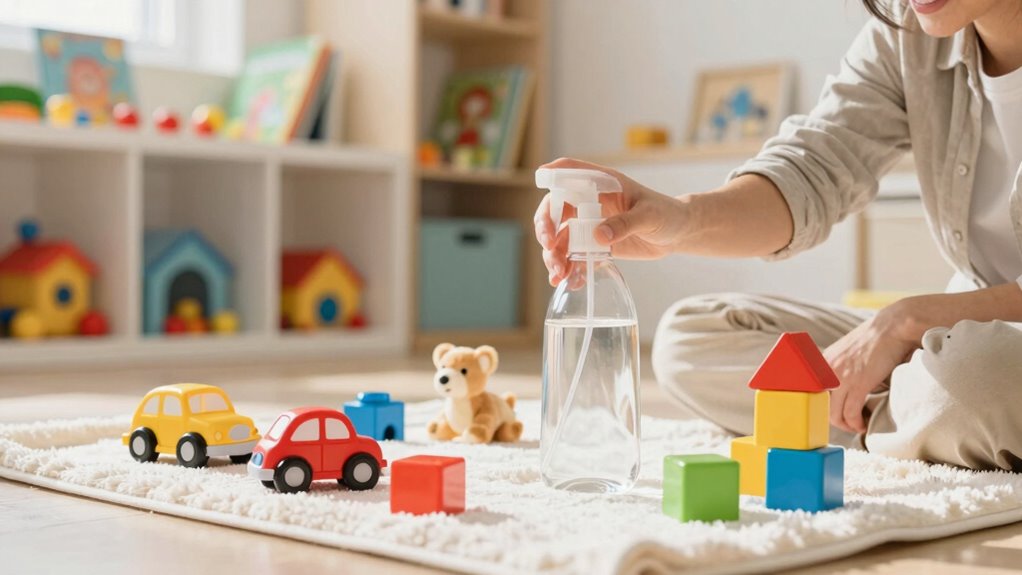
To keep toys germ-free between deep cleanings, start with regular wipe-downs using a gentle cloth and natural disinfectants like vinegar or lemon juice. Make sure to store toys properly in clean, dry containers to prevent dust and bacteria buildup. These simple steps help maintain a healthier play environment without harsh chemicals.
Regular Wipe-Down Techniques
Regularly wiping down your child’s toys is a simple yet effective way to reduce germs between deeper cleanings. The toy material plays a role in choosing the right wipe-down method; soft plastic or silicone toys can be cleaned with a damp cloth, while fabric toys may need a different approach. You should aim for a consistent cleaning frequency—ideally daily or after playdates—to keep germs at bay. Use a gentle, natural wipe or a cloth dampened with water and a mild, parent-approved cleaner. Focus on high-touch areas like handles, buttons, and surfaces your child frequently touches. Incorporating safe cleaning practices from regional flavors and insights from coffee and tea culture can inspire creative, natural cleaning solutions that are both effective and enjoyable. Recognizing germ transmission in everyday objects underscores the importance of these quick wipe-downs, which help prevent the spread of germs and keep toys fresh, reducing the need for more intensive cleaning sessions. Implementing child-safe disinfectants can further enhance safety during routine cleanings. Additionally, choosing non-toxic cleaning products ensures that toys remain safe for your child even after cleaning.
Use Natural Disinfectants
Using natural disinfectants is an effective way to keep your child’s toys germ-free between deeper cleanings. These options are made with child-safe ingredients, so you can sanitize without worry. Vinegar, hydrogen peroxide, and tea tree oil are popular choices that naturally eliminate germs. To guarantee effectiveness, dilute or use sparingly, and always test on small areas first. Incorporating these disinfectants regularly, especially after playdates or outdoor play, helps maintain a healthier environment for your little ones. Here’s a quick comparison:
| Natural Disinfectant | Benefits | Usage Tips |
|---|---|---|
| Vinegar | Antibacterial, safe, inexpensive | Mix with water, wipe toys clean |
| Hydrogen Peroxide | Kills germs effectively | Use undiluted or diluted lightly |
| Tea Tree Oil | Natural antimicrobial, fragrant | Add a few drops to water or spray |
Choosing the right child-safe ingredients guarantees your toys stay germ-free naturally. Regular use of gentle disinfectants can help prevent the spread of germs without harsh chemicals, supporting a healthier home environment for your family. Additionally, understanding the disinfectant properties of these natural options helps ensure you select the most effective method for your needs.
Store Toys Properly
Proper storage plays a key role in keeping your child’s toys germ-free between cleanings. By organizing toys well, you reduce clutter and make it easier to spot dirt or germs. Use toy storage bins or shelves to keep toys separated and protected from dust. Label boxes for different types of toys, like plush, plastic, or wooden, so you know where everything belongs. Encourage your child to put toys back in their designated places after playing. This not only promotes good toy organization but also minimizes the risk of cross-contamination. Regularly check stored toys for dirt or mold, and clean storage areas often. Good toy storage habits help keep toys cleaner, safer, and ready for playtime without unnecessary germs.
CleanSmart Toy Disinfectant Spray Kills 99.9% of Viruses and Bacteria, Rinse Free, 16 oz Bottle, (Pack of 2)
HIGHLY EFFECTIVE AND APPROVED for sanitizing DAY CARE CENTERS in all 50 states
As an affiliate, we earn on qualifying purchases.
As an affiliate, we earn on qualifying purchases.
Common Mistakes When Cleaning Toys and How to Avoid Them

One common mistake parents make when cleaning toys is relying on harsh chemicals that can leave residues or pose health risks. This often happens because they don’t consider the toy material, which affects what cleaning method is safe. Using strong cleaners on plastic or plush toys can cause damage or leave harmful residues, especially if cleaned too frequently. Another mistake is cleaning too often or not enough; cleaning too frequently can wear out delicate materials, while infrequent cleaning allows germs to build up. To avoid these issues, identify your toy’s material and choose gentle, natural cleaning methods. Also, establish a consistent cleaning schedule that balances hygiene with preserving the toy’s integrity. This approach keeps toys safe without risking damage or health hazards.
When to Replace Toys or Have Them Professionally Cleaned
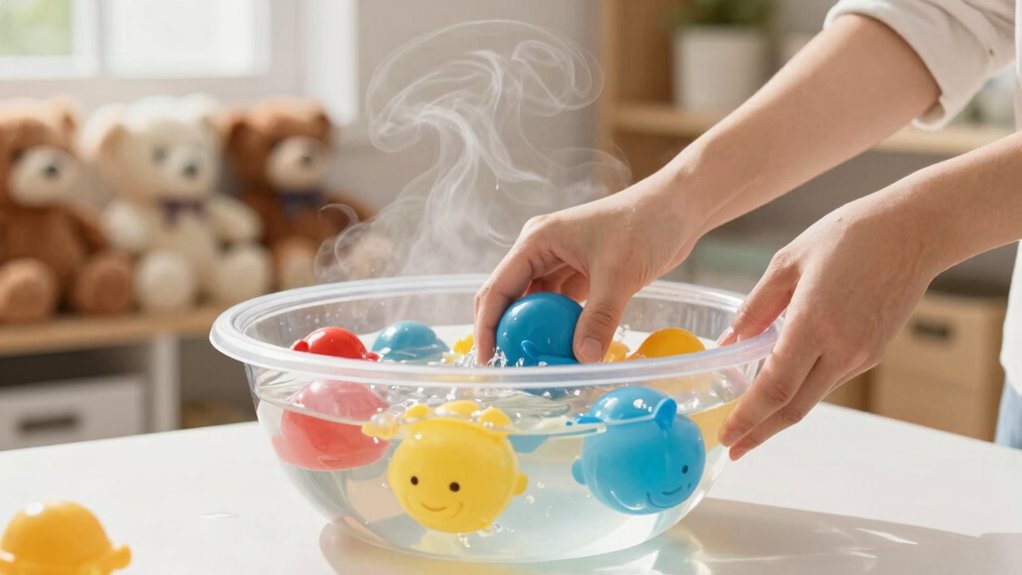
Knowing when to replace toys or seek professional cleaning is essential for your child’s safety. Certain toy materials, like plush or porous items, may need replacement sooner than hard plastics. A good rule of thumb is to follow the recommended replacement timeline, usually every 1-3 years, depending on usage and condition. Regular inspections help identify signs of wear, damage, or persistent dirt that cleaning can’t remove. When in doubt, professional cleaning can extend a toy’s lifespan, but some items, especially those with fragile parts or mold, are best replaced. Use the table below to determine whether to replace or professionally clean:
| Toy Material | When to Replace | When to Have Professionally Cleaned |
|---|---|---|
| Plush | After 2-3 years or if stained/matted | If visibly dirty or moldy |
| Hard Plastic | Every 3-4 years or if cracked/damaged | If surface is sticky or difficult to clean |
| Rubber | 2-3 years, especially if discolored or cracked | If trapped dirt or mold |
| Wooden | Every 3-4 years or if splintering | For deep cleaning and sanitizing |
| Porous materials | Usually replace after 1-2 years | If persistent odor or dirt |
FAQs: How Often Should You Sanitize Your Child’s Toys?
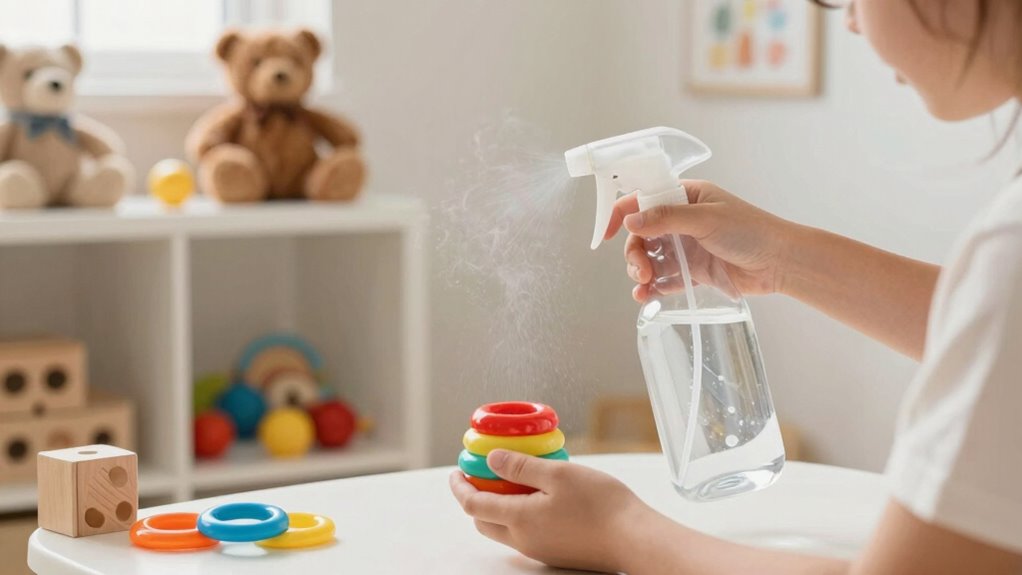
Most parents wonder how often they should sanitize their child’s toys to keep them safe. Regular cleaning helps prevent germs and allergens from building up, especially in toy storage areas. How often depends on use and the child’s health needs. Consider sanitizing:
- After an illness or if someone in the family is sick
- Weekly, for toys frequently mouthed or shared
- When toys are visibly dirty or dusty
This routine minimizes allergy prevention issues and keeps toys hygienic. Toys stored in closed containers or rarely used can be sanitized less often, but it’s still wise to wipe down periodically. Consistent cleaning creates a safer environment and reduces the risk of infections and allergies, making playtime healthier for your little one.
Frequently Asked Questions
Are There Specific Toys That Shouldn’T Be Sanitized With Household Items?
Yes, you should avoid sanitizing fragile electronics or squeaky rubber toys with household items. These materials can be damaged by moisture, harsh chemicals, or excessive cleaning. Instead, gently wipe fragile electronics with a damp cloth and skip soaking squeaky rubber toys. Always check the manufacturer’s instructions for cleaning tips. Your goal is to keep toys safe without compromising their integrity or causing harm to your child.
Can Natural Cleaning Methods Eliminate All Germs Effectively?
Did you know that regular handwashing reduces germs by 99.9%? Natural disinfectants like vinegar and tea tree oil can effectively eliminate many germs, making eco-friendly cleaning a safe choice for toys. While these methods are quite effective, they may not kill all bacteria or viruses. For thorough sanitation, consider combining natural disinfectants with proper cleaning routines, but always follow specific guidelines for certain toys to guarantee safety and cleanliness.
How Can I Sanitize Plush Toys Without Damaging Their Fabric?
To sanitize plush toys without damaging their fabric, you should focus on delicate cleaning. Start by spot cleaning with a mixture of mild soap and water using a soft cloth, which helps maintain fabric care. For deeper sanitation, place the toy in a pillowcase and run it through a gentle cycle in your washing machine with cold water. Air dry thoroughly to keep the fabric in good condition while eliminating germs effectively.
Is It Safe to Use Essential Oils for Toy Cleaning?
Did you know that only 30% of essential oils are safe for children? When it comes to toy cleaning, using essential oils can be risky if you don’t consider essential oil safety and toy material compatibility. Some oils may cause damage or allergic reactions. Always dilute essential oils properly and test a small area first. Stick to kid-friendly, gentle options like lavender or chamomile to keep toys safe and fresh.
Should I Wash or Wipe Down Toys After Each Play Session?
Yes, you should wash or wipe down toys after each play session to maintain proper toy disinfection and hygiene practices. This helps remove dirt, bacteria, and germs that can transfer to your child’s hands or face. Use gentle, non-toxic cleaning methods like warm water and mild soap or a natural disinfectant. Regular cleaning guarantees your child’s toys stay safe and clean, promoting healthier play habits and reducing the risk of illness.
Conclusion
Keeping your child’s toys safe and germ-free isn’t just a chore—it’s the secret weapon against endless illnesses and sleepless nights. With simple, chemical-free methods, you hold the power to protect their tiny world. Think of every sanitized toy as a shield guarding their tiny immune system, making you an unstoppable hero in their health journey. So, stay vigilant, clean regularly, and turn your home into a fortress of safety—because your child’s well-being is worth it!