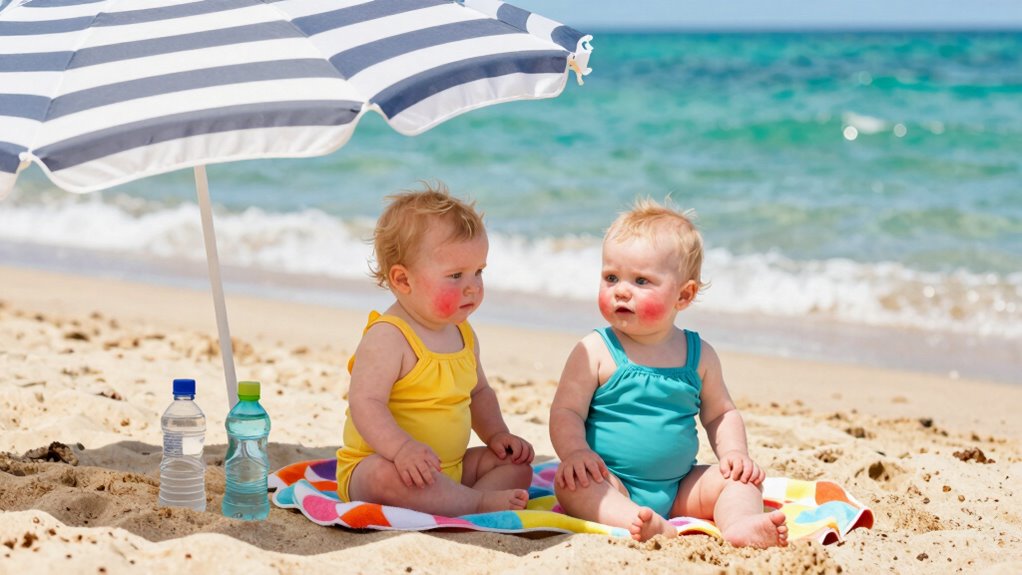

To keep your baby safe and comfortable at the beach, focus on providing plenty of shade with umbrellas or tents, dressing them in UV-protective clothing, and applying mineral-based sunscreen. Offer fluids frequently to prevent dehydration and watch for signs of overheating like fussiness or flushed skin. Make sure their spot is cool, shaded, and well-ventilated, and learn how to recognize and prevent overheating for a stress-free day. More tips can help guarantee a fun, safe experience.

Turn the school run and nap time into listening time
- Thousands of audiobooks, podcasts and originals
- Listen on your phone, tablet or Echo — also offline
- Cancel anytime
Key Takeaways
- Use shade options like umbrellas, tents, and protective clothing to prevent sun exposure and overheat.
- Offer regular hydration with water, breast milk, or electrolyte drinks to keep babies hydrated.
- Dress babies in lightweight, UPF-rated clothing and wide-brim hats for sun protection and cooling.
- Monitor for signs of overheating, such as fussiness or dry mouth, and move to shaded areas immediately.
- Apply mineral-based, broad-spectrum sunscreen every two hours and seek shade during peak sun hours.
As an affiliate, we earn on qualifying purchases.
Why Shade and Cover Are Critical for Baby Safety at the Beach

Shade and cover are vital for keeping babies safe at the beach because their skin is especially delicate and vulnerable to sun damage. Ensuring proper shade safety helps protect your little one from harmful UV rays, which can cause burns and long-term skin issues. Cover essentials, like lightweight, breathable clothing, hats, and umbrellas, create a barrier against direct sunlight. It’s important to plan for frequent shade breaks, especially during peak sun hours. Using a beach tent or canopy provides a reliable refuge where your baby can rest and stay cool. Remember, even on cloudy days, UV rays can penetrate, so shade safety remains essential. Prioritizing shade and cover helps keep your baby comfortable, safe, and protected from potential sun-related harm. Additionally, understanding the importance of UV protection and how to minimize exposure can further enhance your baby’s safety at the beach. Incorporating movable shade structures allows flexibility in creating shaded spots as the sun moves across the sky, ensuring continuous protection throughout the day. Recognizing the role of sun safety education can empower caregivers to make informed decisions for their child’s wellbeing. For optimal protection, it is also beneficial to learn about UV index levels to better plan outdoor activities and avoid peak sunlight times. Being aware of proper hydration strategies can also prevent overheating and keep your baby comfortable during beach outings.
As an affiliate, we earn on qualifying purchases.
How to Choose the Best Sun Protection Gear for Your Baby at the Beach

When selecting sun protection gear for your baby, focus on clothing that offers UPF protection to block harmful rays. You also want to choose baby-safe sunscreens that are gentle on sensitive skin and free from harmful chemicals. To further enhance your baby’s protection, consider using outdoor safety gear that are designed specifically for outdoor safety. For prolonged beach days, don’t forget to bring UV-protective clothing for added coverage. Opting for accessories like sun hats with wide brims can provide extra shade and protection for your little one’s face and neck. By combining these options, you can keep your little one safe and comfortable during beach days.
Sun Protective Clothing
Choosing the right sun protective clothing for your baby guarantees they stay safe and comfortable at the beach. Look for garments made from UV resistant fabrics, which block harmful rays effectively. These fabrics are specially designed to provide maximum protection without sacrificing comfort. Additionally, opt for breathable materials that keep your baby cool and prevent overheating in the sun. Lightweight, moisture-wicking fabrics help regulate body temperature and dry quickly if they get wet. Choose long-sleeved shirts, wide-brim hats, and full-coverage swimsuits to shield your baby’s skin from direct sunlight. Always check for clothing with UPF ratings to ensure *ideal* protection. Selecting appropriate sun protection gear can make a significant difference in your baby’s comfort and safety. Proper selection of sun protective clothing not only shields your baby but also promotes healthy skin development. In addition, choosing clothing with **UV resistant fabrics** ensures better long-term protection from the sun’s harmful rays. When shopping for sun protective clothing, consider items made from sustainable fabrics to reduce environmental impact. Another important factor is to look for clothing with seamless designs that minimize skin irritation and chafing. By choosing suitable sun protective clothing, you’ll help keep your baby safe, comfortable, and happy during your beach adventures.
Baby-Safe Sunscreen Options
Selecting the right sun protection for your baby involves more than just clothing; applying a gentle, baby-safe sunscreen is key to shielding their delicate skin. Look for mineral-based options with natural ingredients, as these provide effective protection without harsh chemicals. Mineral sunscreens contain zinc oxide or titanium dioxide, which sit on the skin’s surface and reflect UV rays, making them safe for sensitive skin. Avoid chemical sunscreens that can cause irritation or allergic reactions. Choose formulas labeled specifically for babies, and opt for broad-spectrum protection with SPF 30 or higher. Reapply every two hours, especially after swimming or sweating. Additionally, incorporating calming essential oils such as lavender or chamomile into your routine can promote relaxation and comfort for your baby during outdoor activities. Studies show that mineral-based sunscreens are generally safer for infants due to their non-penetrating nature. Using natural ingredients in sunscreens minimizes the risk of skin irritation and supports overall skin health. For added protection, consider choosing sunscreens with plant-based extracts, which can soothe and nourish delicate skin. To further enhance protection, look for sunscreens formulated with broad-spectrum filters that shield against both UVA and UVB rays. By selecting mineral-based, natural ingredient sunscreens, you ensure your baby’s skin stays protected and healthy during your beach adventures.
As an affiliate, we earn on qualifying purchases.
How to Tell If Your Baby Is Overheating and What to Do
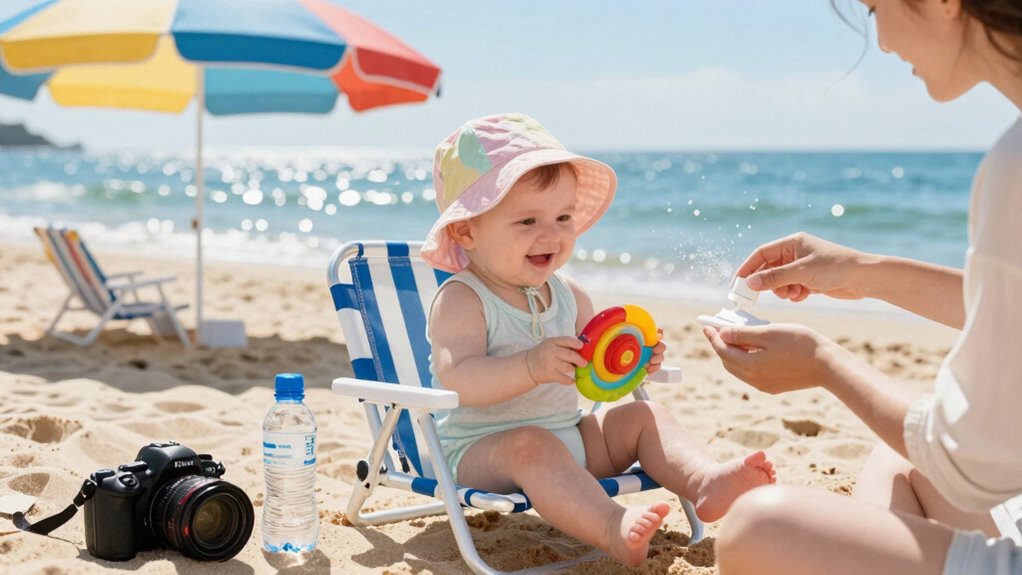
It’s important to stay alert for signs that your baby may be overheating during beach days, especially in hot weather. Watch for signs of dehydration, such as a dry mouth, sunken eyes, or lack of tears when crying. Your baby might also develop a heat rash, which appears as tiny, red bumps or patches on their skin. If your baby feels excessively warm to the touch or seems unusually fussy or sleepy, these could be signs they’re overheating. To help, move them to a shaded area, remove excess clothing, and offer cool, not cold, fluids if they’re old enough. Proper gear care and ensuring your baby is dressed appropriately for the heat can also help prevent overheating. Environmental factors, such as strong sun and high temperatures, can increase the risk, so staying vigilant is key. Monitoring indoor air quality, which impacts overall health, can also help keep your baby comfortable and safe. If symptoms persist or worsen, such as persistent crying, vomiting, or lethargy, seek medical attention immediately. Staying vigilant ensures your baby’s safety during beach outings.
As an affiliate, we earn on qualifying purchases.
How to Keep Your Baby Hydrated and Cool at the Beach
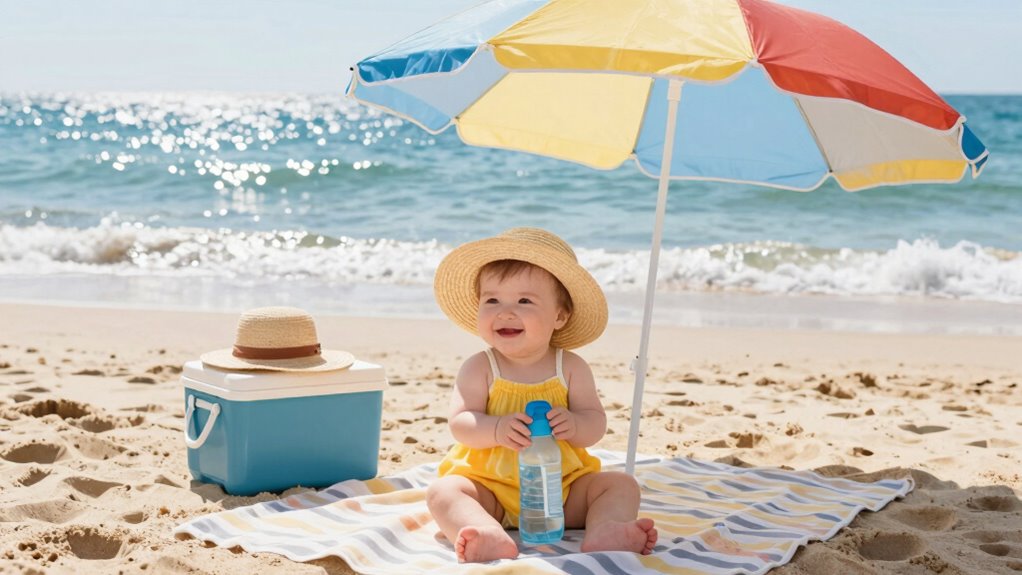
Keeping your baby cool and hydrated at the beach is essential for a safe and enjoyable day. Bring plenty of water and breast milk or formula to keep your baby refreshed. Offer small amounts frequently, especially if they’re playing with beach toys or digging in the sand, which can make them more dehydrated. Use a wide-brimmed hat and lightweight clothing to help keep them cool. To prevent sand safety issues, supervise your baby closely around sand and avoid letting them ingest it. Keep a portable fan or misting spray handy for extra cooling. Remember, maintaining hydration and preventing overheating are your top priorities, so stay attentive and make hydration a regular part of your beach routine.
Setting Up a Safe, Comfortable Spot for Your Baby at the Beach

Creating a designated spot for your baby at the beach helps guarantee their comfort and safety throughout the day. Start with a sturdy beach blanket in a shaded area to keep them cool and protected from direct sun. Bring along sand toys to entertain your little one and make the spot inviting. Set up close to your shade but away from crowded areas for safety. Use lightweight, portable gear for easy transport. Keep essentials like water, sunscreen, and a hat nearby. Ascertain the blanket is flat and free of sharp objects. Here’s a quick guide:
| Item | Purpose | Tips |
|---|---|---|
| Beach blanket | Comfort and sun protection | Use a UV-protective blanket |
| Shade umbrella | Prevent overheating | Secure it firmly |
| Sand toys | Entertainment | Easy to clean after use |
| Water bottle | Hydration | Keep within reach |
Planning Your Beach Day: Tips for Safety and Fun

To guarantee your beach day is both safe and enjoyable, start by planning ahead and packing all essentials. Bring your beach gear—like a sturdy sunshade, a soft blanket, and plenty of water for hydration. Think about snack ideas that are easy and healthy, such as sliced fruit, crackers, or yogurt pouches, to keep your baby energized. Make a checklist of items to avoid last-minute stress: sunscreen, extra diapers, a first aid kit, and a hat for sun protection. Keep a close eye on the weather forecast and plan your arrival and departure times accordingly. Staying organized ensures you won’t forget anything important and can focus on making the day fun and safe for your little one.
Solving Common Beach Day Challenges for Babies
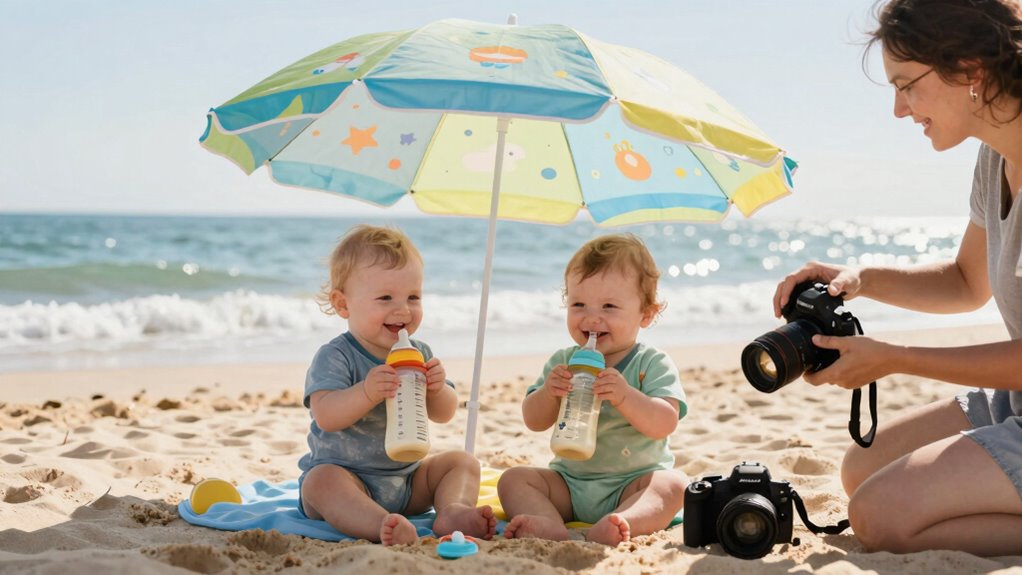
Keeping your baby comfortable at the beach means prioritizing sun protection and ensuring they stay hydrated. You’ll want to use shade, hats, and safe sunscreen to prevent sunburn, while regularly offering water or breast milk to keep them from getting dehydrated. Addressing these challenges head-on helps everyone enjoy a safer, happier beach day.
Sun Protection Strategies
Protecting your baby from the sun is essential for a fun and safe beach day, especially since their skin is more delicate than ours. To guarantee effective UV protection and sun safety, you should take proactive steps. Use a wide-brimmed hat to shield their face, neck, and ears. Dress your baby in lightweight, long-sleeved clothing with UPF fabric for extra coverage. Apply a broad-spectrum, baby-safe sunscreen generously on all exposed skin, reapplying every two hours. Seek shade whenever possible, especially during peak sun hours. Visualize your little one under a colorful umbrella, wearing a floppy hat, snug in a lightweight cover-up, with the sun’s rays deflected by their protective clothing. These strategies help keep your baby safe while enjoying the beach.
Keeping Babies Hydrated
Ensuring your baby stays well-hydrated is just as important as sun protection for a fun day at the beach. Bring plenty of water and offer it frequently, especially if your baby is eating solids or nursing less. Keep a reusable sippy cup or bottle handy, and consider offering small amounts often to prevent dehydration. Dress your baby in lightweight, breathable baby swimwear that helps keep them cool without overheating. Keep their favorite beach toys nearby to encourage playful breaks, which also provide opportunities for hydration. Watch for signs of dehydration, like fussiness or dry mouth, and respond quickly. Staying proactive guarantees your baby remains comfortable, safe, and happy throughout your beach adventure.
Frequently Asked Questions
What Are the Best Times of Day to Visit the Beach With a Baby?
The best beach timings for visiting with your baby are early mornings and late afternoons when the sun isn’t as intense. These ideal visiting hours help you avoid peak heat and direct sunlight, reducing overheating risks. You can enjoy the beach comfortably, keep your baby shaded and hydrated, and have a safer, more enjoyable experience. Always keep an eye on the weather and stay vigilant for signs of overheating.
How Can I Protect My Baby From Sand Irritation?
To protect your baby from sand irritation, keep their skin protected with a gentle, hypoallergenic barrier cream to prevent sand allergies. Dress your little one in lightweight, long-sleeved clothing and a hat to minimize skin contact. After playing, gently rinse your baby’s skin with clean water to remove sand and soothe any irritation. Regularly check for redness or discomfort and take quick action to keep their skin comfortable and healthy.
Are There Specific Signs of Dehydration in Babies I Should Watch For?
You should watch for signs of dehydration in your baby, like dry mouth, sunken eyes, and fewer wet diapers. Early warning signs also include irritability, lethargy, and a lack of tears when crying. If you notice these, it’s essential to offer fluids immediately and seek medical attention if symptoms worsen. Staying alert to these early warning signs helps you keep your baby safe and hydrated during beach outings.
What Should I Do if My Baby Refuses to Wear Sun Protection Gear?
If your baby refuses to wear sun protection gear, try offering baby sunscreen alternatives like zinc oxide sticks or sprays designed for sensitive skin. You can also opt for sun protection clothing options, such as wide-brimmed hats, long-sleeved swimsuits, or lightweight cover-ups. Make it fun by letting your baby pick their favorite style, and stay in shaded areas whenever possible to keep them protected and comfortable.
How Can I Prevent Bugs or Insects From Bothering My Baby at the Beach?
To keep bugs away from your baby at the beach, use natural repellents like citronella or eucalyptus sprays, but check they’re safe for babies first. Dress your little one in insect-proof clothing, such as lightweight long-sleeved shirts and pants, to provide a physical barrier. Keep the beach area tidy, avoid standing water, and consider using a portable mosquito net or tent for extra protection, ensuring your baby stays comfortable and bug-free.
Conclusion
A beach day with your baby is like tending a delicate garden—you need shade, water, and attention to keep everything thriving. When you prioritize sun protection, watch for signs of overheating, and stay hydrated, you’re creating a safe oasis for your little one. Just like a gardener carefully nurtures each plant, your mindful preparations guarantee your baby’s first beach experience is joyful and worry-free. With these tips, your beach days will bloom with happy memories.
Cold & flu season Picks
humidifiers
As an affiliate, we earn on qualifying purchases.