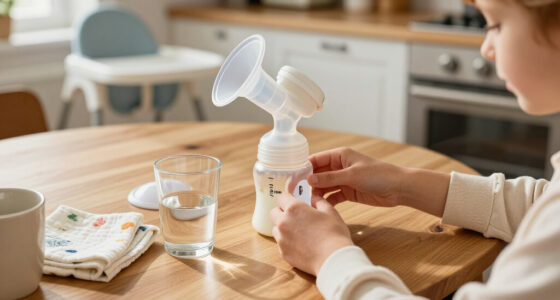
Sterilizing bottles every time isn’t always necessary; regular cleaning with hot soapy water and thorough rinsing usually suffices for daily use. Full sterilization is essential during your baby’s first few months, especially if they’re ill or immunocompromised. Overdoing it can cause unnecessary stress and damage bottles. To strike a good balance, focus on proper cleaning techniques and sterilize only when truly needed. If you want to get the details on when and what’s overkill, keep exploring.
Key Takeaways
- Full sterilization is essential during the first few months when the baby’s immune system is still developing.
- Routine sterilization after every use is unnecessary; proper cleaning with soap and water often suffices.
- Sterilize bottles during illness, if the baby is immunocompromised, or when recommended by a pediatrician.
- Over-sterilizing can damage bottles and create a false sense of security, leading to unnecessary effort.
- Regular cleaning combined with occasional sterilization during vulnerable periods ensures safety without overkill.
As an affiliate, we earn on qualifying purchases.
Do You Really Need to Sterilize Baby Bottles?

Many new parents wonder if they really need to sterilize baby bottles after every use. There are plenty of sterilization myths floating around, leading some to believe that frequent sterilization is always necessary. In reality, thorough cleaning with hot soapy water and proper rinsing often suffices for day-to-day use. Alternative cleaning methods, like dishwasher sterilization or boiling, can effectively reduce germs without overdoing it. The key is understanding when sterilization is truly essential, such as during an illness or for newborns with compromised immune systems. For most healthy babies, regular cleaning combined with proper storage keeps bottles safe. Sterilizing after every single use isn’t always necessary and can sometimes be overkill, giving parents a false sense of security. According to trusted market sources, the emphasis should be on proper cleaning techniques rather than frequent sterilization for routine care. Proper bottle hygiene is crucial to prevent infections without excessive sterilization routines. Knowing when sterilization protocols are necessary can help prevent unnecessary steps and ensure safety without excess effort. Additionally, understanding natural cleaning methods can be a gentle yet effective alternative for maintaining bottle hygiene.
As an affiliate, we earn on qualifying purchases.
When Is It Necessary to Fully Sterilize Baby Bottles?
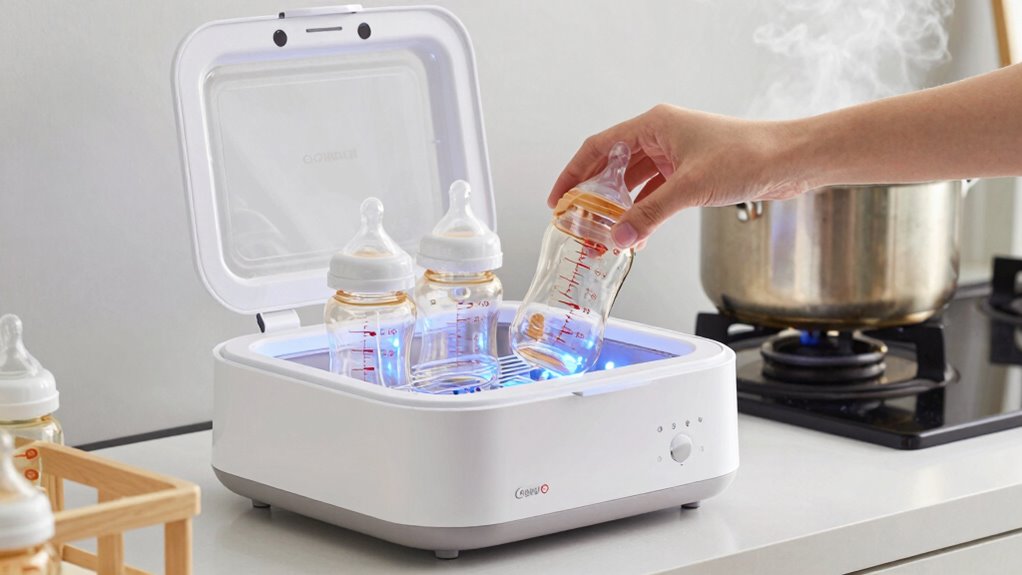
You should fully sterilize baby bottles when your baby is very young, especially within the first few months of life, because their immune systems are still developing. During this time, a higher sterilization frequency is recommended to reduce the risk of infections. Full sterilization guarantees all germs are eliminated, giving your baby a safe feeding environment. As your baby grows and begins eating solids, you can consider alternative cleaning methods like thorough washing with hot water and soap, which may suffice unless specified otherwise by your pediatrician. Remember, full sterilization isn’t necessary every day once their immune system matures, but it’s vital during those early months or if your baby is sick. Always follow guidelines for sterilization frequency to keep your little one safe.
As an affiliate, we earn on qualifying purchases.
How to Clean Baby Bottles Daily : Tips for Busy Parents
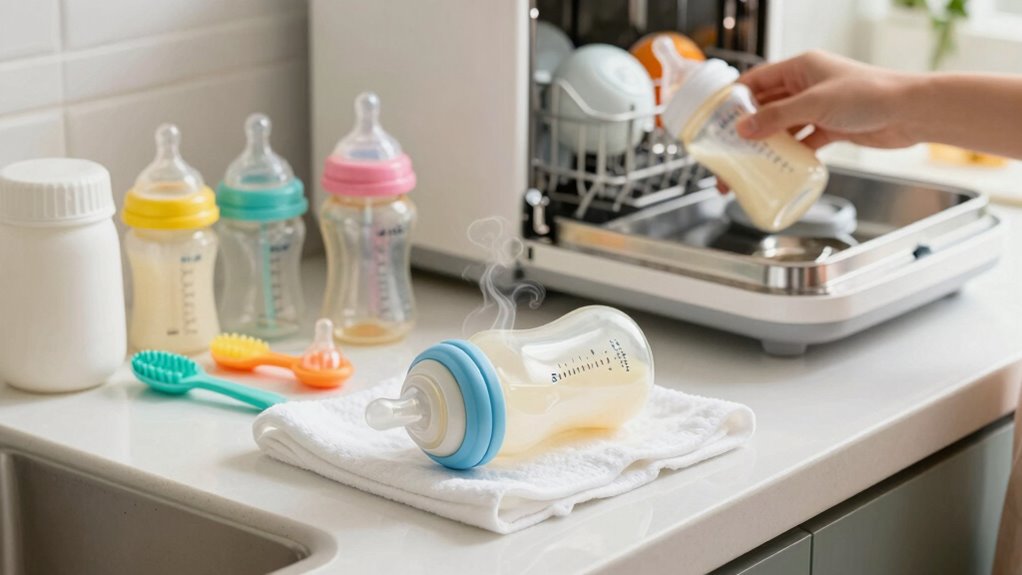
After ensuring your baby bottles are properly sterilized during their early months, maintaining cleanliness becomes a daily priority as your little one grows. To keep bottles safe, establish a simple cleaning schedule. Rinse bottles and accessories immediately after use to prevent residue buildup. Use warm, soapy water and a bottle brush to clean all parts, including bottle accessories like nipples and caps. Dry thoroughly or air dry on a clean rack. Incorporate this routine into your busy day:
| Step | Action | Tips |
|---|---|---|
| Rinse | Immediately rinse after feeding | Prevent residue drying |
| Wash | Use warm, soapy water | Focus on bottle necks |
| Scrub | Use a bottle brush | Clean all accessories |
| Rinse again | Remove soap residue | Essential for safety |
| Dry | Air dry or towel dry | Avoid mold buildup |
Consistent cleaning guarantees safety without overkill. Regularly cleaning practices help maintain your baby’s health and prevent infections, emphasizing that thoroughness is key but excessive sterilization isn’t necessary once bottles are properly sanitized. Additionally, staying informed about regulatory standards ensures your cleaning methods meet safety guidelines.
It’s also helpful to periodically check bottle material for signs of wear that could harbor bacteria.
As an affiliate, we earn on qualifying purchases.
Common Myths About Sterilizing Baby Bottles : What’s Overkill?
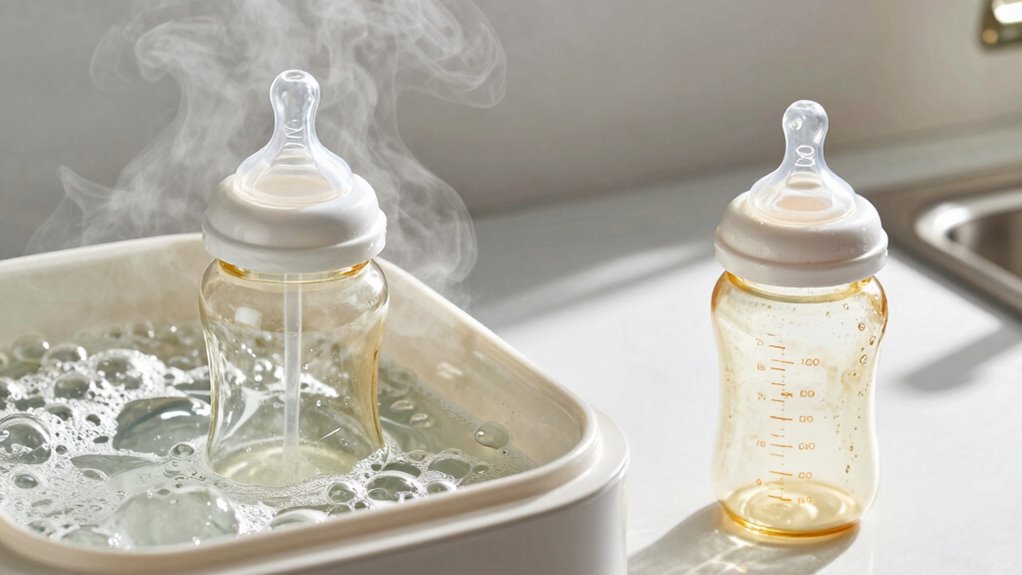
Are all sterilizing methods necessary to keep your baby’s bottles safe? Not necessarily. Many sterilization misconceptions suggest you must sterilize every bottle after each use, but overcleaning concerns can lead to unnecessary effort and even damage to bottles. Sterilization overkill can give you a false sense of security, making you believe that more cleaning equals safer feeding. In reality, thorough washing with soap and water often suffices for daily use. The key is understanding when sterilizing is truly needed—like during illness or for newborns—and when it’s excessive. Overdoing it can also strip bottles of their durability and create stress without adding safety. Focus on effective cleaning practices rather than obsessing over sterilization routines that might be more than what’s required. Proper cleaning techniques are often enough to ensure your baby’s bottles are safe for regular use. Additionally, being aware of website performance metrics can help you stay informed about the best practices for baby bottle safety and sanitation. For example, some sterilization methods may be unnecessarily aggressive for everyday use and can shorten the lifespan of your bottles. Moreover, understanding recommended sterilization frequency can help prevent unnecessary wear and tear on your bottles while maintaining safety standards. Proper knowledge about bottle material care can also extend the usability and safety of your baby bottles.
How to Balance Safety and Practicality in Bottle Cleaning
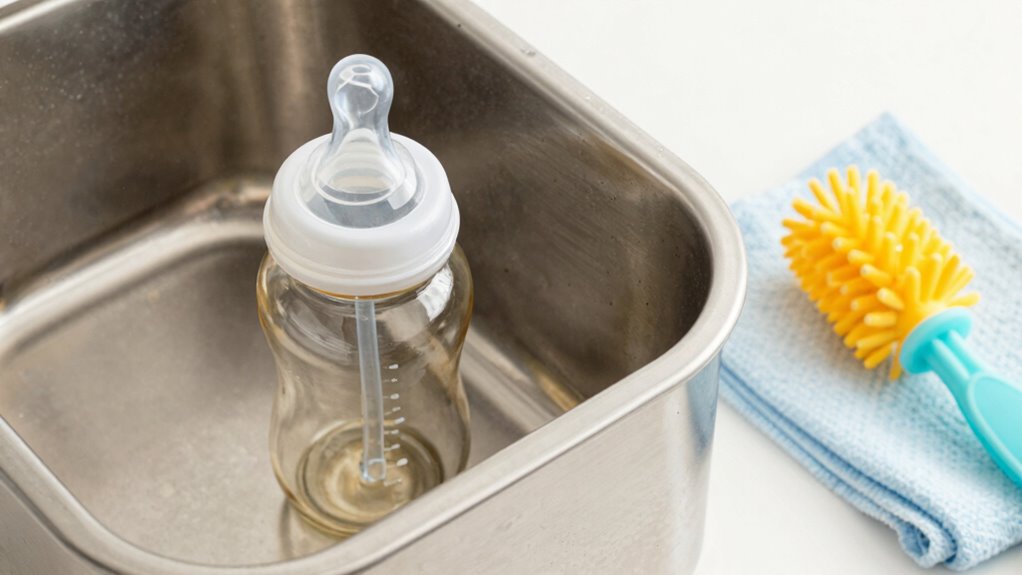
Balancing safety and practicality in bottle cleaning involves finding a routine that keeps your baby protected without causing unnecessary stress or effort. If you opt for chemical sterilization, make certain you’re following instructions carefully to avoid residue. However, natural cleaning methods, like boiling or using vinegar, can be effective and less harsh on your bottles and your baby’s health. Consider your daily needs—if bottles are used frequently, a simple thorough wash with hot water and soap might suffice. Save chemical sterilization for situations where extra safety is needed, such as illness or after hospital visits. Combining natural cleaning for regular use with occasional sterilization keeps the process manageable while maintaining safety. Additionally, understanding early warning signs of breast cancer can help you stay informed about your health and well-being, which is an essential part of overall family health. Regularly monitoring your hearing health can also help detect issues early and ensure your child’s developmental needs are met. Incorporating proper sterilization techniques can further enhance your routine’s effectiveness. To choose the right method, consider the capacity and watt-hours of your sterilization equipment to ensure it meets your household needs. This approach balances practicality with peace of mind, ensuring your baby’s health without overcomplicating your routine.
Frequently Asked Questions
Can I Sterilize Bottles With Boiling Water Instead of a Sterilizer?
Yes, you can sterilize bottles with boiling water instead of a sterilizer. Boiling water is a simple sterilizer alternative that effectively kills germs and bacteria. Just submerge the bottles in boiling water for at least five minutes, making sure all parts are fully covered. This method is safe, affordable, and convenient, especially when you don’t have access to a traditional sterilizer. Just remember to handle hot water carefully.
How Often Should I Replace Bottle Nipples and Accessories?
You should replace bottle nipples and accessories every 2 to 4 months, depending on bottle nipple durability. Regularly inspect for cracks, tears, or discoloration, and replace immediately if you notice any damage. Following an accessory replacement schedule helps prevent choking hazards and guarantees your baby’s safety. Keep in mind, frequent replacements maintain peak hygiene and function, so don’t wait too long before swapping out worn or damaged parts.
Are Microwave Sterilizers as Effective as Traditional Methods?
Imagine a quick magic trick that keeps bottles safe—microwave sterilizers are quite effective and offer fast, convenient sterilization. Their advantages include saving time and space, making them perfect for busy parents. However, you should consider sterilizer safety concerns, like ensuring your bottles and sterilizer are microwave-safe. While they work well, they might not eliminate all bacteria as thoroughly as traditional boiling methods, especially for high-risk situations.
Is It Safe to Reuse Formula Bottles Without Sterilizing?
Reusing formula bottles without sterilizing isn’t entirely safe, especially for newborns and immunocompromised babies. For formula safety, you should clean bottles thoroughly with hot, soapy water and sterilize regularly to eliminate harmful bacteria. Bottle reuse is common, but sterilizing after each use helps prevent infections. If you’re unsure, it’s best to sterilize frequently, particularly during your baby’s first few months, to ensure their health and safety.
What Are the Signs That Sterilization Is No Longer Necessary?
You can skip sterilization when your bottles look and smell clean, and your hygiene habits are diligent. Environmental indicators, like a clean countertop and proper drying, also suggest sterilization isn’t necessary. If you consistently wash bottles thoroughly with soap and hot water, and they’re stored in a dry, sanitary place, sterilizing becomes overkill. Trust your routine, but always stay alert for any signs of contamination or residue.
Conclusion
Ultimately, cleaning your baby’s bottles is like tending a garden—you want to keep it healthy without obsessing over every tiny weed. By understanding when sterilizing is essential and when simple cleaning suffices, you’ll create a safe, stress-free routine. Picture those sparkling bottles on the counter, ready for the next feed, instead of feeling overwhelmed. Trust your instincts, find a balance, and enjoy those precious moments with your little one, confidently knowing you’re doing your best.