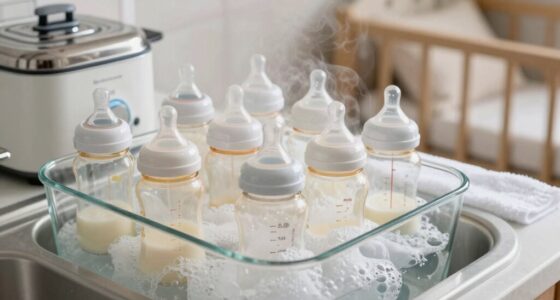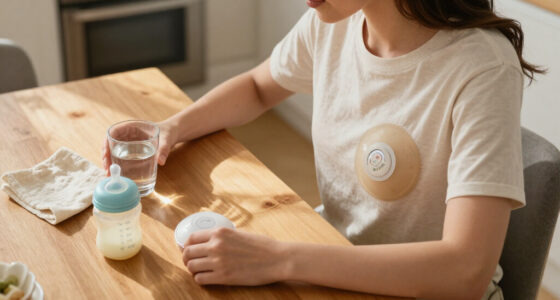

When your baby refuses the bottle, it helps to identify common causes like teething discomfort, fatigue, or preference for breastfeeding. Choosing the right bottle and nipple, ensuring a comfortable feeding position, and creating a calm environment can make a difference. You might also try using pacifiers or gentle suck training to rebuild confidence. If issues persist, consulting a lactation expert or pediatrician can provide targeted support—keep going to discover more effective solutions.

Turn the school run and nap time into listening time
- Thousands of audiobooks, podcasts and originals
- Listen on your phone, tablet or Echo — also offline
- Cancel anytime
Key Takeaways
- Ensure the bottle flow rate matches the baby’s age and sucking strength for smoother feeding.
- Use slow-flow nipples and anti-colic bottles to reduce discomfort and gas, encouraging acceptance.
- Gently observe and correct latch and oral positioning, addressing any oral issues impacting feeding.
- Create a calm, distraction-free environment with proper positioning to promote comfort and focus during feeds.
- Gradually reintroduce bottle feeding with small amounts, using positive associations like pacifiers and professional guidance if needed.
As an affiliate, we earn on qualifying purchases.
Why Is My Baby Refusing the Bottle? Common Causes Explained

If your baby suddenly refuses the bottle, it can be confusing and frustrating. Teething discomfort often makes babies prefer gum massage or cold items over bottle feeding, causing them to reject the nipple. Recent illness may also be a factor; when your little one isn’t feeling well, they might lose interest in feeding altogether. They could associate the bottle with discomfort or simply feel too unwell to suck effectively. Additionally, fatigue from illness or teething pain can make feeding seem less appealing. Changes in routine, strong preferences for breastfeeding, or a sensitive gag reflex can also contribute. Recognizing that these issues are temporary can help you stay patient as your baby’s feeding habits adjust during these challenging times. Incorporating feeding comfort techniques into your routines, such as offering supportive comfort and familiar environments, can help ease this phase. Understanding infant feeding cues can also guide you in responding appropriately to your baby’s needs and signals. Being aware of feeding routines can help in establishing a sense of security and consistency during this period. Sometimes, incorporating gentle water-based soothing methods can also help ease discomfort and encourage feeding.
As an affiliate, we earn on qualifying purchases.
How to Choose the Right Bottle and Nipples for Your Baby

Choosing the right bottle and nipples can make a noticeable difference in your baby’s feeding experience. When choosing nipples, consider the flow rate that matches your baby’s age and sucking strength—slower flows are better for newborns, while faster flows suit older babies. Bottle types also matter: some have anti-colic features to reduce gas and fussiness, while others are designed to mimic breastfeeding more closely. Look for bottles made from safe, BPA-free materials that are easy to clean. Pay attention to nipple shape—orthodontic or wide-neck nipples can promote a natural latch. Experimenting with different combinations of bottle types and choosing nipples suited to your baby’s preferences can help ease bottle refusal and make feeding more comfortable for both of you. Understanding food and feeding mechanics can also help you troubleshoot and select the most effective feeding options. Additionally, selecting bottles with appropriate ventilation can help minimize air intake and reduce colic symptoms. Proper feeding mechanics can also support your baby’s oral development and ensure efficient feeding. Incorporating bottle design features that promote proper airflow can further enhance feeding comfort and reduce discomfort. Being aware of feeding cues can help you recognize your baby’s readiness and improve feeding success.
As an affiliate, we earn on qualifying purchases.
What’s the Best Feeding Position to Comfort Your Baby During Bottle Feeding

Finding the right feeding position can make a significant difference in keeping your baby comfortable and relaxed during bottle feeds. A cozy, semi-upright position often provides better feeding comfort and helps prevent choking or reflux. Sit your baby on your lap facing you, supporting their head and neck with your arm or hand. Keep their body close, with their tummy against yours, to promote bonding and stability. Use positioning tips like elevating their head slightly to reduce gas and discomfort. Avoid feeding in a flat or overly reclined position, which can cause choking or difficulty swallowing. Pay attention to your baby’s cues, adjusting your hold as needed to help them feel secure and at ease throughout the feed. Ensuring proper feeding position can also aid digestion and reduce the risk of reflux. Incorporating proper positioning techniques can further enhance your baby’s comfort and feeding success, especially when considering infant anatomy and feeding dynamics. Being mindful of feeding ergonomics can help prevent strain and make feeding sessions more comfortable for both you and your baby. Additionally, maintaining an appropriate feeding environment can promote focus and relaxation during feeding times.
As an affiliate, we earn on qualifying purchases.
Tips to Create a Calm Environment for Bottle Feeding Success

Creating a calm environment during bottle feeding can help your baby relax and feed more effectively. When you create a soothing environment, your baby feels secure, making it easier to minimize distractions and focus on feeding. Find a quiet space free from noise and interruptions. Dim the lights to promote relaxation and avoid sudden movements that could startle your baby. Use soft, calming sounds or gentle music to set a peaceful tone. Ensure everything you need is within reach so you don’t have to leave the moment. To visualize, imagine:
- A cozy corner with gentle lighting
- Soft background music playing quietly
- An uncluttered space with minimal toys or screens
- Your calm, steady presence guiding the feeding session
These tips help foster a tranquil atmosphere, encouraging successful bottle feeding. Minimalism can also help reduce visual clutter and promote a more peaceful environment. Incorporating sensory stimulation thoughtfully can further enhance your baby’s comfort during feeding. Additionally, using aromatherapy with gentle essential oils like lavender can promote relaxation for both you and your baby. For added safety, ensure that your surroundings are free from potential hazards, especially if using essential oils or diffusers near your baby. Being mindful of environmental factors such as temperature and airflow can also support a calm feeding experience.
How to Re-Introduce the Bottle Using Pacifiers and Suck Training
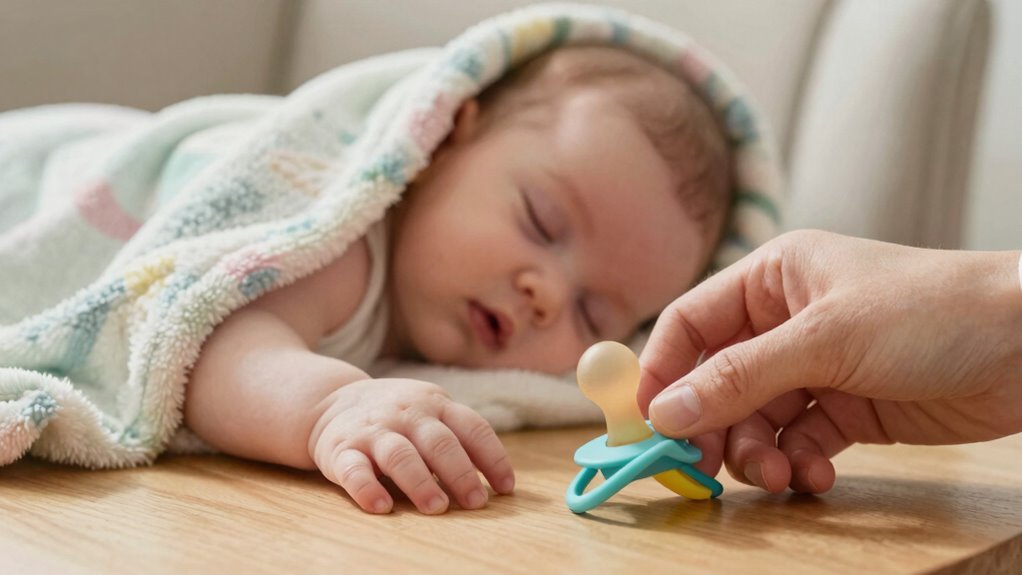
Re-introducing the bottle can be more successful when you incorporate pacifiers and suck training techniques. Start by offering a pacifier to help your baby find comfort with sucking, which can build pacifier comfort and familiarity. Use gentle, consistent cues to encourage your baby to suck on the pacifier, creating a positive association. Once they’re comfortable with the pacifier, begin suck training by offering small amounts of milk in a slow-flow nipple, mimicking the sucking rhythm they’re used to. This approach helps your baby develop the necessary oral muscles and coordination. Patience is key—keep sessions calm and brief, gradually increasing exposure. Over time, your baby will associate sucking with bottle feeding, making re-introduction smoother and more natural. Incorporating proper gear such as a suitable bottle and nipple can also facilitate the transition effectively.
When and How to Seek Help From Lactation Consultants and Pediatricians

Knowing when to seek help from a lactation consultant or pediatrician can make a significant difference in resolving bottle refusal issues. If your baby shows persistent feeding difficulties, seems distressed during bottle attempts, or isn’t gaining weight, it’s time to get professional advice. Reach out for lactation support or pediatric guidance to identify underlying causes and tailored solutions. Additionally, understanding feeding challenges can help you better communicate your concerns and receive targeted assistance from specialists. Imagine a caring expert gently observing your baby’s latch, checking for oral issues, or suggesting alternative feeding strategies. You might also find yourself discussing your feeding routine, exploring nipple preferences, or troubleshooting milk flow.
Seek professional help if your baby has ongoing feeding issues or weight concerns.
- Your baby struggling despite repeated attempts
- Signs of discomfort or pain during feeding
- Poor weight gain or dehydration concerns
- Persistent refusal over days or weeks
Frequently Asked Questions
How Long Should I Wait Before Trying to Reintroduce the Bottle?
You should wait about 2 to 3 days before reintroducing the bottle to give your baby time to adjust. During this period, maintain a consistent feeding schedule and observe your baby’s nipple preference. If they refuse the bottle, try different nipples or feeding positions. Patience is key—reintroducing gradually helps your baby develop comfort and trust, making bottle acceptance smoother when you try again.
Can I Use Breast Milk in a Bottle With Different Nipples?
Yes, you can use breast milk in bottles with different nipples, but make certain the nipple types match your baby’s preferences, whether slow flow or variable flow. Always sterilize the bottles thoroughly before use to prevent bacteria. Switching nipples might affect your baby’s latch or sucking pattern, so observe closely. If your baby refuses the bottle, try different nipple types and make sure proper sterilization to make feeding smoother.
Are There Specific Signs My Baby Is Ready to Take a Bottle?
Yes, your baby is ready for a bottle when they show hunger cues like rooting or lip smacking, and their sucking reflex becomes strong enough for bottle feeding. You’ll notice they’re interested in feeding and can comfortably latch onto the nipple. When these signs appear, gently offer a bottle, ensuring your baby is calm and attentive. This helps encourage successful bottle acceptance and minimizes refusal.
How Do I Handle a Baby Who Refuses the Bottle After Multiple Attempts?
Oh, the irony of bottle refusal—your baby suddenly becomes picky after countless attempts! When faced with breastfeeding challenges, stay calm and try different bottle strategies like changing nipple flow or temperature. Offer the bottle when your baby is calm, not hungry or overtired. Patience and consistency matter; sometimes, a little break helps. Keep trying, and remember, persistence often pays off in bottle refusal strategies.
What Are Alternative Feeding Options if My Baby Consistently Refuses Bottles?
If your baby consistently refuses bottles, consider alternative feeding options like cup feeding, syringe feeding, or using a spoon to deliver milk. These methods can help overcome breastfeeding challenges and make sure your baby still gets nourishment. Focus on gentle, calm bottle refusal strategies, such as offering a different nipple or feeding in a quiet environment. Stay patient and flexible, and consult a lactation expert for personalized guidance tailored to your baby’s needs.
Conclusion
If your baby keeps refusing the bottle, don’t lose hope. Think of it like a puzzle—you need to find the right piece, whether it’s switching bottles, adjusting feeding positions, or creating a calm environment. Often, small tweaks make a big difference, much like tuning a musical instrument. By trying these fixes and seeking expert advice when needed, you’ll help your baby develop confidence with bottle feeding and turn this challenge into a success.
Halloween Picks
halloween
As an affiliate, we earn on qualifying purchases.