Many believe cold water is safe for formula, but that’s a myth. To guarantee safety, you need water heated to around 70°C (158°F) to kill harmful bacteria, then cooled slightly before mixing. Using the right temperature preserves nutrients and prevents bacteria growth, protecting your baby’s health. If you get the temperature wrong, you risk contamination or nutrient loss. Stay tuned to learn how to prepare formula safely and confidently.
Key Takeaways
- Using water at around 70°C (158°F) effectively kills bacteria without damaging nutrients, ensuring safe formula preparation.
- Cold or room temperature water may harbor bacteria and reduce nutrient stability, increasing health risks.
- Properly heated water helps maintain formula’s nutritional content and digestibility, supporting infant health.
- Always verify water temperature with a thermometer to prevent scalding and ensure safety.
- Following manufacturer guidelines for water temperature optimizes formula safety, nutrition, and minimizes bacterial growth.

BESTOYARD Temperature Meter for Food Use – Accurate Temperature Measurement for Baby Milk Formula Household Cooking and Milk Heating 7.28-Inch Stainless Steel & Abs
Precise Temperature Measurement: The electronic milk thermometer accurate readings for milk and other liquids, making it an essential…
As an affiliate, we earn on qualifying purchases.
As an affiliate, we earn on qualifying purchases.
What Is the Correct Water Temperature for Making Baby Formula?

To guarantee your baby’s safety, it’s important to use the correct water temperature when preparing formula. Water safety is vital because it helps eliminate harmful bacteria that may be present. According to formula guidelines, the ideal water temperature is around 70°C (158°F) to ensure any bacteria are killed, especially if you’re using powdered formula. Using water that’s too hot can scald your baby’s mouth, while water that’s too cool might not effectively eliminate bacteria. Always follow manufacturer instructions for mixing and temperature. Pre-warming water to the recommended temperature ensures your formula is safe and nutritious. Proper water temperature is crucial because it directly impacts the microbiological safety of the formula and your baby’s health. It’s also important to note that microbiological safety can be compromised if the water temperature isn’t correctly maintained during preparation. To further prevent contamination, proper handling of the formula and utensils is essential. Additionally, maintaining the correct water temperature helps preserve the nutrients in the formula and prevents bacterial growth during initial preparation. Maintaining the correct temperature also supports the nutritional integrity of the formula, ensuring your baby receives the full benefits of their nourishment. Remember, proper water temperature not only follows formula guidelines but also protects your baby from potential health risks.

Water Warmer, HEYVALUE Baby Bottle Warmer, Formula Maker with Night Light, 4 Temperature Control & 72H Keep Warm, Detachable Tank, Instantly Dispenses Warm Water, Feed Baby More Easier and Healthier
𝗠𝗮𝗸𝗲 𝗕𝗼𝘁𝘁𝗹𝗲 𝗜𝗻𝘀𝘁𝗮𝗻𝘁𝗹𝘆: HEYVALUE bottle warmer serves perfect temp bottle quickly in just 25 seconds! Simply dispense, scoop…
As an affiliate, we earn on qualifying purchases.
As an affiliate, we earn on qualifying purchases.
Why Does Water Temperature Matter for Baby Formula Safety?

Using the right water temperature is vital because it kills harmful bacteria that can be present in the formula. It also prevents bacteria from growing after you prepare the bottle. Plus, proper temperature helps guarantee your baby gets the full, safe nutrition from each feeding. Additionally, maintaining the correct temperature ensures the formula’s color and consistency remain optimal, enhancing the overall feeding experience with accurate temperature control. Ensuring the right temperature can also help reduce the presence of microplastics in dust, which may be a concern in some environments.
Kills Harmful Bacteria
Water temperature plays a critical role in killing harmful bacteria that can be present in formula powder. When you use the right water temperature, you help guarantee formula safety by effectively eliminating bacteria that might cause illness. Hot water, ideally around 70°C (158°F), is powerful enough to destroy bacteria without damaging the nutrients in the formula. Using water that’s too cold can leave bacteria alive, increasing the risk of infections. It’s essential to follow proper temperature guidelines to protect your baby’s health. By paying attention to water temperature during prep, you reduce the chance of harmful bacteria surviving in the formula, making feeding safer. Proper temperature control also helps prevent the growth of bacteria after preparation.
Prevents Bacterial Growth
When you prepare formula at the correct temperature, you prevent bacteria from multiplying and growing in the feed. Proper water temperature diminishes the risk of water contamination, which can introduce harmful bacteria into the formula. If the water is too cool, bacteria may survive and multiply, increasing the chance of illness. On the other hand, water that’s too hot can alter the formula’s consistency, making it difficult to mix properly and potentially affecting how your baby absorbs nutrients. Maintaining the right temperature ensures the formula remains safe and free from bacterial growth. Temperature control is an important factor in ensuring your baby’s formula stays safe and healthy. This helps protect your baby from infections caused by contaminated feed, giving you peace of mind that your little one is consuming a safe, healthy feed each time. Properly monitoring water temperature can also prevent damage to the nutrients in the formula, ensuring your baby receives the full nutritional benefit. Additionally, understanding proper water temperature can help you avoid unnecessary nutrient degradation caused by excessive heat, which can impact the nutritional quality of the formula. Ensuring the correct temperature can also help maintain the stability of nutrients, preserving vital vitamins and minerals in the feed.
Ensures Proper Nutrition
Maintaining the correct water temperature not only prevents bacterial growth but also guarantees your baby receives proper nutrition. When you prepare formula at the right temperature, you help preserve nutrient retention, ensuring your little one gets the essential vitamins and minerals. Proper formula storage is crucial because it keeps the powder fresh and prevents contamination, which can compromise nutrition. Using water that’s too hot or too cold can degrade nutrients or make the formula less digestible. By following safe water temperature guidelines, you ensure the formula remains nutrient-rich and safe for your baby’s developing system. Additionally, appropriate water temperature plays a vital role in maintaining the formula’s nutritional quality during preparation. This careful approach supports your baby’s growth and health, giving you peace of mind that you’re providing the best nutritional foundation possible. Ensuring proper hygiene practices during formula preparation further helps prevent contamination and preserves the formula’s nutritional integrity. Being mindful of temperature control can also help prevent the formation of harmful bacteria and ensure your baby’s safety. Properly monitoring water temperature is essential to avoid nutrient loss and ensure safe feeding. Moreover, understanding how water quality impacts formula safety can help you make informed choices in your feeding routine.

Dr. Brown's All-in-One Sterilizer and Dryer for Baby Bottles, Parts and Other Newborn Essentials
BABY BOTTLE STERILIZER AND DRYER. Sterilize up to six Narrow or Wide-Neck baby bottles at once, plus bottle…
As an affiliate, we earn on qualifying purchases.
As an affiliate, we earn on qualifying purchases.
What Are the Risks of Using Cold or Room Temperature Water?
Using cold or room temperature water can disrupt nutrient stability and reduce the formula’s nutritional value. It also increases the risk of bacterial growth, which can harm your baby’s health. Additionally, mixing the formula may become more difficult, leading to uneven consistency. Properly heated water can help optimize nutrient preservation and ensure a safer feeding environment formula safety. Furthermore, using appropriately heated water supports infant digestion and overall health. Inadequate heating may also affect the bacterial growth risk, making proper temperature control essential for your baby’s safety.
Nutrient Breakdown Disruption
Adding cold or room temperature water to your formula can slow down the nutrient breakdown process, but it also risks compromising the formula’s nutritional integrity. Proper temperature regulation is essential to preserve crucial nutrients like vitamins and minerals that are sensitive to temperature changes. Using water that’s too cold may hinder the formula’s ability to deliver the full nutritional benefit your baby needs, affecting hydration safety. Additionally, inconsistent temperatures can interfere with digestion and absorption. While cold water might seem like a good way to avoid overheating during prep, it can disrupt the delicate balance of nutrients, reducing their effectiveness. Ensuring the right water temperature helps maintain nutrient stability, supporting your baby’s growth and development while keeping hydration safety a priority.
Bacterial Growth Risks
While temperature control is important for preserving nutrients, it also plays a key role in preventing bacterial growth. Using cold or room temperature water can unknowingly increase your baby’s bacterial risks, especially if water isn’t properly sterilized. Temperature myths often lead caregivers to believe that cooler water is safer, but bacteria thrive in these conditions if not handled correctly. This can result in harmful bacteria multiplying rapidly, risking infections. To visualize this, consider the following:
| Safe Practice | Bacterial Risks of Cold Water |
|---|---|
| Proper sterilization | Bacteria can grow if water is contaminated |
| Boiling water | Reduces bacterial risks |
| Use fresh water | Prevents bacterial buildup |
| Store water properly | Limits bacterial growth |
Protect your baby by understanding bacterial risks and avoiding temperature myths that compromise safety.
Formula Mixing Challenges
Mixing formula with cold or room temperature water can pose significant risks if you’re not careful. Using water that’s too cold may prevent the formula from dissolving properly, leading to uneven mixing and potential feeding difficulties. It can also result in inconsistent nutrient intake, affecting your baby’s growth. Proper feeding techniques involve warming water to the recommended temperature to ensure safe and thorough mixing. Additionally, inadequate formula storage can compromise water quality, increasing bacterial growth risks, especially if stored at room temperature. Always follow manufacturer guidelines for mixing and storage to prevent contamination or bacterial buildup. When preparing formula, using appropriately heated water helps ensure your baby receives a safe, properly mixed feed, reducing health risks associated with improper preparation.

Dr. Brown's Baby Formula Mixing Pitcher with Adjustable Stopper, Locking Lid & No Drip Spout, Black, BPA Free, 36oz, 1 Pack
BABY FORMULA MIXER. This formula pitcher features a unique blade to quickly dissolve and blend up to 36…
As an affiliate, we earn on qualifying purchases.
As an affiliate, we earn on qualifying purchases.
How Hot Should the Water Be to Kill Harmful Bacteria?

To effectively kill harmful bacteria, water needs to reach a temperature of at least 140°F (60°C). This temperature is essential for bacterial control in formula preparation. Keep in mind that higher temperatures increase bacterial kill rates but also pose a risk of burns. Use a reliable thermometer to verify water temperature before mixing. Here’s a quick visual:
| Water Temperature | Bacterial Control | Risk Level |
|---|---|---|
| 130°F (54°C) | Limited | Moderate burns |
| 140°F (60°C) | Effective | Burns possible |
| 150°F (65°C) | Maximum | Serious burns |
Ensure water is hot enough to kill bacteria but safe to handle. Proper temperature management is key for safer formula preparation.
How to Properly Prepare Formula Using Safe Water Temperature
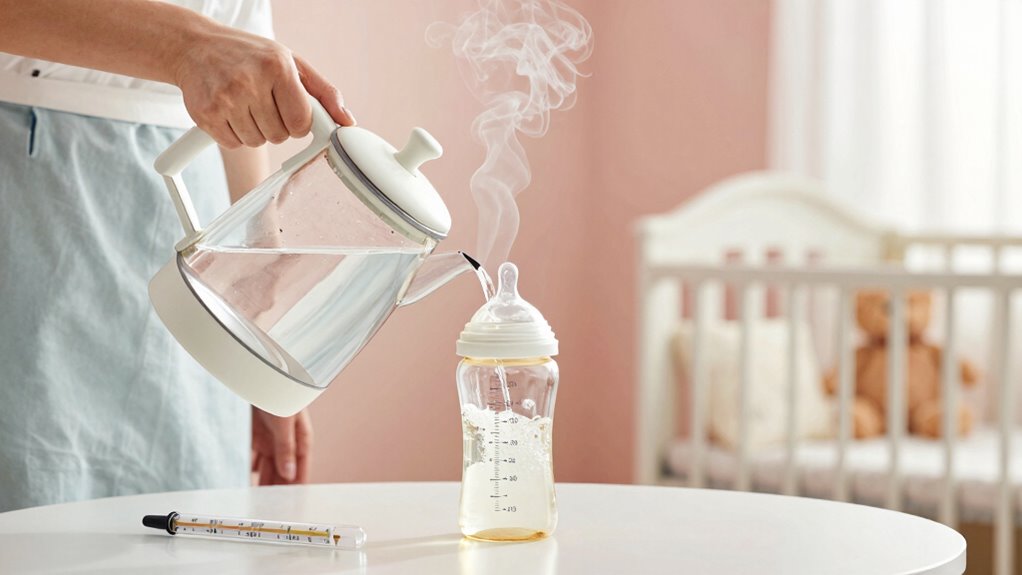
Start by boiling water to kill any bacteria, then let it cool to the appropriate temperature before mixing. Be sure to carefully check the water’s temperature to avoid burning your baby’s mouth. Always store prepared formula properly to keep it safe for feeding.
Boil Water First
Before preparing formula, it’s crucial to boil water to eliminate harmful bacteria and guarantee safety. Boiling ensures water safety and helps achieve consistent formula results. Once boiled, let the water cool to the recommended temperature before mixing, maintaining formula consistency and safety. Keep these tips in mind:
- Use freshly boiled water for each feeding
- Allow water to cool to about 70°C (158°F) before mixing
- Store boiled water in a clean, covered container
- Don’t reboil water multiple times to prevent contamination
- Always check water temperature before feeding to ensure safety and comfort
Following these steps helps you prepare safe, well-mixed formula, minimizing risks and ensuring your baby’s health. Proper boiling and cooling are essential parts of safe formula preparation.
Check Temperature Carefully
After boiling and cooling the water to the proper temperature, it’s important to check that it’s just right before mixing it with formula powder. Making sure the correct temperature helps maintain pediatric hydration and achieves the right formula consistency. To do this accurately, use a reliable thermometer and test a few drops on your wrist—should feel warm, not hot. Here’s a quick guide:
| Temperature Range | Feel Test | Purpose |
|---|---|---|
| 120°F (49°C) | Slight warmth on wrist | Safety and ideal hydration |
| 130°F (54°C) | Warm but comfortable | Bacteria reduction |
| 140°F (60°C) | Hot, but tolerable | Dissolves powder properly |
This step ensures safe, effective feeding for your baby.
Use Safe Storage Methods
Using safe storage methods is essential to guarantee the formula remains clean and free from harmful bacteria. Proper formula storage prevents contamination and ensures safe feeding. Always store prepared formula in the refrigerator at 40°F (4°C) or below, and use it within 24 hours. When handling water, sterilize it properly before mixing to eliminate bacteria. Keep bottles and nipples sterile by washing them thoroughly and boiling or using a sterilizer. Label stored formula with the date and time prepared to prevent keeping it too long. Avoid leaving formula out at room temperature, which promotes bacteria growth. Remember these tips for safe formula storage:
- Store prepared formula in the refrigerator promptly
- Use sterilized water for mixing
- Keep bottles and nipples clean and sterilized
- Label stored formula with preparation date
- Discard leftover formula after 24 hours
Common Mistakes When Preparing Baby Formula and How to Avoid Them
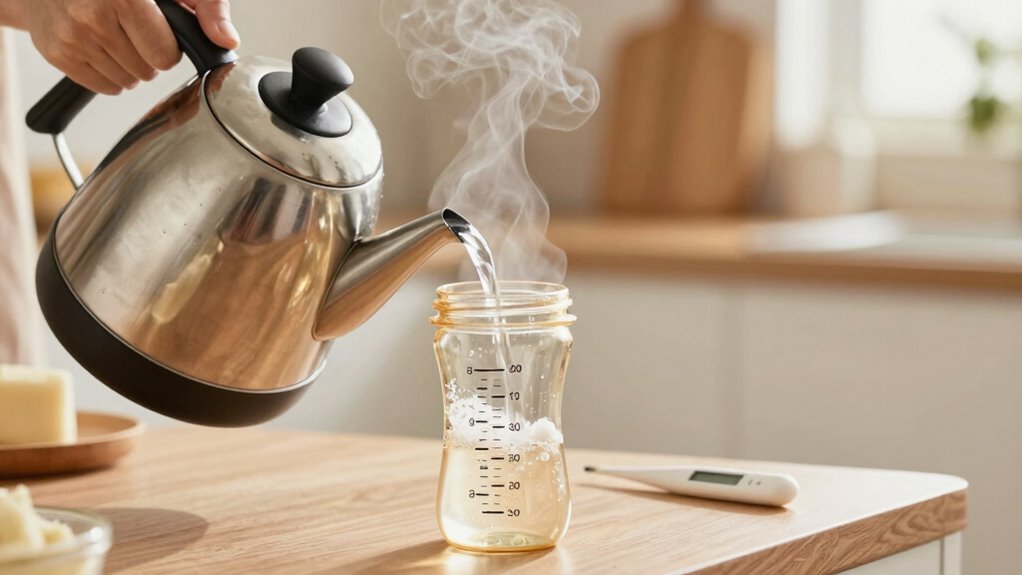
One common mistake parents make when preparing baby formula is not measuring ingredients accurately, which can lead to unsafe feeding. Proper formula mixing is essential to guarantee your baby gets the right nutrition and avoid over-concentrated or diluted milk. Another mistake is improper formula storage; mixing formula and leaving it out too long can promote bacterial growth. Always prepare formula fresh or store it correctly in a clean, airtight container in the fridge if needed. Avoid using excess powder or water, as this can impact your baby’s health. Follow the manufacturer’s instructions precisely, and never guess measurements. By paying attention to formula mixing and storage, you help assure your baby’s safety and nutritional needs are met effectively.
Does Water Temperature Affect the Nutritional Quality of Formula?

The temperature of water used to prepare baby formula can directly impact its nutritional quality. Using water that’s too hot or too cold may compromise formula nutrition or water safety. Hot water can degrade certain nutrients like vitamins, reducing the formula’s overall nutritional value. Conversely, cold water might not effectively kill bacteria, risking contamination. To guarantee ideal formula nutrition and water safety, consider these points:
- Use water at the recommended temperature for mixing
- Avoid boiling water repeatedly, which can break down nutrients
- Do not use water that’s too hot to prevent nutrient loss
- Ensure water is clean and safe before preparation
- Follow guidelines to preserve maximum formula nutrition
Proper water temperature helps maintain essential nutrients and keeps water safe for your baby.
How to Quickly Heat Water Safely for Baby Formula
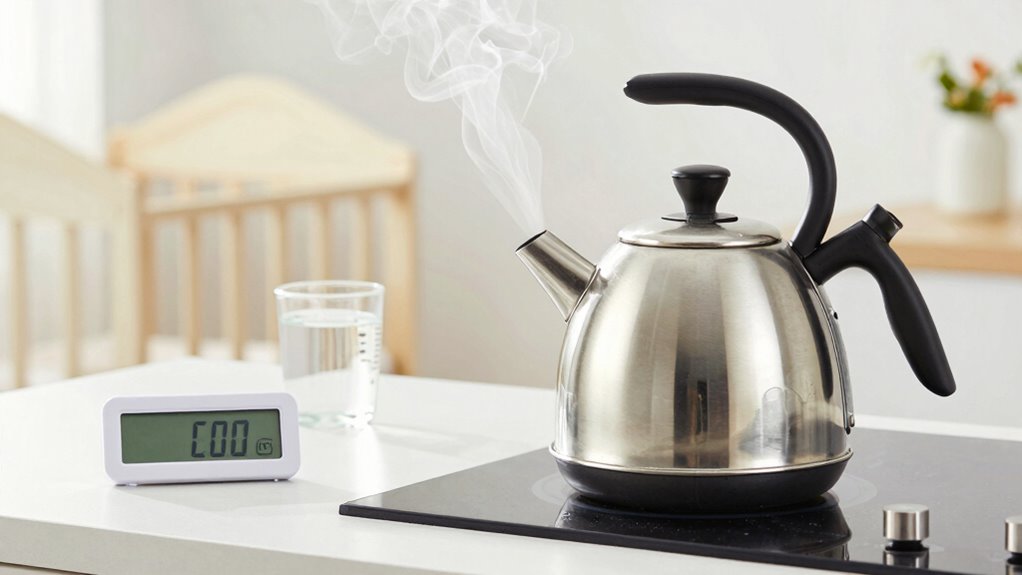
To quickly heat water safely for baby formula, start by pouring the required amount into a clean, microwave-safe container or a pot. Use water heating methods that minimize risks, such as microwaving in short intervals or boiling on the stove. Always check the water temperature before mixing with formula to ensure safety. To help you gauge temperature accurately, consider this table:
| Method | Time/Steps | Temperature Check |
|---|---|---|
| Microwave | 15-30 seconds, stir, check | Use a thermometer or wrist test |
| Boiling | 1-2 minutes, then cool slightly | Ensure water is 120°F (49°C) |
| Hot tap water | Run tap until hot, then measure | Use a thermometer |
| Double boiler | Heat gently, stir constantly | Test before feeding |
Proper water heating is key to formula safety and preserving nutrients.
What If You Accidentally Use the Wrong Water Temperature?

If you accidentally use the wrong water temperature when preparing baby formula, it can affect both safety and nutrition. Using water that’s too hot or too cold may compromise formula safety and reduce its effectiveness. Hot water might scald your baby’s mouth or destroy beneficial nutrients, while cold water can lead to bacteria growth if the formula isn’t mixed properly. To minimize risks, always double-check the water temperature before mixing. If you notice you’ve used the wrong temperature, discard the formula and prepare a fresh batch. Remember, maintaining proper water temperature is key to ensuring formula safety and preventing potential health issues.
- Hot water can scald your baby’s mouth
- Cold water may harbor bacteria
- Nutrients can be destroyed by excessive heat
- Incorrect temperature affects digestibility
- Always verify water temperature before mixing
Expert Tips and Guidelines for Safe Baby Formula Preparation

Preparing baby formula safely requires following clear guidelines to protect your child’s health. Always use water at the recommended temperature—around 70°C (158°F)—to kill bacteria and ensure formula safety. Let the water cool for a few minutes before mixing with the powder, avoiding high temperatures that can degrade nutrients. Check the product instructions for specific mixing ratios and temperature guidelines. Store prepared formula in the fridge and use it within 24 hours. To help you remember, here’s a quick reference:
| Step | Tip | Why it Matters |
|---|---|---|
| 1 | Use water at 70°C (158°F) | Kills bacteria, guarantees safety |
| 2 | Cool water before mixing | Preserves nutrients |
| 3 | Follow product instructions | Ensures proper nutrition |
| 4 | Store in fridge, use within 24h | Prevents bacterial growth |
Following these tips helps maintain formula safety and your baby’s health.
Frequently Asked Questions
Can I Reuse Leftover Formula Safely?
You should avoid reusing leftover formula to guarantee safety. Proper formula storage is key; discard any unused formula after a single feeding. Bacteria can grow quickly in leftover formula, risking your baby’s health. Always prepare fresh formula for each feeding and follow safe storage guidelines. Leftover safety isn’t worth the risk, so it’s best to toss it out rather than reusing it.
Is Bottled Water Safer Than Tap Water for Formula?
Think of water as a delicate dance partner; you want it to be safe and reliable. Bottled water often symbolizes purity and convenience, but tap safety can match that if your local water quality is good. You should check your tap’s safety standards and opt for bottled water if your tap water isn’t tested regularly. Both options can be safe for formula prep when you follow proper hygiene and storage practices.
How Long Can Prepared Formula Be Stored Safely?
You should store prepared formula in the refrigerator for no more than 24 hours, regardless of water temperature used. Always keep it covered and cold to prevent bacteria growth. If you’ve left it out at room temperature, discard it after two hours. Proper storage duration is vital for safety. Avoid reheating or refreezing, and always check the formula before feeding to make sure it remains fresh and safe for your baby.
Does Formula Temperature Affect Digestion?
You might wonder if formula temperature affects digestion, but it doesn’t substantially. Whether the formula is warm or room temperature, your baby’s digestion stays the same. Focus on maintaining proper feeding schedules and safe formula storage. Serving formula at a comfortable temperature can make feeding easier and more pleasant for your baby, but it won’t impact how well they digest the nutrients. Keep everything clean and stored correctly for overall safety.
Can I Heat Formula in the Microwave Safely?
You shouldn’t microwave formula because of temperature safety concerns. Microwave heating can create hot spots, which might scald your baby’s mouth or throat. Instead, use warm water and gently swirl the formula bottle to evenly distribute the heat. Always test the temperature before feeding. This approach guarantees the formula remains safe and at the right temperature, reducing the risk of burns and maintaining nutritional integrity.
Conclusion
Remember, when it comes to preparing baby formula, safety comes first—don’t cut corners with water temperature. Use the right temperature to kill germs and preserve nutrients, ensuring your little one’s health. Always follow expert guidelines and trust that a little extra effort now can prevent big problems later. As the saying goes, “Better safe than sorry”—your baby’s well-being is worth every cautious step.