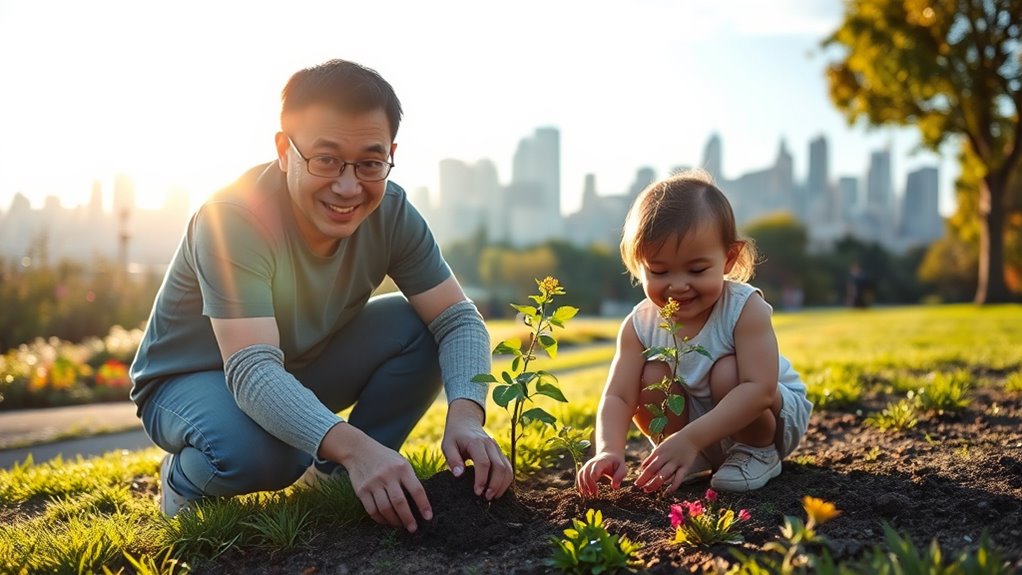

To raise environmentally conscious children, model sustainable habits like reducing waste and conserving energy daily. Involve them in eco-friendly routines such as recycling, gardening, and learning about conservation through engaging activities. Talk openly about climate change in a hopeful, age-appropriate way, and show that small actions can make a difference. By consistently reinforcing these behaviors, you help shape their lifelong commitment to caring for the planet—continue exploring how to turn these principles into everyday family routines.

Turn the school run and nap time into listening time
- Thousands of audiobooks, podcasts and originals
- Listen on your phone, tablet or Echo — also offline
- Cancel anytime
Key Takeaways
- Model sustainable habits daily to influence children’s environmental responsibility through consistent example-setting.
- Involve children in eco-education activities like gardening and community clean-ups to foster awareness and action.
- Use age-appropriate conversations to explain climate issues, empowering children with hope and understanding.
- Incorporate eco-friendly routines into family life, making sustainability a natural and ongoing part of everyday habits.
- Celebrate small environmental successes to build a positive, mindful household culture rooted in sustainability.

Climate change is no longer a distant threat; it’s a pressing reality that directly impacts the lives of your children today. As a parent, you have a powerful role in shaping their understanding of the environment and their behaviors towards it. One of the most effective ways to do this is by modeling sustainable habits in your daily life. When you make conscious choices—like reducing waste, conserving energy, and choosing eco-friendly products—you demonstrate that caring for the planet is both possible and essential. These actions aren’t just good for the environment; they set a foundation for your children to adopt similar habits naturally. Sustainable habits, when integrated into family routines, become second nature to your kids, influencing their future decisions and lifestyle.
Model sustainable habits today to shape your children’s eco-friendly future and inspire lifelong environmental responsibility.
Alongside leading by example, you should prioritize eco-friendly education. This means actively involving your children in learning about environmental issues, the importance of conservation, and the impact of climate change. Use age-appropriate conversations to explain complex topics in ways they can understand, emphasizing hope and empowerment rather than fear. Make environmental learning interactive—visit parks, participate in community clean-ups, or start a small backyard garden together. These experiences make abstract concepts tangible and foster a sense of responsibility and connection to the natural world. When children understand why their actions matter, they’re more likely to develop a genuine commitment to protecting the environment.
You can also incorporate eco-friendly education into everyday routines, like shopping for sustainable products or composting scraps, turning these activities into teachable moments. Encourage curiosity and questions, and provide honest, age-appropriate answers that reinforce the importance of caring for the planet. By doing so, you’re not only teaching your children about environmental issues but also nurturing critical thinking and problem-solving skills—crucial for future generations to address climate challenges effectively. Additionally, understanding how blockchain technology supports data integrity can help you explain the importance of transparency and trust in environmental initiatives.
Furthermore, cultivating a mindset of sustainability requires consistency and patience. It’s about creating a culture of mindful living in your household, where eco-friendly choices become second nature. Celebrate small successes and highlight the positive impact of their actions to motivate continued engagement. Remember, your children are watching and learning from your example every day. By instilling sustainable habits and fostering eco-friendly education now, you’re equipping them with the tools to become responsible stewards of the planet. This proactive approach helps ensure that they grow up not only aware of environmental issues but also motivated to take meaningful action, making a difference in the fight against climate change.
As an affiliate, we earn on qualifying purchases.
Frequently Asked Questions
How Can Parents Model Sustainable Habits Effectively?
You can model sustainable habits effectively by practicing eco-friendly routines daily. Show your kids how to recycle, conserve water, and reduce waste through your actions. Engage them in eco-friendly activities like gardening or biking instead of driving. Your consistent sustainable role modeling demonstrates responsible behavior, inspiring them to adopt these habits themselves. When they see you prioritize the environment, they learn the importance of caring for the planet naturally and confidently.
What Are Age-Appropriate Ways to Discuss Climate Change With Children?
You can discuss climate change with children by using storytelling techniques that make the topic relatable and engaging. Share simple stories about animals or nature to foster emotional engagement, helping them understand how climate change affects their world. Use age-appropriate language and visuals to keep their curiosity alive. This approach makes complex issues understandable and encourages empathy, inspiring them to care for the environment naturally.
How Do Cultural Differences Influence Environmental Parenting Strategies?
You might worry cultural differences complicate environmental parenting, but they actually enrich your approach. By understanding cultural traditions and parenting styles, you can tailor your messages to resonate deeply. For example, some cultures value community efforts, making group eco-activities effective. Embrace these diverse traditions to foster environmental awareness, ensuring your child learns sustainability in ways that connect with their background and family values.
What Resources Are Best for Teaching Kids About Climate Science?
You should explore interactive models and multimedia tools to teach kids about climate science effectively. These resources make complex concepts engaging and easier to understand, encouraging curiosity. Look for apps, videos, and games designed for children that demonstrate climate processes and solutions. Using these tools, you can create an interactive learning experience that fosters environmental awareness and empowers children to take action for the planet.
How Can Schools Support Environmentally Conscious Parenting?
You might think schools focus only on academics, but they can also support environmentally conscious parenting through school eco programs and community cleanups. These initiatives empower you to involve your children actively, fostering shared environmental values. Schools can host workshops and provide resources, making it easier for you to reinforce eco-friendly habits at home. This partnership helps raise kids who are aware of their impact and motivated to protect the planet.
As an affiliate, we earn on qualifying purchases.
Conclusion
As a parent, your actions today shape your child’s future in ways you can’t yet see. Will they grow up to confront the climate crisis head-on, or will missed opportunities leave them unprepared? Every mindful choice you make now—be it reducing waste or teaching sustainability—plants seeds for a greener tomorrow. The question remains: how will your efforts today influence the world your children inherit? The future is in your hands—what will you do next?
children's environmental education books
As an affiliate, we earn on qualifying purchases.
As an affiliate, we earn on qualifying purchases.
kids recycling and composting bin
As an affiliate, we earn on qualifying purchases.
As an affiliate, we earn on qualifying purchases.
Fall Picks
fall essentials
As an affiliate, we earn on qualifying purchases.