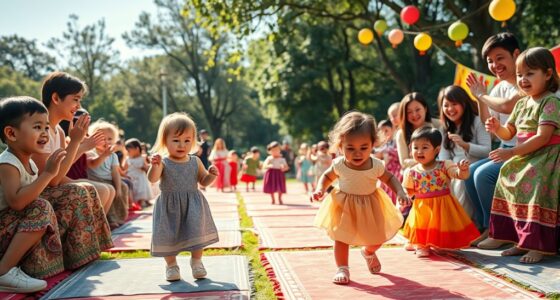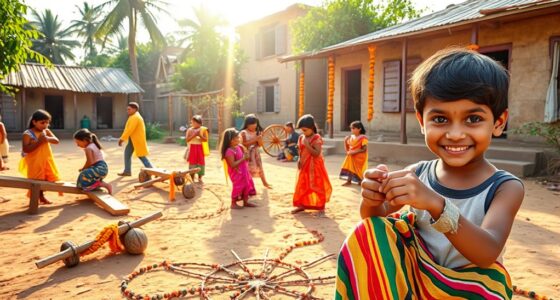
Celebrating cultural festivals with children is a lively way to teach them about heritage and values through hands-on activities like dressing in traditional costumes, tasting authentic foods, and sharing stories. When you involve kids in preparations and uncover the stories behind each tradition, you foster curiosity, respect, and a sense of community. These experiences create lasting memories and deepen their understanding of cultural significance. Keep exploring how each activity brings your child closer to their cultural roots.
Key Takeaways
- Involve children in traditional costumes and storytelling to foster cultural understanding and emotional connection.
- Prepare and taste authentic festival foods to create immersive culinary experiences and appreciation for cultural traditions.
- Encourage active participation in festival preparations like decorating and dancing to build pride and community belonging.
- Share stories and lessons behind festivals to teach moral values and deepen cultural awareness.
- Use festivals as opportunities to promote respect, curiosity, and appreciation for diverse heritages from a young age.
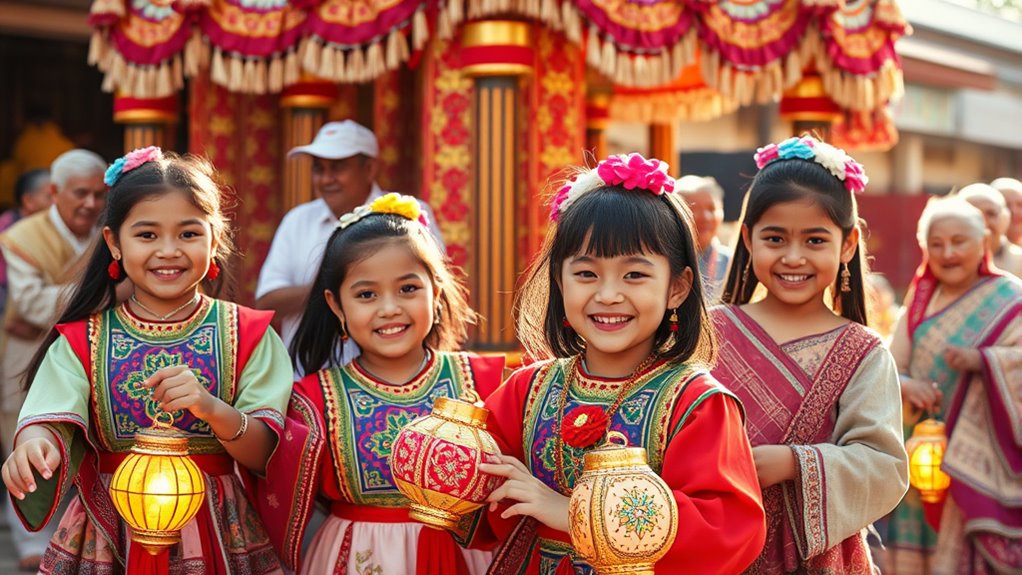
Celebrating cultural festivals with children offers a wonderful opportunity to introduce them to diverse traditions and customs. When you involve your kids in these celebrations, you help them appreciate the rich tapestry of the world’s cultures. One of the most engaging ways to do this is by exploring traditional costumes. Dress up in authentic attire from different cultures, and watch as your children become curious about the stories and history behind each outfit. You might find yourself explaining the significance of vibrant fabrics, intricate embroidery, or specific accessories, which sparks their interest in heritage. These costumes aren’t just beautiful—they carry meaning, and sharing those stories helps your children connect emotionally to the cultures they’re learning about.
Dressing in authentic cultural costumes sparks children’s curiosity and emotional connection to diverse traditions and stories.
Food is another vibrant aspect of cultural festivals that captures children’s imaginations. Festival foods are often colorful, flavorful, and tied to traditions passed down through generations. When you prepare or try traditional dishes together, you turn a simple meal into an immersive experience. For example, making tamales during a Mexican celebration, sampling mooncakes during the Mid-Autumn Festival, or baking gingerbread cookies at Christmas can make the festival come alive in your kitchen. Children love tasting new flavors, and these culinary adventures create lasting memories. Plus, discussing the origins of these foods helps them understand the cultural significance behind each dish, deepening their appreciation for different customs.
Encouraging your children to participate actively in festival preparations—whether it’s dressing in traditional costumes or helping cook festival foods—fosters a sense of involvement and pride. It’s not just about observing but engaging directly with the traditions. As they help set up decorations, craft festival symbols, or learn traditional dances, they begin to see these celebrations as meaningful parts of a community’s identity. This active participation nurtures respect and curiosity for other cultures, laying a foundation for open-mindedness and cultural awareness. Recognizing the importance of cultural education in these activities helps reinforce the lessons and values embedded in each celebration.
Furthermore, sharing stories about the history and significance of festivals during these activities helps your children understand the values and lessons embedded in each celebration. Whether it’s a story about resilience, unity, or gratitude, these narratives reinforce important moral lessons. Celebrating cultural festivals with children isn’t just about having fun; it’s about instilling a sense of heritage, respect, and curiosity that can stay with them for a lifetime. By integrating traditional costumes, festival foods, and meaningful stories into your celebrations, you create a rich, educational experience that teaches your children to value diversity and heritage.
Frequently Asked Questions
How Can Parents Include Children With Special Needs in Festivals?
You can include children with special needs in festivals by ensuring inclusive participation and making sensory-friendly adaptations. Talk with their caregivers to understand their needs, and choose accessible, comfortable environments. Use visual aids, noise-canceling headphones, or quiet spaces to help them feel secure. Engage them with activities suited to their abilities, and encourage family and community support, making the celebration enjoyable and meaningful for everyone.
What Are Some Budget-Friendly Ways to Celebrate Cultural Festivals With Kids?
You can celebrate cultural festivals with kids on a budget by organizing DIY crafts related to the festival, like making paper lanterns or masks. Cooking traditional recipes together is also fun and educational, helping your children connect with their heritage. Use online tutorials and inexpensive materials to keep costs low. These activities not only save money but also foster creativity and cultural understanding in a meaningful, engaging way.
How Do Cultural Festivals Influence Children’s Identity Development?
Cultural festivals play a essential role in shaping your child’s cultural identity by fostering heritage awareness and pride. When you involve them in these celebrations, you help them understand their roots and traditions, which builds confidence and a sense of belonging. This active participation encourages children to embrace diversity and develop a strong, positive self-image rooted in their cultural background. Your engagement makes these festivals powerful tools for identity development.
What Safety Precautions Should Be Taken During Outdoor Festival Celebrations?
You should make certain children wear appropriate festival attire to stay comfortable and protected, like hats and sunscreen. Keep a close eye on them in crowded areas and establish a meeting point in case someone gets separated. Also, prepare emergency plans, like knowing where first aid stations are and having a basic first aid kit handy. Staying vigilant and organized helps everyone enjoy the celebration safely.
How Can Educators Incorporate Festival Lessons Into Classroom Activities?
You can incorporate festival lessons into classroom activities through interactive storytelling that highlights cultural traditions and histories. Encourage children to participate in craft activities, creating traditional art or decorations related to the festival. These hands-on experiences help children engage deeply with the culture, fostering understanding and respect. By blending storytelling with craft projects, you create an immersive environment that teaches heritage and values in a fun, memorable way.
Conclusion
Celebrating cultural festivals with children is like planting seeds of heritage that bloom into a garden of understanding and respect. When you share these traditions, you’re passing down the rich colors of your culture, shaping their future with love and pride. Embrace these moments, for they’re the bridges that connect generations and nurture a world where diversity blossoms like a vibrant tapestry—beautiful, strong, and full of life.