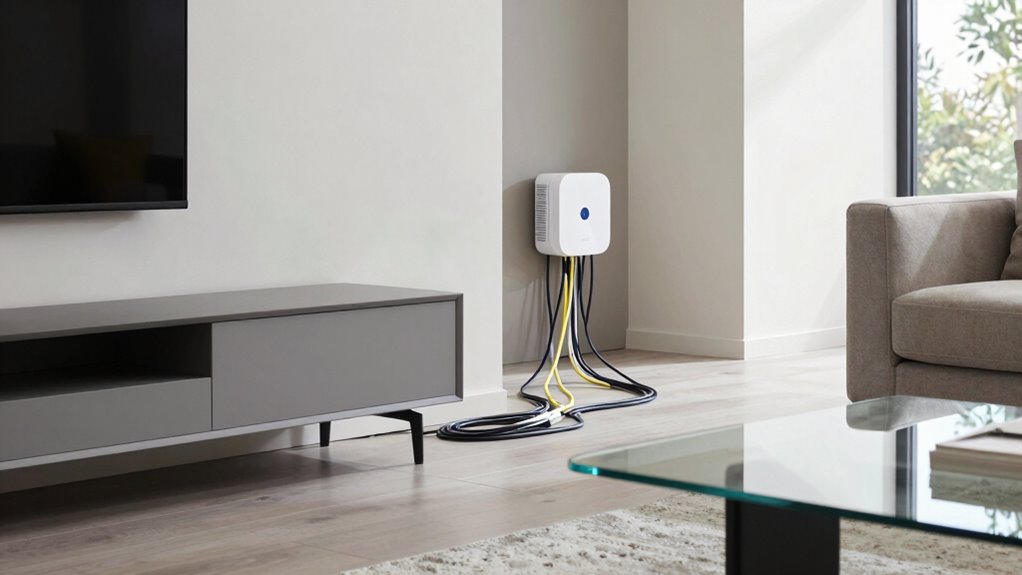

Babyproofing goes beyond just outlet covers—focus on hidden hazards in your modern home. Look out for low windows, unstable furniture, or gaps behind appliances that little ones can reach or get trapped behind. Secure high-risk areas like kitchens and bathrooms by locking cabinets, moving sharp or hot items out of reach, and using safety latches. Modern design features, smart tech, and regular safety checks can make your home safer; discover how these tips help protect your child.
Key Takeaways
- Secure low windows with locks or guards to prevent falls, especially in multi-level or open-plan homes.
- Anchor heavy furniture and appliances to walls to avoid tip-overs in modern, minimalist designs.
- Remove or lock away cleaning supplies, medications, and small objects stored on open shelves at eye level.
- Install safety gates or barriers on stairways and balconies to prevent falls in multi-level layouts.
- Regularly inspect for hidden hazards like gaps behind appliances, unstable furniture, or clutter that can cause trips.
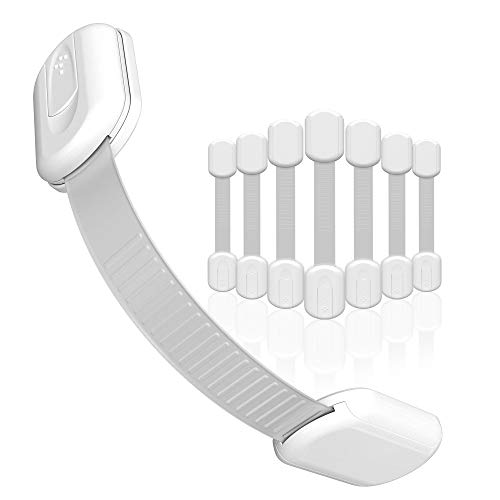
SKYLA HOMES Child Safety Cabinet Locks, White, 8 Pack
Quick for adults but a nightmare for toddlers! Like you, we're tired of cabinet locks that are strenuous…
As an affiliate, we earn on qualifying purchases.
As an affiliate, we earn on qualifying purchases.
How to Identify Hidden Hazards in Modern Home Layouts
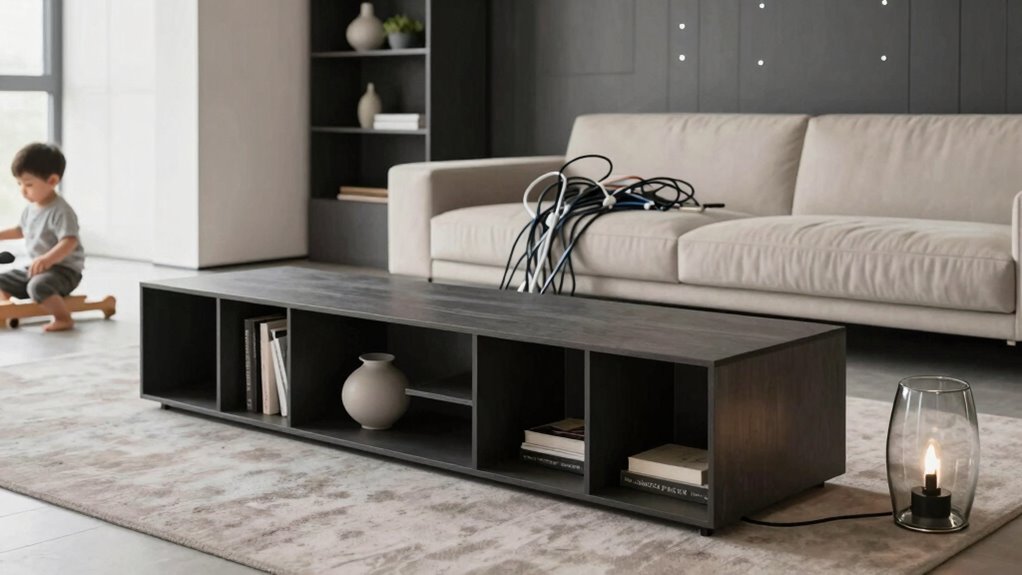
Modern home layouts often feature open floor plans, multi-level designs, and integrated spaces, which can hide potential hazards that aren’t immediately obvious. To identify these hidden hazards, start with a thorough safety audit of your home. Look beyond obvious dangers like sharp furniture edges or unsecured cords. Check for low windows, unstable furniture, or gaps behind appliances that a curious child might access. Multi-level homes may conceal fall risks on stairways or balconies. Open spaces can hide clutter or loose items that could cause trips. Regular safety audits help you spot these hazards early, so you can implement necessary babyproofing measures. Incorporating child-safe design principles during renovation can further minimize risks. Additionally, paying attention to hidden hazards in your environment is crucial for maintaining a safe space. Conducting comprehensive safety assessments regularly ensures you stay ahead of potential dangers. Being aware of environmental factors that contribute to accidents can also enhance your safety planning. Recognizing subtle hazard zones such as uneven flooring or low-hanging fixtures allows for targeted safety improvements. By paying close attention and evaluating your environment, you ensure your home remains a safe space as your little one explores.

ZRFCXE Window Locks,4 Pack Sliding Window Locks with Key for Vertical & Horizontal Sliding Windows Doors,Easv to Install,Adjustable Security Window Lock for Patio Bedroom Home and Office (Black)
【MEASURE YOUR WINDOWS TRACK】: The window lock is apply for sliding windows, sliding doors and vertical windows.please measure…
As an affiliate, we earn on qualifying purchases.
As an affiliate, we earn on qualifying purchases.
Securing High-Risk Areas Like Kitchens and Bathrooms
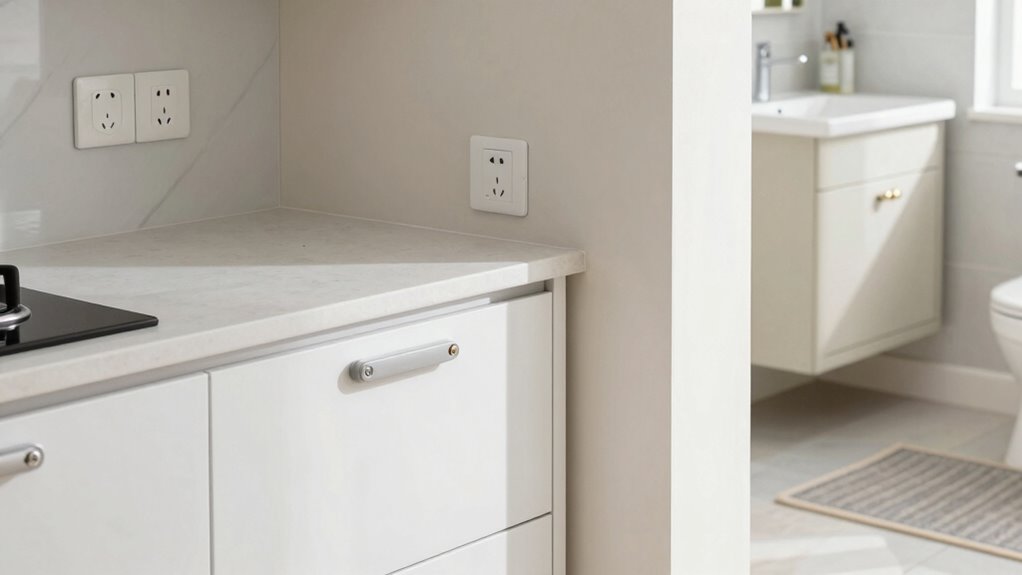
Kitchens and bathrooms are among the most dangerous areas in your home due to the presence of sharp objects, hot surfaces, and slippery floors. To babyproof effectively, focus on appliance placement to keep hot or sharp items out of reach and secure cords to prevent pulling. Guarantee windows have safety locks or stops to prevent falls, especially if they open wide. Remove or secure items like cleaning supplies, medications, and knives stored in these areas. Use nonslip mats on slippery floors and install stove knob covers to prevent accidental ignition. Additionally, secure heavy appliances like microwaves and refrigerators to prevent tipping. Incorporate safety latches on cabinets and drawers to restrict access to hazardous items. Remember, managing these high-risk zones helps create a safer environment, reducing the chance of accidents and giving you peace of mind. Proper hazard identification in these spaces is crucial for effective babyproofing. Conducting a comprehensive safety assessment of these areas can help identify potential dangers before they become accidents. Being aware of potential injury hazards is essential for a thorough safety strategy. Creating a safe environment is essential in minimizing potential hazards and ensuring your baby’s safety in these vulnerable spaces.

Regalo Safety 29"-38.5" Easy Step Baby Gate, Bottom of Stairs & Doorways
✅ TESTED & TRUSTED BABY SAFETY GATE FOR OVER 30 YEARS: Parent-trusted baby safety product certified by the…
As an affiliate, we earn on qualifying purchases.
As an affiliate, we earn on qualifying purchases.
Common Modern Design Features That Pose Safety Risks

While sleek, minimalist design features can enhance your home’s aesthetic, they often introduce safety hazards for curious children. Artificial materials, like smooth plastic or laminate countertops, can be tempting to chew or bite, posing choking or poisoning risks if they contain harmful substances. Open shelving, a popular modern trend, creates accessible storage at a child’s eye level, increasing the chance of items falling or being pulled down. These shelves often display decorative objects or glassware, which can break easily and cause injuries. Additionally, the lack of barriers or barriers that are too low makes it easier for children to access dangerous items. To babyproof effectively, consider securing items on open shelves and choosing safer, non-toxic materials that withstand little hands’ curiosity. Incorporating child-safe design principles can help minimize hazards in modern homes. Furthermore, being aware of market trends in home safety can help you select products that are both stylish and secure. Understanding product safety standards can guide you in choosing the safest options for your home. For example, choosing furniture with rounded edges and non-slip bases can further reduce injury risks. It’s also beneficial to stay informed about safety certification labels that verify product safety and compliance.

Bates- 1-Gang Duplex Wall Plate, 3.18"x 4.98", 10 Pack White
Bates switch plate covers come in a set of 10 pieces, providing a quick and easy solution for…
As an affiliate, we earn on qualifying purchases.
As an affiliate, we earn on qualifying purchases.
Using Smart Technology and Safety Devices Effectively

Smart technology and safety devices can considerably enhance your ability to protect your child, especially when used thoughtfully. By integrating smart devices into your home, you gain real-time monitoring and quick alerts for potential hazards. Effective safety app utilization allows you to control and customize settings remotely, giving you peace of mind. To maximize safety, consider these strategies:
- Ensure seamless smart device integration across all safety systems
- Regularly update safety app software for peak performance
- Set personalized alerts for movement, door openings, or temperature changes
- Use voice-activated controls for quick access in emergencies
- Incorporate automotive performance parts like advanced sensors to detect environmental hazards before they reach dangerous levels, leveraging smart home integrations to enhance overall safety.
- Additionally, implementing environmental hazard detection features can help identify risks such as carbon monoxide or smoke leaks early, further protecting your loved ones.
- Using high-tech safety innovations such as digital displays and improved customization options can provide more precise control and awareness of your home environment.
Conducting Regular Safety Checks and Childproofing Audits

Regular safety checks and childproofing audits are essential to maintaining a secure environment as your child grows and explores. These routine inspections help identify new hazards and ensure your babyproofing essentials are in place. Focus on areas where your child spends the most time, checking for loose furniture, exposed cords, or sharp edges. Don’t forget to verify the stability of heavy appliances and secure doors and cabinets. Parental supervision remains vital, but regular audits add an extra layer of safety. Make it a habit to review and update safety measures every few months, especially after renovations or new purchases. Staying vigilant ensures you catch potential risks early, creating a safer space for your little one to explore confidently. Incorporating essential oils for safety can also promote a calming environment that supports your child’s well-being. Conducting home safety assessments periodically can help you stay ahead of potential hazards and adapt your childproofing strategies as your child develops.
Frequently Asked Questions
How Can I Childproof Open Shelving and Decorative Items Safely?
To childproof open shelving and decorative items, start by securing shelves to the wall to improve open shelving stability. Keep decorative items out of reach or replace fragile ones with safer alternatives. Use childproof safety latches on cabinet doors and consider adding a safety barrier or gate around the shelves. Prioritize decorative item safety by choosing non-toxic, sturdy pieces, and regularly check for any loose items or stability issues.
What Are the Best Ways to Prevent Falls on Modern Staircase Designs?
To prevent falls on modern staircase designs, make certain baluster spacing is less than four inches to keep your child safe. Install sturdy stair gate options at both the top and bottom of the staircase; choose gates that are securely anchored and easy to open for adults but difficult for children. Regularly check for loose balusters or gate hardware, and consider adding a handrail or additional safety barriers for extra protection.
How Do I Childproof Smart Home Devices Without Losing Functionality?
Imagine your smart home devices as giant, unbreakable guardians, protecting your little one without missing a beat. You can do this by activating robust parental controls and setting screen time limits. Use device-specific safety features to block inappropriate content and restrict access to certain functions. This way, your smart device safety remains premier, and you keep the automation and convenience you love, all while ensuring your child’s safety.
Are There Specific Safety Concerns With New Flooring Materials?
You should be aware of flooring hazards and prioritize material safety when choosing new flooring. Some materials, like certain laminates or vinyl, can emit fumes or contain harmful chemicals, posing risks to children. Look for non-toxic, low-VOC options and make certain the surface isn’t too slippery or uneven, which could cause falls. Regularly inspect the flooring for damage or loose tiles to keep your home safe for your little ones.
How Can I Make Outdoor Areas Safer for Curious Toddlers?
To make outdoor areas safer for curious toddlers, focus on garden safety by removing toxic plants and securing tools. Check that outdoor furniture is stable and free of sharp edges. Cover or lock away pool access and garden ponds. Keep pathways clear of tripping hazards and use safety gates at entry points. Regularly supervise your toddler, and teach them about outdoor dangers to guarantee a safe, enjoyable space.
Conclusion
As you walk through your home, imagine spotting those hidden dangers like a subtle shadow lurking behind sleek countertops or tucked away in modern cabinets. By staying vigilant and regularly reviewing your safety measures, you create a secure space where curiosity doesn’t turn into catastrophe. Just like noticing the gentle flicker of a smart device, your proactive steps transform your home into a safe haven—where safety and comfort seamlessly coexist, guiding your little one towards exploration with confidence.