
TL;DR
Designer and new mother Raissa Pardini adapted her South East London apartment around how her family uses it, prioritizing safe floor space for her baby, Jet, and room to explore. Her account describes a personal approach, not a set of verified product-safety recommendations or a reported renovation study.
Designer Raissa Pardini has adapted her South East London apartment for life with her baby, Jet, focusing on safe floor space and everyday use while keeping the home’s distinctive character. In a Livingetc home-tour feature, Pardini describes rethinking a space originally set up for her creative work rather than a family, offering a personal account of balancing a baby’s needs with an adult’s home.

Turn the school run and nap time into listening time
- Thousands of audiobooks, podcasts and originals
- Listen on your phone, tablet or Echo — also offline
- Cancel anytime
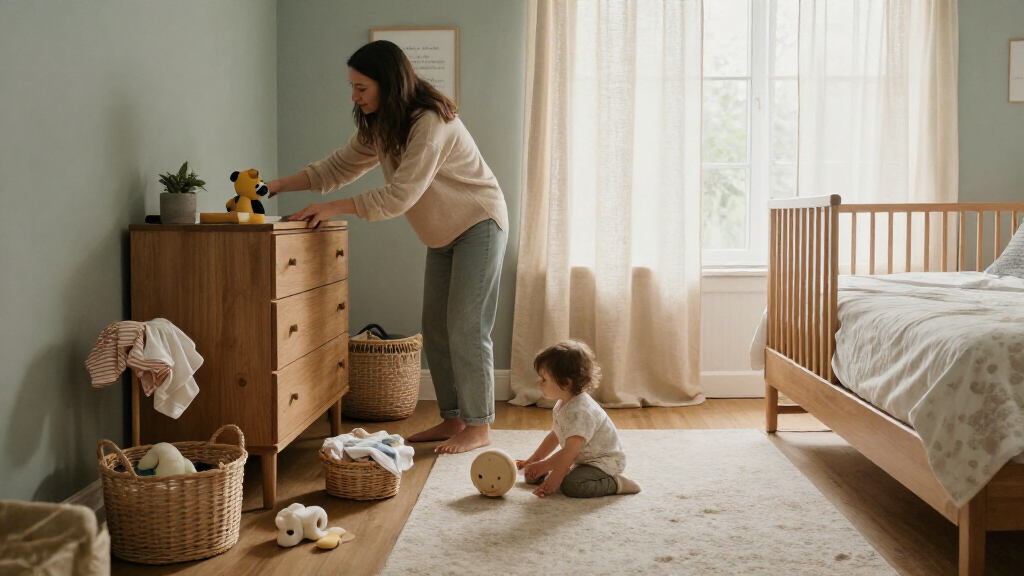
Pardini says the first priority in renovating was giving Jet a safe floor where he could crawl, reach and explore. Rather than filling the apartment with toys, she wanted him to encounter ordinary parts of the home, including textures, shadows, plants and books. She said she believes children can find things to engage with in the spaces adults already inhabit.
That approach did not mean ignoring safety. Pardini acknowledged the need to check that objects are safe for small hands and mouths, but the feature does not provide a detailed safety plan, product list or professional assessment of the apartment. Her account describes her design choices and preferences rather than guidance that can be applied to every home or child.
The apartment had previously served as a place for Pardini and her design practice, with records, books and collected objects. After Jet’s arrival, she says, the way the space needed to function changed. She also wanted to avoid both a home that looked like a nursery and an attractive room that could not accommodate a child, describing the balance as a matter of being inventive.
Making Room for a Baby Around Family Life
Designer Raissa Pardini adapted her South East London apartment for life with her baby, Jet. Her home tour shares personal design choices, not a professional safety assessment.
Start with everyday use
Pardini says the apartment had been set up for her creative work before Jet arrived.
She prioritized a floor area where Jet could crawl, reach and explore.
She wanted Jet to encounter everyday textures, shadows, plants and books.
She adapted how the apartment worked while retaining its distinctive character.
A home that still feels like home
The feature describes design choices that sit alongside the changes for family life.
White walls
Pardini says they keep the apartment bright and let objects stand out.
Red front door
A glossy red door makes a strong color statement.
Graphic details
Black-and-white furniture, art and prints reflect her interest in typography and contrast.
What the account can—and cannot—tell readers
- Pardini’s priorities and design preferences.
- A wish to make room for a child without making the home look like a nursery.
- Her personal account of adapting one apartment.
- A detailed safety plan or product list.
- A professional safety assessment.
- Evidence that the approach suits every family or child.
The home keeps changing
The feature gives no schedule for further changes; what Jet can reach or use will depend on his development.
Making Everyday Rooms Work for Babies
The feature highlights a practical tension many new parents face: a home may need to accommodate crawling, storage and supervision without losing the qualities that made it feel like home. Pardini’s account puts daily function ahead of a wholesale change in style, showing how a family can start by reconsidering how existing rooms are used.
It also offers a counterpoint to the idea that a baby’s arrival requires a room filled with dedicated equipment or brightly colored products. Pardini says she wanted Jet to explore the familiar environment, not simply be surrounded by toys. That is her personal preference, not evidence that one approach suits all children or replaces age-appropriate play, safe sleep arrangements or other care needs.
For readers, the distinction is useful: a visually cohesive home and a child-aware home are not automatically incompatible, but appearance cannot stand in for safety. Any objects or spaces accessible to a baby need to be assessed for the child’s age and abilities. Parents should follow pediatric guidance for sleep and feeding, and check applicable consumer product safety information and CPSC recall notices when choosing products.
Products Worth Considering

LEGO Technic Ducati Panigale V4 R Motorcycle Building Set

Graco Tranzitions 3-in-1 Harness Booster Car Seat

Graco 4Ever DLX 4-in-1 Convertible Car Seat, Maven
As an affiliate, we earn on qualifying purchases.
From Creative Studio to Family Home
Pardini is a multidisciplinary designer, type artist and creative director based in London. The supplied Livingetc feature identifies her as the writer and describes the apartment in South East London. It presents the home through her own account, accompanied by photographs credited to Jamie Salmons.
Her design choices remain visible in the home. Pardini says she kept the walls white to make the apartment feel bright and give objects room to stand out, then used a glossy red front door as a strong color statement. The feature also describes a black-and-white visual thread, with graphic furniture, art and prints reflecting her interest in typography, contrast and color.
She says she has collected some favorite pieces from charity shops or found them on the street, and argues that good taste does not depend on buying expensive items. These details place the baby-related changes within a broader account of how she uses and values her home, rather than presenting the apartment as a before-and-after renovation project with measured outcomes.
““My first priority when renovating was to make sure Jet had a safe floor to crawl around on.””
— Raissa Pardini, in the Livingetc feature
Safety Details the Feature Leaves Open
The supplied material does not specify the renovation’s date, cost, precise layout changes or whether Pardini consulted a child-safety professional. It also does not list the products or materials used, or explain how individual items in reach were checked for hazards. The feature’s description of a “safe floor” is Pardini’s account, not an independently documented safety inspection.
Jet’s exact age and developmental stage are not given beyond the statement that he arrived earlier in the year. Those details matter because what a child can reach or safely use changes as the child grows. The source also does not establish that the approach has been tested beyond this household or that it works for other families’ housing, budgets or care needs.
Changes as Jet Grows
The feature does not announce a next renovation phase or provide a schedule for further changes. Pardini’s account suggests the apartment’s use will continue to develop as Jet’s abilities and interests change, but that is an implication of the family’s circumstances rather than a stated plan.
For now, the reported development is a personal redesign: Pardini says she made room for crawling and exploration while retaining the apartment’s existing visual character. Any further details about new safety measures, rooms or purchases remain unreported in the supplied material.
Key Questions
Who adapted the South East London apartment?
Raissa Pardini, a London-based multidisciplinary designer, type artist and creative director, describes adapting the home after the arrival of her baby, Jet.
What was Pardini’s first priority?
She says she prioritized a safe floor area where Jet could crawl, reach and explore. The feature does not document a formal safety inspection or provide a complete checklist.
Did she turn the apartment into a nursery?
No. Pardini says she wanted the home to accommodate a child without making it look like a nursery. She describes keeping its existing character while changing how the space worked.
What design choices does the feature describe?
The apartment has white walls, a glossy red front door and a black-and-white graphic style. Pardini also discusses using collected objects, books and records to express her taste.
Is the feature a baby-proofing guide?
No. It is a personal home-tour account, not a professional safety guide. Parents should check that products are appropriate for a child’s age, consult relevant CPSC recall information, and follow pediatric guidance for infant sleep and feeding.
Source: livingetc.com