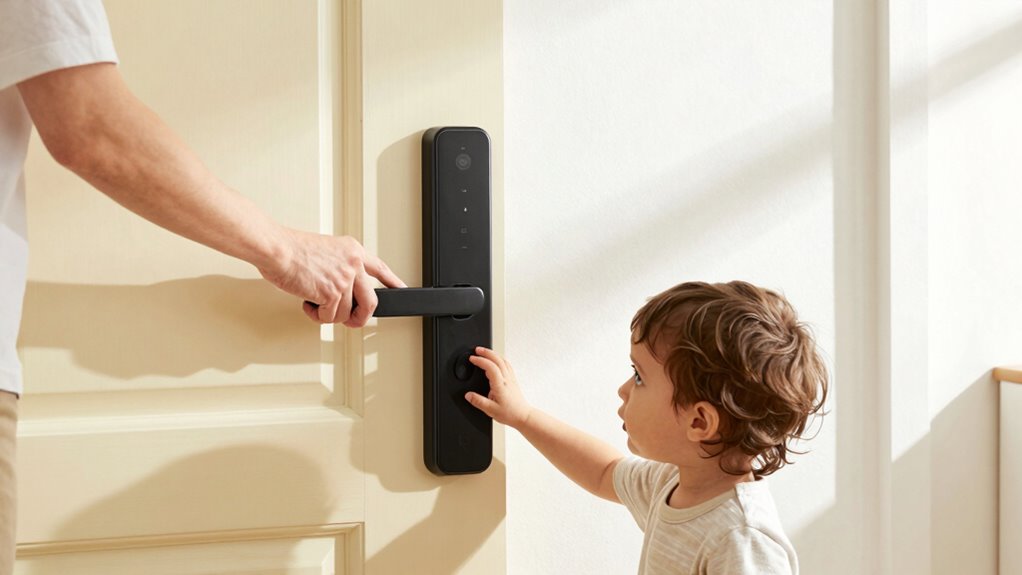

To prevent toddler escapes, choose smart locks with childproof features like internal pins, sliding covers, and secure mechanisms that are hard for kids to tamper with. Manage access by setting temporary or virtual keys for trusted caregivers and regularly update codes. Install the locks properly on sturdy doors and pair them with alarms or monitoring systems for extra security. Ensuring proper use and maintenance helps keep your child safe—more tips on how to do this effectively follow.
Key Takeaways
- Install smart locks with childproof mechanisms like push-button locks and internal pins to prevent toddlers from opening doors.
- Use remote management and virtual keys to control access and revoke permissions easily for caregivers and visitors.
- Regularly update access codes, review permissions, and monitor activity logs to detect and prevent unauthorized or accidental entries.
- Pair smart locks with alarms or safety alerts to notify caregivers if children attempt to exit unsupervised.
- Ensure proper installation on sturdy doors, perform routine maintenance, and choose tamper-resistant locks for maximum security.

Philips WiFi Keypad Door Lock with Handle, Built-in WiFi, APP Remote Control, Voice & Fingerprint Unlock, Smart Locks for Front Door with Auto Lock, Keyless Entry Deadbolt, Satin Nickel
- WiFi Connectivity: Connects directly to 2.4GHz WiFi without hub
- Remote App Control: Manage lock remotely via Philips Home Access App
- Real-Time Access Monitoring: Check lock status and access history anytime
As an affiliate, we earn on qualifying purchases.
As an affiliate, we earn on qualifying purchases.
Why Smart Locks Are a Game-Changer for Child Safety
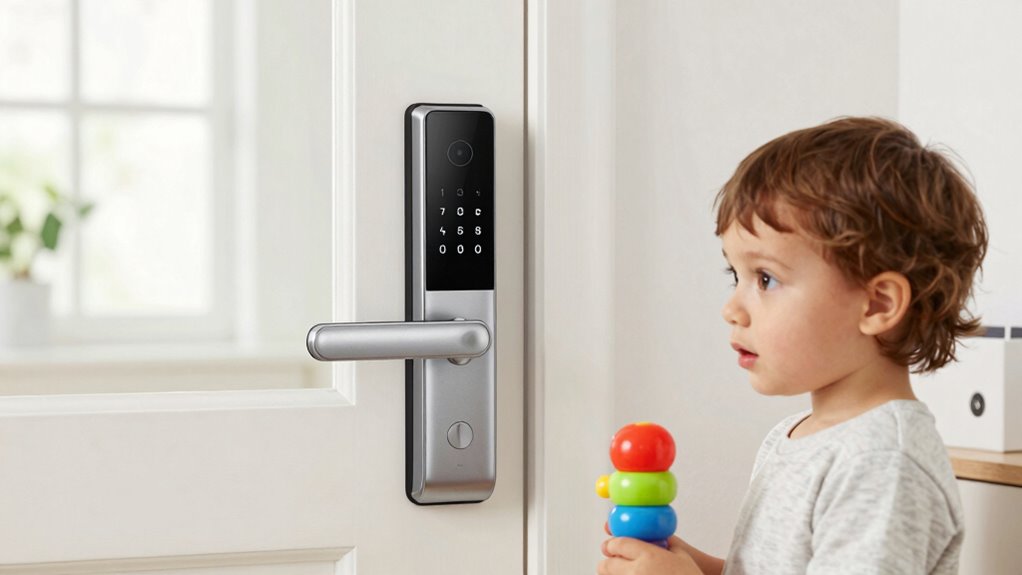
Smart locks are revolutionizing child safety by offering secure, convenient access control that traditional locks can’t match. With smart locks, you can maintain better child supervision because you control who enters and exits your home, reducing the risk of toddlers wandering off unnoticed. These locks enhance home security by preventing unauthorized access and making it easier to monitor entry points remotely. Unlike traditional keys, smart locks allow you to set temporary or permanent access codes for family members, babysitters, or visitors. This ensures your child stays safe inside while you keep an eye on who can come and go. Additionally, integrating smart locks with other safety measures, such as puppy-proofing, can create a more comprehensive safety system for your home and children. In addition, some smart locks feature activity logs, allowing you to review who accessed your home and when, adding an extra layer of security. Moreover, the ability to integrate with home automation systems can further streamline safety management and provide real-time alerts. Understanding how these security features work can help you choose the best options to protect your family effectively. Incorporating remote monitoring capabilities allows you to oversee your home’s security from anywhere, giving you peace of mind. Overall, smart locks provide peace of mind, making it easier to protect your children and your home simultaneously.

Fingerprint Smart Door Lock with Handle & Keypad – No More Lost Keys, Keyless Entry & Remote Access for Home, Kids, Airbnb & Rental Property, DIY Install, Alexa & Google Compatible
- Fingerprint & Keyless Entry: Unlock via fingerprint, keypad, app, FOB, or key
- Ideal for Families: Suitable for kids, parents, and elderly users
- Airbnb & Rental Ready: Generate guest codes and manage remotely
As an affiliate, we earn on qualifying purchases.
As an affiliate, we earn on qualifying purchases.
Key Features of Smart Locks to Prevent Toddler Escapes

Smart locks come with childproof mechanisms that make it difficult for toddlers to open doors on their own. You can set customizable access codes to control who enters and when, adding an extra layer of safety. Plus, remote management features let you lock or unlatch doors from anywhere, ensuring you stay in control at all times. Additionally, choosing reliable data storage solutions for your smart lock system helps ensure your security settings are always protected and accessible when needed. Implementing encryption technology further safeguards your data from unauthorized access, providing peace of mind for busy parents. Ensuring your smart lock system is compliant with industry standards can also help prevent potential vulnerabilities and enhance overall security. As data security becomes increasingly important in future technological trends, integrating these measures ensures your child’s safety is maintained in a connected home environment. Staying informed about smart home security best practices can also help prevent potential vulnerabilities.
Childproof Lock Mechanisms
Childproof lock mechanisms are essential features that help prevent toddlers from escaping through doors or gates. These mechanisms are designed to be secure yet accessible enough for adults, ensuring that little ones can’t easily open them. Smart locks with childproof lock mechanisms often include features like push-button locks, sliding covers, or internal locking pins that require specific actions to open. This added layer of security considerably enhances toddler safety by reducing the risk of accidental escapes or injuries. When choosing a smart lock, make sure it integrates reliable childproof lock mechanisms that are tamper-resistant and easy for adults to operate but challenging for children. Incorporating electric power generation features can also provide additional safety measures by allowing parents to monitor access remotely or set access schedules. This way, you can better control access and keep your kids safe inside your home. Additionally, selecting locks with proper measurement and durable materials ensures long-lasting security and resistance against tampering. Ensuring the lock’s tamper resistance can further prevent children from bypassing security features, and opting for locks with advanced security features can add an extra layer of protection against tampering attempts.
Customizable Access Codes
One of the most effective features of smart locks for preventing toddler escapes is the ability to customize access codes. With access code customization, you can create unique codes for different family members or caregivers, guaranteeing only trusted individuals can unlock the door. This reduces the chance of accidental or intentional escapes by your little ones. Virtual key management further enhances security by allowing you to control and revoke access remotely, so you can deactivate codes when they’re no longer needed. You can also set temporary codes for visitors or babysitters, reducing the chance of unauthorized entry. This level of control guarantees you’re always aware of who has access to your home and when, giving you peace of mind knowing your little ones are safely contained. Smart home security features help you monitor and manage access more effectively, including access control systems that can log entry and exit times. Incorporating encryption protocols into your smart lock system can also prevent hacking attempts, further safeguarding your family. Utilizing access management tools ensures you can easily update or revoke permissions as needed, adding an extra layer of safety. Additionally, integrating tamper alerts can notify you immediately if someone attempts to disable or interfere with the lock.
Remote Lock Management
Building on the ability to customize access codes, remote lock management offers an added layer of security and convenience. With this feature, you can manage access code management seamlessly, ensuring only authorized individuals can unlatch the door. If you need to grant temporary access or revoke permissions, you can do so instantly without physically handling the lock. Remote opening allows you to unlatch or lock doors from anywhere using your smartphone, which is especially useful if you need to let someone in or secure the house quickly. This control helps prevent toddler escapes by limiting the chances of accidental door openings. Additionally, solar-powered locks can be integrated with smart lock systems to ensure continuous operation even during power outages. Incorporating herbal wellness concepts such as natural remedies and holistic practices can also be part of a comprehensive safety approach for your home. Overall, remote lock management empowers you to monitor, control, and respond to access needs on the fly, enhancing home security and keeping your kids safe and giving you peace of mind.

Google Nest x Yale Lock – Tamper-Proof Smart Lock for Keyless Entry – Keypad Deadbolt Lock for Front Door – Satin Nickel
- Secure smart lock replacement: Replaces existing deadbolt for security
- Keyless LED keypad entry: Lock and unlock without keys, with sound confirmation
- Remote access via smartphone: Unlock door remotely for guest access
As an affiliate, we earn on qualifying purchases.
As an affiliate, we earn on qualifying purchases.
Choosing a Safe and Child-Friendly Smart Lock
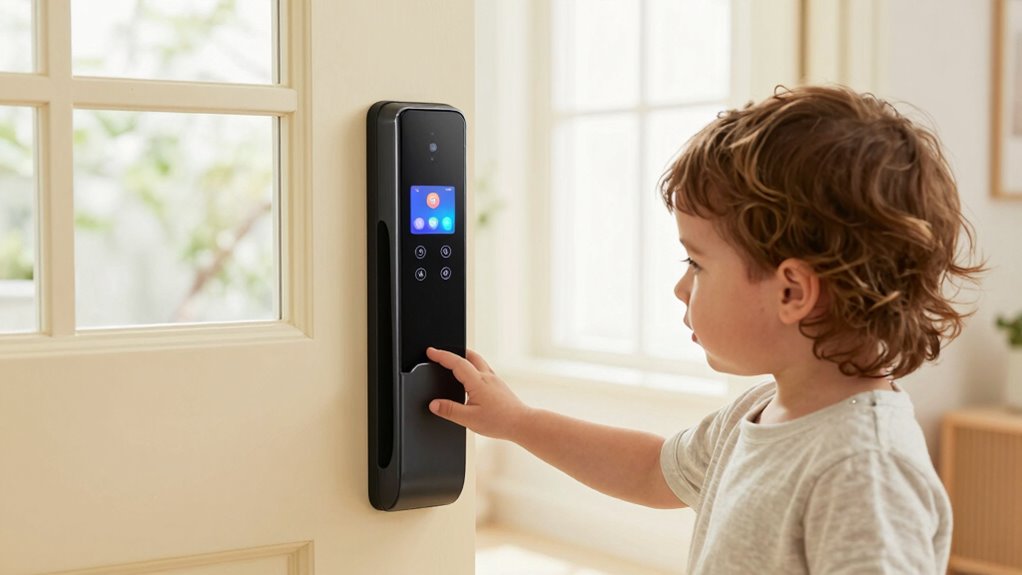
Choosing a safe and child-friendly smart lock requires careful consideration of both security features and ease of use. You want a lock that prioritizes child safety, preventing little ones from accidentally opening or damaging it. Look for models with sturdy lock durability to withstand curious hands and frequent use. Opt for locks that have tamper-resistant mechanisms and secure access options like keypad codes or biometric identification, which are harder for kids to bypass. Avoid locks with complicated setups or features that children can accidentally trigger. A well-designed smart lock offers reliable security while being simple enough for adults to operate confidently. By selecting a lock with these qualities, you guarantee your home remains safe and accessible, giving both you and your kids peace of mind.

Philips Wi-Fi Smart Front Door Lock Set, Keyless Entry Door Lock with Handle, App Remote Control, Electronic Keypad Deadbolt, Auto Lock, Supports Alexa & Google, Anti-Peeping Password, Easy Install
- Multiple Unlock Methods: Voice, password, key, or app
- Remote Access: Control lock remotely via Wi-Fi
- Custom Passwords: Create up to 100 user passwords
As an affiliate, we earn on qualifying purchases.
As an affiliate, we earn on qualifying purchases.
Installing Your Smart Lock for the Best Security

Properly installing your smart lock is key to maximizing its security benefits. A secure setup guarantees your home automation system functions smoothly and reduces vulnerabilities. First, choose a sturdy, compatible door that can support the lock’s weight and features. Second, follow the manufacturer’s instructions carefully, ensuring all components are aligned correctly. Third, check the battery compartment to confirm easy access for battery management, preventing unexpected power loss. Fourth, test the lock thoroughly after installation—try locking and unlocking remotely, and ensure it responds consistently. Proper installation minimizes the risk of tampering and keeps your kids safe. Remember, a well-installed smart lock offers reliable security and peace of mind, especially when managing access for children.
How to Use Access Codes and Virtual Keys for Safe Entry
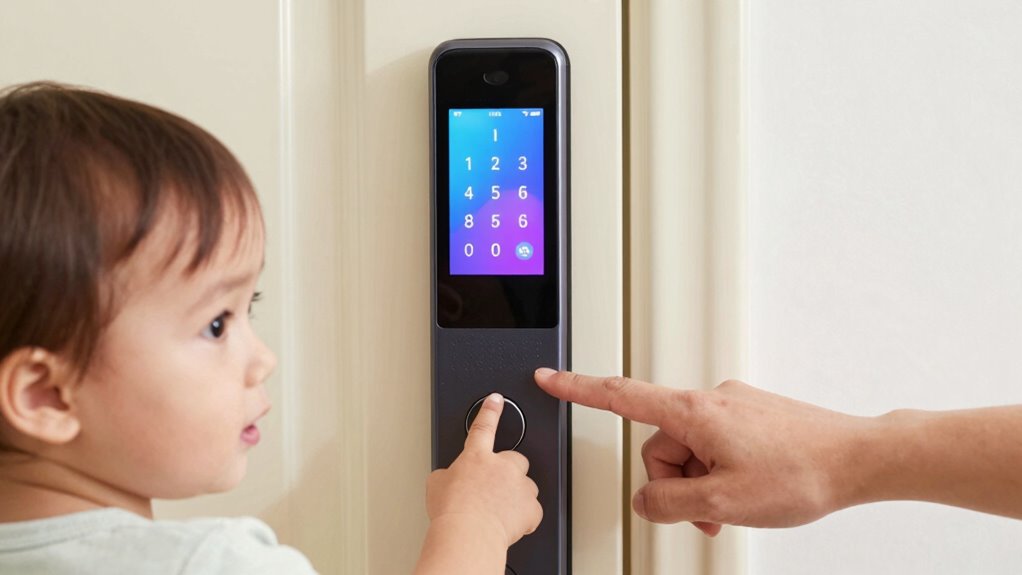
Using access codes and virtual keys can substantially enhance your home’s security by providing controlled, flexible entry for family members and trusted visitors. Proper access code management is key—you should regularly update codes and assign unique ones for different users to prevent unauthorized access. Virtual key sharing makes it easy to grant temporary or limited access remotely, ensuring others can enter without physical keys. When sharing virtual keys, set expiration dates and permissions to maintain control. Always verify who has access and remove or modify codes and keys when no longer needed. This approach minimizes risks associated with lost or stolen keys and helps prevent toddlers from escaping through unlocked doors. By managing access codes diligently, you keep your home safer and more secure for everyone.
Combining Smart Locks With Childproof Home Strategies
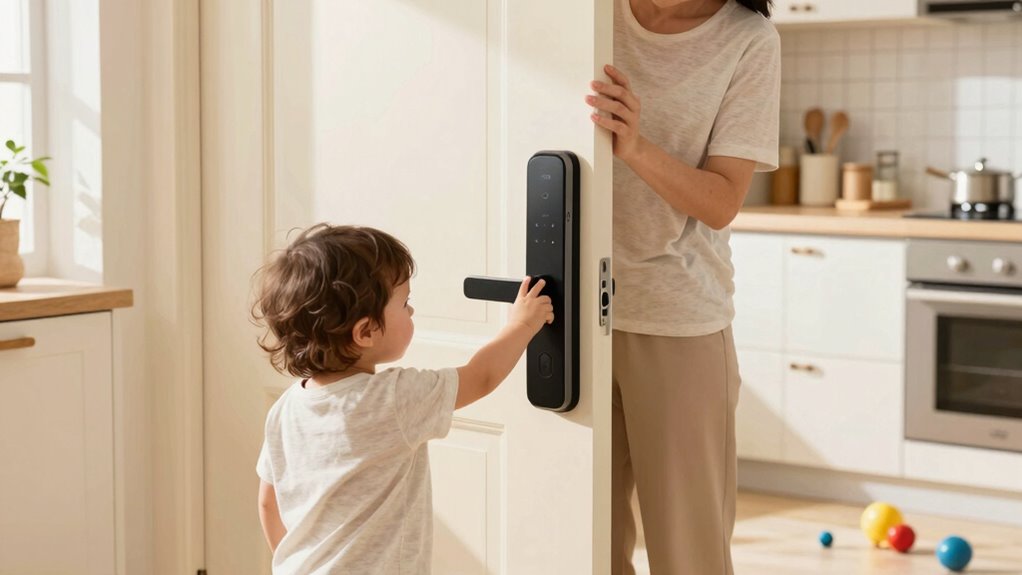
Integrating smart locks into your childproofing plan enhances your home’s safety by giving you control over access points while preventing children from wandering outside. To maximize safety, combine smart lock integration with childproofing essentials. Here are key ideas:
- Install smart locks on exterior doors and gates to restrict unsupervised outdoor access.
- Use access codes or virtual keys to control entry, ensuring kids can’t open doors without your permission.
- Pair smart locks with safety alarms on doors for added alerts when children attempt to exit.
- Regularly update lock codes and review access permissions to maintain control over who’s entering your home.
Troubleshooting Smart Locks When Kids Are Involved

When kids are involved, troubleshooting smart locks can become more challenging because their curiosity and unpredictable behavior often lead to access issues or accidental lockouts. To prevent this, focus on reinforcing child proofing habits and planning for emergencies. Regularly check that batteries are charged and settings are correct. Educate your kids on how the lock works without giving them full control. Consider using temporary access codes or remote unlocking features in urgent situations. Here’s a simple guide:
| Issue | Solution | Prevention Tip |
|---|---|---|
| Kids accidentally lock out | Keep spare keys nearby or use remote unlock | Practice with them regularly |
| Battery failure | Maintain backup power options | Schedule routine checks |
| Improper code input | Enable lock alerts for failed attempts | Limit access to trusted adults |
Success Stories: How Smart Locks Keep Toddlers Safe

Many parents have seen how smart locks boost security and give them peace of mind. You can prevent your toddler from wandering outside or accessing areas they shouldn’t, simply by using these advanced features. These success stories show just how effective smart locks are in keeping little ones safe.
Enhanced Security Measures
Smart locks have revolutionized home safety by preventing toddlers from accessing dangerous areas, even when parents aren’t around. These enhanced security measures guarantee child safety and bolster your overall home security. They offer features like customized access codes, remote lock control, and temporary keys for visitors.
Here are some key ideas:
- Multi-factor authentication to prevent unauthorized entry
- Auto-lock features for added security when you’re away
- Access logs to monitor who enters and exits
- Temporary access codes for trusted caregivers or family members
Peace of Mind
Parents everywhere are discovering how smart locks provide peace of mind by seamlessly safeguarding their children. With smart locks, you don’t have to worry about constant child supervision, especially during busy mornings or unexpected moments. They enable you to control access remotely, ensuring your toddler is safe inside while preventing accidental escapes. In emergencies, these locks enhance preparedness by allowing quick entry or lockdown when needed. Many parents share success stories of how smart locks prevented toddlers from wandering off or getting into unsafe areas. Knowing you can monitor and manage door access at all times reduces anxiety and boosts confidence in your child’s safety. Ultimately, smart locks give you peace of mind, so you can focus on what matters most—your family’s well-being.
Final Tips for Maintaining Your Smart Lock System

Regular maintenance is essential to keep your smart lock functioning smoothly and securely. To guarantee reliability, regularly check battery levels and replace batteries promptly to avoid lockouts. Keep firmware updated, as manufacturers often release security patches and performance improvements. Here are some final tips:
- Monitor battery health and replace them as needed
- Schedule regular firmware updates via the app
- Clean the lock and keypad to prevent dirt buildup
- Test all lock features periodically to catch issues early
Staying on top of these tasks helps prevent unexpected failures and keeps your children safe. By maintaining your smart lock, you ensure it remains a dependable barrier for your family. Consistent upkeep provides peace of mind, knowing your system is always ready to secure your home.
Frequently Asked Questions
Are Smart Locks Suitable for Outdoor Use Around Children?
Yes, smart locks are suitable for outdoor use around children if they offer weather resistance and outdoor durability. You should choose models designed specifically for outdoor environments, as they withstand rain, sun, and temperature changes. Make sure the lock’s weatherproof features maintain it functioning reliably in various weather conditions. This way, you ensure the safety and security of your kids while maintaining the lock’s performance outdoors.
How Do Smart Locks Integrate With Existing Home Security Systems?
Smart locks seamlessly integrate with your existing home security system by supporting accessory compatibility and user access management. You can connect them to smart hubs or security platforms, allowing remote control and monitoring. This integration enables you to manage who enters your home, set temporary access codes, and automate lock schedules. By syncing with your system, you enhance security and convenience, giving you peace of mind knowing your smart lock works harmoniously with your current setup.
Can Smart Locks Be Overridden Manually During Emergencies?
Yes, smart locks often feature a manual override for emergency access, allowing you to open the door even if the electronic system fails or during emergencies. You typically use a physical key or a designated override button. This guarantees you can quickly respond to urgent situations, maintaining safety and security. Always check your specific lock model’s manual override options to understand how to access it when needed.
What Are the Privacy Considerations With Smart Lock Apps?
You should be aware of privacy concerns with smart lock apps, as they often require extensive app permissions, including access to your location, camera, and microphone. These permissions can expose your personal data if not managed carefully. Always review app permissions before installation, choose reputable brands with strong privacy policies, and regularly update the app to guarantee your privacy remains safeguarded. Staying vigilant helps keep your home secure and your information private.
Do Smart Locks Require Regular Firmware Updates for Safety?
Did you know that 85% of smart lock vulnerabilities are due to outdated firmware? Regular firmware updates are essential for safety, as they include vital security patches that protect your home from potential hacks. By maintaining your smart lock’s firmware, you guarantee its security features stay current, reducing risks. So, make it a habit to check for updates regularly, keeping your smart lock secure and functioning properly.
Conclusion
With smart locks, you can keep your little adventurers safe and sound, preventing toddler escapes like a trusty knight guarding the castle gates. Regularly update your system and stay vigilant, because in this modern age, technology is your best ally—no need for a knight’s armor or a dragon’s breath. Embrace these smart solutions, and rest easy knowing your home is a fortress where tiny explorers are protected every step of the way.