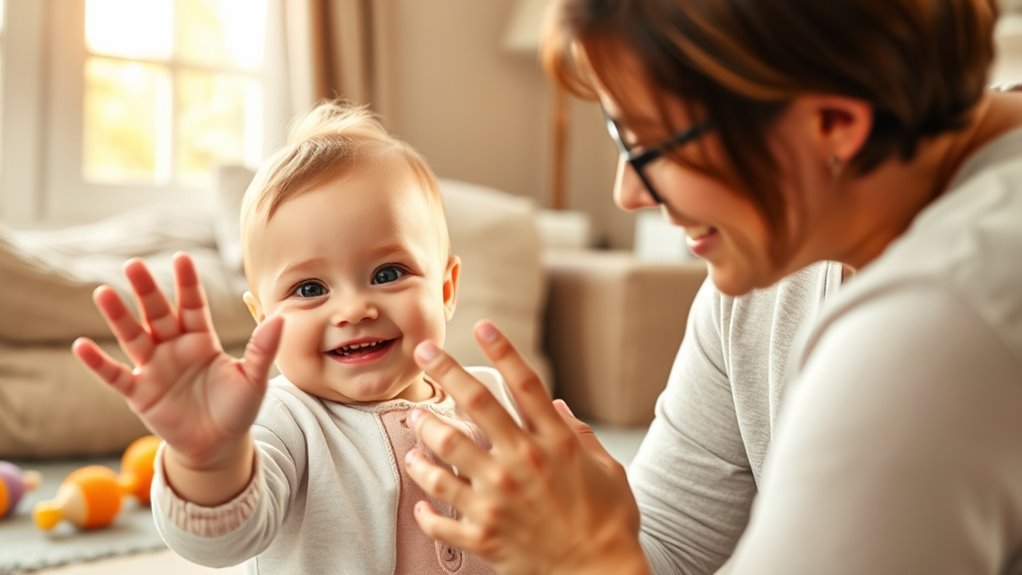

Baby sign language greatly helps your little one communicate earlier by letting them express needs and feelings before they can talk. Using gestures strengthens their understanding of language and supports overall development. As they learn signs, they begin to connect words with objects or actions, easing their progression to spoken language. Successful signing encourages more interaction and confidence. If you keep exploring, you’ll discover even more ways baby sign language can boost communication skills.
Key Takeaways
- Baby sign language enables early expression of needs and feelings, enhancing overall communication skills.
- Learning signs supports understanding of language structure and accelerates vocabulary development.
- Using signs fosters stronger interaction, encouraging more frequent and meaningful communication.
- Gesture development lays a foundation for transitioning to spoken words and complex language skills.
- Early sign language promotes cognitive growth and improves social interactions beyond basic needs.
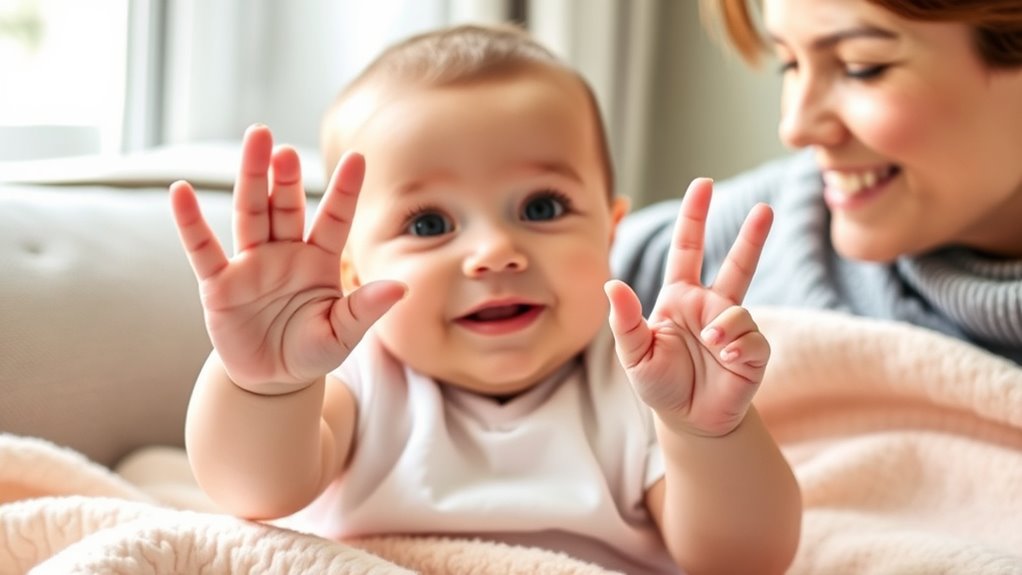
Baby sign language is a powerful tool that helps young children communicate before they can speak. By teaching your baby simple gestures, you give them a way to express their needs and feelings early on. This not only reduces frustration but also fosters their overall development. When you introduce signs, you’re encouraging gesture development, which is an essential part of early communication skills. Gesture development involves your baby learning to use their hands to symbolize objects, actions, or feelings. These gestures serve as a foundation for later verbal language, helping your child understand that symbols can stand for real things and ideas. As your baby practices these signs, they begin to grasp the connection between physical actions and meanings, which is a critical step in their language milestones.
Early on, you’ll notice that your baby starts to link certain gestures with specific needs, like pointing to their mouth when hungry or waving goodbye. These early gestures are often considered precursors to spoken words, marking important language milestones. When your child successfully uses a sign, it’s a sign they’ve achieved an important step in their communication journey. The process of learning gestures boosts their understanding of language structure and helps them realize that words can represent objects, actions, or feelings. This understanding accelerates their progress toward speaking their first words and eventually forming sentences. Developing gesture skills also supports the development of comprehensive communication, which is crucial for social interactions.
Introducing baby sign language can also make your interactions more meaningful. As your baby begins to communicate through gestures, you’re more likely to interpret their needs accurately, which encourages them to use signs more often. This positive feedback loop reinforces their motivation to communicate and supports their language development. Over time, you’ll see your child’s gesture development evolve, with signs becoming more complex and specific, aligning with their growing cognitive abilities. These improvements mark significant language milestones, where your baby not only communicates basic needs but also begins to share thoughts and ideas.
Frequently Asked Questions
When Should I Start Teaching My Baby Sign Language?
You should start teaching your baby sign language around 4 to 6 months old when they begin reaching gestural milestones, like waving or pointing. This is the ideal time to introduce simple signs using sign language resources such as books, videos, or classes. Starting early helps your baby develop communication skills and reduces frustration. Consistency and patience are key, so incorporate signs into daily routines to reinforce learning effectively.
Can Baby Sign Language Delay Speech Development?
Like a steady ship, baby sign language doesn’t delay speech development; instead, it can support it. Using gestures helps your baby improve gesture recognition and motor skill development, which are essential for speech. When you introduce signs, you’re not replacing spoken words but enhancing your baby’s ability to communicate. With patience and consistency, signing can boost confidence and language skills without hindering natural speech progression.
What Signs Are Most Useful for Early Communication?
You should focus on simple, useful signs like “milk,” “more,” “all done,” and “help.” These signs improve gesture comprehension and encourage early communication. Keep signs straightforward, avoiding complex gestures that might overwhelm your baby. Consistent use helps your little one connect words with actions, boosting their confidence and understanding. Remember, simple signs can create a strong foundation for language development without causing delays.
Is Sign Language Effective for Children With Speech Delays?
Yes, sign language can be effective for children with speech delays. It encourages gesture imitation, helping kids develop non-verbal communication skills. Using signs alongside spoken words fosters vocabulary expansion, making it easier for children to express themselves before they develop full speech. Consistent practice and patience are key, as sign language can boost confidence and reduce frustration, ultimately supporting their overall communication development.
How Can I Encourage My Baby to Use Signs Consistently?
To encourage your baby to use signs consistently, incorporate gestural gestures into your daily routines. Use simple signs regularly during activities like feeding, diaper changes, and playtime, so they associate signs with familiar experiences. Be patient, offer lots of positive reinforcement, and model the signs yourself. Repetition and consistency help your baby understand and remember the gestures, making it easier for them to communicate effectively over time.
Conclusion
You might worry that teaching your baby sign language could delay their speech, but it actually boosts their confidence and understanding. Imagine your little one happily pointing to their favorite toy or food, expressing themselves before they can say the words. As you teach signs, you’re building a bridge for them to communicate their needs and feelings. So, don’t hesitate—embrace baby sign language, and watch your child’s confidence and connection grow every day.