
Supporting early communication in babies by introducing sign language can be highly beneficial. You can help your little one develop language skills by encouraging gestures like “milk,” “more,” and “all done,” which allow them to express themselves before they speak. Using signs strengthens bonds, reduces frustration, and makes learning more engaging. If you keep exploring, you’ll discover even more ways to enhance your child’s language journey and overall communication skills.

Turn the school run and nap time into listening time
- Thousands of audiobooks, podcasts and originals
- Listen on your phone, tablet or Echo — also offline
- Cancel anytime
Key Takeaways
- Introducing simple sign language facilitates early communication and reduces frustration for infants.
- Sign language creates visual cues that support language learning and enhance understanding.
- Using signs helps distinguish between multiple languages, aiding bilingual development.
- Early signing promotes cognitive skills and active participation in language acquisition.
- Sign language is especially beneficial in noisy settings or when verbal communication is limited.
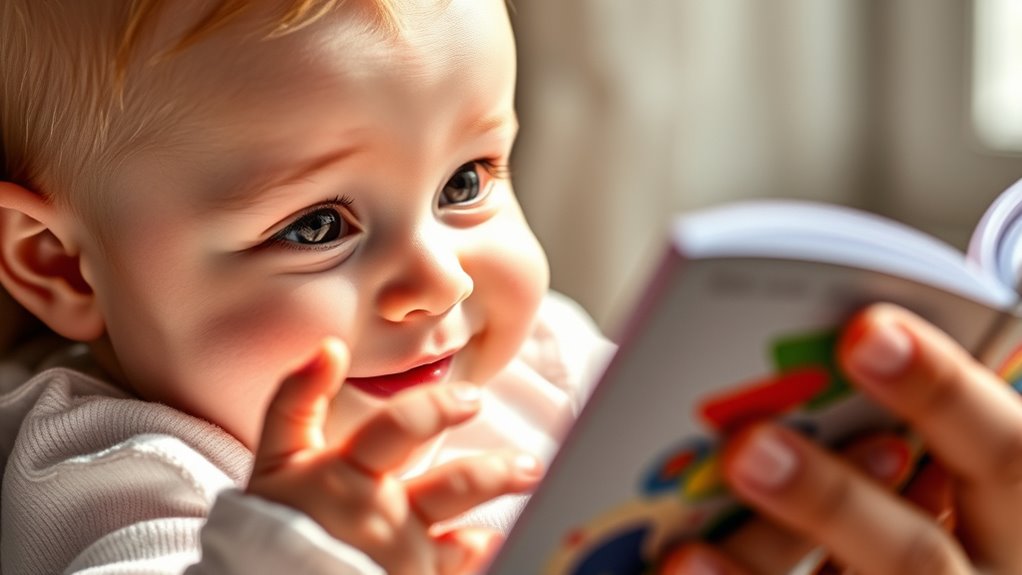
Have you ever wondered how infants learn to speak so quickly and effortlessly? It’s truly fascinating to watch a baby go from cooing and babbling to forming words and sentences. One way to support this natural process is by introducing sign language early on. Using sign language with your baby can bridge the gap between their limited verbal skills and their desire to communicate. Simple signs like “milk,” “more,” or “all done” can help your baby express their needs before they can speak. This early form of communication not only reduces frustration but also encourages your baby’s language development. When you consistently use signs, your baby begins to associate gestures with words, creating a visual link that complements their spoken language. This method fosters a more interactive learning environment, where your little one feels understood and motivated to communicate more. Additionally, incorporating sign language can support language acquisition by helping babies grasp the connection between gestures and words more effectively.
In addition to boosting early communication, incorporating sign language can positively influence bilingual development if you’re raising your child in a multilingual environment. When your baby is exposed to two languages, they often start speaking later than their monolingual peers, but that’s perfectly normal. Using signs in both languages can help clarify meaning and reduce confusion. For instance, signing “eat” in one language and its equivalent in another helps your baby differentiate between the two. It also supports cognitive flexibility, as bilingual children tend to develop better problem-solving skills and a deeper understanding of language structures. Sign language acts as a visual bridge, making the transition between languages smoother and more concrete. It gives your baby a tool to express themselves in either language, even before they develop full verbal fluency. This can be especially helpful in noisy environments or when your child is still learning the sounds of each language.
As an affiliate, we earn on qualifying purchases.
Frequently Asked Questions
How Can Parents Effectively Encourage Babbling?
You can effectively encourage babbling by engaging in gesturing games and mimicking your baby’s sounds. Respond to their babbles with enthusiasm, repeating and expanding on their sounds to promote vocal imitation. Play interactive games that involve simple gestures and sounds, which help your baby associate actions with words. Consistently encourage their attempts, showing patience and excitement, so they feel motivated to keep practicing their early communication skills.
What Are Early Signs of Speech Delays?
Think of your child’s speech development as a garden in early spring—if signs of delay appear, such as limited babbling by 12 months, lack of gestures, or no response to sounds, it’s time to act. These early signs of delay can signal the need for early intervention, which helps your child catch up. Addressing these signs promptly nurtures their communication skills and guarantees they flourish.
How Does Bilingual Exposure Affect Language Development?
Bilingual exposure can positively influence your child’s language development. It may lead to code switching benefits, helping them become flexible communicators. Bilingual exposure advantages include enhanced cognitive skills, better problem-solving, and increased cultural awareness. While some may worry about delays, research shows children can successfully learn two languages simultaneously. Your support and consistent exposure help your baby develop strong, diverse language skills, setting a solid foundation for future communication.
When Should I Worry About My Baby’s Speech Progress?
You shouldn’t worry about your baby’s speech progress until they’re around 12 months old and haven’t started babbling or making sounds. Most babies hit key speech milestones by age 1, but if your little one shows no signs of developmental concerns by 18 months, it’s worth consulting a specialist. Remember, every child develops at their own pace, but early intervention can make a big difference if delays persist.
Are There Recommended Activities to Promote Vocabulary Growth?
You can promote your baby’s vocabulary growth through engaging activities like interactive reading and naming games. During interactive reading, point to pictures and encourage your baby to repeat words, fostering connection and recognition. Play naming games by naming objects around you and asking your baby to do the same, which builds their word bank and confidence. Consistent, fun interactions strengthen their language skills naturally and effectively.
infant sign language flash cards
As an affiliate, we earn on qualifying purchases.
As an affiliate, we earn on qualifying purchases.
Conclusion
Think of your baby’s language journey as planting a tiny seed. With your nurturing words, gentle encouragement, and patience, that seed will sprout into a vibrant, thriving tree of communication. Every sound you encourage, every story you share, helps it grow stronger. Soon, those delicate sprigs will turn into sturdy branches, reaching out to connect with the world. Your support turns this beautiful garden of language into a lush, lively landscape your little one will explore for years to come.
baby sign language books for parents
As an affiliate, we earn on qualifying purchases.
As an affiliate, we earn on qualifying purchases.
early communication sign language toys
As an affiliate, we earn on qualifying purchases.
As an affiliate, we earn on qualifying purchases.
Halloween Picks
halloween
As an affiliate, we earn on qualifying purchases.