
TL;DR

Turn the school run and nap time into listening time
- Thousands of audiobooks, podcasts and originals
- Listen on your phone, tablet or Echo — also offline
- Cancel anytime
A Motherly report updated Sept. 30 describes one mother’s experience of severe back pain during labor and explains how back labor can differ from expected contraction pain. An OB-GYN says baby position may contribute, but back pain alone does not definitively show the baby’s position or explain the cause.
Motherly updated a report on back labor on Sept. 30, describing how one mother experienced severe lower-back pain during labor and did not recognize the contractions she expected. The account, which includes comments from board-certified OB-GYN Brandye Wilson-Manigat, says baby position can contribute to back pain, but is not the only possible factor.
The writer says she first heard a detailed description of back labor from a friend while she was 20 weeks pregnant. At 37 weeks, she woke with intense back pain and went to a hospital, where a nurse told her it “could be” back labor. The baby was reported to be fine at that visit, and the pain eased for a time. It returned the following night, accompanied by vomiting, and she went back to the hospital. Her care team also monitored a concern about the baby’s heart rate.
The writer recalls that contractions were difficult to identify amid the back pain. She says that when it was time to push, she could not tell what a contraction had felt like. Her account does not establish a definitive cause for her pain or a diagnosis of the baby’s position; she describes uncertainty about what was happening during labor.
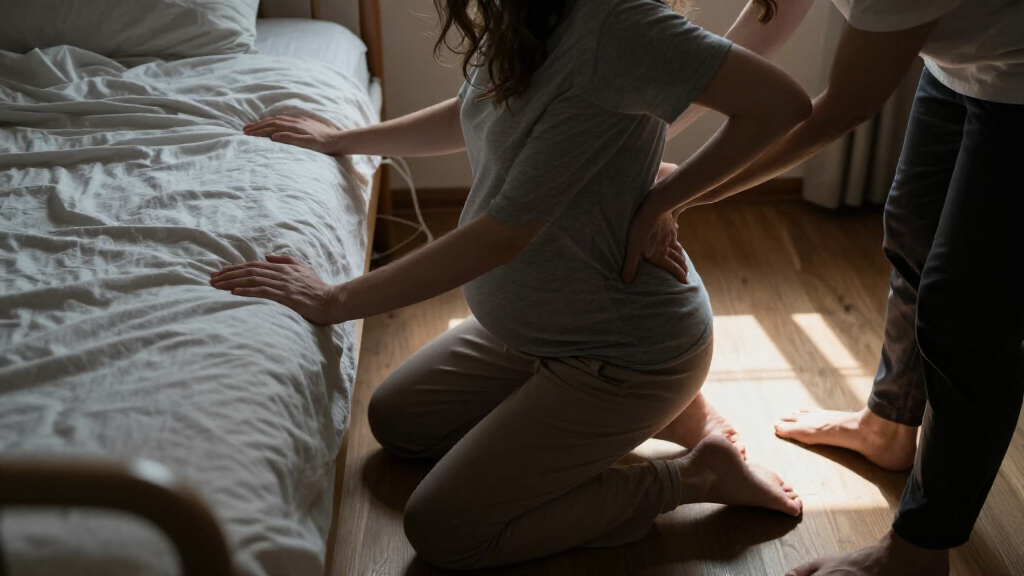
Wilson-Manigat describes back labor as intense lower-back pain during labor. She says a baby’s position may put increased pressure on the sacrum, tailbone and nearby tissues during contractions. Experiences vary: some women report constant pressure, while others feel sharp pain that worsens with contractions. The doctor characterizes pain as subjective and says some women find back labor harder to cope with than labor pain felt mainly in the abdomen.
Recognizing Pain Beyond Contractions
The report highlights a gap between a common expectation of labor and one person’s experience: the writer expected to recognize contractions, but remembers back pain as the dominant sensation. That distinction can matter to people preparing for birth because a description of labor limited to abdominal contractions may not match every account.
The article does not establish how often back labor occurs or show that it is routinely overlooked in maternity care. It does make the narrower point that back labor can catch someone by surprise, and that explaining it before labor may help set expectations. The author’s account also illustrates why uncertainty can remain even after a hospital assessment: the nurse said it could be back labor, while the writer says she never received a definitive explanation of the pain’s cause.
For readers, the practical relevance is awareness, not self-diagnosis. Severe pain and concerns during labor are matters to raise with a maternity care team. The article describes one person’s experience and a clinician’s general explanation; it does not offer an individual assessment or a prediction of what another person’s labor will feel like.
How Baby Position May Contribute
Wilson-Manigat says back labor may be associated with the baby’s skull resting against the back of the mother’s pelvis, a position described as occiput posterior. She cautions that back labor is not a definitive sign of that position. The report also lists pelvic shape or size, a baby being too large for the available space, and conditions that prevent rotation as factors that may be involved.
The article presents these as possible contributors, not a confirmed explanation for the writer’s own labor. Wilson-Manigat says doctors cannot always identify why a particular person experiences back pain. The account also frames back labor as a different way of experiencing labor rather than a separate type of labor, with some pain coping strategies overlapping.
““Back labor is a term used to describe intense pain in the lower back during labor.””
— Brandye Wilson-Manigat, board-certified OB-GYN, as quoted by Motherly
Cause and Frequency Remain Unclear
The report does not give a prevalence estimate for back labor, and it does not establish why it is less commonly discussed. Wilson-Manigat says it is not what most people experience and that it can be folded into broader discussion of labor pain. The article provides no study data or comparison baseline for those observations.
The cause of the writer’s pain also remains uncertain in the account. Her symptoms, the hospital visits and the heart-rate monitoring concern are described from her perspective, but the article does not provide medical records or a final clinical explanation. It is not clear whether clinicians later identified a fetal position or another cause.
What Expectant Readers Can Ask
Motherly’s report does not announce a policy change, new clinical guidance or a scheduled follow-up. Its immediate contribution is an updated personal account and an explanation from an OB-GYN. Readers who want to discuss labor expectations can ask their maternity care team how back pain may present, what factors clinicians assess, and when pain or other symptoms call for contacting the team.
Any future explanation of this individual case would depend on information from the writer or her clinicians; none is included in the report. For now, the article’s central point is limited: back labor is possible, its cause may not be clear, and experiences of labor pain differ.
Key Questions
What does back labor mean?
In the report, OB-GYN Brandye Wilson-Manigat defines it as intense lower-back pain during labor. Some women describe constant pressure; others report sharp pain that worsens with contractions.
Does back pain mean the baby is facing the wrong way?
No. Wilson-Manigat says a posterior position may be a clue, but back labor does not definitively identify the baby’s position. The report lists other possible factors as well.
Did the article determine what caused the writer’s pain?
No. The writer describes hospital visits and severe pain, but says she did not receive a definitive explanation. The report does not provide a final diagnosis.
What should someone do if they have severe pain during labor?
The article is not individualized medical guidance. People experiencing severe pain or other concerns during labor should contact their maternity care team for advice specific to their situation.
Source: rss
Fall Picks
fall essentials
As an affiliate, we earn on qualifying purchases.