
TL;DR
Educational toys for toddlers are toys that invite children to explore, practice skills, imagine, or interact; they do not need screens or an “educational” label. Choose sturdy toys that fit your child’s age and interests, check for recalls and hazards, and use everyday play to talk, build, move, and pretend together.
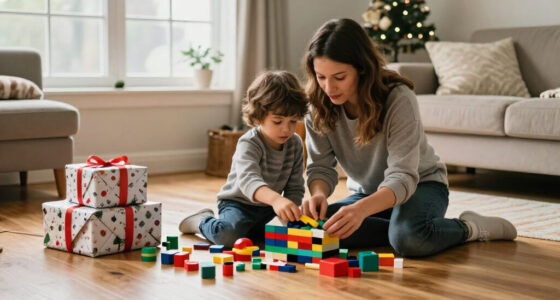
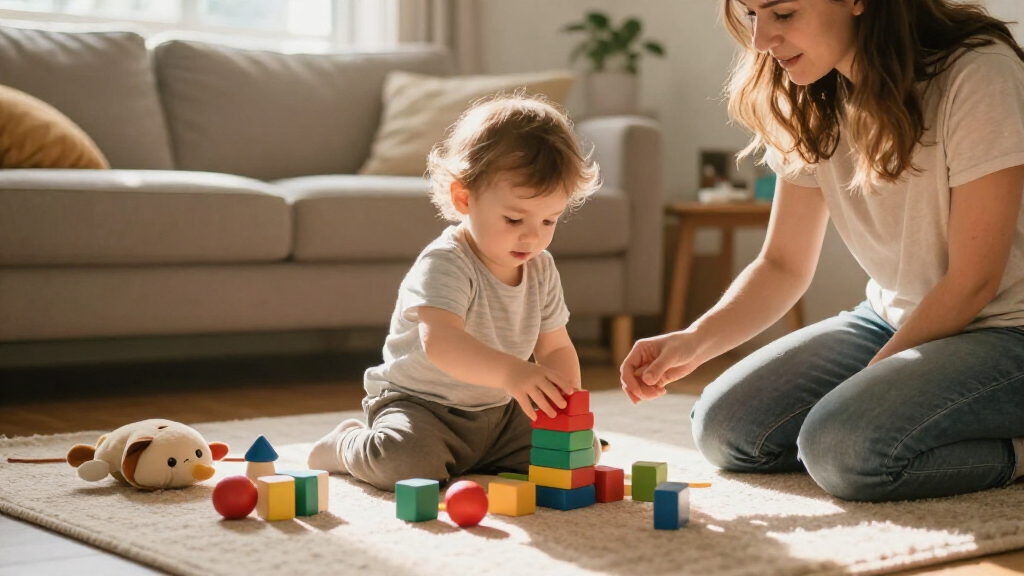
A tower of blocks can teach a toddler more about cause and effect than a toy that flashes every time you press a button. The blocks wobble, tumble with a clatter, and invite another try. That kind of hands-on play gives your child room to explore at their own pace.

Give the gift of listening to the whole family
- Choose a 1-, 3-, 6- or 12-month membership
- They pick the audiobooks they love
- Easy to send by email
This guide explains what makes a toy useful for learning, how to match choices to your toddler, and what to check for safety before play begins. You’ll also find ways to turn ordinary moments—stacking cups in the bath or naming pictures at bedtime—into easy chances to talk and play.
You don’t need a playroom full of gear. A few age-appropriate toys, a watchful adult, and time to follow your child’s curiosity can go a long way.
Choose toys that match your toddler’s age guidance, abilities, and interests; development varies from child to child.
Simple objects such as blocks, cups, books, and crayons can invite many kinds of play without electronic features.
Talk about what your toddler is doing, pause, and follow their lead to make play more interactive.
Inspect toys for damage, small parts, loose magnets, and accessible batteries, and check CPSC recall notices in the United States.
Rotate a few toys and use safe household items to add variety without buying a large collection.
What Makes a Toy Educational? Look for Room to Explore
An educational toy gives your toddler a useful chance to explore, practice, imagine, or interact. It does not need a special label, app, or speaker; a set of stacking cups can introduce size, order, and cause and effect as your child nests them, knocks them over, and starts again. Each repetition lets your child compare what happened with what they expected. That’s why an ordinary toy can be engaging over time: the child changes the action and gets a new result.
Think of a toy as an open door, not a tiny teacher. A toy that allows more than one kind of play can keep offering new possibilities as your child grows. A cardboard box might be a tunnel one day and a pretend bus the next, while a chunky crayon lets a toddler make bold marks without needing to follow a lesson. Open-ended play asks the child to supply some of the ideas, which can invite imagination and decision-making. A more structured toy can still be enjoyable, but if it has only one correct action, it may offer fewer ways to adapt the play.
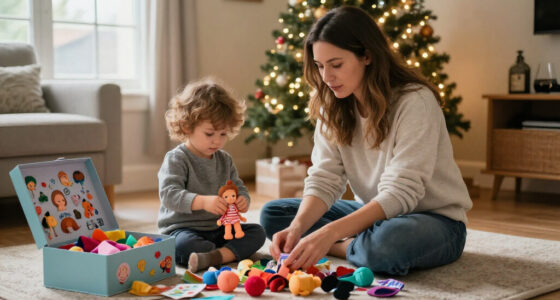
Educational toys can support several kinds of practice. Picture books, songs, and pretend play invite conversation; large blocks and shape sorters exercise hand control; balls and push toys encourage movement. Dolls and toy kitchens can give you a natural reason to take turns, name feelings, or pretend to serve lunch. These categories overlap: carrying blocks across the room uses movement, and deciding where to put them involves planning. You don’t need to make every play session cover every skill; noticing what your child is already exploring can help you choose what to offer next.
For example, if your toddler drops a ball from a low step, you might say, “It rolled under the chair—where did it go?” The answer doesn’t need to be right. Shared attention and a few warm words turn a simple game into a moment of discovery. Your comment connects the action to language, while pausing gives your child time to look, respond, or try again. If they are absorbed in the ball’s movement, a short observation may keep the play going better than a string of questions.
Products Worth Considering

Owlet Dream Sock Smart Baby Monitor

LEGO Technic Lamborghini Sián FKP 37 Model Building Kit, 3,696 Pieces

LEGO Marvel Avengers Tower 76269 Building Set
As an affiliate, we earn on qualifying purchases.
Choose Toys That Fit Your Child’s Age, Skills, and Interests
Choose toys by checking the manufacturer’s age guidance alongside your toddler’s current abilities and interests. Younger toddlers often enjoy large, easy-to-grasp objects, while older toddlers may be ready for simple puzzles, pretend-play props, and more involved building; children develop at different rates. Age guidance is a useful first filter because it can flag parts or activities that are unsuitable, but it does not predict whether your child will find a toy satisfying. A toy that is too difficult may lead to frustration, while one that is too easy may lose its appeal; watching how your child approaches it helps you judge the fit.
Age labels help you spot products that may be unsuitable, but they don’t tell you everything about how your child will use a toy. Your toddler might happily repeat a simple stacking game for ten minutes while ignoring a complicated toy designed for the same age range. Watch what catches their eye: lids to open, things to carry, or pictures to name. Those preferences show you what kind of action currently holds their attention. A toy that connects with that interest is more likely to get used, though you can still offer something new now and then to let curiosity broaden.
When you’re choosing educational toys for a toddler who loves water, for instance, a few large cups can make a supervised bath or water-table session more engaging. Your child can pour, fill, and compare what holds more. The play stays simple, and you can describe what you see: “That blue cup is full; the yellow one is empty.” This choice works because the cups are easy to adapt to the child’s pace: they can repeat pouring or try comparing amounts. It also calls for close supervision around water, so the setting and adult attention matter as much as the toy itself.
Follow your child’s lead rather than turning play into a test. If they use a puzzle piece as a pretend phone, you can join the story before suggesting where the piece fits. That flexibility keeps the child’s idea at the center and may reveal what they are ready to explore. A toy’s value often shows up in the play your child returns to, not in how quickly they complete a task.
Use Simple Toys to Build Language, Movement, and Problem-Solving
Simple toys give toddlers chances to repeat actions, make choices, and explore what happens next. A ball can roll, bounce, hide under a sofa, and return in a game with you, so one object creates several opportunities for movement, prediction, and conversation. Repetition matters because toddlers can notice how changing one action changes the result. A ball pushed gently travels differently from one tossed, and your child can investigate that difference without needing a formal instruction.
Blocks make a clear example. Your toddler might stack two, watch them topple, and reach for a wider base. You can describe the action—“That tower fell down”—or invite a next step with “Shall we try a big block on the bottom?” The goal is not to deliver a lesson; it’s to give your child room to try and to hear useful words during play. Describing what happened gives language to the experience, while a suggestion can help when your child seems ready for a new idea. Too many prompts, though, can turn exploration into a sequence of adult directions, so a pause after one comment lets your toddler decide whether to continue, change the plan, or ask for help.
Here’s a small routine you can try with nesting cups after lunch:
- Let your toddler choose a cup and handle it freely. Choosing gives them a simple way to direct the game.
- Name what you notice: “You put the little cup inside the big one.” This links an action to words without demanding an answer.
- Pause and watch before offering another idea. The pause gives your toddler time to respond through a look, sound, or movement.
- Follow the next move, whether your child stacks, nests, fills, or carries the cups. Adapting to their idea keeps the exchange playful instead of making it feel like a task.
This kind of back-and-forth leaves space for your toddler to lead. If they start filling cups with toy animals instead, the game has changed—and you can follow that story. Toys are usually simple at their most useful: they invite an action and leave the next move to the child. The adult adds attention and words, but the child still gets to test ideas and shape what happens.
Compare Electronic and Traditional Toys Before You Buy
Electronic toys can be fun, but lights and sounds don’t automatically make a toy more educational. A useful comparison looks at what the child gets to do, how adults can join in, and whether the toy leaves space for independent ideas. A toy that responds to a button can hold attention, but a response chosen by the toy may give the child fewer chances to decide what happens next. Traditional toys often leave more of that choice to the child, though they may need an adult to get a game started.
| What to compare | Electronic toy | Traditional toy |
|---|---|---|
| Child’s choices | May offer preset buttons or responses | Often invites the child to decide what happens |
| Examples | Talking activity toy or sound board | Blocks, cups, crayons, or picture books |
| Adult play | You can repeat or talk about its sounds | You can build, draw, read, and pretend together |
| Practical checks | Look for accessible batteries and connected features | Check for loose parts, sharp edges, and wear |
Picture a toddler pressing a button to hear an animal sound. You can turn that moment into a chat by asking, “Can you find the cat in this book?” A block, meanwhile, might become a cat’s bed in the child’s own pretend game. Both toys can support play; the key is what happens around them. The electronic toy offers a prompt and an immediate response, while the block can take on whatever role the child imagines. Neither format guarantees a richer experience on its own; your child’s interest and the possibilities for interaction matter more than the feature list.
When deciding, ask whether the toy encourages your child to make choices and whether you can easily join the play. A toy does not need to teach letters or numbers early to be useful. A broad mix of talking, movement, pretend play, and exploration offers plenty to do without making play feel like a formal lesson. Also weigh practical tradeoffs: electronics may need batteries and can include small components, while traditional toys can still break, wear down, or contain unsuitable parts. Checking the toy’s condition and age guidance matters whichever type you choose.
Check Toy Safety, Age Guidance, and CPSC Recalls
Before handing your toddler a toy, check that it matches the manufacturer’s age guidance, has no loose or broken parts, and does not present small-part, magnet, or battery hazards. Toddlers still put objects in their mouths, so examine toys regularly, especially after rough play or sharing. This quick check matters because a toy that was suitable when intact can become unsafe as it wears down. Age labels help screen out products with parts or features that may not suit young children, but inspection catches changes that occurred after purchase.
Look over seams, edges, and attachments. A damaged seam on a stuffed toy may expose filling; a loose button battery or magnet can pose a serious danger if a child gets access to it. Keep toys with accessible batteries or small detachable pieces out of reach when your toddler plays without close supervision. Small parts can be hard to notice among other toys, so checking the floor and play area also helps reduce the chance that a detached piece is overlooked.
Make a quick check part of putting out a toy. For example, before setting out chunky blocks, scan for cracks and loose pieces, then confirm they are large enough for your child’s age and abilities. Supervise climbing, water play, and any activity where your toddler may fall or mouth an object. The amount of attention needed depends on both the activity and your child: water and climbing require you to stay close, while even a familiar toy deserves a fresh look if it has been damaged or shared.
Check current CPSC recall notices for products sold in the United States, and consult the relevant product-safety authority where you live. A recall can identify a hazard that is not obvious from looking at the toy, so checking provides information an ordinary inspection cannot. A toy that was safe when new can become damaged with use, and recalls can change what you need to know. Follow product instructions and ask your pediatrician for guidance if you have questions about your child’s development or play needs.
Make Playtime Work Without Buying More Toys
You do not need a large toy collection to give your toddler varied play. A manageable set of safe, familiar items can support building, movement, pretend play, and conversation; putting a few toys away for a while can make old favorites feel new again. Having fewer items available at once can also make it easier for a toddler to settle into one game, though children differ in what holds their attention. Rotation is a way to refresh choices, not a schedule you need to follow perfectly.
For example, you could leave out blocks, a few board books, and a ball this week, then swap the ball for chunky crayons and a doll next week. The blocks remain familiar, while the changing options offer a fresh invitation. Watch how your child uses each item before deciding whether it’s worth keeping in rotation. If a toy gets ignored, it may be a mismatch for your child right now rather than a waste; it could become interesting later as their skills and pretend ideas change.
Everyday objects can add variety, too, if they are safe for your child and used with supervision. Large containers might become a place to put and retrieve soft toys; you can narrate the game as your toddler carries each one across the room. Check that objects have no small parts, sharp edges, or other hazards before offering them. Household items can make play feel familiar and flexible, but their safety may be less predictable than a toy designed for children, so inspect them and stay nearby.
Responsive play matters more than a shopping list. If your toddler stacks two cups and then bangs them together, you can copy the rhythm, smile, and wait for their next move. That short exchange can keep the game going while letting your child decide what happens next. Following their lead makes the most of what is already available: your attention helps turn a simple object into a shared game.
Frequently Asked Questions
What makes a toy educational for a toddler?
A toy is educational when it gives your toddler a chance to explore, practice, imagine, or interact. Blocks, picture books, pretend-play props, and nesting cups can all support play without carrying an “educational” label.
How do I choose a toy for my toddler’s age?
Start with the manufacturer’s age guidance, then consider your child’s abilities and interests. Younger toddlers often enjoy large, easy-to-grasp objects, while older toddlers may explore simple puzzles or more involved pretend play; individual development varies.
Are electronic toys better than traditional toys?
Not automatically. Electronic features may engage your child, while traditional toys often leave room for them to decide what happens next. Either kind can support play when it encourages choices, conversation, or exploration.
How many toys does a toddler need?
There is no required number. A manageable selection of safe, varied toys is often enough, and rotating some items can renew interest without buying more.
How can I check whether a toddler toy is safe?
Follow age guidance and inspect the toy for loose parts, sharp edges, damage, accessible button batteries, and small magnets. Check current CPSC recalls in the United States, and supervise play when your child may mouth objects or use a toy in a risky way.
Do expensive toys teach toddlers more?
Price does not reliably measure a toy’s learning value. A few large blocks or cups can spark sorting, stacking, and pretend play; choose safe items that your child enjoys using.
Conclusion
Choose a safe, age-appropriate toy your toddler wants to return to, then give them room to explore it. A handful of blocks, a well-loved picture book, or a few nesting cups can start a lively game when you join with words and attention.
When the cups clatter across the kitchen floor, you don’t need a lesson plan. Follow the little hands, share a laugh, and see what they try next.