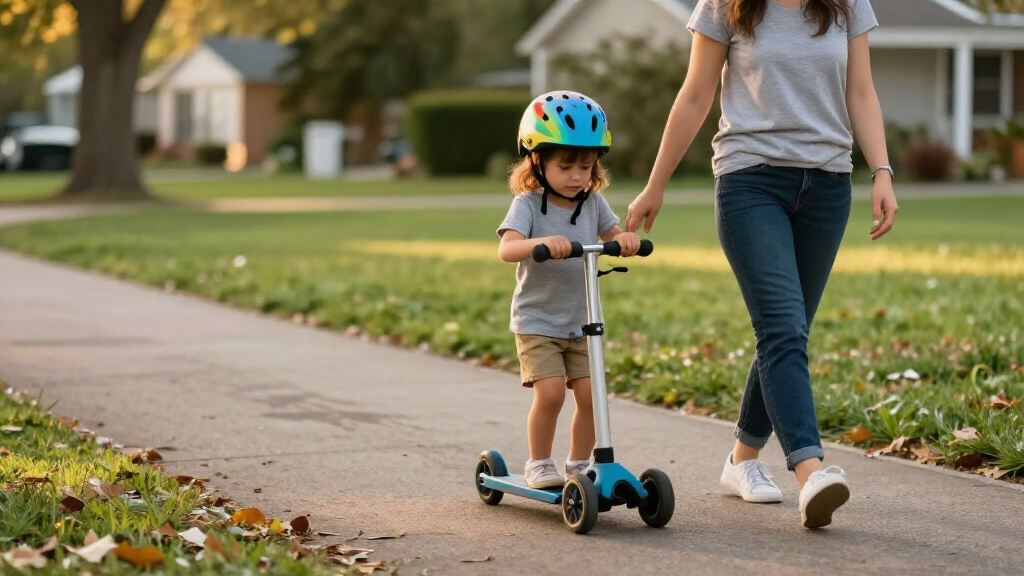

For a strong all-around pick, I’d start with the Segway Ninebot C2 Kids Electric Scooter, while the Gotrax GKS Mini stands out for its simple, kid-focused setup and the Hiboy Q2 Lite for families who want a seat. The best kids electric scooters differ most in how they balance speed and control, rider stability, portability, and features such as lights or adjustable handlebars. Three-wheel models can offer a steadier starting point, while two-wheel scooters may suit children ready for more balance practice. A higher motor rating or longer claimed range does not automatically make a scooter the right fit for a young rider. Keep reading for my breakdown of all 11 picks, the tradeoffs that separate them, and a guide to choosing by age, ability, and everyday use.

Turn the school run and nap time into listening time
- Thousands of audiobooks, podcasts and originals
- Listen on your phone, tablet or Echo — also offline
- Cancel anytime
Complete the kit


Key Takeaways
- The Segway Ninebot C2 is my best overall pick because it offers a more balanced option for families comparing a dedicated kids’ scooter with simpler or more feature-heavy designs.
- The Gotrax GKS Mini favors straightforward riding, making it a more natural candidate for families who value a simple setup over a long feature list.
- Three-wheel scooters put stability ahead of a conventional scooter feel; the two similar three-wheel listings should be compared closely for verified specifications before choosing between them.
- Lights and displays are not substitutes for fit or braking: models such as the FanttikRide C9 Pro, SIMATE S5, and WEELMOTION add visible features, but buyers should still check size, controls, and stopping systems.
- The Segway Ninebot C2 Pro and Hiboy Q2 Lite serve more specific needs: compare the C2 Pro for a more feature-oriented Segway option and the Q2 Lite when a seat is a priority.




| kids electric scooter | Maximum speed | Recommended age | Maximum range | Brakes |
|---|---|---|---|---|
| Gyroor Electric Scooter for Ki | 5 mph | — | — | — |
| FanttikRide C9 Pro Kids’ Elect | — | 8–12 years | 5 miles | Rear foot brake and rear EABS brake |
| Gotrax GKS Mini Electric Scoot | 7.5 mph | 6–12 years | 3.75 miles | Electronic brake and rear foot brake |
| SIMATE S5 Electric Scooter for | 8.7 mph | 6–14 years | 5 miles | Electronic brake and foot brake |
| Segway Ninebot C2 Kids Electri | 9.9 mph | 6–10 years | 8.7 miles | — |
| Foldable Electric Scooter for | 6 mph | 6–12 years | — | Dual brakes; front braking |
| 3-Wheel Electric Scooter for K | — | — | — | — |
| WEELMOTION Foldable Electric S | Up to 10 mph | — | Up to 5 miles | Electronic front brake and rear fender brake |
| Three-Wheel Electric Scooter f | — | 3–12 years | — | — |
| Hiboy Q2 Lite Kids Electric Sc | — | 4–10 years | Up to 5 miles | Front braking |
| Segway Ninebot C2 Pro Kids Ele | 12.4 mph | — | 9.3 miles | — |
More Details on Our Top Picks
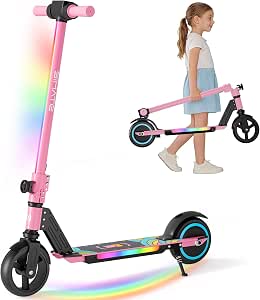
Gyroor Electric Scooter for Kids with LED Light-Up Wheels and Deck
The Gyroor is the youngest-rider pick here: its 5 mph top speed and kick-start activation suit children who are still learning to manage a powered scooter. At 9.3 pounds, it is also much easier for a small rider or parent to handle than the 16.3-pound Gotrax GKS Mini. Multicolor lights on the wheels and deck add visibility and appeal, while the textured deck and rear foot brake give new riders straightforward features to learn. The two handlebar heights offer some room to grow, though less flexibility than the FanttikRide C9 Pro’s three settings. The tradeoff is limited pace and battery capacity: older or more confident children may outgrow its speed, and the 2.5 Ah battery may constrain ride time. I’d choose it for short, supervised outings, not longer trips.
Pros:- Low 5 mph top speed and kick-start activation suit beginner riders.
- At 9.3 pounds, it is lighter than the Gotrax GKS Mini and easier for young children to manage.
- Two handlebar heights accommodate some growth.
- LED-lit wheels and deck, a textured surface, and a rear foot brake add visibility and basic riding control.
Cons:- The 5 mph limit may feel restrictive to older children.
- The 2.5 Ah battery may limit ride duration.
- Two handlebar settings provide less adjustment than the FanttikRide C9 Pro.
Best for: Parents of children ages 3–8 who want a lightweight first electric scooter for short, supervised rides.
Not ideal for: Older children seeking faster rides or families wanting longer outings, since the speed tops out at 5 mph and battery capacity is 2.5 Ah.
- Target age:3–8 years
- Motor power:100W
- Maximum speed:5 mph
- Maximum rider weight:110 lbs
- Handlebar heights:29.5 and 33.5 inches
- Battery capacity:2.5 Ah
- Charge time:4 hours
- Weight:9.3 lbs
Our verdict“Choose the Gyroor for a young beginner who needs a light, simple scooter and does not need higher speeds or long rides.”
FanttikRide C9 Pro Kids’ Electric Scooter with Rainbow Lights
The FanttikRide C9 Pro gives older children a useful step between a slow starter scooter and a faster model: riders can choose 5, 8, or 10 mph rather than being locked into one pace. That makes it more adaptable to changing confidence than the Gyroor, which tops out at 5 mph, while its three handlebar heights suit riders from 3.9 to 5.2 feet. A display, five light patterns, and one-step folding add day-to-day convenience, and the rear foot and EABS brakes provide two braking methods. Its stated range is only 5 miles, though, and a five-hour charge plus no listed suspension makes it less suited to long or bumpy rides. Compared with the SIMATE S5, it offers more explicit handlebar adjustment but less listed suspension. I’d favor it for neighborhood rides and easy storage.
Pros:- Three speed settings let riders choose a pace that matches their confidence.
- Three handlebar heights suit a range of rider heights and allow adjustment as children grow.
- One-step folding makes storage and transport easier.
- LED display and five light patterns add ride information and visibility.
Cons:- The stated maximum range is 5 miles.
- A full charge takes 5 hours.
- No suspension is listed, unlike the SIMATE S5’s dual suspension.
Best for: Families with riders ages 8–12 who want selectable speeds, adjustable handlebars, and a scooter that folds for storage.
Not ideal for: Children who need extra cushioning on rough paths or families planning rides beyond the stated 5-mile range.
- Recommended age:8–12 years
- Recommended rider height:3.9–5.2 ft
- Speed settings:5, 8, and 10 mph
- Maximum range:5 miles
- Ride time:Up to 40 minutes
- Handlebar heights:31.7, 34.1, and 36.5 inches
- Brakes:Rear foot brake and rear EABS brake
- Weight:14 lbs
Our verdict“Pick the C9 Pro for an older child who benefits from selectable speeds and adjustable fit more than suspension or extended range.”
Gotrax GKS Mini Electric Scooter for Kids, 150W Motor, 3.75-Mile Range
The Gotrax GKS Mini stands out for its kick-to-start control and two braking methods, making it a practical choice for families who want clear start-and-stop routines for riders ages 6–12. The motor engages only after the scooter reaches about 1.87 mph, which helps reduce accidental throttle starts. An electronic brake and rear foot brake give children more than one way to slow down; the Gyroor, by comparison, has a rear foot brake only. Solid 6-inch wheels avoid punctures, and the non-slip deck supports everyday riding, but solid tires and the lack of suspension mean less cushioning over uneven ground. Its 7.5 mph maximum is slower than the Segway Ninebot C2’s 9.9 mph, while the stated range is just 3.75 miles. The six-hour charge is another limitation for frequent rides.
Pros:- Kick-to-start activation helps prevent sudden motor engagement.
- Electronic and rear foot brakes provide two stopping methods.
- Solid 6-inch rubber wheels are designed to resist punctures.
- Non-slip deck supports stable footing during everyday rides.
Cons:- The stated maximum range is 3.75 miles.
- A full charge takes 6 hours.
- No suspension is listed, limiting cushioning on uneven surfaces.
Best for: Families of riders ages 6–12 who prioritize kick-to-start operation, two braking options, and solid puncture-resistant wheels.
Not ideal for: Children who need a longer-range scooter, or families whose regular routes include rough surfaces where suspension would help.
- Recommended age:6–12 years
- Motor power:150W
- Maximum speed:7.5 mph
- Maximum range:3.75 miles
- Maximum rider weight:120 lbs
- Battery charge time:6 hours
- Brakes:Electronic brake and rear foot brake
- Certifications:UL 2272 and CPC
Our verdict“Choose the GKS Mini for a child who benefits from kick-to-start operation and dual braking, but look elsewhere for longer rides or rough paths.”
SIMATE S5 Electric Scooter for Kids, with LED Display, Colorful Lights, Adjustable Height, and Dual Brakes
Among these five, the SIMATE S5 is the clearest choice for riders who want added comfort on everyday paths: its dual suspension is a feature the FanttikRide C9 Pro and Gotrax GKS Mini do not list. It also pairs an electronic brake with a foot brake and delays motor engagement until a 2 mph push, giving children familiar ways to start and stop. At 8.7 mph, it is quicker than the Gotrax GKS Mini but slower than the Segway Ninebot C2, a useful middle ground for riders ages 6–14. The display shows speed, setting, and battery capacity, and the scooter folds for storage. Its main fit limitation is the listed fixed 36.2-inch handle height, which offers less adjustment than the FanttikRide’s three positions. The range is capped at 5 miles, so I’d pick it for comfort over distance.
Pros:- Dual suspension offers cushioning not listed for the FanttikRide C9 Pro or Gotrax GKS Mini.
- Electronic and foot brakes provide two stopping methods.
- Start-up assist requires a 2 mph push before the motor engages.
- LED display shows speed, setting, and battery capacity.
Cons:- The listed handle height is fixed at 36.2 inches, limiting fit adjustment.
- The stated maximum range is 5 miles.
- Its 8.7 mph top speed is lower than the Segway Ninebot C2’s 9.9 mph.
Best for: Riders ages 6–14, especially those using uneven neighborhood paths, whose families want dual suspension and two braking methods.
Not ideal for: Children who need adjustable handlebar heights or families seeking rides beyond the stated 5-mile range.
- Recommended age:6–14 years
- Recommended rider height:4.0–5.3 ft
- Motor power:130W
- Maximum speed:8.7 mph
- Maximum range:5 miles
- Maximum weight capacity:154 lbs
- Suspension:Dual suspension
- Brakes:Electronic brake and foot brake
Our verdict“Choose the SIMATE S5 for a rider who values suspension and dual brakes more than adjustable handlebars or extended range.”
Segway Ninebot C2 Kids Electric Scooter
The Segway Ninebot C2 has the strongest stated distance and ride-time figures in this group: up to 8.7 miles and 70 minutes, compared with the 5-mile limits listed for the FanttikRide C9 Pro and SIMATE S5. Its 9.9 mph maximum speed and three riding modes give children room to choose among different paces, while kick-to-start activation helps avoid a sudden launch. A rear drum brake and mechanical handbrake offer two ways to stop, and IPX4 water resistance adds some protection against splashes. The compromise is fit: its 110-pound rider limit is lower than the Gotrax GKS Mini’s 120 pounds and the SIMATE S5’s 154 pounds. At 17.2 pounds, it is also heavier than the FanttikRide. I’d choose it for longer rides, not for the lightest carry.
Pros:- Stated range of up to 8.7 miles exceeds the 5-mile figures for the FanttikRide C9 Pro and SIMATE S5.
- Three riding modes let children choose a suitable pace.
- Kick-to-start activation helps prevent sudden acceleration.
- Rear drum and mechanical handbrakes provide two braking methods; IPX4 water resistance adds splash protection.
Cons:- The 110-pound maximum rider weight is lower than the Gotrax GKS Mini and SIMATE S5 limits.
- At 17.2 pounds, it is heavier than the FanttikRide C9 Pro.
- A full charge takes 5.5 hours, and the rigid setup may feel less cushioned on uneven surfaces.
Best for: Families with riders ages 6–10 who want a longer stated range, selectable riding modes, and two brake types.
Not ideal for: Riders nearing or above 110 pounds, or families who need a lighter scooter to carry and store.
- Recommended age:6–10 years
- Maximum rider weight:110 lbs
- Maximum speed:9.9 mph
- Maximum range:8.7 miles
- Run time:Up to 70 minutes
- Charging time:5.5 hours
- Riding modes:3
- Safety certification:UL 2272 and UL 2271
Our verdict“Choose the Ninebot C2 for a child who can use its 110-pound capacity and would benefit from a longer stated range and three riding modes.”
Foldable Electric Scooter for Kids, 80W Motor, 6 MPH, LED Deck Lights, Adjustable Handlebar
I’d shortlist the CBD YD531 for families who want a simple, slower scooter that can keep pace as a child grows. Its handlebar adjusts to three heights, up to 36 inches, giving it a fit advantage over the WEELMOTION, whose handlebar is fixed. The 6 mph maximum is also gentler than that model’s 10 mph ceiling, though speed alone does not replace adult supervision or protective gear. Dual brakes and UL certification add useful safety-focused features, while the folding, lightweight design helps with storage and carrying. The tradeoff is a more limited riding environment: its small solid wheels are intended for paved paths, not rough ground. A 140-pound capacity may also make it a shorter-lived choice for larger, fast-growing kids.
Pros:- Three handlebar heights, reaching up to 36 inches, accommodate a range of child sizes.
- Dual brakes and UL certification provide safety-focused features.
- Folds and is lightweight for easier storage and carrying.
- LED deck lighting adds visibility in dim conditions.
Cons:- The 6 mph maximum is slower than the WEELMOTION’s stated top speed.
- Small solid wheels are intended for pavement rather than rough terrain.
- The 140-pound capacity may limit how long larger children can use it.
Best for: Families seeking an adjustable, foldable scooter for a child riding mainly on sidewalks and paved paths.
Not ideal for: Children who need a scooter for rough or uneven surfaces, or larger riders likely to outgrow the 140-pound capacity.
- Recommended age:6–12 years
- Motor:80W
- Maximum speed:6 mph
- Maximum weight capacity:140 lbs
- Handlebar:Three adjustable heights; up to 36 in
- Wheels:Two 5.3-inch solid rubber wheels
- Brakes:Dual brakes; front braking
- Lighting and folding:LED light-up deck; foldable
- Safety certification:UL certified
Our verdict“Choose the CBD YD531 for a growing child who needs an adjustable, modest-speed scooter for paved routes.”
3-Wheel Electric Scooter for Kids, 3 Adjustable Heights, Up to 5 MPH
For a child still getting comfortable with balance and throttle control, I’d favor this three-wheel scooter over the two-wheel CBD YD531. Its extra wheel, textured deck, and choice of electric or kick riding give beginners a way to get accustomed to steering before relying on the motor. The three handlebar settings suit a broad range of heights, and the 5 mph top speed keeps its pace more restrained than the seated Hiboy Q2 Lite’s maximum of 9.3 mph. Transport is another strength: it weighs 9 pounds, folds quickly, and has a pull handle. The tradeoff is that its 132-pound capacity is lower than the CBD model’s, and the three-wheel format is less suited to older children seeking a more conventional scooter. Its stated ride time is up to two hours, not a guaranteed duration.
Pros:- Three-wheel layout and textured deck offer a beginner-oriented setup.
- Electric and kick modes let children practice without relying on motor power.
- Three handlebar heights accommodate different rider sizes.
- At 9 pounds, it folds quickly and includes a pull handle for transport.
Cons:- The 5 mph top speed may feel limiting to children ready for a faster ride.
- The 132-pound capacity is lower than the CBD YD531’s 140-pound limit.
- The up-to-two-hour runtime is a stated maximum and will vary with use.
Best for: Young or cautious riders who want a stable three-wheel platform and the option to practice in kick mode.
Not ideal for: Older or larger children seeking a two-wheel scooter, or riders who need capacity beyond 132 pounds.
- Age range:3–12 years
- Wheel configuration:Three wheels
- Top speed:5 mph
- Runtime:Up to 2 hours
- Riding modes:Electric and kick
- Handlebar heights:26, 29, and 32 in
- Weight and capacity:9 lbs; 132 lbs maximum rider weight
- Lighting:Three LED light-up wheels, glowing deck, and front headlight
- Folding and certification:One-second folding system; UL 2272
Our verdict“Pick this model for a smaller or cautious child who benefits from three wheels, kick mode, and easy transport.”
WEELMOTION Foldable Electric Scooter for Kids, 200W Motor, LED Lights and Display, Dual Brakes, UL 2272 Certified
The WEELMOTION is the speed-focused choice in this group: its stated maximum of 10 mph and range of up to 5 miles suit older kids who want more pace than the 5 mph, three-wheel models from the same lineup. A digital display showing speed and battery level gives riders a clearer read on a trip than the simpler CBD YD531, while RGB deck and front lights add visibility. Push-start activation means the motor engages after the scooter reaches 1.8 mph, which helps limit accidental starts. It also folds and weighs 15.4 pounds. Those gains come with compromises: the handlebar does not adjust, the rigid ride may feel harsh on uneven pavement, and its 5-mile maximum range calls for short outings. I’d match its speed to a rider’s ability and keep it to suitable routes.
Pros:- Up to 10 mph offers more pace than the 5 mph three-wheel options.
- Digital display shows speed and battery level.
- Push-start activation reduces the chance of an accidental motor start.
- Folding aluminum frame weighs 15.4 pounds and includes electronic front and rear fender braking.
Cons:- The handlebar height is not adjustable, limiting fit as a child grows.
- Maximum range is 5 miles per charge.
- Rigid suspension can make uneven pavement less comfortable.
Best for: Older or more confident children who want a faster scooter for short rides on smooth, paved routes.
Not ideal for: Younger riders who need a slower, adjustable fit, or families planning longer trips or rough-surface riding.
- Motor:200W
- Maximum speed:Up to 10 mph
- Maximum range:Up to 5 miles
- Rider weight range:Minimum 40 lbs; maximum 175 lbs
- Wheels:6.5-inch solid rubber
- Weight:15.4 lbs
- Brakes:Electronic front brake and rear fender brake
- Display and lights:Digital speed and battery display; RGB deck and front lights
- Certification and folding:UL 2272; foldable
Our verdict“Choose the WEELMOTION for a confident child who values a faster ride and useful display more than adjustable handlebars or longer range.”
Three-Wheel Electric Scooter for Kids, Ages 3–12, 3 Adjustable Heights, 5 mph
This model fills a narrower role than its close three-wheel counterpart, the B0F7LZ9Y6D: it explicitly lists a thumb throttle, making its controls a useful point of comparison for families choosing how a child will operate the motor. Like that other scooter, it pairs three wheels with kick and electric modes, three handlebar heights, a textured deck, and a quick fold with pull handle. That shared setup favors younger riders and convenient transport over speed; the top speed is 5 mph, well below the WEELMOTION’s 10 mph maximum. Its lights and UL 2272 certification add practical visibility and a safety-focused credential. The main limit is capacity: riders top out at 132 pounds. The stated ride time of up to two hours is also a maximum, so I wouldn’t plan outings around that figure alone.
Pros:- Listed thumb throttle gives buyers a clear control style to compare with other models.
- Kick and electric modes offer different ways to ride.
- Three handlebar heights and a textured deck suit a range of younger riders.
- One-second folding and a pull handle help with storage and transport.
Cons:- The 5 mph maximum is slower than the WEELMOTION’s stated 10 mph.
- The 132-pound capacity may rule it out for larger children.
- Up to two hours of ride time is not a guaranteed duration.
Best for: Families who want a three-wheel scooter with a listed thumb throttle, adjustable fit, and kick mode for a young rider.
Not ideal for: Children seeking higher speeds, or larger riders who may exceed the 132-pound capacity.
- Recommended age:3–12 years
- Wheel configuration:Three wheels
- Top speed:5 mph
- Ride time:Up to 2 hours
- Motor and throttle:Brushless motor; thumb throttle
- Riding modes:Electric and kick
- Handlebar heights:26, 29, and 32 in
- Maximum weight capacity:132 lbs
- Lighting and certification:Light-up wheels, glowing deck, and front headlight; UL 2272
Our verdict“Choose this three-wheel model if a thumb throttle and kick-mode option matter more than higher speed or greater rider capacity.”
Hiboy Q2 Lite Kids Electric Scooter with Seat
Unlike the stand-up scooters elsewhere in this lineup, the Hiboy Q2 Lite gives a child a cushioned seat and ergonomic grips, making it the distinct choice for riders who prefer sitting. Its three speed modes—4, 6, and 9.3 mph—also let families start at a lower pace and move up, while the WEELMOTION offers a higher stated maximum but no listed speed modes. The 8.5-inch solid tires are larger than the WEELMOTION’s 6.5-inch wheels, though both models have rigid rides and limited ranges of up to 5 miles. This Hiboy is not the light, carry-friendly pick: it weighs 25.8 pounds, has a 110-pound capacity, and uses front braking. Its fixed 32.28-inch handle height may also make the fit less adaptable than the CBD YD531’s adjustable bar.
Pros:- Cushioned seat and ergonomic grips offer a seated alternative to stand-up scooters.
- Three speed modes provide a lower starting pace and faster setting.
- Solid 8.5-inch tires are designed to resist punctures.
- UL 2272 certified and arrives mostly assembled.
Cons:- At 25.8 pounds, it is heavier to carry than the 9-pound three-wheel scooters.
- The 5-mile maximum range limits longer outings.
- Front braking only and rigid suspension leave fewer ride-control and comfort features than some alternatives.
Best for: Children ages 4–10 who prefer a seated ride and families who want several speed settings for practice.
Not ideal for: Families needing a lightweight scooter to carry, larger riders above 110 pounds, or children who need an adjustable handlebar.
- Recommended age:4–10 years
- Motor:100W brushless
- Speed modes:4, 6, and 9.3 mph
- Maximum range:Up to 5 miles
- Tires:8.5-inch solid rubber
- Maximum weight capacity:110 lbs
- Brakes:Front braking
- Weight and handle height:25.8 lbs; 32.28 in
- Certification and charging:UL 2272; 4-hour charge time
Our verdict“Pick the Hiboy Q2 Lite for a child who prefers a seat and staged speed choices, provided its weight and 110-pound capacity fit your needs.”
Segway Ninebot C2 Pro Kids Electric Scooter
The adjustable handlebar with three height settings gives the C2 Pro a longer fit window than a fixed-height beginner scooter, making it a strong choice for a child who is still growing. Its three riding modes let families select a pace that suits the rider, while the kick-to-start throttle requires a short push before motor assistance begins. Compared with the smaller Gotrax GKS Mini, this Segway offers a longer stated range and a higher top speed, so it better suits older or more confident children. The tradeoff is that its 12.4 mph maximum may be too fast for beginners, and its rigid suspension offers little cushioning on rough paths. The 9.3-mile range also falls short of longer outings, while the Bluetooth speaker is an extra rather than a substitute for protective gear and supervision.
Pros:- Three handlebar height settings can accommodate a growing rider.
- Three riding modes offer choices for different skill levels and riding preferences.
- Kick-to-start throttle requires a push before acceleration, helping avoid sudden motor engagement.
- Digital display and integrated Bluetooth speaker add useful information and entertainment.
Cons:- Maximum speed of 12.4 mph may be too high for young or inexperienced riders.
- Rigid suspension provides limited comfort on uneven pavement.
- Maximum stated range of 9.3 miles may not suit longer rides.
Best for: Families seeking an adjustable scooter for a growing child who already has basic riding confidence and will use it on smoother paths.
Not ideal for: First-time riders who need a very low-speed option, or children who ride mainly on uneven surfaces where rigid suspension may feel harsh.
- Motor power:150W
- Maximum speed:12.4 mph
- Maximum range:9.3 miles
- Battery charge time:4 hours
- Weight capacity:132 lbs
- Item weight:23.6 lbs
- Riding modes:3
- Handlebar:Adjustable, three height settings
- Certification:UL 2272
Our verdict“Choose the C2 Pro for a growing, confident rider who wants adjustable fit and multiple riding modes, but skip it for a beginner who needs a slower scooter or frequent rough-surface comfort.”
How We Picked
I compared these 11 kids’ electric scooters around the details that affect a child’s ride and a parent’s day-to-day decisions: rider fit, starting and stopping control, stability, handling, and practical usability. I also considered whether adjustable height, a seat, folding design, lighting, and display features solve a real need or add complexity. A scooter’s stated motor power or range can help frame its intended use, but those numbers do not establish that it is appropriate for a particular child; check the manufacturer’s rider limits and guidance.
The order reflects how broadly useful each option appears from its listed design and features, rather than a claim that one scooter suits every child. The Segway Ninebot C2 leads as the best-balanced starting point; the Gotrax GKS Mini earns a place near it for simplicity, while specialized picks rank for particular needs such as three-wheel stability, folding, or a seat. Models with overlapping features are separated by their intended use, and I’d verify current specifications, safety documentation, and fit before purchase—especially where listings have similar names or sparse details.
| kids electric scooter | Brakes |
|---|---|
| Gyroor Electric Scooter for Ki | — |
| FanttikRide C9 Pro Kids’ Elect | Rear foot brake and rear EABS brake |
| Gotrax GKS Mini Electric Scoot | Electronic brake and rear foot brake |
| SIMATE S5 Electric Scooter for | Electronic brake and foot brake |
| Segway Ninebot C2 Kids Electri | — |
| Foldable Electric Scooter for | Dual brakes; front braking |
| 3-Wheel Electric Scooter for K | — |
| WEELMOTION Foldable Electric S | Electronic front brake and rear fender brake |
| Three-Wheel Electric Scooter f | — |
| Hiboy Q2 Lite Kids Electric Sc | Front braking |
| Segway Ninebot C2 Pro Kids Ele | — |
Factors to Consider When Choosing Kids Electric Scooters
I’d choose a kids’ electric scooter by working outward from the child, not from the feature list. These checks help avoid a common mismatch: buying a scooter that looks capable on paper but feels awkward, difficult to control, or inconvenient in the places it will actually be used.
Match The Scooter To The Rider’s Balance And Experience
A child’s coordination and confidence matter as much as age when choosing between two and three wheels. A three-wheel design can provide a steadier platform at low speeds, but it may handle and turn differently from a standard two-wheel scooter. A child who already rides a kick scooter may prefer the familiar feel of a two-wheel model, while a beginner may benefit from a simpler, more stable layout. Don’t assume that an age range on a listing guarantees a good fit; check the maker’s height, weight, and riding guidance. If the child cannot comfortably stand, steer, and reach the controls on a supervised trial, a more powerful model is not the answer. I’d prioritize easy control over extra speed or decorative features.
Treat Speed And Range Claims As Planning Aids
Motor power and advertised range describe different things: power relates to the scooter’s drive system, while range estimates how far it may travel under specified conditions. Neither tells you by itself how manageable the scooter will feel to a young rider. A longer range can be useful for repeated rides, but it may add weight or encourage trips that outlast a child’s attention and supervision. Real use can vary with rider weight, terrain, temperature, and battery condition, so leave room between the claimed maximum and your family’s needs. Check whether the scooter has a clear, controllable way to start and stop before treating higher output as an advantage. For a first scooter, familiar controls and a comfortable speed are usually more useful than chasing the largest number.
Check Braking, Safety Information, And Protective Gear
Look beyond the word “brakes” and find out what braking system the specific model uses, where the controls are, and whether the child can operate them comfortably. A dual-brake label is useful information, but it does not replace checking the manual and practicing stopping in a clear, flat area. Verify any safety certification claim against the exact model and its documentation rather than assuming that similar product names mean identical equipment. A helmet that fits correctly is a baseline, with other protective gear chosen for the child and riding setting. Supervision, a suitable riding surface, and local rules matter even when a scooter has lights or a display. If the listing leaves key safety details unclear, I’d contact the seller or manufacturer before buying.
Measure The Fit Before Paying For Adjustability
Adjustable handlebars can help a scooter fit a growing child, but the adjustment range needs to match the child’s current height—not just a future estimate. Have the child stand naturally and check that the handlebar position allows relaxed arms and confident steering. A scooter that is too large can be difficult to control even if its handlebar technically adjusts. Also check the rider weight limit and whether the deck gives enough room for a stable stance. If siblings will share the scooter, compare the full adjustment range and each child’s ability to reach the controls. Adjustability adds value only when the scooter fits the riders who will use it now.
Weigh Portability Against Stability And Convenience
Foldability can make a scooter easier to store or carry, but it does not tell you how heavy the scooter is or how easy the folding latch is to operate. Check the folded dimensions, carrying weight, and whether an adult can secure the mechanism without pinching fingers. A seat, larger deck, or extra lighting may suit a particular routine, yet those features can make storage and transport less convenient. Think through the full route: carrying it upstairs, placing it in a vehicle, or storing it between rides may matter more than a few extra features. For children who ride only near home, a less portable design may be fine. For families who travel with the scooter, folded size and manageable weight deserve priority.
Compare Ownership Details, Not Just The Feature List
Before choosing, check the battery charging instructions, expected charge time, replacement-part availability, warranty terms, and the process for getting service. These details are easy to overlook beside colorful wheels, deck lights, and digital displays, but they shape how useful the scooter remains after the first rides. Ask whether the charger is included and how the manufacturer recommends storing the battery between uses. For a folding or adjustable model, inspect the instructions for routine checks on the latch, handlebar, wheels, and brakes. A feature-rich scooter may be a poor fit if repairs or support are difficult to access. I’d pay more for a clearly documented, serviceable option only when those ownership benefits matter to the family.
Frequently Asked Questions
Is a three-wheel electric scooter a better first choice for a young child?
It can be a good starting point for a child who feels unsure balancing on two wheels, since the three-wheel layout provides a different, steadier stance. That does not make every three-wheel model easy to control: check how the steering works, how the scooter starts, and whether the child can use its brakes. A child who already rides a two-wheel kick scooter may find a conventional layout more familiar. Compare the scooter’s rider limits and dimensions with the child’s current size instead of relying on the age range alone. Supervise early practice on a flat, open surface and let the child’s comfort guide the next step.
Should I choose the scooter with the highest motor power or longest range?
Not by default. Motor power and range figures do not show how easy the scooter is for a particular child to steer, start, or stop, and advertised range can vary with riding conditions. First check rider fit, speed guidance, braking, and the child’s experience. Then use the range figure to judge whether it suits your expected outings, leaving a margin for real-world variation. A lower-powered or simpler scooter can be the better choice when rides are short or the rider is new. Avoid treating a larger specification as a safety or quality guarantee.
Do LED lights and displays make a kids’ scooter safer?
Lights can help a scooter be more visible, and a display may make certain information easier to see, but neither replaces active supervision, a helmet, or good braking. Check whether the lights are visible in the conditions where the child will ride and whether the display is easy to understand without distracting the rider. Decorative wheel and deck lights should not be mistaken for a complete lighting setup for low-light riding. Confirm local rules before allowing a child to ride near roads or after dark. If you are choosing between a light-heavy model and one with clearer fit and controls, prioritize the latter.
Is a seat a good reason to choose the Hiboy Q2 Lite?
A seat may suit a child who prefers seated riding or a family looking for that specific riding position, but it changes the scooter’s fit and use. Check whether the seat is adjustable, whether the child can reach the controls and place their feet securely, and whether the manufacturer gives clear rider guidance for seated operation. Also consider storage: a seated design may be less convenient to carry or stow than a compact stand-up scooter. Compare it with the Segway C2 options if the child wants a more conventional scooter experience. Choose the seat model for a real comfort or use preference, not simply because it appears to add versatility.
What should I verify when two listings have similar names or features?
Compare the exact model number and the manufacturer’s product page rather than relying on a shared name or similar photos. Confirm the rider weight limit, age and height guidance, speed settings, range, brakes, battery details, and whether the scooter folds or adjusts. Check that any certification claim applies to the exact model being sold, and review the manual for charging and maintenance instructions. This is especially useful for the two three-wheel listings in this roundup, whose names and headline specifications are very close. If a seller cannot clarify a key difference, I would not treat the listings as interchangeable.
Conclusion
For the broadest mix of everyday usability and kid-focused design, I’d choose the Segway Ninebot C2 as my best overall pick. The Gotrax GKS Mini is my best value-style choice for families who want a simpler option, while the Segway Ninebot C2 Pro is the best premium candidate for buyers drawn to a more feature-oriented Segway model—after checking its fit and specifications. For a beginner who needs a steadier platform, I’d compare the three-wheel scooters first; for a child who wants seated riding, the Hiboy Q2 Lite fills that specific role. Choose the WEELMOTION or foldable 80W model when folding and listed features suit your storage routine, and consider the FanttikRide C9 Pro or Gyroor if lights are a strong preference. Before deciding, confirm the exact model’s rider limits, controls, safety information, and fit for your child.