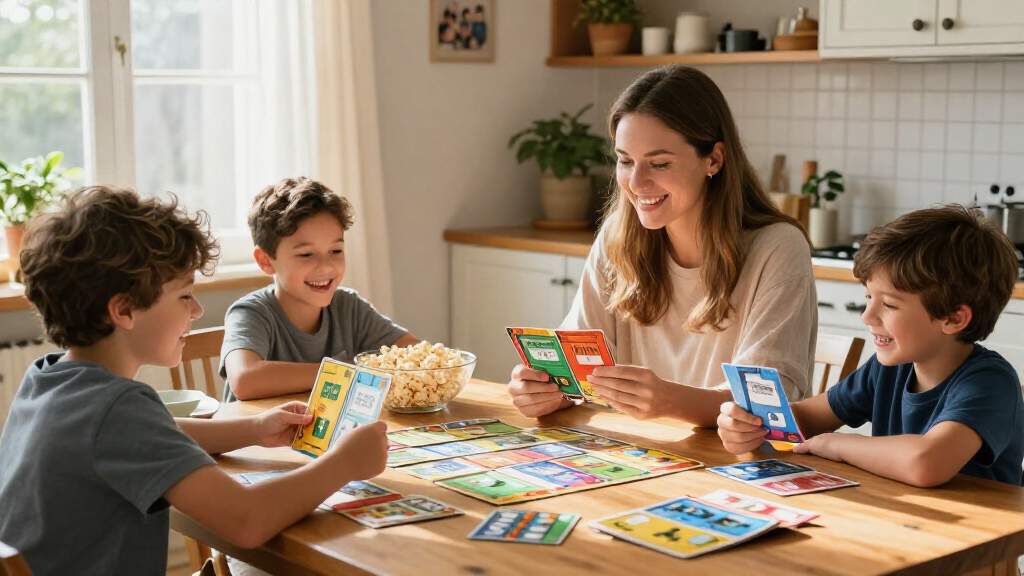

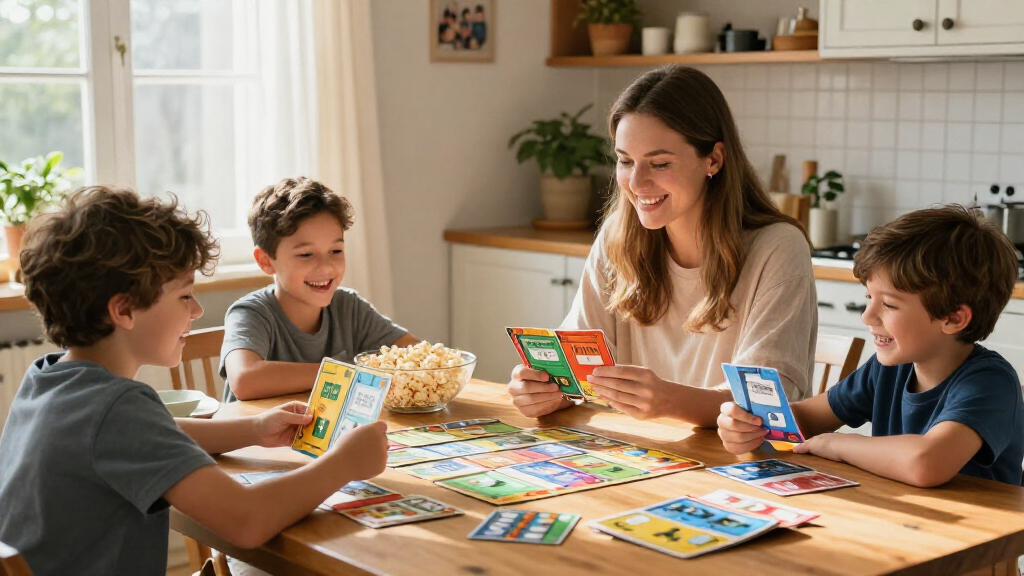
The best family trivia card games balance questions kids can attempt with enough challenge to keep adults involved. I’d start with Generations Challenge Trivia Card Game for a broad age mix, consider Higher or Lower for quick, low-pressure rounds, and pick Trivia for Everyone 2026 if a large question pool matters most. The main tradeoff is between general knowledge, which rewards what players already know, and family-focused prompts that can bring everyone in but may suit some groups better than others. Age range, reading comfort, and whether you want trivia or conversation-led play can matter as much as the number of questions. Read on for how all 14 options differ and which type of family each one suits.

Turn the school run and nap time into listening time
- Thousands of audiobooks, podcasts and originals
- Listen on your phone, tablet or Echo — also offline
- Cancel anytime
Complete the kit


Key Takeaways
- Generations Challenge is the lead pick for mixed-age groups because its kids-and-adults framing puts age range at the center of the decision.
- Higher or Lower offers a simpler format than broad general-knowledge games, making it a candidate for families who want brisk turns and less pressure to recall obscure facts.
- Trivia for Everyone 2026 stands apart for its stated 1,520 questions and two difficulty levels, a combination that favors variety and adjustable challenge.
- Do You Really Know Your Family? and Who in Our Family? shift the focus from outside facts to family knowledge, so they suit conversation more than conventional quiz play.
- HISTORY Channel Trivia Game and 21st Century Trivia offer more defined subject territory, while broad options such as QUOKKA suit groups seeking general knowledge.
| Generations Challenge Trivia Card Game for Kids and Adults |  | Best for Travel | Brand: QUOKKA | Questions: 600 | Cards: 300 trivia cards | VIEW LATEST PRICE | See Our Full Breakdown |
| What Do You Meme? All of Us – Multigenerational Family Trivia Game |  | Best for Large Multigenerational Groups | Brand: What Do You Meme? | Model number: GG424 | Age range: 12 years and up | VIEW LATEST PRICE | See Our Full Breakdown |
| I Should Have Known That! Trivia Game, Green |  | Best for Adult Family Parties | Brand: Hygge Games | Model: 21026 | Age range: 14 years and up | VIEW LATEST PRICE | See Our Full Breakdown |
| GENSMAK Multi-Generational Trivia Party Game |  | Best for Flexible Family Teams | Brand: GENSMAK | Model: GTOG5001 | Age range: 10 years and up | VIEW LATEST PRICE | See Our Full Breakdown |
| Higher or Lower Trivia Card Game for Kids and Adults |  | Best for Younger Players and Easy Starts | Brand: QUOKKA | Game type: Trivia card game | Questions: 500+ | VIEW LATEST PRICE | See Our Full Breakdown |
| HISTORY Channel Trivia Game |  | Best for Broad Topic Coverage | Players: 2 or more | Recommended age: 14 years and up | Playing time: About 30 minutes | VIEW LATEST PRICE | See Our Full Breakdown |
| 21st Century Trivia Game for 2 or More Players, Ages 12+ |  | Best for Current-Events Fans | Players: 2 or more | Recommended age: 12 years and up | Trivia questions: 1,200 | VIEW LATEST PRICE | See Our Full Breakdown |
| Who Knows More? Kids or Adults? Family Trivia Game |  | Best for Kids-versus-Adults Play | Players: 2 or more | Recommended age: 8 years and up | Categories: History, pop culture, science, and general trivia | VIEW LATEST PRICE | See Our Full Breakdown |
| Trivia for Everyone 2026 Card Game, 1,520 Questions, 2 Difficulty Levels |  | Best for Flexible Group Play | Edition: 2026 | Players: 2 or more | Recommended age: 14 years and up | VIEW LATEST PRICE | See Our Full Breakdown |
| Mount Cleverest Original Edition True or False Trivia Card Game |  | Best for Younger Players and Travel | Edition: Original | Players: 2–12 | Recommended age: 6 years and up | VIEW LATEST PRICE | See Our Full Breakdown |
| Super Trivia Card Game for Adults and Families |  | Best for Varied Trivia Formats | Questions: 1,200 across 6 formats | Players: 2–6 | Recommended age: 16 years and up | VIEW LATEST PRICE | See Our Full Breakdown |
| Viral Studios Who in Our Family? Family Party Game |  | Best for Big, Lively Groups | Age range: 8 years and up | Players: 2 or more | Playing time: About 30 minutes | VIEW LATEST PRICE | See Our Full Breakdown |
| Do You Really Know Your Family? Family Card Game |  | Best for Conversation and Younger Families | Age guidance: Kids, teens, and adults; manufacturer recommended age 8–10 years | Players: 3–8 | Included components: Cards | VIEW LATEST PRICE | See Our Full Breakdown |
| QUOKKA General Knowledge Trivia Card Game for Adults and Families |  | Best for Flexible Play Modes | Questions: 500 | Questions per card: 5 | Players: 2 or more | VIEW LATEST PRICE | See Our Full Breakdown |
| family trivia card game | Players | Included components | Material | Recommended age |
|---|---|---|---|---|
| Generations Challenge Trivia C | 2 or more | 1 box, 6 mini game decks, 300 trivia cards, instructions | Cardstock | 10 years and up |
| What Do You Meme? All of Us | 4 or more | 480 trivia cards, 8 wild cards, 1 timer, 1 scoreboard, 2 tokens, instructions | Paper | — |
| I Should Have Known That! Triv | More than 2 | — | Paper | — |
| GENSMAK Multi-Generational Tri | 2–8 or more | Trivia questions, bonus points cards, SMAK! cards, instructions | Cardstock | — |
| Higher or Lower Trivia Card Ga | 2 or more | Cards | Cardstock | 8 years and up |
| HISTORY Channel Trivia Game | 2 or more | Cards, board, and rules | Cardstock | 14 years and up |
| 21st Century Trivia Game for 2 | 2 or more | Game | Cardstock | 12 years and up |
| Who Knows More? Kids or Adults | 2 or more | Cards | Cardstock | 8 years and up |
| Trivia for Everyone 2026 Card | 2 or more | 190 double-sided cards and cardboard gift box | — | 14 years and up |
| Mount Cleverest Original Editi | 2–12 | Cards and 30 betting discs | Cardboard | 6 years and up |
| Super Trivia Card Game for Adu | 2–6 | Question cards, die, instructions | — | 16 years and up |
| Viral Studios Who in Our Famil | 2 or more | 250 cards, 7 dry-erase boards, 7 markers, rulebook | Paper | — |
| Do You Really Know Your Family | 3–8 | Cards | Cardstock | — |
| QUOKKA General Knowledge Trivi | 2 or more | Card game | — | 12 years and up |
More Details on Our Top Picks
Generations Challenge Trivia Card Game for Kids and Adults
Generations Challenge suits families who want a broad mix of trivia in a small, easy-to-pack format. Its 600 questions across 300 cards range from science and history to entertainment and sports, so the game can move between subjects rather than hinge on one family member’s specialty. Team and head-to-head options also let the group adapt play to its size. Compared with What Do You Meme? All of Us, this game is more travel-friendly and starts at age 10, but it lacks that game’s timer-driven team structure and generational categories. It still needs at least two players, and its manual format means someone has to manage the questions and play. Choose it for a portable, flexible family game, not a highly guided party experience.
Pros:- 600 questions span history, science, entertainment, sports, and other subjects.
- Team and head-to-head formats suit different family group sizes.
- Compact dimensions make it convenient to pack for travel.
- Age recommendation of 10+ welcomes younger players than some adult-focused trivia games.
Cons:- Requires at least two players, so it cannot serve as a solo activity.
- Manual play offers less built-in structure than games with a timer or scoreboard.
Best for: Families with children aged 10 and up who want a compact trivia game for trips, visits, and casual game nights.
Not ideal for: Solo players or families seeking a timed, highly structured party game with built-in scoring components.
- Brand:QUOKKA
- Questions:600
- Cards:300 trivia cards
- Recommended age:10 years and up
- Players:2 or more
- Included components:1 box, 6 mini game decks, 300 trivia cards, instructions
- Material:Cardstock
- Dimensions:3.46 × 2.48 × 0.08 inches
- Language:English
Our verdict“Choose Generations Challenge for portable, varied trivia that can work for family teams or one-on-one play.”
What Do You Meme? All of Us – Multigenerational Family Trivia Game
All of Us is built around a particular family challenge: getting generations to compete together without relying on one shared era of knowledge. Its four generational categories and team choices give players a way to lean on familiar topics or take a risk elsewhere, while the 60-second timer keeps turns moving. With over 2,000 questions, it offers more question volume than Generations Challenge, but that game is the easier pick for travel and smaller groups. All of Us needs at least four players and recommends age 12+, so it is less flexible for a household with younger children or just two people. Play can also run from 30 to 90 minutes, making it better for a planned gathering than a quick gap-filler.
Pros:- Four generational categories give different age groups recognizable areas of knowledge.
- More than 2,000 questions support repeated play.
- The timer encourages quick decisions and keeps team turns active.
- Teams can choose familiar categories or take chances on other generations.
Cons:- Requires at least four players, limiting its use for small households.
- The 12+ age recommendation excludes younger children.
- A 30–90 minute play time can be too long for a brief game session.
Best for: Families of four or more with teens and adults from several generations who enjoy team competition and timed turns.
Not ideal for: Small households, families with children under 12, or groups looking for a short, predictable game session.
- Brand:What Do You Meme?
- Model number:GG424
- Age range:12 years and up
- Players:4 or more
- Play time:30–90 minutes
- Question count:Over 2,000
- Included components:480 trivia cards, 8 wild cards, 1 timer, 1 scoreboard, 2 tokens, instructions
- Material:Paper
- Generational categories:Four
Our verdict“Pick All of Us when four or more players across generations want a timed, team-based trivia contest.”
I Should Have Known That! Trivia Game, Green
I Should Have Known That! takes a different route from broad family trivia: its more than 400 questions focus on everyday facts players may recognize only after the answer is revealed. The points-loss scoring makes wrong answers part of the fun, but it also turns uncertainty into a penalty rather than a relaxed guess. Compared with Higher or Lower Trivia Card Game, which welcomes players aged 8+ with comparison questions, this game is aimed at older groups and is a less suitable choice for younger children. Its 110 cards keep the package straightforward, though the listed player count is more than two, so it is not a two-player option. I’d choose it for a lively gathering of teens and adults who enjoy teasing each other over missed everyday knowledge, not for gentle all-ages play.
Pros:- More than 400 everyday-fact questions offer plenty of prompts for group play.
- Wrong-answer penalties create a distinctive, playful scoring challenge.
- The subject matter can spark conversation about familiar facts and assumptions.
- 110-card format is straightforward to set out and play.
Cons:- Recommended for ages 14 and up, making it less inclusive for younger family members.
- Designed for more than two players, so it does not suit a pair playing alone.
- Losing points for incorrect answers may feel discouraging to players who prefer low-pressure trivia.
Best for: Families with teens aged 14 and up who want a humorous, group-oriented trivia game for parties.
Not ideal for: Households with younger children, two-player families, or players who prefer not to lose points for wrong answers.
- Brand:Hygge Games
- Model:21026
- Age range:14 years and up
- Players:More than 2
- Cards:110
- Questions:More than 400
- Language:English
- Material:Paper
- Color:Green
Our verdict“Choose this for older family groups who enjoy party-style questions and can take wrong-answer penalties in stride.”
GENSMAK Multi-Generational Trivia Party Game
GENSMAK earns its place with an age-10+ starting point, room for two to eight or more players, and questions drawn from pop culture across generations. Its comedic hints and special cards add ways to approach a question beyond simply knowing the answer, which can help younger players stay involved. That makes it more adaptable for mixed-age family teams than What Do You Meme? All of Us, which requires at least four players and is aimed at age 12+. GENSMAK is less focused on sheer question volume than All of Us, and the goal of reaching 20 points means play still depends on answering trivia correctly. The hints can soften the challenge, but they do not remove the knowledge gap entirely. It’s a strong fit for families who value flexible group size and playful twists over a timer-led format.
Pros:- Supports groups from two to eight or more players, offering more flexibility than games with higher minimums.
- Questions cover pop culture across generations.
- Comedic hints can make prompts more approachable and entertaining.
- Bonus-point and SMAK! cards add strategic choices beyond answering questions.
Cons:- Trivia answers remain central to earning points, which may leave less confident players at a disadvantage.
- The recommended age starts at 10, so it may not suit families with younger children.
- A 20-point win condition may feel less direct than a quick, fixed-round game.
Best for: Families with children aged 10+ who want to play in teams or adapt the game for a group of varying size.
Not ideal for: Players seeking a timer-based contest, or families who want a game where trivia knowledge is not central to scoring.
- Brand:GENSMAK
- Model:GTOG5001
- Age range:10 years and up
- Players:2–8 or more
- Trivia questions:750
- Included components:Trivia questions, bonus points cards, SMAK! cards, instructions
- Material:Cardstock
- Winning objective:Score 20 points
- Manufacturer:Sand Box Creations
Our verdict“Choose GENSMAK for mixed-age groups that want flexible team sizes, hints, and extra card-driven twists.”
Higher or Lower Trivia Card Game for Kids and Adults
Higher or Lower is the most accessible starting point here for families with younger children: it is recommended for ages 8+ and uses comparison questions that invite a guess rather than requiring a bank of specialist facts. Its easy-to-learn format also makes it a practical choice when not everyone wants to learn a longer rule set. Compared with I Should Have Known That!, it is younger-friendly and less punishing in concept; that game is aimed at age 14+ and subtracts points for incorrect answers. Higher or Lower offers over 500 questions and portable cards, but the supplied details do not describe team rules or a scoring system, so buyers wanting a structured party contest may prefer GENSMAK’s special cards and 20-point goal. It needs at least two players and is intended for indoor play.
Pros:- Age recommendation of 8+ makes it accessible to younger family members.
- Comparison questions encourage guesses without requiring specialist knowledge.
- More than 500 questions provide variety across rounds.
- Portable cards are convenient for travel and family outings.
Cons:- Requires at least two players.
- The supplied product details do not specify a scoring system or team structure.
- Intended for indoor play, limiting where families can use it.
Best for: Families with children aged 8+ who want quick, approachable trivia that encourages guessing and conversation.
Not ideal for: Solo players or groups seeking detailed team rules, a defined scoring objective, or outdoor play.
- Brand:QUOKKA
- Game type:Trivia card game
- Questions:500+
- Players:2 or more
- Recommended age:8 years and up
- Included components:Cards
- Material:Cardstock
- Language:English
- Special feature:Portable
Our verdict“Choose Higher or Lower for younger families who want portable, low-barrier trivia built around quick comparisons.”
HISTORY Channel Trivia Game
For families with teens and adults who want a substantial mix of subjects, the HISTORY Channel Trivia Game offers more than 2,000 questions spanning five categories, from science and geography to sports and culture. Its board gives play a more structured, around-the-table feel than the card-only 21st Century Trivia Game, whose focus stays on recent topics. That broader scope makes this a better fit when players have varied interests, though the age-14 recommendation leaves younger children out. A typical game lasts about 30 minutes, so it suits a planned game-night round better than a quick filler between activities. The tradeoff is that the board format is less streamlined than a simple draw-and-answer card game, and you need at least two players.
Pros:- More than 2,000 questions give repeat plays a wide pool of material
- Five subject areas offer more variety than a game focused on recent events
- Board, cards, and rules provide a structured shared game-night format
- Compact 10 x 10-inch box is practical to store or bring to a gathering
Cons:- Recommended for ages 14 and up, limiting mixed-age play with younger kids
- About 30 minutes per game may be longer than some families want for casual play
- Requires at least two players
Best for: Families with teenagers and adults who want varied trivia subjects and a board-game structure for planned game nights
Not ideal for: Households with younger children or anyone seeking a very quick, minimal-setup travel game
- Players:2 or more
- Recommended age:14 years and up
- Playing time:About 30 minutes
- Question count:More than 2,000
- Categories:Arts & Culture, Sports & Recreation, Science & Technology, Geography & Landmarks, People & Events
- Included components:Cards, board, and rules
- Material:Cardstock
- Dimensions:10 x 10 x 2 inches
Our verdict“Choose this for teen-and-adult groups who want broad-category trivia and a board-led game, but skip it if younger children need to join.”
21st Century Trivia Game for 2 or More Players, Ages 12+
The 21st Century Trivia Game narrows its subject matter to people, sports, entertainment, headlines, and technology, making it a natural pick for families whose teens follow contemporary culture. Its 1,200 questions and straightforward rules keep the format easier to approach than a more extensive, board-based game such as the HISTORY Channel Trivia Game. The focus is also its limitation: players looking for geography, older historical material, or a wide spread of general knowledge may find the subject range less accommodating. At ages 12 and up, it can include some younger teens than several adult-oriented options in this lineup, but it still won’t serve a household with elementary-age children. Its compact, no-battery format makes it especially handy for travel or parties.
Pros:- 1,200 questions focus on recognizable 21st-century subjects
- Five topic areas offer variety within a contemporary theme
- Simple rules make it easier to introduce at parties or family gatherings
- Compact cardstock game needs no batteries and is convenient for travel
Cons:- Recent-topic emphasis leaves less room for broad history and general knowledge
- Ages 12 and up still excludes many younger family members
- Requires at least two players
Best for: Families with teens aged 12 and up who enjoy recent entertainment, sports, technology, and headline trivia
Not ideal for: Families seeking broad historical and general-knowledge coverage or a game younger children can join
- Players:2 or more
- Recommended age:12 years and up
- Trivia questions:1,200
- Categories:People, sports, entertainment, headlines, and technology
- Categories per card:4
- Material:Cardstock
- Included components:Game
- Battery required:No
Our verdict“Pick this for teen-centered family or travel play built around modern culture, not for families seeking all-ages or wide-ranging trivia.”
Who Knows More? Kids or Adults? Family Trivia Game
Instead of asking every player to compete on equal footing, Who Knows More? Kids or Adults? turns the generation gap into the game: children team up against adults, answer in turns, and race to 20 points. That team structure makes it a more direct fit for mixed-age family groups than the teen-focused 21st Century Trivia Game, which sets its recommended age at 12. Its subjects span history, pop culture, science, and general facts, while the simple win condition helps younger players follow the round without learning a complicated scoring system. The tradeoff is that it depends on players enjoying question-and-answer trivia; there’s no alternate activity for a group that doesn’t. It also needs at least two people, and the supplied details don’t specify a playing time.
Pros:- Kids-versus-adults teams make mixed-age competition the central format
- Ages 8 and up accommodates younger players than many trivia picks in this lineup
- History, pop culture, science, and general facts span several interests
- First-to-20 scoring gives players a clear, easy-to-follow goal
Cons:- Question-and-answer play may not suit groups looking for a different kind of activity
- Requires at least two players and works best when teams can be formed
- No playing-time estimate is provided
Best for: Families with children aged 8 and up who want kids and adults competing as teams rather than individually
Not ideal for: Groups that prefer individual competition, varied game mechanics, or play without trivia questions
- Players:2 or more
- Recommended age:8 years and up
- Categories:History, pop culture, science, and general trivia
- Included components:Cards
- Material:Cardstock
- Winning condition:First team to reach 20 points
- Package dimensions:11.93 × 5.08 × 17.01 cm
- Model number:BOIBOOST02
Our verdict“Choose this when you want younger kids and adults to play together in opposing teams, rather than tackle the same trivia individually.”
Trivia for Everyone 2026 Card Game, 1,520 Questions, 2 Difficulty Levels
Trivia for Everyone 2026 is the most adaptable pick here for older groups: two difficulty levels let players choose between Party and Expert questions, while three modes support free-for-all, host-led, or team play. That gives it more ways to shape a round than the fixed kids-versus-adults format of Who Knows More?, but its age-14 recommendation means it doesn’t replace that game for families with younger children. The set includes 1,520 questions on 190 double-sided cards, so the format stays card-based rather than adding a board to manage. Color-coded cards help distinguish questions from answers during play. Its main compromise is age reach; the supplied information also doesn’t identify specific subject categories, so buyers wanting a clearly defined theme may prefer the HISTORY Channel game.
Pros:- Party and Expert levels let groups adjust question difficulty
- Three play modes support different group sizes and competitive styles
- 1,520 questions across 190 double-sided cards provide a substantial card-based set
- Color coding helps players follow questions and answers
Cons:- Recommended for ages 14 and up, excluding younger family members
- Specific topic categories are not listed in the supplied product details
Best for: Families and friend groups of teens and adults who want to switch between team, host-led, and individual formats
Not ideal for: Households with children under 14 or buyers who want clearly listed trivia categories
- Edition:2026
- Players:2 or more
- Recommended age:14 years and up
- Questions:1,520
- Cards:190 double-sided cards
- Difficulty levels:2: Party Mode and Expert Mode
- Play modes:3: Free-For-All, Question Master, and Teams
- Included components:190 double-sided cards and cardboard gift box
Our verdict“Pick this for older groups that value multiple play styles and adjustable difficulty, but choose a younger-age game for a broader family age range.”
Mount Cleverest Original Edition True or False Trivia Card Game
Mount Cleverest Original Edition lowers the entry barrier with true-or-false questions and an age recommendation of 6 and up. The included 30 betting discs add a choice beyond simply answering, giving younger players a simple way to take part even when they’re unsure. That makes it a more accessible family option than the age-14 HISTORY Channel Trivia Game, though it doesn’t offer the same listed question count or broad category breakdown. Its small, portable package suits travel and parties, and the stated player range runs from two to 12. The tradeoff is a narrower answer format: anyone who wants detailed open-ended trivia or a substantial catalog of listed subjects may prefer a more traditional question set. The cardboard components also call for ordinary care during frequent group play.
Pros:- True-or-false format is approachable for players as young as 6
- Thirty betting discs add a simple wager-and-answer choice
- Compact package is easy to bring to travel or parties
- Listed player range accommodates groups of up to 12
Cons:- Binary answers offer less depth than open-ended trivia formats
- No question count or category breakdown is provided in the supplied details
- Cardboard components may need careful handling during frequent group play
Best for: Families with younger children who want a compact, easy-to-join trivia game for trips and casual gatherings
Not ideal for: Trivia fans seeking detailed subject coverage, open-ended questions, or a listed question count
- Edition:Original
- Players:2–12
- Recommended age:6 years and up
- Game type:Trivia card game
- Included components:Cards and 30 betting discs
- Material:Cardboard
- Package dimensions:5.75 x 1.75 x 6.5 inches
- Item weight:8 ounces
Our verdict“Choose this for younger families who value easy rules and portability over a large, clearly categorized trivia collection.”
Super Trivia Card Game for Adults and Families
Six question formats give this game more variety than a straightforward general-knowledge deck such as QUOKKA General Knowledge Trivia Card Game, with picture questions and estimation rounds changing how players tackle each turn. Its 1,200 questions also make it a strong choice for families who want a substantial question pool for recurring game nights. The tradeoff is its age cutoff: at 16 and up, it is less suited to mixed-age family gatherings than Do You Really Know Your Family?, which is designed to include younger players. A roughly 50-minute playtime calls for a dedicated game-night slot rather than a quick filler round. The compact box, die, and simple setup help make it portable, but this is best for older groups who enjoy trivia itself more than personal prompts or party challenges.
Pros:- 1,200 questions spread across six formats, including picture and estimation rounds.
- Supports 2–6 players, making it suitable for small family groups.
- Compact travel box and quick setup make it easy to bring along.
- Trivia-focused play suits groups who prefer questions over personal conversation prompts.
Cons:- The 16-and-up age recommendation excludes many younger family members.
- About 50 minutes is a longer commitment than the quick rounds in Who in Our Family?.
- Supports no more than six players.
Best for: Families with teens aged 16 and up and adults who want varied question formats for a full-length trivia night.
Not ideal for: Families with children under 16 or anyone looking for a short, casual game between other activities.
- Questions:1,200 across 6 formats
- Players:2–6
- Recommended age:16 years and up
- Playing time:About 50 minutes
- Language:English
- Included components:Question cards, die, instructions
- Materials:Paper, carton, plastic
- Container:Box
Our verdict“Choose this for an older family group seeking a varied, substantial trivia session, but skip it if younger children need to join.”
Viral Studios Who in Our Family? Family Party Game
Rather than relying on knowledge questions alone, Who in Our Family? mixes trivia with “most likely to” votes and head-to-head challenges. That variety makes it more of a family party game than QUOKKA General Knowledge Trivia Card Game, which stays focused on general-knowledge questions. Seven dry-erase boards and markers give several players a way to answer or vote at once, and the rounds are designed to move quickly. Its age recommendation of 8 and up makes it accessible to many family groups, though the voting and personal judgments may suit some households better than others. The main tradeoff is that it depends on group interaction rather than sustained trivia depth; for a quieter, question-led session, Super Trivia Card Game offers a larger stated question pool. It is an indoor party pick, not a travel game for outdoor gatherings.
Pros:- Combines trivia, “most likely to” prompts, and head-to-head challenges.
- Seven dry-erase boards and markers support simultaneous group participation.
- Quick rounds and simple rules help keep a family party moving.
- Suitable for two or more players, with no stated upper player limit.
Cons:- The party format offers less sustained general-knowledge trivia than Super Trivia Card Game.
- Designed for indoor use, limiting where it fits best.
- The age range starts at 8, so younger children may not be ready to join.
Best for: Families with children aged 8 and up who want quick, social rounds for a group of relatives or friends.
Not ideal for: Trivia purists, outdoor groups, or families who prefer quiet question-and-answer play over voting and challenges.
- Age range:8 years and up
- Players:2 or more
- Playing time:About 30 minutes
- Included components:250 cards, 7 dry-erase boards, 7 markers, rulebook
- Material:Paper
- Dimensions:8.8 × 6.3 inches
- Game type:Party game
- Use:Indoor
Our verdict“Pick it for an indoor family gathering where group banter matters as much as trivia, rather than for a question-heavy game night.”
Do You Really Know Your Family? Family Card Game
Personal prompts and silly challenges make this a better fit for families who want to learn about one another than for players seeking a test of general knowledge. Compared with Super Trivia Card Game, its appeal lies less in a large, varied trivia pool and more in the stories and laughter that questions can prompt. The stated age guidance includes children, teens, and adults, with a manufacturer recommendation of 8–10 years, so it can bring younger family members into the game more readily than the 16-and-up Super Trivia option. Its portable tin is easy to pack, but the game needs at least three players, which rules out a parent-child pair. The listed three-minute playing time may not describe a full session, so I would treat it as a flexible prompt game rather than plan around that figure.
Pros:- Conversation prompts encourage players to share and learn about one another.
- Silly challenges add a playful alternative to standard question-and-answer turns.
- Designed for children, teens, and adults to play together.
- Compact tin makes the card game easy to carry.
Cons:- Requires at least three players, unlike Super Trivia Card Game, which supports two.
- The listed three-minute playing time may not reflect a complete game session.
- The supplied details do not state a question count or a maximum player limit.
Best for: Families with at least three players, including children around the recommended 8–10 age range, who enjoy conversation and playful challenges.
Not ideal for: Two-player households or groups who want structured general-knowledge questions, a clearly stated full-session length, or a larger trivia pool.
- Age guidance:Kids, teens, and adults; manufacturer recommended age 8–10 years
- Players:3–8
- Included components:Cards
- Material:Cardstock
- Container:Tin
- Language:English
- Estimated playing time:3 minutes
- Dimensions:2 × 4.7 × 6.7 inches
Our verdict“Choose this for a family of three or more that values conversation and shared laughs more than conventional trivia scoring.”
QUOKKA General Knowledge Trivia Card Game for Adults and Families
Three ways to play—one-on-one, in teams, or in timed rounds—make this a flexible pick for family groups whose size or mood changes from game night to game night. Its 500 general-knowledge questions, arranged five to a card, offer a defined trivia focus, while the format leaves room to choose a winning target of three or five cards. Compared with Who in Our Family?, this is more directly about answering trivia than voting on family traits or taking on social challenges. Its 12-and-up recommendation makes it more accessible to younger players than Super Trivia Card Game, though it still may leave younger children out. The compact box suits travel, but at least two players are required, and the supplied details do not give a playtime estimate.
Pros:- 500 questions with answers give players a way to check responses.
- One-on-one, team, and timed modes adapt to different group sizes and play styles.
- Five questions per card provide a structured way to work through the deck.
- Compact box and portable dimensions suit travel and game nights.
Cons:- The 12-and-up age recommendation may exclude younger children.
- Requires at least two players and cannot be played solo.
- No playing-time estimate is provided.
Best for: Families with players aged 12 and up who want a portable general-knowledge game that can shift between head-to-head, team, and timed play.
Not ideal for: Families with children under 12, solo players, or buyers who need a stated game duration before planning an activity.
- Questions:500
- Questions per card:5
- Players:2 or more
- Recommended age:12 years and up
- Play modes:One-on-one, teams, timed rounds
- Language:English
- Included components:Card game
- Dimensions:5.62 × 4.21 inches
- Container:Box
Our verdict“Pick QUOKKA for portable, adaptable general-knowledge play with older children and adults; skip it if your group includes younger kids or needs a planned game length.”
How We Picked
I compared the games by how well their stated formats address the needs of a family table: mixed ages, different knowledge levels, clear turn-taking, and a pace that can hold attention. I also looked at the kind of play each title promises, distinguishing conventional quiz formats from true-or-false, higher-or-lower, and family-knowledge games. The strongest recommendations are those with a clear use case rather than a broad label alone.
The ranking reflects fit and differentiation, not a claim that every family will prefer the same style. Games framed for kids and adults or offering difficulty options rise for mixed-age play; compact, rule-light formats suit shorter sessions; and specialized or conversation-led games rank for narrower preferences. Product names and supplied details establish the scope of this comparison, so I avoid assuming unlisted components, exact play time, or age suitability beyond the stated information.
| family trivia card game | Material |
|---|---|
| Generations Challenge Trivia C | Cardstock |
| What Do You Meme? All of Us | Paper |
| I Should Have Known That! Triv | Paper |
| GENSMAK Multi-Generational Tri | Cardstock |
| Higher or Lower Trivia Card Ga | Cardstock |
| HISTORY Channel Trivia Game | Cardstock |
| 21st Century Trivia Game for 2 | Cardstock |
| Who Knows More? Kids or Adults | Cardstock |
| Trivia for Everyone 2026 Card | — |
| Mount Cleverest Original Editi | Cardboard |
| Super Trivia Card Game for Adu | — |
| Viral Studios Who in Our Famil | Paper |
| Do You Really Know Your Family | Cardstock |
| QUOKKA General Knowledge Trivi | — |
Factors to Consider When Choosing Best Family Trivia Card Games
Before choosing, decide what you want the cards to do for your group. A family quiz can test general knowledge, make age differences part of the fun, or prompt people to share stories about one another. The right format depends on who is playing, how much reading they enjoy, and whether your group wants a score-driven contest or a more social activity.
Match the game to the youngest regular player
Choose for the youngest person who will play often, not the oldest person in the room. A game can be labeled for families yet still rely on reading fluency, broad background knowledge, or patience that younger children may not have. Look for clear age guidance and, where offered, separate difficulty levels or questions aimed at different generations. If the youngest player needs constant help, the adults may end up answering instead of playing together. A game designed around kids and adults can reduce that gap, but it cannot replace checking the age range and question style. For occasional gatherings with a wide age spread, favor adaptable rules over a narrow age band.
Choose the kind of challenge your group enjoys
Not all trivia difficulty feels the same. Direct fact-recall questions can reward school knowledge and specialist interests, while higher-or-lower or true-or-false formats give players a way to make an educated guess. That distinction can matter for relatives who dislike being put on the spot. A large question count does not automatically make a game more engaging if the prompts feel repetitive or too specialized for your table. Consider whether players enjoy scoring and keeping track of right answers, or prefer the lighter tension of guessing. If confidence varies widely, a format with more than one difficulty level can help everyone stay involved.
Decide whether you want trivia or family conversation
Family-themed games may ask players to reflect on relationships, memories, or what relatives know about one another rather than recall outside facts. That can draw in people who rarely choose quiz games, but it changes the activity from a knowledge contest to a social one. Before buying, think about whether your group is comfortable sharing personal opinions and stories. A family party game may work well after dinner, while a general-knowledge deck can be easier to use with guests who do not know one another well. Avoid choosing by the word “trivia” on the box alone; check whether the prompts are factual, personal, or a mix. This small distinction can determine whether the game feels welcoming or awkward.
Account for reading pace and attention span
Card games are portable, but a deck still asks someone to read prompts, explain rules, and keep turns moving. Long questions and frequent rule checks can slow a group that wants a quick activity between other plans. Short-format mechanics can help younger players and guests who prefer casual rounds, while a larger question pool may better serve families planning repeated sessions. Think about the number of players who will actually take turns, not just the maximum group size printed on a package. If your household often plays in brief bursts, a simple loop is more useful than elaborate scoring. For longer game nights, variety and enough prompts to support repeat play become more valuable.
Value replayability by variety, not just card count
A high question count can delay repetition, but the range of topics and difficulty matters just as much. If your family has a few strong knowledge areas, a narrowly themed deck may run out of novelty for some players even when it contains many cards. On the other hand, a focused subject can be a better fit for a household that already enjoys that topic. Check whether a game offers multiple categories or challenge levels, and think about how often the same people will play. Families who bring a deck to gatherings may value broad appeal more than a specialized question pool. The best replay value comes from prompts that different players can answer for different reasons.
Spend for the feature your family will use
When comparing options, prioritize a feature that solves a real problem at your table: age-adjusted questions, a distinct subject focus, a large stated pool, or a conversation-led format. A more elaborate game is not a better buy if your group only wants a quick round. Conversely, a basic deck may disappoint if the same family plays every week and quickly remembers the prompts. Treat packaging claims and question totals as clues, not a substitute for knowing your group’s habits. If you are unsure whether children will enjoy trivia, start with an accessible format rather than paying for complexity they may not use. For a regular game-night household, variety and a suitable challenge range may justify choosing a more specialized option.
Frequently Asked Questions
Which type of trivia game works best when children and adults play together?
Look for a game that explicitly addresses mixed ages or offers more than one difficulty level, rather than assuming a general family label means the questions will suit everyone. A simple guessing mechanic can also soften differences in knowledge and reading ability. If children are much younger than the adults, check the stated age guidance and consider whether an adult will need to read each card aloud. The goal is to give younger players a reasonable way to participate without making adults wait through a long explanation. For a group with a wide age range, adaptable challenge matters more than a specialist topic.
Should I choose a general-knowledge game or a family-question game?
Choose general knowledge if your group enjoys competing over facts and wants a game that works with guests who may not know one another well. Family-question games are a better match when the point is to share memories, compare opinions, or see how well relatives know each other. They can be more inviting for people who do not enjoy being quizzed, but personal prompts may not suit every gathering. Think about who will be at the table and how comfortable they are discussing family topics. If you want both styles, check whether a title actually mixes them rather than relying on its name.
Does a larger question count mean better replay value?
A larger pool can help a game last longer before familiar prompts return, but quantity alone does not guarantee variety. Repeated topics, uneven difficulty, or questions that only appeal to one age group can still limit who wants to play. Look for signs of breadth, such as multiple difficulty levels or a format that allows different kinds of answers. Consider how often your household will bring the game out: occasional players may not need an especially large deck, while weekly players may appreciate more prompts. A count is most useful when the questions also fit your group.
Are quick trivia formats a good choice for younger players?
They can be, especially when turns involve a clear choice or guess rather than a long sequence of facts to recall. Short rounds can keep attention on the game and make a wrong answer feel less consequential. Still, a quick mechanic does not guarantee that the questions themselves are age-appropriate, so check the stated age range and content. Reading support may also be needed for children who cannot yet read cards independently. For mixed-age play, pair simple rules with prompts that do not leave younger players out of every round.
What should I prioritize if my family has very different knowledge levels?
Prioritize formats that make guessing, multiple difficulty levels, or age-aware questions part of the play, rather than relying on everyone to know the same facts. Avoid treating the game as a strict test of who is smartest; that can make repeated mismatches less fun. A family-knowledge game may shift the advantage toward shared memories, while a true-or-false or higher-or-lower format can give less confident players a route into each turn. You can also agree on teams that mix ages and experience. The best fit is the one that lets each person contribute in a different way.
Conclusion
For most mixed-age households, I’d begin with Generations Challenge Trivia Card Game as the best overall fit because its kids-and-adults framing directly addresses the main family-game challenge. For a simpler, fast-guessing style, Higher or Lower is my best value-style pick; families wanting a larger stated pool and adjustable challenge should look at Trivia for Everyone 2026 as the premium-style choice for breadth. Newer or less confident players may prefer the accessible feel of Mount Cleverest Original Edition, with its true-or-false format, while families seeking shared stories rather than outside facts should choose Do You Really Know Your Family? or Who in Our Family?. Pick by the people around your table first, then by topic or question count.
Evergreen bestsellers Picks

Sony BRAVIA 5 85-Inch Mini LED 4K HDR Smart Google TV (K-85XR50)

KitchenAid Artisan 5-Quart Tilt-Head Stand Mixer with Flex Edge Beater

De'Longhi Magnifica Duo Fully Automatic Espresso Machine with Milk Frother, Silver
As an affiliate, we earn on qualifying purchases.