
The Special Supplies Therapressure Therapy Brush earns my best overall pick for sensory tools for kids because it delivers a clinically grounded technique — the Wilbarger brushing protocol — at a price any family can manage, and it works across a wide age range. Close behind, the Learning Resources Helping Hands Fine Motor Tool Set stands out as the best all-around kit for younger children, combining four distinct tools that build hand strength while providing tactile input, and the Pushpeel Silicone Sensory Activity Board is the strongest pick for fidgety kids who need a quiet, portable outlet during school or travel. The main tradeoff in this category is between calming-focused tools like brushes, chew tubes, and worry stones, and skill-building tools like sorting toys and tracing boards — many kids benefit from both, but budgets usually force a choice. Durability is another dividing line: silicone and wood options outlast cheap plastic fidgets that crack under heavy chewing or repetitive spinning. Keep reading for the full breakdown of all 14 tools, including who each one suits and which ones are worth skipping.

Get baby and family essentials delivered free — and shop member deals
- Fast, free delivery on millions of items
- Access to Prime Big Deal Days deals on October 6–7
- Prime Video, Amazon Music and more included
Complete the kit


Key Takeaways
- Tools rooted in established occupational therapy techniques — the Therapressure brush and the fine motor tool set — separated themselves from novelty fidgets by serving multiple developmental goals at once rather than just occupying hands.
- Silicone emerged as the safest and most durable material across the lineup: the chew tubes, Pushpeel board, and flip cubes all survived chewing and washing far better than plastic or fabric alternatives, which matters most for younger kids and oral seekers.
- Three KLT products made the list, but they are not interchangeable — the worry stones suit anxiety-prone kids, while the two flip cube sets differ in noise level, making the quieter 6-pack the better classroom choice.
- Portable, quiet tools (chair bands, worry stones, the Pushpeel board) consistently outperformed flashy options like liquid motion bubblers and fidget spinners for real-world settings like classrooms, restaurants, and car rides.
- The premium picks — the ColorScape sensory mat set and the Pushpeel ABC tracing board — justify higher cost only for buyers who need structured learning integration; casual users get nearly as much value from tools a fraction of the price.
| Special Supplies Sensory Therapressure Therapy Brush, Latex-Free, 6-Pack |  | Best for Portable Tactile Input | Pack size: 6 brushes | Dimensions: 3.25 × 1.75 × 1 in | Bristles: Soft, flexible, BPA-free | VIEW LATEST PRICE | See Our Full Breakdown |
| Yowlieu Wooden Sensory Bin Tools, 10-Piece Montessori Set |  | Best for Open-Ended Sensory Bins | Brand: Yowlieu | Set contents: 10 wooden tools and 1 storage bag | Material: Natural wood | VIEW LATEST PRICE | See Our Full Breakdown |
| 4-Pack Silicone Sensory Chew Tubes for Children |  | Best for Oral Sensory Variety | Pack quantity: 4 | Material: Food-grade silicone | Free from: BPA, PVC, and phthalates | VIEW LATEST PRICE | See Our Full Breakdown |
| Learning Resources Helping Hands Fine Motor Tool Set |  | Best for Structured Fine-Motor Practice | Brand: Learning Resources | Model: LER5558 | Included tools: Gator Grabber Tweezers, Handy Scoopers, Twisty Droppers, and Squeezy Tweezers | VIEW LATEST PRICE | See Our Full Breakdown |
| Gokeey Transformable Fidget Spinners, 4-Pack |  | Best for Creative Fidgeting on the Go | Brand: Gokeey | Material: ABS plastic | Number of items: 4 | VIEW LATEST PRICE | See Our Full Breakdown |
| Super Z Outlet Liquid Motion Bubbler Sensory Toy |  | Best Calm-Down Visual Tool | Brand: Super Z Outlet | Material: Plastic | Dimensions: 2 in wide × 5.75 in long | VIEW LATEST PRICE | See Our Full Breakdown |
| WNSIRVY Chair Bands for Kids, 5 Pack |  | Best for Classroom Seating | Brand: WNSIRVY | Pack Quantity: 5 bands | Material: Thermoplastic elastomer (TPE) | VIEW LATEST PRICE | See Our Full Breakdown |
| Pushpeel Silicone Sensory Activity Board with 11 Strings and Travel Bag |  | Best Travel Pick | Material: Non-toxic silicone | Included Accessories: 11 colored strings and travel bag | Activities: Push, peel, loop, and bridge | VIEW LATEST PRICE | See Our Full Breakdown |
| KLT Silicone Sensory Flip Fidget Cubes for Kids, 4-Pack |  | Best Value Multi-Pack | Brand: KLT | Quantity: 4 fidget toys | Material: Food-grade silicone | VIEW LATEST PRICE | See Our Full Breakdown |
| KLT Sensory Worry Stones, 6 Pack |  | Best for Discreet Fidgeting | Brand: KLT | Quantity: 6 stones | Material: Soft rubber | VIEW LATEST PRICE | See Our Full Breakdown |
| ZaxiDeel Fine Motor Color Sorting Sensory Toy for Toddlers |  | Best for Travel and Quiet Play | Brand: ZaxiDeel | Dimensions: 5.6 x 5.6 inches | Age Range: 3 years and up | VIEW LATEST PRICE | See Our Full Breakdown |
| KLT Quiet Textured Flip Fidget Cubes, 6 Pack |  | Best Value for Groups | Brand: KLT | Quantity: 6 cubes | Material: Food-grade silicone | VIEW LATEST PRICE | See Our Full Breakdown |
| ColorScape Sensory Mats with Lesson Plans, Set of 9 |  | Best for Classrooms and OT Sessions | Quantity: 9 mats | Mat Size: 20 x 20 cm each | Material: BPA-free | VIEW LATEST PRICE | See Our Full Breakdown |
| Pushpeel Advanced ABC Tracing Puzzle Board, Uppercase Alphabet, Spruce |  | Best for Early Handwriting Prep | Brand: Pushpeel | Included Components: 1 board, 26 letters, 1 removal tool | Recommended Age: 36 months – 6 years | VIEW LATEST PRICE | See Our Full Breakdown |
| sensory tools for kid | Material | Brand | Recommended age |
|---|---|---|---|
| Special Supplies Sensory Thera | — | — | — |
| Yowlieu Wooden Sensory Bin Too | Natural wood | Yowlieu | 3 years and up |
| 4-Pack Silicone Sensory Chew T | Food-grade silicone | — | — |
| Learning Resources Helping Han | Plastic | Learning Resources | — |
| Gokeey Transformable Fidget Sp | ABS plastic | Gokeey | 3 years and up |
| Super Z Outlet Liquid Motion B | Plastic | Super Z Outlet | 36 months – 10 years |
| WNSIRVY Chair Bands for Kids | Thermoplastic elastomer (TPE) | WNSIRVY | — |
| Pushpeel Silicone Sensory Acti | Non-toxic silicone | — | — |
| KLT Silicone Sensory Flip Fidg | Food-grade silicone | KLT | 36 months – 6 years |
| KLT Sensory Worry Stones | Soft rubber | KLT | 36 months – 12 years |
| ZaxiDeel Fine Motor Color Sort | Soft gel filling with colored balls | ZaxiDeel | — |
| KLT Quiet Textured Flip Fidget | Food-grade silicone | KLT | 3 years and up |
| ColorScape Sensory Mats with L | BPA-free | — | — |
| Pushpeel Advanced ABC Tracing | Polypropylene (PP), silicone | Pushpeel | 36 months – 6 years |
More Details on Our Top Picks
Special Supplies Sensory Therapressure Therapy Brush, Latex-Free, 6-Pack
The six-brush set suits families or therapy providers who want a compact way to offer gentle to moderate pressure on skin or clothing. Each brush is small enough to keep in a bag, and the soft, flexible bristles give this pick a different purpose from the Yowlieu wooden tools, which focus on scooping and pretend play. The assorted colors may also help keep brushes assigned to different children or locations. The tradeoff is that the listing does not identify the individual colors or explain how to choose pressure for a child, so caregivers should follow guidance from the child’s occupational therapist. These brushes are a focused tactile option, not a broad activity set, and the description does not provide a cleaning method.
Pros:- Six compact brushes are easy to distribute between home, school, and travel bags.
- Soft, flexible bristles are described for gentle to moderate pressure.
- Latex-free and BPA-free bristle material.
- Assorted colors can help distinguish brushes by child or setting.
Cons:- Individual brush colors are not specified.
- The description gives no cleaning instructions or age range.
- Offers a narrow tactile activity rather than the varied tasks available with the Yowlieu wooden tool set.
Best for: Caregivers and occupational therapy providers seeking small, portable brushes for therapist-guided tactile activities.
Not ideal for: Families looking for varied fine-motor play or detailed guidance on choosing and using sensory tools.
- Pack size:6 brushes
- Dimensions:3.25 × 1.75 × 1 in
- Bristles:Soft, flexible, BPA-free
- Latex:Latex-free
- Colors:6 assorted colors
- Intended use:Gentle to moderate pressure on skin or clothing
Our verdict“Choose this set for portable, therapist-guided tactile input; skip it if you want a versatile play kit.”
Yowlieu Wooden Sensory Bin Tools, 10-Piece Montessori Set
For children who enjoy scooping, pouring, and making up their own play, the 10 wooden tools offer more variety than the four specialized implements in the Learning Resources Helping Hands set. Smooth, hand-sanded edges support comfortable handling, while a storage bag gives the tools a place to go between activities. I rank this set for open-ended play because children can use the pieces in different ways rather than follow a single sorting task. The main catch is that rice, sand, stones, or other fillers are not included, so the activity needs materials from home. It is recommended for ages 3 and up, which makes it a poor fit for younger children who may mouth small play materials.
Pros:- Ten tools support scooping, pouring, transferring, and pretend play.
- Smooth, hand-sanded wooden edges are suited to repeated handling.
- Storage bag helps keep the pieces together between activities.
- Manual play needs no batteries.
Cons:- Sensory fillers such as rice and sand are sold separately.
- Recommended for ages 3 and up, limiting use with younger toddlers.
- Less task-specific than the Learning Resources set’s tweezers, tongs, and droppers.
Best for: Caregivers and preschool teachers setting up reusable sensory bins for children age 3 and older.
Not ideal for: Families seeking a ready-to-play kit with sensory fillers included or a tool set for children under 3.
- Brand:Yowlieu
- Set contents:10 wooden tools and 1 storage bag
- Material:Natural wood
- Recommended age:3 years and up
- Educational objective:Motor skills
- Power source:Manual
- Batteries:Not required
Our verdict“Pick this set for flexible sensory-bin play with older toddlers and preschoolers when you already have fillers.”
4-Pack Silicone Sensory Chew Tubes for Children
Children who seek oral input may benefit from having three textures to choose from, and this four-pack makes it easier to offer variety than a single-texture chew option. The food-grade silicone is listed as free from BPA, PVC, and phthalates, while dishwasher-safe care can simplify cleaning. Refrigerator and freezer compatibility also gives caregivers another way to vary the feel. Compared with the Special Supplies Sensory Therapressure Therapy Brush, this set addresses oral input rather than touch on skin or clothing; the two serve different sensory preferences. The listing does not provide dimensions or an age range, however, and it offers no detailed durability information. Buyers should check fit and suitability with a child’s clinician, especially if chewing strength or supervision needs are a concern.
Pros:- Four tubes provide options across three textures.
- Made from food-grade silicone and listed free from BPA, PVC, and phthalates.
- Dishwasher-safe care can simplify routine cleaning.
- Can be chilled in a refrigerator or freezer for a different sensory feel.
Cons:- No dimensions or recommended age range are provided.
- Durability claims are not supported by detailed test information.
- Focused on oral input rather than the fine-motor activities in the Learning Resources tool set.
Best for: Caregivers seeking multiple textured silicone chew options and straightforward dishwasher cleaning for a child who needs oral sensory input.
Not ideal for: Buyers who need a clearly specified age fit, dimensions, or detailed durability guidance before choosing a chew tool.
- Pack quantity:4
- Material:Food-grade silicone
- Free from:BPA, PVC, and phthalates
- Textures:3
- Colors:4
- Care:Dishwasher safe
- Temperature use:Refrigerator and freezer safe
Our verdict“Choose this pack when textured oral input and easy cleaning matter more than documented sizing or age guidance.”
Learning Resources Helping Hands Fine Motor Tool Set
The Learning Resources set stands out for children who benefit from clear, hands-on tasks: tweezers, scoopers, tongs, and droppers let them squeeze, sort, and transfer materials in different ways. That makes it more targeted for grasp practice than the broader Yowlieu wooden set, whose tools invite open-ended scooping and pretend play. The colorful, easy-grip designs are intended for small hands, and the stated age range runs from 36 months to 10 years. Sensory materials are not included, so caregivers need to supply items for the tools to pick up or move. There is also no manufacturer warranty. This is a practical choice for classrooms and home activities built around fine-motor skills, but less appealing if you want tactile input without setup or materials.
Pros:- Four distinct tools support grasping, scooping, squeezing, and transferring.
- Colorful, easy-grip designs are made for small hands.
- Supports fine-motor skills, coordination, and pincer grasp through play.
- Suitable for home, classroom, or occupational therapy activities.
Cons:- Sensory-bin materials are not included.
- No manufacturer warranty is listed.
- More task-focused and less open-ended than the Yowlieu wooden sensory tools.
Best for: Preschool and elementary caregivers or educators who want specific grasping and transfer activities for children ages 3 to 10.
Not ideal for: Families looking for a self-contained sensory toy, a warranty, or primarily tactile or oral sensory input.
- Brand:Learning Resources
- Model:LER5558
- Included tools:Gator Grabber Tweezers, Handy Scoopers, Twisty Droppers, and Squeezy Tweezers
- Number of tools:4
- Age range:36 months–10 years
- Material:Plastic
- Warranty:No warranty
Our verdict“Choose this set for guided fine-motor activities with supplied sensory materials; pass if you want an all-in-one toy.”
Gokeey Transformable Fidget Spinners, 4-Pack
The Gokeey set combines spinning and shape-building: six pivoting chains on each piece lock into positions, so a child can switch between a moving fidget and a small construction activity. That gives it more creative play than a basic spinner, while its pocket-sized form is easier to carry than either sensory-bin tool set from Yowlieu or Learning Resources. Four colors also make sharing straightforward. The tradeoff is the ABS plastic construction and multiple moving joints, which the listing identifies as possible concerns with rough or heavy use. Its center bearing is described as supporting smooth, long spins, but no detailed durability testing is provided. Recommended for ages 3 and up, it suits casual fidgeting better than an activity that directly develops fine-motor tool skills.
Pros:- Pivoting chains allow shape-building as well as spinning.
- Four different colors make the set easy to share.
- Compact size suits pockets and travel bags.
- Center bearing is described as supporting smooth, long spins.
Cons:- ABS plastic and moving chains may be vulnerable to rough handling or heavy use.
- No detailed durability test information is provided.
- Less suited to guided fine-motor practice than the Learning Resources tool set.
Best for: Families seeking a compact, shareable fidget for children age 3 and up who enjoy both spinning and rearranging parts.
Not ideal for: Buyers whose children handle toys roughly or who want a clearly documented durability record or guided fine-motor activity.
- Brand:Gokeey
- Material:ABS plastic
- Number of items:4
- Colors:Red, yellow, blue, and purple
- Maximum length:13.5 cm / 5.31 in
- Leg length:5.5 cm / 2.17 in per chain
- Recommended age:3 years and up
- Model number:f001
Our verdict“Pick this set for portable, imaginative fidgeting if the child handles moving plastic toys gently.”
Super Z Outlet Liquid Motion Bubbler Sensory Toy
This liquid motion bubbler earns its spot as the go-to visual calming tool in this lineup. Unlike the WNSIRVY Chair Bands, which channel physical energy through the legs, this bubbler works almost entirely through the eyes: flip it over and two colored drops drift slowly downward, giving an anxious child something slow and predictable to watch. That makes it a natural fit for desks, waiting rooms, and quiet corners where noise or movement would be a problem. The tradeoff is structural — you get exactly one bubbler per order, and the color combination is random, so a child attached to a specific color may be disappointed. Compared with the Pushpeel Silicone Activity Board, it also offers less variety of interaction, but for pure visual regulation, it is hard to beat.
Pros:- Slow-moving colored drops provide soothing visual stimulation
- Fully reusable — just flip it to restart the flow
- No batteries or charging, so it works anywhere indefinitely
- Compact enough for desks, classroom shelves, and travel bags
Cons:- Color combination is selected at random, with no way to choose
- Only one bubbler per order, making multi-child households pay repeatedly
Best for: Parents and teachers building a calm-down corner where a quiet, no-hands visual focus tool is the priority
Not ideal for: Families wanting multiple units or a specific color — you get one randomly selected bubbler per order
- Brand:Super Z Outlet
- Material:Plastic
- Dimensions:2 in wide × 5.75 in long
- Weight:4.16 oz
- Quantity:1 bubbler
- Colors:Two colors; assorted, randomly selected
- Power:Manual; no batteries required
- Recommended Age:36 months – 10 years
Our verdict“A one-piece, zero-maintenance visual timer that suits any calm-down space, provided you accept the random color and single-unit limitation.”
WNSIRVY Chair Bands for Kids, 5 Pack
Where every other pick in this roundup is something a child holds, these bands attack restless energy at the source: the chair. Strung between the legs of a desk or chair, they give a child a quiet, continuous outlet for bouncing feet — which is often exactly what a wriggly student needs to stay seated and focused. Compared with the KLT Flip Fidget Cubes, which occupy the hands and can pull attention away from a worksheet, these bands work hands-free, making them the better classroom choice. The five-pack covers multiple seats at a modest cost-per-unit, and the TPE construction stretches to fit legs spaced 12–30 inches apart. The honest drawback: fit is not universal. Chunky-framed chairs, bolted legs, or odd spacing can leave a band loose enough to slip, so measure before buying.
Pros:- Hands-free fidgeting keeps hands free for schoolwork
- Stretchy TPE design installs in seconds without tools
- Engineered to stay quiet, so classrooms stay undisturbed
- Five-pack covers multiple chairs or leaves spares for home and school
Cons:- Fit depends entirely on chair or desk leg spacing within 12–30 inches
- Bands can lose tension over time with heavy daily bouncing
Best for: Teachers and parents of kids who fidget with their legs and need a hands-free way to stay seated during work time
Not ideal for: Households with wide or irregularly spaced furniture legs — bands may sag or slip off frames outside the 12–30 inch range
- Brand:WNSIRVY
- Pack Quantity:5 bands
- Material:Thermoplastic elastomer (TPE)
- Color:Multicolor
- Item Weight:0.13 kg
- Dimensions:24.5 in L × 1.97 in W
- Chair/Desk Fit:Legs spaced 12–30 in apart
- Warranty:3 years
Our verdict“The most practical pick here for seat-time focus — buy these if your child’s restlessness lives in their legs, and measure your chairs first.”
Pushpeel Silicone Sensory Activity Board with 11 Strings and Travel Bag
This activity board is the most travel-ready option in the batch. The included carry bag and fully silent push, peel, loop, and bridge actions make it a legitimate contender for planes, restaurants, and waiting rooms — places where the Super Z Outlet Liquid Motion Bubbler works visually but offers nothing for busy hands. With 11 colored strings, it also delivers more structured fine-motor practice than the KLT Worry Stones, which are freer and less goal-oriented. The silicone build is non-toxic and CPC certified, which matters for a toy that will inevitably reach a mouth-adjacent zone. Two gaps hold it back from a higher rank: the seller publishes no dimensions, so judging whether it fits a specific diaper bag or tray table is guesswork, and there are no cleaning instructions — a real omission for a fabric-bag, multi-string toy that travels.
Pros:- Completely silent, making it genuinely appropriate for quiet public spaces
- Multiple tactile actions (push, peel, loop, bridge) prevent quick boredom
- Includes 11 colored strings and a dedicated travel bag
- CPC-certified, non-toxic silicone suited to ages 3 through adult
Cons:- No published dimensions, making fit and portability hard to verify
- No cleaning instructions included, an odd gap for a travel toy
Best for: Families who need a silent, screen-free activity that survives long car rides, flights, and restaurant waits
Not ideal for: Buyers who want precise sizing and clear care instructions before purchasing — neither is provided
- Material:Non-toxic silicone
- Included Accessories:11 colored strings and travel bag
- Activities:Push, peel, loop, and bridge
- Age Suitability:Children 3+ and adults
- Certifications:CPC certified
- Patent:US 12,478,892
Our verdict“The clear choice for keeping hands quietly busy on the go, if you can live with the missing size and care details.”
KLT Silicone Sensory Flip Fidget Cubes for Kids, 4-Pack
Four separate fidget toys in one box makes this set the best cost-per-option play in the roundup for families with more than one child, or one child who loses things. Each cube offers textured surfaces plus a flip action, and the integrated one-piece construction means no detachable pieces to vacuum up — a genuine advantage over the Pushpeel Activity Board, whose 11 strings can scatter. Compared with the KLT Worry Stones from the same brand, the cubes add movement and texture variety, while the stones win on squish. The main limitation is the narrow stated age window of 36 months to 6 years: older kids in the family may find the flip action repetitive, and the rating makes it awkward to share across a wider age spread. Still, for preschool and kindergarten pockets, four quiet cubes is hard to argue with.
Pros:- Four toys in one set, ideal for siblings or multiple calm-down bins
- Food-grade silicone with textured surfaces for varied tactile input
- One-piece construction eliminates loose or detachable parts
- Quiet enough for classrooms and car rides
Cons:- Recommended age range stops at 6 years, limiting longevity
- Flip action is repetitive and may lose appeal with sustained use
Best for: Budget-conscious families with preschoolers who need multiple quiet fidgets for home, car, and classroom bins
Not ideal for: Families with kids over 6 — the stated age range tops out early and older children may outgrow the flip action quickly
- Brand:KLT
- Quantity:4 fidget toys
- Material:Food-grade silicone
- Model:2508JY16
- Recommended Age:36 months – 6 years
- Educational Objectives:Focus, sensory stimulation
- Included Components:4 flipping fidget toys
Our verdict“A smart multi-child buy for the preschool set — just don’t expect it to stay engaging past early elementary school.”
KLT Sensory Worry Stones, 6 Pack
Worry stones are the lowest-profile sensory tool in this entire roundup, and that is precisely their value. A single stone fits inside a closed fist, letting an anxious child self-regulate during circle time, a test, or a family dinner without anyone noticing — something neither the Pushpeel Activity Board nor even the KLT Flip Cubes can match for discretion. The soft, squishy rubber texture invites repetitive rubbing and squeezing, and the washable build matters for anything that travels between pockets, floors, and mouths-adjacent hands. Six stones spread across backpacks, desks, and the car. Two cautions: the small parts warning rules out children under 3, and the listing omits individual dimensions, so buyers sizing for very small or very large hands are guessing.
Pros:- Extremely discreet — fits in one hand and draws no attention
- Soft, textured rubber is satisfying to rub and squeeze
- Washable, which matters for a toy that lives in pockets and desks
- Six-stone pack covers home, school, and travel at once
Cons:- Small parts make it unsuitable for children under 3
- No individual stone dimensions listed, complicating size expectations
Best for: School-age kids who need a pocket-sized, socially invisible way to manage anxiety during class or transitions
Not ideal for: Toddlers under 3 — the stones are small parts — and buyers who need exact size information before ordering
- Brand:KLT
- Quantity:6 stones
- Material:Soft rubber
- Texture:Textured
- Care:Washable
- Recommended Age:36 months – 12 years
- Educational Objective:Sensory
Our verdict“The most invisible regulation tool in the lineup — buy it for an anxious school-age child, skip it for toddlers.”
ZaxiDeel Fine Motor Color Sorting Sensory Toy for Toddlers
This flower-shaped sorting toy earns its spot as the most packable option in the lineup. At 5.6 x 5.6 inches, it slides into a backpack or busy bag more easily than the ColorScape Sensory Mats, which are meant to stay spread out on a floor. Pushing the soft gel balls through the paths builds color recognition and hand-eye coordination while staying completely silent — a genuine advantage for restaurants, waiting rooms, and classrooms where the Gokeey fidget spinners would be too distracting. Compared with the KLT flip cubes, it offers more structured learning: there’s a correct outcome, not just fidgeting. The tradeoff is longevity. The design is simple enough that kids past preschool will outgrow it, and the 3+ age recommendation means younger toddlers who put everything in their mouths should wait.
Pros:- Builds color recognition, counting, and hand-eye coordination in one activity
- Completely quiet, screen-free play that works in classrooms and public places
- Compact enough for backpacks, diaper bags, and busy bags
- Soft gel squeeze play kids willingly repeat
Cons:- Ages 3+ recommendation excludes the younger toddlers the design seems aimed at
- Simple format may not hold older children’s attention beyond a few months
Best for: Parents and teachers who need a silent, pocket-sized activity for travel, restaurants, or calm-down corners
Not ideal for: Families with children under 3 or kids older than about 5 — the sorting challenge sits in a narrow developmental window
- Brand:ZaxiDeel
- Dimensions:5.6 x 5.6 inches
- Age Range:3 years and up
- Material:Soft gel filling with colored balls
- Included Components:Sensory Color Matching Game
- ASIN:B0CR3KJS21
Our verdict“Buy this if you want a travel-ready, noise-free toy that teaches rather than just occupies — but skip it once your child masters sorting.”
KLT Quiet Textured Flip Fidget Cubes, 6 Pack
Six cubes for the price of one toy is the whole argument here, and it’s a strong one for classrooms or siblings who fight over fidgets. Each cube pairs a different textured surface with a three-shade flip effect, so kids can rotate between them instead of getting bored with a single feel. Unlike the ZaxiDeel sorting toy, there’s no skill-building objective — this is pure regulation, closer in spirit to the KLT worry stones already in this roundup, but with more tactile variety per piece. The food-grade silicone is washable and silent, making these a fit for test-taking environments where chair bands or spinners aren’t allowed. The honest drawback is size: these are small enough to vanish under car seats and into couch cushions, and a six-pack can dwindle to a two-pack within weeks.
Pros:- Six distinct textures and colorways in one set
- Silent operation suits classrooms and quiet shared spaces
- Washable food-grade silicone with rounded, safe edges
- Compact enough for pockets and pencil cases
Cons:- Small pieces are genuinely easy to lose, shrinking the set over time
- No skill or learning component — purely a regulation tool
Best for: Teachers, therapists, and multi-child households that need several quiet fidgets at once for a low per-piece cost
Not ideal for: Buyers wanting a single durable showpiece toy — these are small, losable fidgets, not a main activity
- Brand:KLT
- Quantity:6 cubes
- Material:Food-grade silicone
- Color Design:Three shades per cube; six distinct colors
- Noise:Silent
- Recommended Age:3 years and up
- Included Components:6 flip toys
Our verdict“Grab this set if quantity and variety matter more than depth; it’s the practical bulk buy of the fidget category.”
ColorScape Sensory Mats with Lesson Plans, Set of 9
This is the only option in the roundup built for whole-body and floor-based sensory work rather than handheld fidgeting. Nine BPA-free mats at 20 × 20 cm each give you enough surface to build a tactile path, and the included lesson plans push it ahead of loose fidget sets like the KLT cubes for structured therapy or preschool use. The non-slip backing matters more than it sounds — kids stepping mat to mat without sliding is the difference between a calming activity and a safety issue. Cleanup is a real strength too: wipe-clean and machine-washable beats the gel-filled ZaxiDeel toy, which can’t go in a washing machine. The tradeoff is portability and clarity. Nine mats take up real storage space, and the listing doesn’t detail which textures you’ll actually get, so buyers planning around specific tactile inputs are buying somewhat blind.
Pros:- Nine mats enable texture paths, stations, and group activities
- Lesson plans add structure that most sensory toys lack
- Non-slip backing keeps mats stable underfoot
- Machine-washable and wipe-clean for shared settings
Cons:- No itemized texture list, so specific tactile needs are hard to pre-plan for
- Bulkier to store and transport than any handheld option here
Best for: Occupational therapists, preschool teachers, and sensory-diet planners who need structured, multi-texture floor activities
Not ideal for: Travel-focused families or anyone wanting a pocket fidget — these mats belong in a dedicated play or therapy space
- Quantity:9 mats
- Mat Size:20 x 20 cm each
- Material:BPA-free
- Backing:Non-slip
- Cleaning:Wipe-clean and machine-washable
- Included:Lesson plans
Our verdict“This set makes the most sense for classrooms and therapy rooms where structured, floor-level sensory play is the goal — not for on-the-go fidgeting.”
Pushpeel Advanced ABC Tracing Puzzle Board, Uppercase Alphabet, Spruce
Among everything in this roundup, this board does the most direct pre-writing work. Guiding soft strings through each uppercase letter gives kids the muscle memory of letter formation — something no fidget cube, worry stone, or liquid bubbler in this lineup addresses. Compared with the Pushpeel Silicone Sensory Activity Board already featured, this version swaps open-ended string play for structured alphabet practice, making it the better pick for kindergarten readiness and the weaker pick for pure calming. The 26 letters plus removal tool are quiet and durable, and at 12 ounces it travels well. Two honest caveats: it’s rated intermediate skill level, so toddlers who aren’t yet letter-ready will frustrate quickly, and uppercase-only means you’ll need a separate resource for lowercase — where most early reading actually happens.
Pros:- Trains actual letter formation, not just letter exposure
- Strengthens fine motor control and pincer grip for handwriting
- Silent silicone build suits classrooms and car rides
- All 26 letters plus removal tool in one portable board
Cons:- Intermediate difficulty frustrates children not yet ready for structured letter work
- Uppercase only — lowercase practice requires a separate purchase
Best for: Parents of 3-to-6-year-olds working on letter recognition and handwriting readiness who want a screen-free, quiet practice tool
Not ideal for: Kids needing a calming fidget rather than a task — this is work disguised as play, and children not yet interested in letters will abandon it
- Brand:Pushpeel
- Included Components:1 board, 26 letters, 1 removal tool
- Recommended Age:36 months – 6 years
- Material:Polypropylene (PP), silicone
- Style:Uppercase alphabet
- Number of Pieces:27
- Item Weight:12 ounces
- Skill Level:Intermediate
Our verdict“Choose this when your goal is handwriting prep with a sensory twist; choose a fidget instead if your goal is calming.”
How We Picked
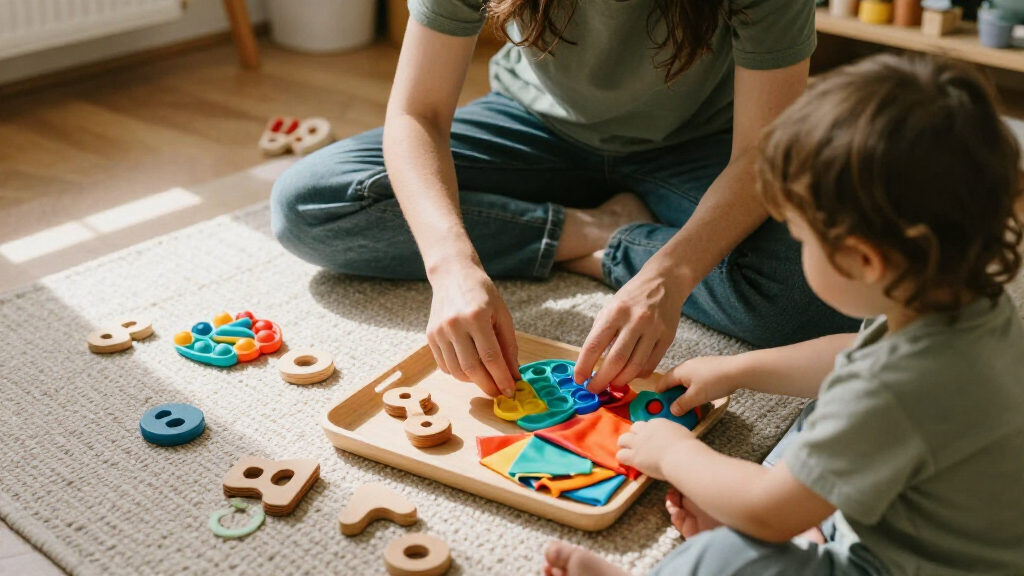
I evaluated each tool against four criteria that matter most to parents, teachers, and therapists buying sensory tools for kids. First, sensory effectiveness: does the tool genuinely deliver the type of input it promises — tactile, proprioceptive, oral, visual, or vestibular — or is it a toy with a sensory label? Second, safety and durability: I favored latex-free, non-toxic materials, checked choking-hazard concerns for younger children, and prioritized construction that survives chewing, dropping, and repeated use. Third, practicality: how the tool performs in real settings — a classroom fidget must be silent, a travel tool must fit in a bag, and a therapy tool must be simple enough for daily use. Fourth, versatility and value: tools that grow with the child or serve multiple needs ranked higher than single-purpose novelty items.
The ranking reflects a simple philosophy: tools grounded in occupational therapy practice outrank generic fidgets, and durable materials outrank cheap ones even at a higher cost. That is why the Therapressure brush and fine motor tool set lead the list while flashier options like fidget spinners and liquid bubblers sit lower — they are engaging but developmentally thinner. Where two products overlap, I broke ties by noise level, portability, and how forgiving each tool is for different ages.
Factors to Consider When Choosing Best Sensory Tools For Kids
Choosing sensory tools is less about finding the single best product and more about matching the tool to your child’s specific sensory profile and the setting where it will be used. Before buying anything on this list, work through the factors below — they explain why two similarly priced tools can be perfect for one child and useless for another.Know Your Child’s Sensory Profile First
The most common mistake parents make is buying a popular fidget and hoping it sticks. Sensory needs fall into broad patterns: sensory seekers crave intense input and benefit from chewing tools, deep-pressure brushes, and resistance-based toys; sensory avoiders often prefer gentle, predictable input like soft textures, slow visual motion, or smooth worry stones. A child who chews shirt collars needs oral input — a spinner will not help. A child who melts down in loud cafeterias may need a calming tool, not a stimulating one. If you are unsure, an occupational therapy screening can identify your child’s profile in a session or two, and that knowledge will make every purchase on this list dramatically more effective. Observing when and where your child struggles — transitions, homework, car rides, bedtime — tells you most of what you need to know about which sensory channel to target.
Match the Tool to the Setting
A tool that works beautifully at home can become a problem at school. Classrooms demand silent, one-handed, low-visibility tools — chair bands, worry stones, and textured flip cubes fit; fidget spinners with bearings and clicking parts do not, and many schools ban them outright. Travel calls for tools that cannot be dropped and lost under a seat, which is why tethered or pocket-sized options like the Pushpeel board outperform loose pieces. Home therapy sessions allow for messier, multi-piece setups like sensory bins and sorting toys where a lost component matters less. Bedtime calming favors slow, repetitive, non-stimulating input — liquid bubblers and brushing protocols — rather than anything with lights or fast motion. Buying a tool for the wrong setting is the fastest way to watch a twenty-dollar purchase end up in a drawer.
Material Safety and Durability Standards
Anything destined for a mouth needs to meet a higher bar than a typical toy. Look for food-grade or platinum-cured silicone, BPA-free and latex-free labeling, and single-piece construction without small parts that can detach. Silicone chew tools should be firm enough to resist tearing — a chewed-off fragment is a genuine choking risk, which is why I would replace any chew tube at the first sign of splitting, regardless of age rating. Wood tools, like the Yowlieu bin set, should be finished with non-toxic sealants and hand-washed, since soaking can warp them. Fabric and foam items cannot be fully sanitized, making them a weaker choice for shared settings like classrooms or therapy clinics. Durability and safety usually cost the same or barely more upfront, and the replacement math favors paying it.
Age and Developmental Fit
Sensory tools span toddler through tween, and age ratings on packaging are only a starting point. Toddlers and preschoolers do best with large-piece, cause-and-effect tools like sorting sets and squeeze tools that build fine motor skills alongside sensory input. School-age children can manage discreet tools and often prefer them, since visibly different equipment can attract unwanted attention from classmates. Older kids respond to tools that look like ordinary desk items — chair bands and puzzle boards pass as normal classroom gear. Also weigh whether you want the tool to grow: a tracing board serves a four-year-old and a seven-year-old differently, while a teething-style chew tube has a shorter useful window. When in doubt, buy the version rated slightly older, since under-challenging tools lose their regulating effect quickly.
Therapy Integration versus Standalone Use
Some tools in this category are self-explanatory — hand a child a worry stone and it works. Others, particularly the Therapressure brush, belong to structured protocols that require correct technique to be effective and, ideally, guidance from an occupational therapist. If your child sees a therapist, ask which tools fit the current treatment plan before buying; a mismatched tool can reinforce a habit you are trying to redirect. The lesson plans included with the ColorScape mats and the structured progression of the Pushpeel alphabet board are designed for this integration, which explains their premium positioning. Standalone fidgets are fine as supplements, but families relying on sensory tools for regulation rather than entertainment get far better outcomes when at least one tool ties into a deliberate routine.
Budget Realism and Build Order
You do not need to buy everything at once, and doing so usually overwhelms the child. A smarter approach is to start with two or three tools targeting different inputs — one calming, one oral or tactile, one for the primary problem setting — then expand based on what your child actually reaches for. Multi-packs offer the best per-unit value and let you keep spares in a car kit, a backpack, and a classroom drawer, which is where the six-pack brush set and four-pack fidget bundles earn their keep. Premium single items make sense only after you know your child engages with that category. And be skeptical of steep spending on any single fidget: the mechanism that regulates a nervous system is the sensory input, not the price tag.
Frequently Asked Questions
Are sensory chew tubes safe if my child bites off pieces?
No chew tool is truly bite-proof, and this is where close supervision matters more than the brand you choose. Food-grade silicone is the right material, but every chew tube has a lifespan that depends on your child’s bite strength and chewing intensity. Inspect the tube before each use and replace it the moment you see cracks, thinning, or rough edges — a swallowed fragment is a real choking hazard, especially for children under three. If your child tears through standard tubes quickly, look for thicker or firmer grades rather than buying replacements more often, and raise the behavior with an occupational therapist, since heavy destructive chewing often signals a need for more intense oral input than a tube alone provides. Rotating between several tubes also spreads the wear and gives you earlier warning before one fails.
Will the chair bands fit my child’s chair, and do they work for adults?
Chair bands rely on stretchy latex-free elastic with adjustable loops, and they fit most standard classroom chairs and desk legs, but fit depends on leg width and spacing more than chair brand. Measure the distance between the front legs of your chair before buying — bands that are stretched too far lose resistance quickly, and bands that are too loose do nothing. For children, the band should sit low enough that their feet rest on it while seated, providing the bouncing resistance that helps restless legs. Adult desk chairs with thick or angled legs are a weaker fit, and the resistance will feel trivial for a full-grown adult, so these are best treated as a kids’ tool. In classrooms, they are one of the few fidget options teachers consistently allow because they are silent and invisible to other students.
What is the difference between the two KLT flip cube sets in this lineup?
The main difference is noise and quantity, which changes where you can use them. The 4-pack silicone flip cubes produce a soft popping sound as they turn inside out, making them better for home use or kids who respond well to auditory feedback with their fidgeting. The 6-pack quiet textured version is designed to stay silent in class, with textured surfaces that add tactile variety instead of sound, and the extra two cubes mean you can stash spares in a backpack and a car without hunting for the one that went missing. Texturally, the quiet set offers more variety across its six pieces, which helps kids who habituate quickly to a single sensation. If you are choosing for school, take the quiet set; if the tool is purely for home regulation, the 4-pack’s audible feedback can be genuinely calming for some children.
Do I need a therapist’s guidance to use the Therapressure brush correctly?
The brush itself is simple, but the brushing protocol it is designed for involves specific pressure, sequence, and frequency that are hard to learn from packaging alone. Occupational therapists typically teach the Wilbarger protocol in a session: firm strokes over arms, hands, back, and legs, followed by joint compressions, repeated on a schedule. Used casually, the brush still provides pleasant tactile input and many kids enjoy it, so it is not wasted without training — but the regulating effects families report usually come from the protocol done properly. If your child has an OT, one demonstration is all it takes, and the six-pack means you can keep brushes in multiple locations. If you do not have therapy access, start with gentle brushing as part of a calming routine and watch how your child responds before committing to any structured schedule.
Which of these tools are best for a classroom where fidget spinners are banned?
Several options in this roundup are built exactly for that restriction. Chair bands attach to the desk itself and are invisible to classmates, making them the safest bet for kids who feel self-conscious. Worry stones fit in a palm or pocket and make no noise at all, working well during tests and quiet reading. The Pushpeel activity board is silent and looks like an ordinary educational toy, so it rarely attracts teacher attention. Textured flip cubes from the quiet KLT set are another classroom-safe choice, though they are more visible than a stone. Avoid the fidget spinners and liquid bubblers for school — the first is frequently banned by name and the second is a visual distraction to surrounding students. A pocket stone plus chair bands covers most classroom needs for under the cost of a single premium toy.
Conclusion
After comparing all 14 tools, the right pick depends less on quality — most of these are well made — and more on what your child needs and where they need it. For best overall, the Special Supplies Therapressure Therapy Brush 6-Pack stands out because it addresses regulation directly, works across ages, and the multi-pack lets you keep brushes at home, at school, and in a bag. For best value, the KLT Sensory Worry Stones 6-Pack and WNSIRVY Chair Bands deliver quiet, effective regulation for pennies per tool, and together they cover home and classroom. For the best premium pick, the ColorScape Sensory Mats with Lesson Plans earn their price through structured learning integration that no fidget can match. For beginners — families buying their first sensory tool — the Learning Resources Helping Hands Fine Motor Tool Set is the easiest entry point: playful, low-risk, and developmentally productive. For specific needs: oral seekers should get the silicone chew tubes, anxious kids benefit most from the worry stones, classroom-discreet regulation points to the Pushpeel board, and toddlers building early skills are best served by the ZaxiDeel color sorting toy. Start with one or two, watch which your child reaches for, and build from there.
Fall Picks
fall essentials
As an affiliate, we earn on qualifying purchases.