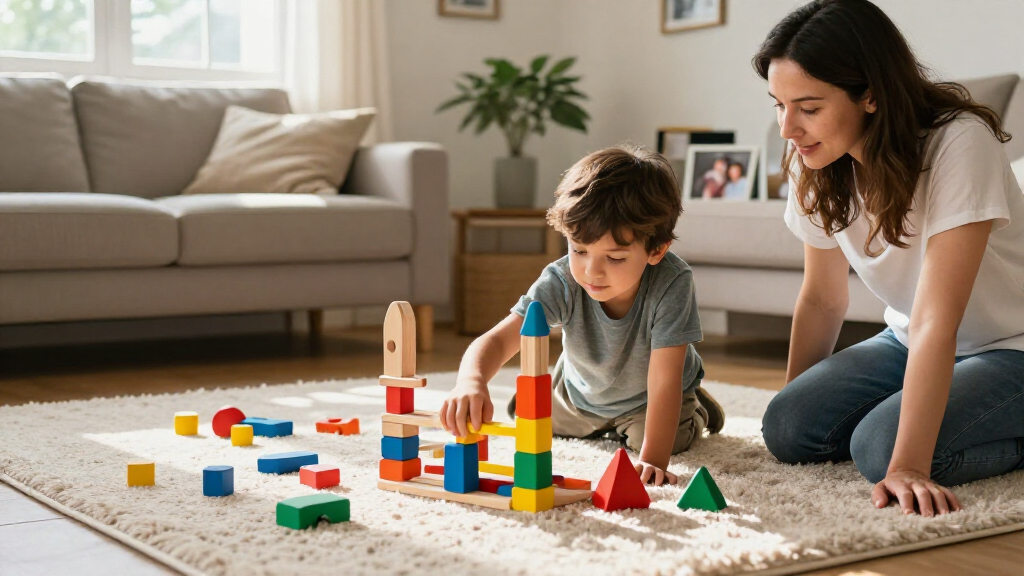

The best toys for 7-year-olds combine a satisfying challenge with play children can manage largely on their own. My best overall pick is the ThinkFun Gravity Maze for its hands-on logic puzzles and clear progression; LEGO Creator 3-in-1 Space Shuttle stands out for repeatable building, while the National Geographic Kids Magic Kit suits kids who like performing for others. The main tradeoff is choosing between focused, skill-building play and open-ended or active fun—and between toys that invite solo use and those that need adult help. Read on for how all 14 options compare and which one fits your child’s interests, patience, and play space.

Turn the school run and nap time into listening time
- Thousands of audiobooks, podcasts and originals
- Listen on your phone, tablet or Echo — also offline
- Cancel anytime
Complete the kit


Key Takeaways
- Gravity Maze leads for structured solo play: its marble challenges give children a clear goal, unlike open-ended construction kits that depend more on the child’s own ideas.
- LEGO Creator 3-in-1 Space Shuttle offers a useful balance of guided building and rebuild potential; the more elaborate STEM kits may offer more project variety but can ask for more setup and adult involvement.
- The lineup’s strongest options serve very different moods: the Hover Soccer Ball is for active indoor play, while Bitzee Magicals centers on digital-pet interaction.
- Creative and performance toys reward different strengths: Crayola’s airbrush kit supports making pictures, while the National Geographic Magic Kit gives children tricks to practice and present.
- Age labels are not a complete measure of fit: the Smartivity Mechanical Hand is marked for ages 8–14, so its assembly demands may be a stretch for some 7-year-olds even if they enjoy building.
| BeAndge STEM Building Kits for Kids, 5 Projects |  | Best for Variety in STEM Building | Brand: BeAndge | Model: BA1011 | Number of projects: 5 | VIEW LATEST PRICE | See Our Full Breakdown |
| Learning Resources STEM Explorers Pixel Art Challenge |  | Best Screen-Free Logic and Art Activity | Brand: Learning Resources | Model number: LER9463 | Recommended age: 5–8 years | VIEW LATEST PRICE | See Our Full Breakdown |
| LEGO Creator 3-in-1 Space Shuttle Building Set, 144 Pieces, Ages 6+ (31134) |  | Best Overall for Build-and-Rebuild Play | Brand: LEGO | Model: Space Shuttle 31134 | Piece count: 144 | VIEW LATEST PRICE | See Our Full Breakdown |
| Ninja Blast Light-Up Hover Soccer Ball |  | Best for Active Indoor Play | Brand: Ninja Blast | Recommended age: 3 years and up | Power source: Rechargeable | VIEW LATEST PRICE | See Our Full Breakdown |
| Tsomtto 10-in-1 STEM Building Toy Set for Kids |  | Best for Model Choice and Storage | Brand: Tsomtto | Model: J-7748 | Piece count: 167 | VIEW LATEST PRICE | See Our Full Breakdown |
| Klutz LEGO Gear Bots STEM Activity Kit |  | Best for Kinetic STEM Building | Recommended age: 8–12 years | Number of models: 8 | LEGO elements: 62 | VIEW LATEST PRICE | See Our Full Breakdown |
| National Geographic LED Air Rocket Launcher Toy |  | Best Outdoor Physics Toy | Age range: 6 years and up | Launch distance: Up to 100 feet | Launch type: Foot-pump powered | VIEW LATEST PRICE | See Our Full Breakdown |
| Smartivity Robotic Mechanical Hand STEM Toy for Kids Ages 8–14 |  | Best for a Guided Robotics Build | Age range: 8–14 years | Material: Engineered wood | Theme: Anatomy and robotics | VIEW LATEST PRICE | See Our Full Breakdown |
| LEGO Creator 3-in-1 Flatbed Truck with Helicopter, Plane, Hot Rod and SUV, 31146 |  | Best Rebuildable Vehicle Set | Recommended age: 7 years and up | Piece count: 270 | Models: Flatbed truck with helicopter; plane with fuel truck; hot rod with SUV | VIEW LATEST PRICE | See Our Full Breakdown |
| Bitzee Magicals Interactive Digital Pet Toy |  | Best Screen-Free Digital Pet | Age range: 5 years and up | Collectible characters: 20 | Batteries: 3 AA batteries included | VIEW LATEST PRICE | See Our Full Breakdown |
| National Geographic Kids Magic Kit with 45 Tricks |  | Best for Aspiring Performers | Brand: Blue Marble | Recommended age: 8 years and up | Included tricks: More than 45 | VIEW LATEST PRICE | See Our Full Breakdown |
| Dan&Darci Magic Gel Water Pets Kit |  | Best for Sensory Craft Play | Brand: Dan&Darci | Recommended age: 6 years and up | Included gels: 7 basic color gels, 2 glitter gels, and 1 glow-in-the-dark gel | VIEW LATEST PRICE | See Our Full Breakdown |
| ThinkFun Gravity Maze Falling Marble Logic Game |  | Best for Independent Problem-Solving | Brand: ThinkFun | Age range: 8+ | Challenge cards: 60 | VIEW LATEST PRICE | See Our Full Breakdown |
| Crayola Marker Airbrush Art Kit with 8 Washable Markers and 5 Stencils |  | Best for Easy-Start Art | Brand: Crayola | Age range: 6+ | Included markers: 8 washable broad-line markers | VIEW LATEST PRICE | See Our Full Breakdown |
| toys for 7-year-old | Brand | Recommended age |
|---|---|---|
| BeAndge STEM Building Kits for | BeAndge | 6–14 years |
| Learning Resources STEM Explor | Learning Resources | 5–8 years |
| LEGO Creator 3-in-1 Space Shut | LEGO | 6 years and up |
| Ninja Blast Light-Up Hover Soc | Ninja Blast | 3 years and up |
| Tsomtto 10-in-1 STEM Building | Tsomtto | 3 years and up |
| Klutz LEGO Gear Bots STEM Acti | — | 8–12 years |
| National Geographic LED Air Ro | — | — |
| Smartivity Robotic Mechanical | — | — |
| LEGO Creator 3-in-1 Flatbed Tr | LEGO | 7 years and up |
| Bitzee Magicals Interactive Di | — | — |
| National Geographic Kids Magic | Blue Marble | 8 years and up |
| Dan&Darci Magic Gel Water Pets | Dan&Darci | 6 years and up |
| ThinkFun Gravity Maze Falling | ThinkFun | — |
| Crayola Marker Airbrush Art Ki | Crayola | — |
More Details on Our Top Picks
BeAndge STEM Building Kits for Kids, 5 Projects
For a seven-year-old who likes taking things apart and seeing how they work, five different projects give this kit more variety than the LEGO Creator 3-in-1 Space Shuttle, which focuses on one small set of space-themed builds. The solar- and wind-powered cars introduce different ways to make a model move, while the robot, tank, and glider broaden the activities beyond vehicles. Step-by-step instructions and the included mini screwdriver can help a child work through assembly, though some steps may call for an adult’s help. The tradeoff is that this is a build-first toy, not something ready for immediate play: assembly takes time, and AA batteries are not included. I’d choose it for hands-on variety, not for the simplest independent build.
Pros:- Five distinct projects offer more variety than a single-model building kit.
- Solar- and wind-powered builds introduce different ways of producing motion.
- Step-by-step manuals and a mini screwdriver support guided assembly.
- Projects encourage problem solving, concentration, and fine motor practice.
Cons:- AA batteries are required and not included.
- Assembly may need adult help, especially for a child new to building kits.
- The provided details do not specify how long each model takes to assemble.
Best for: Families or teachers looking for several guided STEM builds to share with a seven-year-old who enjoys assembling models.
Not ideal for: Children who want a toy ready to play with straight away, or families who prefer not to supply batteries or help with assembly.
- Brand:BeAndge
- Model:BA1011
- Number of projects:5
- Included projects:Solar-powered car, wind-powered car, obstacle-avoidance robot, transmission tank, and glider
- Recommended age:6–14 years
- Material:Plastic
- Batteries:AA batteries required; not included
- Included accessories:Mini screwdriver and step-by-step instruction manuals
Our verdict“Choose this for a seven-year-old who wants several hands-on STEM builds and has an adult available to help with assembly.”
Learning Resources STEM Explorers Pixel Art Challenge
This is the most structured screen-free pick in this group: 40 challenges give a seven-year-old clear goals while they arrange colored foam pieces into pixel pictures. The activity links pattern-making and spatial reasoning with early math and coding ideas, without asking a child to assemble a mechanism like the BeAndge STEM Building Kits. That makes it a gentler fit for children who prefer puzzles and visual tasks to construction. The compact 5.5-inch tray suits a table or classroom station, but it also limits the scale of the art. Unlike the LEGO Creator 3-in-1 Space Shuttle, this set offers no three-dimensional model to keep and play with afterward. The small foam pixels can also scatter or go missing, so it works best with a dedicated play space and tidy storage.
Pros:- Forty challenges provide a guided progression of screen-free activities.
- Combines visual design with early math, coding concepts, and spatial reasoning.
- Small tray works well for a desk, classroom table, or limited play space.
- Foam pixels offer a hands-on alternative to screen-based activities.
Cons:- The result is flat pixel art rather than a three-dimensional build.
- Small foam pieces can be lost or scattered during play.
- The 5.5-inch tray limits the size of designs.
Best for: Parents and teachers seeking a compact, screen-free activity for a seven-year-old who enjoys patterns, puzzles, and making pictures.
Not ideal for: Children who prefer large construction projects, moving toys, or finished builds they can use in imaginative play.
- Brand:Learning Resources
- Model number:LER9463
- Recommended age:5–8 years
- Number of challenges:40
- Pixel pieces:400 foam pieces
- Tray size:5.5 × 5.5 inches
- Pixel size:1 cm³
Our verdict“Pick this for a seven-year-old who likes guided visual puzzles more than building and playing with a three-dimensional toy.”
LEGO Creator 3-in-1 Space Shuttle Building Set, 144 Pieces, Ages 6+ (31134)
The three rebuild options make this a strong all-round building toy for a seven-year-old: the same 144 pieces become a space shuttle, a spaceship, or a posable astronaut. That gives the set more replay value than a single finished model, while keeping the build scale manageable for a child who is still gaining confidence with bricks. The shuttle’s opening hatch and removable, extendable satellite add play details beyond display, and the alternate spaceship has moving wings. Compared with the BeAndge STEM Building Kits, this set is less focused on experimenting with power and mechanisms; it trades that variety for a familiar, imaginative building experience. Only one model can be assembled at a time, so rebuilding means taking apart the current creation. The compact finished size may also feel modest to children who want a larger centerpiece.
Pros:- Three distinct build options extend play beyond a single finished model.
- Opening hatch and extendable, removable satellite add interactive shuttle details.
- Moving wings and a posable astronaut support imaginative play.
- 144 pieces make it a relatively approachable build for this age range.
Cons:- Only one of the three models can be built at a time.
- Rebuilding requires taking apart the model currently assembled.
- The finished shuttle is compact at about 6 inches long.
Best for: Families seeking a manageable, reusable building set for a seven-year-old who enjoys space stories and rebuilding models.
Not ideal for: Children who want several models displayed at once or prefer science experiments and powered mechanisms to brick-based construction.
- Brand:LEGO
- Model:Space Shuttle 31134
- Piece count:144
- Recommended age:6 years and up
- Build options:Space shuttle, spaceship, or astronaut
- Shuttle dimensions:Over 2.5 inches high, 5 inches long, and 6 inches wide
- App compatibility:LEGO Builder app supports 3D model viewing
Our verdict“Choose this as a flexible first space-themed building set for a seven-year-old who likes to rebuild and invent stories.”
Ninja Blast Light-Up Hover Soccer Ball
Where the LEGO Creator 3-in-1 Space Shuttle rewards careful building, this light-up hover ball is about getting a child moving with little setup. It glides across hard floors, and the soft foam bumper helps reduce knocks against furniture during indoor kicking. That makes it a practical option for a seven-year-old who wants active play but may not have a yard or a playmate available; the listing supports one to ten players. Its rechargeable design also avoids disposable batteries. The main limitation is the surface: it is intended for indoor use and works best on hard floors, so it is a poor match for carpeted rooms or outdoor soccer. At 550 grams, it is also a substantial toy to keep moving in a small room. I’d pick it for short bursts of indoor activity, not a replacement for outdoor sports.
Pros:- Glides across wood, tile, and concrete surfaces.
- Light-up feature makes the ball visible and adds visual interest indoors.
- Foam bumper helps protect furniture during play.
- Rechargeable power avoids disposable batteries.
Cons:- Designed for indoor use rather than outdoor soccer.
- Works best on hard floors and is not suited to carpeted play areas.
- Needs clear floor space for kicking and movement.
Best for: Families with a clear hard-floor area who want a simple active toy for a seven-year-old to play with alone or with others.
Not ideal for: Households with mostly carpeted floors, limited open space, or a need for an outdoor soccer toy.
- Brand:Ninja Blast
- Recommended age:3 years and up
- Power source:Rechargeable
- Usage:Indoor
- Number of players:1–10
- Weight:550 g
- Dimensions:6 × 6 × 2 inches
- Included components:Hover soccer ball and charging cable
Our verdict“Choose this for a seven-year-old who wants active indoor play and has room to use it on hard flooring.”
Tsomtto 10-in-1 STEM Building Toy Set for Kids
With 10 possible models from 167 pieces, this set gives a seven-year-old more design choices than the LEGO Creator 3-in-1 Space Shuttle. Vehicles, a rocket, a robot, and a helicopter offer different prompts for building and pretend play, while the step-by-step guide gives children a route through the options. The included storage box is a useful distinction for families trying to keep building pieces together between sessions. The tradeoff is that only one model can be built at a time, so the variety is in choosing what to assemble next, not in keeping a fleet on display. The stated recommended age begins at three, which may also mean some seven-year-olds looking for more intricate or technically challenging builds will outgrow the instructions quickly. This is a better fit for guided variety than advanced engineering.
Pros:- Ten model options offer several directions for repeat building.
- Step-by-step instructions can support children who prefer guided construction.
- Storage box helps keep the pieces together between play sessions.
- Model choices include vehicles, a rocket, a robot, and a helicopter.
Cons:- Only one model can be assembled at a time.
- The age guidance starts at three, so some seven-year-olds may find the builds too simple.
- The supplied details do not state the dimensions or complexity of individual models.
Best for: Families looking for a guided building set with multiple vehicle and character models plus a box to keep pieces together.
Not ideal for: Seven-year-olds seeking advanced engineering challenges or hoping to build and keep several models at once.
- Brand:Tsomtto
- Model:J-7748
- Piece count:167
- Number of models:10
- Recommended age:3 years and up
- Included components:Instruction manual
- Storage:Sturdy storage box
- Materials:Non-toxic building blocks
Our verdict“Pick this for a seven-year-old who likes choosing between guided builds and needs a set that stores in its own box.”
Klutz LEGO Gear Bots STEM Activity Kit
Eight moving creatures make this a more mechanical project than the LEGO Creator 3-in-1 Flatbed Truck set, which focuses on rebuilding vehicles. The illustrated book guides kids through combining LEGO Technic elements and papercraft, while introducing axles, cams, and cranks through construction rather than screen-based lessons. That hands-on motion gives the finished models a clear play payoff: kids turn a crank and watch their creations move.
The main catch for this roundup is age fit: the kit is recommended for ages 8–12, so many 7-year-olds may need adult help with the steps. It also asks for patience with manual assembly and cranking, rather than offering the immediate outdoor action of the National Geographic LED Air Rocket Launcher. I’d choose it for a child who enjoys building mechanisms; skip it if the age guidance or paper construction is a poor match.
Pros:- Builds eight different kinetic creatures, giving the project variety beyond a single model.
- Introduces axles, cams, and cranks through working mechanisms.
- Illustrated 64-page book provides step-by-step building guidance.
- Combines LEGO Technic pieces with papercraft for a distinct build style.
Cons:- Recommended for ages 8–12, making it a stretch for some 7-year-olds without adult support.
- Papercraft components may be less durable than an all-brick construction toy.
- Each creature uses a manual crank, so movement depends on a child turning it.
Best for: A 7-year-old who already enjoys construction projects and can work through age-8-and-up instructions with an adult nearby.
Not ideal for: Children who need a toy suited strictly to age 7, prefer ready-to-play action, or may lose interest in a careful paper-and-parts build.
- Recommended age:8–12 years
- Number of models:8
- LEGO elements:62
- Papercraft sheets:10
- Book length:64 pages
- Operation:Manual crank
- Dimensions:10 x 1.5 x 10 inches
Our verdict“Choose this for a mechanically curious child ready for an age-8-and-up build, rather than a 7-year-old seeking quick, free-form play.”
National Geographic LED Air Rocket Launcher Toy
Big launches and outdoor movement set this apart from the tabletop building projects in the roundup. The foot pump sends foam-tipped rockets up to 100 feet, while an adjustable tube lets kids experiment with launch angles. A learning guide adds flight activities, so the fun can turn into simple comparisons about motion and aerodynamics instead of ending after the first launch.
Compared with the LEGO Creator 3-in-1 Flatbed Truck, this launcher delivers action without a long construction session, but it needs open outdoor space and is less suited to rainy days or compact homes. The rockets’ switchable LED lights add visibility and make launches more engaging, though the lights require batteries. I’d pick it for a child who likes running, aiming, and repeating experiments; skip it if there is no safe place to launch.
Pros:- Foot-pump launch provides active play without requiring a powered launcher.
- Adjustable launch angle supports simple flight experiments.
- Includes three foam-tipped rockets with switchable LED lights.
- Learning guide connects launching to motion and aerodynamics.
Cons:- Needs substantial open space for safe launches and retrieval.
- Rocket lights require batteries.
- Outdoor use limits play during poor weather or when space is unavailable.
Best for: Families with a yard, park access, or another safe open area, especially for an active 7-year-old who enjoys experimenting outdoors.
Not ideal for: Apartment households without reliable outdoor launch space or children whose play needs to stay indoors.
- Age range:6 years and up
- Launch distance:Up to 100 feet
- Launch type:Foot-pump powered
- Rockets included:3 foam-tipped, light-up rockets
- Launch tube:Adjustable angle
- Power source:Battery powered for rocket lights
- Educational objective:Physics
Our verdict“Pick this for an active 7-year-old with safe outdoor space; choose a building set such as LEGO Creator 3-in-1 if indoor play matters more.”
Smartivity Robotic Mechanical Hand STEM Toy for Kids Ages 8–14
This kit centers on a single, functional project: assemble a mechanical hand and explore how its parts work together. That focus makes it more direct than the Klutz LEGO Gear Bots kit, which offers eight smaller creatures and introduces several types of mechanisms. The Smartivity set is a better fit for a child drawn to anatomy or robotics who wants one substantial build, with step-by-step instructions to guide the process.
Its engineered-wood construction offers a different feel from LEGO bricks, but assembly is part of the commitment, not a minor prelude to play. The stated age range begins at 8 years, so a 7-year-old may need close adult help with the build. Lifetime replacement parts are a useful support if components go missing or break, though the product data does not specify the hand’s functions or a play guide. Choose it for an older-leaning, patient builder; skip it for quick, open-ended play.
Pros:- Creates a working mechanical hand rather than a display-only model.
- Step-by-step instructions support a guided, screen-free build.
- Engineered wood provides an alternative to the LEGO-based construction kits.
- Lifetime replacement parts offer support for missing or damaged components.
Cons:- Recommended age starts at 8, so many 7-year-olds may need substantial help.
- Assembly takes time before the finished toy is ready for play.
- The single-project format offers less model variety than the Klutz LEGO Gear Bots kit.
Best for: A hands-on 7-year-old interested in how hands and mechanical linkages work, with an adult available to support an age-8-and-up build.
Not ideal for: Children who want a ready-to-use toy, dislike assembly, or prefer several small builds over one focused project.
- Age range:8–14 years
- Material:Engineered wood
- Theme:Anatomy and robotics
- Set name:Smartivity DIY Robotic Mechanical Hand STEM Fun Toys
- Model number:SMRT1135
- Item dimensions:11.81 x 9.8 inches
- Replacement parts:Available for the lifetime of the product
Our verdict“Choose this for a patient, robotics-curious child who wants one guided mechanical build and can get help with the age-8-and-up assembly.”
LEGO Creator 3-in-1 Flatbed Truck with Helicopter, Plane, Hot Rod and SUV, 31146
Three vehicle combinations from one 270-piece set give this pick a strong balance of building and repeat play for age 7. Kids can make a flatbed truck with helicopter, a propeller plane with fuel truck, or a hot rod with SUV, then take the models apart and start again. Moving wheels, propellers, and rotor blades add play value after construction. Compared with the LEGO Creator 3-in-1 Space Shuttle set elsewhere in this roundup, this one leans into vehicles and offers multiple paired builds.
The limitation is that only one combination can be built at a time, so changing the display means rebuilding rather than keeping all versions assembled. It also suits children who enjoy following build steps more than inventing freely from loose bricks. Unlike the Klutz LEGO Gear Bots kit, it does not focus on explaining mechanical concepts; its appeal is vehicle variety and rebuildability. I’d choose it for a young LEGO fan who likes trucks, aircraft, and repeat builds.
Pros:- Three distinct vehicle combinations offer repeat building from one set.
- Moving wheels, propellers, and rotor blades support play after assembly.
- 270 pieces provide a substantial project for the stated age range.
- Vehicles can be rebuilt into different pairings as interests change.
Cons:- Only one model combination can be built at a time.
- Changing combinations requires taking apart and rebuilding the set.
- Additional LEGO Creator sets are sold separately.
Best for: A 7-year-old who enjoys LEGO instructions, vehicles, and rebuilding the same pieces into different models.
Not ideal for: Children who want to display all the included models at once or prefer an open-ended STEM lesson over vehicle play.
- Recommended age:7 years and up
- Piece count:270
- Models:Flatbed truck with helicopter; plane with fuel truck; hot rod with SUV
- Moving features:Wheels, propellers, and rotor blades
- Model:Creator 3-in-1 31146
- Brand:LEGO
- Model year:2024
Our verdict“This is the clearest choice for a 7-year-old who wants repeatable vehicle builds, but not for a child expecting every model to remain assembled.”
Bitzee Magicals Interactive Digital Pet Toy
Responsive virtual pets without a conventional screen make Bitzee Magicals the most character-led pick in this batch. Its 20 characters react to swipes, tilts, shakes, and touch, then grow through different stages as kids care for them, play games, collect gems, and cast spells. That ongoing routine contrasts with the LEGO Creator 3-in-1 Flatbed Truck, which centers on building and rebuilding vehicles rather than tending to a character.
Bitzee is ready for interactive play rather than an assembly project, but its appeal depends on a child wanting to return to the same digital-pet loop. It is less suited to kids looking for physical construction or outdoor activity like the National Geographic LED Air Rocket Launcher. Three AA batteries are included, though the product has no manufacturer warranty, and flashing lights may trigger epilepsy in sensitive individuals. I’d choose it for a child who likes caring for virtual characters; skip it if flashing lights are a concern.
Pros:- Twenty collectible characters offer variety within the digital-pet format.
- Touch, swipes, tilts, and shakes trigger character responses.
- Care, games, gems, spells, and character growth create several play activities.
- Three AA batteries are included for getting started.
Cons:- Flashing lights may trigger epilepsy in sensitive individuals.
- No manufacturer warranty is listed.
- The character-care format may feel repetitive to children who prefer building or active outdoor play.
Best for: A 7-year-old who enjoys caring for characters and wants interactive, screen-free play without a building project.
Not ideal for: Children who prefer hands-on construction, or anyone sensitive to flashing lights; the manufacturer warns these may trigger epilepsy in sensitive individuals.
- Age range:5 years and up
- Collectible characters:20
- Batteries:3 AA batteries included
- Included components:1 Bitzee, Quick Start Guide, Instruction Sheet, 3 AA batteries
- Manufacturer:Spin Master
- Model number:6069953
- Warranty:No warranty
Our verdict“Choose Bitzee Magicals for a child who wants an interactive virtual pet, but avoid it when flashing lights are a concern or physical building is the priority.”
National Geographic Kids Magic Kit with 45 Tricks
For a 7-year-old who enjoys putting on shows, this kit offers a bigger performance challenge than the more open-ended Crayola Marker Airbrush Art Kit. Its magic props and specialized card deck support more than 45 tricks, while step-by-step video instruction breaks techniques into lessons a child can practice before performing. That mix gives the kit room to grow beyond a single afternoon activity, but the recommended age is 8 and up, so many 7-year-olds may need an adult to help with the directions and harder moves. Unlike the airbrush kit, this is about rehearsing and presenting rather than making a finished art project. It also works best indoors, and tricks can take patience to master; children expecting instant results may lose interest before they are ready to perform.
Pros:- More than 45 tricks give children plenty of skills to practice and perform.
- Video lessons from a professional magician demonstrate techniques and performance tips.
- Props and a specialized card deck support a range of classic illusions.
- Encourages creativity, practice, and confidence in front of an audience.
Cons:- Recommended age is 8 and up, so some 7-year-olds may need help.
- Some tricks require repeated practice before they work reliably.
- Designed for indoor use, limiting where children can perform.
Best for: A 7-year-old who likes performing for family, practicing card tricks, and learning skills with adult guidance.
Not ideal for: Children who want quick, independent play or who get frustrated when a trick takes repeated practice; the kit is also recommended for ages 8 and up.
- Brand:Blue Marble
- Recommended age:8 years and up
- Included tricks:More than 45
- Included components:Magic props and specialized card deck
- Instructions:Step-by-step video instructions
- Number of players:1
- Batteries:Not required
- Item dimensions:7.24 x 2.37 x 10 inches
Our verdict“Choose this for a budding young performer ready to practice tricks, but pick the Crayola airbrush kit for a child who would rather make art right away.”
Dan&Darci Magic Gel Water Pets Kit
This kit suits a 7-year-old who would rather make and handle a creation than rehearse a performance. Children fill molds with colored gel, dip them in prepared gelling solution, then store the finished pets in the included jar. Glitter and glow-in-the-dark gels add variety to the activity, while six molds give siblings or friends options for making different shapes. Compared with the National Geographic Kids Magic Kit, the appeal here is tactile crafting, not learning a set of tricks to present to an audience. The tradeoff is that the gelling solution needs preparation, so it is less immediate and may call for adult help with setup and cleanup. This is an indoor activity, and the finished pets are a better fit for children who enjoy small, hands-on projects than for those who want a reusable game with progressively harder challenges.
Pros:- Includes ten gel colors, including glitter and glow-in-the-dark options.
- Six molds let children create several different pets.
- A jar with a lid provides a place to keep finished creations.
- Recommended age of 6 years and up includes most 7-year-olds.
Cons:- Gelling-solution pellets need preparation before the main activity.
- Indoor use and the gel process can make this less convenient for spontaneous play.
- The activity centers on making the pets rather than offering progressive challenges afterward.
Best for: Families seeking a supervised indoor craft for a 7-year-old who likes squishy textures, colorful materials, and making small creations.
Not ideal for: Children who want a ready-to-play toy with no setup, or families looking for a screen-free logic challenge like Gravity Maze.
- Brand:Dan&Darci
- Recommended age:6 years and up
- Included gels:7 basic color gels, 2 glitter gels, and 1 glow-in-the-dark gel
- Molds:6
- Other included components:2 packets of gelling-solution pellets, strainer, jar with lid, and instruction guide
- Usage:Indoor
- Batteries:Not required
- Dimensions:8 x 8 x 3 inches
Our verdict“Pick this for a 7-year-old who enjoys supervised sensory crafts, rather than a child who prefers puzzles or performance play.”
ThinkFun Gravity Maze Falling Marble Logic Game
Gravity Maze stands out for children who enjoy figuring out how pieces fit together and testing whether a plan works. The player arranges towers on a grid to guide a marble to its target, with 60 progressive challenges providing a clear path from simpler layouts to harder puzzles. Compared with the Dan&Darci Magic Gel Water Pets Kit, this offers repeated logic play instead of a one-session craft, and it is easier to return to when a child wants a fresh challenge. It also supports solo play, though others can join in. The age guidance is 8+, so a 7-year-old may need an adult to help with the first puzzles or read challenge cards. Persistence is part of the experience, but that can feel like a drawback to children who prefer quick wins or imaginative, less structured play.
Pros:- Sixty challenges provide a structured range of puzzle difficulty.
- Building marble routes exercises spatial reasoning and planning.
- Supports screen-free play that can be done alone or with others.
- The grid, towers, and marbles make the puzzle solution physically visible.
Cons:- Rated for ages 8 and up, so a 7-year-old may need guidance.
- Harder challenges require patience and persistence.
- The goal-based puzzle format may feel restrictive to children who prefer free building.
Best for: A 7-year-old who likes building, spatial puzzles, and working independently, with an adult available to help bridge the 8+ age guidance.
Not ideal for: Children who prefer open-ended pretend play, quick results, or tactile crafts without a puzzle-solving goal.
- Brand:ThinkFun
- Age range:8+
- Challenge cards:60
- Towers:9
- Marbles:3
- Other included components:Game grid and 1 target piece
- Model number:44001006
- Color:Multicolor
Our verdict“Choose Gravity Maze for a patient young puzzle-solver who wants a toy to revisit, rather than the one-off crafting focus of the Magic Gel Water Pets kit.”
Crayola Marker Airbrush Art Kit with 8 Washable Markers and 5 Stencils
This is the most direct pick here for a 7-year-old who wants to start making something without learning a trick or solving a puzzle first. The battery-powered sprayer turns washable markers into spray art, and five reusable stencils give children an easy way to make shapes and patterns before trying their own designs. Compared with the National Geographic Kids Magic Kit, it offers a quicker creative payoff and less practice, though it does not build toward a performance skill. The eight included markers are a useful starting set, and compatibility with select Crayola Broadline, Super Tips, and Pip-Squeaks markers gives families more options if they already own them. Setup has a catch: it needs four AA batteries, not included, and the sprayer operates only when pointed downward. It is best for a supervised art space, not for children who dislike limits on how they can hold a tool.
Pros:- Includes eight washable broad-line markers for getting started.
- Reusable stencils help children make designs without needing advanced drawing skills.
- Compatible with select Crayola Broadline, Super Tips, and Pip-Squeaks markers.
- Age range of 6+ is a close fit for most 7-year-olds.
Cons:- Requires four AA batteries, which are not included.
- Sprayer operates only when pointed downward, limiting how children can use it.
- Spray-art play calls for a suitable, supervised work area.
Best for: A 7-year-old who likes drawing and wants a guided way to experiment with spray effects, especially in a household that already has compatible Crayola markers.
Not ideal for: Families who want a battery-free activity, or children who expect to spray at different angles or work without an adult nearby.
- Brand:Crayola
- Age range:6+
- Included markers:8 washable broad-line markers
- Reusable stencils:5
- Battery requirement:4 AA batteries, not included
- Compatible markers:Crayola Broadline, Super Tips, and Pip-Squeaks
- Spray orientation:Operates when pointed downward
- Certification:ACMI Certified
- Model number:747669
Our verdict“Choose this for a 7-year-old eager to make guided spray art, but choose the Magic Kit if the child prefers practicing and performing for an audience.”
How We Picked
I compared these toys by how well their core activity fits a typical 7-year-old: whether instructions and challenges feel approachable, whether play can continue after the first session, and how much adult setup or troubleshooting is likely. I also weighed variety, opportunities to build or practice a skill, storage and cleanup demands, and whether the toy works best alone, with a partner, or in a group. Age guidance matters, but I treated it as a starting point rather than a guarantee of fit.
The ranking favors toys with a clear, repeatable play loop and a strong match for this age group, rather than the greatest number of parts or activities. That puts Gravity Maze and the Space Shuttle set near the top for structured problem-solving and rebuilding, while more specialized picks rank for the children they suit best. Kits that depend on careful assembly, consumable materials, adult help, or a particular play setting have more limited appeal, even when they may be excellent for the right child.
Factors to Consider When Choosing Best Toys For 7-year-olds
For a 7-year-old, the right toy is less about a long feature list and more about whether the child can get started, stay interested, and return to it. I’d match the toy to how the child likes to play, then check the practical details that shape how often it comes out.
Match the challenge to the child, not just the age label
Seven-year-olds can differ widely in reading confidence, fine-motor control, patience, and comfort with trial and error. A toy with numbered challenges or visual instructions may help a child work independently, while a multi-step build may be more satisfying with an adult nearby. A common mistake is treating an older age range as a mark of quality; it can instead signal small parts, more complex assembly, or harder instructions. For a child who gets frustrated quickly, look for short stages and visible progress. For a child who loves a challenge, a toy that allows repeated attempts can hold attention longer than a quick, one-and-done activity. When in doubt, think about the last activity the child finished happily, not only what they say they want.
Decide whether the toy should guide play or leave it open
Some children enjoy a defined task: build this model, solve this route, or learn this trick. Others prefer to invent their own designs and stories. Guided toys can make it easier to begin and help a child feel capable, but they may lose appeal once the instructions run out. Open-ended toys can support more varied play, though they may need a child who enjoys coming up with ideas. Consider how the toy handles both modes: can a child follow a model first and then make a variation? That combination often works well for children who need a little structure before they play independently. Avoid choosing a toy for its advertised number of activities alone; check whether those activities feel meaningfully different.
Factor in adult help and setup time
A toy can be age-appropriate and still need an adult to sort pieces, explain a step, or supervise a messy activity. Before choosing, think about when the child will use it and whether someone will be available to help. Assembly kits and science-style activities can be rewarding shared projects, but they may disappoint if the expectation is independent play straight out of the box. Simple setup matters especially for toys meant for brief after-school sessions. Check whether the activity requires household supplies, batteries, a large clear surface, or careful cleanup. A little adult participation can be a plus when it creates shared time; it becomes a drawback when the toy cannot be used without it.
Check the play space and cleanup reality
The best toy for a child’s interests may still be a poor fit for a small home or a busy family routine. Larger active toys need room and may work better in a clear, safe area than beside furniture or fragile objects. Art and gel-based activities can bring extra cleanup, while building pieces and small accessories need a storage plan so they do not disappear between sessions. Look at what must be put away after play, not just the toy itself. If the child shares a room or play space, a compact activity with contained pieces may get used more often than something that needs to stay set up. Choosing for the available space can prevent an exciting gift from becoming a rarely used one.
Think about repeat play and what runs out
Some toys keep going through new builds, challenges, or imaginative variations; others have a finite set of tricks or an activity that changes after its materials are used. Neither format is automatically better. A child who enjoys mastering a skill may happily practice the same set of tricks, while another may prefer the evolving possibilities of a building toy. Check whether the kit includes all required materials and whether any special components are likely to be used up or misplaced. Also ask whether a toy needs a companion, an audience, or an available screen-like interaction to stay engaging. The strongest match is the one whose play pattern fits the child’s habits, not simply the one with the most listed activities.
Pay for a better fit, not a bigger promise
When comparing toys, extra parts and multiple modes matter only if the child will use them. A compact logic game may earn more repeat sessions than a large kit if the child enjoys solving clear problems. A multi-build set can be a strong choice for a child who likes rebuilding, while a single-purpose toy may be better when it precisely matches a current interest. Watch for feature lists that combine small variations into a large activity count. Consider durability, replaceable or reusable parts, and whether the toy still works when the novelty fades. A good choice supports the way the child already plays while offering one manageable step beyond it.
Frequently Asked Questions
Which toy in this roundup is best for a 7-year-old who likes playing alone?
ThinkFun Gravity Maze is the clearest fit for a child who enjoys working through a defined challenge independently. Its puzzle-based format gives the child a goal without needing a group or an audience. The LEGO building sets can also support solo play, though some children may want help interpreting steps or sorting parts. For a child who prefers inventing rather than following a task, a construction kit may be a better match. Think about whether the child likes solving one problem at a time or creating something without a set answer.
Are STEM building kits a good choice if my child gets frustrated by difficult instructions?
They can be, but the amount of guidance and adult support varies across kits. A clearly staged build may feel manageable, while a project with many small steps can be discouraging if the child expects to work alone. The LEGO Creator 3-in-1 Space Shuttle offers a more defined building experience than a multi-project kit, which may help a child who likes concrete instructions. For a child who often needs help, plan to build together rather than treating the toy as independent play. You can also start with one short session and pause before frustration takes over.
What should I choose for a 7-year-old who already has lots of building toys?
Look for a different kind of play rather than another set that repeats the same building experience. Gravity Maze shifts the focus to logic and spatial planning, while the National Geographic Kids Magic Kit adds practice and performance. For a child who needs to move around, the Ninja Blast Light-Up Hover Soccer Ball offers a more active option, subject to having a suitable play area. Ask what the child does with existing building sets: if they mostly follow instructions, an open-ended creative activity may add variety. If they invent new builds, another construction toy could still be a good fit.
Which options are likely to need adult help or extra cleanup?
Hands-on kits often call for more adult involvement than a self-contained puzzle or a straightforward building set. Projects involving assembly, careful steps, or art materials may need help with setup, supervision, or putting supplies away. The Crayola Marker Airbrush Art Kit is a creative choice, but it makes sense to prepare a workspace and check the cleanup routine first. The Smartivity Robotic Mechanical Hand carries an older age range, so some 7-year-olds may need substantial guidance. Check the instructions and included materials before gifting if independent use is a priority.
How do I choose between a creative kit and an interactive toy?
Start with what the child tends to do voluntarily: make things, tell stories, solve puzzles, or interact with characters. A creative kit gives the child a tangible project and may suit someone who enjoys making choices about colors or designs. An interactive toy such as Bitzee Magicals centers on responding to and caring for a digital pet, which may appeal to a child drawn to character-based play. Creative kits can require more setup and produce materials to store, while interactive toys may depend on the child returning to the same play pattern. If possible, choose the format that complements rather than duplicates the toys the child already reaches for.
Conclusion
For the strongest all-around mix of repeatable play and age-appropriate challenge, I’d choose ThinkFun Gravity Maze as best overall. The LEGO Creator 3-in-1 Space Shuttle is my best value pick for a child who enjoys building and rebuilding, while the National Geographic Kids Magic Kit is the best beginner-friendly option for learning a skill in short, practiceable steps. For a premium-style project experience, I’d look at the Smartivity Robotic Mechanical Hand only for a confident builder who can get adult help, given its older age guidance. Choose the Ninja Blast Light-Up Hover Soccer Ball for active play, Crayola’s airbrush kit for a young artist, or Bitzee Magicals for a child drawn to interactive pets. The best fit is the one that matches how your child already likes to play and the time and space your household can give it.
Cold & flu season Picks
humidifiers
As an affiliate, we earn on qualifying purchases.