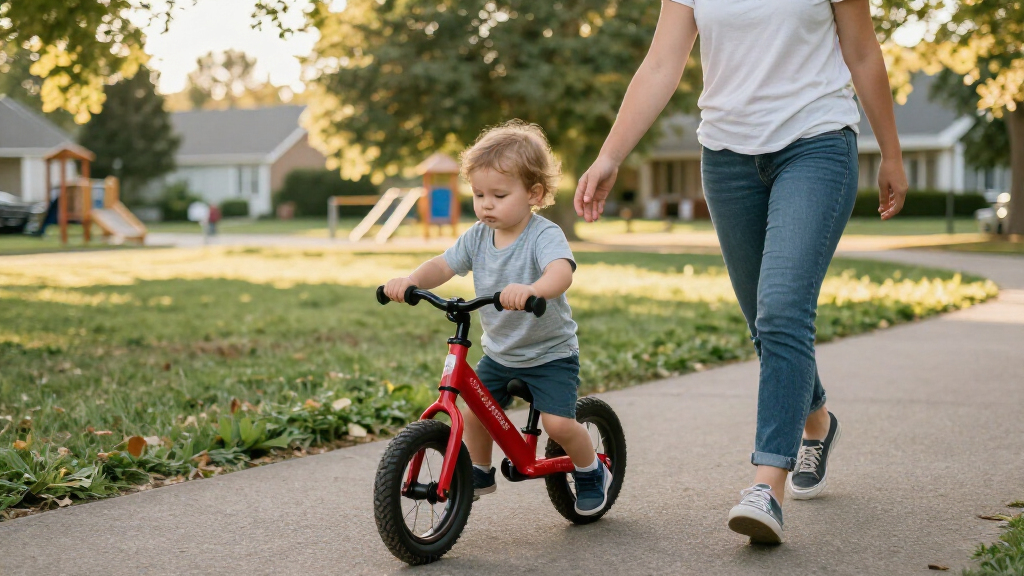

The best baby balance bikes pair a low, confidence-building seat with a stable design that suits a child’s size and stage. My best overall pick is the woom WOW, which stands out for its youngest-rider focus; the Radio Flyer Steady Start is a strong choice for families who want a steady first ride, while the Strider 12 Sport offers more room to grow. The main tradeoffs are age fit, portability, adjustability, and whether features such as lights or a rocking mode add real value for your family. A bike that fits comfortably matters more than a long list of extras. Read on for my full comparison of all 15 picks and guidance for choosing the right one.

Turn the school run and nap time into listening time
- Thousands of audiobooks, podcasts and originals
- Listen on your phone, tablet or Echo — also offline
- Cancel anytime
Complete the kit


Key Takeaways
- The woom WOW earns the overall lead because its stated age range starts at nine months, making it the most clearly positioned option here for very young riders.
- Radio Flyer Steady Start and the compact 12–24-month models suit early practice, while larger Strider models better fit families planning for a longer riding period.
- Adjustable seat and handlebar designs offer flexibility, but adjustment only helps when the lowest setting fits the child now.
- The Strider Pro 2-in-1 is the lineup’s unusual pick: its rocking mode may help a hesitant child get familiar with the bike indoors before trying it as a balance bike.
- Lights, baskets, and themed styling are secondary; size, manageable weight, stable handling, and a comfortable riding position matter more for learning.
| KRIDDO Baby Balance Bike for Toddlers, Black |  | Best for Wide-Wheel Stability | Brand: KRIDDO | Model: KB004-Black | Color: Black | VIEW LATEST PRICE | See Our Full Breakdown |
| Radio Flyer Steady Start Balance Bike for Kids Ages 1–3, Red |  | Best for First-Time Riders | Bike type: Balance bike; no drivetrain | Age range: 1–3 years | Wheel design: Wide front wheel with dual rear wheels | VIEW LATEST PRICE | See Our Full Breakdown |
| woom WOW Baby & Toddler Balance Bike, No-Pedal, 9 Months to 3 Years |  | Best for Early Two-Wheel Practice | Age range: 9 months to 3 years | Minimum user height: 27 inches | Recommended rider height: 28–40 inches | VIEW LATEST PRICE | See Our Full Breakdown |
| Hape My First Balance Bike, Vespa Green |  | Best for Lightweight Indoor Riding | Model: E0104 | Color: Vespa Green | Age range: 1–3 years | VIEW LATEST PRICE | See Our Full Breakdown |
| Liberry Baby Balance Bike for Toddlers, Green |  | Best for Extra-Stable Short Rides | Age range: 12–24 months | Frame material: Steel | Wheel material: EVA | VIEW LATEST PRICE | See Our Full Breakdown |
| Umatoll Baby Balance Bike with Light-Up Rear Wheels |  | Best for Engaging First Rides | Age range: 12–24 months | Frame: Aluminum | Wheel material: EVA | VIEW LATEST PRICE | See Our Full Breakdown |
| KidRoller Toddler Balance Bike with Adjustable Seat and Front Basket, Pink |  | Best for Basket-Loving Toddlers | Age range: 12–36 months | Frame: Aluminum | Wheel material: EVA | VIEW LATEST PRICE | See Our Full Breakdown |
| Retrospec Cricket Baby Balance Bike for Toddlers, 12–24 Months |  | Best for First-Time Balance Practice | Recommended age: 12 months–2 years | Wheel count: 4 | Suggested inseam: 9–13 inches | VIEW LATEST PRICE | See Our Full Breakdown |
| SEREED Baby Balance Bike for Toddlers, 12–24 Months |  | Best Lightweight Two-Wheel Starter | Age range: 12–24 months | Frame: Aluminum alloy | Wheel size: 6.7 inches | VIEW LATEST PRICE | See Our Full Breakdown |
| Strider 12 Classic Balance Bike for Toddlers |  | Best for a Longer Fit Window | Age range: 1–3 years | Wheel size: 12 inches | Seat height range: 11–16 inches (28–40 cm) | VIEW LATEST PRICE | See Our Full Breakdown |
| Strider Pro 2-in-1 Rocking Balance Bike, Black Pearl |  | Best for Early Starter-to-Rider Play | Bike type: Balance bike with detachable rocking base | Age range: 6 months–5 years | Frame: Aluminum | VIEW LATEST PRICE | See Our Full Breakdown |
| SEREED Toddler Balance Bike with Adjustable Seat and Handlebars |  | Best Lightweight Two-Wheel Pick | Frame: Carbon steel | Tires: EVA foam | Wheel size: 11 inches | VIEW LATEST PRICE | See Our Full Breakdown |
| PerKidern Baby Balance Bike for Ages 1–2 |  | Best for First-Time Riders | Recommended age: 12–24 months | Wheels: 4 high-density EVA wheels | Frame: Carbon steel | VIEW LATEST PRICE | See Our Full Breakdown |
| Strider 12 Sport Balance Bike for Kids Ages 1–4, Matte Gray |  | Best Overall for Two-Wheel Learning | Age range: 1–4 years | Wheel size: 12 inches | Seat height range: 11–17 inches | VIEW LATEST PRICE | See Our Full Breakdown |
| Gamfeiny Toddler Balance Bike with Colorful Lighting Wheels |  | Best for Light-Up Toddler Fun | Recommended age: 10–36 months | Frame: Carbon steel | Seat and handle material: PU seat; EVA handles | VIEW LATEST PRICE | See Our Full Breakdown |
| baby balance bike | Age range | Weight | Frame |
|---|---|---|---|
| KRIDDO Baby Balance Bike for T | — | — | — |
| Radio Flyer Steady Start Balan | 1–3 years | 7 pounds | — |
| woom WOW Baby & Toddler Balanc | 9 months to 3 years | 6 lb (2.7 kg) | — |
| Hape My First Balance Bike | 1–3 years | — | — |
| Liberry Baby Balance Bike for | 12–24 months | 5 pounds in specifications; description states 6.4 pounds | — |
| Umatoll Baby Balance Bike with | 12–24 months | 3.3 pounds (1.5 kg) | Aluminum |
| KidRoller Toddler Balance Bike | 12–36 months | 4.6 pounds (2.1 kg) | Aluminum |
| Retrospec Cricket Baby Balance | — | — | — |
| SEREED Baby Balance Bike for T | 12–24 months | 3.5 pounds | Aluminum alloy |
| Strider 12 Classic Balance Bik | 1–3 years | 6.5 pounds (2.9 kg) | Alloy steel |
| Strider Pro 2-in-1 Rocking Bal | 6 months–5 years | — | Aluminum |
| SEREED Toddler Balance Bike wi | — | 7.8 pounds | Carbon steel |
| PerKidern Baby Balance Bike fo | — | 4.6 pounds | Carbon steel |
| Strider 12 Sport Balance Bike | 1–4 years | — | Alloy steel |
| Gamfeiny Toddler Balance Bike | — | 4.6 pounds | Carbon steel |
More Details on Our Top Picks
KRIDDO Baby Balance Bike for Toddlers, Black
The KRIDDO is a sensible pick for toddlers who are just learning to push off and steer: its extra-wide 3.6-inch PU wheel is designed to add stability, while the lightweight frame and non-slip handlebars make it easier for small hands to manage. The adjustable seat lets the bike keep pace with a growing rider, and its BPA-free materials suit families who want those details specified. Compared with the Radio Flyer Steady Start, this is a two-wheel design rather than a self-standing three-wheeler, so it offers a more direct balance-bike feel but less built-in steadiness when parked. One drawback is the listing’s inconsistent age guidance: it gives both 12 months to 2.5 years and 12 months to 3 years. I’d check the fit and supervision needs for the child rather than relying on the upper age limit.
Pros:- Wide 3.6-inch PU wheel is designed to provide extra stability for new riders.
- Adjustable seat can accommodate a growing toddler.
- Lightweight frame and non-slip handlebars support easier handling.
- BPA-free materials and soft TPR handlebar details are specified.
Cons:- Age guidance conflicts between 12 months to 2.5 years and 12 months to 3 years.
- Unlike the Radio Flyer Steady Start, its two-wheel layout does not stand on its own.
Best for: Caregivers seeking a lightweight two-wheel starter bike with a wide wheel and adjustable seat for a toddler who is ready to practice scooting.
Not ideal for: Families who want a bike that stands independently or need a clearly stated age limit; the Radio Flyer Steady Start has a three-wheel layout, and KRIDDO’s listed age range varies.
- Brand:KRIDDO
- Model:KB004-Black
- Color:Black
- Listed age range:12 months to 3 years; listing also states 12 months to 2.5 years
- Seat:Adjustable PU seat
- Wheel:3.6-inch-wide PU wheel
- Materials:BPA-free; TPR handlebar details
- Included:Tool kit
Our verdict“Choose the KRIDDO if you want a lightweight two-wheel starter with a wide wheel, but skip it if a consistent age range or self-standing design is a priority.”
Radio Flyer Steady Start Balance Bike for Kids Ages 1–3, Red
For a toddler who needs extra help staying upright, the Radio Flyer Steady Start prioritizes stability over a traditional two-wheel feel. Its three-wheel layout stands on its own, and the wide, treaded wheels are intended for quiet use on indoor floors and paved paths. A tool-free padded seat adjustment makes fit changes straightforward, while the foot brake gives a child a stopping feature not listed for the woom WOW. That added support comes with a tradeoff: children practice scooting and coordination, but this design is less like balancing on a conventional two-wheel bike. Its 1–3 age range also leaves less room for older toddlers than the KRIDDO’s stated upper limit, though KRIDDO’s listing is inconsistent. I’d choose this for early confidence on smooth surfaces, not for gravel or more varied terrain.
Pros:- Three-wheel design stands on its own and offers a stable starting point.
- Wide treaded wheels are intended for quiet use indoors and on paved surfaces.
- Padded seat adjusts without tools.
- Foot brake provides a stopping feature absent from the woom WOW.
Cons:- Designed for ages 1–3, so older or fast-growing toddlers may outgrow it sooner.
- Intended for indoor floors and paved surfaces rather than uneven terrain.
- Three wheels provide a different balance-learning experience from a conventional two-wheel bike.
Best for: Families introducing a young toddler to scooting who value a self-standing, stable bike for indoor floors and paved paths.
Not ideal for: Caregivers seeking a conventional two-wheel balance-bike feel or a bike for gravel and uneven routes; the woom WOW is a closer match for two-wheel practice.
- Bike type:Balance bike; no drivetrain
- Age range:1–3 years
- Wheel design:Wide front wheel with dual rear wheels
- Seat:Padded, tool-free adjustable
- Brake:Foot brake
- Weight:7 pounds
- Maximum weight recommendation:42 pounds
- Intended terrain:Paved roads and indoor use
Our verdict“Pick the Radio Flyer for a young beginner who benefits from a self-standing three-wheel design and will ride mainly on smooth surfaces.”
woom WOW Baby & Toddler Balance Bike, No-Pedal, 9 Months to 3 Years
The woom WOW stands out for starting balance practice early without switching to a three-wheel format. It is listed for riders from 9 months, with a low 10.5-inch saddle and a 6-pound aluminum frame that should be easier to handle and carry than the 7-pound Radio Flyer Steady Start. Its self-centering steering is intended to help the front end return toward straight, giving new riders a steadier steering cue. Quiet wheels work indoors or outdoors, and the handlebars turn for carrying and storage. The main compromise is that there are no brakes, so it relies on a young rider’s feet to slow down. Its one-size fit is also bounded by the stated 27-inch minimum height and 28–40-inch recommended range; compare those measurements with your child before choosing it.
Pros:- Listed for ages 9 months to 3 years, earlier than the other bikes in this batch.
- Lightweight 6-pound aluminum frame is easier to carry than the 7-pound Radio Flyer.
- Self-centering steering is designed to support steadier handling for beginners.
- Quiet wheels and turnable handlebars suit indoor use, carrying, and storage.
Cons:- No brakes; riders must slow themselves with their feet.
- One-size fit has a defined height range that may not suit every child in its age span.
- Does not offer the self-standing stability of the Radio Flyer’s three-wheel design.
Best for: Families wanting an early-start, two-wheel bike with a low saddle and lightweight frame for a child who meets the listed height guidance.
Not ideal for: Caregivers who want a brake, a self-standing three-wheel design, or a broader height fit; the Radio Flyer Steady Start offers three wheels and a foot brake.
- Age range:9 months to 3 years
- Minimum user height:27 inches
- Recommended rider height:28–40 inches
- Frame material:Aluminum
- Weight:6 lb (2.7 kg)
- Saddle height:10.5 inches
- Handlebar height:15.75 inches
- Brakes:None
- Warranty:Limited warranty
Our verdict“Choose the woom WOW for lightweight, early two-wheel practice if your child fits its height guidance and you are comfortable with a brake-free design.”
Hape My First Balance Bike, Vespa Green
The Hape My First is the lightest listed option here at 3.2 pounds, making it a practical choice when adults expect to carry the bike between rooms or outings. Its aluminum-alloy frame keeps weight down, while soft TPU foam wheels are designed not to scratch floors—a useful distinction from the KRIDDO, whose wheel material is PU and whose description does not make the same floor-protection claim. The seat adjusts horizontally, so families should check that this adjustment suits their child’s fit needs rather than assume it works like a height-adjustable seat. Hape’s listed 25 kg capacity is higher than the Radio Flyer’s 42-pound recommendation, but the bike still targets ages 1–3. Adult assembly is required, though no tools are needed. I’d favor it for light indoor use over riders who need a more specified fit range.
Pros:- At 3.2 pounds, it is lighter than the listed Radio Flyer and woom models.
- Soft TPU foam wheels are designed not to scratch floors.
- Aluminum-alloy frame keeps the bike lightweight.
- Seat adjusts horizontally, and assembly requires no tools.
Cons:- Adult assembly is required.
- Seat adjustment is described as horizontal rather than height-adjustable.
- The supplied details do not give a rider-height or inseam range.
Best for: Caregivers who want a very lightweight bike for a 1–3-year-old and need soft wheels designed to protect indoor floors.
Not ideal for: Families who want an explicitly height-adjustable seat or a bike that arrives ready without adult assembly; the KRIDDO specifies an adjustable seat and includes a tool kit.
- Model:E0104
- Color:Vespa Green
- Age range:1–3 years
- Frame material:Aluminum alloy
- Wheel material:TPU foam
- Seat:Horizontally adjustable
- Maximum weight capacity:25 kg
- Item weight:3.2 pounds
- Assembly:Adult assembly required; no tools necessary
Our verdict“Choose the Hape for a lightweight indoor-friendly bike with floor-conscious wheels, but look elsewhere if you need clearly specified seat-height fit adjustments.”
Liberry Baby Balance Bike for Toddlers, Green
The Liberry is aimed at the youngest riders who benefit from a broad, protected base: its four-wheel layout and closed wheels are designed to support stability and help keep feet away from the wheels. At 5 pounds, it is lighter than the Radio Flyer Steady Start, and its seat adjusts from 9.7 to 11 inches to help match a child’s inseam as they grow. Soft EVA tires are intended to reduce noise and absorb some bumps on smooth indoor or outdoor surfaces. This is not the pick for rough paths: the product guidance rules out uneven surfaces such as gravel, while the woom WOW offers a more conventional two-wheel setup. There is also conflicting weight information—the specs list 5 pounds, but the description says 6.4 pounds—so carrying weight is not fully clear.
Pros:- Four-wheel design and closed wheels are intended to improve stability and protect feet.
- Seat height adjusts from 9.7 to 11 inches.
- Soft EVA tires are designed to reduce noise and absorb some shocks.
- Listed 5-pound weight is lighter than the Radio Flyer Steady Start.
Cons:- Not recommended for uneven surfaces such as gravel.
- Weight information conflicts: 5 pounds in the specs and 6.4 pounds in the description.
- Four wheels provide a different balance-learning experience from a two-wheel bike.
Best for: Caregivers of 12–24-month-olds who prioritize a stable, enclosed-wheel design for short rides on smooth floors or paved surfaces.
Not ideal for: Families planning rides on gravel or uneven ground, or seeking traditional two-wheel balance practice; the woom WOW is better suited to the latter.
- Age range:12–24 months
- Frame material:Steel
- Wheel material:EVA
- Wheel size:6 inches
- Number of wheels:4
- Seat height:9.7–11 inches
- Recommended inseam:10–18 inches
- Maximum weight capacity:55 lbs
- Weight:5 pounds in specifications; description states 6.4 pounds
Our verdict“Choose the Liberry for a young toddler who needs a stable, enclosed-wheel bike on smooth surfaces, but skip it for gravel or conventional two-wheel practice.”
Umatoll Baby Balance Bike with Light-Up Rear Wheels
The Umatoll pairs self-illuminating rear wheels with practical safeguards, making it a good fit for families who want an early balance bike to hold a young toddler’s attention. The wheels light up as they spin without batteries, while a 135-degree steering limiter and enclosed wheels help limit sharp turns and keep feet away from the wheels. Its 3.3-pound aluminum frame is lighter than the KidRoller, which may make it easier for a small rider to move and for an adult to carry. The three-position seat and no-tool assembly add convenience, though the stated age range ends at 24 months. There are no brakes, so close supervision matters, and its 6-inch wheels suit beginner play rather than a child ready for a larger, longer-use bike like the Strider 12 Classic.
Pros:- Rear wheels glow when spinning without batteries
- Three-position adjustable seat suits a range of toddler heights
- Steering limiter and fully enclosed wheels support controlled beginner riding
- Lightweight aluminum frame and quiet EVA wheels suit indoor use
Cons:- No brake, so riders cannot slow the bike with a hand control
- 12–24-month age range limits its useful growth window
- 6-inch wheels are aimed at early, small-scale riding rather than more substantial paths
Best for: Families introducing a 12–24-month-old to scooting who want a lightweight bike with lights and enclosed wheels for supervised indoor or outdoor play.
Not ideal for: Buyers seeking a bike that can fit a child beyond age two or one with brakes; this model is specified only for ages 12–24 months and has no brake.
- Age range:12–24 months
- Frame:Aluminum
- Wheel material:EVA
- Wheel size:6 inches
- Weight:3.3 pounds (1.5 kg)
- Maximum weight recommendation:55 pounds
- Seat:Three-position adjustable
- Steering limiter:135 degrees
Our verdict“Choose the Umatoll for a young beginner who may enjoy glowing wheels, but pick the Strider 12 Classic for a wider age range and longer-term fit.”
KidRoller Toddler Balance Bike with Adjustable Seat and Front Basket, Pink
The KidRoller gives a beginner bike a playful extra with its front basket, while retaining useful stability features: a widened enclosed wheel and a 135-degree steering limiter. Its stated 12–36-month range is broader than the Umatoll and SEREED, both listed for ages 12–24 months, so it may suit families hoping to keep one starter bike in use longer. The tradeoff is a 4.6-pound weight, heavier than those two options, which can be more work for a small toddler to maneuver or for a parent to carry. Its 7-inch EVA wheels are designed for indoor and outdoor surfaces, but the bike has rigid suspension and is specified for paved roads. I’d choose it for supervised pavement and imaginative play, not rough routes or a particularly light carry.
Pros:- Front basket adds a playful place for small toys
- 12–36-month age range spans longer than several 12–24-month alternatives
- Widened enclosed wheel and steering limiter support controlled beginner use
- EVA wheels are designed for indoor and outdoor surfaces
Cons:- Heavier than the Umatoll and SEREED, at 4.6 pounds
- Rigid suspension offers no cushioning over bumps
- Intended riding terrain is paved roads
Best for: Families with a 12–36-month-old who wants a basket and needs an enclosed-wheel beginner bike for paved paths and indoor floors.
Not ideal for: Parents prioritizing the lightest bike or planning frequent rides on uneven terrain; the KidRoller weighs 4.6 pounds and has rigid suspension.
- Age range:12–36 months
- Frame:Aluminum
- Wheel material:EVA
- Wheel size:7 inches
- Weight:4.6 pounds (2.1 kg)
- Suspension:Rigid
- Steering limiter:135 degrees
- Additional features:Adjustable seat, front basket, widened enclosed wheel
Our verdict“Pick the KidRoller if a basket and broader toddler age range matter more than minimizing weight or riding beyond paved surfaces.”
Retrospec Cricket Baby Balance Bike for Toddlers, 12–24 Months
For a toddler who is still learning to scoot and steer, the Retrospec Cricket’s four-wheel layout offers a more stable starting point than the two-wheel Umatoll, KidRoller, and SEREED. Its low seat lets a child keep feet near the floor, supporting the push-and-glide practice that comes before more confident balancing. The non-slip, floor-friendly wheels also make it a sensible indoor pick, and the bike arrives 95% assembled, reducing setup work. That stability is also its main limitation: it is designed for ages 12 months to two years and early balance practice, not for a child ready to ride a conventional two-wheel bike. Unlike the longer-fitting Strider 12 Classic, the Cricket has a narrower stated age and size window. Choose it for the earliest practice stage, then expect to move on as skills and size change.
Pros:- Four wheels provide a stable learning platform for early riders
- Low seat supports feet-down scooting and gliding
- Non-slip wheels are designed to be floor-friendly indoors
- Arrives 95% assembled
Cons:- Limited to early toddler practice and a 12–24-month age range
- Four-wheel setup does not offer the same two-wheel balance challenge as the SEREED or Strider 12 Classic
- No pedals, so it cannot serve as a pedaling bike
Best for: Caregivers of a 12–24-month-old beginner who wants a stable, low-to-the-ground bike for indoor scooting and early steering practice.
Not ideal for: Families looking for a two-wheel bike with room to fit a growing preschooler; the Cricket has four wheels and a limited toddler age and size range.
- Recommended age:12 months–2 years
- Wheel count:4
- Suggested inseam:9–13 inches
- Weight capacity:44 pounds (20 kg)
- Assembly:95% assembled
- Seat design:Low feet-to-floor design
- Wheels:Non-slip, floor-friendly
Our verdict“Choose the Cricket for a younger beginner who needs extra stability, but look to a two-wheel model once independent balance is the goal.”
SEREED Baby Balance Bike for Toddlers, 12–24 Months
The SEREED is a straightforward two-wheel starter for toddlers who are ready to scoot and practice steering. At 3.5 pounds, it is close in weight to the Umatoll and lighter than the KidRoller, making it easier to carry between play areas. Its aluminum-alloy frame, non-slip wheels and handles, and 135-degree turning limit cover the core needs of a supervised beginner bike without adding a basket or light-up feature. The Umatoll offers a three-position seat and glowing wheels, while the SEREED’s supplied specs give a minimum user height of 18 inches and a two-year warranty. Both are limited to ages 12–24 months and lack brakes, so neither is a strong choice for a child who needs a longer fit window or brake control. Check the listed height before choosing it.
Pros:- Light 3.5-pound build is easier to carry than the KidRoller
- Aluminum-alloy frame keeps the design simple and lightweight
- 135-degree turning limit and closed wheels support supervised beginner riding
- Non-slip wheels are suitable for indoor and outdoor use
Cons:- No brake
- 12–24-month age range gives limited room for extended use
- Minimum user height is listed as 18 inches, so fit should be checked before purchase
Best for: Families seeking a simple, lightweight two-wheel bike for a toddler aged 12–24 months who meets the 18-inch minimum user height.
Not ideal for: Buyers who need brakes, a longer age range, or extra play features; the SEREED has no brake and is specified for ages 12–24 months.
- Age range:12–24 months
- Frame:Aluminum alloy
- Wheel size:6.7 inches
- Weight:3.5 pounds
- Maximum weight recommendation:55 pounds
- Minimum user height:18 inches
- Turning limit:135 degrees
- Warranty:2-year manufacturer warranty
Our verdict“Choose the SEREED for a no-frills, light two-wheel starter if your toddler fits its height requirement and does not need brake control.”
Strider 12 Classic Balance Bike for Toddlers
Among these five, the Strider 12 Classic makes the strongest case for growing with a child: its 1–3-year age range, adjustable seat and handlebars, and stated 12–17-inch inseam fit give it more room than the Umatoll, SEREED, or Cricket. The 12-inch wheels and built-in footrest also suit a rider who has moved beyond the earliest feet-down scooting stage. Its flat-free foam rubber tires avoid inflation and puncture upkeep, although the bike is specified for paved roads and has rigid suspension. At 6.5 pounds, it is heavier than the Umatoll and SEREED, and the supplied seat-height range starts at 11 inches, so fit should be checked rather than inferred from age alone. This is the more versatile growth pick, but it costs portability compared with the lighter toddler-focused options.
Pros:- Adjustable seat and handlebars accommodate growth
- Stated 12–17-inch inseam range is broader than the toddler-only alternatives
- Flat-free foam rubber tires require no inflation
- Built-in footrest gives riders a place to rest their feet while gliding
Cons:- At 6.5 pounds, it is heavier than the Umatoll and SEREED
- Specified for paved roads, with rigid suspension
- No pedals, so it remains a balance bike rather than a pedaling option
Best for: Families wanting one balance bike for a toddler aged 1–3 years, especially a child who fits the 12–17-inch inseam range and will ride on paved surfaces.
Not ideal for: Parents seeking the lightest bike for frequent carrying, a four-wheel platform for a first-time rider, or a model intended for rough terrain.
- Age range:1–3 years
- Wheel size:12 inches
- Seat height range:11–16 inches (28–40 cm)
- Suitable inseam:12–17 inches (30–43 cm)
- Frame:Alloy steel
- Tires:Flat-free foam rubber
- Weight:6.5 pounds (2.9 kg)
- Maximum rider weight:60 pounds (27 kg)
Our verdict“Choose the Strider 12 Classic for a longer fit window and adjustable setup, provided your child fits its dimensions and rides mainly on pavement.”
Strider Pro 2-in-1 Rocking Balance Bike, Black Pearl
The Strider Pro is the most flexible pick here for families who want a rocking toy before introducing a ride-on bike. Its detachable rocking base supports that earlier play stage, then the bike converts without tools into a 12-inch balance bike with built-in footrests. That makes it a broader-use option than the Strider 12 Sport, which is a conventional balance bike rather than a rocker-and-bike set. The lightweight aluminum frame and adjustable seat and handlebars help tailor the fit as a child grows. The tradeoff is its 11.6-pound weight: it is heavier than the Sport and the 7.8-pound SEREED, so a young rider may find it harder to manage. It also has no brake, and the age guidance is inconsistent across its title and product details.
Pros:- Detachable rocking base adds a play mode before two-wheel riding.
- Converts to a balance bike without tools.
- Adjustable seat and handlebars accommodate changes in fit.
- Lightweight aluminum frame compared with many steel-frame options.
Cons:- At 11.6 pounds, it is heavier than the Strider 12 Sport and SEREED model.
- No braking system is provided.
- Age guidance varies between the title and product details.
Best for: Families who want one product for rocking play and a later balance-bike introduction, with room for seat and handlebar adjustments.
Not ideal for: Caregivers prioritizing the lightest bike for independent carrying, or buyers who want clear age guidance and a braking system.
- Bike type:Balance bike with detachable rocking base
- Age range:6 months–5 years
- Frame:Aluminum
- Wheel size and material:12 inches; EVA
- Seat height range:9–17 inches
- Handlebar height range:18–22 inches
- Weight and maximum load:11.6 pounds; 40 pounds
- Brakes:None
- Warranty:2-year limited manufacturer warranty
Our verdict“Choose the Strider Pro if you value a rocker-to-bike setup more than the lower weight and simpler design of a conventional balance bike.”
SEREED Toddler Balance Bike with Adjustable Seat and Handlebars
For a child ready to push a conventional two-wheel bike, the SEREED stands out for its 7.8-pound build and adjustable fit. That lower weight can make it easier for a small rider to steer and for an adult to carry than the 11.6-pound Strider Pro. Its airless EVA tires avoid inflation and punctures, a practical advantage for families who want a low-maintenance bike for indoor or outdoor use. The quick-release seat and handlebar adjustments also give it more room to fit a growing child than the age-focused four-wheel PerKidern. This is still a simple pedal-free model: it has no brakes, and its rigid frame offers no suspension to soften uneven ground. The listed maximum load is high, but fit and riding readiness matter more than that figure alone.
Pros:- At 7.8 pounds, it is lighter than the Strider Pro.
- Quick-release seat and handlebar adjustments support changes in fit.
- Airless EVA tires do not need inflation.
- Customizable plate and stickers let children personalize the bike.
Cons:- No brakes are included.
- Rigid frame has no suspension for rougher surfaces.
- Two-wheel format may be less reassuring for a child who is not ready to balance independently.
Best for: Families seeking a light, low-maintenance two-wheel balance bike with adjustable contact points for a child learning to push and steer.
Not ideal for: Very young toddlers who need the added stability of four wheels, or families who want a brake or suspension.
- Frame:Carbon steel
- Tires:EVA foam
- Wheel size:11 inches
- Seat height:12.6–17.1 inches
- Handlebar height:19.6–22.5 inches
- Weight:7.8 pounds
- Maximum weight recommendation:110 pounds
- Brakes:None
- Included components and warranty:Balance bike, customizable plate, 3 stickers, user manual; 2 years
Our verdict“Pick the SEREED for a lightweight, adjustable two-wheel starter, but choose a four-wheel model if stability is the priority.”
PerKidern Baby Balance Bike for Ages 1–2
The PerKidern is aimed at the earliest stage of riding, where four-wheel stability matters more than practicing two-wheel balance. Its four EVA wheels and 4.6-pound weight make it a manageable first ride for children aged 12–24 months, while the padded seat and non-slip handles add comfort and grip. Compared with the two-wheel SEREED Toddler Balance Bike, this design asks less of a new rider’s balance; compared with the Gamfeiny, it has a stated U brake rather than relying only on its enclosed-wheel setup. The tradeoff is a short recommended age window, and children propel it with their feet because it has no pedals. That makes it a first-step ride-on, not a bike that will serve through a longer balance-bike learning period.
Pros:- Four wheels provide a stable setup for early riders.
- Weighs 4.6 pounds, making it easy to carry.
- Soft EVA wheels are described as quiet and suitable for indoor use.
- Assembles in five steps without tools.
Cons:- Recommended age is limited to 12–24 months.
- No pedals; children must push with their feet.
- Its four-wheel layout does not offer the same two-wheel balancing practice as the SEREED or Strider 12 Sport.
Best for: Families introducing a 12–24-month-old to steering and foot-powered movement who want a stable four-wheel base.
Not ideal for: Buyers seeking a two-wheel balance-bike progression or a model intended to fit a child beyond the toddler stage.
- Recommended age:12–24 months
- Wheels:4 high-density EVA wheels
- Frame:Carbon steel
- Seat:Padded PU
- Handles:Non-slip EVA
- Weight:4.6 pounds
- Assembly:5 steps; no tools required
- Brake style:U brake
Our verdict“Choose the PerKidern as a stable first ride for a young toddler, not as a longer-lasting two-wheel balance bike.”
Strider 12 Sport Balance Bike for Kids Ages 1–4, Matte Gray
The Strider 12 Sport is the strongest all-around choice here for families focused on a straightforward two-wheel learning bike. At 6.7 pounds, it is lighter than the Strider Pro, and its seat and handlebar ranges let parents adjust the fit as a child grows. Flat-free foam tires remove inflation and puncture upkeep, while the safety pad and grippy mini handlebars add useful touches for young riders. Unlike the four-wheel PerKidern, this model gives children direct practice balancing on two wheels; unlike the SEREED, it includes assembly tools and a safety pad. Its limits are clear: there is no braking system, and the stated 1–4 age range is narrower than some families may want. It is also a rigid bike, so it offers no suspension for rough terrain.
Pros:- Weighs 6.7 pounds, less than the Strider Pro.
- Adjustable seat and handlebars help maintain fit as a child grows.
- Flat-free foam tires require no inflation.
- Safety pad and grippy mini handlebars are included.
Cons:- No braking system is included.
- The stated age range ends at 4 years.
- Rigid suspension may feel less forgiving on uneven ground.
Best for: Families seeking a lightweight, adjustable two-wheel bike for a child learning balance and steering across the stated 1–4 age range.
Not ideal for: Parents who want a brake, suspension for uneven paths, or a four-wheel setup for a very hesitant first-time rider.
- Age range:1–4 years
- Wheel size:12 inches
- Seat height range:11–17 inches
- Handlebar height range:18–22 inches
- Weight and maximum load:6.7 pounds; 60 pounds
- Frame:Alloy steel
- Wheel material:Rubber; flat-free foam tires
- Brake system and suspension:No braking system; rigid
- Warranty:2-year manufacturer warranty
Our verdict“Choose the Strider 12 Sport for a light, adjustable two-wheel learning bike with low-maintenance tires, provided a brake is not a requirement.”
Gamfeiny Toddler Balance Bike with Colorful Lighting Wheels
The Gamfeiny gives the youngest riders a playful feature absent from the PerKidern: motion-activated rear-wheel lights that need no batteries. Its four enclosed, quiet wheels, limited 135-degree steering, soft PU seat, and non-slip EVA handles suit a young child’s first foot-powered rides. At 4.6 pounds, it matches the PerKidern’s listed weight and is easy to move around, while tool-free assembly keeps setup simple. The lights make it more visually engaging, but they do not replace the PerKidern’s stated U brake. Like that model, the Gamfeiny is a four-wheel, no-pedal ride-on, not a two-wheel bike for extended balance practice. Its recommended age range of 10–36 months is also limited, so families looking for a bike that grows into later preschool riding should compare it with the Strider 12 Sport.
Pros:- Rear-wheel lights activate with motion and need no batteries.
- Four enclosed wheels and limited steering are designed with safety in mind.
- Soft seat and non-slip handles suit small riders.
- Tool-free assembly and a 4.6-pound weight make it easy to set up and carry.
Cons:- Recommended age range is limited to 10–36 months.
- No pedals, so the child moves by pushing with their feet.
- Unlike the PerKidern, the listed specs do not identify a brake system.
Best for: Families of children aged 10–36 months who want an easy-to-assemble four-wheel starter with battery-free wheel lights.
Not ideal for: Parents seeking two-wheel balance practice, a longer age range, or a clearly listed brake system.
- Recommended age:10–36 months
- Frame:Carbon steel
- Seat and handle material:PU seat; EVA handles
- Wheels:4 enclosed, quiet wheels
- Lighting:Motion-activated rear-wheel lights; no batteries required
- Steering limit:135 degrees
- Weight:4.6 pounds
- Dimensions:21.2 × 9.2 × 15.3 inches
- Model:BK-200
Our verdict“Pick the Gamfeiny for a light-up first ride for a young toddler, but choose the Strider 12 Sport for sustained two-wheel balance practice.”
How We Picked
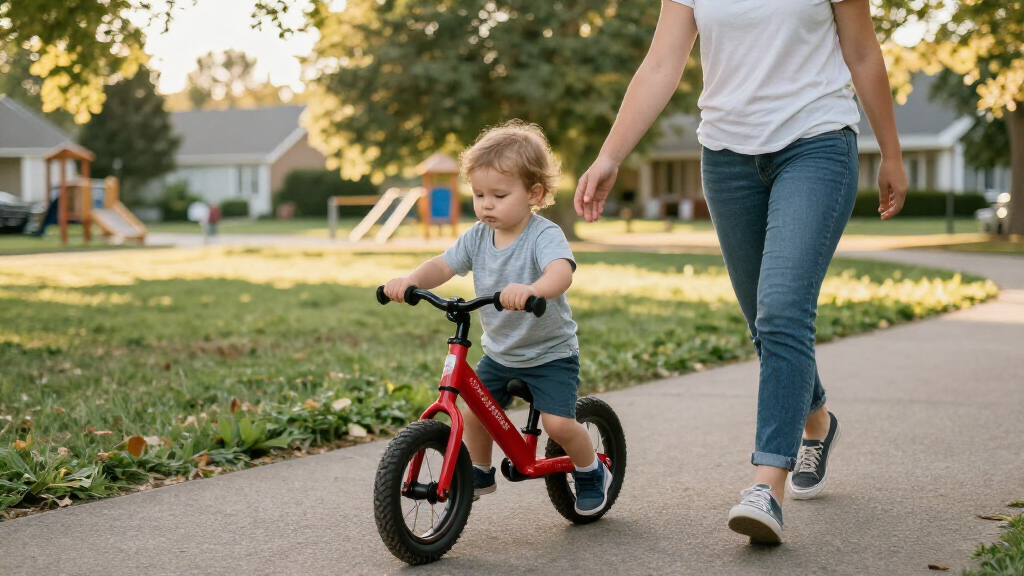
I ranked these bikes around the needs of a baby or toddler learning to move on two wheels: a usable fit for the stated age range, a low and approachable riding position, stable handling, and a design that is simple for an adult to manage. I also weighed adjustability, likely usefulness beyond the first few months, ease of carrying or storing, and whether added features serve a clear purpose. Because product names and listed age ranges do not establish exact fit for every child, I treat age guidance as a starting point rather than a substitute for checking the manufacturer’s sizing information.
The order favors clear suitability as a first balance bike and practical value over novelty features. That puts the woom WOW and established Strider options ahead for distinct reasons, while age-specific models such as the Retrospec Cricket and SEREED 12–24 Months are better targeted to a narrower stage. Bikes with lights, baskets, or less clearly differentiated features rank lower unless those extras match a family’s priorities. Buyers should confirm fit, weight, assembly requirements, and safety guidance for the exact model before choosing.
| baby balance bike | Frame |
|---|---|
| KRIDDO Baby Balance Bike for T | — |
| Radio Flyer Steady Start Balan | — |
| woom WOW Baby & Toddler Balanc | — |
| Hape My First Balance Bike | — |
| Liberry Baby Balance Bike for | — |
| Umatoll Baby Balance Bike with | Aluminum |
| KidRoller Toddler Balance Bike | Aluminum |
| Retrospec Cricket Baby Balance | — |
| SEREED Baby Balance Bike for T | Aluminum alloy |
| Strider 12 Classic Balance Bik | Alloy steel |
| Strider Pro 2-in-1 Rocking Bal | Aluminum |
| SEREED Toddler Balance Bike wi | Carbon steel |
| PerKidern Baby Balance Bike fo | Carbon steel |
| Strider 12 Sport Balance Bike | Alloy steel |
| Gamfeiny Toddler Balance Bike | Carbon steel |
Factors to Consider When Choosing Best Baby Balance Bikes
Matching a bike to a small rider is less about picking the longest feature list and more about finding a comfortable first fit. I would check these factors before choosing among the models in this roundup.
Start With Fit, Not the Age Label
Age ranges are broad guidance, not a promise that every child in that range can use the same bike comfortably. Check the maker’s seat-height range against your child’s inseam and look for a position that lets them plant their feet while seated. A bike that is too tall can make early attempts feel unstable, even if it claims to fit the child’s age. Avoid buying a larger model solely for future growth if your child cannot use it confidently now. Adjustable seats can extend usefulness, but only when the lowest setting works at the outset. Recheck the fit as your child grows and follow the product’s stated limits.
Decide Between a First-Ride Bike and One That Can Grow
Some families want a simple, small bike for a brief introduction; others prefer a model that can serve through several stages. A compact bike aimed at babies or younger toddlers may be easier to manage early on, while a wider adjustment range can reduce the need to replace it quickly. The tradeoff is that a larger, more adaptable frame may be heavier or less convenient for the youngest rider. Think about how often your child will ride and whether you have storage space before paying for extra range. Check which parts actually adjust, since an adjustable seat alone does not mean the whole bike can accommodate every growth stage. For a very young beginner, present-day confidence should take priority over a longer lifespan.
Consider Weight and Carrying Practicality
Adults often end up carrying a child’s bike when a ride is cut short, so the bike’s weight can affect everyday use as much as riding performance. If you expect to take it to parks, childcare, or on trips, compare the listed weight and dimensions rather than judging from photographs. A lighter frame can be easier to lift, but it still needs to feel stable and well made. Larger models may offer more room to grow yet take up more space in a car or hallway. Check whether the bike can be carried comfortably and stored without awkward disassembly. This practical check can matter more than decorative accessories.
Treat Stability and Control as First-Ride Priorities
A new rider needs to walk, sit, and steer without fighting the bike. Look for a design intended for the child’s stage, with a seat position and handlebar reach that allow relaxed movement. Avoid assuming that more steering restriction, extra wheels, or a wide stance automatically makes a bike easier; the manufacturer’s design and fit still matter. For a cautious child, a stable, simple setup may be more useful than advanced adjustments. Supervise practice on a flat, open surface and use protective gear appropriate to the product guidance. A bike should support gradual learning rather than pressure a child to ride before they are ready.
Separate Useful Features From Novelty
Lights, baskets, colorful wheels, and rocking modes can make a bike more appealing, but they do not replace good fit or manageable handling. Ask whether an extra feature will change how your family uses the bike or simply add another part to maintain. A rocking configuration may appeal to a child who enjoys indoor play, while a basket can suit short neighborhood outings; neither is necessary for learning balance. Check battery needs, cleaning instructions, and any assembly steps for electronic or convertible features. A simpler model may be easier to store and maintain. Pay extra attention to the core riding setup before choosing accessories.
Plan for the Place Your Child Will Ride
Where the bike will be used affects which design makes sense. Smooth indoor floors, sidewalks, and park paths place different demands on wheels, clearance, and storage, so check the maker’s intended-use guidance. A compact model may be convenient indoors, while a child who will ride outside regularly may benefit from a more durable, adaptable option. Do not assume a bike is suitable for rough ground based on its appearance alone. Consider whether you can supervise in a clear, level area and whether the bike is easy to bring along. Matching the bike to your routine can prevent an otherwise appealing purchase from sitting unused.
Frequently Asked Questions
How do I know if a baby balance bike fits my child?
Use the manufacturer’s seat-height range and your child’s inseam as the first checks, then confirm that your child can sit comfortably with both feet reaching the ground. Their knees should not be forced into a cramped position, and the handlebars should be within easy reach. Age labels are only a rough guide because children of the same age vary in height and confidence. If the lowest seat setting is still too tall, choose a smaller model rather than expecting your child to grow into it immediately. Check the exact model’s sizing instructions before ordering.
Should I choose a bike for a baby or wait until my toddler is older?
That depends on your child’s interest, physical readiness, and ability to sit and move the bike safely with close supervision. A model listed for a younger age can offer an earlier introduction, but the age range alone does not mean every baby is ready to ride. If your child is not interested or cannot reach the ground comfortably, waiting is a sensible choice. A balance bike is not a milestone that needs to be rushed. Revisit the fit and your child’s interest later rather than buying ahead based only on age.
Is an adjustable bike worth choosing over a simpler model?
Adjustability is useful when the bike fits your child at its smallest setting and the adjustment range matches your likely use. It can help accommodate growth and reduce the chance of outgrowing the bike quickly. Still, a simpler, lighter model may be easier for a very young rider to handle and for an adult to carry. Check whether the handlebars adjust as well as the seat, and whether changes require tools. Do not pay for a broader range if the bike is too large for your child today.
Does a rocking or light-up feature help a child learn to balance?
These features may make a bike more engaging, but they are not a substitute for a comfortable fit and opportunities to practice moving and steering. A rocking mode can provide a different way to interact with a bike, particularly indoors, while light-up wheels are mainly an attention-grabbing extra. Think about whether your child will use the feature and whether batteries, cleaning, or extra parts create inconvenience. For a hesitant beginner, a calm, familiar riding setup may be more helpful than a feature-rich design. Choose the added function only if it fits your child’s play habits.
Should I buy a 12-inch Strider-style bike or a smaller baby model?
Compare the actual fit and intended age range instead of choosing by wheel size alone. The Strider 12 models may appeal to families seeking a bike with a broader toddler use case, while smaller age-targeted options can make more sense for a younger child who needs a lower, more approachable setup. Check seat height, overall weight, and the child’s ability to steer and move the bike. A larger model can offer more room to grow but may be harder to manage at first. If possible, use the manufacturer’s size guidance to rule out a poor fit before deciding.
Conclusion
For most families comparing these 15 options, I would start with the woom WOW as best overall because it is specifically positioned for very young riders. The Radio Flyer Steady Start is my best beginner choice for families prioritizing an approachable first ride, while the Strider 12 Sport is the best pick for a broader growth window. For a premium-focused buyer, the Strider Pro 2-in-1 is the distinctive option if its rocking mode will get real use; for value, I would compare the simpler age-targeted models, including the Retrospec Cricket, against your child’s fit rather than paying for extras. Choose the Umatoll or Gamfeiny only if light-up wheels are a feature your child will enjoy, and consider the KidRoller if a basket suits your outings. My final rule is straightforward: choose the bike your child can use comfortably now, then weigh adjustability and extras around that fit.
Evergreen bestsellers Picks

Dyson V8 Cyclone Cordless Vacuum

Bose QuietComfort True Wireless Earbuds with Active Noise Cancellation, Black

KitchenAid 5.5-Qt Bowl-Lift Stand Mixer, Porcelain White (KSM55SXXX)
As an affiliate, we earn on qualifying purchases.