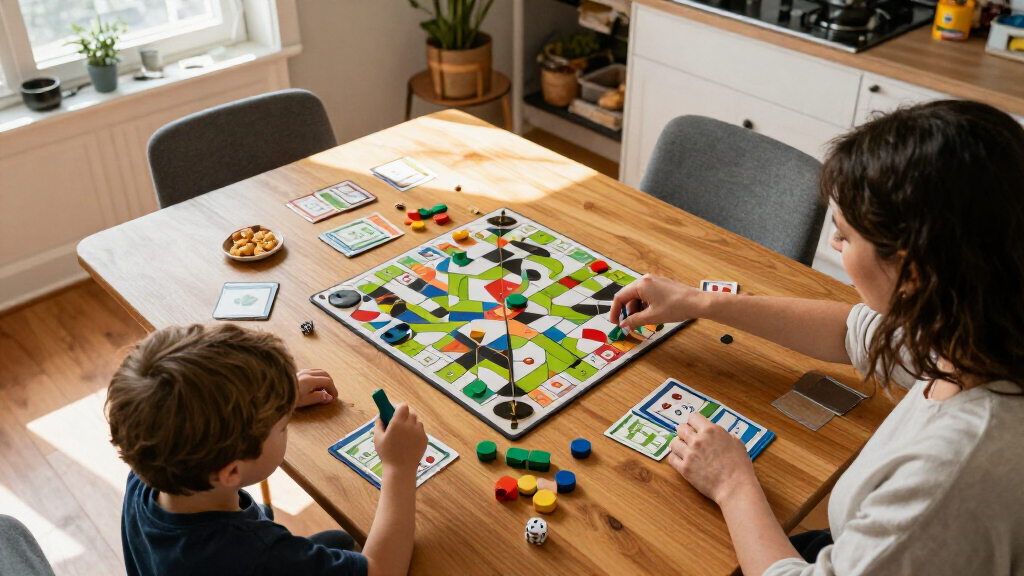
For most families, Outfoxed! is the best overall board game for kids because cooperative mystery-solving gives young players a shared goal instead of asking one child to lose. Guess Who? is a strong pick for simple, focused two-player play, while Candy Land suits preschoolers who are still learning how turns work. The main tradeoffs are age fit, reading and reasoning demands, how much luck shapes the result, and whether a game needs a group or works with two players. Some games reward strategy; others are better for quick movement, silly reactions, or first games with very young children. Read on for the full breakdown and a guide to choosing the right game for your family.

Turn the school run and nap time into listening time
- Thousands of audiobooks, podcasts and originals
- Listen on your phone, tablet or Echo — also offline
- Cancel anytime
Complete the kit


Key Takeaways
- Outfoxed! stands out for mixed-age cooperation: Its shared mystery gives children a reason to discuss clues together, unlike competitive games where one player’s win means another’s loss.
- Simple rules do not always mean the same kind of play: Candy Land introduces turn-taking for preschoolers, while Guess Who? adds yes-or-no deduction without a long rules lesson.
- Group size changes the best choice: Battleship and Guess Who? are built around two players, while Hedbanz, Twister, and Taco Cat Goat Cheese Pizza work better when several people can join.
- Hands-on action can matter more than strategy: Operation, Don’t Break the Ice, and Twister suit children who prefer physical challenges, though they offer different kinds of energy and skill.
- Age labels are only a starting point: Reading, attention span, fine-motor control, and comfort with winning or losing can matter more than a child’s exact age when choosing among these games.
| Hasbro Gaming Guess Who? Plus Board Game with People and Pet Cards | 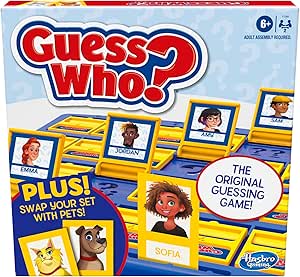 | Best for Two-Player Deduction | Brand: Hasbro Gaming | Game: Guess Who? Plus | Players: 2 | VIEW LATEST PRICE | See Our Full Breakdown |
| Hasbro Gaming Operation Electronic Board Game for Ages 6+ |  | Best for Solo Play and Steady Hands | Brand: Hasbro Gaming | Players: 1 or more | Age range: 6 years and up | VIEW LATEST PRICE | See Our Full Breakdown |
| Taco Cat Goat Cheese Pizza Card Game | 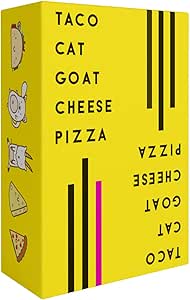 | Best for Fast Family and Travel Rounds | Brand: Taco Cat Goat Cheese Pizza | Manufacturer: Dolphin Hat Games | Players: 2–8 | VIEW LATEST PRICE | See Our Full Breakdown |
| Outfoxed! Cooperative Mystery Board Game |  | Best Cooperative Mystery | Brand: Gamewright | Game type: Cooperative board game | Players: 4 | VIEW LATEST PRICE | See Our Full Breakdown |
| Spin Master Games Hedbanz Classic Edition Picture Guessing Game |  | Best for Larger Question-and-Answer Groups | Players: 2–6 | Age range: 6 years and up | Edition: Classic Edition | VIEW LATEST PRICE | See Our Full Breakdown |
| Monopoly Junior: Super Mario Edition Board Game |  | Best for Super Mario Fans | Recommended age: 5 years and up | Players: 2 or more | Estimated playing time: 30 minutes | VIEW LATEST PRICE | See Our Full Breakdown |
| Hasbro Twister Classic Party Game for Ages 6 and Up |  | Best Active Group Game | Age range: 6 years and up | Players: 2 to 4 | Included components: 1 vinyl mat, 1 spinner, and instructions | VIEW LATEST PRICE | See Our Full Breakdown |
| Hasbro Trouble Board Game for Ages 5 and Up |  | Best for Familiar, Simple Competition | Age range: 5–15 years | Players: 2–4 | Edition: Classic Edition | VIEW LATEST PRICE | See Our Full Breakdown |
| Hasbro Connect 4 Game, 2025 Edition, with Carrying Case and Score Trackers |  | Best Portable Two-Player Strategy Game | Recommended age: 6 years and up | Players: 2 | Edition: 2025 Edition | VIEW LATEST PRICE | See Our Full Breakdown |
| Hasbro Don’t Break the Ice Classic Game |  | Best for Preschoolers | Recommended age: 3 years and up | Players: 2–4 | Playing time: 30 minutes | VIEW LATEST PRICE | See Our Full Breakdown |
| The Uzzle 3.0 Family Board Game |  | Best for Pattern Puzzles | Age range: 4 years and up | Players: 1–4 | Puzzles: 100 total; 25 per difficulty level | VIEW LATEST PRICE | See Our Full Breakdown |
| Hasbro Gaming Candy Land Board Game for Kids Ages 3 and Up |  | Best for Preschool Beginners | Brand: Hasbro Gaming | Players: 2–4 | Recommended age: 3 years and up | VIEW LATEST PRICE | See Our Full Breakdown |
| Sorry! Classic Family Board Game for Ages 6+ |  | Best for Competitive Family Play | Brand: Hasbro Gaming | Players: 2–4 | Recommended age: 6 years and up | VIEW LATEST PRICE | See Our Full Breakdown |
| Hasbro Gaming Battleship Classic Board Game for 2 Players, Ages 7+ |  | Best Two-Player Strategy Game | Brand: Hasbro Gaming | Players: 2 | Recommended age: 7 years and up | VIEW LATEST PRICE | See Our Full Breakdown |
| Hasbro Gaming Clue Junior Board Game: Case of the Broken Toy, Ages 5+, 2–6 Players |  | Best Mystery Game for Young Detectives | Brand: Hasbro Gaming | Age range: 5 years and up | Number of players: 2–6 | VIEW LATEST PRICE | See Our Full Breakdown |
| board games for kid | Included components | Players | Brand | Age range |
|---|---|---|---|---|
| Hasbro Gaming Guess Who? Plus | 2 gameboards, 48 people face cards, 24 people mystery cards, 48 pets face cards, 24 pets mystery cards, 2 scorekeepers, and rules | 2 | Hasbro Gaming | 6 years and up |
| Hasbro Gaming Operation Electr | Gameboard with Cavity Sam, tweezers, 26 cards, 12 Funatomy parts, play money, rubber band, and instructions | 1 or more | Hasbro Gaming | 6 years and up |
| Taco Cat Goat Cheese Pizza Car | Cards | 2–8 | Taco Cat Goat Cheese Pizza | 7 years and up |
| Outfoxed! Cooperative Mystery | Board game, dice, and evidence scanner | 4 | Gamewright | — |
| Spin Master Games Hedbanz Clas | 6 headbands, 6 headplates, 16 scoring badges, 1 timer, 69 picture cards, 3 sample question cards, and instructions | 2–6 | — | 6 years and up |
| Monopoly Junior: Super Mario E | Gameboard, 4 character tokens with plastic bases, 4 character cards, Coin Sound Unit, 20 Chance cards, 48 Sold Signs, power-up die, numbered die, 90 cardboard coins, label sheet, and game guide | 2 or more | — | — |
| Hasbro Twister Classic Party G | 1 vinyl mat, 1 spinner, and instructions | 2 to 4 | Hasbro Gaming | 6 years and up |
| Hasbro Trouble Board Game for | Gameboard, plastic game unit with Pop-O-Matic die roller, 16 pegs, and instructions | 2–4 | Hasbro | 5–15 years |
| Hasbro Connect 4 Game | Grid and tray, 42 discs (21 red and 21 yellow), and game rules | 2 | — | — |
| Hasbro Don’t Break the Ice Cla | 2 mallets, ice tray frame, 4 ice tray legs, 1 large ice block, 32 small ice blocks, Phillip the Penguin figure, and instructions | 2–4 | — | — |
| The Uzzle 3.0 Family Board Gam | 4 sets of 10 blocks and 100 challenges | 1–4 | — | 4 years and up |
| Hasbro Gaming Candy Land Board | Gameboard, 4 gingerbread pawns, card deck, instructions | 2–4 | Hasbro Gaming | — |
| Sorry! Classic Family Board Ga | Gameboard, 12 pawns, 45 cards, and instructions | 2–4 | Hasbro Gaming | — |
| Hasbro Gaming Battleship Class | 2 portable battle cases, 10 plastic ships, 73 red hit pegs, 168 green miss pegs, and instructions | 2 | Hasbro Gaming | — |
| Hasbro Gaming Clue Junior Boar | Gameboard, 6 character pawns, 6 furniture tokens, 7 white bases, 7 yellow bases, detective notepad, die, label sheet, and game guide | — | Hasbro Gaming | 5 years and up |
More Details on Our Top Picks
Hasbro Gaming Guess Who? Plus Board Game with People and Pet Cards
Guess Who? Plus is a strong pick for two children who enjoy narrowing down possibilities through questions. Players identify a hidden person or pet using yes-or-no questions, and the two card sets give families more variety than a single-character-set guessing game. Fold-up boards and an easy-load frame also make setup and packing away straightforward. Compared with Hedbanz Classic Edition, this keeps the guessing contained to a face-to-face two-player match rather than a larger group activity. That focus is also its main limitation: it does not suit a family looking for one game everyone can join, and children need to read or ask questions to play independently. I’d choose it for paired play and skip it when flexible group size matters most.
Pros:- People and pet card sets offer two character categories
- Yes-or-no questions give children a clear deduction structure
- Fold-up boards are convenient to store and carry
- Easy-load frames help make setup quick
Cons:- Designed for exactly two players
- Independent play depends on reading and forming questions
Best for: Two children ages 6 and up who enjoy asking questions, sorting clues, and playing head-to-head.
Not ideal for: Families seeking a game for three or more players, or children who are not yet comfortable reading and asking questions.
- Brand:Hasbro Gaming
- Game:Guess Who? Plus
- Players:2
- Age range:6 years and up
- Included components:2 gameboards, 48 people face cards, 24 people mystery cards, 48 pets face cards, 24 pets mystery cards, 2 scorekeepers, and rules
- Material:Plastic
- Model number:F1360
- Model year:2021
Our verdict“Choose Guess Who? Plus for portable, question-driven play between two children; pick Hedbanz instead when you need a larger group to join.”
Hasbro Gaming Operation Electronic Board Game for Ages 6+
Operation stands apart from the guessing and group games here because it gives children a hands-on challenge they can play solo or with others. Removing the 12 ailment pieces with tweezers builds fine motor control, while the buzzer and light-up nose make mistakes immediately clear. That feedback can keep younger players engaged without requiring long explanations. Compared with Don’t Break the Ice, Operation asks for more precise tool control rather than careful tapping, so it better suits children who enjoy a steady-hand challenge. The tradeoffs are tangible: the metal edges punish accidental contact, which may frustrate players who find fine motor tasks difficult, and the game needs two AA batteries. I’d pick it for flexible player count and physical skill practice, not for a relaxed, no-pressure game.
Pros:- Supports solo play as well as group play
- Twelve removable pieces provide a range of fine motor challenges
- Buzzer and light-up nose give immediate feedback
- Combines hand control with simple strategic choices
Cons:- Requires two AA batteries
- Touching the metal edges triggers a mistake, which can frustrate less precise players
Best for: Families with children ages 6 and up who want a hands-on game that can be played alone or passed among a group.
Not ideal for: Children who become frustrated by precision tasks, or households that prefer games without batteries or buzzer feedback.
- Brand:Hasbro Gaming
- Players:1 or more
- Age range:6 years and up
- Ailment pieces:12
- Included components:Gameboard with Cavity Sam, tweezers, 26 cards, 12 Funatomy parts, play money, rubber band, and instructions
- Skills:Fine motor coordination and strategy
- Batteries required:2 AA batteries
Our verdict“Choose Operation for a tactile precision game with solo-play flexibility, but opt for Don’t Break the Ice if you want a simpler physical challenge.”
Taco Cat Goat Cheese Pizza Card Game
Taco Cat Goat Cheese Pizza is the quickest-moving choice in this group: players chant the sequence, play cards, and race to slap the pile when the spoken word matches the card. Its 10–15 minute rounds and compact card format suit travel, parties, or a short break between longer games. Unlike the clue-building pace of Outfoxed!, this game rewards fast reactions rather than cooperative deduction, making it a livelier fit for energetic groups. That speed is also the catch. Players who are slower to react can collect the pile, and the slapping mechanic may not suit children who dislike noisy, competitive play. It is listed for ages 7 and up, a year older than several options here. I’d choose it for a lively group, not for a quiet or contemplative game night.
Pros:- Simple rules are quick to learn
- Short rounds fit into brief play sessions
- Compact card format is convenient for travel
- Action cards add changes to the rhythm of play
Cons:- Fast reactions and coordinated slapping are central to play
- Slower players can end up collecting the pile
Best for: Families with children ages 7 and up who want a compact, high-energy game for short group sessions or travel.
Not ideal for: Children who struggle with quick reactions or coordination, and groups looking for calm, cooperative play.
- Brand:Taco Cat Goat Cheese Pizza
- Manufacturer:Dolphin Hat Games
- Players:2–8
- Age range:7 years and up
- Play time:10–15 minutes
- Included components:Cards
- Edition:Original
- Model number:73626
Our verdict“Pick Taco Cat Goat Cheese Pizza for quick, energetic group play; choose Outfoxed! if your children prefer teamwork and clue-solving.”
Outfoxed! Cooperative Mystery Board Game
Outfoxed! is the clearest choice here for children who would rather solve a problem together than compete against each other. Players gather clues, use the evidence scanner, and eliminate suspects before the fox escapes, bringing memory and deduction into a shared goal. With a recommended age of 5 and up, it can suit younger players than Taco Cat Goat Cheese Pizza, whose fast reflexes are aimed at older children. The cooperative format also gives the group a reason to talk through clues instead of simply racing to win. Its tradeoffs are the listed four-player setup and a 15–20 minute playing time, which may feel brief to children who want a longer mystery. I’d choose it for shared decision-making and pass if your group needs a competitive game or a wider player-count range.
Pros:- Cooperative goal encourages teamwork and communication
- Clues support logic, memory, and deduction
- Simple rules and short rounds suit younger players
- Evidence scanner adds a hands-on element to the mystery
Cons:- Listed for four players, limiting group-size flexibility
- 15–20 minute sessions may feel brief to players seeking longer games
Best for: Families with children ages 5 and up who want a short, cooperative game that encourages discussion and clue-solving.
Not ideal for: Buyers who need a game for a flexible number of players, or children looking for a longer, competitive board game.
- Brand:Gamewright
- Game type:Cooperative board game
- Players:4
- Recommended age:5 years and up
- Playing time:15–20 minutes
- Language:English
- Included components:Board game, dice, and evidence scanner
Our verdict“Choose Outfoxed! for a short shared mystery, while Taco Cat Goat Cheese Pizza is a better fit for competitive, high-speed play.”
Spin Master Games Hedbanz Classic Edition Picture Guessing Game
Hedbanz Classic Edition turns guessing into a group activity: each player wears a headband with a picture card and asks yes-or-no questions to work out what they are. Its 2–6 player range makes it more adaptable for a family gathering than Guess Who? Plus, which is designed for two. Picture cards, sample questions, and a timer give children a simple structure for taking turns and getting started. It also invites players to form their own questions, so the interaction is less confined to a head-to-head board. The downside is that the game still depends on asking and answering questions; children who need more support with language may find turns challenging. It also needs at least two players. I’d choose Hedbanz for a group that enjoys talking and guessing, rather than for solo play or quiet play.
Pros:- Accommodates up to six players
- Headbands and picture cards make the guessing format easy to see and join
- Sample question cards can help children get started
- Timer and scoring badges give turns a clear structure
Cons:- Requires at least two players
- Players need to ask and answer yes-or-no questions
Best for: Families with two to six children ages 6 and up who enjoy asking questions and playing a social guessing game.
Not ideal for: Solo players or children who find verbal question-and-answer turns difficult.
- Players:2–6
- Age range:6 years and up
- Edition:Classic Edition
- Included components:6 headbands, 6 headplates, 16 scoring badges, 1 timer, 69 picture cards, 3 sample question cards, and instructions
Our verdict“Choose Hedbanz for a larger, conversational guessing group; pick Guess Who? Plus for a more focused two-player deduction game.”
Monopoly Junior: Super Mario Edition Board Game
Familiar characters and simple property buying give this Monopoly Junior edition a clear hook for younger Mario fans. Players move around the Mushroom Kingdom, collect coins, and use the power-up die, which can trigger the coin sound. That themed feedback makes turns feel more lively than the straightforward peg movement in Trouble, while its roughly 30-minute playtime keeps it more contained than a longer family game. The tradeoff is that the Monopoly-style buying and collecting still asks kids to track coins and make basic choices; it is not as immediate as Don’t Break the Ice for preschoolers. The character tokens and coins are cardboard, and the sound unit needs batteries whose details are not provided. I’d choose it for kids who already enjoy Mario and are ready for a light introduction to board-game money.
Pros:- Four recognizable playable characters: Mario, Peach, Yoshi, and Luigi
- Power-up die can trigger a Super Mario coin sound
- Introductory Monopoly-style play designed for younger players
- About 30 minutes of play
Cons:- Coin Sound Unit requires batteries, but battery details are not provided
- Character tokens and coins are cardboard
- Coin collection and property buying may be less immediate for younger children than simpler turn-based games
Best for: Children aged 5 and up who recognize the Mario characters and want a first game involving coins, property, and simple choices.
Not ideal for: Families seeking a battery-free game, durable molded character pieces, or a game that works well for children who are not interested in Super Mario.
- Recommended age:5 years and up
- Players:2 or more
- Estimated playing time:30 minutes
- Theme:Super Mario
- Edition:Kids Edition
- Manufacturer:Hasbro
- Model number:F4817
- Included components:Gameboard, 4 character tokens with plastic bases, 4 character cards, Coin Sound Unit, 20 Chance cards, 48 Sold Signs, power-up die, numbered die, 90 cardboard coins, label sheet, and game guide
Our verdict“Choose this for a young Super Mario fan ready for light money-and-property play, but skip it if you want a battery-free or theme-neutral game.”
Hasbro Twister Classic Party Game for Ages 6 and Up
Twister turns a board-game gathering into a full-body group challenge: players follow the spinner and reach for colored circles while trying not to fall. Its rules are easy to grasp, and color recognition, balance, and coordination come into play without requiring reading or scorekeeping. Unlike the seated, turn-by-turn play of Connect 4, Twister gets children moving and can suit a lively indoor or outdoor gathering. That difference is also its main limitation: the vinyl mat needs clear floor space, and awkward positions can be uncomfortable or difficult for some players. It supports only 2 to 4 players, so it is not a solution for a large group unless players take turns. I’d rank it as the active pick, not as an all-purpose family game for every room or ability level.
Pros:- Spinner-led rules are quick to learn
- Encourages balance, coordination, and color recognition
- Can be played indoors or outdoors
- Includes team play instructions and tournament tips
Cons:- The mat needs enough clear floor space
- Balancing in increasingly awkward positions may not suit every player
- Limited to 2–4 players
Best for: Families with children aged 6 and up who want a movement-based game for a small group and have clear floor space.
Not ideal for: Households short on open floor area, players who prefer seated games, or groups larger than four who want everyone playing at once.
- Age range:6 years and up
- Players:2 to 4
- Included components:1 vinyl mat, 1 spinner, and instructions
- Game objective:Be the last player standing
- Play location:Indoors or outdoors
- Brand:Hasbro Gaming
- Warranty:No warranty
Our verdict“Pick Twister for an active small-group game with room to spread out; choose Connect 4 instead for compact, seated play.”
Hasbro Trouble Board Game for Ages 5 and Up
The Pop-O-Matic die roller makes Trouble easy to start: press the bubble, move a peg, and race to get all four pieces home. It also keeps the die attached to the game, a practical plus compared with games that rely on loose dice or small accessories. The rules are simple enough for many five-year-olds, while an optional Power Up spaces version gives families a way to change the basic race. Compared with Connect 4, Trouble accommodates up to four players and has more turn-to-turn movement, but it offers less planning than Connect 4’s blocking and line-making. A player can send an opponent’s peg back to the start, which adds playful rivalry but can also undo progress and frustrate children who dislike setbacks. I’d pick it for families who want uncomplicated, competitive turns rather than a cooperative experience.
Pros:- Pop-O-Matic bubble rolls the die and keeps it attached to the game
- Straightforward race-to-the-finish objective
- Supports 2–4 players
- Optional Power Up spaces add a different version of play
Cons:- Opponents can bump a peg back to the beginning
- Play depends heavily on die rolls rather than player planning
- The race format may feel repetitive to children seeking more varied decisions
Best for: Families with children aged 5 and up who want an easy-to-learn racing game for two to four players.
Not ideal for: Children who find being sent back to the start upsetting, or families looking for cooperative play or deeper strategy.
- Age range:5–15 years
- Players:2–4
- Edition:Classic Edition
- Model number:A5064
- Included components:Gameboard, plastic game unit with Pop-O-Matic die roller, 16 pegs, and instructions
- Optional play mode:Power Up spaces version
- Brand:Hasbro
Our verdict“Choose Trouble for accessible, lively family competition, but pass if setbacks or luck-driven movement tend to frustrate your child.”
Hasbro Connect 4 Game, 2025 Edition, with Carrying Case and Score Trackers
Connect 4 is the clearest choice here for two-player planning: children must build a line of four discs while watching for the opponent’s next move. The rules take little explanation, but each placement creates a chance to set up a win or block one, making the decisions more deliberate than the luck-led peg race in Trouble. This edition adds practical storage: the grid and tray fold into a handled case, the discs stow inside, and built-in trackers record wins across rounds. That makes it easier to carry and put away than Twister, though it is strictly a two-player game and cannot include a whole family in one match. The small discs can also go missing. I’d choose this for siblings or one-on-one play, not for households that need a game everyone can join simultaneously.
Pros:- Simple rules lead quickly into blocking and planning
- Grid and tray fold into a carrying case with a handle
- Discs store inside the game unit
- Built-in score trackers help record wins across rounds
Cons:- Designed for two players only
- Small discs may be easy to lose
- The head-to-head format offers no team or group mode in the provided product details
Best for: Siblings, friends, or parent-child pairs seeking a portable, easy-to-learn strategy game with contained storage.
Not ideal for: Families who need more than two people to play at once, or households where small loose pieces are easily misplaced.
- Recommended age:6 years and up
- Players:2
- Edition:2025 Edition
- Included components:Grid and tray, 42 discs (21 red and 21 yellow), and game rules
- Storage:Discs store inside the unit; grid and tray fold into a carrying case with handle
- Scorekeeping:Built-in score trackers
- Model number:G1500
Our verdict“Pick this edition for portable one-on-one strategy with built-in storage, but choose a multiplayer game if the whole family needs to join.”
Hasbro Don’t Break the Ice Classic Game
Don’t Break the Ice suits younger children who want a simple, hands-on turn: tap a block and try to keep Phillip the Penguin from falling. Its 3-and-up age recommendation makes it the youngest-player pick in this group, while games such as Twister start at age 6 and ask for more physical coordination. The mallets and 32 small blocks give children a clear action to focus on, and two to four players can take turns. The central tension is easy to understand, but the round ends when Phillip falls, so a child can be eliminated rather than staying involved to the finish. Resetting all the ice blocks between rounds also takes adult attention and adds setup after each fall. I’d choose it for short, supervised play with preschoolers, not for families who want a cooperative game or uninterrupted rounds.
Pros:- Simple turns give young children a clear action to take
- Recommended from age 3 and up
- Includes two mallets and 32 small ice blocks
- Supports 2–4 players
Cons:- A player is eliminated when Phillip falls through the ice
- The ice blocks need resetting between rounds
- Small blocks and mallets call for supervision with very young children
Best for: Families with preschoolers aged 3 and up who want a tactile, turn-based game for two to four players.
Not ideal for: Parents seeking cooperative play, minimal resetting, or a game where every child stays involved after a round-ending fall.
- Recommended age:3 years and up
- Players:2–4
- Playing time:30 minutes
- Included components:2 mallets, ice tray frame, 4 ice tray legs, 1 large ice block, 32 small ice blocks, Phillip the Penguin figure, and instructions
- Language:English
- Model number:C2093
- Warranty:No warranty
Our verdict“Choose Don’t Break the Ice for tactile preschool play, but skip it if you want cooperative turns or quick resets between rounds.”
The Uzzle 3.0 Family Board Game
The Uzzle 3.0 suits kids who would rather solve a visual challenge than wait for a turn around a board. Players flip, spin, and combine blocks to match challenge cards, with 100 puzzles across four difficulty levels offering a way to adjust the challenge for different ages or skills. It also works solo, unlike Candy Land, which is built around group turns, and supports up to four players for shared play. The larger blocks in this version may be easier for younger hands to manipulate. The tradeoff is its brisk, observation-focused play: children who need more time to spot patterns or prefer a story-based game may find it stressful. It is an indoor activity, and its puzzle format may feel less social than games built around conversation or shared goals.
Pros:- Four difficulty levels let families adjust the challenge
- 100 puzzles provide plenty of pattern-matching variety
- Supports solo play as well as games for up to four players
- Larger blocks in the updated version are easier for young hands to handle
Cons:- Quick visual matching and hand speed may frustrate some children
- Designed for indoor use
Best for: Families with children at different puzzle skill levels who want a game that also works for solo play
Not ideal for: Kids who dislike timed or fast-feeling visual challenges, or families seeking an outdoor game
- Age range:4 years and up
- Players:1–4
- Puzzles:100 total; 25 per difficulty level
- Difficulty levels:4
- Included components:4 sets of 10 blocks and 100 challenges
- Material:High-quality plastic
- Dimensions:8 × 8 in
- Weight:1.7 lb
Our verdict“Choose The Uzzle 3.0 for flexible solo or group puzzle play, but pick a gentler turn-based game if quick pattern spotting is not a fit.”
Hasbro Gaming Candy Land Board Game for Kids Ages 3 and Up
Candy Land is a straightforward first board game for children who are not reading yet. Players match colored cards to spaces on the path, so the basic rules are easy to follow and turns offer practice with color recognition and taking turns. Its short, listed 15-minute playing time also makes it a simpler fit for a young child’s attention span than Sorry! Classic, which has a much longer listed playing time and adds pawn setbacks. The tradeoff is that movement depends on the cards drawn, leaving little room for strategy or player choice. Children who already want to make tactical decisions may outgrow the experience quickly. It is also aimed at a narrower age group than games such as The Uzzle 3.0, whose difficulty levels give older or more puzzle-minded kids another challenge.
Pros:- No reading is required to follow the basic play
- Color-coded cards and spaces support matching and color recognition
- Simple turn-taking makes it accessible to young beginners
- Instructions are provided in English and Spanish
Cons:- Card draws determine movement, so players have little control over the outcome
- The recommended age range limits its appeal for older children
Best for: Families introducing a preschooler to board-game turns, color matching, and simple shared play
Not ideal for: Older children looking for strategy, meaningful choices, or a game that grows with their skills
- Brand:Hasbro Gaming
- Players:2–4
- Recommended age:3 years and up
- Estimated playing time:15 minutes
- Included components:Gameboard, 4 gingerbread pawns, card deck, instructions
- Instruction languages:English and Spanish
- Skills:Color recognition, matching, turn-taking
Our verdict“Pick Candy Land as a simple first game for preschoolers, not as a lasting choice for kids ready for strategy.”
Sorry! Classic Family Board Game for Ages 6+
Sorry! Classic is a stronger fit than Candy Land for children who can handle a little strategy alongside luck. Players draw cards to move three pawns home, while the option to send an opponent back to start gives each move a competitive consequence. That interaction can make family turns feel more dramatic than the simple color matching in Candy Land. It is designed for two to four players and includes 12 pawns and 45 cards. The main tradeoff is the setback mechanic: being sent back can frustrate a child who is close to finishing. The listed 120-minute playing time is also much longer than Candy Land’s 15 minutes, so it may be a poor match for short play sessions or younger players with limited patience.
Pros:- Combines card draws with choices about how to move
- Sending opponents back creates direct player interaction
- Supports two to four players
- Three pawns per player give the race several pieces to manage
Cons:- A pawn can be sent back to start, which may feel punishing
- The listed playing time of 120 minutes is lengthy for a children’s game
Best for: Families with children aged six and up who enjoy direct competition, tactical choices, and unpredictable setbacks
Not ideal for: Young or easily frustrated players, and families who need a short game for a limited play window
- Brand:Hasbro Gaming
- Players:2–4
- Recommended age:6 years and up
- Playing time:120 minutes
- Included components:Gameboard, 12 pawns, 45 cards, and instructions
- Language:English
- Edition:Standard Edition
Our verdict“Choose Sorry! for older kids who enjoy competitive setbacks, but favor Candy Land for shorter, gentler play.”
Hasbro Gaming Battleship Classic Board Game for 2 Players, Ages 7+
Battleship Classic is the clearest choice here for two children who want a head-to-head deduction game. Players call coordinates, track hits and misses, and try to locate the opposing fleet; that makes careful memory and logical guesses matter more than the card-driven movement in Sorry! Classic. The portable battle cases keep ships and pegs together, making this more practical to pack than a game with a large loose board and pieces. A Salvo option adds a tougher way to play once the standard rules feel familiar. Its biggest limitation is also clear: it is built for exactly two players, so it cannot include a larger family around the same game. The small ships and pegs can be easy to lose, and the coordinate-based play may not suit children who prefer a more physical or cooperative game.
Pros:- Coordinate calls reward logical guessing and memory
- Portable battle cases provide storage for travel
- Salvo mode offers an added play option
- Separate hit and miss pegs help players track calls
Cons:- Designed for exactly two players
- Small ships and pegs may be easy to lose
Best for: Two children aged seven and up who enjoy private competition, deduction, and tracking information
Not ideal for: Families needing a game for three or more players, or children likely to misplace small pieces
- Brand:Hasbro Gaming
- Players:2
- Recommended age:7 years and up
- Playing time:30 minutes
- Edition:Classic
- Included components:2 portable battle cases, 10 plastic ships, 73 red hit pegs, 168 green miss pegs, and instructions
- Language:English
- Model number:F4527
Our verdict“Choose Battleship for a portable strategy matchup between two kids, but choose Sorry! if you need room for more players.”
Hasbro Gaming Clue Junior Board Game: Case of the Broken Toy, Ages 5+, 2–6 Players
Clue Junior: Case of the Broken Toy brings deduction to a younger audience through a mystery about which toy was broken, who broke it, and when. Players gather information and mark off possibilities on a detective notepad, giving the game a more structured reasoning task than the visual pattern puzzles in The Uzzle 3.0. It also accommodates two to six players, making it more flexible for a family group than the two-player-only Battleship. Its tradeoff is that children need to read clues and keep track of eliminated choices; that can make the game less accessible to early readers or kids who struggle to maintain notes. The indoor setup is not suited to outdoor play, and families seeking a quick, low-attention game may prefer a simpler option.
Pros:- Introduces deduction and process of elimination through a child-focused mystery
- Detective notepad gives players a way to track ruled-out possibilities
- Supports two to six players
- Includes character pawns, furniture tokens, and a game guide
Cons:- Reading clues and recording eliminated choices may challenge some younger players
- Designed for indoor use
Best for: Families with children aged five and up who enjoy solving mysteries and can read clues or track information with help
Not ideal for: Early readers who need a no-reading game, or groups looking for a quick, action-focused activity
- Brand:Hasbro Gaming
- Age range:5 years and up
- Number of players:2–6
- Theme:Mystery
- Included components:Gameboard, 6 character pawns, 6 furniture tokens, 7 white bases, 7 yellow bases, detective notepad, die, label sheet, and game guide
- Educational objective:Critical thinking, problem-solving, deductive reasoning, and reading comprehension
- Operation mode:Manual
- Usage:Indoor
Our verdict“Pick Clue Junior for a larger group of young mystery solvers, but choose Candy Land if reading is still a barrier.”
How We Picked
I compared these 15 games by how well their rules, play length, and central challenge suit children and the adults or siblings likely to join them. I gave more weight to accessible instructions, meaningful participation for younger players, replay appeal, and whether a game supports a particular family need, such as cooperative play, two-player competition, or active group fun. I also considered practical tradeoffs: reading and fine-motor demands, reliance on luck, player-count limits, and the space or attention a game asks for.
The ranking favors games that combine broad age appeal with a clear reason to return to the table. Outfoxed! leads for its cooperative structure and kid-friendly deduction; Guess Who? follows as a straightforward two-player option, while the remaining picks rank according to their audience and use case rather than pretending every game suits every household. Specialized choices such as Battleship, Twister, and Taco Cat Goat Cheese Pizza can be better fits for particular groups, even when they are less versatile overall.
| board games for kid | Brand |
|---|---|
| Hasbro Gaming Guess Who? Plus | Hasbro Gaming |
| Hasbro Gaming Operation Electr | Hasbro Gaming |
| Taco Cat Goat Cheese Pizza Car | Taco Cat Goat Cheese Pizza |
| Outfoxed! Cooperative Mystery | Gamewright |
| Spin Master Games Hedbanz Clas | — |
| Monopoly Junior: Super Mario E | — |
| Hasbro Twister Classic Party G | Hasbro Gaming |
| Hasbro Trouble Board Game for | Hasbro |
| Hasbro Connect 4 Game | — |
| Hasbro Don’t Break the Ice Cla | — |
| The Uzzle 3.0 Family Board Gam | — |
| Hasbro Gaming Candy Land Board | Hasbro Gaming |
| Sorry! Classic Family Board Ga | Hasbro Gaming |
| Hasbro Gaming Battleship Class | Hasbro Gaming |
| Hasbro Gaming Clue Junior Boar | Hasbro Gaming |
Factors to Consider When Choosing Best Board Games For Kids
A good choice depends on how a child likes to play, who will join in, and what your family wants game night to feel like. These broader checks can prevent a mismatch that an age label or a familiar name alone might miss.
Match the Rules to the Child, Not Just the Age Label
Age guidance is a useful filter, but it cannot tell you whether a child is ready to read cards, hold several clues in mind, or manage small pieces. Think about the actual task: recognizing pictures is different from asking logical questions, keeping track of a mystery, or following a sequence of actions. A game that is slightly challenging can hold attention; one that relies on skills a child has not developed may require an adult to do much of the work. For siblings at different stages, look for games where younger players can contribute without needing someone else to take every turn for them. Check whether the rules allow adults to simplify play without removing the child’s sense of agency. The common mistake is buying by age range alone and overlooking the kind of thinking or coordination the game demands.
Choose the Right Social Dynamic
Before choosing a game, decide whether your group wants to cooperate, compete one-on-one, or play as a lively group. Cooperative play can soften the pressure of losing, but some children prefer clear individual goals and the chance to win. Two-player games can be a practical fit for one child and one adult, yet they may sit unused when siblings or friends join. Party-style games can include a crowd, though energetic reactions and faster turns may frustrate a child who prefers quiet thinking. Consider how your child responds when another player gets ahead; the emotional tone of a game can matter as much as its mechanics. A mismatch here is a common reason a technically age-appropriate game gets little use.
Balance Luck, Skill, and Replay Appeal
Games driven heavily by chance can help younger children focus on taking turns rather than mastering strategy, but older children may lose interest if their decisions rarely affect the result. Skill-based play can feel rewarding, though a large gap in ability between siblings may make repeated matches discouraging. Look for more than a single novelty: changing choices, different challenges, or group interaction can give a game reasons to come back out. Also ask whether the fun depends on a child already knowing a familiar character or theme; licensed appeal may attract a player at first but does not guarantee lasting play. Paying more for a game makes sense when the rules and challenge can grow with the child, not simply because the box promises a broad age range. The best balance depends on whether your family values easy entry, thoughtful decisions, or replay variety most.
Check Player Count and Household Fit
The listed player count is not just a box detail: it determines whether the game fits a quiet afternoon with one child or a family gathering. A game designed for two can create a satisfying focused match, but it will not solve the problem of entertaining several children at once. Larger groups can make quick-turn games feel lively, while longer waits between turns may leave younger players disengaged. Consider who will realistically play most often, not who might join once in a while. Storage and setup also matter in homes where games need to be easy to put away or bring along. Choosing for your usual group is more reliable than buying for an imagined game night with everyone present.
Account for Energy, Space, and Small Pieces
Some games ask players to sit and reason; others involve movement, quick reactions, or careful hand control. Think about the room available, the time of day, and whether a child is likely to enjoy a physical challenge or find it distracting. Small pieces can be harder for younger children to manage and easier to misplace, so check the component style and how the game will be stored between sessions. A compact setup may suit travel or a crowded table, while active play needs enough safe space for everyone to take part. Avoid treating portability as a bonus if the game still needs a large playing area once opened. The right practical fit can determine whether a game becomes a regular choice or stays on a shelf.
Frequently Asked Questions
Which game is a good first choice for a child who has never played a board game?
Start with a game whose turns are easy to see and whose goal can be explained in a few sentences. Candy Land offers a gentle introduction to turn-taking, while Trouble adds a more active race-to-the-finish structure for children ready to follow a few extra steps. A first game should not require an adult to interpret every move or keep track of several rules at once. Play a short round together before expecting a child to manage the game independently. If the child loses interest, try a shorter session rather than assuming they are not ready for games at all.
What should I choose if my child gets upset when they lose?
Consider a cooperative game, where players work toward one shared outcome instead of competing for a single winner. That structure can reduce the sting of losing, though a group still needs to handle a shared result that may not go their way. You can also choose games where turns are quick and the focus stays on the activity rather than a long scorekeeping process. Avoid changing rules secretly to guarantee a win; instead, talk about whether the group wants a practice round or a simpler challenge. As a child becomes more comfortable, introduce competitive games in short, low-pressure sessions.
Are licensed character games a better buy than classic games?
A familiar character can make a child more willing to try a game, especially when the theme connects with a current interest. That appeal is separate from how much the game asks players to think, wait, or manage pieces. Classic games may be easier to reuse across siblings and changing interests, while a themed edition can be a stronger fit for a particular child right now. Before choosing, check whether the theme changes the play in a meaningful way or mainly decorates familiar mechanics. If the child’s interest is brief, prioritize rules they will still enjoy after the novelty fades.
How many board games should I buy for siblings with different ages?
One well-matched game is often more useful than several chosen to cover every age separately. Look for a game that lets the younger child participate meaningfully while giving the older one enough choice or challenge to stay engaged. If their abilities and preferences are far apart, a simple game for shared play plus a more demanding option for the older child may work better than forcing every game to suit both. Adults can help younger players with reading or setup, but avoid making them spectators while an older sibling makes all the decisions. Let the children’s actual interest guide future purchases rather than buying a large set at once.
When is it worth choosing a more involved game over a simple one?
Choose a more involved game when the child already enjoys following rules, making choices, and staying with a task through several turns. Added complexity can bring more replay value, but only if players can understand what their decisions do and remain engaged while others take turns. A simpler game is not a lesser choice when the goal is a quick family activity or a relaxed introduction to playing together. If you are unsure, explain the core objective and let the child decide whether the extra challenge sounds appealing. The strongest purchase is the one your family will actually set up and play, not the one with the most rules.
Conclusion
Best overall: choose Outfoxed! if you want children to solve a shared mystery and work together. Best value for straightforward play: Guess Who? is a sensible fit for focused two-player rounds, while best for beginners is Candy Land for young children learning basic turns. For a more involved choice, consider The Uzzle 3.0 as the roundup’s premium-leaning pick for families seeking a puzzle challenge; its style is less suited to children who want a story or active group play. For specific needs, choose Battleship for two-player tactical play, Twister for movement and group energy, or Taco Cat Goat Cheese Pizza for quick, silly reactions. If you are still unsure, start with the game that matches your usual player count and your child’s preferred pace—that is more likely to reach the table regularly.