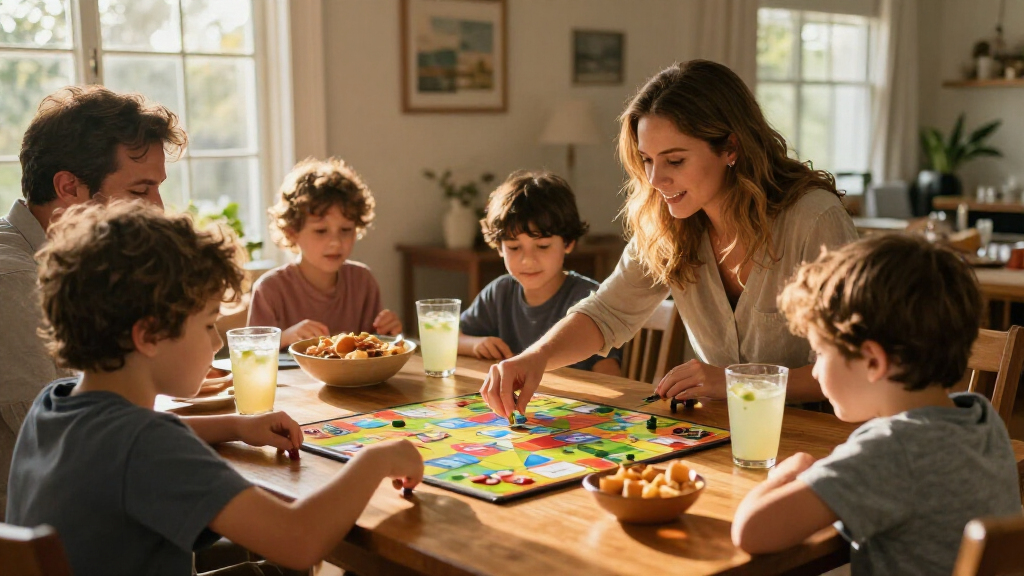

The best family party board games get everyone involved without making rules or awkward age gaps the focus. My best overall pick is Herd Mentality, which suits groups that enjoy guessing how others think, while The Chameleon is a standout for families who like bluffing and deduction. For a lively word challenge, Taboo gives teams a familiar, fast-moving format. The main tradeoffs are whether your group prefers trivia, creative answers, physical activity, or quick social games—and whether younger players can join on equal terms. Read on for the full breakdown, plus guidance on choosing a game that fits your family’s group size and style.

Turn the school run and nap time into listening time
- Thousands of audiobooks, podcasts and originals
- Listen on your phone, tablet or Echo — also offline
- Cancel anytime
Complete the kit


Key Takeaways
- Herd Mentality stands out for large gatherings because its social guessing format can include a wide range of players without relying on specialized knowledge.
- The Chameleon and Sounds Fishy both use bluffing, but they suit different groups: one centers on spotting a hidden player, while the other adds misleading trivia answers.
- Taboo, Tapple, and You Can’t Say Umm all reward quick wordplay, but their distinct pressure styles make them better fits for different ages and confidence levels.
- Conversation-led choices like Do You Really Know Your Family? and Who’s Most Likely To… depend more on shared comfort and family dynamics than on traditional game skill.
- Twister and Chicken vs Hotdog bring physical energy, while karaoke and gibberish games add performance; these can lift a party but may leave quieter guests less involved.
| I Should Have Known That! Trivia Game, Green |  | Best for Trivia Fans | Brand: Hygge Games | Model: 21026 | Number of cards: 110 | VIEW LATEST PRICE | See Our Full Breakdown |
| The Chameleon Board Game: Award-Winning Catch The Traitors Party Game |  | Best for Social Deduction | Players: 3–8 | Age recommendation: 12 years and up | Playing time: About 15 minutes per round | VIEW LATEST PRICE | See Our Full Breakdown |
| Hasbro Gaming Taboo Classic Word Guessing Party Game |  | Best for Team Play | Brand: Hasbro Gaming | Players: 4 or more | Age recommendation: 13 years and up | VIEW LATEST PRICE | See Our Full Breakdown |
| Herd Mentality Board Game: #1 Family Party Games, 4-20 Players |  | Best for Big Family Gatherings | Players: 4–20 | Age recommendation: 10 years and up | Game mechanics: Social deduction, majority answers | VIEW LATEST PRICE | See Our Full Breakdown |
| Sounds Fishy Bluffing Trivia Board Game |  | Best for Creative Bluffing | Brand: Big Potato | Players: 4–10 | Age recommendation: 10 years and up | VIEW LATEST PRICE | See Our Full Breakdown |
| Who’s Most Likely To… Kinda Clean Edition Family Card Game |  | Best for Playful Family Roasts | Players: 4+ | Recommended age: 14 years and up | Included components: 250 prompt cards | VIEW LATEST PRICE | See Our Full Breakdown |
| Grab The Mic Karaoke Party Game with Foam Microphone |  | Best for Music-Loving Groups | Players: 2–12 | Recommended age: 8+ years | Playing time: 20 minutes | VIEW LATEST PRICE | See Our Full Breakdown |
| Chicken vs Hotdog Party Game |  | Best for Active, Silly Challenges | Players: 2 or more | Age range: 8 years and up | Playing time: 15 minutes | VIEW LATEST PRICE | See Our Full Breakdown |
| Do You Really Know Your Family? Fun Family Game for Kids, Teens and Adults |  | Best for Family Conversation | Players: 3–8 | Age range: Adult, kid, teen | Estimated playing time: 3 minutes | VIEW LATEST PRICE | See Our Full Breakdown |
| You Can’t Say Umm Family Card Game |  | Best for Team Wordplay | Players: 4–10 | Recommended age: 10 years and up | Playing time: 20 minutes | VIEW LATEST PRICE | See Our Full Breakdown |
| The Original Tapple Family Word Game |  | Best for Fast Word-Race Energy | Players: 2–8 | Recommended age: 8 years and up | Playing time: 15 minutes | VIEW LATEST PRICE | See Our Full Breakdown |
| BLANK SLATE Board Game, A Party Game of Addicting Predictions |  | Best for Shared-Inside-Joke Moments | Players: 3–8 | Recommended age: 8 years and up | Playing time: 20–35 minutes | VIEW LATEST PRICE | See Our Full Breakdown |
| Our Family is So Weird | A Family Card Game to Decide Who’s Most Likely To |  | Best for Teen-and-Adult Family Laughs | Players: 3 or more | Recommended age: 14 years and up | Prompt cards: 150 | VIEW LATEST PRICE | See Our Full Breakdown |
| Hasbro Twister Classic Party Game for 2–4 Players, Ages 6 and Up |  | Best Active Party Game | Players: 2–4 | Recommended age: 6 years and up | Included components: Vinyl mat, spinner, instructions | VIEW LATEST PRICE | See Our Full Breakdown |
| WHAT DO YOU MEME? Guess the Gibberish Family Card Game |  | Best for Compact Travel Play | Players: 2 or more | Recommended age: 12 years and up | Cards: 400 | VIEW LATEST PRICE | See Our Full Breakdown |
| family party board game | Players | Included components | Material | Language |
|---|---|---|---|---|
| I Should Have Known That! Triv | More than 2 | — | Paper | English |
| The Chameleon Board Game: Awar | 3–8 | — | — | — |
| Hasbro Gaming Taboo Classic Wo | 4 or more | Squeaker, notepad, sand timer | — | English |
| Herd Mentality Board Game: #1 | 4–20 | — | Cardboard | — |
| Sounds Fishy Bluffing Trivia B | 4–10 | 20 bonus question cards | — | — |
| Who’s Most Likely To… Kinda | 4+ | 250 prompt cards | Cardstock | English |
| Grab The Mic Karaoke Party Gam | 2–12 | 120 word cards (250 words), foam microphone, game board, player tokens, instructions | Cardboard | French |
| Chicken vs Hotdog Party Game | 2 or more | Chicken vs Hotdog game | Plastic | English |
| Do You Really Know Your Family | 3–8 | — | — | English |
| You Can’t Say Umm Family Card | 4–10 | Cards and bell | Cardstock | English |
| The Original Tapple Family Wor | 2–8 | Portable Tapple wheel, 36 cards, instructions | Paper and plastic | English |
| BLANK SLATE Board Game | 3–8 | Scoreboard, 8 dry-erase slates, word cue cards, rules | Paper | — |
| Our Family is So Weird | A Fam | 3 or more | 150 prompt cards, 6 dry-erase boards, 6 dry-erase markers | Cardstock | English |
| Hasbro Twister Classic Party G | 2–4 | Vinyl mat, spinner, instructions | — | — |
| WHAT DO YOU MEME? Guess the Gi | 2 or more | Cards, sand timer, instructions | Paper | — |
More Details on Our Top Picks
I Should Have Known That! Trivia Game, Green
I Should Have Known That! makes familiar facts the source of the laughs: players answer questions about things they might be expected to know, and wrong answers cost points. That penalty gives it a more teasing, high-pressure feel than Herd Mentality, where matching the group is the point, or Sounds Fishy, where players can invent answers. With more than 400 questions across 110 cards, it offers plenty of prompts for family gatherings, but the format favors people who enjoy factual recall over free-form storytelling. The main tradeoff is that mistakes are penalized rather than simply missed, which can feel less welcoming to younger or easily discouraged players. Its 14+ age recommendation also makes it a better fit for teen-and-adult gatherings than mixed-age family nights.
Pros:- More than 400 questions provide variety across repeat gatherings.
- The point-loss rule makes even familiar questions feel lively and risky.
- Suited to group play at parties and family gatherings.
Cons:- Losing points for incorrect answers may discourage players who are less confident with trivia.
- The 14+ age recommendation limits its fit for family groups with younger children.
Best for: Families with teens and adults who enjoy quick trivia challenges and can laugh off losing points for wrong answers.
Not ideal for: Households with younger children or players who prefer cooperative, low-pressure questions; the age recommendation is 14+ and incorrect answers reduce scores.
- Brand:Hygge Games
- Model:21026
- Number of cards:110
- Number of questions:More than 400
- Players:More than 2
- Age recommendation:14 years and up
- Language:English
- Material:Paper
Our verdict“Choose it for teen-and-adult family gatherings where trivia and playful wrong-answer penalties are part of the fun.”
The Chameleon Board Game: Award-Winning Catch The Traitors Party Game
The Chameleon turns a shared secret word into a bluffing contest: everyone except one player sees the word, then each person gives a clue while the group tries to identify the outsider. The clues create a sharper social-deduction challenge than Herd Mentality, which rewards agreeing with the majority, while its hidden-information twist gives it a different flavor from the answer-making in Sounds Fishy. Rounds take about 15 minutes, the rules are designed to be learned quickly, and 800 topics help keep repeat plays varied. The tradeoff is that the fun depends on players being comfortable speaking up, bluffing, and accusing one another; quieter groups may find the discussion less natural. It supports 3 to 8 players and is recommended for ages 12+, so it suits smaller gatherings more than very large parties.
Pros:- The hidden Chameleon role gives every clue a social-deduction purpose.
- Short rounds and quick-to-learn rules make it easy to bring to a gathering.
- 800 topics support varied repeat play.
- Works with groups as small as three.
Cons:- Players need to be comfortable giving clues and accusing others for the discussion to flow.
- The stated player range tops out at eight, limiting its use for larger parties.
- The 12+ recommendation makes it a less suitable choice for younger children.
Best for: Families with teens and adults who enjoy bluffing, reading social cues, and lively discussion in groups of three to eight.
Not ideal for: Large gatherings over eight players or families seeking a quiet, straightforward game with no bluffing or accusations.
- Players:3–8
- Age recommendation:12 years and up
- Playing time:About 15 minutes per round
- Topics:800
- Game mechanics:Bluffing, social deduction
- Indoor/outdoor use:Indoor
- Operation mode:Manual
- Materials:Cardboard, plastic
Our verdict“Pick The Chameleon for a small family group that enjoys bluffing and deduction more than majority-answer or trivia formats.”
Hasbro Gaming Taboo Classic Word Guessing Party Game
Taboo Classic is the pick here for families who want to play in teams: one player describes a target word while avoiding the forbidden clues, and teammates race to guess before time runs out. Its 212 cards and 848 guess words give groups a substantial supply of prompts, while the squeaker and sand timer make turns feel more animated than the conversational rounds of The Chameleon. Unlike I Should Have Known That!, it tests quick explanations rather than factual recall, so trivia knowledge matters less. The tradeoff is that it needs at least four players and works best when people can think and speak quickly under a timer. The 13+ recommendation also rules it out for younger family members, and its timed team format may not suit guests who prefer a slower, less pressured game.
Pros:- 212 cards contain 848 guess words for replay variety.
- The squeaker and sand timer add clear, lively turn structure.
- Team-based word guessing relies less on trivia knowledge.
- Portable card box makes it practical to bring to gatherings.
Cons:- Requires at least four players, so it is not a fit for small groups.
- The timer can put pressure on players who need extra time to find words.
- Recommended for ages 13 and up.
Best for: Families of four or more with teens and adults who enjoy fast team rounds, word clues, and a little time pressure.
Not ideal for: Small households, younger children, or players who dislike timed speaking challenges and team competition.
- Brand:Hasbro Gaming
- Players:4 or more
- Age recommendation:13 years and up
- Cards:212
- Guess words:848
- Included components:Squeaker, notepad, sand timer
- Language:English
- Edition:Classic
Our verdict“Choose Taboo for a group of four or more that wants energetic team wordplay rather than bluffing or trivia.”
Herd Mentality Board Game: #1 Family Party Games, 4-20 Players
Herd Mentality earns its place as the big-group choice: players answer a question and collect cows when their answer matches the majority, while the odd one out gets the pink cow of doom. Its stated range of 4–20 players reaches well beyond The Chameleon and Taboo Classic, making it easier to include a crowded family table without splitting into teams. The social aim is also distinct from I Should Have Known That!: success depends on guessing what other people will say, not knowing facts. That simple premise helps mixed-experience groups join in, though the game can frustrate anyone who prefers original answers or wants skill to matter more than consensus. It is recommended for ages 10+, but the group-answer format still relies on players understanding the questions and enjoying the joke of being the outlier.
Pros:- Supports groups of 4–20 players, making it a strong fit for crowded gatherings.
- The majority-answer mechanic is quick to explain and easy to join.
- Recommended for ages 10+, broadening its use across family age groups.
- Includes 20 extra questions.
Cons:- Players who dislike being the odd one out may not enjoy the pink-cow penalty.
- The majority-based scoring favors matching others over original answers.
- Its group dynamic is less suited to small gatherings than The Chameleon or Taboo.
Best for: Large, mixed-age family gatherings that need an easy-to-explain game for four to twenty players.
Not ideal for: Small groups or players who prefer factual quizzes, individual strategy, or rewards for giving unusual answers rather than matching the majority.
- Players:4–20
- Age recommendation:10 years and up
- Game mechanics:Social deduction, majority answers
- Extra questions:20
- Indoor/outdoor use:Indoor
- Operation mode:Manual
- Rulebook:Printed, included
- Material:Cardboard
Our verdict“Pick Herd Mentality when accommodating a large family group matters more than trivia knowledge or individual wordplay.”
Sounds Fishy Bluffing Trivia Board Game
Sounds Fishy mixes trivia prompts with invented answers: players make up plausible responses and try to persuade the guesser that theirs is true. That gives it more room for creativity than I Should Have Known That!, where factual recall and lost points drive the challenge, while its bluffing brings it closer to The Chameleon without relying on a secret-word clue round. At about 15 minutes and for 4–10 players, it suits a family group looking for a compact, quick-playing option; the 20 bonus question cards add more prompts. The tradeoff is that players need to enjoy improvising and selling a story, so it may fall flat with guests who want clear right-or-wrong answers. Its recommended age of 10+ helps it span more ages than the older-teen trivia picks, though it remains an indoor game.
Pros:- Combines trivia prompts with creative answer-making and bluffing.
- A roughly 15-minute play time suits short party rounds.
- Supports groups of 4–10 players.
- Includes 20 bonus question cards.
Cons:- Players must invent convincing answers, which may not suit less improvisational groups.
- The stated player range does not cover very large gatherings.
- Designed for indoor play.
Best for: Families with children aged 10+ and adults who like making up answers, bluffing, and short party rounds.
Not ideal for: Players who prefer factual trivia with definite answers or groups larger than ten; the game depends on inventive bluffing and is designed for indoor use.
- Brand:Big Potato
- Players:4–10
- Age recommendation:10 years and up
- Playing time:15 minutes
- Game mechanics:Bluffing, push-your-luck, trivia
- Included components:20 bonus question cards
- Dimensions:7.4 x 5.8 x 2.2 inches
- Batteries:Not required
Our verdict“Choose Sounds Fishy for a mid-sized family group that prefers imaginative bluffing to straight trivia or majority guessing.”
Who’s Most Likely To… Kinda Clean Edition Family Card Game
For families who enjoy teasing each other, this game turns 250 prompts into quick votes about who best fits each description. The rules are simple: read a card and let the group decide, so nobody has to manage a board or learn a long sequence of turns. Compared with Do You Really Know Your Family?, which centers on questions and answers, this pick puts the spotlight on how players see one another. That can spark laughs, but it also means the fun depends on everyone being comfortable with affectionate roasting. Its 14+ age guidance and four-player minimum make it less flexible for households with younger kids or small groups. I’d choose it for a lively gathering, not as the safest fit for every family personality.
Pros:- 250 prompts provide plenty of material for repeat gatherings.
- No board or elaborate setup makes it easy to start.
- Voting on who fits each prompt invites group discussion and laughter.
- Compact dimensions make it practical to bring on trips.
Cons:- Requires at least four players, limiting its use with smaller households.
- Roast-style prompts may feel uncomfortable for sensitive groups.
- The 14+ age guidance excludes younger family members.
Best for: Families with four or more players, mostly teens and adults, who enjoy light teasing and quick group voting.
Not ideal for: Households with younger children, fewer than four players, or anyone who would rather avoid personal jokes and roasts.
- Players:4+
- Recommended age:14 years and up
- Included components:250 prompt cards
- Language:English
- Material:Cardstock
- Dimensions:5 x 4 x 2.9 inches
- Weight:16 ounces
- Brand:DSS Games
Our verdict“Choose this for teen-and-adult gatherings that welcome playful teasing; pick Do You Really Know Your Family? for a more question-led family conversation.”
Grab The Mic Karaoke Party Game with Foam Microphone
Grab The Mic suits families who would rather sing than sit through another round of questions. Players race to claim the foam microphone and sing a lyric containing a revealed word; its multiple game modes offer alternatives when one challenge starts to feel repetitive. Compared with You Can’t Say Umm, which rewards careful describing and listening, this game puts music recall and performance under pressure. That makes it a lively choice for a room with confident singers, while less outgoing players may find the spotlight uncomfortable. The listed French language is a practical caveat for English-speaking families: check the card language before choosing, since the product data does not confirm English cards. At 20 minutes and up to 12 players, it has room for a larger gathering, but depends on everyone knowing enough lyrics to join in.
Pros:- Supports groups of up to 12 players.
- Several game modes vary the challenge.
- Foam microphone gives the game a playful, hands-on focus.
- The listed 20-minute playing time suits a short party activity.
Cons:- Racing to sing lyrics may put shy players on the spot.
- Players need a shared store of recognizable song lyrics.
- The listed language is French, which may not suit English-speaking groups.
Best for: Music-loving families with children aged eight and up who want an energetic game for a group of up to 12.
Not ideal for: Groups uncomfortable singing in front of others, players who struggle to recall lyrics quickly, or English-speaking buyers who need confirmed English-language cards.
- Players:2–12
- Recommended age:8+ years
- Playing time:20 minutes
- Included components:120 word cards (250 words), foam microphone, game board, player tokens, instructions
- Language:French
- Material:Cardboard
- Dimensions:8.66 x 2.68 x 4.53 inches
- Brand:Lucky Egg
Our verdict“Pick this for a big, music-loving group ready to perform, but favor You Can’t Say Umm if your family prefers wordplay without singing.”
Chicken vs Hotdog Party Game
When a family party needs movement more than conversation, Chicken vs Hotdog offers a simple physical contest: flip a chicken or hotdog piece and try to land it standing while working through 30 challenge cards. Head-to-head and team formats let players adapt the competition to the group, and the listed 15-minute playtime keeps rounds brisk. Compared with Grab The Mic, this pick swaps singing and lyric recall for a dexterity challenge; it’s a better match for players who want to act rather than perform vocally. The tradeoff is that the central flipping task can frustrate players who find it difficult, and the game is listed for indoor use. Its two-or-more player count is flexible, though a larger party may need teams to keep everyone involved.
Pros:- Thirty challenge cards give the core flipping task different prompts.
- Head-to-head and team play suit different group sizes.
- The listed 15-minute playing time makes it easy to fit into a party.
- Two-or-more player guidance allows play without a large group.
Cons:- The game hinges on landing a flipped piece upright, which some players may find difficult.
- Listed for indoor use, so it is not a fit for outdoor gatherings.
- The short, dexterity-focused format may offer less appeal to players who prefer conversation.
Best for: Families with children aged eight and up who want short, active indoor rounds that work as head-to-head contests or team play.
Not ideal for: Players who prefer word or conversation games, anyone who finds flipping small pieces challenging, or families seeking an outdoor game.
- Players:2 or more
- Age range:8 years and up
- Playing time:15 minutes
- Included components:Chicken vs Hotdog game
- Material:Plastic
- Language:English
- Dimensions:10.43 x 7.09 x 2.95 inches
- Brand:Big Potato
Our verdict“Choose Chicken vs Hotdog for quick, physical indoor fun; choose Grab The Mic instead if your group prefers a music-based party challenge.”
Do You Really Know Your Family? Fun Family Game for Kids, Teens and Adults
This is the conversation-first choice in this group: players answer questions about one another, then take on silly challenges that can turn a family game night into a shared story. Its listed three-to-eight-player range and eight-and-up age guidance make it more accessible to mixed-age households than Who’s Most Likely To… Kinda Clean Edition, which is aimed at older players and needs four or more. The listed playtime is only three minutes, so I’d treat that figure as a prompt for a short round rather than a promise of a full evening’s entertainment. The main appeal is learning how relatives think, not a complex contest; families seeking fast action or sustained strategy may want a different party game. The available details don’t specify the card count, so repeat variety is hard to judge.
Pros:- Questions about family members encourage conversation and personal answers.
- Silly challenges add a playful activity beyond answering questions.
- The listed three-to-eight-player range fits many household game nights.
- Portable tin packaging suits travel and gatherings away from home.
Cons:- The listed three-minute playing time suggests a brief activity rather than a full game night.
- Available product information does not specify the number of cards.
- Personal questions may be less appealing to players who prefer objective challenges.
Best for: Families with children aged eight and up who want a compact, conversation-led activity for three to eight players.
Not ideal for: Groups looking for action, strategy, or a clearly documented long-form game; the listed playtime is very short and card quantity is not specified.
- Players:3–8
- Age range:Adult, kid, teen
- Estimated playing time:3 minutes
- Container type:Tin
- Language:English
- Educational objective:Social interaction, communication skills, and family bonding
- Usage:Indoor
- Dimensions:2 x 4.7 x 6.7 inches
Our verdict“Choose this for a short, family-focused conversation game; Who’s Most Likely To… Kinda Clean Edition is a better fit for older groups that prefer teasing votes.”
You Can’t Say Umm Family Card Game
You Can’t Say Umm turns explaining a prompt into a team challenge: describe the item without relying on fillers such as “umm,” while opponents listen for a slip and ring the bell. That clear objective makes it easier to teach than many conversation games, and its four-to-ten-player range gives families room to split into teams. Compared with Grab The Mic, the pressure comes from speaking clearly rather than singing lyrics, so it suits players who enjoy word challenges but don’t want to perform a song. The included extra challenges add variety, yet the core demand stays the same: think aloud while being watched for verbal slips. That can be stressful for players who dislike speaking under pressure, and the bell plus competing teams can make a room noisy.
Pros:- A straightforward describe-and-listen objective is quick to teach.
- Team play gives four to ten players a shared goal.
- Extra challenges add variation to the main activity.
- Cards and bell provide a hands-on way to track the action.
Cons:- Requires at least four players, so it does not fit smaller groups.
- Avoiding verbal fillers while describing something may frustrate nervous speakers.
- The bell and team play can make rounds noisy.
Best for: Families with four to ten players aged ten and up who enjoy team word games and can handle a little speaking pressure.
Not ideal for: Smaller households, players uncomfortable speaking on the spot, or groups that need a quiet game for a shared room.
- Players:4–10
- Recommended age:10 years and up
- Playing time:20 minutes
- Language:English
- Included components:Cards and bell
- Material:Cardstock
- Item dimensions:7.48 × 2.59 × 0.1 inches
- Brand:Big Potato
Our verdict“Pick this for a medium-sized family that likes fast team wordplay; choose Do You Really Know Your Family? for a more personal, conversation-led game.”
The Original Tapple Family Word Game
Tapple is the best fit here for families who want quick turns and lots of shouted answers rather than a game built around personal jokes or matching opinions. Players race to name a word that fits a category and starts with a chosen letter, while the ten-second timer keeps each round moving. Its 144 categories offer variety, and the wheel stores the cards, making it easier to bring to gatherings than a larger setup like Twister.
The tradeoff is that speed and vocabulary matter: a short countdown can frustrate younger or more hesitant players, even though the listed age starts at eight. Compared with Blank Slate, Tapple rewards fast recall more than shared intuition, so it suits lively groups better than players who prefer time to think. The compact format is handy, but the pressure is part of the game, not an optional extra.
Pros:- Built-in ten-second timer gives rounds a brisk pace.
- 144 categories provide a broad range of prompts.
- Wheel stores the cards for easier packing and storage.
- Supports two to eight players.
Cons:- The short timer can put slower thinkers or younger players at a disadvantage.
- Gameplay depends on vocabulary and quick word recall.
- The supplied product information lists no manufacturer warranty.
Best for: Families with players aged eight and up who enjoy quick word challenges and want a portable game for groups of two to eight.
Not ideal for: Families with younger children, players who dislike timed pressure, or groups looking for a relaxed, conversation-led game.
- Players:2–8
- Recommended age:8 years and up
- Playing time:15 minutes
- Categories:144 across 36 cards
- Timer:Built-in ten-second timer
- Included components:Portable Tapple wheel, 36 cards, instructions
- Material:Paper and plastic
- Language:English
Our verdict“Choose Tapple for a portable, high-energy word race, but pick Blank Slate if your family prefers unhurried answers and matching minds.”
BLANK SLATE Board Game, A Party Game of Addicting Predictions
Blank Slate makes the list for families who enjoy guessing how other people think. A cue leaves a phrase unfinished; everyone writes a completion, then scores by matching another player’s answer. That simple format turns differences in family habits and associations into the fun, rather than asking players to race for the right word as in Tapple. With 500 cues and dry-erase slates, it offers plenty of prompts without requiring a separate answer sheet each round.
It works best when the group is comfortable reading one another and explaining unexpected answers. Compared with Our Family Is So Weird, Blank Slate is less pointed: players aim to match, not vote on who fits a teasing prompt. That makes it easier to bring to mixed company, though the joke can fall flat if answers rarely align. It also needs at least three players and takes longer than a quick round of Tapple.
Pros:- 500 cues offer a wide range of phrase-completion prompts.
- Dry-erase slates make repeated rounds simple to run.
- Matching answers creates a cooperative-feeling social challenge.
- Suitable for family nights, holidays, and casual gatherings.
Cons:- Requires at least three players.
- The fun depends on players finding matching associations.
- A 20–35 minute game is a longer commitment than Tapple’s listed 15 minutes.
Best for: Families of three to eight who like wordplay, shared references, and guessing what relatives will write.
Not ideal for: Two-player households or groups that prefer timed competition, physical activity, or prompts with one clear answer.
- Players:3–8
- Recommended age:8 years and up
- Playing time:20–35 minutes
- Word cues:500 across more than 250 double-sided cards
- Included components:Scoreboard, 8 dry-erase slates, word cue cards, rules
- Game mechanics:Word association, guessing, deduction
- Material:Paper
- Dimensions:9.84 × 9.84 inches
Our verdict“Pick Blank Slate when your family enjoys predicting one another’s answers and wants a gentler social alternative to Tapple’s timed word race.”
Our Family is So Weird | A Family Card Game to Decide Who’s Most Likely To
Our Family Is So Weird is the most family-specific pick in this group: players vote on which relative best fits each prompt, then defend their choice. That makes it a natural choice for reunions and holiday tables where people already know one another’s habits. Unlike Blank Slate, which asks players to match word associations, this game invites direct, playful teasing. Its 150 prompts, six dry-erase boards, and markers give everyone a way to vote at once.
The age guidance of 14+ narrows its audience, and the humor depends on a family being comfortable calling one another out. It is also capped at six boards, unlike larger-group options such as Tapple, which supports up to eight. Choose it for a close-knit teen-and-adult group, not as a universal game for every generation or a gathering where personal jokes may feel awkward.
Pros:- Prompts focus on familiar family habits and personalities.
- Dry-erase boards let everyone vote simultaneously.
- 150 prompt cards support repeated rounds.
- The first-to-seven-cards win condition gives play a clear endpoint.
Cons:- Recommended for ages 14 and up, so it excludes younger children.
- Voting prompts can feel personal in families that are not comfortable with teasing.
- Six boards limit the included voting setup to a smaller group than Tapple.
Best for: Families with teens and adults who know one another well and enjoy light teasing at holidays or reunions.
Not ideal for: Families with children under 14, groups larger than six, or players who may feel uncomfortable being the subject of a prompt.
- Players:3 or more
- Recommended age:14 years and up
- Prompt cards:150
- Included components:150 prompt cards, 6 dry-erase boards, 6 dry-erase markers
- Win condition:First player to collect 7 cards
- Language:English
- Material:Cardstock
- Dimensions:6.25 × 2 × 9 inches
Our verdict“Choose this for a close-knit teen-and-adult family that enjoys playful callouts; Blank Slate is the safer fit for less personal group humor.”
Hasbro Twister Classic Party Game for 2–4 Players, Ages 6 and Up
Twister is the clear choice here when a family party needs movement rather than another round of word or card prompts. Players follow the spinner and stretch across colored circles, so the laughs come from balancing and navigating crowded positions, not from knowing a category as in Tapple or sharing associations as in Blank Slate. Its age-six guidance makes it accessible to younger players, and team instructions offer an alternative to individual play.
The physical format is also its main limitation: the mat needs open floor space, and a fall or knee or elbow touching the mat can eliminate a player. That can be less welcoming for people with mobility limits, and the listed capacity is just two to four. Compared with Guess the Gibberish, Twister is less portable and harder to set up, but it adds a genuinely active option for a family gathering.
Pros:- Active play offers a change from word and card games.
- Recommended for ages six and up.
- Team play instructions provide another way to play.
- Can be played indoors or outdoors.
Cons:- Requires enough clear space to lay out the mat.
- Players can be eliminated after falling or touching the mat with a knee or elbow.
- Limited to two to four players.
Best for: Families with space to spread out a mat who want an active game that younger children can join.
Not ideal for: Large groups, players with mobility or balance limitations, and households short on clear floor space.
- Players:2–4
- Recommended age:6 years and up
- Included components:Vinyl mat, spinner, instructions
- Play modes:Individual and team play
- Playing location:Indoors or outdoors
- Skills:Balance, coordination, color recognition
- Manufacturer warranty:No warranty listed
Our verdict“Pick Twister when your family has room and wants physical party play; choose Tapple or Blank Slate for a larger group around a table.”
WHAT DO YOU MEME? Guess the Gibberish Family Card Game
Guess the Gibberish earns its place as the portable pick for families with older children who enjoy decoding silly-sounding phrases. Players race against a one-minute sand timer, and a clue on each card can help when a phrase stalls. The 400-card set provides plenty of material for gatherings, while its card-based format is simpler to pack than Twister, which needs a clear floor area. Compared with Tapple, the challenge is interpreting a phrase rather than finding a word that fits a category.
The age recommendation starts at 12, and the timer can add pressure for players who need more time to parse the clues. It supports two or more players, but larger groups may need to share turns rather than answer simultaneously. This is a straightforward travel or game-night option, not the best match for families seeking strategy, physical activity, or prompts about their own family dynamics like Our Family Is So Weird.
Pros:- 400 cards provide a large supply of phrase prompts.
- Clues on card backs can help players decode phrases.
- One-minute sand timer gives each turn a clear limit.
- Compact card format is easier to bring along than Twister’s mat.
Cons:- Recommended for ages 12 and up, limiting play with younger children.
- Timed decoding may frustrate players who need more time.
- The description specifies two or more players but no upper player limit or playing time.
Best for: Families with players aged 12 and up who want a portable, light word-decoding game for trips and gatherings.
Not ideal for: Families with younger children, players who dislike timed guessing, or groups seeking a more personal or strategic game.
- Players:2 or more
- Recommended age:12 years and up
- Cards:400
- Timer:One-minute sand timer
- Included components:Cards, sand timer, instructions
- Material:Paper
- Brand:WHAT DO YOU MEME?
- Model:ICH431
Our verdict“Choose Guess the Gibberish for portable, timed wordplay with older kids; choose Blank Slate for a more social game centered on matching family members’ answers.”
How We Picked
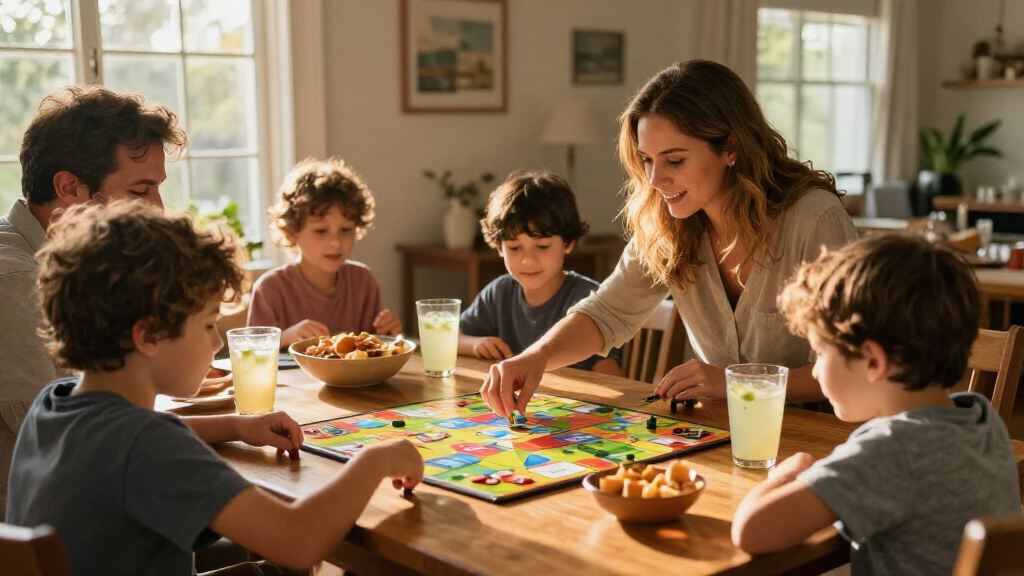
I compared these games through the needs of a mixed-age family gathering: how quickly a group can learn the rules, how many people can take part, whether younger and less competitive players can contribute, and how much the fun depends on trivia knowledge, word speed, social confidence, or physical movement. I also looked at replay potential, the kind of interaction each game creates, and whether its format works for a short round or a longer game night.
The ranking favors flexibility and broad participation, which is why Herd Mentality leads: its group-based social guessing is an easy fit for varied ages and larger gatherings. Games with more specific appeal—such as karaoke, physical play, or personal prompts—rank lower for general family use, even when they may be the best match for a particular group. The list includes all 15 options, but the right choice depends on who will actually play and what kind of energy the gathering needs.
| family party board game | Brand | Language | Material |
|---|---|---|---|
| I Should Have Known That! Triv | Hygge Games | English | Paper |
| The Chameleon Board Game: Awar | — | — | — |
| Hasbro Gaming Taboo Classic Wo | Hasbro Gaming | English | — |
| Herd Mentality Board Game: #1 | — | — | Cardboard |
| Sounds Fishy Bluffing Trivia B | Big Potato | — | — |
| Who’s Most Likely To… Kinda | DSS Games | English | Cardstock |
| Grab The Mic Karaoke Party Gam | Lucky Egg | French | Cardboard |
| Chicken vs Hotdog Party Game | Big Potato | English | Plastic |
| Do You Really Know Your Family | — | English | — |
| You Can’t Say Umm Family Card | Big Potato | English | Cardstock |
| The Original Tapple Family Wor | — | English | Paper and plastic |
| BLANK SLATE Board Game | — | — | Paper |
| Our Family is So Weird | A Fam | — | English | Cardstock |
| Hasbro Twister Classic Party G | — | — | — |
| WHAT DO YOU MEME? Guess the Gi | WHAT DO YOU MEME? | — | Paper |
Factors to Consider When Choosing Best Family Party Board Games
Choosing a family party game is less about finding one universal winner and more about matching the rules and social style to your group. These broader checks can help you avoid a game that sounds fun but leaves some guests waiting, guessing, or sitting out.
Match the game to your group size
Start with the number of people who are likely to play at once, not the largest group you might host once a year. Some party games work best when everyone answers or watches each round, while team formats can keep a larger group involved without requiring every person to take a solo turn. A compact group may find a high-player-count game less personal, while a game designed for a few participants can create long waits at a big gathering. Check whether the stated player range includes comfortable play at both ends. If your family size changes often, favor adaptable team play over a fixed turn order.
Look beyond the age label
An age recommendation is a useful starting point, but it does not tell you whether a younger player can contribute on equal footing. Trivia can reward accumulated knowledge, fast word games can favor confident readers, and humor-based prompts can depend on understanding family references. Before choosing, ask what kind of skill the game rewards and whether adults can adjust their play to keep the experience welcoming. Games based on opinions or shared predictions may bridge age gaps better than knowledge tests, though they can bring their own social sensitivities. For a group spanning children and adults, participation matters more than a low minimum age alone.
Choose the right kind of social pressure
Party games can put players on the spot in very different ways: speaking quickly, bluffing, singing, acting, or sharing personal opinions. A lively performance game may be a hit with a bold family and uncomfortable for guests who dislike being the center of attention. Likewise, prompts about who is most likely to do something can feel affectionate in one family and pointed in another. Think about how well guests know one another and whether everyone is comfortable being teased or judged by a group. For mixed company, cooperative clues or low-stakes guessing often create less pressure than personal disclosures or solo performances.
Estimate downtime, not just play length
A short round does not always mean everyone stays engaged: players may still spend a lot of time waiting between turns. Team-based formats can reduce that pause, while rapid-response games keep attention high but may make slower thinkers feel rushed. Consider whether your group likes watching others play or prefers frequent chances to answer. If guests will arrive and leave at different times, choose a game that can accommodate latecomers or restart cleanly between rounds. For a planned game night, a longer format can work; during a meal or open-house gathering, brief rounds are often easier to fit in.
Think about setup, space, and noise
Game night logistics affect enjoyment as much as the rules do. A table-based word or trivia game can fit a small room, while physical games need clear floor space and may not suit guests with mobility limits. Karaoke and other performance-led options can raise the volume, which may compete with conversation or disturb nearby rooms. Check whether the game needs a timer, writing materials, a phone, or room for players to stand before bringing it to a gathering. A simpler setup is especially useful when the host is also serving food or managing children. The right choice should fit the room you have, not an idealized party space.
Prioritize replayability over novelty
A funny first round can carry a game, but repeat use depends on whether prompts, answers, or group dynamics change enough over time. Word and deduction games often gain variety from new clues and different player behavior; conversation games may rely more heavily on who is present and what the group already knows about one another. Consider whether the game will come out for regular family nights or only for a particular celebration. If you want a dependable staple, look for a format that stays engaging with new players and repeated sessions. A highly specific game can still be a good choice when your family enjoys its central activity enough to return to it.
Frequently Asked Questions
Which of these games is the best fit for a large family gathering?
Herd Mentality is the clearest starting point for a larger group because its social guessing format is designed to bring many players into the same round. The Chameleon can also work well when your group enjoys deduction and hidden roles, while Taboo offers a familiar team challenge. Check each game’s player guidance before buying, since a group that exceeds the intended size may need teams or house rules. If guests will be joining and leaving, choose a game with short rounds and easy re-entry.
What should I choose if children and adults have very different knowledge levels?
Favor games based on opinions, shared predictions, or word association over trivia that depends on specialized knowledge. In this lineup, Herd Mentality and BLANK SLATE focus more on how players think and connect answers than on recalling facts. A word-speed game can still create an age gap if younger players read or respond more slowly, so think about pace as well as subject matter. Teaming adults with children can help, but it works best when the rules do not make one player responsible for every answer.
Are conversation games a safe choice for a family with guests who do not know everyone well?
Not always: games built around personal opinions or judgments can depend on how comfortable the group is with teasing and family stories. Who’s Most Likely To… and Our Family Is So Weird are more suited to groups that enjoy playful commentary about one another. For relatives, new partners, or friends meeting for the first time, a word or deduction game can offer interaction without asking players to reveal much about themselves. If you choose a personal-prompt game, agree that anyone can pass without explanation.
How do I pick between a word game and a bluffing game?
Choose a word game if your family enjoys quick clues, associations, or finding answers under a time limit; Taboo, Tapple, and You Can’t Say Umm offer different versions of that pressure. Pick bluffing if players prefer reading reactions and weighing suspicious answers, as in The Chameleon or Sounds Fishy. Word games can favor quick speakers, while bluffing games may ask quieter players to explain or defend a guess. Think about which kind of participation feels fun rather than stressful for your group.
Do physical or performance-based games work for mixed-age gatherings?
They can, but space, mobility, and willingness to perform matter more than age alone. Twister asks players to move and balance, while Grab The Mic puts singing and performance at the center of play; these are strongest when your group welcomes those activities. A physical or karaoke game may leave some guests out if they cannot or do not want to take part. Before choosing one as the main event, check the room setup and consider pairing it with a seated game so everyone has another way to join.
Conclusion
For the broadest mix of ages and group sizes, I recommend Herd Mentality as the best overall; it makes social guessing the focus instead of trivia expertise or performance. For a value-minded pick, Taboo is a familiar team word challenge, while The Chameleon is my premium-style choice for families who want bluffing and deduction to drive the evening. Beginners may find Chicken vs Hotdog or Do You Really Know Your Family? approachable when the group prefers simple prompts and quick play, though the latter suits families comfortable with personal questions. For specific needs, choose Twister for physical activity, Grab The Mic for a performance-loving crowd, or Tapple for fast wordplay. Match the game to your family’s comfort level, available space, and preferred pace, and the right pick should become clear.