The best kids board game overall in this roundup is Outfoxed!, a cooperative mystery that gives young players a shared goal instead of making one child lose. The Uzzle 3.0 stands out for quick visual puzzles, while Candy Land is a simple starting point for preschoolers. The main tradeoffs are age fit, reading and reasoning demands, competition, and how much setup or adult help a game needs. A familiar classic may be easier to learn, but a more involved game can offer richer choices and replay. Read on for the full breakdown and help matching a game to your family.

Turn the school run and nap time into listening time
- Thousands of audiobooks, podcasts and originals
- Listen on your phone, tablet or Echo — also offline
- Cancel anytime
Complete the kit


Key Takeaways
- Outfoxed! is the strongest all-around fit for families seeking teamwork, deduction, and a shared finish rather than direct player elimination.
- Candy Land and Trouble favor very different early-game needs: Candy Land keeps rules simple for younger children, while Trouble adds more direct competition and a pop-o-matic die.
- The two Battleship games serve different ages and play styles. The planes edition adds tactical options, while Classic keeps the familiar hidden-grid guessing format more straightforward.
- Quick, portable-feeling play is a strength of the card and guessing games Taco vs Burrito, Taco Cat Goat Cheese Pizza, and Hedbanz; they lean on lively interaction more than a traditional board.
- Setup and space shape the practical choices. Mouse Trap and Twister ask for more room or preparation, while Connect 4 and many card games are easier to start and put away.
| Hasbro Gaming Clue Junior: Case of the Broken Toy |  | Best for Young Mystery Fans | Brand: Hasbro Gaming | Age range: 5 years and up; product details also contain conflicting 8+ guidance | Players: 2–6 | VIEW LATEST PRICE | See Our Full Breakdown |
| Hasbro Gaming Battleship with Planes Strategy Board Game, Ages 7+ |  | Best for Two-Player Strategy | Brand: Hasbro Gaming | Recommended age: 7 years and up | Players: 2 | VIEW LATEST PRICE | See Our Full Breakdown |
| Hasbro Gaming Candy Land Board Game for Kids, Ages 3 and Up |  | Best First Board Game | Brand: Hasbro Gaming | Recommended age: 3 years and up | Players: 2–4 | VIEW LATEST PRICE | See Our Full Breakdown |
| Hasbro Gaming Trouble Board Game for Ages 5 and Up, 2–4 Players |  | Best for Easy, Lively Play | Age range: 5 years and up | Players: 2–4 | Edition: Classic Edition | VIEW LATEST PRICE | See Our Full Breakdown |
| Outfoxed! Cooperative Mystery Board Game |  | Best Cooperative Game | Brand: Gamewright | Game type: Cooperative board game | Players: 4 | VIEW LATEST PRICE | See Our Full Breakdown |
| Sorry! Board Game for Kids Ages 6 and Up |  | Best for Classic Family Rivalry | Brand: Hasbro Gaming | Players: 2–4 | Age range: 6 years and up | VIEW LATEST PRICE | See Our Full Breakdown |
| Hasbro Gaming Operation Electronic Board Game |  | Best for Fine-Motor Play | Brand: Hasbro Gaming | Age range: 6+ years | Players: 1 or more | VIEW LATEST PRICE | See Our Full Breakdown |
| Mouse Trap Board Game for Kids Ages 6 and Up |  | Best for Hands-On Chain-Reaction Fun | Brand: Hasbro Gaming | Age range: 6 years and up | Players: 2–4 | VIEW LATEST PRICE | See Our Full Breakdown |
| Hasbro Gaming Battleship Classic Board Game |  | Best for Two-Player Strategy | Brand: Hasbro Gaming | Players: 2 | Age range: 7 years and up | VIEW LATEST PRICE | See Our Full Breakdown |
| The Uzzle 3.0 Family Board Game |  | Best for Puzzle-Solving Across Ages | Age range: 4 years and up | Players: 1–4 | Puzzles: 100 unique challenges; 25 per difficulty level | VIEW LATEST PRICE | See Our Full Breakdown |
| Hasbro Connect 4 Board Game (2025 Edition) |  | Best for Quick Two-Player Games | Brand: Hasbro | Edition: 2025 | Age range: 6 years and up | VIEW LATEST PRICE | See Our Full Breakdown |
| Taco vs Burrito Card Game |  | Best for Food-Themed Family Play | Brand: Taco vs Burrito | Players: 2–4 | Age range: 6 years and up | VIEW LATEST PRICE | See Our Full Breakdown |
| Spin Master Games Hedbanz Classic Edition Picture Guessing Game |  | Best for Conversation and Guessing | Edition: Classic Edition | Players: 2–6 | Recommended age: 6 years and up | VIEW LATEST PRICE | See Our Full Breakdown |
| Taco Cat Goat Cheese Pizza Card Game | 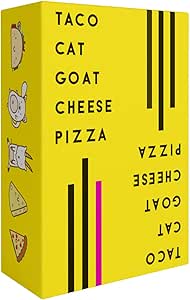 | Best for Fast, High-Energy Groups | Edition: Original | Players: 2–8 | Age range: 7 years and up | VIEW LATEST PRICE | See Our Full Breakdown |
| Hasbro Twister Classic Party Game |  | Best Active Group Game | Brand: Hasbro Gaming | Players: 2–4 | Age range: 6 years and up | VIEW LATEST PRICE | See Our Full Breakdown |
| kids board game | Players | Included components | Brand | Age range |
|---|---|---|---|---|
| Hasbro Gaming Clue Junior: Cas | 2–6 | Gameboard, 6 character pawns, 6 furniture tokens, 7 white bases, 7 yellow bases, detective notepad, die, label sheet, and game guide | Hasbro Gaming | 5 years and up; product details also contain conflicting 8+ guidance |
| Hasbro Gaming Battleship with | 2 | 2 portable battle cases, 10 plastic ships, 2 plastic planes, 84 red hit pegs, 168 white miss pegs, label sheet, and instructions | Hasbro Gaming | — |
| Hasbro Gaming Candy Land Board | 2–4 | Gameboard, 4 gingerbread pawns, card deck, and instructions | Hasbro Gaming | — |
| Hasbro Gaming Trouble Board Ga | 2–4 | Gameboard, plastic game unit with Pop-O-Matic die roller, 16 pegs, and instructions | — | 5 years and up |
| Outfoxed! Cooperative Mystery | 4 | Board game | Gamewright | — |
| Sorry! Board Game for Kids Age | 2–4 | Gameboard, 12 pawns, 45 cards, instructions | Hasbro Gaming | 6 years and up |
| Hasbro Gaming Operation Electr | 1 or more | Gameboard with Cavity Sam, tweezers, 26 cards, 12 Funatomy parts, play money, rubber band, instructions | Hasbro Gaming | 6+ years |
| Mouse Trap Board Game for Kids | 2–4 | Game board, 4 plastic mice, 2 metal marbles, 25 trap-building parts and accessories, 52 cheese pieces | Hasbro Gaming | 6 years and up |
| Hasbro Gaming Battleship Class | 2 | 2 portable battle cases, 10 plastic ships, 73 red hit pegs, 168 green miss pegs, instructions | Hasbro Gaming | 7 years and up |
| The Uzzle 3.0 Family Board Gam | 1–4 | 4 sets of 10 blocks | — | 4 years and up |
| Hasbro Connect 4 Board Game | 2 | Grid and tray, 42 discs (21 red and 21 yellow), game rules | Hasbro | 6 years and up |
| Taco vs Burrito Card Game | 2–4 | — | Taco vs Burrito | 6 years and up |
| Spin Master Games Hedbanz Clas | 2–6 | 6 headbands, 6 headplates, 16 scoring badges, 1 timer, 69 picture cards, 3 sample question cards, instructions | — | — |
| Taco Cat Goat Cheese Pizza Car | 2–8 | Cards | — | 7 years and up |
| Hasbro Twister Classic Party G | 2–4 | Vinyl mat, spinner, instructions | Hasbro Gaming | 6 years and up |
More Details on Our Top Picks
Hasbro Gaming Clue Junior: Case of the Broken Toy
Clue Junior gives younger players a gentler route into deduction: they search beneath pawns and furniture tokens, then use a detective notepad to track which toy, person, and time fit the case. That makes it more thinking-focused than Candy Land, where the main task is matching colors and moving along a path. Its 2–6 player range also suits a larger family better than two-player options such as Battleship.
The tradeoff is that this mystery asks children to manage clues and make an accusation, so the youngest players may need help following the process. The product details list ages 5 and up, while another feature line reportedly says 8 and up; I would check the included guide and use adult support as needed. It is an indoor game, and the small clue pieces call for tidy storage.
Pros:- Detective notepad helps children track clues and rule out possibilities.
- Mystery format encourages deductive reasoning and problem-solving.
- Supports 2–6 players, accommodating larger groups.
- Searching beneath pawns and furniture tokens adds a hands-on clue-finding step.
Cons:- The product information gives conflicting age guidance, listing 5+ in one place and 8+ in another.
- The deduction and accusation steps may be challenging for the youngest listed players without help.
- Designed for indoor play, with multiple small components to keep together.
Best for: Families with children ready to practice clue tracking and simple deduction, especially when several siblings or friends want to play together.
Not ideal for: Three-year-olds or families seeking a very simple, reading-free first game; the clue-elimination process may need adult guidance.
- Brand:Hasbro Gaming
- Age range:5 years and up; product details also contain conflicting 8+ guidance
- Players:2–6
- Theme:Mystery
- Included components:Gameboard, 6 character pawns, 6 furniture tokens, 7 white bases, 7 yellow bases, detective notepad, die, label sheet, and game guide
- Educational objectives:Critical thinking, problem-solving, deductive reasoning, and reading comprehension
- Dimensions:1.63 × 13.13 × 10.5 inches
- Operation and use:Manual; indoor
Our verdict“Choose Clue Junior for a group of young children ready for a guided mystery, rather than a simple color-matching game.”
Hasbro Gaming Battleship with Planes Strategy Board Game, Ages 7+
Battleship with Planes is the pick here for two children who like keeping their plans private and reasoning from limited information. Players call coordinates, track hits and misses, and account for aircraft as well as ships, adding another target type to the familiar hunt. That gives it more hidden-information strategy than Trouble, where movement largely depends on the die, and a more competitive feel than cooperative Outfoxed!.
The portable battle cases make it easier to store the pieces and play away from a table at home. But the strict two-player format rules it out for siblings who want a group game, while the many small pegs can be lost during travel or cleanup. Its listed playtime is 30 minutes, so it asks for a longer, more focused matchup than the shorter rounds of Outfoxed!. Choose it for a pair, not a family-wide game night.
Pros:- Aircraft add a twist to the familiar ship-targeting strategy.
- Coordinate calls and hit-or-miss tracking reward planning and deduction.
- Portable battle cases store components and support play on the go.
- The game provides pieces for both players in one set.
Cons:- Designed for exactly two players, so it does not include the rest of a group.
- Small pegs can be lost during play, travel, or cleanup.
- Its listed 30-minute playing time is longer than the short rounds of Outfoxed!.
Best for: Two children aged 7 or older who enjoy head-to-head planning, coordinate tracking, and keeping their strategy hidden.
Not ideal for: Families needing a game for three or more players, or children who find small pieces frustrating to manage.
- Brand:Hasbro Gaming
- Recommended age:7 years and up
- Players:2
- Playing time:30 minutes
- Genre:Strategy
- Included components:2 portable battle cases, 10 plastic ships, 2 plastic planes, 84 red hit pegs, 168 white miss pegs, label sheet, and instructions
- Model number:C3890
- Warranty:No warranty
Our verdict“Pick Battleship with Planes when two older children want a focused, competitive strategy game and can keep track of small pegs.”
Hasbro Gaming Candy Land Board Game for Kids, Ages 3 and Up
Candy Land is the easiest entry point in this group for preschoolers: children draw color-coded cards and move a gingerbread pawn, with no reading required. That makes it more accessible to a three-year-old than Clue Junior, which asks players to track clues and make a deduction. Its 15-minute estimated playtime also suits a short attention span, while the English and Spanish instructions can help adults in bilingual households teach the rules.
The simplicity is also its limit. Because movement follows drawn cards, children make few strategic choices, and the path-racing format may feel repetitive to older kids who want the mystery of Clue Junior or the head-to-head planning of Battleship with Planes. It is best viewed as a first lesson in taking turns and matching colors, not as a game that will keep older children engaged as their skills grow.
Pros:- No reading is required to follow the basic color-card movement.
- Color matching supports early recognition and matching skills.
- The estimated 15-minute playtime fits young children’s shorter sessions.
- Instructions are provided in English and Spanish.
Cons:- Card draws largely determine movement, leaving few strategic choices.
- The recommended age range is young children, so older siblings may outgrow the gameplay.
- The path-racing format can feel repetitive for children seeking varied challenges.
Best for: Families introducing board games to preschoolers who are learning colors and turn-taking and are not yet reading independently.
Not ideal for: Older children looking for meaningful strategy, clue-solving, or more control over their moves.
- Brand:Hasbro Gaming
- Recommended age:3 years and up
- Players:2–4
- Estimated playing time:15 minutes
- Included components:Gameboard, 4 gingerbread pawns, card deck, and instructions
- Instruction languages:English and Spanish
- Skills:Color recognition, matching, and turn-taking
Our verdict“Choose Candy Land as a simple, reading-free first game for preschoolers, not as a strategy pick for older children.”
Hasbro Gaming Trouble Board Game for Ages 5 and Up, 2–4 Players
Trouble suits children who want to get moving quickly: press the Pop-O-Matic bubble to roll, then race four pegs toward the finish. Since the die stays inside the plastic game unit, it is less likely to roll under furniture than a loose die in Clue Junior. The basic rules are easy to explain, and the optional Power Up spaces add a way to vary play without replacing the familiar race.
The catch is that the bubble does not remove the luck from the game; it just makes rolling convenient. A player can send an opponent’s peg back to the start, which may create excitement for some children but frustration for others. Compared with Candy Land, Trouble adds the possibility of directly setting back another player, so it is a better fit for kids who enjoy playful rivalry than for families seeking a cooperative experience like Outfoxed!. It supports up to four players, but not larger groups.
Pros:- Pop-O-Matic rolls the die in place, reducing the chance of a loose die going missing.
- Simple race-to-the-finish rules are quick for young players to learn.
- Classic play and optional Power Up spaces offer two ways to play.
- Four pegs per player give children a clear, repeated goal.
Cons:- The die roll strongly shapes movement, limiting player control.
- An opponent can send a peg back to the beginning, which may frustrate some children.
- Supports only 2–4 players.
Best for: Families with children aged 5 and up who want a quick-to-teach race game and enjoy a little friendly competition.
Not ideal for: Children who are upset by losing progress or groups larger than four; the send-back rule can be a sticking point.
- Age range:5 years and up
- Players:2–4
- Edition:Classic Edition
- Included components:Gameboard, plastic game unit with Pop-O-Matic die roller, 16 pegs, and instructions
- Movement mechanic:Pop-O-Matic die roller
- Gameplay options:Classic gameplay or optional Power Up spaces
Our verdict“Choose Trouble for a straightforward, lively race if the children playing can handle setbacks without losing interest.”
Outfoxed! Cooperative Mystery Board Game
Outfoxed! makes teamwork the point: players gather clues and use an evidence decoder together to identify which fox took Mrs. Plumpert’s pot pie. Its short, 15–20 minute sessions and simple rules make it approachable for young players, while the shared deduction gives children a reason to talk through what they have found. Compared with Clue Junior, this is the better fit for siblings who dislike accusing one another; Clue Junior has each player investigate, while Outfoxed! makes the group solve the case together.
That cooperative setup is also its defining limit. Children who want to compete or make independent moves may prefer Trouble or Battleship with Planes. The listing specifies four players, so it may not suit a larger family, and the clue-solving and dice rolling still ask children to follow the game rather than simply take turns moving. Choose it for shared reasoning, not head-to-head rivalry.
Pros:- Cooperative play encourages communication and shared decision-making.
- Clue gathering and the evidence decoder support logic and deduction.
- Simple rules are suited to younger players.
- Short 15–20 minute rounds fit a brief family game session.
Cons:- The listing specifies four players, limiting its fit for larger groups.
- Children seeking direct competition may find the shared objective less engaging.
- Play relies on dice rolling and clue solving, which may not suit children seeking free-form play.
Best for: Families with children aged 5 and up who want siblings to solve a mystery together instead of competing against each other.
Not ideal for: Children who prefer direct competition, or groups larger than four players.
- Brand:Gamewright
- Game type:Cooperative board game
- Players:4
- Recommended age:5 years and up
- Playing time:15–20 minutes
- Language:English
- Included components:Board game
- Core mechanics:Clue gathering and evidence decoder
Our verdict“Pick Outfoxed! for a short, shared mystery where young players can reason together rather than compete.”
Sorry! Board Game for Kids Ages 6 and Up
Sorry! is the pick for families who want a simple race game with room for playful sabotage. Card-driven moves make the rules approachable for children, while sliding and sending rival pawns back adds decisions that go beyond simply moving forward. Compared with Candy Land, it gives players more ways to affect one another; that same take-that element can also lead to sore feelings. Strategy is limited by the luck of the draw, so it suits casual family play better than children seeking a skill-first challenge. The listed 120-minute playing time is a substantial commitment for younger players, especially beside the shorter sessions offered by games such as Battleship. I’d choose it for mixed-age groups who enjoy competitive twists, but skip it if your child dislikes setbacks.
Pros:- Straightforward card-based movement is accessible to children ages six and up.
- Sliding and sending pawns back create tactical choices beyond a simple race.
- Accommodates two to four players for small family groups.
- Familiar rules and gameplay can appeal across generations.
Cons:- Card draws have a strong effect on movement, limiting how much strategy can control the outcome.
- The listed 120-minute playing time may be too long for many younger players.
- Sending another player’s pawn back can cause frustration.
Best for: Families with children six and older who enjoy classic, competitive games and can handle having a pawn sent back.
Not ideal for: Younger children with short attention spans or players who get upset when opponents disrupt their progress.
- Brand:Hasbro Gaming
- Players:2–4
- Age range:6 years and up
- Estimated playing time:120 minutes
- Included components:Gameboard, 12 pawns, 45 cards, instructions
- Manufacturer part number:A5065
Our verdict“Choose Sorry! for a family that values playful rivalry over short sessions or fully skill-based outcomes.”
Hasbro Gaming Operation Electronic Board Game
Operation turns a child’s steady hand into the main skill, asking players to lift small pieces with tweezers without triggering the buzzer and flashing nose. That physical challenge makes it a different kind of kids’ game from Battleship Classic, which centers on deduction and turn-by-turn guesses. Operation also allows solo play, so it can occupy one child when a group is not available. Its humor and simple objective suit family sessions, though the electronic feedback depends on two AA batteries, which are not included. The small Funatomy parts need careful handling and are unsuitable for children under six; rough handling or moisture may also affect the electronics. I’d pick it for hands-on play, not for families wanting a compact, battery-free game.
Pros:- Tweezers play gives children a direct way to practice fine motor control and hand-eye coordination.
- Supports solo play as well as group play.
- Buzzer and light feedback make mistakes immediate and entertaining.
- Simple rules are easy for young players to learn.
Cons:- Requires two AA batteries, which are not included.
- Small pieces pose a choking hazard for children under six.
- Electronic components may be affected by rough handling or moisture.
Best for: Families with children six and older who want a hands-on game that practices careful tweezers control and can also be played solo.
Not ideal for: Households with children under six, players who prefer strategy over dexterity, or families who want a game without batteries and small parts.
- Brand:Hasbro Gaming
- Age range:6+ years
- Players:1 or more
- Battery requirements:2 AA batteries
- Included components:Gameboard with Cavity Sam, tweezers, 26 cards, 12 Funatomy parts, play money, rubber band, instructions
- Skills developed:Fine motor coordination, strategy
Our verdict“Choose Operation for a child who enjoys dexterity challenges and can play carefully around small parts.”
Mouse Trap Board Game for Kids Ages 6 and Up
Mouse Trap stands apart from more conventional board games by making the trap itself a centerpiece: players collect cheese and assemble a contraption designed to capture rival mice. That construction-and-cause-and-effect appeal gives it a more hands-on feel than Sorry!, where cards drive most of the action. The tradeoff is setup and upkeep: its many trap parts, accessories, and metal marbles call for assembly and careful handling, so it is less convenient than a game stored in a compact case. At a listed 30 minutes, it also asks for less play time than Sorry!’s stated duration. Its elimination-style finish may still disappoint a child whose mouse is captured early. I’d choose it for kids who enjoy building mechanisms, rather than families seeking the simplest setup.
Pros:- Building and triggering the trap adds tactile cause-and-effect play.
- Supports two to four players.
- Gameplay can encourage counting, cooperation, construction, and decision-making.
- Listed playing time is 30 minutes.
Cons:- The trap uses many parts and requires assembly during play.
- Loose accessories and metal marbles need careful handling and storage.
- A captured mouse is eliminated, which can leave a player waiting.
Best for: Families with children six and older who enjoy assembling moving contraptions and seeing how one action sets off another.
Not ideal for: Players who want a quick setup, dislike small loose components, or would be unhappy being knocked out before the game ends.
- Brand:Hasbro Gaming
- Age range:6 years and up
- Players:2–4
- Playing time:30 minutes
- Edition:Standard Edition
- Included components:Game board, 4 plastic mice, 2 metal marbles, 25 trap-building parts and accessories, 52 cheese pieces
- Instructions:English and Spanish
Our verdict“Choose Mouse Trap for children who value constructing and triggering a contraption more than streamlined setup.”
Hasbro Gaming Battleship Classic Board Game
Battleship Classic is the strongest fit here for two children who like making guesses, tracking results, and adjusting their search for an opponent’s hidden fleet. Unlike the group-focused Mouse Trap, it is built specifically for a head-to-head match, with separate battle cases that keep ships and pegs together for storage or travel. The basic rules are accessible to players ages seven and up, while Salvo mode gives experienced players a more involved option. Its defining limit is also clear: it supports only two players, so it will not bring a larger family into the same game. The listed 30-minute playing time makes it a contained session, not a long strategic campaign. I’d pick it for siblings or one-on-one play, and skip it if group participation matters more.
Pros:- Two portable battle cases keep components together for storage and travel.
- Simple core rules are approachable for children ages seven and up.
- Salvo mode offers an added challenge for experienced players.
- Peg tracking helps players record hits and misses during a match.
Cons:- Limited to two players.
- A 30-minute session may feel short to players seeking extended strategy.
- The game centers on direct competition rather than cooperative family play.
Best for: Families with two children ages seven and up who want a portable head-to-head game with a step up from pure guessing.
Not ideal for: Larger families or groups seeking a game where three or more players can join the same session.
- Brand:Hasbro Gaming
- Players:2
- Age range:7 years and up
- Playing time:30 minutes
- Included components:2 portable battle cases, 10 plastic ships, 73 red hit pegs, 168 green miss pegs, instructions
- Ships included:Aircraft carrier, destroyer, submarine, patrol boat, battleship
- Model number:F4527
Our verdict“Choose Battleship Classic when two players want portable, tactical competition rather than a game for the whole family.”
The Uzzle 3.0 Family Board Game
The Uzzle 3.0 is the best fit for children who want visual challenges rather than a race, guessing contest, or take-that match. Players flip, spin, and combine blocks to match patterns, with 100 challenges across four difficulty levels allowing one set to serve different skill levels. That makes it more adaptable than Battleship Classic, which is designed for two players and a single style of head-to-head play. Uzzle supports solo play and groups of up to four, so it can work for independent practice or family puzzle sessions. Its block-based format is less suited to children looking for a story or direct competition, and the harder puzzles may frustrate younger players. I’d choose it for repeatable pattern practice, not for a lively, luck-driven family game.
Pros:- Four difficulty levels let players work at different skill levels.
- Includes 100 challenges for repeated puzzle play.
- Larger blocks are designed to be easier for children to handle.
- Supports solo play or groups of up to four.
Cons:- Play is limited to four unless additional games are obtained.
- The higher difficulty levels may challenge younger children.
- Pattern-solving may feel less social to players who prefer direct interaction.
Best for: Families with children from age four who enjoy visual puzzles and want solo challenges alongside play for up to four.
Not ideal for: Children who prefer storytelling, physical action, or direct competition, and younger players likely to be discouraged by harder patterns.
- Age range:4 years and up
- Players:1–4
- Puzzles:100 unique challenges; 25 per difficulty level
- Difficulty levels:4
- Included components:4 sets of 10 blocks
- Material:Plastic
- Dimensions:8 × 8 × 4 in
- Weight:1.7 lb
- Language:English
Our verdict“Choose The Uzzle 3.0 for children who enjoy visual problem-solving and a range of solo or shared challenges.”
Hasbro Connect 4 Board Game (2025 Edition)
Connect 4’s strongest advantage is its fast, direct head-to-head play: children ages 6 and up can start with little setup, and rounds take about five minutes. The carrying case keeps the grid and discs together, while built-in score trackers make it easier to keep a casual match moving. Compared with Hedbanz Classic Edition, it asks less of players verbally, making it a better fit for children who prefer visual strategy to asking questions. Its narrow focus is also its main tradeoff: it supports only two players, unlike Hedbanz or Taco Cat Goat Cheese Pizza, which can include a group. The plastic construction and familiar gameplay may feel less substantial or novel than a more involved family game, but portability and quick resets give it a clear place in a kids’ game collection.
Pros:- Carrying case stores the discs with the grid and has a handle for transport.
- One-motion setup makes it easy to start a game without assembly.
- Built-in sliding score trackers avoid needing separate scorekeeping.
- Short rounds fit travel breaks and brief family game sessions.
Cons:- Designed for exactly two players, so it does not suit larger groups.
- Plastic construction may feel less durable than wooden alternatives.
- The familiar, focused format offers less variety than games with multiple play modes.
Best for: Families looking for a portable, easy-to-start strategy game for two children or an adult and child.
Not ideal for: Households that usually play with three or more people, or buyers seeking a premium-feeling game with more varied rules.
- Brand:Hasbro
- Edition:2025
- Age range:6 years and up
- Players:2
- Included components:Grid and tray, 42 discs (21 red and 21 yellow), game rules
- Model number:G1500
Our verdict“Choose this edition for compact, quick strategy matches between two players, but pick a group game if everyone wants to join.”
Taco vs Burrito Card Game
Taco vs Burrito pairs silly food humor with simple strategy, giving children ages 6 and up a reason to think about which cards to play rather than simply follow a path. Its five gameplay variations add replay options, and the 15-minute format works for a family session without demanding a long stretch of attention. Compared with Connect 4, it supports up to four players and gives each round more card-driven surprises; unlike the physical action in Taco Cat Goat Cheese Pizza, it rewards planning more than speed. The paper cards and meal holders make it easy to pack, though they are less rugged than a sturdy board and can show wear with frequent handling. The short play time may also leave some groups wanting another round, and its humor-led theme will not appeal to every child.
Pros:- Five gameplay variations provide more replay options than a single-rule card game.
- Supports two to four players, including adults and children.
- Compact card-based components are convenient to take along.
- Quick-to-learn rules make it accessible to younger players.
Cons:- Paper cards and meal holders may wear faster than plastic or wooden pieces.
- A typical 15-minute game may feel too brief for players wanting a longer session.
- The humorous food theme may not suit every child or family.
Best for: Families with children six and up who want a portable card game with light strategy and several ways to play.
Not ideal for: Buyers seeking a durable board-and-piece game, or groups that prefer longer, more serious strategy sessions.
- Brand:Taco vs Burrito
- Players:2–4
- Age range:6 years and up
- Playing time:About 15 minutes
- Components:56 cards, 4 taco/burrito meal holders, 3 quick start cards, rule book
- Material:Paper
- Dimensions:7 x 5 x 2 inches
- Theme:Humor and food
Our verdict“Pick Taco vs Burrito for a portable, playful card game with some choice and strategy, rather than a longer traditional board game.”
Spin Master Games Hedbanz Classic Edition Picture Guessing Game
Hedbanz makes asking good questions the game: players wear a picture card and use yes-or-no answers to figure out what they are. That format gives children ages 6 and up practice with clues and listening, while six headbands let a larger family play together. Compared with Connect 4, which centers on quiet visual strategy for two, Hedbanz is more social and accommodates up to six players. It is also less physically hectic than Taco Cat Goat Cheese Pizza, though the timer still adds pressure. The tradeoff is that a child must be comfortable asking and answering questions; players who are shy, still learning the format, or prefer independent turns may find it less inviting. Most components are paper, so the cards need more careful handling than a game built around durable plastic pieces.
Pros:- Supports two to six players, making it more group-friendly than two-player games.
- Yes-or-no questions create a simple structure for clue-giving and deduction.
- Includes 69 picture cards across familiar categories such as animals, objects, and food.
- A timer and scoring badges give rounds a clear pace and goal.
Cons:- Players need to ask and answer questions, which may be uncomfortable for shy children.
- The timer can add pressure for players who need more time to form questions.
- Paper picture cards may not hold up as well as sturdier game components.
Best for: Families with children six and up who enjoy conversation, guessing clues, and playing in a group of up to six.
Not ideal for: Children who dislike speaking in front of others or groups wanting a quiet, low-pressure game without a timer.
- Edition:Classic Edition
- Players:2–6
- Recommended age:6 years and up
- Included components:6 headbands, 6 headplates, 16 scoring badges, 1 timer, 69 picture cards, 3 sample question cards, instructions
- Material:Primarily paper
- Model year:2023
Our verdict“Choose Hedbanz for lively family conversation and picture guessing, but skip it if your child prefers quieter or less verbal games.”
Taco Cat Goat Cheese Pizza Card Game
Taco Cat Goat Cheese Pizza is built around quick reactions, not careful planning: players chant the sequence, flip cards, and race to slap the pile when a spoken word matches. That simple loop makes it quick to teach and easy to bring on a trip, while surprise action cards keep the rhythm from feeling entirely predictable. Compared with Taco vs Burrito, it is livelier and better suited to a large group, supporting up to eight players, but it offers less room for deliberate card strategy. Hedbanz also works for a group, though it favors conversation and guessing rather than speed. The physical slapping and rapid pace can exclude children who prefer calmer turns or have difficulty reacting quickly; it can also get noisy. Its compact card-only format is convenient, but not a substitute for a more substantial board-game session.
Pros:- Supports groups of two to eight, making it flexible for gatherings.
- Simple rules allow new players to join quickly.
- Action cards add twists to the repeated chant-and-match pattern.
- Compact card format is easy to carry for travel or short breaks.
Cons:- Fast reactions and slapping the pile may make play uncomfortable for some children.
- The energetic pace can become noisy and may not suit a quieter game night.
- Offers less strategic planning than Taco vs Burrito.
Best for: Families and groups with children ages 7 and up who enjoy noisy, quick-turn games and can react comfortably at speed.
Not ideal for: Players who prefer thoughtful turns, have difficulty with fast reactions, or want a calm game with minimal physical activity.
- Edition:Original
- Players:2–8
- Age range:7 years and up
- Play time:10–15 minutes
- Included components:Cards
- Unit count:1
Our verdict“Pick it for quick, energetic play with a larger group, but choose Taco vs Burrito for a calmer game with more room to plan.”
Hasbro Twister Classic Party Game
Twister turns a game night into a balance and coordination challenge, with simple spinner instructions that let children ages 6 and up join without learning a complex rule set. It works for two to four players and can be played indoors or outdoors, giving it a more physical role than Hedbanz or the card-based Taco Cat Goat Cheese Pizza. The colored mat also gives younger players a straightforward visual cue to follow. That activity comes with a space requirement: players need enough clear floor area to spread out and move safely. Elimination when someone falls or touches the mat with a knee or elbow can leave a child waiting, unlike games where everyone keeps taking turns. I’d choose Twister for an energetic group that enjoys movement, not as a compact option or the best fit for a small room.
Pros:- Spinner-based rules are easy for children to follow.
- Combines balance, coordination, and color recognition in active play.
- Can be played indoors or outdoors.
- Offers a physical alternative to the card and table games in this roundup.
Cons:- Requires enough open floor space for the mat and players to move.
- Players can be eliminated after falling or touching the mat with a knee or elbow.
- The two-to-four-player limit makes it less suitable for larger groups.
Best for: Families with children six and up who want a movement-based group game and have clear floor space indoors or outdoors.
Not ideal for: Households with limited play space, or children who dislike physical challenges or being eliminated from a game.
- Brand:Hasbro Gaming
- Players:2–4
- Age range:6 years and up
- Included components:Vinyl mat, spinner, instructions
- Skills:Balance, coordination, color recognition
- Play location:Indoor or outdoor
- Warranty:No warranty
Our verdict“Choose Twister when your group wants active play and has room to spread out, but opt for Hedbanz or a card game in a small space.”
How We Picked
I compared these 15 games by how well their rules, play demands, and physical format suit children and the adults playing with them. The main factors were age accessibility, clarity of turns, the balance of luck and decision-making, time and effort to get started, player interaction, and likely replay across different family groups. I also looked at whether a game gives children room to practice useful skills—such as deduction, spatial reasoning, language, or taking turns—without making the rules feel like work.
The ranking favors games with a clear audience and a strong balance of engagement, usability, and repeat play. Outfoxed! leads because cooperative deduction gives it broad family appeal; picks like Candy Land and Connect 4 rank for specific strengths rather than trying to serve every age. Games with more setup, physical space needs, or narrower play styles remain worthwhile, but those tradeoffs keep them below the most adaptable options.
| kids board game | Brand |
|---|---|
| Hasbro Gaming Clue Junior: Cas | Hasbro Gaming |
| Hasbro Gaming Battleship with | Hasbro Gaming |
| Hasbro Gaming Candy Land Board | Hasbro Gaming |
| Hasbro Gaming Trouble Board Ga | — |
| Outfoxed! Cooperative Mystery | Gamewright |
| Sorry! Board Game for Kids Age | Hasbro Gaming |
| Hasbro Gaming Operation Electr | Hasbro Gaming |
| Mouse Trap Board Game for Kids | Hasbro Gaming |
| Hasbro Gaming Battleship Class | Hasbro Gaming |
| The Uzzle 3.0 Family Board Gam | — |
| Hasbro Connect 4 Board Game | Hasbro |
| Taco vs Burrito Card Game | Taco vs Burrito |
| Spin Master Games Hedbanz Clas | — |
| Taco Cat Goat Cheese Pizza Car | — |
| Hasbro Twister Classic Party G | Hasbro Gaming |
Factors to Consider When Choosing Best Kids Board Games
Before choosing, I would match the game to how your household actually plays, not just the age printed on the box. These broader checks can prevent a game from being too hard, too passive, or too cumbersome for your usual game time.
Match the Rules to the Youngest Regular Player
Age labels are a useful starting point, but they do not show how much reading, memory, or turn planning a child will need. Look for the youngest player’s likely sticking point: recognizing symbols, following several steps, or waiting through other turns. A game that older siblings enjoy may still need an adult to read cards or explain choices for a younger child. That support can be fine if an adult usually joins, but frustrating if children are expected to play independently. When ages vary widely, shared goals or simple turns often keep the group together better than a game built around advanced tactics.
Choose Competition or Cooperation Deliberately
Some children relish racing, bluffing, or blocking an opponent; others find losing the central experience discouraging. Cooperative games give players a common problem to solve, though they can also let an older child dominate decisions unless adults invite everyone to contribute. Competitive games create clear winners and can be exciting, but repeated setbacks may matter more to a young player than the designer intended. Think about whether your group enjoys playful rivalry or prefers a shared outcome. If you are unsure, choosing a cooperative option can make mixed-age sessions easier to sustain.
Balance Luck With Meaningful Choices
Luck can help a young child join in before they can plan several turns ahead, and it can keep a family game from becoming a contest of age or experience. Too much randomness, however, may leave older children feeling that their decisions do not matter. Strategy-heavy games can reward thought but may create a steep learning curve for first-time players. A useful middle ground offers straightforward rules with small choices children can learn to make over time. Consider whether your priority is an easy shared activity or a game that rewards repeated practice.
Account for Setup, Storage, and Play Space
A game can sound appealing and still stay on the shelf if it takes too long to prepare or pack away. Physical components, moving parts, and larger play areas add excitement but also require a suitable table, floor space, and a plan for keeping pieces together. Card-based or compact formats are easier to bring along, though they may be less satisfying for children who want a substantial board or tactile pieces. Check whether setup requires adult help and whether small components can be stored safely around younger siblings. The right practical fit can matter more than a feature list.
Think About Group Size and Waiting Time
Check how many people can play at once and what everyone does between turns. A game that works well for two may not suit a family gathering, while a larger group can make a turn-based game feel slow for children with short attention spans. Fast-response party games keep more players involved at once, but they may become noisy or hectic. For a small household, head-to-head strategy can make each move feel important. For mixed groups, prioritize games where spectators can follow the action and turns arrive regularly.
Judge Value by Repeat Use, Not Just Novelty
A dramatic first play is not the same as lasting family value. Ask whether the game changes with different opponents, allows children to improve, or can be played in short sessions when time is limited. Simple classics are easy to return to, while puzzle and deduction games may offer more variation through problem-solving. A specialized game can still be a good choice if it fills a clear gap, such as a preschool-friendly first game or a lively option for parties. Pay more attention to how often your family is likely to bring it out than to how many components are in the box.
Frequently Asked Questions
Which game is the best starting point for a child who has never played a board game?
I would start with a game whose turns are easy to follow and whose rules can be explained in a few steps. Candy Land is the simplest fit for very young beginners, while Connect 4 suits children ready to think about how one move affects the next. If a child is comfortable with clues and teamwork, Outfoxed! offers more to discuss without making one player the opponent. The best choice depends on the child’s attention and readiness, not only their age. A short practice round can help a beginner learn without feeling pressured to get every rule right.
What should I choose for siblings who dislike losing to each other?
A cooperative game is often the better starting point because players work toward one shared result. Outfoxed! is the clearest match in this lineup, since the group investigates together rather than competing for individual victory. Cooperative play does not automatically prevent frustration, though: children can disagree about what to do, and an older sibling may try to take over. Adults can help by asking each child to share a clue or suggestion before the group decides. If the siblings later enjoy friendly rivalry, a simple head-to-head game can add variety.
Are classic games still a good choice if my child already has several games?
They can be, especially if the family wants familiar rules that are easy to bring out without a long explanation. Classic formats such as Connect 4 or Battleship can build repeat play through direct choices, while Candy Land is useful for very early play even if its decisions stay limited. A new game is more likely to add something worthwhile when it offers a different kind of interaction, such as cooperation, physical activity, or fast group play. Compare what your child already enjoys with what is missing rather than choosing a title only because it is familiar. That keeps the collection varied instead of duplicative.
How can I tell whether a game will work for mixed ages?
Check whether younger players can take part without reading independently or planning several moves ahead, and whether older children still have choices that feel meaningful. Games based on shared clues or visual recognition can bridge age gaps, while highly competitive games may highlight differences in experience. Also look at turn length: younger children may lose interest if they wait too long. An adult can sometimes adjust the session by helping with reading or setting a team format, but that changes how much adult involvement is needed. If the age gap is large, choose a game that lets everyone contribute in different ways.
Should I choose a compact card game or a larger game with a board and pieces?
Choose based on where and how your family will play. Card games are generally easier to store and carry, and fast rounds can suit parties or short breaks, but quick reactions and lively group energy may not suit every child. A board game with more components can create a stronger sense of occasion and support a more structured activity, but it may need extra setup, table space, and careful storage. Consider whether the game must travel, whether younger siblings are nearby, and how much preparation adults are willing to handle. A smaller box is not automatically better if its play style does not fit your group.
Conclusion
For most families, I would choose Outfoxed! as the best overall because cooperative deduction combines conversation and problem-solving without putting one child directly against another. For a low-friction first game, Candy Land is my pick for beginners; for a more tactical familiar option, Connect 4 is a strong value choice. If you want a game built around quick visual challenges, choose The Uzzle 3.0; for a lively group or party, consider Taco Cat Goat Cheese Pizza or Hedbanz. Families seeking a more active experience can look at Twister, while those who enjoy a larger setup may prefer Mouse Trap. Match the choice to your players’ ages, patience, and space, and the game is more likely to make it to the table.
Black Friday Picks

Sony WH-1000XM6 Wireless Noise-Canceling Headphones, Black
As an affiliate, we earn on qualifying purchases.