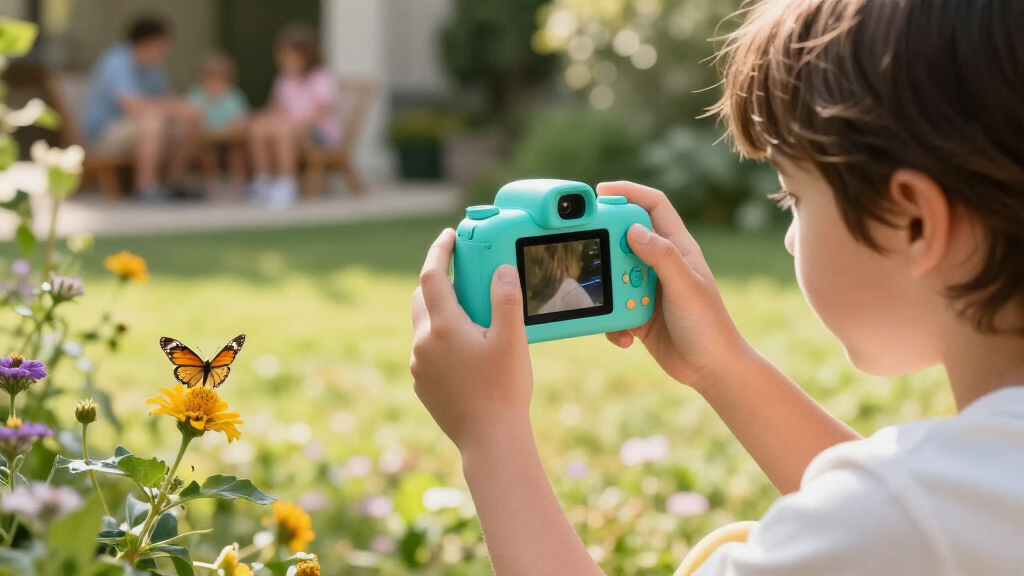
Choosing the right kids digital cameras means balancing rugged durability with intuitive controls that don’t frustrate young users. My top overall pick is the Makolle Kids Digital Camera with Flip Lens because its dual-lens design lets children capture selfies and landscapes without awkward wrist angles. For those prioritizing optical reach, the DX5 Digital Camera stands out with its 16x zoom, allowing kids to photograph distant subjects like birds or sports events clearly. The main tradeoff in this category often lies between simplicity and feature density; more advanced models offer higher megapixels and zoom but may overwhelm toddlers with complex menus. Continue reading to see which model fits your child’s specific age group and creative interests.

Get baby and family essentials delivered free — and shop member deals
- Fast, free delivery on millions of items
- Access to Prime Big Deal Days deals on October 6–7
- Prime Video, Amazon Music and more included
Complete the kit


Key Takeaways
- Dual-lens designs, such as those found in the Makolle and GPOSY models, significantly reduce frustration for children who want to take selfies by eliminating the need to flip the camera manually.
- High megapixel counts (44MP–48MP) are largely marketing fluff on small sensors; image quality differences between budget and premium kids‘ cameras are minimal in good lighting but diverge sharply in low light.
- Physical durability features like rubberized bumpers and soft silicone covers matter more for longevity than screen resolution, as drops are the primary cause of failure for this demographic.
- Storage capacity has shifted from internal memory to included SD cards; models with 32GB–64GB cards prevent immediate bottlenecks, whereas those with only 8GB or no card require immediate additional purchases.
- Video capability is a differentiator, with 1080p being the new standard; however, 4K options for kids often result in large file sizes that fill SD cards quickly, making 1080p the practical sweet spot.
| Makolle Kids Digital Camera and Camcorder with Flip Lens, SD Card, Green |  | Best for Creative Selfies | Photo resolution: 8 MP | Video resolution: 1080p | Lens: 180° flip lens | VIEW LATEST PRICE | See Our Full Breakdown |
| Makolle Kids Digital Camera and Camcorder, Blue |  | Best for Younger First-Time Photographers | Photo resolution: 8 MP | Video resolution: 1080p | Lens: 180-degree flip lens | VIEW LATEST PRICE | See Our Full Breakdown |
| Kids Digital Camera with Dual Lens, 48MP, 1080p Video, 32GB Card |  | Best for Built-In Entertainment | Recommended age: 3–9 years | Photo resolution: 48 MP | Video resolution: 1080p, 720p | VIEW LATEST PRICE | See Our Full Breakdown |
| DX5 Digital Camera for Kids – 48MP, 16x Zoom, FHD 1080p, Anti‑Shake |  | Best for Steadier Everyday Photos | Sensor type: CMOS | Photo sensor resolution: 48 MP | Screen size: 2.4-inch LCD | VIEW LATEST PRICE | See Our Full Breakdown |
| Seckton Kids Selfie Camera, Pink |  | Best for Simple Selfie Play | Color: Pink | Photo sensor resolution: 8 MP | Effective still resolution: 4 MP | VIEW LATEST PRICE | See Our Full Breakdown |
| Digital Camera for Kids and Beginners with 64GB Card |  | Best for Bundled Accessories | Listed photo resolution: 64MP; effective still resolution also listed as 48MP | Video: 4K (2160p) | Sensor: CMOS, 1/2.3-inch | VIEW LATEST PRICE | See Our Full Breakdown |
| 44MP Compact Digital Camera with 16x Zoom, 1080p Video, Face Detection and Smile Capture (Blue) |  | Best for Simple Portrait Features | Photo resolution: 44MP | Video: 1080p | Digital zoom: 16× | VIEW LATEST PRICE | See Our Full Breakdown |
| Camkory FHD 1080p Digital Camera for Kids, Pink |  | Best for Beginner-Friendly Travel | Photo resolution: 44MP | Video: 1080p | Zoom: 16× | VIEW LATEST PRICE | See Our Full Breakdown |
| 4K Digital Camera for Kids, 48MP, 16x Zoom, 64GB Card, Pink |  | Best for the 4K Feature Set | Photo resolution: 48MP | Video: UHD 4K in description; 1080p also listed | Digital zoom: 16× | VIEW LATEST PRICE | See Our Full Breakdown |
| GPOSY Kids Digital Camera with 32GB SD Card, 1080p Video, Dual Cameras, Blue |  | Best for Selfies and Play | Photo sensor resolution: 48MP | Video: 1080p | Cameras: Front and rear | VIEW LATEST PRICE | See Our Full Breakdown |
| Goopow Kids Digital Camera with Cartoon Soft Cover |  | Best for Preschool Beginners | Recommended age: 3–8 years | Screen: 2-inch LCD | Photo resolution: 12 MP | VIEW LATEST PRICE | See Our Full Breakdown |
| 1080p Digital Point-and-Shoot Camera with 32GB Card |  | Best Feature-Rich Pick for Older Kids | Sensor type: CMOS | Photo resolution: 44 MP | Video resolution: Full HD 1080p | VIEW LATEST PRICE | See Our Full Breakdown |
| Seckton Kids Selfie Camera, Navy Blue |  | Best for Selfie-Taking Kids | Recommended age: 3–10 years | Photo resolution: 8 MP | Video resolution: 1080p | VIEW LATEST PRICE | See Our Full Breakdown |
| Desuccus Kids Digital Camera with 32GB Card |  | Best for Creative Play | Age range: 3–12 years | Screen: 2 inches | Photo resolution: 8 MP sensor; 48 MP effective still resolution listed | VIEW LATEST PRICE | See Our Full Breakdown |
| Makolle Kids Camera for Girls 3-12 Years Old – HD Digital Video Camcorder with Tripod and SD Card (Pink) |  | Best Accessory Bundle for Young Creators | Recommended age: 3–12 years | Photo and video resolution: 8 MP photos; 1080p video | Lens: 180° flip lens with autofocus | VIEW LATEST PRICE | See Our Full Breakdown |
| kids digital camera | Photo resolution | Digital zoom | Video resolution |
|---|---|---|---|
| Makolle Kids Digital Camera an | 8 MP | 8x | 1080p |
| Makolle Kids Digital Camera an | 8 MP | 8x | 1080p |
| Kids Digital Camera with Dual | 48 MP | 16x | 1080p, 720p |
| DX5 Digital Camera for Kids | — | — | 1080p (FHD) |
| Seckton Kids Selfie Camera | — | — | 1080p |
| Digital Camera for Kids and Be | — | 16× | — |
| 44MP Compact Digital Camera wi | 44MP | 16× | — |
| Camkory FHD 1080p Digital Came | 44MP | — | — |
| 4K Digital Camera for Kids | 48MP | 16× | — |
| GPOSY Kids Digital Camera with | — | 8× | — |
| Goopow Kids Digital Camera wit | 12 MP | 8x | Up to 1080p |
| 1080p Digital Point-and-Shoot | 44 MP | 16x | Full HD 1080p |
| Seckton Kids Selfie Camera | 8 MP | — | 1080p |
| Desuccus Kids Digital Camera w | 8 MP sensor; 48 MP effective still resolution listed | — | — |
| Makolle Kids Camera for Girls | — | 8x | — |
More Details on Our Top Picks
Makolle Kids Digital Camera and Camcorder with Flip Lens, SD Card, Green
The 180° flip lens gives kids a clear reason to pick this Makolle over a basic point-and-shoot: they can frame selfies without guessing where the camera is aimed. It also captures 8 MP photos and 1080p video, with frames, stickers, filters, and burst shooting for children who like experimenting rather than simply documenting outings. Compared with the Seckton Kids Selfie Camera, it lists a longer 2–3-hour battery life and includes a tripod, though both offer selfie-friendly cameras and bundled storage. The included SD card, reader, strap, and tripod make it ready for varied activities, but its digital zoom can soften images, and the battery still calls for recharging during longer days. I’d choose it for creative play, not for optical-zoom image quality or all-day use.
Pros:- 180° flip lens makes selfie framing easier
- Captures 8 MP photos and 1080p video
- Includes an SD card, card reader, neck strap, and tripod
- Frames, stickers, filters, and burst shooting encourage creative use
Cons:- Listed battery life of 2–3 hours may not cover a full day out
- 8x digital zoom can reduce image detail
Best for: Children who want to take selfies, add playful effects, and try both handheld and tripod photography.
Not ideal for: Families planning long outings without charging access or buyers who need clear images at high zoom.
- Photo resolution:8 MP
- Video resolution:1080p
- Lens:180° flip lens
- Digital zoom:8x
- Screen size:2.4 inches
- Battery capacity:1000 mAh
- Battery life:2–3 hours
- Included accessories:SD card, card reader, neck strap, tripod
Our verdict“Choose this Makolle for selfie-friendly creative play and useful included accessories, provided its limited battery life and digital zoom suit your needs.”
Makolle Kids Digital Camera and Camcorder, Blue
The blue Makolle pairs one-button shooting with a soft, shockproof design, making it a straightforward pick for children who are still learning camera basics. Its 180-degree flip lens supports selfies, while frames, stickers, filters, and burst mode offer ways to play without adding complicated controls. Against the green Makolle Kids Digital Camera and Camcorder with Flip Lens, the core imaging and accessory package is very similar; this version’s listing specifically calls out its shockproof materials and ages 3–12, but does not specify a screen size. An included SD card, reader, strap, and tripod help it feel ready to use, yet it is not water resistant, so puddles and wet-weather outings call for care. Battery estimates also vary between two hours and 2–3 hours, making it a weaker choice for extended use.
Pros:- One-button shooting keeps basic use simple
- 180-degree flip lens helps children frame selfies
- Shockproof design uses soft materials
- Includes an SD card, card reader, neck strap, and tripod
Cons:- Not water resistant, so wet-weather use is risky
- Battery life is inconsistent in the listing, ranging from 2 to 3 hours
- 8x digital zoom may reduce image quality
Best for: Children ages 3–12 who need simple controls, a forgiving soft exterior, and selfie and filter features.
Not ideal for: Families looking for a camera for poolside or rainy-day use, or those who need a dependable all-day battery estimate.
- Photo resolution:8 MP
- Video resolution:1080p
- Lens:180-degree flip lens
- Digital zoom:8x
- Display:LED
- Battery capacity:1000 mAh
- Recommended age:3–12 years
- Water resistance:Not water resistant
Our verdict“This blue Makolle suits younger beginners who value simple shooting and a shockproof shell, but it is not a wet-weather or long-session camera.”
Kids Digital Camera with Dual Lens, 48MP, 1080p Video, 32GB Card
This dual-lens camera makes a strong case for kids who want their camera to do more than take pictures: it adds games, MP3 playback, and photo stickers alongside selfie and regular shooting. The included 32GB TF card offers more ready-to-use storage than the bundled card listed with the Makolle models, while a silicone case adds a protective layer for small hands. Its 48 MP claim sits alongside 1080p video, but that number alone does not establish better real-world image quality; the 16x digital zoom can also reduce detail when children zoom in. Compared with the DX5 Digital Camera for Kids, this option prioritizes play features and dual lenses, while the DX5 specifies anti-shake and a larger battery. This model does not list battery runtime, so I’d favor it for short, supervised sessions over trips where charging is uncertain.
Pros:- Dual lenses support selfies and regular photos
- Includes a preinstalled 32GB TF card and USB transfer cable
- Silicone case provides a protective outer layer
- Games, photo stickers, and MP3 playback add entertainment options
Cons:- Battery runtime is not specified
- 16x digital zoom may reduce image detail
- 2-inch display is smaller than the 2.4-inch screen specified for the DX5
Best for: Children ages 3–9 who want selfies, playful photo effects, games, and music in one compact device.
Not ideal for: Families who need a stated battery runtime, image stabilization, or reliable detail when using zoom.
- Recommended age:3–9 years
- Photo resolution:48 MP
- Video resolution:1080p, 720p
- Lens:Dual lens
- Digital zoom:16x
- Storage:32GB TF card included
- Display:2-inch LCD
- Weight:220 g
Our verdict“Pick this dual-lens model for a young child who wants games and music as well as photos, not for buyers prioritizing runtime or steady zoomed shots.”
DX5 Digital Camera for Kids – 48MP, 16x Zoom, FHD 1080p, Anti‑Shake
The DX5 stands apart from the selfie-focused Makolle and Seckton options by emphasizing anti-shake technology, scene modes, and close-up shooting. Those features give a child more help when framing everyday subjects, while macro, burst, and self-timer modes provide room to try different styles. It also bundles a preformatted 32GB TF card, USB-C cable, and a 1500 mAh rechargeable battery, a more substantial listed capacity than the 1000 mAh Makolle models. However, the 16x zoom is digital, so it should not be treated as a guarantee of crisp distant shots; the listing also gives no wireless sharing, and video is limited to 1080p. I’d rank it ahead of simpler selfie cameras for kids interested in varied photography, but not for families seeking phone-free wireless transfers or richer video options.
Pros:- Anti-shake technology supports steadier handheld photos
- Eight scene modes plus macro, burst, and self-timer functions
- Includes a 32GB TF card and USB-C cable
- 1500 mAh rechargeable battery has greater listed capacity than the Makolle models
Cons:- No Wi-Fi or Bluetooth for wireless transfers
- 16x digital zoom may sacrifice detail
- Video options are limited to 1080p
Best for: Children who want to practice different types of photography and benefit from anti-shake, scene, macro, and timer modes.
Not ideal for: Families who want wireless photo sharing or children mainly looking for selfie effects and entertainment features.
- Sensor type:CMOS
- Photo sensor resolution:48 MP
- Screen size:2.4-inch LCD
- Video resolution:1080p (FHD)
- Zoom:16x
- Image stabilization:Anti-shake
- Battery capacity:1500 mAh
- Charging interface:USB-C
- Included memory card:32GB TF
Our verdict“Choose the DX5 for a budding photographer who wants steadier shots and varied shooting modes, but skip it if wireless sharing is a priority.”
Seckton Kids Selfie Camera, Pink
Seckton keeps the appeal focused: dual cameras make it easier for a child to switch between selfies and regular photos, and its soft-plastic shell is designed to handle bumps. It includes a microSD card and lanyard, so there is less to gather before handing it over. Compared with the Makolle Kids Digital Camera and Camcorder with Flip Lens, Seckton does not list a flip lens or tripod, but it does offer a shockproof shell and a simple carrying setup. The main tradeoff is the gap between its 8 MP sensor and 4 MP effective still resolution; buyers should not assume the sensor figure means 8 MP output. Its 1–2 hours of continuous photo-taking is also shorter than the Makolle’s stated 2–3 hours. I’d pick it for basic selfie fun, not extended outings or families prioritizing still-photo resolution.
Pros:- Dual cameras make switching to selfies straightforward
- Records 1080p video
- Shockproof soft-plastic shell helps protect against drops
- Includes a microSD card, USB cable, and lanyard
Cons:- Effective still resolution is listed as 4 MP despite an 8 MP sensor
- 1–2 hours of continuous photo-taking is relatively limited
- Does not list the flip lens or tripod included with the green Makolle
Best for: Children ages 3–10 who want a compact selfie camera with a soft shell and simple carry lanyard.
Not ideal for: Families who need longer shooting sessions or expect still photos to use the full listed 8 MP sensor resolution.
- Color:Pink
- Photo sensor resolution:8 MP
- Effective still resolution:4 MP
- Video resolution:1080p
- Storage capacity:32 GB
- Memory card type:MicroSD
- Battery life:1–2 hours of continuous photo taking
- Recommended age:3–10 years
Our verdict“This Seckton is a fit for children who want uncomplicated selfie play in a shockproof shell, but its short runtime and 4 MP effective still resolution limit its appeal.”
Digital Camera for Kids and Beginners with 64GB Card
The main reason I’d choose this camera over the Camkory FHD 1080p Digital Camera for Kids, Pink is its included 64GB card and tripod/handheld grip: the larger card leaves more room for clips, while the grip gives beginners a steadier way to hold or position the camera. It also lists 4K video, autofocus, anti-shake, and creative filters, giving young photographers more to try than a basic point-and-shoot. The compact, drop-resistant design suits family outings, and recording while charging may help during longer sessions. However, the listing conflicts on still resolution, stating both 64MP and 48MP, and its weight is given as both 0.23 lb and 25 g. I’d treat the resolution and weight claims cautiously, and note that the listed battery information is also unclear.
Pros:- Includes a 64GB TF card and tripod/handheld grip
- Lists 4K video, autofocus, and anti-shake
- Compact, drop-resistant design is suited to kid use
- Can record while charging
Cons:- Still resolution is inconsistently listed as 64MP and 48MP
- Weight is inconsistently listed as 0.23 lb and 25 g
- Battery details are unclear, with lithium polymer and one AAA battery both listed
Best for: Families who want a beginner camera with a generous included memory card and a grip or tripod for supported shots.
Not ideal for: Buyers who need consistent, clearly documented specifications or a camera with a reliable stated battery setup.
- Listed photo resolution:64MP; effective still resolution also listed as 48MP
- Video:4K (2160p)
- Sensor:CMOS, 1/2.3-inch
- Display:2.8-inch IPS LCD
- Digital zoom:16×
- Included storage:64GB TF card
- Connectivity:USB
- Included accessories:Tripod/handheld grip, hand strap, USB-C charging cable
Our verdict“Choose this for the 64GB card and versatile grip, but skip it if conflicting specifications would make you hesitate.”
44MP Compact Digital Camera with 16x Zoom, 1080p Video, Face Detection and Smile Capture (Blue)
Face detection and smile capture give this blue compact camera a clear use case: children who want to take portraits without managing many settings. It also has anti-shake and a fill light, which may help with casual indoor snapshots, while the 2.4-inch screen keeps framing straightforward. Compared with the Camkory FHD 1080p Digital Camera for Kids, Pink, this model offers similar 44MP photo and 1080p video claims but a smaller display and does not list a memory card in the box. Its 16× zoom is digital, so it enlarges the image rather than providing the reach of optical zoom. The listed 0.23 kg weight is also relatively substantial for a child-sized camera, making this a better match for supervised outings than for the youngest hands.
Pros:- Face detection and smile capture simplify casual portraits
- Includes digital anti-shake and a fill light
- Records 1080p video and captures photos listed at 44MP
- USB-C connectivity and an included lanyard
Cons:- Memory card is not listed among the included items
- 16× zoom is digital rather than optical
- Listed weight of 0.23 kg may feel heavy for smaller children
Best for: Children who mainly want an uncomplicated camera for portraits and family snapshots, with smile capture and a fill light.
Not ideal for: Families looking for a ready-to-use kit with storage included, or a particularly light camera for younger children.
- Photo resolution:44MP
- Video:1080p
- Digital zoom:16×
- Screen:2.4 inches
- Sensor:CMOS, 1/3.2-inch
- Image stabilization:Digital
- Supported memory card:Up to 64GB
- Connectivity:USB-C
Our verdict“Pick this for its portrait-friendly controls, but choose the Camkory instead if an included memory card and larger screen matter more.”
Camkory FHD 1080p Digital Camera for Kids, Pink
I’d put the Camkory ahead of more feature-heavy picks for a child who needs a simple camera to take on family trips. Its 3-inch screen is larger than the displays on the GPOSY and the blue 44MP compact camera, making it easier for beginners to frame shots and review them. A 32GB card and two batteries are included, so families have storage and a spare power source ready for an outing. Creative filters, face and smile detection, and continuous shooting add variety without changing the camera’s basic point-and-shoot approach. The tradeoff is that it records 1080p rather than the 4K claimed by the Digital Camera for Kids and Beginners model, and it has no built-in flash. Its listing also contains inconsistent aperture and ISO details, so I would not rely on those figures for a more technical choice.
Pros:- Large 3-inch screen is easier for beginners to use
- Includes a 32GB memory card and two batteries
- Lightweight at 158.76 g and suited to travel
- Provides 20 creative filters, face and smile detection, and continuous shooting
Cons:- No built-in flash
- Video is limited to 1080p, unlike the 4K claims on some alternatives
- Aperture and ISO information is inconsistent in the listing
Best for: Families seeking a light, straightforward first camera with included storage and a spare battery for day trips.
Not ideal for: Buyers who need a built-in flash, 4K video, or dependable technical details about exposure settings.
- Photo resolution:44MP
- Video:1080p
- Zoom:16×
- Screen:3 inches
- Storage included:32GB SD card
- Batteries:Two included
- Weight:158.76 g
- Special features:Digital image stabilization, 20 creative filters, face and smile detection, continuous shooting, self-timer
Our verdict“Choose the Camkory for an easy travel-ready starter kit, unless a flash or higher-resolution video is a priority.”
4K Digital Camera for Kids, 48MP, 16x Zoom, 64GB Card, Pink
This pink camera brings together kid-focused controls, a 64GB card, and a built-in fill light, making it a more feature-rich choice than the GPOSY, which prioritizes a rugged body and selfie cameras over a larger storage card. Its 48MP photo claim and 16× digital zoom cover familiar point-and-shoot basics, while USB-C supports charging and data transfer. The main appeal is the stated UHD 4K video, but the product information also lists 1080p under video resolution, so I would verify which recording mode is actually supported before buying for video. The 2.4-inch screen is smaller than the Camkory’s 3-inch display, and the zoom remains digital. This is a better fit for older children who want more shooting features than for buyers seeking the clearest specifications or a large preview screen.
Pros:- Includes a 64GB TF card and USB-C connectivity
- Built-in fill light supports dimmer shooting conditions
- Compact 0.23 lb design with kid-focused controls
- Offers multiple shooting features and anti-shake
Cons:- Video is described as UHD 4K but also listed as 1080p
- 16× zoom is digital
- 2.4-inch screen is smaller than the Camkory’s 3-inch display
Best for: Older children, listed for ages 5–13, who want a fill light, USB-C, and a larger included card for photos and clips.
Not ideal for: Families who require confirmed 4K recording, optical zoom, or a bigger screen for reviewing photos.
- Photo resolution:48MP
- Video:UHD 4K in description; 1080p also listed
- Digital zoom:16×
- Screen:2.4-inch IPS
- Sensor:CMOS, 1/2.3-inch
- Storage included:64GB TF card
- Connectivity:USB-C, HDMI
- Weight:0.23 lb
Our verdict“Consider it for the fill light and bundled 64GB card, but not if confirmed 4K video is a firm requirement.”
GPOSY Kids Digital Camera with 32GB SD Card, 1080p Video, Dual Cameras, Blue
The GPOSY earns its place through front and rear cameras, a practical distinction for children who want to take selfies as well as photograph friends and family. Its shock-resistant silicone body is described as drop-resistant, giving it a more play-oriented feel than the Camkory’s lightweight travel design. The included 32GB card means it is ready for photos and 1080p video, while frames, filters, continuous shooting, and five educational games add activities beyond taking pictures. The tradeoffs are its small 2-inch screen and 8× digital zoom, which offer less framing flexibility than the 16× zoom listed for the Camkory and other cameras here. There is no built-in flash, and the supported card capacity tops out at 32GB, so it suits casual play better than longer recording sessions.
Pros:- Front and rear cameras support selfies
- Includes a 32GB SD card
- Silicone body is described as shockproof and drop-resistant
- Adds five educational games, 28 frames, and six filters
Cons:- No built-in flash
- 2-inch screen is smaller than the Camkory’s 3-inch display
- 8× digital zoom and 32GB maximum card support are less flexible than some alternatives
Best for: Younger children who want a sturdy-feeling first camera for selfies, casual clips, filters, and simple games.
Not ideal for: Families who need a larger screen, built-in flash, stronger zoom reach, or storage expansion beyond 32GB.
- Photo sensor resolution:48MP
- Video:1080p
- Cameras:Front and rear
- Screen:2 inches
- Digital zoom:8×
- Storage included:32GB SD card
- Maximum card capacity:32GB
- Additional features:MP3, five educational games, continuous shooting, timed shooting, self-timer, 28 frames, six filters
Our verdict“Choose the GPOSY for a play-focused, selfie-capable camera, not for a large screen or extended storage capacity.”
Goopow Kids Digital Camera with Cartoon Soft Cover
For a first camera aimed at younger children, the Goopow keeps the experience playful and uncomplicated: it has a selfie mode, photo and video recording, games, and 28 scene selections. Its compact 100 g design and lanyard make it easier for small hands to carry than the heavier 1080p Digital Point-and-Shoot Camera with 32GB Card. The included 8 GB SD card means a child can start saving pictures without a separate memory-card purchase, though the camera supports only up to 8 GB. Video reaches 1080p, but the modest 2-inch screen and roughly 1.5–2-hour battery life suit short play sessions better than long outings. Charging needs adult oversight and a charger rated at 1A or less; product details also give two different weights.
Pros:- Compact, lightweight body with an included lanyard for young children
- Selfie mode plus photo and video recording
- Includes an 8 GB SD card and card reader
- Games and 28 scene selections add child-friendly creative options
Cons:- Battery life is about 1.5–2 hours, limiting longer outings
- Storage support tops out at 8 GB
- Charging requires adult supervision and a charger rated at 1A or less; listed weights conflict
Best for: Families introducing a camera to children ages 3–8 who want a lightweight, ready-to-use option with games and simple creative effects.
Not ideal for: Older children who want room for extensive photo storage, longer sessions between charges, or a larger screen for reviewing footage.
- Recommended age:3–8 years
- Screen:2-inch LCD
- Photo resolution:12 MP
- Video resolution:Up to 1080p
- Digital zoom:8x
- Battery life:About 1.5–2 hours
- Included storage:8 GB SD card; supports up to 8 GB
- Dimensions and weight:4.17 x 2.71 x 1.88 inches; listed as 100 g and 105 g
Our verdict“Choose the Goopow for a young beginner who values a small, playful camera over extended battery life or expandable storage.”
1080p Digital Point-and-Shoot Camera with 32GB Card
This is the most feature-packed choice in this group, but it is better suited to a child ready for a more conventional compact camera than a toy-like first model. Its 2.5-inch screen, anti-shake feature, time-lapse, slow motion, and webcam capability give older kids more ways to shoot than the Desuccus Kids Digital Camera with 32GB Card. The 32 GB card and two rechargeable batteries also provide a practical advantage over the Goopow, whose included card holds only 8 GB. Still, the 44 MP figure describes photo resolution, not a guarantee of better results, and its 16x zoom is digital, so distant subjects may lose detail as magnification increases. It is not water resistant, so outdoor use calls for care, and its 0.27 kg weight is less suited to the youngest children.
Pros:- Larger 2.5-inch screen than the 2-inch displays on the Goopow and Desuccus
- Includes two rechargeable batteries and a 32 GB SD card
- Anti-shake, time-lapse, slow-motion, and webcam features broaden its uses
- Compact point-and-shoot layout with a lanyard and carrying bag
Cons:- 16x zoom is digital rather than optical
- Not water resistant
- At 0.27 kg, it is heavier than the smaller child-focused options
Best for: Older children who want varied shooting modes, a bigger screen, and a camera that can also serve as a webcam.
Not ideal for: Preschoolers needing a very light, rugged-feeling starter camera, or families expecting water resistance or optical zoom.
- Sensor type:CMOS
- Photo resolution:44 MP
- Video resolution:Full HD 1080p
- Screen:2.5 inches
- Digital zoom:16x
- Image stabilization:Yes
- Included storage:32 GB SD card
- Batteries and connectivity:Two rechargeable lithium-ion batteries; USB
- Weight and water resistance:0.27 kg; not water resistant
Our verdict“Pick this for an older child who will use its extra modes and larger screen, rather than for a preschooler needing the simplest lightweight camera.”
Seckton Kids Selfie Camera, Navy Blue
The Seckton’s clearest reason to make this list is its dual-camera setup: children can frame selfies without turning the camera around and guessing at the composition. That makes it a more focused selfie pick than the Goopow, which offers a selfie mode but does not specify dual cameras. It also records 1080p video, includes a microSD card, and uses a shockproof soft-plastic shell with a lanyard—useful for everyday handling by children ages 3–10. The tradeoff is a 1.5-hour battery life, similar to the Goopow’s lower range, and a compact display listed as just 2 cm. Its 8 MP photo capture is more modest on paper than the Desuccus’s claimed 48 MP effective still resolution, though those figures alone do not establish real-world image quality.
Pros:- Dual cameras make selfie framing straightforward
- Records 1080p video and captures 8 MP photos
- Shockproof soft-plastic shell and lanyard suit child use
- MicroSD card and USB cable are included
Cons:- Battery lasts about 1.5 hours
- Compact display is listed as 2 cm, limiting preview space
- 8 MP photo resolution is lower on paper than the Desuccus’s listed effective resolution
Best for: Children ages 3–10 who take lots of selfies and need a small camera with a protective shell and included card.
Not ideal for: Kids who want a larger display for composing or reviewing shots, or families planning long photo sessions without recharging.
- Recommended age:3–10 years
- Photo resolution:8 MP
- Video resolution:1080p
- Camera configuration:Dual camera
- Display:OLED; 2 cm listed
- Battery life:About 1.5 hours
- Storage and connectivity:MicroSD card included; USB
- Weight and color:6.4 ounces; navy blue
Our verdict“Choose the Seckton when easy selfies matter more than a larger screen or longer time between charges.”
Desuccus Kids Digital Camera with 32GB Card
The Desuccus is a strong match for children who like adding personality to pictures, thanks to 15 photo frames, six color filters, five games, and voice recording. That gives it more listed creative extras than the Goopow’s 28 scene selections, while its 32 GB memory card holds more than the Goopow’s included 8 GB card. USB-C charging is also a convenient modern connection, and at 5 ounces it is light enough to carry with its lanyard on trips. The small 2-inch screen leaves less room to review images than the 2.5-inch screen on the 1080p Digital Point-and-Shoot Camera with 32GB Card. Buyers should also treat the resolution claims cautiously: the specs list both an 8 MP sensor and 48 MP effective still resolution, leaving the exact image-resolution basis unclear.
Pros:- Includes a 32 GB memory card and USB-C charging
- Offers frames, filters, games, voice recording, burst shooting, and delayed capture
- Light 5-ounce design with an included lanyard
- Photo, video, and playback functions suit everyday child use
Cons:- The 2-inch screen is small for reviewing photos and video
- Still-image specifications conflict, listing an 8 MP sensor and 48 MP effective resolution
- Does not list a battery runtime
Best for: Children ages 3–12 who enjoy filters, frames, games, and voice recording, with a parent who values USB-C charging and included storage.
Not ideal for: Families prioritizing a larger preview screen or clear, consistent information about still-image resolution.
- Age range:3–12 years
- Screen:2 inches
- Photo resolution:8 MP sensor; 48 MP effective still resolution listed
- Video resolution and format:1080p; MP4
- Included memory card:32 GB
- Battery and charging:1000 mAh; USB-C
- Weight:5 ounces
- Creative features:15 frames, 6 filters, 5 games, voice recording, burst shooting, delayed capture
Our verdict“Choose the Desuccus for a creative child who will use its effects and games, but skip it if dependable resolution details or a larger screen are priorities.”
Makolle Kids Camera for Girls 3-12 Years Old – HD Digital Video Camcorder with Tripod and SD Card (Pink)
The Makolle is the most ready-made mini filming kit here: a tripod, neck strap, and SD card arrive alongside the camera, so kids can try steady shots and hands-free recording without hunting for accessories. Its 180° flip lens with autofocus is a more direct selfie solution than the Seckton’s dual-camera layout, while one-button operation and shock-resistant construction keep the controls approachable for ages 3–12. Creative extras include frames, stickers, filters, burst shooting, and an MP3 player. The listed battery runtime of 2–3 hours is longer than the Seckton’s 1.5 hours, though continuous recording will still call for charging breaks. Compared with the feature-rich 1080p Digital Point-and-Shoot Camera with 32GB Card, this model emphasizes child-friendly accessories and handling over webcam use and advanced recording modes; Wi-Fi and app sharing are not listed.
Pros:- 180° flip lens with autofocus supports selfies and varied framing
- Includes a tripod, neck strap, SD card, and card reader
- One-button operation and shock-resistant construction suit younger users
- Lists 2–3 hours of continuous shooting and adds frames, stickers, filters, and music playback
Cons:- No Wi-Fi or app connectivity for sharing
- SD-card capacity is not specified
- Battery life is limited to about 2–3 hours of continuous shooting
Best for: Children ages 3–12 who want to make videos, pose for selfies, and use a tripod without buying accessories separately.
Not ideal for: Families who want wireless sharing or need a confirmed SD-card capacity and detailed storage limits.
- Recommended age:3–12 years
- Photo and video resolution:8 MP photos; 1080p video
- Lens:180° flip lens with autofocus
- Digital zoom:8x
- Battery:800 mAh rechargeable
- Battery life:About 2–3 hours continuous shooting
- Storage:SD card included; capacity unspecified, with card reader
- Accessories:Tripod and neck strap
- Additional features:MP3 player, 12 frames, 8 stickers, 6 filters, burst shooting, timer
Our verdict“Choose the Makolle for a young video-maker who will use the included tripod and flip lens, not for wireless sharing or specified high-capacity storage.”
How We Picked
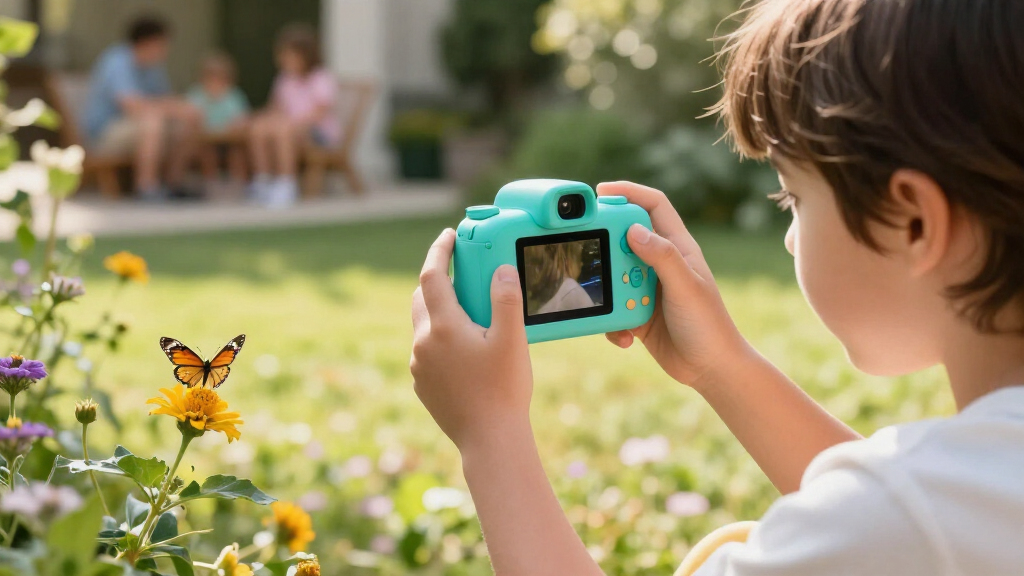
I evaluated these fifteen cameras based on a strict hierarchy of buyer needs for children aged three to twelve. Durability was weighted most heavily, assessing whether the casing could withstand drops and if buttons were prone to sticking. Usability came second, focusing on interface simplicity; cameras with too many sub-menus were ranked lower because they hinder spontaneous shooting. Image Quality was judged not by megapixel count alone, but by color accuracy and exposure handling in typical daylight conditions. I also prioritized models that included essential accessories like SD cards and lanyards, as these reduce the friction of initial setup. The ranking reflects a balance between these factors, favoring ease of use for younger children and feature sets for older kids who can handle more complex controls.
Factors to Consider When Choosing Kids Digital Cameras
Beyond the spec sheets, choosing a camera for a child requires understanding how their motor skills and attention spans interact with hardware. This guide breaks down the factors that actually impact daily use.Age Appropriateness and Interface Complexity
The most common mistake parents make is buying a camera that is too complex for the child’s developmental stage. For ages 3–6, single-button operation or minimal menu navigation is critical; a child should be able to take a photo without opening a settings screen. Cameras like the Goopow or simpler Seckton models excel here because they prioritize immediate capture over configuration. For ages 7–12, children can handle basic menus and understand concepts like zoom or flash, making feature-rich models like the DX5 appropriate. If the interface requires more than three taps to access a core function, a younger child will likely abandon the device. Always check if the camera has a dedicated ‘kids mode’ or simplified UI, as this drastically changes the user experience for beginners.
Durability vs. Aesthetics
Kids’ cameras live and die by their ability to survive drops. Look for rubberized bumpers or thick silicone skins that absorb shock, rather than hard plastic bodies that crack on impact. While glossy finishes might look premium, they attract fingerprints and offer poor grip for small hands. Matte, textured surfaces are superior for preventing slips. Additionally, consider the lens protection; a lens that protrudes significantly is vulnerable to scratches, whereas recessed lenses or those with protective covers last longer. If your child is rough with electronics, prioritize a bulky, armored design over a slim, sleek one, even if it looks less ‘grown-up’.
Storage Solutions and File Management
Internal storage is rarely sufficient for modern photography. I strongly recommend choosing a camera that includes a 32GB or 64GB SD card in the box. Models with only 8GB or no card included force an immediate additional purchase, which can be a hidden cost. Furthermore, consider the file format; JPEGs are universally compatible, but some cameras may save video in formats that require specific software on older computers. Plug-and-play USB connectivity is also valuable, allowing kids to transfer files directly to a computer without needing a separate card reader. This reduces barriers to sharing their creations with family.
Battery Life and Charging Convenience
Battery anxiety kills creative sessions. Check whether the camera uses a proprietary rechargeable battery or standard AA batteries. Proprietary lithium-ion batteries usually offer longer life but require the specific charger, which can be lost. AA batteries are easier to replace instantly but add weight and recurring costs. For most families, a USB-C or micro-USB charging port is the most convenient option, as it allows charging from any standard phone cable. Avoid cameras with micro-USB ports if possible, as USB-C is becoming the universal standard and offers better durability. A battery life of at least 2–3 hours of continuous shooting is recommended for a full day of activity.
Video Capabilities and Audio Quality
While 4K marketing is prevalent, 1080p HD video is the practical maximum for kids’ cameras. Higher resolutions fill SD cards rapidly and produce files that are difficult for young children to manage or upload. More important than resolution is audio clarity; many budget cameras have poor microphones that capture excessive wind noise or mechanical zoom sounds. If your child wants to make vlogs or stories, look for models with external microphone ports or better internal mic placement. Stabilization features are also key for video, as hand-shake is amplified when filming, making footage unwatchable without digital or optical stabilization.
Frequently Asked Questions
Do kids digital cameras need high megapixels for good photos?
Not necessarily, and this is a common misconception. Megapixel count primarily determines how large a photo can be printed, not how good it looks on a screen. Most kids’ cameras have small sensors where increasing megapixels beyond 12MP can actually decrease image quality by increasing noise and reducing dynamic range. For social media sharing and viewing on tablets or phones, 8–12 megapixels is more than sufficient. A camera with better lens quality and image processing algorithms will produce far superior images than a camera with 48MP but a cheap sensor. Do not pay a premium for megapixels alone; look for reviews that mention color accuracy and low-light performance instead.
Can I use these cameras as webcams for online learning?
Most dedicated kids’ digital cameras are not plug-and-play webcams. They typically function as mass storage devices when connected via USB, meaning you must transfer files manually rather than streaming live video. Some higher-end models or specific camcorders may offer webcam functionality, but this is rare in the budget kids’ category. If your child needs a webcam for school, it is better to buy a dedicated USB webcam for that purpose. Attempting to use a digital camera as a webcam often requires complex software workarounds that are not user-friendly for children or parents.
Is it safe to let my child use the flash indoors?
Generally, yes, but supervision is advised for very young children. The flash on kids’ cameras is typically less powerful than on professional DSLRs, reducing the risk of eye strain or retinal damage. However, direct flash exposure at very close range can still be startling or uncomfortable. I recommend setting the flash to ‘auto’ mode so it only triggers when necessary, or disabling it entirely for indoor shots where ambient light is sufficient. This teaches children about lighting conditions rather than relying on the flash as a crutch. Always remind children not to look directly into the flash at close proximity.
How do I prevent my child from accidentally deleting important photos?
This is a frequent issue with touchscreen interfaces. The best solution is to transfer photos regularly to a computer or cloud storage service and then format the card. Some cameras offer a ‘lock’ feature for individual images, but this is not universal. For younger children, you might consider using a write-protected SD card adapter when you want to preserve a specific batch of photos, though this prevents new photos from being taken. Alternatively, teach your child to name folders or use the ‘favorite’ star feature to mark keepers, making it easier to identify important shots before any accidental deletion occurs.
Are expensive kids’ cameras worth the extra cost compared to a smartphone?
Yes, for two main reasons: digital hygiene and motor skill development. Handing a smartphone to a child exposes them to notifications, apps, and potential online risks, whereas a dedicated camera provides a closed, creative environment. Physically, holding a dedicated camera with a shutter button encourages better posture and steadiness than tapping a glass screen. Additionally, smartphones are expensive to replace if dropped; kids’ cameras are inexpensive and disposable. The psychological benefit of having a ‘tool’ specifically for photography fosters a sense of ownership and seriousness about their creative hobby that a multi-purpose device cannot replicate.
Conclusion
Choosing the right kids digital cameras depends largely on your child’s age and how they plan to use the device. For the best overall balance of durability, ease of use, and feature set, the Makolle Kids Digital Camera with Flip Lens is my primary recommendation; its dual-lens design solves the selfie problem without complicating the interface. If you are looking for the best value, the Seckton Kids Selfie Camera offers a rugged build and essential features at a lower price point, making it ideal for younger children who need a sturdy starter device. For those seeking premium features like optical zoom, the DX5 Digital Camera is the superior choice, allowing older kids to explore composition and distance photography. Beginners or toddlers should stick to the Goopow or similar models with soft covers and single-button simplicity. Ultimately, prioritize a design that fits your child’s hands and a storage capacity that prevents immediate bottlenecks, ensuring the camera remains a tool for creativity rather than frustration.
Fall Picks
fall essentials
As an affiliate, we earn on qualifying purchases.