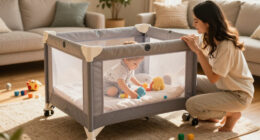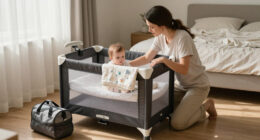
To establish a home office and nursery in one room, start by measuring your space and planning zones for work and play. Choose multi-functional furniture like fold-away desks and convertible cribs to maximize space and stay organized with clear storage solutions. guarantee safety by securing furniture and keeping hazards out of reach, and create cozy zones with soft lighting and calm decor. For tips on optimizing your layout and switching smoothly between areas, continue exploring these strategies.

Turn the school run and nap time into listening time
- Thousands of audiobooks, podcasts and originals
- Listen on your phone, tablet or Echo — also offline
- Cancel anytime
Key Takeaways
- Measure and plan the room layout to balance workspace and nursery zones while maintaining good traffic flow.
- Select multi-functional furniture that adapts to both work and nursery needs, like fold-away desks and convertible cribs.
- Ensure safety by securing furniture, using soft materials, and keeping hazards out of reach in both zones.
- Incorporate organized storage solutions with labeled bins and wall-mounted shelves to maximize space and maintain tidiness.
- Use visual cues such as rugs, color schemes, or decor to subtly differentiate work and play areas for easy transition.
As an affiliate, we earn on qualifying purchases.
Assessing Your Space and Planning the Layout
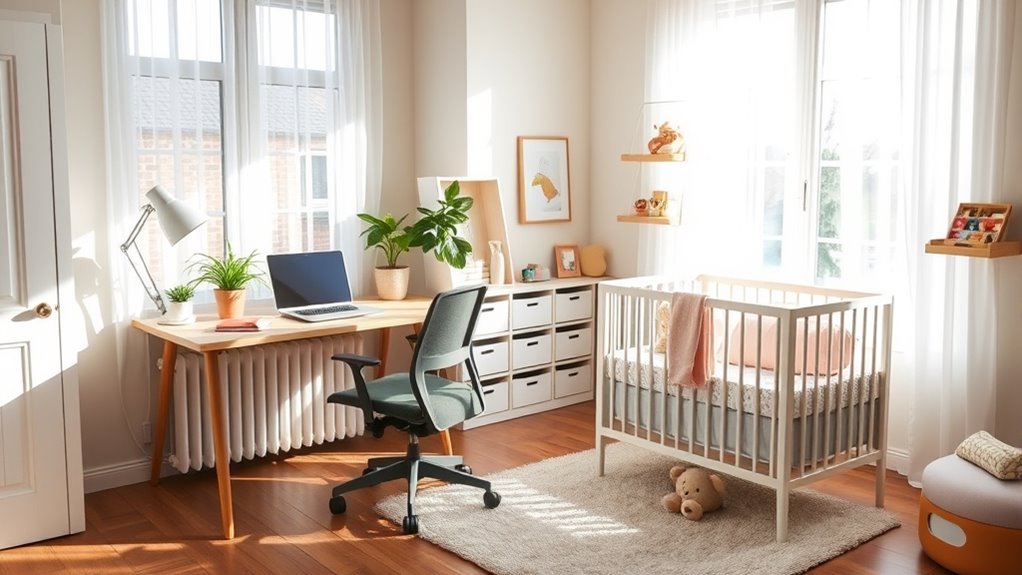
Before you start arranging furniture, take a close look at the space you have available. Measure the room’s dimensions and note the locations of doors, windows, outlets, and other fixed features. Visualize how you move through the space naturally and identify areas that feel open or cramped. Think about the essential zones: a workspace and a nursery area. Consider how much space each needs and whether you’ll need to create separate zones or blend them for efficiency. Sketch a rough layout to experiment with different arrangements before committing. Keep traffic flow in mind, ensuring there’s enough room to move comfortably around furniture. Proper planning now will help you maximize your space and create a functional, comfortable environment for work and baby care. Additionally, considering room acoustics can improve sound quality and reduce noise disruptions in a combined office and nursery setup.
As an affiliate, we earn on qualifying purchases.
Choosing Multi-Functional Furniture for Efficiency
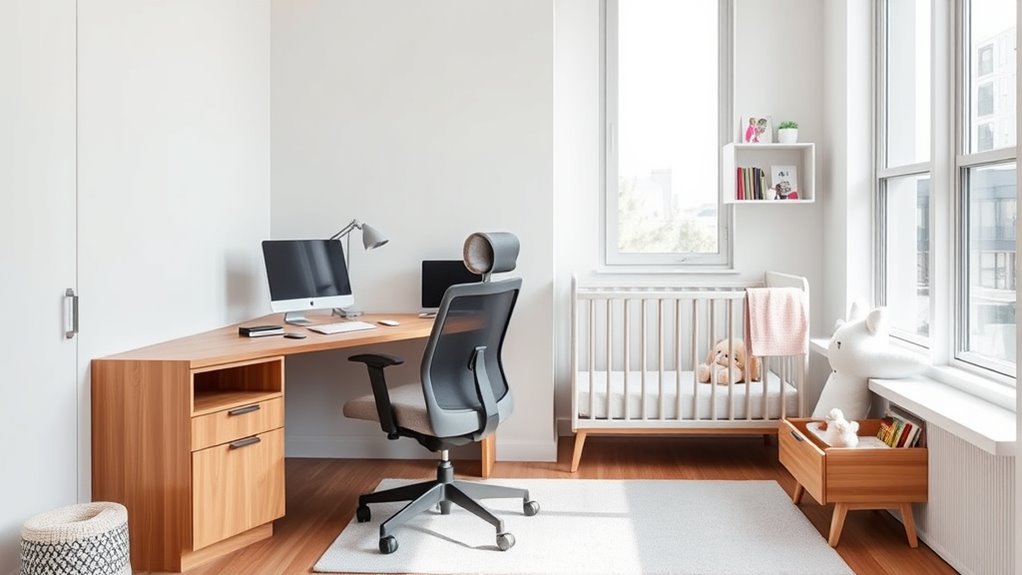
Once you’ve assessed your space and sketched out a layout, selecting multi-functional furniture can considerably boost your home’s efficiency. Look for pieces that serve more than one purpose, like a desk that doubles as a changing station or a bed with built-in storage drawers. Fold-away desks or wall-mounted desks save space when not in use, freeing up room for play or work. Consider a crib that transforms into a toddler bed, or an ottoman with hidden storage for toys and supplies. Choosing versatile furniture helps you make the most of limited space without sacrificing style or functionality. Additionally, opting for self watering plant pots can simplify plant care and add a touch of greenery without extra fuss. Focus on quality and durability to ensure your furniture withstands daily use, and prioritize pieces that seamlessly blend into your design aesthetic.
As an affiliate, we earn on qualifying purchases.
Creating a Safe and Cozy Nursery Environment
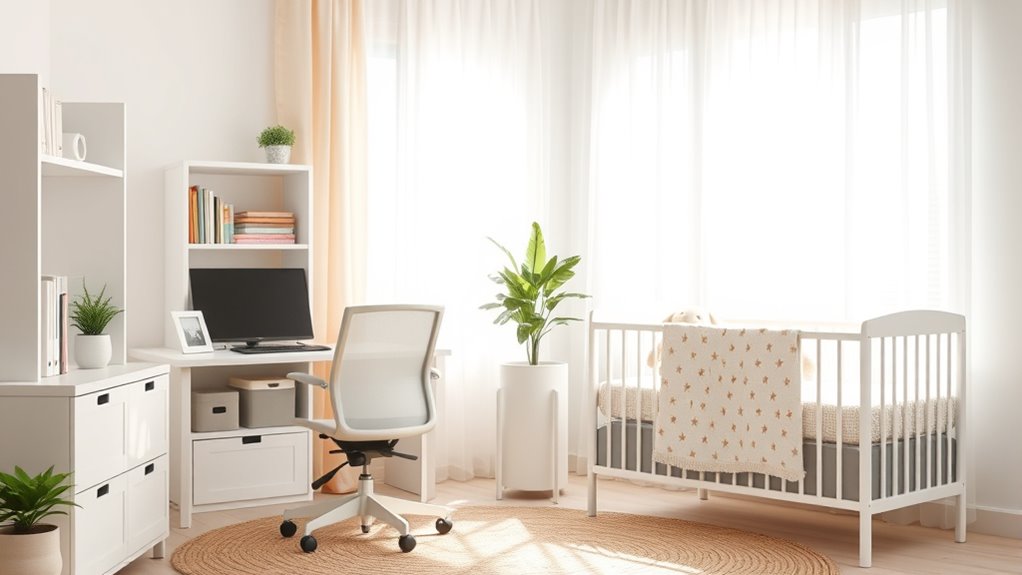
Creating a safe and cozy nursery starts with paying close attention to both safety features and comfort elements. Guarantee the furniture is sturdy, free of sharp edges, and secured to the wall to prevent tipping. Use non-slip rugs and soft, breathable fabrics for bedding and curtains. Keep cords, blinds, and small objects out of reach to avoid hazards. Maintain a comfortable temperature with proper ventilation and a thermostat. Incorporate soft lighting, like dimmable lamps or nightlights, to create a calming atmosphere. Add plush, supportive bedding and cozy blankets to invite restful sleep. Personal touches like a favorite stuffed animal or gentle wall decor can enhance the warmth. Ensuring proper nursery layout can also promote safety and ease of movement within the space. Prioritize safety without sacrificing comfort, creating an environment where your little one feels secure and relaxed.
As an affiliate, we earn on qualifying purchases.
Organizing Supplies and Storage Solutions
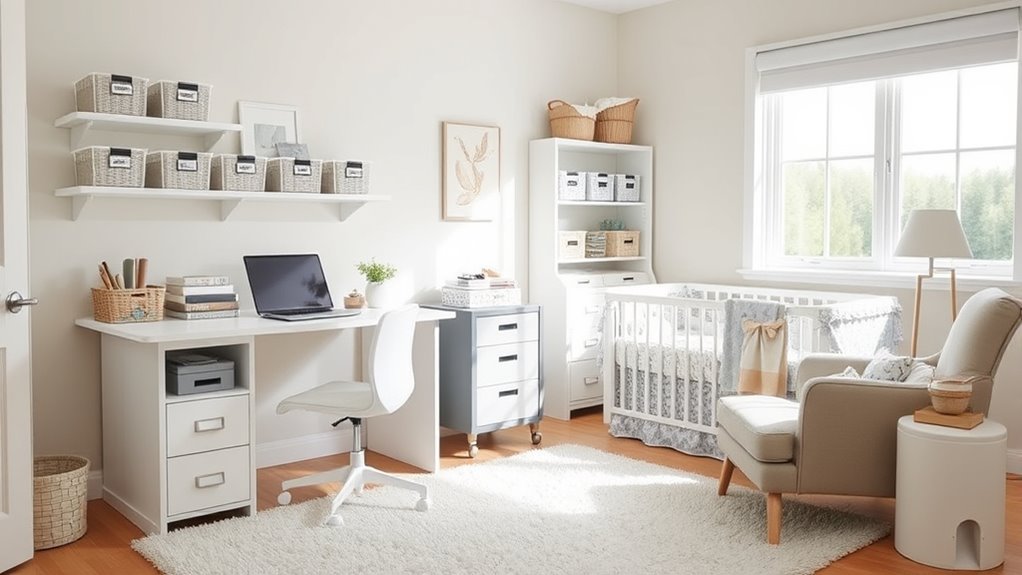
Efficiently arranging your nursery supplies guarantees everything you need is easily accessible and neatly stored. Use clear, labeled bins to categorize items like diapers, wipes, and clothing, so you can find what you need without fuss. Install wall-mounted shelves or cubbies to keep frequently used items within reach, freeing up surface space. Consider drawer dividers for small items such as socks, bibs, and toys, preventing clutter. Use stackable storage containers to maximize closet space and keep items organized by size or type. Keep a designated spot for cleaning supplies and emergency essentials, like first aid kits. Regularly declutter and reassess your storage solutions to ensure they continue to meet your needs as your baby grows. Staying organized makes caring for your little one more efficient and enjoyable. Additionally, adopting storage solutions inspired by the commercial entertainment industry can optimize space and enhance overall organization.
Designing a Seamless Transition Between Work and Play Areas
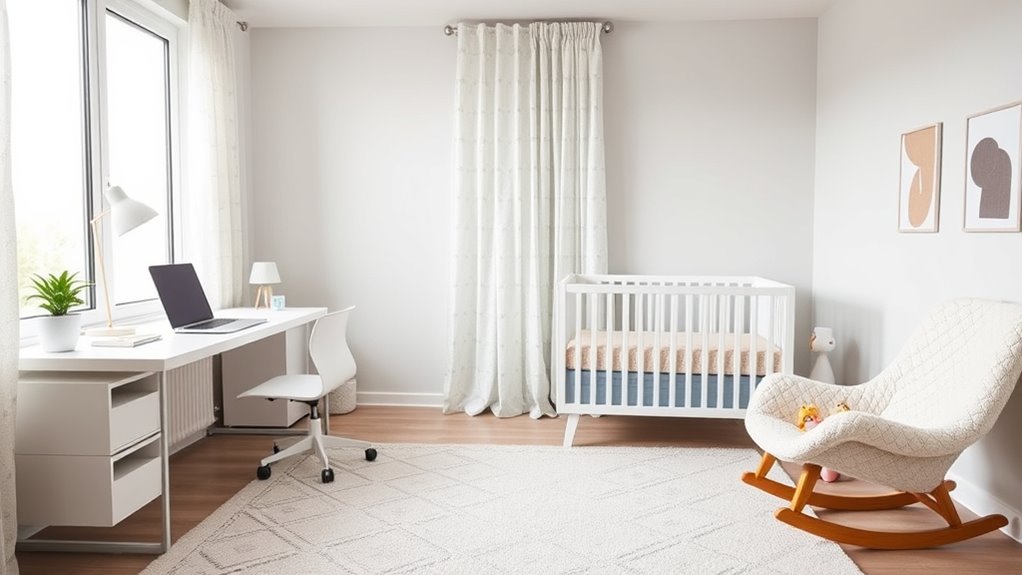
Have you considered how to make your shift between work and play areas feel natural and effortless? Creating a clear visual separation helps you transition smoothly. Use different rugs or area rugs to define each zone, giving each space its own identity. Incorporate furniture arrangements that naturally lead your eye from one area to the next, like a desk facing away from the nursery or a bookshelf acting as a subtle divider. Use color schemes or decor accents to distinguish work from play spaces without overwhelming the room. Keep pathways clear and clutter-free, so moving between areas feels seamless. By thoughtfully designing your layout, you’ll find it easier to switch gears, staying focused during work hours and relaxed during playtime.
Frequently Asked Questions
How Can I Optimize Natural Light in a Combined Workspace and Nursery?
To optimize natural light in your combined workspace and nursery, start by positioning your desk near large windows to maximize daylight. Use sheer curtains or light-filtering blinds to soften the light without blocking it entirely. Keep furniture and decor in light, neutral colors to reflect and amplify sunlight. Regularly clean windows to guarantee maximum brightness, and consider adding mirrors to bounce light around the room, creating a bright, welcoming environment.
What Are the Best Soundproofing Options for a Dual-Purpose Room?
To block out noise in a dual-purpose room, you should consider installing soundproofing options like acoustic panels or foam tiles on the walls. Adding thick curtains or rugs can absorb sound, while weatherstripping doors and windows reduces outside noise. You might also think about using white noise machines to mask disruptive sounds. These solutions help create a peaceful environment, whether you’re working or caring for your little one.
How Do I Maintain Privacy Between Work and Baby Areas?
To maintain privacy between work and baby areas, you should create physical barriers like a bookshelf or a foldable room divider. Use curtains or sliding doors for flexible separation. Place furniture strategically to block sightlines, and consider soundproofing elements like acoustic panels or rugs to reduce noise transfer. Establish clear boundaries and routines so both spaces feel separate, helping you focus and keep your baby safe and comfortable.
What Are Eco-Friendly Materials Suitable for a Nursery and Office?
When choosing eco-friendly materials for a nursery and office, you should look for options like organic cotton, bamboo, and reclaimed wood. These materials are safe for your baby and reduce environmental impact. Avoid plastics and synthetic fabrics, opting instead for natural, non-toxic paints and finishes. By selecting sustainable options, you create a healthy, safe space for both work and your little one, ensuring comfort and eco-conscious living.
How Can I Incorporate Growth-Friendly Features for the Nursery?
Think of your nursery as a garden that grows with your little one. To foster growth-friendly features, choose adjustable furniture that adapts as your child develops. Incorporate ample storage to keep the space organized and flexible. Use soft, eco-friendly materials that can withstand wear and tear. Finally, create a calm environment with soothing colors and natural light, helping your child flourish and feel secure in their space.
Conclusion
By thoughtfully designing your shared space, you create a sanctuary that balances work and play. Remember, a well-planned room is like a house built on a strong foundation—every detail supports comfort and functionality. With smart choices and creative organization, you’ll turn chaos into calm, making your home office and nursery a seamless haven for both productivity and precious moments. After all, a tidy space is the first step toward a peaceful mind.
Fall Picks
fall essentials
As an affiliate, we earn on qualifying purchases.