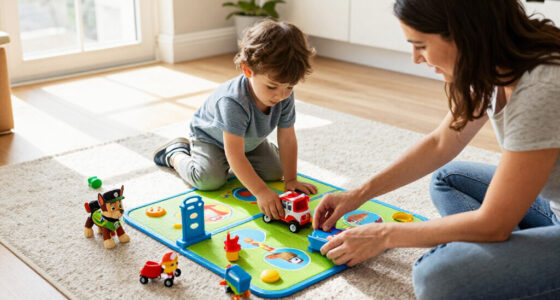

The best classic toys for kids pair lasting play value with a format children can enjoy without a screen. My best overall pick is the Melissa & Doug Wooden Building Blocks Set, thanks to its open-ended play and usefulness across many play styles; Candy Land is a standout for young children learning simple turn-taking, while Rubik’s Cube suits kids who want a lasting puzzle challenge. The tradeoff is that open-ended toys invite more kinds of play but may need space, while compact games are easier to store but offer a narrower experience. Age, patience, small parts, and whether a child prefers solo or group play can all change the right choice. Read on for my full comparison and guidance by buyer type.

Give the gift of listening to the whole family
- Choose a 1-, 3-, 6- or 12-month membership
- They pick the audiobooks they love
- Easy to send by email
Complete the kit


Key Takeaways
- Open-ended play gave the blocks the broadest role: the wooden set can support building and imaginative play, while most other picks center on one activity.
- Simple rules are a better starting point for younger players: Candy Land and Barrel of Monkeys ask less of a new player than Rubik’s Cube or Operation.
- Classic toys vary widely in group size: Twister, Candy Land, and Let’s Go Fishin’ work best as shared activities, while Slinky, Wooly Willy, and the kaleidoscope can entertain one child at a time.
- Small parts and physical coordination shape suitability: Jacks, linking monkeys, and the fishing game call for more careful handling and dexterity than the larger building blocks.
- Compact toys trade range for easy storage: Waterfuls, Wooly Willy, and the tin kaleidoscope pack away readily, but they offer less variety than a large set of blocks or a game suited to repeat group play.




| classic toys for kid | Brand | Included components | Material | Recommended age |
|---|---|---|---|---|
| Original Slinky Walking Spring | Just Play | — | Metal | — |
| Spirograph Jr. Drawing Kit for | Spirograph | — | — | 3 years and up |
| Hasbro Gaming Candy Land Kingd | Hasbro Gaming | Gameboard, 4 gingerbread pawns, card deck, and instructions | — | — |
| Spin Master Games Barrel of Mo | Spin Master Games | 1 barrel and 15 monkeys | Plastic | — |
| Hasbro Twister Classic Board G | Hasbro Gaming | Vinyl mat, spinner board, and instructions | — | — |
| Mattel Games Magic 8 Ball Fort | Mattel Games | — | Plastic | 6 years and up |
| Rubik’s Original 3×3 Cube Puzz | — | 1 Rubik’s Cube | Plastic | 8 years and up |
| Schylling Classic Tin Kaleidos | Schylling | Classic Tin Kaleidoscope | Metal | 3 years and up |
| Melissa & Doug 100-Piece Woode | — | — | Solid wood | 2 years and up |
| Original Waterfuls Handheld Wa | PlayMonster | Waterfuls toy with storage compartment and 3 double-sided background cards | — | 3 years and up |
| Original Wooly Willy Magnetic | Wooly Willy | Magnetic wand and drawing board | Plastic | — |
| Pressman Let’s Go Fishin’ Clas | Goliath | 21 fish, 4 plastic fishing poles, instructions, plastic game base | — | 4 years and up |
| Classic View-Master Metallic V | View-Master | 1 viewer and 2 reels | — | — |
| JA-RU Vintage Metal Jacks Game | JA-RU | — | Aluminum | 4–10 years |
| Hasbro Gaming Operation Electr | Hasbro Gaming | Gameboard with Cavity Sam, tweezers, 26 cards, 12 Funatomy parts, play money, rubber band, instructions | — | — |
More Details on Our Top Picks
Original Slinky Walking Spring Toy, Metal
The Original Slinky earns its place for turning a simple spring into a toy kids can explore in several ways: stretch it, watch it move, or try guiding it down steps. Its compact metal coil is easy to hold and needs no batteries, unlike the more structured turn-taking of Candy Land or the drawing setup of Spirograph Jr. That freedom suits children who enjoy experimenting without a fixed objective. The tradeoff is that play depends on careful handling: coils can tangle, and a stairway or other suitable surface helps show off its signature walk. It is also less suited to children under five. Choose it for a small, tactile classic rather than a game with a defined activity or group format.
Pros:- Metal spring supports repeated stretching and movement.
- Small diameter makes it easy for children to hold.
- Manual play needs no batteries.
- Open-ended movement invites experimentation and imaginative play.
Cons:- The coils can tangle if handled carelessly.
- Its signature stair-walking play needs a suitable surface.
- Not intended for children under five.
Best for: Families seeking a compact, screen-free toy for children ages 5 and up who enjoy hands-on experimentation and open-ended play.
Not ideal for: Caregivers of children under five, or buyers seeking a structured game that is easy to play with several people at once.
- Brand:Just Play
- Sub-brand:Slinky
- Material:Metal
- Diameter:2.75 inches
- Dimensions:3 x 3 x 2.5 inches
- Item weight:6.08 ounces
- Age range:5–12 years
- Power source:Manual; no batteries required
Our verdict“Pick the Slinky for a compact, tactile classic that rewards experimenting, but choose Candy Land for a more structured group activity.”
Spirograph Jr. Drawing Kit for Kids Ages 3+
Spirograph Jr. is the clearest choice here for young children who want to make something, rather than compete or follow a moving toy. Its jumbo gears, washable markers, paper, and guide offer a ready-to-use path from choosing a gear to making a patterned drawing. The case doubles as a drawing desk and stores the pieces, giving it a more contained setup than Barrel of Monkeys, whose small figures can scatter during play. Compared with the Slinky, this kit provides a more directed creative task, though it also requires paper, markers, and a place to work. Its appeal may fade for children who prefer active or social play, and the manufacturer provides no warranty. I’d choose it for preschool-age artists who enjoy repeated patterns and hands-on drawing.
Pros:- Jumbo gears are designed for smaller hands.
- Washable markers, paper, and a design guide are included.
- Carry-along case doubles as a drawing desk.
- Built-in storage helps keep the gears together.
Cons:- Drawing requires a workspace and materials from the kit.
- The creative activity may not hold the interest of children who prefer active play.
- No manufacturer warranty is listed.
Best for: Families with children ages three and up who like drawing and benefit from larger, easy-to-handle design pieces and built-in storage.
Not ideal for: Buyers looking for a physical group game, or children who prefer movement and free-form play to drawing activities.
- Brand:Spirograph
- Model:Spirograph Jr. Set
- Type:Drawing and design kit
- Recommended age:3 years and up
- Gears and gear ring:4 gears and 1 gear ring
- Markers:5 washable markers
- Paper and guide:24-page design paper pad and 8-page design guide
- Case:Carry-along case with drawing desk, storage, and gear frame
Our verdict“Choose Spirograph Jr. for a young child who wants a guided drawing activity; pick Twister instead for active family play.”
Hasbro Gaming Candy Land Kingdom of Sweet Adventures Board Game
Candy Land is the strongest pick in this group for a child’s first board-game experience: players follow a colorful route, match cards, and take turns without needing to read. That low barrier makes it more accessible to preschoolers than Twister, which asks for balance and coordination, or the Slinky, which is mainly open-ended solo play. Its short listed play time and support for two to four players make it easy to fit into a brief family activity. The tradeoff is that card draws, not player decisions, largely determine progress, so older children may tire of the limited strategy. I’d choose it for learning the rhythm of a shared game, not for families seeking a tactical challenge or a game that rewards practiced skill.
Pros:- No reading is required to play.
- Color matching gives preschoolers an accessible way to follow the game.
- Supports two to four players.
- English and Spanish instructions are included.
Cons:- Card draws make the outcome largely luck-based.
- Limited strategic depth may not hold older players’ interest.
Best for: Families introducing children ages three and up to turn-taking, color matching, and simple board-game routines.
Not ideal for: Older children or adults seeking meaningful strategy, or families who want outcomes driven mainly by skill.
- Brand:Hasbro Gaming
- Age range:3 years and up
- Players:2–4
- Playing time:15 minutes
- Included components:Gameboard, 4 gingerbread pawns, card deck, and instructions
- Instruction languages:English and Spanish
- Skills developed:Color recognition, matching, and turn-taking
- Manufacturer part number:04700079
Our verdict“Choose Candy Land to introduce preschoolers to shared game routines; choose Twister when your group wants movement rather than a board and cards.”
Spin Master Games Barrel of Monkeys Classic Linking Game
Barrel of Monkeys offers a quick, hands-on challenge that can be played alone or with others, making it more flexible for different play situations than Candy Land, which is designed around a shared board-game path. Players link the monkeys by their arms and try to build a chain without dropping it; that simple rule makes the activity easy to explain, while the challenge comes from controlling the growing chain. The included snap-together barrel gives all 15 monkeys a dedicated storage spot, a practical advantage over loose drawing supplies in a kit such as Spirograph Jr. The small pieces can still go missing, and dropping the chain can interrupt play. This is a better fit for children who enjoy a dexterity challenge than for those wanting a longer, story-like game.
Pros:- Can be played solo or with other players.
- Simple linking rules are easy to explain.
- Fifteen monkeys provide pieces for building a chain.
- Snap-together barrel stores the monkeys.
Cons:- The chain can drop during play, disrupting a run.
- Small plastic monkeys can be misplaced.
Best for: Families with children ages three and up who want a portable linking challenge that works for solo play or a small group.
Not ideal for: Buyers who want a board game with a longer shared structure, or households where small pieces are easily lost.
- Brand:Spin Master Games
- Age range:3 years and up
- Players:1 or more
- Included components:1 barrel and 15 monkeys
- Material:Plastic
- Game action:Link monkeys by their curved arms
- Storage:Snap-together barrel
Our verdict“Pick Barrel of Monkeys for a compact dexterity game with flexible player count; choose Candy Land for a more structured preschool board game.”
Hasbro Twister Classic Board Game
Twister stands apart from the lineup by turning play into a full-body activity: players follow the spinner and place hands and feet on matching mat colors while trying to keep their balance. That makes it a livelier group option than Candy Land, where players move pawns along a board, and a less solitary choice than the Slinky. The simple instructions make the basic idea easy to grasp, but the game needs enough floor space for the mat and works best for players comfortable with bending and reaching. Its physical demands can exclude people with limited mobility, so it is not the most flexible family pick. Choose it when your group wants an active indoor or outdoor game, rather than a quiet activity that can be played at a table.
Pros:- Encourages movement, balance, and coordination.
- Simple rules make it approachable for a wide age range.
- Spinner adds a clear prompt to each turn.
- Vinyl mat is listed as suitable for indoor and outdoor use.
Cons:- Requires sufficient floor space for the mat.
- Bending and reaching may be challenging for players with limited mobility.
- Designed for two to four players, so it is less suitable for solo play.
Best for: Families and groups with children ages six and up who have room to spread out and enjoy active, color-based play.
Not ideal for: People with limited mobility, or households without enough clear floor space for the vinyl mat.
- Brand:Hasbro Gaming
- Age range:6 years and up
- Players:2–4
- Included components:Vinyl mat, spinner board, and instructions
- Skills:Balance, coordination, and color recognition
- Mat material:Vinyl
- Warranty:No warranty
Our verdict“Choose Twister for an active group with space to move; choose Candy Land for seated play or the Slinky for a compact solo toy.”
Mattel Games Magic 8 Ball Fortune-Telling Toy
The Magic 8 Ball earns its place as a classic toy for quick, shared amusement: ask a yes-or-no question, turn it over, and read the answer in the window. Its mix of positive, negative, and neutral responses gives gatherings an easy conversation starter, unlike the Rubik’s Original 3×3 Cube, which keeps one player working through a sustained puzzle. The appeal here is simplicity, not depth: there are no pieces to arrange or rules to learn, but the preset answers limit how much the experience changes. It also works best when children treat its fortunes as pretend play rather than meaningful advice. Choose it for casual laughs and pass-around play; skip it if you want a toy that builds a skill or offers varied challenges.
Pros:- Simple yes-or-no format is easy to learn and share
- Answers appear in a viewing window without loose pieces
- Positive, negative, and neutral responses support pretend-play scenarios
- Manual operation needs no batteries
Cons:- Preset responses limit replay variety
- Offers less sustained problem-solving than the Rubik’s Cube
- Colors and decorations may vary
Best for: Families seeking an easy, pass-around novelty for conversation, pretend fortune-telling, and casual gatherings.
Not ideal for: Children who want a puzzle to solve or a toy with changing challenges; its responses come from a limited set of preset answers.
- Brand:Mattel Games
- Model:DHW39
- Material:Plastic
- Dimensions:4.5 x 4.5 x 4.5 inches
- Weight:9.92 ounces
- Recommended age:6 years and up
- Players:1
- Operation:Manual
- Use:Indoor
Our verdict“Choose the Magic 8 Ball for quick group laughs, not for open-ended play or a lasting puzzle challenge.”
Rubik’s Original 3×3 Cube Puzzle
For kids who want a classic toy with a genuine challenge, the Rubik’s Original 3×3 Cube has more staying power than the Magic 8 Ball: each turn changes the puzzle, and solving it takes planning rather than chance. Its six colored sides and nine squares per side create a compact puzzle children can pick up at home or during travel. The updated mechanism is designed for smoother, faster turns, while plastic tiles avoid the peeling associated with traditional stickers. That durability does not make the puzzle easy, though. Beginners may need instruction or practice before they can complete a side, and its small parts make the stated age guidance relevant. Compared with the wooden blocks, it is less open-ended but more focused on one repeatable logic challenge.
Pros:- Repeated turning offers an ongoing problem-solving challenge
- Mechanism is designed for smoother, faster play
- Plastic tiles resist fading and peeling associated with traditional stickers
- Compact format suits travel and quiet moments
Cons:- Can frustrate beginners who do not know a solving method
- Recommended for ages 8 and up because it contains small parts
- Less open-ended than building toys such as Melissa & Doug wooden blocks
Best for: Kids aged 8 and up who enjoy logical challenges and want a compact, repeatable puzzle for quiet time or travel.
Not ideal for: Younger children or beginners looking for an immediately rewarding, open-ended toy; solving the cube can take practice.
- Puzzle format:3×3 cube
- Sides:6
- Squares per side:9
- Material:Plastic
- Recommended age:8 years and up
- Included components:1 Rubik’s Cube
- Model number:6063971
Our verdict“Pick the Rubik’s Cube for an older child who likes persistent logic puzzles and is willing to practice.”
Schylling Classic Tin Kaleidoscope
The Schylling Classic Tin Kaleidoscope offers a different kind of classic play: turn its separate cell and watch colorful, iridescent patterns shift as the view changes. That makes it a gentler choice for visual exploration than the Rubik’s Cube, which asks children to pursue a specific solution. Its metal construction gives it a traditional tin-toy feel, and the simple action leaves room for children to invent their own descriptions and stories. The tradeoff is that the patterns depend on having a light source, so it is less reliable in dim rooms than a self-contained toy such as the Magic 8 Ball. It also provides observation rather than building or problem-solving. I’d choose it for preschool-age children who enjoy looking closely and imagining what they see.
Pros:- Turning the cell changes the colorful patterns
- Metal construction gives it a classic tin-toy character
- Simple viewing play can prompt imagination and conversation
- Does not require learning rules or solving a puzzle
Cons:- Needs a light source to show its patterns
- Offers less active challenge than the Rubik’s Cube
- No warranty is listed
Best for: Families with children aged 3 and up who enjoy visual play, changing patterns, and inventing stories from what they see.
Not ideal for: Kids seeking a hands-on building or logic challenge, or families who need a toy that works well in dim spaces.
- Brand:Schylling
- Material:Metal
- Recommended age:3 years and up
- Number of packs:1
- Included components:Classic Tin Kaleidoscope
- Model number:CTK
- Warranty:No warranty
Our verdict“Choose this kaleidoscope for simple, light-dependent visual discovery rather than a building or puzzle activity.”
Melissa & Doug 100-Piece Wooden Building Blocks Set with Storage Box
The Melissa & Doug wooden blocks stand out for giving young children many ways to play: 100 solid wood pieces in nine classic shapes support stacking, building, sorting, and counting. Unlike the Rubik’s Cube, which centers on one defined puzzle, these blocks let children choose the goal and change it as they play. Four colors can help with simple sorting activities, while handling and arranging the pieces gives little hands practice with coordination. The set is aimed at ages 2 and up, making it a more suitable building choice for toddlers than the older-age Rubik’s Cube. The tradeoffs are practical: its carrying box is cardboard rather than a durable container, and the stated FSC certification applies only to new inventory. It also needs more floor or table space than compact handheld toys.
Pros:- 100 blocks allow many stacking and building combinations
- Four colors and nine shapes support sorting and shape recognition
- Solid wood pieces suit hands-on creative play
- Carrying handle makes the included storage box easier to move
Cons:- Cardboard storage box may not hold up as well as a durable container
- Large set can take up more play and storage space than handheld toys
- FSC certification applies to new inventory only
Best for: Families with children aged 2 and up who want a versatile first building set for stacking, sorting, and imaginative construction.
Not ideal for: Households short on play and storage space, or buyers who need a sturdy reusable storage container rather than a cardboard box.
- Pieces:100 blocks
- Material:Solid wood
- Colors:4
- Shapes:9 classic shapes
- Recommended age:2 years and up
- Storage:Cardboard box with carrying handle
- Certification:FSC certification applies to new inventory
Our verdict“Choose this set for toddlers and preschoolers who benefit from open-ended building and sorting, provided you have room for the pieces.”
Original Waterfuls Handheld Water Game with 6 Interchangeable Backgrounds
The Original Waterfuls brings arcade-style play to a handheld, screen-free format: children press to move water and try the challenge shown on one of six interchangeable backgrounds. Its compact design and built-in card compartment make it easier to carry than the Melissa & Doug blocks, while the lack of batteries or cords keeps setup simple once it is filled with water. The themed cards, including pinball, basketball, and space designs, add variety without changing the basic play style. That simplicity is also a limit: it is less open-ended than wooden blocks, and each session depends on having water available. Unlike the self-contained Magic 8 Ball, this game needs preparation before play. I’d pick it for travel or short hands-on breaks, not for a toy that can be used anywhere without setup.
Pros:- Six interchangeable backgrounds offer different themes
- No batteries or cords are required
- Built-in compartment stores the background cards
- Handheld play can exercise coordination and fine motor skills
Cons:- Must be filled with water before play
- Set themes offer less open-ended play than Melissa & Doug wooden blocks
- Recommended for ages 3 and up, so it is not intended for younger children
Best for: Families seeking a compact, screen-free activity for children aged 3 and up, especially for travel or short play sessions.
Not ideal for: Buyers who want an immediately ready-to-play toy or open-ended construction; this game must be filled with water and follows set challenges.
- Brand:PlayMonster
- Model:1580Z
- Recommended age:3 years and up
- Play style:Handheld water game
- Backgrounds:6 interchangeable designs on 3 double-sided cards
- Power:No batteries or cords required
- Included components:Waterfuls toy with storage compartment and 3 double-sided background cards
- Unit count:1
- Warranty:No warranty
Our verdict“Choose Waterfuls for portable, screen-free play if you are comfortable filling it with water before each session.”
Original Wooly Willy Magnetic Drawing Toy
Wooly Willy is the pick for a child who likes drawing but benefits from a toy that does not need paper, markers, or a cleanup routine. A magnetic wand moves the sealed metal shavings to create silly faces, and tilting the board clears the design for another round. That makes it more self-contained than Spirograph Jr., which offers more involved drawing but needs its drawing materials. The tradeoff is limited variety: Wooly Willy is a one-player activity centered on decorating one face, rather than a game for siblings or a group. Its compact board is easy to bring along, though the toy is intended for indoor use. I’d choose it for simple, quiet play—not for a child looking for a more open-ended art set.
Pros:- Sealed magnetic shavings stay contained, avoiding loose pieces and drawing cleanup
- Tilt-to-clear frame makes it easy to start a new design
- Compact board suits travel and quiet indoor play
Cons:- Designed for one player, so it offers little shared play
- The face-drawing format provides less creative range than a drawing kit such as Spirograph Jr.
Best for: Caregivers seeking a compact, low-mess solo activity for preschoolers at home or while traveling
Not ideal for: Families looking for a shared game, outdoor toy, or open-ended drawing kit with room for varied artwork
- Brand:Wooly Willy
- Age range:3 years and up
- Players:1
- Board size:7 x 8.75 inches
- Item dimensions:7 x 0.37 x 8 inches
- Material:Plastic
- Power:Manual
- Included components:Magnetic wand and drawing board
Our verdict“Choose Wooly Willy for portable, contained solo drawing play, but pick Spirograph Jr. if creative variety matters more.”
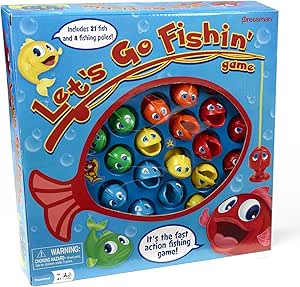
Pressman Let’s Go Fishin’ Classic Fishing Game
Let’s Go Fishin’ turns a familiar fishing idea into a quick coordination challenge: players use small poles to catch fish as the pond rotates and the fish open and close their mouths. With room for one to four players, it offers more direct group interaction than solo-focused Wooly Willy, and the moving targets give turns a lively rhythm. The set includes 21 fish and four poles, so several players can take part without sharing a single tool. The compromise is setup and durability: the game needs a C battery that is not included, and its plastic parts may not suit rough handling. Compared with Candy Land, this is more about timing and hand control than taking turns along a board. I’d favor it for short, animated play sessions, not as the sturdier choice for frequent knocks.
Pros:- Rotating pond and moving fish add a hand-eye coordination challenge
- Supports solo play or groups of up to four
- Includes 21 fish and four fishing poles
- Quick turns make it easy for young players to join in
Cons:- Requires one C battery, which is not included
- Plastic components may be less durable than sturdier materials
Best for: Families with children aged four and up who want a lively, simple game that can involve several players
Not ideal for: Buyers who want a battery-free toy or a game with sturdier-feeling components for rough play
- Brand:Goliath
- Manufacturer:Pressman Toys
- Players:1–4
- Recommended age:4 years and up
- Playing time:30 minutes
- Included components:21 fish, 4 plastic fishing poles, instructions, plastic game base
- Battery requirement:1 C battery, not included
- Edition:Classic
Our verdict“Choose Let’s Go Fishin’ for active, multi-player turns, and choose Candy Land for a calmer board-game format.”
Classic View-Master Metallic Viewfinder with 2 Reels – Discovery Endangered Species
View-Master gives a classic toy a more observational role: children advance through 3D animal images and learn facts about endangered species. The two included reels provide 14 images, making this a focused introduction to wildlife rather than a large activity set. Compared with the Tin Kaleidoscope, it offers specific animal content and facts instead of open-ended visual patterns; the tradeoff is that the experience depends on the supplied reels and the viewer. The plastic viewer is sized for children, and compatibility with most standard View-Master reels can open up more content later. Its listed power details are mixed—the operation mode is manual, while the specs also list battery power—so buyers should check the package requirements. I’d pick it for a child drawn to animals, not for active group play or outdoor use.
Pros:- 3D animal images make wildlife viewing more immersive
- Two reels provide 14 images from the endangered species collection
- Animal facts add an educational element
- Compatible with most standard View-Master reels for expanded content
Cons:- Only two reels are included, limiting the initial image selection
- The listed power information is mixed, and the product description notes battery use
- Designed for indoor viewing rather than active play
Best for: Caregivers of children aged three and up who want a hands-on animal viewing activity with simple wildlife facts
Not ideal for: Families seeking a group game, outdoor activity, or a toy with a larger variety of content included from the start
- Brand:View-Master
- Manufacturer:Basic Fun
- Model number:02052
- Age range:3–15 years
- Included components:1 viewer and 2 reels
- Dimensions:2.75 x 6 x 9.5 inches
- Material and color:Plastic; red
- Theme:Discovery Endangered Species
- Images included:7 images per reel
Our verdict“Choose View-Master for focused, animal-themed viewing and learning; choose the Tin Kaleidoscope for a simpler visual toy without specific educational content.”
JA-RU Vintage Metal Jacks Game Set with 2 Bouncy Balls
JA-RU Jacks is the hands-on skill pick here: players bounce a ball, collect metal jacks, and build coordination through repeat attempts. Unlike Let’s Go Fishin’, which supplies movement through a rotating mechanism, jacks asks players to create their own rhythm and improve their timing. The set includes 16 aluminum jacks, two bouncy balls, and instructions, keeping the activity compact and straightforward. It is listed for two players, so it suits turn-taking better than Wooly Willy’s solo format. Small parts are the central tradeoff: jacks and balls can be misplaced, and the set is intended for indoor play. I’d choose it for children who enjoy practicing a physical skill and counting pieces, rather than those who need a game with an electronic cue or a more guided pace.
Pros:- Includes 16 metal jacks and two bouncy balls
- Compact set comes with instructions
- Encourages hand-eye coordination, fine motor skills, and basic counting
- Manual play needs no batteries
Cons:- Small pieces can be easy to misplace
- Listed for two players, limiting group play
- Intended for indoor use
Best for: Children aged four to ten who enjoy practicing coordination, taking turns, and counting during a simple indoor game
Not ideal for: Households that need larger, easy-to-track play pieces or a game suitable for outdoor play
- Brand:JA-RU
- Contents:16 metal jacks, 2 bouncy balls, instructions
- Players:2
- Recommended age:4–10 years
- Material:Aluminum
- Dimensions:4 x 7 x 1 inches
- Usage:Indoor
- Educational objectives:Hand-eye coordination, fine motor skills, basic counting
Our verdict“Choose JA-RU Jacks for a compact, skill-based two-player classic, and pick Let’s Go Fishin’ for a more animated group game.”
Hasbro Gaming Operation Electronic Board Game
Operation is the most deliberate dexterity challenge in this group: players use tweezers to remove 12 ailment pieces without touching the metal edges, with a buzzer and a lit nose signaling a mistake. That feedback makes each attempt easy to follow, while solo or group play gives it more flexibility than the two-player JA-RU Jacks set. The included cards and play money add structure beyond simply extracting the pieces. The tradeoff is that it calls for steadier hands and more patience than Let’s Go Fishin’, whose moving targets create a faster, more kinetic challenge. Operation also needs two AA batteries, and its narrow tweezers-and-cavity task may frustrate younger or less patient players. I’d choose it for children aged six and up who like careful, focused play rather than a quick, low-pressure activity.
Pros:- Supports solo play or group play
- Buzzer and light-up nose give immediate feedback
- Includes 12 removable ailment pieces, cards, tweezers, and play money
- Encourages fine motor coordination and strategy
Cons:- Requires two AA batteries
- Touching the metal edges triggers feedback, which may frustrate players still developing steady hands
- More focused on careful extraction than the quicker action of Let’s Go Fishin’
Best for: Families with children aged six and up who enjoy careful hand-control challenges and want a game that can be played solo or together
Not ideal for: Younger children or players who prefer quick, forgiving play over precise tweezer work
- Brand:Hasbro Gaming
- Age range:6 years and up
- Players:1 or more
- Ailment pieces:12
- Included components:Gameboard with Cavity Sam, tweezers, 26 cards, 12 Funatomy parts, play money, rubber band, instructions
- Skills:Fine motor coordination, strategy
- Batteries:2 AA batteries required
- Instruction languages:English and Spanish
- Model number:4545
Our verdict“Choose Operation for a focused, precision-based game with solo flexibility, and pick Let’s Go Fishin’ for faster, less delicate play.”

How We Picked
I compared the 15 toys by how well each delivers the kind of play associated with a classic toy: simple entry, repeat use, and an experience that does not depend on digital features. I also weighed age fit, skill demands, number of players, storage needs, and whether the toy supports one narrow activity or several kinds of play. Those factors matter because an appealing toy can still be a poor match for a child’s patience, play space, or usual company.
The ranking favors toys with broad usefulness and a clear fit across more than one situation, which puts the wooden blocks ahead of single-activity novelty toys. I then considered how effectively each pick serves a more specific need: Candy Land for straightforward shared play, Rubik’s Cube for a focused solo challenge, and Twister for active group fun. Compact toys remain worthwhile, but their limited play range or narrower age and skill fit keeps them below the most versatile options.
Factors to Consider When Choosing Best Classic Toys For Kids
Classic toys are not interchangeable: a toy that keeps one child absorbed alone may be a poor choice for a family game night. I recommend choosing by the play situation you want to support, then checking whether the toy’s age, space, and upkeep demands fit your home.
Match the toy to the child’s current skills
A toy can be age-appropriate on its label yet still frustrate a child if it asks for patience or hand control they have not developed. For a first game, look for rules a child can grasp quickly and turns that do not require sustained concentration. Puzzles and dexterity games can be rewarding when a child enjoys repetition, but may be ignored if the challenge feels like a test. Avoid buying a more demanding toy solely because it seems likely to teach a skill. A good fit lets the child succeed often enough to want another turn, while still leaving room to improve.
Decide whether play should be solo or shared
Think about when the toy will come out: during independent play, on a playdate, or at a family gathering. Group games need enough players, patience for waiting, and rules everyone can follow; a toy that depends on several people may sit unused in a household with different schedules. Solo toys avoid that coordination problem, though some offer a narrower social experience. A useful mix is one toy for independent play and one that makes it easy to join in together. Check the expected player count and whether younger and older children can enjoy the same activity without one group carrying the game.
Account for space, cleanup, and storage
The toy’s footprint includes more than its box: building pieces spread across the floor, and active games need room for players to move. Before buying, picture where the toy will be used and where every piece will go afterward. A storage container can help, but small pieces still take time to gather and can be misplaced. Compact handheld toys are easier to put away, though their smaller play scope may mean children move on sooner. Choose the storage arrangement your household will actually maintain rather than assuming a tidy-up routine will happen on its own.
Look beyond the word “classic” to durability and upkeep
A familiar design does not automatically mean every part will suit your household. Consider whether the toy includes loose pieces, moving parts, electronic components, or materials that need more careful handling. Check the manufacturer’s age guidance and inspect small components before giving a toy to a younger child. For games, think about whether a missing piece would make the set hard to use; for toys with an electronic element, consider battery needs and what happens if it stops working. A simpler toy often has fewer upkeep demands, while a more elaborate game can offer a different kind of shared play.
Pay for a broader play life, not just a bigger set
More pieces do not always create more meaningful play. A versatile set may earn its space by supporting changing ideas over time, while a small toy can be a better match if a child loves one particular activity. Ask whether the toy can grow with the child, work with siblings or friends, or invite new ways to play without extra accessories. A focused game makes sense when its exact activity is the appeal; it is a weaker choice if you expect one purchase to cover many play moods. Prioritize the kind of repeat use your child enjoys rather than sheer piece count or a familiar name.
Frequently Asked Questions
Which classic toy is the best starting point for a child who is new to games?
Look for a game with simple turns and little reading or strategy, rather than one that depends on patience with a difficult puzzle. Candy Land is the clearest fit among these picks for children starting with basic turn-taking. A parent can help explain the rules, then let the child handle more of each turn over time. If the child prefers making things to following rules, the wooden blocks may be a better first choice. Match the activity to what the child already enjoys, not just their age.
Which options work best when a child wants to play alone?
For independent play, the Slinky, Wooly Willy, tin kaleidoscope, Waterfuls, and Rubik’s Cube do not require a group. They differ in the kind of attention they ask for: some invite brief experimentation, while the cube can reward sustained effort and repeated practice. The wooden blocks also work solo, with a wider range of possible projects but more space and cleanup. If the child tends to switch activities quickly, a small handheld toy may be easier to pick up and put down. Choose a puzzle only if the child enjoys working through a challenge without immediate help.
Are these toys suitable for siblings of different ages?
Some can bring different ages together, but not every child will contribute in the same way. Building blocks allow younger children to stack while older ones make more involved structures, so the activity can shift with their abilities. A simple board game can also work if an adult helps with rules and younger players can take turns comfortably. By contrast, toys that rely on precise dexterity or sustained puzzle solving may favor the older sibling. Check age guidance and small-part warnings, and plan for supervision when a younger child may mouth or mishandle pieces.
Should I choose an open-ended toy or a game with set rules?
Choose open-ended play if the child likes inventing projects and you want one toy to support different ideas over time. A rules-based game is a stronger fit when the goal is a shared activity with a clear beginning, turns, and finish. The two formats also ask different things of adults: open-ended toys need room and may benefit from prompts, while games often need someone to explain the rules and keep play moving. Consider how the child responds to structure before choosing. If you are unsure, one of each type offers more variety than buying several toys with the same play pattern.
How can I avoid choosing a classic toy that gets played with only once?
Start with the child’s habits: a toy is more likely to get repeat use if its activity already matches something they enjoy, such as building, drawing, puzzles, movement, or group games. Check whether it offers changing challenges or depends on a single novelty effect. Also think about practical barriers: a game that needs several players may be hard to bring out, and a toy with many small pieces may be left in the box if cleanup is inconvenient. Avoid relying on nostalgia alone; your memories of a toy do not guarantee the same appeal for a child. A good match for the child’s usual play routine matters more than a famous name.
Conclusion
For the broadest range of play, I recommend the Melissa & Doug Wooden Building Blocks Set as the best overall pick. The best value in play range is also the blocks: one set supports many kinds of building without requiring a group or a fixed set of rules. For a best premium-style choice among these options, choose Twister when you want a substantial shared activity and have room for active play; it is a less fitting choice for quiet or solo use. Candy Land is my pick for beginners who are ready for simple turn-taking, while Rubik’s Cube is best for a focused puzzle fan who likes practicing independently. Choose the Slinky, Wooly Willy, Waterfuls, or kaleidoscope if compact, quick-access play matters most; choose the fishing game, jacks, or Barrel of Monkeys when dexterity is part of the appeal. The right choice is the one that matches how the child actually plays, not simply the toy that feels most familiar.