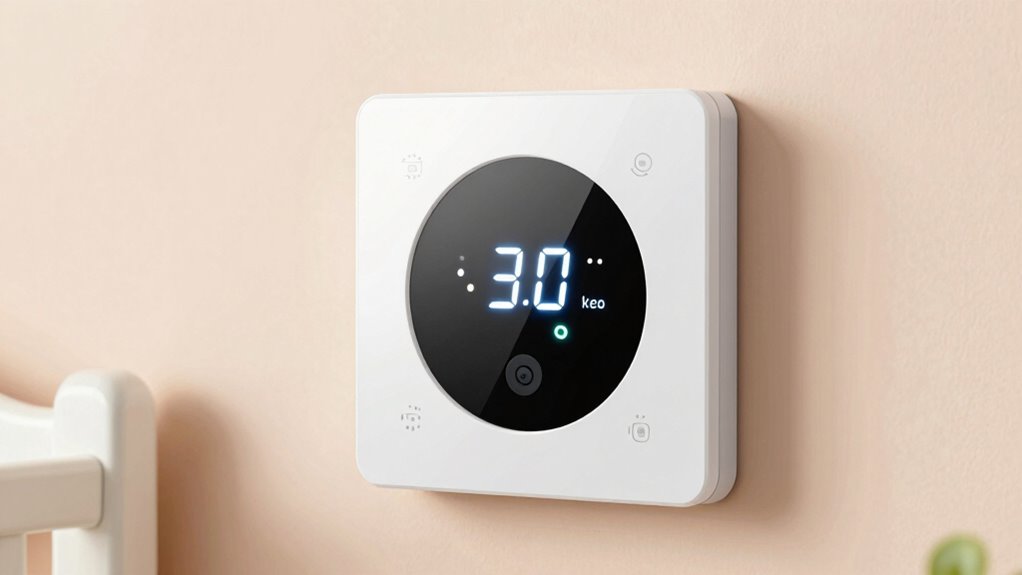

Nursery sensors detect heat and convert it into electrical signals—either digital or analog—then display temperature data. However, their accuracy depends heavily on proper placement, calibration, and maintenance. External factors like drafts, sunlight, or nearby heat sources can skew results, making the sensor’s display unreliable if not checked regularly. To guarantee your nursery stays safe and cozy, understanding how these sensors work and verifying their accuracy is essential—keep reading to learn more.

Turn the school run and nap time into listening time
- Thousands of audiobooks, podcasts and originals
- Listen on your phone, tablet or Echo — also offline
- Cancel anytime
Key Takeaways
- Proper calibration of nursery sensors is essential to ensure accurate temperature readings, regardless of digital or analog type.
- External factors like drafts, heat sources, or placement errors can cause false or misleading sensor data.
- Digital sensors convert thermal energy into binary signals, but still require calibration for precise measurements.
- Using multiple sensors and cross-checking with reliable thermometers helps verify accuracy and detect discrepancies.
- Regular maintenance and correct placement prevent environmental interference and ensure sensors provide truthful temperature data.
As an affiliate, we earn on qualifying purchases.
How Nursery Sensors Measure Room Temperature
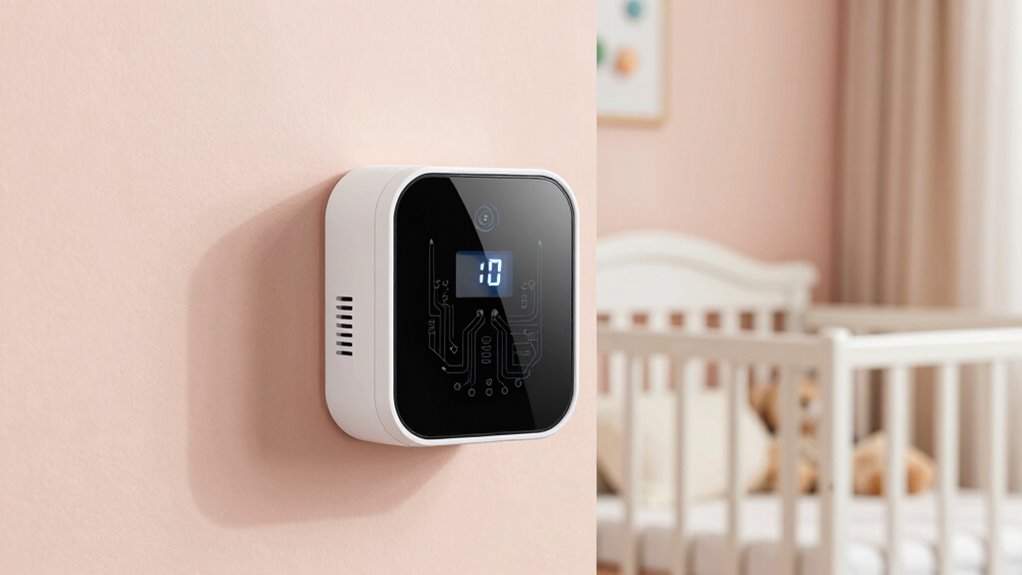
Nursery sensors measure room temperature by detecting the thermal energy in the environment and converting it into electrical signals. To guarantee accurate readings, you need to perform sensor calibration, which aligns the sensor’s output with known temperature standards. When choosing between digital and analog sensors, consider that digital sensors convert temperature data into binary code, offering precise, stable readings and easier integration with digital systems. Analog sensors, meanwhile, produce a continuous electrical signal that varies with temperature, which can be more susceptible to noise and require additional signal processing. Proper calibration is essential for both types to prevent inaccurate measurements. Understanding these differences helps you maintain reliable temperature monitoring in your nursery, ensuring a safe environment for your little ones. Additionally, selecting the appropriate sensor type, such as those with anti-interference features, can further enhance measurement accuracy in challenging environments. Regular maintenance and testing of sensors are crucial to ensure ongoing measurement reliability and consistent performance. Moreover, considering the ethnicity of sensor components can influence their performance and durability in specific environments. Incorporating temperature compensation techniques can also improve measurement precision under varying conditions. Recognizing how sensor placement impacts readings can help optimize your nursery’s climate control system.
digital room thermometer for nursery
As an affiliate, we earn on qualifying purchases.
As an affiliate, we earn on qualifying purchases.
Why Your Nursery Sensor’s Reading Might Not Match the Room
Even when your sensor is properly calibrated, several factors can cause its readings to differ from the actual room temperature. Sensor calibration guarantees the device provides accurate measurements, but imperfections can still occur. Digital accuracy depends on the sensor’s quality, age, and how well it maintains calibration over time. External influences like drafts, nearby heat sources, or sunlight can impact readings, even if the sensor itself is precise. Additionally, manufacturing inconsistencies or dust buildup can affect the sensor’s ability to detect temperature accurately. Regular maintenance and Sensor calibration are essential to ensure ongoing accuracy. A sensor that isn’t regularly checked or recalibrated might drift from true room temperature, leading you to rely on inaccurate data. Factors such as sensor quality and environmental conditions also play a role in measurement reliability. Understanding these factors helps you interpret sensor readings more critically, rather than taking them at face value. Sensor reliability can further diminish if proper maintenance isn’t performed regularly. Moreover, sensor placement is crucial, as incorrect positioning can skew readings and mislead your understanding of the actual room temperature.
Additionally, environmental interference can impact sensor performance even further, making it important to consider placement and surroundings carefully.
analog temperature sensor for nursery
As an affiliate, we earn on qualifying purchases.
As an affiliate, we earn on qualifying purchases.
How Sensor Placement Affects Temperature Accuracy
Proper sensor placement is key to getting accurate temperature readings. If the sensor isn’t positioned correctly, environmental interference can skew results, making calibration ineffective. To optimize placement, consider these points:
Correct sensor placement ensures accurate readings and reliable calibration results.
- Keep sensors away from direct sunlight, vents, or heaters, which cause false readings.
- Mount sensors at the child’s eye level, avoiding drafty or stagnant areas.
- Avoid placing sensors near windows or doors where temperature fluctuates unpredictably.
- Confirm sensors are securely fixed and not exposed to moisture or dust, which impact calibration.
- Regularly sensor maintenance ensures consistent accuracy and detects potential issues early. Additionally, understanding environmental interference can help in choosing the best location for sensors, ensuring more reliable temperature readings. Being aware of sensor calibration techniques can further enhance measurement precision and reliability. Recognizing sensor placement best practices can also prevent common errors that compromise data quality.
As an affiliate, we earn on qualifying purchases.
Common Myths About Nursery Sensor Readings Debunked
Many common beliefs about nursery sensor readings are actually misconceptions that can lead to improper temperature management. One false idea is that all sensors provide accurate results without calibration, but in reality, sensor calibration is vital to ensure reliable readings. Some assume digital sensors are inherently better than analog ones; however, both types require proper calibration and maintenance. Believing that digital sensors always offer precise data can be misleading, as their accuracy depends on quality and calibration. Conversely, analog sensors might seem outdated but can be just as effective if properly calibrated. Understanding that sensor calibration, regardless of whether you use digital or analog sensors, is essential helps prevent misinterpretation of nursery temperatures and promotes a safer environment for your little ones. Additionally, recognizing that flushing mechanisms of modern toilets can help in maintaining optimal function and avoiding common issues like clogs or leaks. Properly understanding sensor accuracy and how it depends on calibration techniques further supports creating a reliable nursery environment, especially when considering humidity control and air quality measures necessary for health and safety. Furthermore, integrating knowledge of Heidegger’s authenticity can encourage caregivers to trust their observations and instincts when monitoring nursery conditions, ensuring a more attentive and responsive environment for infants.
How to Cross-Check Nursery Sensor Accuracy

To guarantee your nursery sensors provide precise readings, start by checking their placement to avoid heat sources or drafts. Use multiple sensors in different areas to compare data and identify inconsistencies. Additionally, consider the Free Floating system that can help balance readings across devices, providing more reliable results. Finally, cross-check your sensors’ readings with a reliable thermometer to confirm accuracy. Regular calibration can also help maintain their accuracy and reliability.
Verify Sensor Placement
Ensuring your nursery sensors are accurately placed is crucial for reliable temperature readings. Proper placement minimizes errors caused by environmental interference and helps maintain accurate sensor calibration. To verify placement:
- Position sensors away from direct sunlight, vents, or heating sources to avoid skewed readings.
- Keep sensors at the same height as the plants or babies for consistency.
- Avoid placing sensors near windows or doors where drafts can affect temperature.
- Regularly check that sensors remain securely mounted and haven’t shifted over time.
This careful placement reduces influence from environmental interference and guarantees the sensor calibration remains accurate. Proper positioning is essential for trustworthy data, helping you make informed decisions about nursery conditions. Remember, even the best sensor can give false readings if placed improperly.
Use Multiple Measurements
How can you be confident that your nursery sensors are providing accurate temperature readings? The key is using multiple measurements. By comparing sensor data over time and cross-referencing with a reliable thermometer, you can spot discrepancies indicating calibration issues. Regular sensor calibration and data logging help identify trends or sudden shifts. Here’s a simple comparison table:
| Sensor 1 | Sensor 2 | External Thermometer |
|---|---|---|
| 72°F | 73°F | 72.5°F |
| 71.8°F | 72.9°F | 72.4°F |
| 72.2°F | 73.1°F | 72.6°F |
| 72.5°F | 73.2°F | 72.7°F |
| 72.3°F | 73.0°F | 72.5°F |
Using multiple measurements helps verify sensor accuracy and ensures your nursery remains within safe temperature ranges.
Cross-Check With Thermometer
Wondering if your nursery sensors are truly accurate? To verify, you should cross-check with a reliable thermometer. Start by selecting a high-quality thermometer to serve as your gold standard. Then, follow these steps:
- Place the thermometer and sensor in the same environment, away from direct sunlight or drafts.
- Allow both devices to stabilize for at least 10 minutes.
- Record their readings simultaneously.
- Compare the readings, noting any consistent discrepancies.
If your sensor’s readings differ considerably, consider sensor calibration to improve accuracy. For home automation systems, regular cross-checks ensure reliable data. Accurate measurements help you maintain a safe nursery environment, making this simple process essential.
Practical Tips for a Safe & Cozy Nursery Temperature
To keep your nursery safe and comfortable, start by maintaining the ideal temperature range for your little ones. Make sure your sensors are placed correctly to get accurate readings, and regularly monitor and adjust your settings as needed. This way, you create a cozy environment that supports healthy growth and peace of mind.
Optimal Nursery Temperature Range
Maintaining the right temperature in your nursery is vital for your baby’s comfort and health. The ideal nursery temperature range is generally between 68°F and 72°F (20°C-22°C). To guarantee accuracy, regularly check humidity levels, aiming for 40-60%, which helps prevent overheating or chilling. Proper sensor calibration is essential; inaccurate sensors can mislead you about the actual temperature. Consider these tips:
- Use a reliable thermometer alongside your sensor to verify readings.
- Calibrate sensors periodically according to manufacturer instructions.
- Monitor humidity levels, adjusting vents or humidifiers as needed.
- Maintain consistent temperature by avoiding drafts and direct sunlight.
Staying within this range promotes restful sleep and reduces health risks. Accurate readings depend on well-maintained sensors and proper environmental control.
Proper Sensor Placement Tips
Proper sensor placement is essential for accurately monitoring your nursery’s temperature and ensuring a safe, cozy environment for your baby. Position the sensor away from direct sunlight, drafts, and heating or cooling vents, as these can skew readings. Mount it at baby’s eye level, ideally on a wall about 3 feet above the floor. Regularly check sensor calibration to maintain accuracy; a miscalibrated sensor can give false readings, leading to improper adjustments. Also, consider ambient humidity, which affects perceived temperature and sensor performance. Avoid placing the sensor near windows or humidifiers that can alter humidity levels. By choosing the right spot and maintaining calibration, you ensure reliable temperature readings that keep your nursery comfortable and safe for your little one.
Monitoring and Adjusting Settings
Regularly monitoring your nursery’s temperature with your sensor helps you catch any fluctuations early, ensuring a safe environment for your baby. To keep readings accurate, consider these practical tips:
- Perform sensor calibration periodically to maintain precision.
- Use data logging to track temperature trends over time and identify patterns.
- Adjust the sensor placement if readings seem inconsistent or unstable.
- Set alert thresholds to notify you of significant temperature changes.
When and How to Use Extra Tools to Monitor Room Temperature

While standard room thermometers provide a basic reading, there are times when using extra tools becomes essential for accurate monitoring. If you notice inconsistent readings or want detailed insights, consider employing devices like data loggers or digital thermometers with sensor calibration features. Data logging allows you to track temperature fluctuations over time, helping identify patterns or issues unnoticed with simple thermometers. Regular sensor calibration ensures your tools remain precise, preventing misleading readings that could affect your nursery environment. Use these tools when exact temperature control is critical, such as during sensitive periods or when troubleshooting heating or cooling problems. By integrating extra tools into your monitoring routine, you gain a clearer, more reliable picture of your nursery’s environment, ensuring ideal conditions for your little one.
Choosing the Best Nursery Sensor for Accurate Monitoring
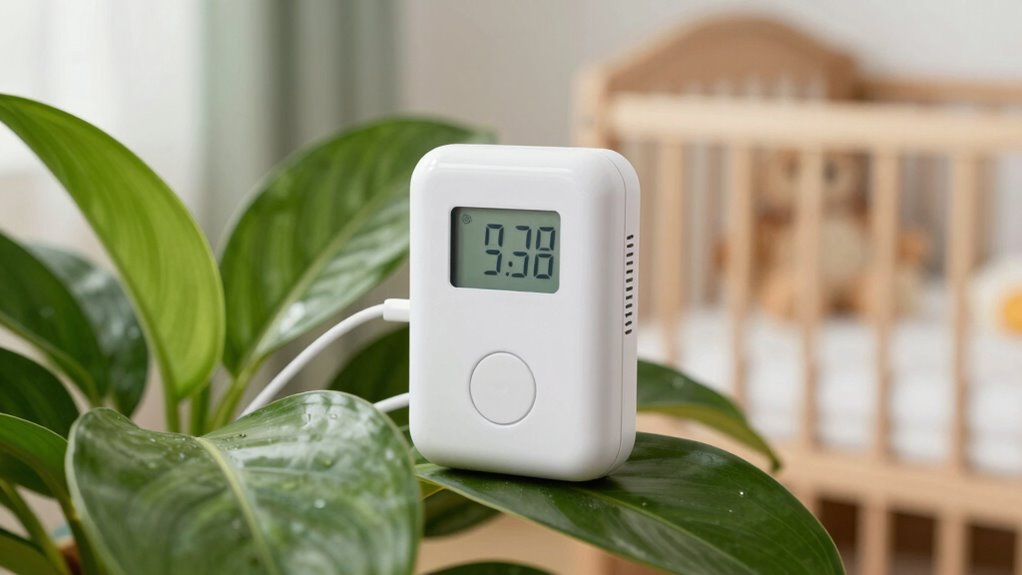
Choosing the right nursery sensor can substantially improve how accurately you monitor your child’s environment. To guarantee precise readings, focus on sensors with reliable sensor calibration, which maintains accuracy over time. Consider models that support data logging, allowing you to track temperature fluctuations and identify patterns. When selecting a sensor, evaluate these key factors:
- Sensor calibration capabilities for consistent accuracy
- Data logging features to monitor environmental changes
- Response time for quick detection of temperature shifts
- Compatibility with your existing monitoring system
Frequently Asked Questions
Do All Nursery Sensors Use the Same Technology to Measure Temperature?
Not all nursery sensors use the same technology to measure temperature. You’ll find variations in sensor accuracy because different devices rely on distinct technology differences, such as thermistors, infrared sensors, or digital sensors. These differences impact how precisely the sensor detects temperature changes. So, when choosing a nursery sensor, consider the technology it uses, as this directly affects its accuracy and reliability in monitoring your baby’s environment.
How Often Should I Calibrate My Nursery Sensor for Accuracy?
You should calibrate your nursery sensor at least once every three to six months to guarantee accurate readings. Regular sensor calibration is essential for reliable device maintenance, preventing false temperature alerts that could jeopardize your baby’s safety. Keep an eye on manufacturer recommendations, and calibrate more frequently if you notice inconsistent readings. Proper sensor calibration helps maintain the device’s accuracy, giving you peace of mind about your nursery’s environment.
Can External Factors Like Sunlight Affect Sensor Readings?
Sunlight can definitely affect sensor readings, especially if the sensor experiences solar interference. To prevent inaccurate results, you should pay attention to sensor placement, avoiding direct sunlight exposure. Position the sensor in a shaded, well-ventilated area away from windows or heat sources. This way, external factors like sunlight won’t skew the temperature readings, ensuring your nursery environment stays accurately monitored and comfortable for your little one.
Are There Safety Concerns With Certain Types of Nursery Sensors?
You should be aware that some nursery sensors pose safety concerns due to potential sensor malfunctions, which could lead to inaccurate readings or device failure. Additionally, data privacy is a significant issue, as these sensors collect sensitive information about your child’s environment and routines. Always choose reputable brands, regularly update firmware, and review privacy policies to guarantee your child’s safety and protect your data.
What Is the Typical Lifespan of a Nursery Temperature Sensor?
You can expect a nursery temperature sensor to last around 3 to 5 years, depending on sensor durability and usage conditions. Regular calibration guarantees accurate readings and extends its lifespan. Keep an eye on any signs of malfunction, like inconsistent readings, and calibrate the sensor as recommended by the manufacturer. Proper maintenance and timely replacements help maintain a safe environment for your baby.
Conclusion
Remember, your nursery sensor is just one piece of the puzzle—like a lighthouse guiding you through foggy waters. By understanding how these sensors work and taking extra steps to verify their readings, you can create a safe, cozy haven for your little one. Trust your instincts, stay informed, and don’t hesitate to use additional tools. With a little effort, you’ll navigate temperature concerns smoothly, ensuring your baby’s comfort is always within reach.
Fall Picks
fall essentials
As an affiliate, we earn on qualifying purchases.