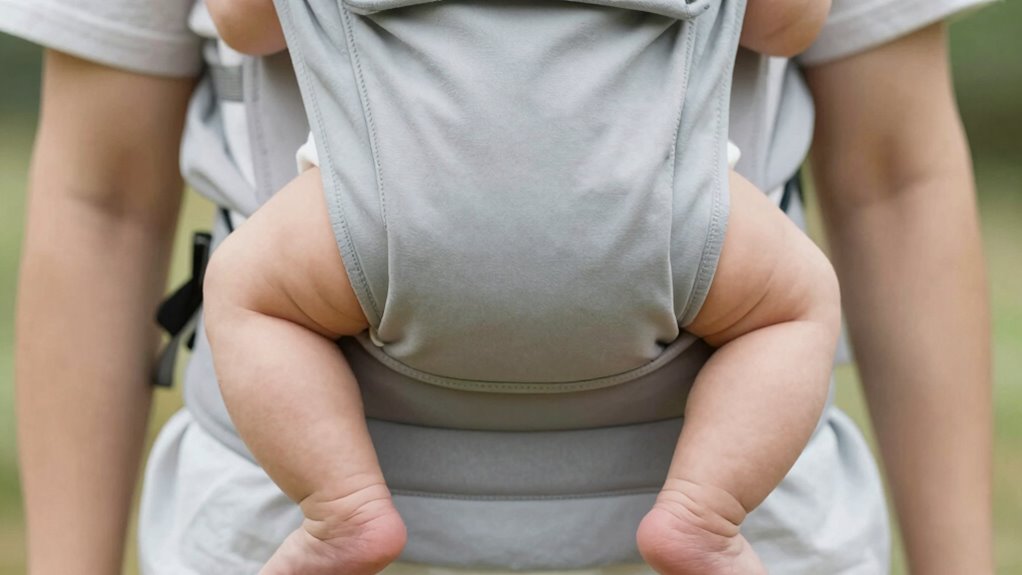

To support healthy hips in your newborn carrier, focus on positions that keep their hips in a natural “M” shape with knees higher than the bottom and thighs spread apart. Choose a carrier with a wide seat and breathable fabric, and always make certain your baby is snug but comfortable. Avoid positions where legs dangle straight down or hips are forced into straight or rigid postures. Keep these tips in mind to promote proper development as you explore more ways to keep your little one happy.
Key Takeaways
- Use carriers that keep the baby’s hips in an ergonomic “M” shape with knees higher than hips.
- Position the baby facing inward in a snug, supportive cradle hold to promote healthy hip development.
- Ensure the carrier maintains proper support for thighs and prevents legs from dangling straight down.
- Adjust straps to keep the baby close, comfortable, and in a natural, spread-squat hip position.
- Avoid positions that force hips into straight or dangling postures, ensuring the baby’s hips stay in a healthy spread.
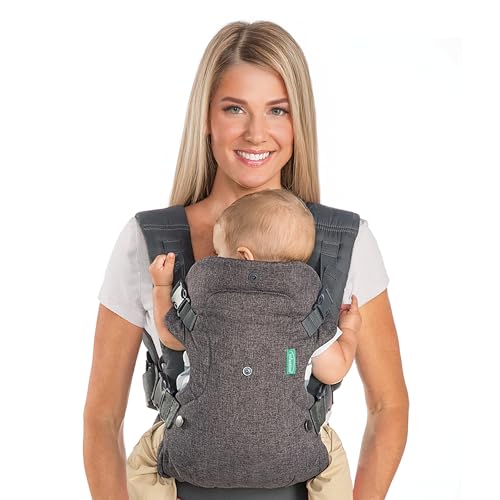
Infantino Flip 4-in-1 Convertible Baby Carrier, Adjustable, Ergonomic Babywearing, Registry Essential, Baby Carrier for Newborn to Toddler, Gray
4-IN-1 CARRYING POSITIONS FOR EVERY STAGE: Convertible baby carrier with facing-in (narrow/wide), facing-out, and back carry positions. Supports…
As an affiliate, we earn on qualifying purchases.
As an affiliate, we earn on qualifying purchases.
Why Is Proper Hip Position Important for Your Newborn?
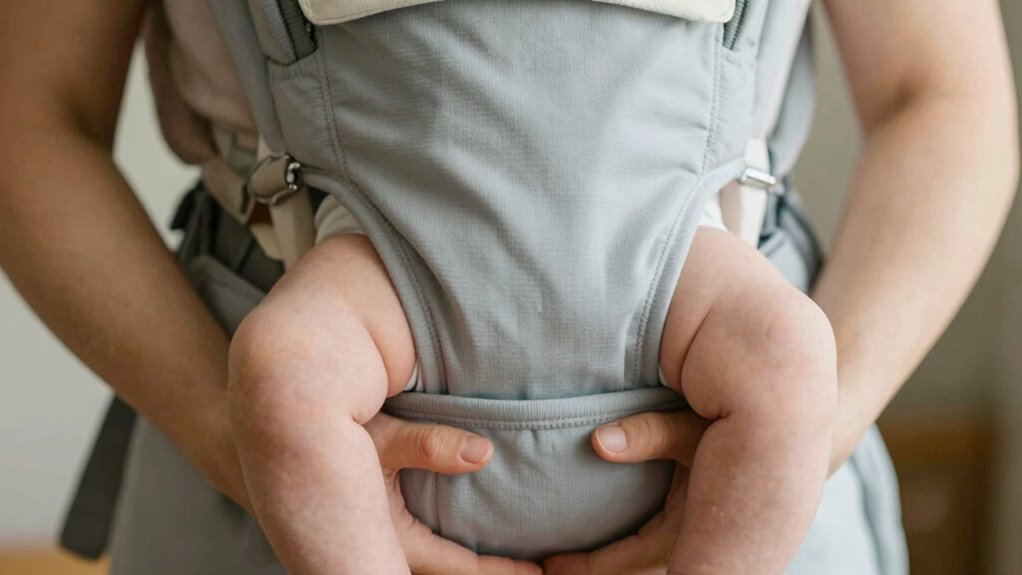
Proper hip positioning is essential because it helps prevent developmental issues like hip dysplasia. When you carry your newborn with their hips in a healthy, supported position, you promote proper joint development. Incorrect positioning can lead to uneven growth and delay or disrupt reaching developmental milestones. Ensuring your baby’s hips are flexed and abducted allows the socket to develop correctly, reducing the risk of hip dysplasia. This position also encourages natural movement and comfort, making it easier for your baby to explore and grow. By paying attention to hip placement from the start, you support healthy development and help your little one reach key milestones smoothly. Proper hip positioning isn’t just about comfort—it’s crucial for your baby’s long-term health. Additionally, understanding piercing care and hygiene can help ensure overall well-being and prevent complications during recovery.

Momcozy Baby Carrier – Ergonomic, Cozy and Lightweight Carrier for 7-45lbs, Effortless to Put On, Ideal for Hands-Free Parenting, Enhanced Lumbar Support, Purehug for Infant to Toddler, Black
Hands Free Comfort: This ergonomic Baby Carrier perfect for experiencing hands-free convenience in everyday use, outing or travel….
As an affiliate, we earn on qualifying purchases.
As an affiliate, we earn on qualifying purchases.
What Features Should a Baby Carrier Have to Support Hip Health?

To support your baby’s hip health, choose a carrier that promotes ergonomic positioning by ensuring the hips are flexed and abducted in a natural “M” shape. Look for carriers made from breathable fabric to keep your baby comfortable and prevent overheating. Breathable materials like mesh or lightweight cotton help maintain airflow, especially during warm weather or extended wear. Additionally, proper support in a carrier helps prevent hip dysplasia and promotes healthy development. A well-designed carrier will also have a wide seat that supports the thighs and maintains the hips in healthy positions. Ensuring the carrier provides ergonomic design can improve both safety and comfort for your little one. Incorporating natural positioning principles is essential for long-term hip health. Using carriers with hip-healthy features can further enhance your baby’s comfort and development.
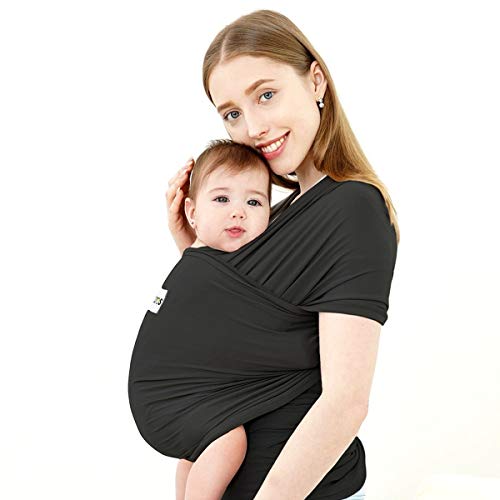
Acrabros Baby Wrap Carrier,Hands Free Baby Carrier Sling,Lightweight,Breathable,Softness,Perfect for Newborn Infants and Babies Shower Gift,Black
COMFORTABLE BABY CARRIER FOR NEWBORN TO TODDLER:Our baby carrier is designed for newborns to toddlers (8 to 35…
As an affiliate, we earn on qualifying purchases.
As an affiliate, we earn on qualifying purchases.
What Are the Best Carrier Positions for Healthy, Ergonomic Hips?
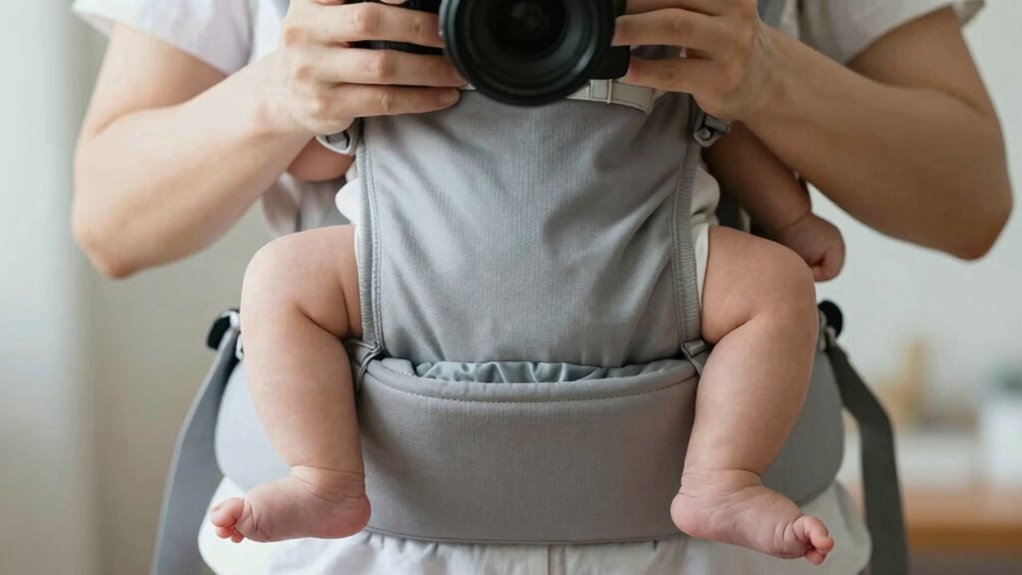
Choosing the right carrier position can make a significant difference in your baby’s hip development. The best positions guarantee ergonomic support, keeping your baby’s hips in a healthy, frog-like spread with knees higher than the bottom. The prone or inward-facing cradle hold often provides ideal hip positioning, allowing your baby to sit with hips flexed and abducted naturally. Avoid carrier positions that force hips into straight or dangling postures, as these can hinder development. Look for carriers that support a snug, ergonomic fit and allow hips to move freely. Confirming your baby’s hips are well-supported promotes healthy development and reduces the risk of hip dysplasia. Proper carrier fit is essential for maintaining correct hip positioning and ensuring your baby’s comfort and safety. Always check that the carrier maintains proper hip positioning and provides ample support for your baby’s weight and comfort. Proper positioning and hip healthy design are crucial for long-term hip health. Additionally, selecting a carrier with adjustable features can help accommodate your baby’s growth and ensure continued proper hip alignment. Ensuring the carrier offers ergonomic support can further optimize hip health and comfort during extended wear.

Baby Carrier, MOMTORY Safety-Certified 6-in-1 Baby Carrier Newborn to Toddler, Adjustable Detachable Infant Baby Hip Seat Carrier for 7-50lbs, All Seasons, Perfect for Shopping Travelling
𝐅𝐫𝐨𝐦 𝐁𝐚𝐛𝐲 𝐭𝐨 𝐓𝐨𝐝𝐝𝐥𝐞𝐫, 𝐎𝐮𝐫 𝐂𝐚𝐫𝐫𝐢𝐞𝐫'𝐬 𝐆𝐨𝐭 𝐘𝐨𝐮!: It is a versatile baby carrier designed to carry children…
As an affiliate, we earn on qualifying purchases.
As an affiliate, we earn on qualifying purchases.
What Common Mistakes Can Harm Your Baby’s Hip Development?
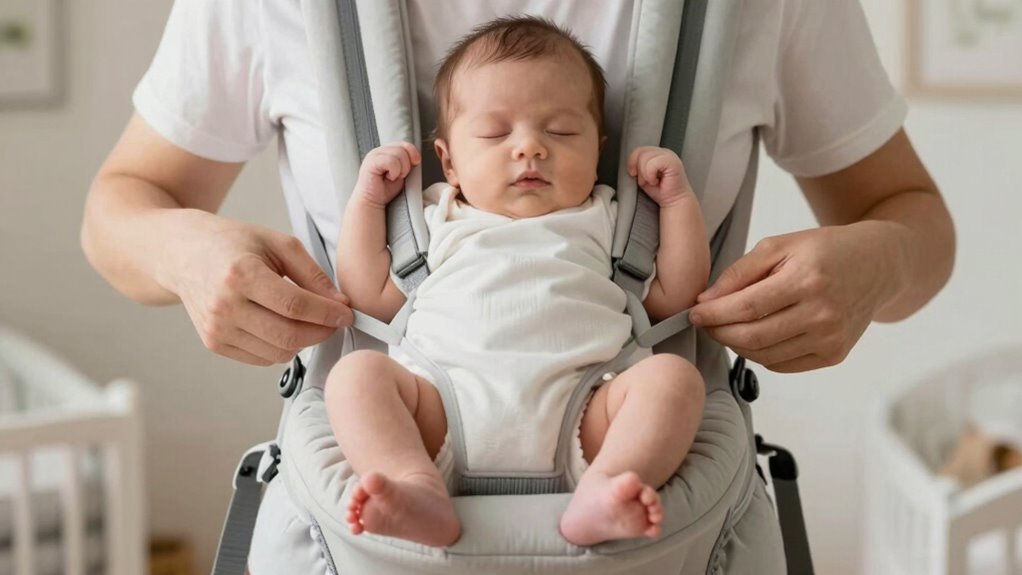
Many common carrier use mistakes can negatively impact your baby’s hip development. Improper support and positioning can lead to issues like hip dysplasia. To keep your baby’s hips healthy, avoid these mistakes:
- Using carriers that don’t support the thighs in a spread-squat position
- Letting the baby’s legs dangle straight down
- Placing the baby too low or high in the carrier
- Ignoring signs of discomfort or improper hip alignment
- Failing to ensure ergonomic positioning for optimal hip health
Additionally, ensuring the carrier promotes hip-healthy positioning can significantly reduce the risk of developmental issues. Proper carrier adjustment is essential to maintain correct hip alignment during use. Selecting a carrier with ergonomic design helps prevent incorrect hip development and supports natural movement. Awareness of proper positioning techniques can help caregivers avoid these errors altogether. These errors can cause the hips to develop incorrectly, risking hip dysplasia. Ensuring proper support and positioning helps prevent such problems and promotes healthy hip development. Always choose a carrier that supports ergonomic positioning and adjust it correctly for your baby’s comfort and safety.
How Do You Choose the Right Carrier and Position for Your Baby?
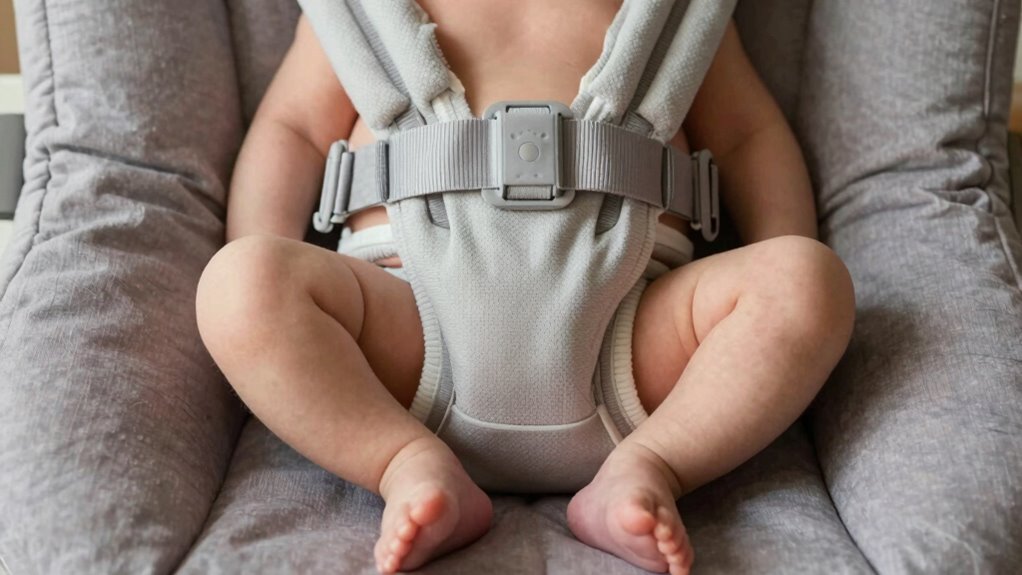
Selecting the right carrier and positioning your baby correctly can make a significant difference in their comfort and hip health. When choosing a carrier, consider fabric options—breathable, stretchy fabrics like cotton or linen provide comfort and flexibility. Guarantee the carrier offers proper support for your baby’s hips and spine, promoting healthy development. Carrier safety is essential; always follow manufacturer instructions and check for secure straps and fastenings. Opt for positions that keep your baby in an ergonomic “M” shape, with knees higher than the hips, to prevent strain. Adjust the carrier to keep your baby snug but not too tight, allowing free movement and proper airflow. Ensuring hip-healthy positioning and making thoughtful choices about fabric options and guaranteeing carrier safety helps support your baby’s healthy hip development and overall comfort. Being aware of developmentally appropriate carrier use can further promote optimal growth and reduce the risk of hip dysplasia, especially when considering proper carrier positioning techniques.
Frequently Asked Questions
How Long Should I Keep My Baby in a Specific Carrier Position Each Day?
You should keep your baby in a specific carrier position for about 1-2 hours at a time, ensuring you monitor carrier safety and your baby’s comfort. Switch positions regularly to support healthy hips and prevent strain. Always check that your baby’s hips are in an ergonomic, spread-squat position, and avoid prolonged periods in the same position. Trust your instincts and adjust as needed to keep your baby comfortable and promote hip health.
Are There Age-Specific Carrier Positions That Promote Healthy Hip Development?
You’ll find that age-specific carrier positions naturally support healthy hip development through ergonomic positioning. For newborns, cradle hold positions keep hips flexed and abducted, promoting ideal growth. As your baby grows, upright seated positions with knees higher than hips help maintain proper alignment. By choosing positions tailored to age, you encourage healthy hip development and guarantee comfort, making carrier time enjoyable for both of you.
Can Certain Fabrics or Materials Affect Hip Health in Carriers?
Certain fabrics and materials can impact your baby’s hip health. Opt for carriers made from breathable fabrics like cotton or mesh, which help keep your baby comfortable and prevent overheating. Additionally, choose carriers with flexible materials, such as soft stretch fabrics, to allow natural movement and proper positioning. These qualities support healthy hip development by ensuring the carrier stays snug yet comfortable, reducing pressure on the hips and promoting proper alignment.
How Often Should I Switch Carrier Positions to Ensure Proper Hip Growth?
You should switch carrier positions at least every 15-20 minutes to keep your baby’s hips from becoming a static sculpture. This practice helps prevent hip dysplasia and promotes healthy development. An ergonomic design in your carrier makes these adjustments easier and safer, ensuring your little one’s hips stay properly aligned. By rotating positions regularly, you’re nurturing healthy hips and giving your baby the best start in life.
Are There Signs My Baby’s Hips Are Developing Incorrectly Despite Proper Positioning?
If you notice your baby shows signs of hip dysplasia or experiences carrier discomfort, it could indicate improper hip development. Watch for uneven leg positioning, clicking sounds, or limited movement in the hips. If these signs appear, consult your pediatrician promptly. Proper positioning, combined with attentive observation, helps guarantee healthy hip growth and reduces risks associated with improper development. Always prioritize your baby’s comfort and correct positioning during carrier use.
Conclusion
By choosing the right carrier and positioning your baby carefully, you’re planting seeds for healthy hips to grow. Think of yourself as a gentle gardener tending to delicate blooms—supportive, attentive, and nurturing. When you prioritize ergonomic positions, you’re weaving a sturdy foundation for your little one’s future. Trust your instincts, stay informed, and let your love be the guiding rhythm—creating a safe, harmonious space where your baby’s hips can flourish with every embrace.