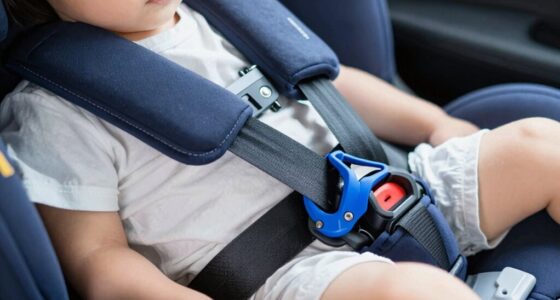
When flying with a car seat, most airlines permit its use but policies vary, so always check each airline’s rules beforehand. You should verify if your car seat is FAA-approved and fits on the plane seat. Remember to secure it properly and arrive early for check-in. Knowing what accessories are allowed and how to handle delays or restrictions can prevent last-minute surprises. Continue to the next details to ensure a smooth journey with your child’s safety at the forefront.
Key Takeaways
- Most airlines allow FAA-approved car seats, but policies vary; always verify specific airline regulations before travel.
- Confirm your car seat fits the aircraft seat and is properly secured using the airplane seatbelt or LATCH system.
- Notify the airline about traveling with a car seat during booking and check-in to avoid surprises or additional fees.
- Arrive early to handle check-in, security, and potential issues with your car seat’s transportation or installation.
- Remember to remove loose items and straps, and carry proper documentation to ensure smooth handling and avoid delays.

Graco Contender Slim Convertible Car Seat, West Point, Lightweight Travel Car Seat with Compact, Space-Saving Design, Rear-Facing 5–40 lbs, Forward-Facing 26.5–65 lbs, Easy to Transfer, FAA Approved
Convertible car seat grows with your child from rear-facing harness (5-40 lb) to forward-facing harness (26.5-65 lb)
As an affiliate, we earn on qualifying purchases.
As an affiliate, we earn on qualifying purchases.
What Airlines Allow for Car Seats and How to Check
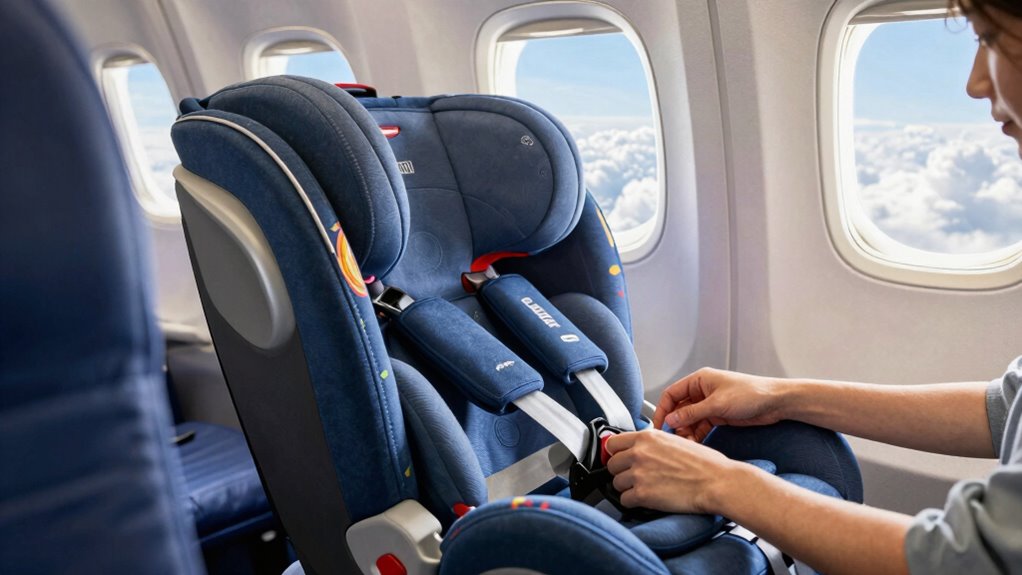
Most airlines allow you to bring a car seat for your child, but policies can vary. To guarantee smooth travel, check each airline’s policies on bringing car seats beforehand. Some airlines permit only specific types of seats, such as FAA-approved, harnessed car seats, while others may have size restrictions. Seat compatibility is essential; your car seat must fit properly in the aircraft seat without obstructing aisles or other passengers’ space. Always review the airline’s website or contact customer service directly to confirm their rules. Many airlines provide detailed guidance on acceptable car seats and how to attach them securely. Verifying these details ahead of time helps prevent surprises at the gate and ensures that your child’s car seat meets all safety standards for air travel. Additionally, understanding vetted safety standards can help ensure your car seat is appropriate for airline travel. Being familiar with credit card security measures can also help you avoid potential data breaches when booking tickets online. Knowing airline-specific policies can further streamline your pre-flight preparations and avoid last-minute issues. It’s also helpful to review additional safety tips to prepare for a safe and comfortable journey with your child. For example, contacting airline customer service directly about their specific requirements can save time and reduce stress on travel day.

J.L. Childress Padded Backpack Car Seat Bag – Car Seat Travel Bag for Airplane, Cover Fits Most Baby & Infant Carriers & Boosters, Airport Accessories for Gate Check or Baggage Check – Ultimate, Black
CAR SEAT BAG FOR TRAVEL – This premium car seat bag offers complete protection for your car seat…
As an affiliate, we earn on qualifying purchases.
As an affiliate, we earn on qualifying purchases.
How to Prepare and Secure Your Car Seat for Air Travel
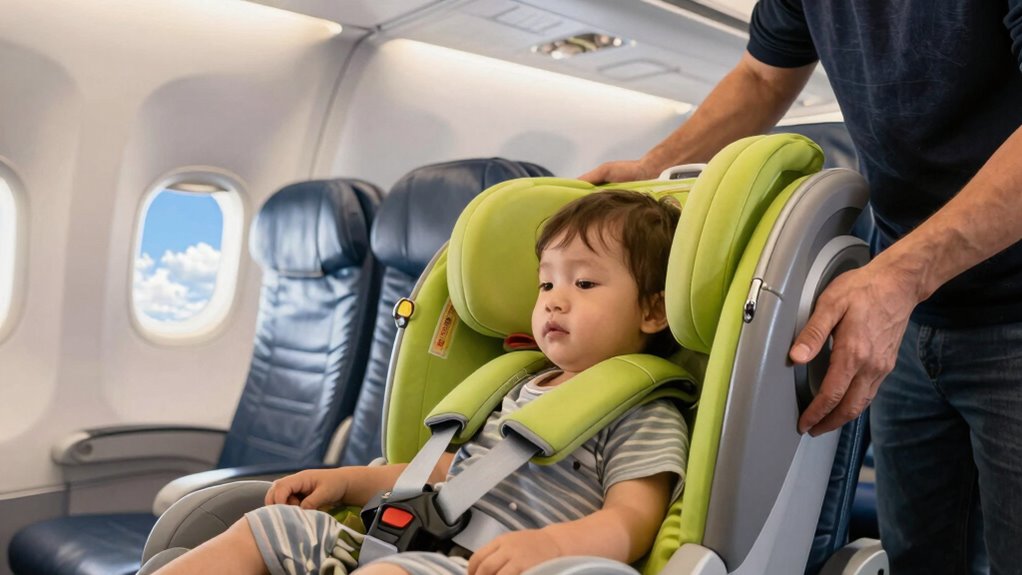
Before your flight, make sure to safeguard your car seat properly to prevent damage or movement. Selecting the right travel accessories, like straps or travel bags, can make transportation easier and safer. Proper preparation ensures your child’s seat stays secure and ready for use upon arrival. Additionally, using POS/receipt printers designed for travel can help ensure your electronic equipment functions reliably throughout your trip. Incorporating digital content formats into your preparation can also streamline travel documentation and communication. Remember to check for safety tips specific to your car seat model and airline regulations to further protect your child’s safety during air travel. To further protect your equipment, consider best gear and knife roundups for smart shopping to find reliable travel accessories and safety gear. Being aware of airline policies can also prevent unexpected issues during boarding.
Secure Your Car Seat Properly
To guarantee your child’s car seat is secure for air travel, start by removing any loose items and straps that might get caught or damaged during the flight. Proper seat installation is essential—you want the seat to stay firmly in place. Follow your airline’s instructions and the car seat manufacturer’s guidelines to ensure it’s correctly installed using the airplane seatbelt or the LATCH system if available. Check that the safety harness is snug, with no slack, and that it’s positioned at or just below your child’s shoulders. Make sure the car seat doesn’t move more than an inch side-to-side or front-to-back when tested at the belt path. Additionally, understanding regional flavor profiles and the importance of secure installation can enhance your traveling experience. Ensuring proper installation techniques can help prevent accidents and provide peace of mind. Familiarizing yourself with airline safety policies can also streamline the boarding process. Reviewing proper safety procedures before your trip can further ensure your child’s safety during air travel. Being aware of wiring best practices can help you troubleshoot and maintain your car seat’s integrity over time. Securing your car seat properly guarantees your child’s safety and peace of mind during your flight.
Choose the Right Travel Accessories
Choosing the right travel accessories can make the process of preparing and securing your child’s car seat much easier. Start by selecting accessories that comply with airline policies, such as lightweight travel bags, harness protectors, and seat belt extenders. These items help protect your car seat during transit and make it easier to carry through the airport. Look for travel accessories designed specifically for air travel, like seat belt protectors or travel carts, which ensure your car seat stays secure and undamaged. Always double-check airline policies regarding approved accessories to avoid surprises at the gate. Using the right travel accessories streamlines the boarding process and keeps your child’s car seat safe, comfortable, and compliant with airline regulations. Proper work-life harmony can also help parents stay calm and organized during travel, reducing stress for everyone involved. Incorporating smart home safety tips, such as setting up reminders for travel preparations, can further ease the journey. Additionally, understanding affiliate disclosure policies can help parents make informed purchasing decisions for travel gear. Planning ahead and being aware of airline regulations ensures a smoother travel experience for both parent and child. For added peace of mind, consider using child safety verification tools to ensure all accessories meet safety standards and airline requirements.

WAYB Pico Travel Car Seat with Premium Carrying Bag- Lightweight, Portable, Foldable – Perfect for Airplanes, Rideshares, and Road Trips – Forward Facing for Kids 26.5–50 lbs and 33.5–45"
To keep little ones safe, returned car seats with open boxes must be destroyed (per industry standards). So,…
As an affiliate, we earn on qualifying purchases.
As an affiliate, we earn on qualifying purchases.
Why Using Your Car Seat on the Plane Can Keep Your Child Safe and Comfortable
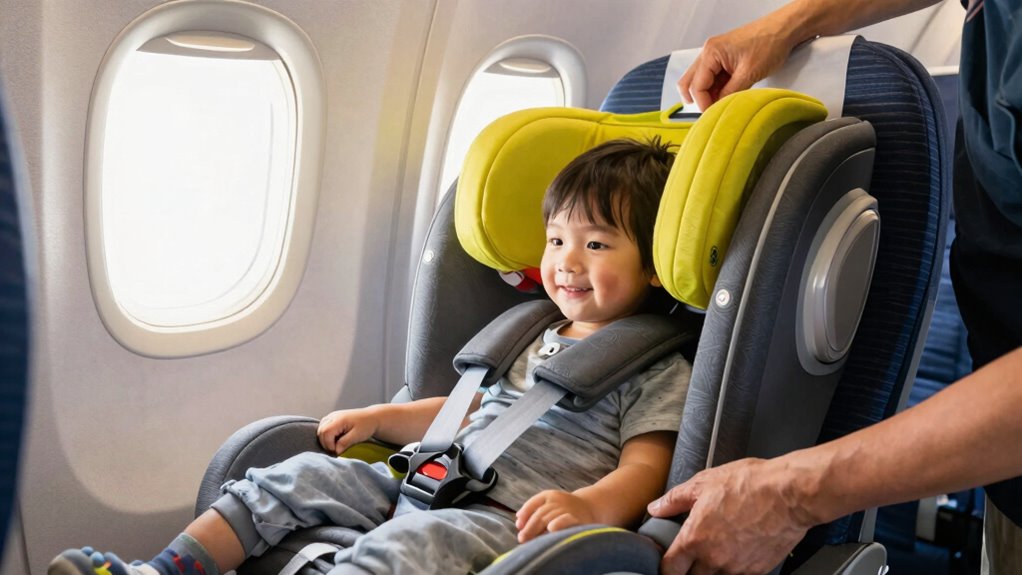
Using your car seat on the plane can considerably enhance your child’s safety by providing a familiar and secure restraint. It also helps keep your child comfortable, making the flight less stressful for everyone. Overall, it’s a smart choice that balances safety and comfort during travel. Additionally, selecting a modern/composting toilet can improve bathroom efficiency and comfort at your destination. Being aware of airline policies regarding car seats and practicing ethical consumer choices can help parents make informed decisions that prioritize safety and responsibility.
Enhanced Safety Measures
When you bring your child’s car seat onto the plane, it provides a familiar and secure environment that considerably enhances safety. Using your car seat as a child restraint aligns with airline policies and ensures your child is properly secured during turbulence or unexpected moves. This added safety measure reduces the risk of injury and keeps your child comfortable throughout the flight. To help you understand, here’s a quick comparison:
| Benefit | Explanation | Important Notes |
|---|---|---|
| Proper Restraint | Ensures correct seat belt positioning | Check airline policies beforehand |
| Reduced Movement | Limits child’s movement during turbulence | Use a harness for added security |
| Familiar Environment | Boosts confidence and comfort | Reinforces safety with familiar gear |
Using your car seat is a smart, safe choice that respects airline policies and enhances your child’s safety on board.
Improved Travel Comfort
Bringing your child’s car seat onto the plane can substantially boost their comfort during the flight. A familiar seat provides better seat comfort compared to standard airplane seats, which can be cramped and hard for kids to settle into. Using their own car seat improves travel ergonomics, supporting proper spinal alignment and reducing restlessness. Your child will be able to sit more securely and comfortably, minimizing discomfort from prolonged sitting. Plus, the familiarity of their own seat helps reduce travel anxiety, making the journey smoother for everyone. With improved travel ergonomics, your child stays in a more natural position, leading to less fatigue and fussiness. Overall, using a car seat on the plane ensures a more comfortable, less stressful travel experience for your little one.

Guiseapue Car Seat Travel Bag for Airplane: Car Seat Bags for Air Travel Fit All Car Seats, Infant Carriers & Booster Seats, Carseat Cover Fit Doona Graco Evenflo, First Mothers Day Gifts for New Mom
Wide Compatibility: This car seat travel bag for airplane comes in a 34x18x18inch size which can easily accommodate…
As an affiliate, we earn on qualifying purchases.
As an affiliate, we earn on qualifying purchases.
Common Mistakes Parents Make When Flying With a Car Seat: And How to Avoid Them

Many parents make the mistake of not properly securing the car seat or overlooking airline policies, which can lead to delays, extra fees, or safety concerns during your flight. Parent oversight is essential; you need to understand the airline’s specific policies about car seat use and baggage. Failing to do so may cause you to bring an incompatible seat or face unexpected charges. Don’t assume all airlines have the same rules—check their guidelines beforehand. Also, avoid rushing through security with your car seat, as improper handling can damage it or delay boarding. Ensuring you follow airline policies and paying close attention to how your car seat should be transported helps prevent avoidable issues. Proper preparation keeps your travel smoother and your child safer.
Booking Your Car Seat With the Airline: Tips and Confirmations

Booking your car seat with the airline ahead of time can save you from unexpected hassles at the airport. To guarantee a smooth process, double-check the airline’s baggage policies and car seat regulations. When you call or book online, clearly specify that you’ll be traveling with a car seat to confirm space and equipment compatibility. Visualize:
- Your car seat securely packed and ready for check-in
- Airline staff handling it with care
- Confirmation emails or boarding passes listing your car seat
- Clear signage indicating your seat’s location
- Peace of mind knowing your car seat is accounted for and compliant with airline policies
What to Do If Your Car Seat Isn’t Allowed or Is Delayed at the Airport
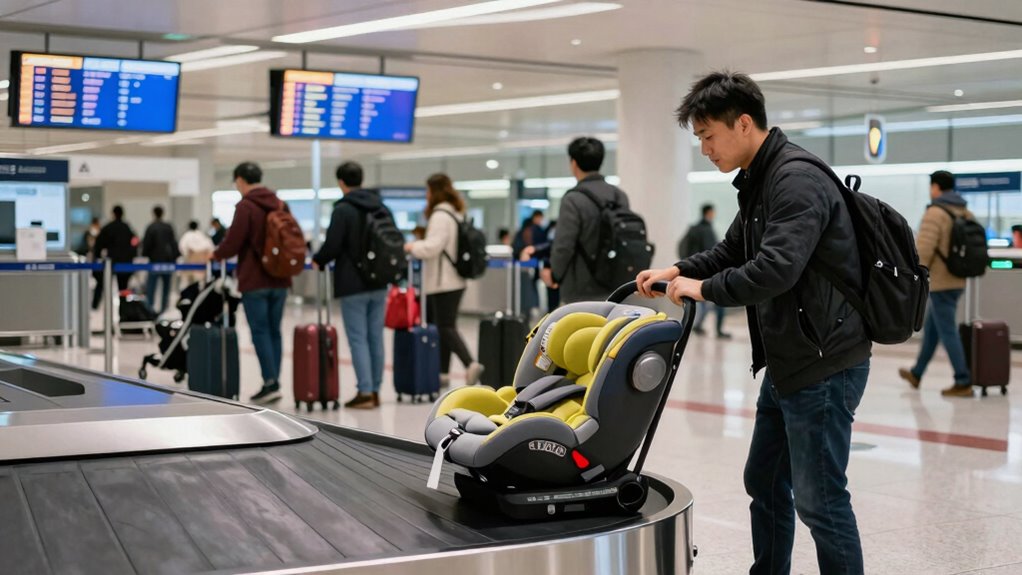
If your car seat isn’t permitted on the flight or gets delayed at the airport, stay calm and act quickly. Head to airport security to clarify the issue and see if they can assist. If your car seat is lost luggage, immediately report it to airline staff and ask for a tracking claim. Meanwhile, consider using an airport-provided booster or car seat if available, or rent one nearby. Inform the gate agents about the delay so they can note your situation. Keep your boarding passes and receipts handy for reference. Remember, delays happen, but staying organized and communicating promptly can help minimize stress. Always arrive early to handle unexpected issues smoothly and ensure you’re prepared for any last-minute changes.
Frequently Asked Questions
Can I Upgrade My Child’s Seat to a First-Class or Premium Cabin?
Yes, you can usually upgrade your child’s seat to a first-class or premium cabin, but it depends on the airline’s seat upgrade policies. Check with your airline ahead of time, as some airlines allow upgrades for children, often at a discounted rate. Be aware that upgrade availability varies, so booking early and asking about specific policies guarantees your child gets a comfortable, upgraded experience on your flight.
Are There Size or Weight Restrictions for Car Seats on Specific Airlines?
Most airlines have specific seat size restrictions and weight limits for car seats. You should check your airline’s policies before flying, as some have maximum dimensions for approved car seats, typically around 16-18 inches wide, and weight limits often range from 40 to 50 pounds. Exceeding these restrictions may mean you can’t use your car seat on the plane, so measure and confirm to ensure compatibility.
Do I Need to Remove the Car Seat’s Harness During Security Screening?
Removing the harness during security screening is usually necessary, but it’s not as intimidating as climbing Everest! You’ll typically need to take the harness off so TSA can scan the car seat thoroughly. Follow security procedures closely, and check your airline’s guidelines beforehand. Remember, some airports might have different rules, so stay alert and prepared to remove the harness to guarantee smooth security checks.
How Do I Handle a Damaged or Expired Car Seat at the Airport?
If your car seat is damaged or expired, don’t attempt to use it during travel. You should replace it for safety and comply with airline policies. At the airport, inform airline staff about the issue; they won’t be liable if you choose to take the seat, but proper car seat maintenance guarantees safety. Remember, airline liability covers safety concerns, so using a damaged or expired seat isn’t advisable for your child’s protection.
Can I Use a Car Seat From a Different Manufacturer Than My Child’s Car Seat?
Wondering if you can use a car seat from a different manufacturer? Absolutely! Just check the car seat compatibility and manufacturer differences to guarantee it fits your child’s needs and your vehicle’s safety standards. Most airlines and local laws don’t restrict you to a single brand, so long as the car seat meets safety regulations. Always verify the installation instructions and approval labels to keep your child safe during travel.
Conclusion
Flying with a car seat can make travel safer and more comfortable for your child. Remember, over 80% of parents report difficulty in confirming their seat’s approval, so double-check airline policies beforehand. By preparing properly and avoiding common mistakes, you’ll guarantee a smooth journey. With the right planning, you can reduce stress and keep your little one secure, making travel easier and more enjoyable for everyone involved.