Steam cleaning kills many germs, bacteria, and viruses on contact without harsh chemicals, making it a good choice for homes with babies. However, it doesn’t eliminate all pathogens, especially bacterial spores or some stubborn viruses. Use it carefully on durable surfaces, and always follow safety guidelines to avoid burns or damage. To guarantee thorough sanitation and protect your little one, learn how to use steam cleaning effectively and safely around your home.
Key Takeaways
- Steam cleaning effectively kills germs, bacteria, and viruses on contact without chemicals, but some hardy pathogens may resist.
- It is safe around babies when used properly, avoiding direct contact with hot steam and following manufacturer guidelines.
- Steam cleans and sanitizes surfaces like floors, upholstery, and fabrics, reducing dust mites and odors.
- Excessive heat or improper use can damage delicate items, soft fabrics, or painted surfaces.
- For thorough sanitation, combine steam cleaning with other hygiene practices, as it may not eliminate all pathogens.

Steam Cleaner, Portable Steamer for Cleaning with 16pcs Accessories, 6-Level Adjustable and 15s Heat-Up, Handheld Steam Cleaner for Home, Tile, Dirt, Grout, Grease, Car Detailing
Powerful Steam Cleaner: This steam cleaner heats up in just 15 seconds, releasing high-temperature steam at 221°F (105°C)…
As an affiliate, we earn on qualifying purchases.
As an affiliate, we earn on qualifying purchases.
Is Steam Cleaning Safe for Babies and What Germs Does It Kill?

Is steam cleaning safe for babies? Yes, when used correctly, steam cleaning is generally safe around little ones. It effectively promotes germ elimination without harsh chemicals, reducing potential irritants. Steam’s high temperature kills bacteria, viruses, and dust mites on contact, making it a reliable method for deep cleaning. Plus, steam cleaning tools are designed with surface compatibility in mind, so they won’t damage most surfaces when used properly. You don’t need to worry about residues or chemical fumes, which are common concerns with traditional cleaning products. Additionally, natural cleaning methods like steam cleaning can support a healthier home environment. However, confirm the steam cleaner is used at a safe distance from your baby and follow manufacturer instructions carefully. This way, you can enjoy a hygienic environment while keeping your baby safe and sound.

Momcozy KleanPal Pro All-in-One Bottle Washer, Sterilizer & Dryer – White
𝐔𝐋𝐓𝐈𝐌𝐀𝐓𝐄 𝐓𝐈𝐌𝐄-𝐒𝐀𝐕𝐈𝐍𝐆 & 𝐂𝐋𝐄𝐀𝐍𝐈𝐍𝐆 𝐒𝐎𝐋𝐔𝐓𝐈𝐎𝐍: Automatically washes, sterilizes, and dries baby bottles, pump parts, baby tableware, and more,…
As an affiliate, we earn on qualifying purchases.
As an affiliate, we earn on qualifying purchases.
What Surfaces Can Be Cleaned Effectively With Steam?
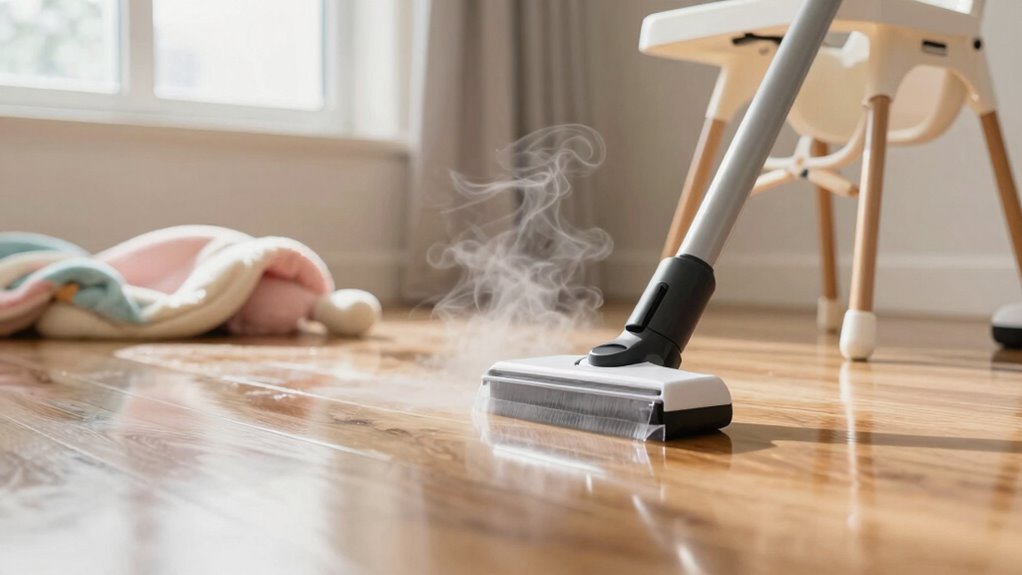
Steam cleaning works well on high-traffic areas like floors and entryways, removing dirt and germs effectively. You can also use it on fabrics and upholstery to refresh surfaces and eliminate odors. Knowing which surfaces respond best helps you clean more efficiently and safely. Additionally, understanding indoor air quality can help you prevent the spread of microplastics and other pollutants during cleaning routines. For example, using steam on upholstered furniture can help reduce dust mites and allergens, improving overall air purity. Being aware of cycling gear care tips can also ensure your equipment remains safe and effective around your home environment. Incorporating microplastic reduction strategies during cleaning can further enhance indoor air safety and overall health. Moreover, choosing steam cleaning methods that are compatible with precious metal investments can help preserve your valuable assets without introducing harmful chemicals.
High-Traffic Areas
High-traffic areas such as tile, hardwood, and laminate floors respond exceptionally well to steam cleaning because of their durability and ability to withstand high temperatures. These surfaces can handle the intense heat, making steam an effective way to sanitize and remove dirt without harsh chemicals. When considering steam cleaning safety, verify your steam cleaner is suitable for high traffic surfaces to prevent damage. Steam kills germs, bacteria, and dust mites, making it ideal for busy zones. Regular steam cleaning helps maintain a clean environment, especially in areas prone to frequent dirt buildup. Just keep the steam mop moving steadily to avoid moisture seeping into seams or cracks. Proper technique ensures your high-traffic surfaces stay spotless and safe, with no risk of warping or damage. Additionally, understanding the appropriate cleaning procedures for each surface type can help prolong their lifespan and maintain their appearance, especially since some materials may require specific handling to prevent surface damage. Using manufacturer recommendations can further ensure that your cleaning methods align with the surface’s material properties and resist potential harm. It’s also important to consider material-specific guidelines to ensure your cleaning methods do not inadvertently harm delicate surfaces.
Fabric and Upholstery
Fabric and upholstery surfaces respond particularly well to steam cleaning because the heat penetrates deep to loosen dirt, grease, and germs effectively. This makes steam cleaning an excellent choice for fabric refreshment and maintaining upholstery. You can safely clean sofas, chairs, curtains, and mattresses, removing embedded dust and bacteria without harsh chemicals. Steam’s high temperature kills many germs, making it a hygienic option for homes with kids or pets. It also helps to refresh worn or stained fabrics, restoring vibrancy and softness. Just make sure your fabric is compatible with steam cleaning by checking manufacturer instructions. When used correctly, steam cleaning preserves the integrity of your upholstery while providing a deep clean that traditional methods might miss. Additionally, understanding safe cleaning practices can help prevent damage to delicate fabrics. Proper ventilation during and after cleaning is essential to ensure that any residual moisture dissipates and to maintain a healthy indoor environment. Using appropriate steam cleaning equipment can further improve the effectiveness and safety of the process. Employing the right cleaning techniques can maximize results and protect your fabrics from potential harm. Being aware of piercing care and hygiene can also help maintain a clean environment, especially in households with babies and young children. It’s an efficient, eco-friendly way to keep your fabrics fresh and healthy.

BISSELL Little Green Mini Portable Carpet Cleaner, 4075
EVERY PURCHASE SAVES PETS. Every purchase makes it possible for BISSELL to continue our support of BISSELL Pet…
As an affiliate, we earn on qualifying purchases.
As an affiliate, we earn on qualifying purchases.
Which Germs and Bacteria Are Not Removed by Steam Cleaning?
While steam cleaning is effective against many germs and bacteria, some microorganisms can still survive the process. Certain bacteria and viruses exhibit germ resistance, allowing them to withstand high temperatures and moisture. Bacterial survival depends on factors like heat tolerance and the presence of protective biofilms. For example, spores from bacteria such as Clostridium difficile are particularly resistant to heat and may not be fully eradicated by steam cleaning alone. Additionally, some viruses with sturdy protein coats, like norovirus, can sometimes withstand steam if the temperature isn’t high enough or exposure isn’t sufficient. Knowing which germs resist steam helps you understand its limitations. While steam cleaning is a powerful tool, it doesn’t guarantee complete sterilization against all bacteria and viruses.
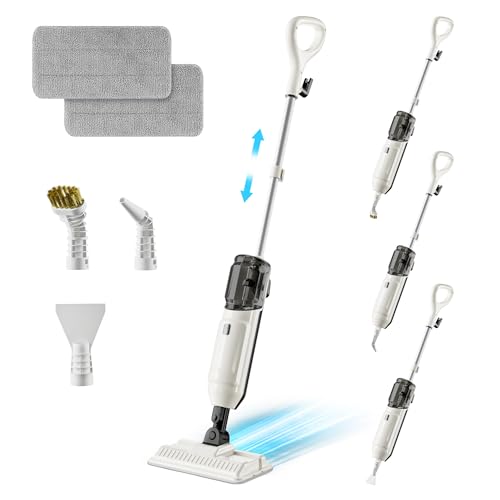
Steam Mop for Floor Cleaning, Multi-Purpose Steam Cleaner with Handheld Steamer & Accessories, Deep Cleaning Floor Steamer for Hardwood and Tile, Pet-Friendly Steam Mop for Home
Powerful Steam Mop for Deep Floor Cleaning: This steam mop cleaner delivers 260°F high-temperature steam in just 15…
As an affiliate, we earn on qualifying purchases.
As an affiliate, we earn on qualifying purchases.
Can Steam Cleaning Damage Household Items or Surfaces?
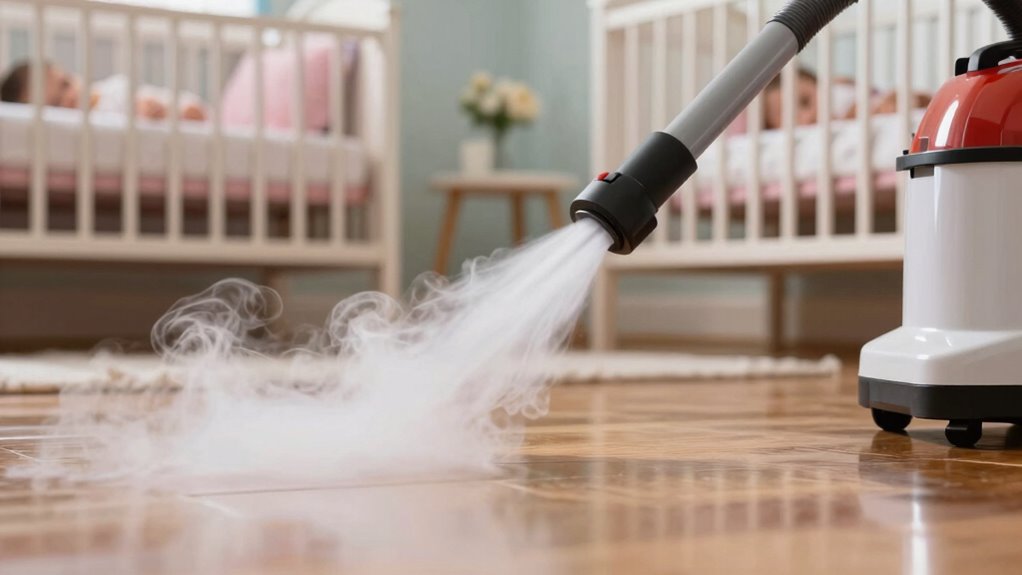
Steam cleaning can be safe for many household items when used correctly, but it has the potential to cause damage if not applied properly. Excessive heat or high pressure may lead to household damage, especially on delicate surfaces. For example, unsealed wood, painted finishes, or soft fabrics might warp, crack, or discolor if exposed to steam too aggressively. To guarantee surface safety, always test a small, inconspicuous area before cleaning larger sections. Use the appropriate settings for each surface, and avoid holding the steam nozzle too close or for too long. Proper technique helps prevent damage while allowing you to effectively sanitize surfaces. Additionally, understanding household surface materials can help you choose the safest cleaning method. Being aware of cleaning technique limitations ensures you don’t unintentionally damage your household items. Using proper cleaning tools can further reduce the risk of damage and improve cleaning efficiency. When used carefully, steam cleaning is a safe method that minimizes risk to your household items. For added protection, consider surface-specific precautions to tailor your cleaning approach to each material. Recognizing manufacturer guidelines can also help prevent misuse that might lead to damage.
Are Steam Cleaners Safe to Use on Toys and Cribs?
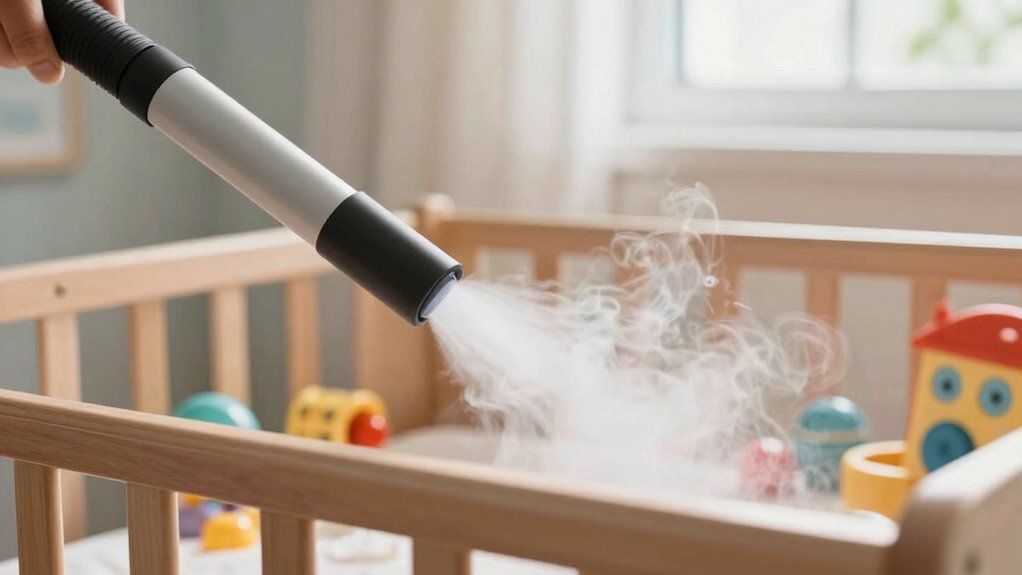
You might wonder if steam cleaning is safe for toys and cribs, especially regarding toy material safety and the surfaces of cribs. Some materials can be sensitive to heat or moisture, which could cause damage or pose safety risks. It’s important to contemplate these factors before using a steam cleaner on your child’s items. Additionally, understanding home design and architecture details can help ensure that cleaning methods are appropriate for different surfaces and materials around your home. For example, being aware of material safety considerations can guide you in choosing the safest cleaning techniques for your child’s belongings.
Toy Material Safety
Many parents wonder whether steam cleaners are safe for toys and cribs, given the materials they’re made from. Toy safety depends heavily on material concerns, as some plastics, fabrics, and painted surfaces can be sensitive to heat and moisture. Steam cleaning can be effective, but it’s not always suitable for every material. For example:
- Soft plastics may warp or degrade
- Painted or decorated surfaces might peel or fade
- Fabric toys could shrink or lose integrity
To keep your child’s toys safe, always check manufacturer guidelines and test a small area first. Avoid steam cleaning toys with delicate or porous materials. When used properly, steam can sanitize many toys without harmful chemicals, but understanding material concerns is key to ensuring safety around your little one.
Crib Surface Considerations
While steam cleaning can effectively sanitize cribs and toys, it’s important to consider the surface materials before proceeding. Crib surface considerations vary depending on the material, such as painted wood, laminate, or upholstery. Some surfaces may be sensitive to heat or moisture, risking damage or warping, so always check manufacturer guidelines. For baby safe cleaning, avoid prolonged exposure to steam on delicate finishes or glued components that might loosen. Use a low-temperature steam setting and keep the nozzle moving to prevent water pooling. Test a small, inconspicuous area first to ensure no adverse effects. When used correctly, steam cleaning can be a safe and effective method to sanitize your baby’s crib surfaces without introducing harsh chemicals. Always prioritize gentle, baby safe cleaning practices.
What Precautions Should I Take When Steam Cleaning Around Babies?
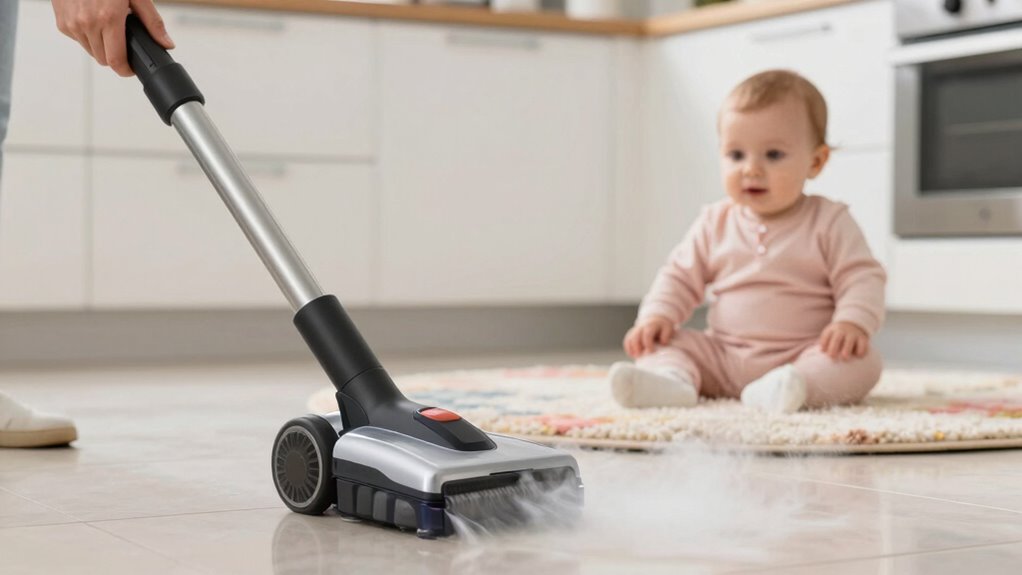
When steam cleaning around babies, ensuring their safety by taking specific precautions is vital. Start by childproofing the area—remove toys, unplug electrical outlets, and keep cords out of reach. Always follow proper steam cleaner maintenance to prevent malfunctions or leaks. Before cleaning, check the device’s temperature settings and verify it’s in good condition. Keep your baby at a safe distance, ideally in another room, while you clean. Be cautious of hot steam escaping and avoid direct contact with your baby’s skin or eyes. Additionally, ventilate the space well after cleaning to clear any residual moisture or fumes. By implementing these precautions, you protect your little one and guarantee effective, safe steam cleaning.
How Does Steam Cleaning Compare to Chemical Disinfectants?

Steam cleaning offers an eco-friendly and chemical-free alternative to traditional disinfectants, making it a safer choice for households sensitive to harsh chemicals. When comparing chemical options, steam uses only heat and water to eliminate germs, bacteria, and viruses, whereas chemical disinfectants often contain harsh ingredients that can linger on surfaces. In terms of chemical comparison, steam provides a more natural approach, reducing your exposure to potentially harmful substances. Regarding environmental impact, steam cleaning produces no chemical waste or pollution, making it a more sustainable option. While chemical disinfectants may be effective against certain pathogens, they can contribute to chemical buildup and environmental harm. Overall, steam cleaning offers a safer, greener way to disinfect without sacrificing effectiveness.
What Additional Steps Can Ensure Complete Disinfection?
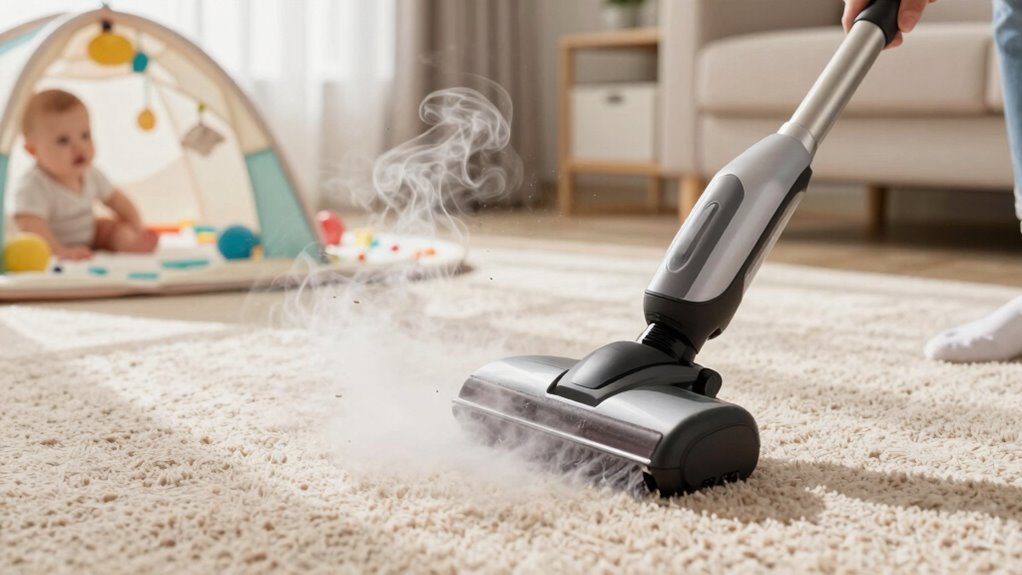
To guarantee thorough disinfection, taking additional steps beyond steam cleaning can make a significant difference. Implementing proper disinfection protocols and sanitation procedures ensures germs are thoroughly eliminated. You can:
- Use EPA-approved disinfectants after steam cleaning to target bacteria and viruses missed by heat.
- Increase cleaning frequency in high-touch areas like doorknobs and light switches.
- Follow proper hand hygiene and wear gloves during cleaning to prevent recontamination.
These measures help reinforce your sanitation efforts, especially in environments with babies or vulnerable individuals. Steam cleaning alone may not reach all pathogens, so combining it with chemical disinfectants and strict protocols ensures a safer, cleaner space. This extensive approach minimizes risks and supports a healthier environment for everyone.
Tips for Safe and Effective Steam Cleaning at Home
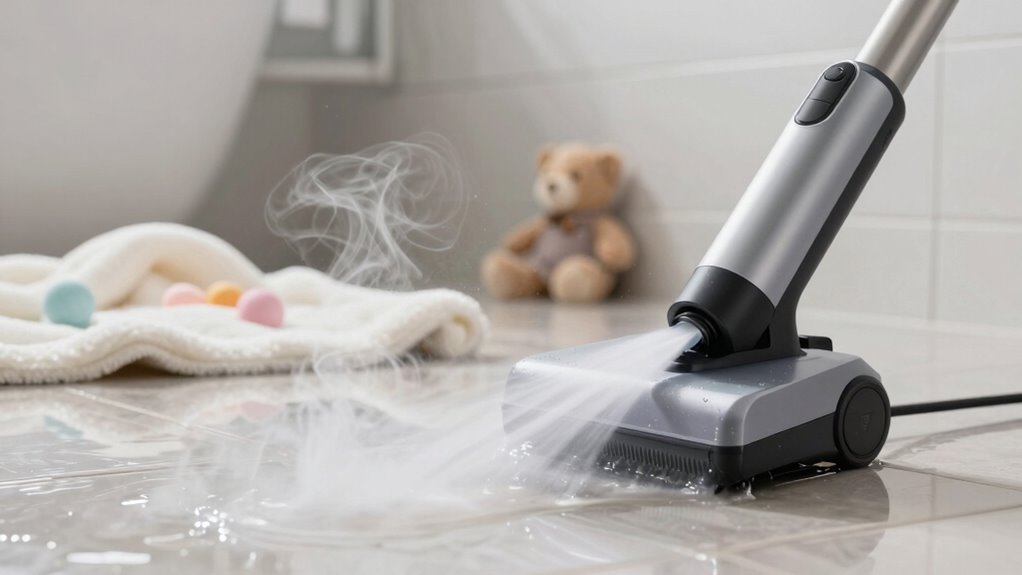
After completing thorough disinfection, it’s important to make certain your steam cleaning process is both safe and effective for home use. One of the key steam cleaning benefits is its ability to kill germs and loosen dirt without harsh chemicals. However, be aware of steam cleaning limitations, such as potential damage to delicate surfaces or insufficient cleaning for heavy grime. To maximize safety, always follow manufacturer instructions, test a small area first, and keep the steam cleaner at the right distance. Use proper protective gear, like gloves and goggles, especially when cleaning around children or pets. Regularly clean your equipment to prevent mold. By understanding these tips, you ensure your steam cleaning is both effective at sanitizing and safe for your home environment.
Frequently Asked Questions
How Long Should I Wait After Steam Cleaning Before Allowing Babies Back?
You should wait at least 2 to 4 hours after steam cleaning before allowing babies back. This gives ample time for any chemical residues to dissipate and for steam penetration to fully dry and sanitize the area. Ventilate well during this period to speed up the process. Ensuring the surface is completely dry minimizes any risks, making it safe for your little ones to return without health concerns.
Can Steam Cleaning Remove Stubborn Stains or Only Surface Dirt?
Did you know steam cleaning can reach temperatures over 200°F? It’s great for deep stain removal and surface dirt elimination. While it’s effective on many stains, stubborn ones like grease or ink may need multiple treatments or specialized cleaners. Steam penetrates porous surfaces, loosening dirt and grime. For best results, focus on pre-treating tough stains first, then use steam to thoroughly clean, ensuring your space looks fresh and spotless.
Is There a Risk of Burns or Injuries From Steam Cleaners Around Children?
You should be cautious with steam cleaners around children, as there’s a risk of steam burns and injury if not handled carefully. Always keep kids away during use, and never point the steam nozzle at anyone. To prevent injury, follow safety instructions closely and let the device cool down before storing. Proper injury prevention guarantees your little ones stay safe while you keep your home clean with steam cleaning.
Are There Specific Brands or Models Recommended for Safe Baby-Friendly Cleaning?
You can find baby-safe brands and non-toxic models that are perfect for cleaning around your little one. Look for steam cleaners with safety certifications and adjustable steam levels to prevent burns. Brands like Bissell, Shark, and Eureka offer non-toxic, baby-friendly options. These models are designed with safety in mind, so you can confidently clean your home without worrying about harmful chemicals or accidental injuries.
How Frequently Should I Steam Clean Different Household Areas for Optimal Safety?
You should steam clean high-traffic areas like floors and carpets weekly to maintain safety and hygiene. For less-used spaces, biweekly or monthly cleaning suffices. Always follow safety precautions, such as ensuring proper ventilation and letting surfaces cool before contact. Regular cleaning reduces allergens and germs, creating a safer environment for your baby. Adjust your cleaning frequency based on activity level and surface type to keep your home healthy and safe.
Conclusion
Steam cleaning is a safe and effective way to reduce germs around your home, especially with babies around. Did you know that steam can kill up to 99% of bacteria and viruses on common surfaces? Just remember to follow safety tips and use proper precautions. With the right approach, you can keep your home clean without harsh chemicals, creating a healthier space for your little one to grow and play.