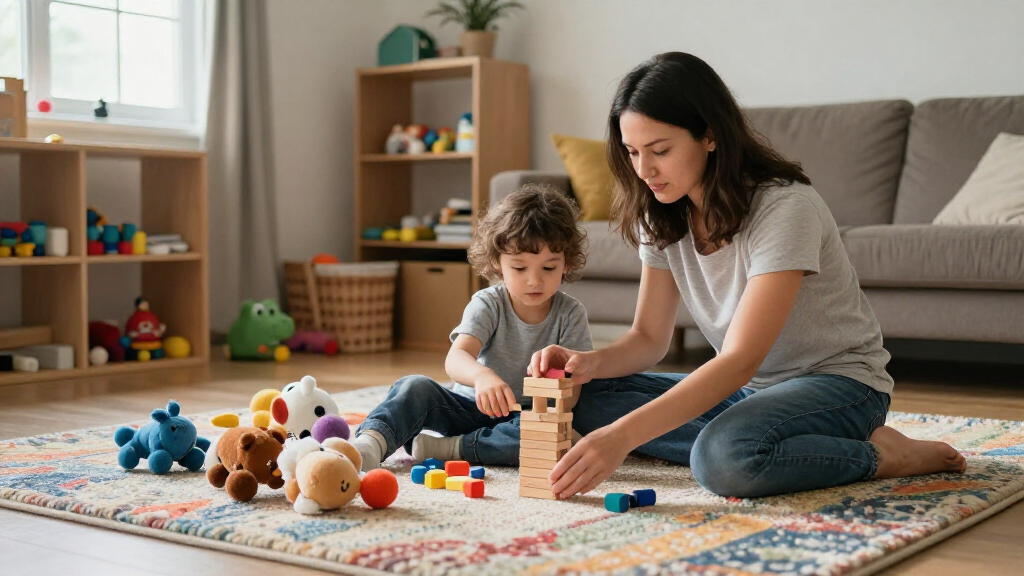

The 15 best children’s toys for creative play and learning balance open-ended fun with skills children can practice through play. I’d choose the Melissa & Doug 100-Piece Wooden Building Blocks Set as the best overall pick for flexible, screen-free construction; Learning Resources Gears! Gears! Gears! Deluxe Building Set stands out for children who want to see how moving parts work, while Play-Doh Fun Tub Set offers an easy entry to hands-on creativity. The main tradeoffs are open-ended play versus guided challenges, compact storage versus a larger range of activities, and simple materials versus more specialized features. Read on for how the 15 options compare, who each suits, and what to prioritize for your child.

Turn the school run and nap time into listening time
- Thousands of audiobooks, podcasts and originals
- Listen on your phone, tablet or Echo — also offline
- Cancel anytime
Complete the kit


Key Takeaways
- Open-ended building earned the strongest all-around case: wooden blocks support many kinds of construction without tying play to a single challenge or theme.
- Guided activities suit children who like clear goals: Design & Drill ABCs & 123s, Pixel Art Challenge, and Brainometry Puzzle offer more structured tasks than basic blocks.
- Magnetic sets vary in scale and age fit: the 150-piece sets offer broader construction possibilities, while COUOMOXA’s 42-piece set is a more approachable starting point for younger children.
- Creative play is not limited to construction: the classroom set, ice cream shop sensory bin, and Play-Doh tub bring pretend play and tactile exploration into the mix.
- More pieces do not automatically mean a better fit: storage demands, small-part supervision, and a child’s tolerance for open-ended play matter as much as set size.
| Melissa & Doug Pattern Blocks and Boards with 120 Wooden Shape Tiles and 5 Double-Sided Puzzle Boards |  | Best for Early Math and Pattern Practice | Brand: Melissa & Doug | Age range: 3+ years | Tile count: 120 wooden shapes | VIEW ON AMAZON | See Our Full Breakdown |
| Educational Insights Design & Drill ABCs & 123s |  | Best for Letter and Number Learning Through Building | Brand: Educational Insights | Model number: 4113 | Recommended age: 36 months–7 years | VIEW ON AMAZON | See Our Full Breakdown |
| 150-Piece Magnetic Building Cube Set for Kids |  | Best for Open-Ended Group Building | Brand: Wxlbr | Model: ZM153 | Piece count: 150 | VIEW ON AMAZON | See Our Full Breakdown |
| Learning Resources STEM Explorers Pixel Art Challenge |  | Best for Screen-Free Coding Concepts | Brand: Learning Resources | Model number: LER9463 | Recommended age: 5–8 years | VIEW ON AMAZON | See Our Full Breakdown |
| 142 pcs Wooden Pattern Blocks & Tangram Puzzle – Montessori Smart Sticks STEM Toy for Ages 3-5 |  | Best for Preschoolers Who Like Building from Cards | Brand: Pajojoqa | Total pieces: 142 | Components: 120 sticks and rings, 20 double-sided cards, wooden base, storage bag | VIEW ON AMAZON | See Our Full Breakdown |
| Melissa & Doug School Time Classroom Play Set |  | Best for Classroom Role-Play | Recommended age: 4–8 years | Piece count: 150+ | Materials: 80% paper, 20% plastic | VIEW ON AMAZON | See Our Full Breakdown |
| Melissa & Doug 100-Piece Wooden Building Blocks Set with Storage Box |  | Best for Open-Ended Building | Age range: 2 years and up | Piece count: 100 blocks | Material: Solid wood | VIEW ON AMAZON | See Our Full Breakdown |
| Creativity for Kids Sensory Bin Ice Cream Shop Playset |  | Best for Sensory Pretend Play | Recommended age: 3–5+ years | Set size: 28 pieces | Sensory sand: 2.5 lb | VIEW ON AMAZON | See Our Full Breakdown |
| Jelly Blox Creative Kit, 20 Blocks |  | Best for Tactile Building | Recommended age: 2 years and up | Block count: 20 | Block type: Soft, flexible blocks | VIEW ON AMAZON | See Our Full Breakdown |
| Play-Doh Fun Tub Set with 19 Accessories and Reusable Storage Container |  | Best for Modeling Variety | Age range: 3 years and up | Accessories: 19 | Modeling compound: 5 cans, 2 oz each | VIEW ON AMAZON | See Our Full Breakdown |
| PicassoTiles 120-Piece Hedgehog Bristle Blocks STEM Building Toy |  | Best for Flexible 3D Building | Brand: PicassoTiles | Model: PTB120 | Piece count: 120 | VIEW ON AMAZON | See Our Full Breakdown |
| EchoPlan 150-Piece Magnetic Building Blocks Set |  | Best for Large Magnetic Builds | Brand: EchoPlan | Model: YH-150 | Piece count: 150 | VIEW ON AMAZON | See Our Full Breakdown |
| COUOMOXA Magnetic Building Blocks, 42-Piece STEM Set for Kids Ages 3–5 |  | Best Magnetic Set for Beginners | Brand: COUOMOXA | Model: CC107 | Piece count: 42 | VIEW ON AMAZON | See Our Full Breakdown |
| Learning Resources Gears! Gears! Gears! Deluxe Building Set |  | Best for Learning Cause and Effect | Brand: Learning Resources | Piece count: Listed as 100; another product description states 95 | Included components: Gears, pillars, axles, bases, connectors, crank handle | VIEW ON AMAZON | See Our Full Breakdown |
| Learning Resources STEM Explorers Brainometry Puzzle |  | Best for Solo Logic Challenges | Brand: Learning Resources | Model: LER9306 | Age range: 5–10 years | VIEW ON AMAZON | See Our Full Breakdown |
| children s toys for creative play and learning | Brand | Recommended age |
|---|---|---|
| Melissa & Doug Pattern Blocks | Melissa & Doug | — |
| Educational Insights Design & | Educational Insights | 36 months–7 years |
| 150-Piece Magnetic Building Cu | Wxlbr | 3–8 years |
| Learning Resources STEM Explor | Learning Resources | 5–8 years |
| 142 pcs Wooden Pattern Blocks | Pajojoqa | — |
| Melissa & Doug School Time Cla | — | 4–8 years |
| Melissa & Doug 100-Piece Woode | — | — |
| Creativity for Kids Sensory Bi | — | 3–5+ years |
| Jelly Blox Creative Kit | — | 2 years and up |
| Play-Doh Fun Tub Set with 19 A | — | — |
| PicassoTiles 120-Piece Hedgeho | PicassoTiles | 3 years and up |
| EchoPlan 150-Piece Magnetic Bu | EchoPlan | 36 months–12 years |
| COUOMOXA Magnetic Building Blo | COUOMOXA | 36 months–12 years |
| Learning Resources Gears! Gear | Learning Resources | — |
| Learning Resources STEM Explor | Learning Resources | — |
More Details on Our Top Picks
Melissa & Doug Pattern Blocks and Boards with 120 Wooden Shape Tiles and 5 Double-Sided Puzzle Boards
Five double-sided boards give this set a clear starting point for children learning to match shapes, sort colors, and count, while the 120 wooden tiles leave room to move beyond the printed designs. That balance makes it more guided than the open-ended magnetic cube set, which asks children to invent structures without a pattern to follow. Children can also use the shapes for their own designs, adding creative play to the early math practice. The wooden case gives the pieces a home, though 120 small tiles take time to sort and put away. I’d choose this for preschoolers who like puzzles and tabletop activities; families seeking larger, free-building structures may prefer the magnetic cubes or Melissa & Doug Wooden Building Blocks instead.
Pros:- Five double-sided boards offer guided pattern challenges and different ways to play.
- 120 wooden shapes support sorting, counting, and child-created designs.
- Combines shape recognition with spatial awareness and hand-eye coordination.
- Wooden case provides storage for the tiles.
Cons:- Sorting and storing 120 small pieces can make cleanup lengthy.
- Designed for ages 3 and up, so it is not a fit for younger children.
Best for: Preschoolers who enjoy matching puzzles and families looking for hands-on practice with shapes, sorting, and counting.
Not ideal for: Families who want large-scale construction play or a set with very few small pieces to manage.
- Brand:Melissa & Doug
- Age range:3+ years
- Tile count:120 wooden shapes
- Puzzle boards:5 double-sided boards
- Shapes:6 shapes in different colors
- Storage:Durable wooden case
Our verdict“Choose this set for preschoolers ready to explore patterns and early math through tactile, board-based play.”
Educational Insights Design & Drill ABCs & 123s
For children who learn by doing, this set turns letters and numbers into a hands-on construction activity: children use a toy drill or screwdriver to attach bolts to the board, then can make their own patterns and pictures. The alphabet and number cards provide a more focused learning path than the open-ended 150-Piece Magnetic Building Cube Set, while the tools bring a pretend-engineering element those pattern-card sets lack. It suits a wider stated age range, 36 months to 7 years, but the cards and bolting activity may appeal differently as children grow. The main catch is practical: the drill needs three AAA batteries, not included. I’d pick it for families who want early literacy and number practice built into construction, not for those seeking a purely unstructured building set.
Pros:- Pairs alphabet and number cards with hands-on construction.
- Includes both a toy drill and a handheld screwdriver.
- Bolting work supports fine motor practice and early engineering exploration.
- Children can create original pictures and patterns beyond the card activities.
Cons:- Toy drill requires three AAA batteries, which are not included.
- The board-and-bolt format offers less room for large-scale building than magnetic cubes.
Best for: Families with children ages 3 to 7 who want letter and number practice paired with tool-based fine-motor play.
Not ideal for: Buyers who want a battery-free activity or a construction set focused on large, free-form structures.
- Brand:Educational Insights
- Model number:4113
- Recommended age:36 months–7 years
- Included components:Toy drill, handheld screwdriver, 50 bolts, 10 double-sided number cards, 26 alphabet cards, drill board
- Battery requirement:3 AAA batteries, not included
- Number of packs:1
- Warranty:No warranty
Our verdict“Choose this for a child who will enjoy practicing letters and numbers while fastening bolts and making designs.”
150-Piece Magnetic Building Cube Set for Kids
This set’s main advantage is freedom: 150 magnetic cubes let children experiment with color, patterns, and structures without needing to follow a puzzle card or finish a prescribed challenge. That makes it a more open-ended choice than Learning Resources STEM Explorers Pixel Art Challenge, whose 40 activities guide children toward specific designs on a small tray. The cube set is also described as portable and mess-free, a useful distinction for travel or shared spaces, though the available details do not specify its material or dimensions. Those omissions make it harder to judge the pieces’ size and storage needs before buying. I’d choose it for families who want collaborative, imaginative building; children who thrive on step-by-step tasks may get more direction from the pixel art set or Melissa & Doug pattern boards.
Pros:- 150 pieces allow varied, open-ended construction.
- Magnetic building supports hands-on problem-solving and spatial exploration.
- Bright colors can prompt color and pattern play.
- Described as portable and mess-free for travel or classroom use.
Cons:- Material and dimensions are not specified, making it difficult to judge piece size and storage needs.
- Adult participation is suggested for young children.
- Offers less structured learning guidance than sets with challenge cards or puzzle boards.
Best for: Families seeking an open-ended, portable building activity for children ages 3 to 8 to use independently or with others.
Not ideal for: Buyers who need specified material and dimensions or children who prefer guided challenges with clear solutions.
- Brand:Wxlbr
- Model:ZM153
- Piece count:150
- Recommended age:3–8 years
- Material:Not specified
- Play type:Magnetic construction
Our verdict“Pick this for children who want collaborative, free-form magnetic building rather than card-led puzzles.”
Learning Resources STEM Explorers Pixel Art Challenge
Forty challenges give this set a stronger learning structure than the 150-Piece Magnetic Building Cube Set, which is designed for open-ended construction rather than sequential tasks. Children place foam pixels in a 10×10 tray to make designs while working with patterning, spatial reasoning, problem-solving, and introductory coding concepts—all without a screen. The challenge booklet can help children get started independently or give an adult a ready-made activity for home or classroom use. Its focus is also its limit: a 5.5 × 5.5-inch tray keeps designs small, and children who want broad, three-dimensional building may prefer the magnetic cubes. The stated 5–8 age range is narrower than several other options here, so I’d choose it for children who enjoy compact puzzles and visual challenges.
Pros:- 40 challenges offer a guided progression of activities.
- Introduces math and coding concepts through screen-free pixel art.
- Foam pieces give children a hands-on way to practice fine motor control.
- Compact tray and booklet suit home, classroom, or independent play.
Cons:- The 5.5 × 5.5-inch tray limits the size of designs.
- The stated 5–8 age range is narrower than options aimed at preschoolers and older children.
Best for: Families and educators seeking a screen-free, structured activity for children ages 5 to 8 who enjoy patterns and visual puzzles.
Not ideal for: Children who prefer large three-dimensional builds, or buyers looking for a toy that grows well beyond the stated age range.
- Brand:Learning Resources
- Model number:LER9463
- Recommended age:5–8 years
- Challenge count:40
- Foam pixel pieces:400
- Tray:10×10 display tray, 5.5 × 5.5 inches
- Pixel size:1 cm cubed
- Included components:Foam pixels, display tray, challenge booklet
Our verdict“Choose this for a 5- to 8-year-old who likes structured, screen-free pattern and coding-style challenges.”
142 pcs Wooden Pattern Blocks & Tangram Puzzle – Montessori Smart Sticks STEM Toy for Ages 3-5
This set offers a different kind of pattern play from the Melissa & Doug Pattern Blocks and Boards: instead of matching solid shape tiles to boards, children arrange sticks and rings on a wooden base to recreate designs from 20 double-sided cards or invent their own. That makes it a good fit for preschoolers ready to practice careful placement and problem-solving, with a storage bag for carrying the pieces. The set is listed for ages 36 months to 7 years, although its title emphasizes ages 3–5; buyers should weigh that range against the child’s interest and ability to manage small pieces. The wooden components and stated water-based paints may appeal to families seeking a wood-based alternative to foam pixels, but this is still a multi-piece set that needs supervision and cleanup.
Pros:- 120 sticks and rings support both card-based patterns and original designs.
- 20 double-sided cards provide varied prompts for preschool play.
- Wooden base gives children a defined area for arranging pieces.
- Storage bag supports organization and portability.
Cons:- Small parts can be lost and may pose a choking hazard for very young children.
- Many individual pieces require sorting and cleanup.
- The title targets ages 3–5 while the listed age range extends to 7, which may leave older children wanting more complex challenges.
Best for: Preschool families looking for a wooden, card-guided pattern activity that also allows children to make their own designs.
Not ideal for: Households with children who may mouth small parts, or buyers who want large building pieces and minimal cleanup.
- Brand:Pajojoqa
- Total pieces:142
- Components:120 sticks and rings, 20 double-sided cards, wooden base, storage bag
- Age range:36 months–7 years
- Material:Environmental-friendly wood, water-based paints
- Model number:SD41
- Package type:Standard packing
- Warranty:No warranty
Our verdict“Choose this for a preschooler who enjoys reproducing simple patterns with wooden pieces and can play safely with small parts.”
Melissa & Doug School Time Classroom Play Set
This set turns early learning into a shared make-believe lesson: children can switch between teacher and student, use the write-on boards, and work through reusable activity cards. Its 150-plus pieces offer more role-play variety than the simpler building focus of the Melissa & Doug 100-Piece Wooden Building Blocks Set, while the fold-down desk gives the play a clear setting. The included pattern blocks, timer, pointer, and lesson planner can prompt counting, storytelling, and turn-taking without requiring a screen. The tradeoff is that many components are paper-based, so they need more careful handling than solid wood blocks. I’d choose it for children who enjoy structured pretend play, but skip it if you want a particularly rugged set for rough or outdoor use.
Pros:- Flip-down double-sided desk supports both teacher and student role-play.
- Reusable activity cards and write-on boards provide repeatable practice.
- Classroom accessories and pattern blocks offer varied prompts for play and learning.
- Pieces store inside the box for portable, screen-free play.
Cons:- Paper-heavy components may wear faster than sturdier wooden toys.
- The many small accessories can take time to sort and put away.
- Manufacturer warranty is not provided.
Best for: Children ages 4–8 who enjoy playing school with a sibling, friend, or caregiver and benefit from hands-on classroom-themed activities.
Not ideal for: Families looking for a highly durable, all-wood toy or a set suited to outdoor play, since many parts are paper and the boards and cards need careful handling.
- Recommended age:4–8 years
- Piece count:150+
- Materials:80% paper, 20% plastic
- Desk:Flip-down, double-sided
- Write-on boards:2 double-sided boards
- Reusable activity cards:9 double-sided cards
- Other included items:2 dry-erase markers, eraser, pointer, 12 pattern blocks, timer, lesson planner, storybook, 3 sticker sheets, and bell
- Certification:FSC-certified materials; applies to new inventory only
Our verdict“Choose this set for children who turn everyday lessons into pretend-play stories; pick the wooden blocks instead if durability and open-ended construction matter more.”
Melissa & Doug 100-Piece Wooden Building Blocks Set with Storage Box
For a child who would rather invent a tower than follow a picture or lesson, these 100 solid wood blocks offer a straightforward, reusable building base. Nine shapes and four colors invite sorting and simple pattern-making as well as stacking, balancing, and imaginative construction. Compared with the Melissa & Doug School Time Classroom Play Set, this set has fewer built-in prompts but asks less of an adult to set up: children can start building in many directions right away. It also suits younger builders, with an age range beginning at 2 years. The main compromise is storage: the carrying box is cardboard, not a durable bin, and the blocks do not include activity cards or guided challenges. Choose it for flexible construction play, not for a structured learning sequence.
Pros:- One hundred solid wood blocks support repeated, open-ended construction.
- Nine classic shapes create opportunities for sorting and shape recognition.
- Four colors add simple ways to make patterns and group pieces.
- Carrying handle makes the set easier to move and put away.
Cons:- The cardboard storage box may not hold up as well as a sturdier container.
- No guide or activity cards are included for children who want specific building challenges.
- FSC certification applies to new inventory only.
Best for: Families seeking a first substantial block set for children ages 2 and up, especially those who value open-ended building, sorting, and early shape play.
Not ideal for: Buyers who need a durable hard-sided storage case or children who prefer guided projects and themed accessories.
- Age range:2 years and up
- Piece count:100 blocks
- Material:Solid wood
- Colors:4
- Shapes:9
- Storage:Cardboard box with carrying handle
- Model number:MND481
- Certification:FSC certification applies to new inventory only
Our verdict“Pick these blocks for durable, low-tech building and early shape play, but choose a guided activity set if your child needs a more defined task.”
Creativity for Kids Sensory Bin Ice Cream Shop Playset
This ice cream shop pairs tactile exploration with a simple pretend-play theme: children can scoop sensory sand, serve cones, sort beads, and count their creations. That combination makes it more themed and sensory-focused than the Melissa & Doug 100-Piece Wooden Building Blocks Set, which leaves the play scenario entirely to the child. The lidded bin gives the materials a defined play area and a place to store them, a useful distinction from loose modeling compound sets such as the Play-Doh Fun Tub Set. The tradeoff is cleanup: sensory sand can escape the bin, so a covered table or easy-to-clean surface is a sensible part of the setup. I’d favor this for preschoolers who enjoy pretend food and tactile play, not for homes seeking a mess-free activity.
Pros:- Sensory sand and shop accessories combine hands-on exploration with imaginative play.
- Scooping, sorting, and counting create simple learning opportunities within the play theme.
- Lidded bin provides a contained play space and storage.
- The ice cream theme gives children an easy starting point for shared pretend play.
Cons:- Sand can scatter beyond the bin and may require a protective surface for cleanup.
- The set is recommended for ages 3 and up, so it is not suited to younger toddlers.
- The themed accessories offer less open-ended construction than a block set.
Best for: Caregivers of children ages 3–5 and older preschoolers who enjoy pretend shops, scooping activities, and tactile sorting or counting.
Not ideal for: Families who need a low-mess toy for carpeted rooms or children who are not ready to keep sensory materials within a play area.
- Recommended age:3–5+ years
- Set size:28 pieces
- Sensory sand:2.5 lb
- Bin dimensions:Approximately 14.5 in W × 10.25 in L × 4.75 in H
- Storage:Lidded bin
- Included items:Sensory sand, ice cream scoop, pom-poms, cones, rainbow beads, and other sensory toys
Our verdict“Choose this for preschoolers drawn to tactile, pretend-shop play, and skip it if keeping sand off the floor is a priority.”
Jelly Blox Creative Kit, 20 Blocks
Jelly Blox makes construction a sensory activity as well as a building one. The 20 soft, flexible blocks can be squeezed, stretched, and joined, while selected pieces add textures from sand, foam beads, mini stars, or mini bricks. That gives it a different appeal from the Melissa & Doug 100-Piece Wooden Building Blocks Set: the wooden set offers many more pieces and classic stacking, while Jelly Blox puts tactile feedback and softer handling first. Compatibility with other Jelly Blox kits also leaves room to expand the building collection later. The tradeoff is a smaller block count, and the colors and sensory fills may vary, so buyers should not expect an exact assortment. I’d choose it for toddlers and preschoolers who like touch-based play more than precise, large-scale construction.
Pros:- Soft blocks can be squeezed, stretched, and squished alongside ordinary construction play.
- Sensory fills add different tactile experiences across selected blocks.
- Compatible with other Jelly Blox kits for expanding the set.
- Designed for cleaning with gentle soap and water.
Cons:- Twenty blocks provide fewer building pieces than the 100-block wooden set.
- Block and sensory-fill colors may vary.
- The supplied information lists an instruction manual but no specific building challenges or activity cards.
Best for: Families with children ages 2 and up who seek a soft, tactile building toy and want the option to add compatible Jelly Blox sets.
Not ideal for: Children who want a large assortment for complex structures, or buyers who need a predictable color and fill combination.
- Recommended age:2 years and up
- Block count:20
- Block type:Soft, flexible blocks
- Sensory fills:Selected blocks contain sand, foam beads, mini stars, or mini bricks
- Compatibility:Compatible with other Jelly Blox kits
- Cleaning:Gentle soap and water
- Included component:Instruction manual
- Manufacturer:Goliath
Our verdict“Choose Jelly Blox for soft, sensory building with toddlers, but favor wooden blocks if piece count and conventional construction are the priorities.”
Play-Doh Fun Tub Set with 19 Accessories and Reusable Storage Container
This Play-Doh set gives young makers several ways to change the same material: flatten it, cut it into shapes and animals, extrude it, or stamp pretend fruit. Five colors and 19 accessories make it a more tool-rich modeling option than the sensory-focused Creativity for Kids Sensory Bin Ice Cream Shop Playset, while the reusable tub keeps the tools and compound together between sessions. Its open-ended material also leaves more room for children to invent their own shapes than a classroom-themed set with prepared activity cards. The tradeoffs are practical: it is intended for indoor use, and modeling compound and small tools need cleanup and supervision appropriate to the child’s age. I’d choose it for preschoolers who enjoy hands-on making with familiar tools, but not for families who want a no-mess or outdoor activity.
Pros:- Five colors of modeling compound support colorful, varied creations.
- Cutters, stampers, a roller, and an extruder offer different ways to shape the material.
- Reusable tub with resealable lid helps keep tools and compound together.
- Manual play requires no batteries.
Cons:- Designed for indoor use, limiting where children can play with it.
- The compound and accessories require cleanup after play.
- Recommended for ages 3 and up, so it is not suitable for younger toddlers.
Best for: Families with children ages 3 and up who want a starter modeling set with several tools, multiple colors, and a reusable storage tub.
Not ideal for: Buyers seeking an outdoor toy, a mess-free activity, or a set designed for children under 3.
- Age range:3 years and up
- Accessories:19
- Modeling compound:5 cans, 2 oz each
- Colors:Blue, orange, teal, purple, and red
- Animal and shape cutters:12
- Other accessories:7
- Storage:Reusable tub with resealable lid
- Power:Manual; no batteries required
- Use:Indoor
Our verdict“Pick this for preschoolers who want varied, tool-based modeling play and a storage tub, but choose another option if indoor cleanup is a concern.”
PicassoTiles 120-Piece Hedgehog Bristle Blocks STEM Building Toy
Flexible connections are the main reason I’d choose this set: its 120 bristle-style pieces join at different angles, letting children move from flat patterns to cars, houses, and other 3D builds. That open-ended approach gives it more construction freedom than the COUOMOXA Magnetic Building Blocks, which focus on rods, balls, and simpler structures. Easy attachment and removal also make rebuilding part of the play, rather than a chore.
The tradeoff is that these pieces don’t offer the magnetic stability or clearly guided challenges of the EchoPlan set and Brainometry puzzle. It suits children who like inventing their own designs, but the age recommendation starts at three, and younger children need a different option. The set’s size and piece count also call for storage space and a way to keep parts together.
Pros:- 120 flexible pieces connect at varied angles for 3D construction.
- Pieces attach and detach readily, supporting repeated redesigns.
- Encourages shape recognition, coordination, spatial thinking, and problem-solving.
- Made from BPA-free, non-toxic, lead-safe plastic.
Cons:- Not recommended for children under three.
- The many loose pieces need storage and can be difficult to keep together.
- Offers less guided structure than a set with challenge cards or building instructions.
Best for: Families with children aged three and up who enjoy open-ended construction and want one set for experimenting with many shapes and 3D designs.
Not ideal for: Caregivers looking for magnetic builds, step-by-step puzzle challenges, or a toy suitable for children under three.
- Brand:PicassoTiles
- Model:PTB120
- Piece count:120
- Recommended age:3 years and up
- Material:BPA-free, non-toxic, lead-safe plastic
- Dimensions:14.13 x 11.75 x 3.38 inches
- Weight:3 pounds
- Warranty:1 year on parts
Our verdict“Choose PicassoTiles for a preschool-age builder who wants flexible, self-directed 3D construction rather than magnetic connections or prescribed puzzles.”
EchoPlan 150-Piece Magnetic Building Blocks Set
150 magnetic blocks give this set room for bigger, more elaborate constructions than the 42-piece COUOMOXA Magnetic Building Blocks. Each one-inch ABS block contains eight sealed magnets, a design that supports more stable connections while children build and revise colorful structures. Rounded edges and an included idea guide add practical help for young builders who want prompts before moving into their own designs.
Compared with the PicassoTiles Hedgehog Bristle Blocks, EchoPlan favors magnetic block-to-block construction over flexible connections at varied angles. Its stated age range spans three to twelve, but the set may be less appealing to a child who prefers tactile, nonmagnetic pieces or a specific building project. The product data also doesn’t identify the shapes included in its 32 designed elements, so buyers have less detail about the available building variety before choosing.
Pros:- 150 one-inch blocks offer plenty of pieces for larger builds.
- Eight magnets per block support stable magnetic connections.
- Rounded edges and sealed magnets are specified in the product description.
- Includes a printed idea guide to help start building.
Cons:- Recommended age begins at 36 months, so it is not intended for younger children.
- The individual shapes in the 32 designed elements are not specified.
- A large collection may take more storage space than a smaller beginner set.
Best for: Families with children aged three and up who want a sizable magnetic construction set, an idea guide, and pieces for progressively larger builds.
Not ideal for: Buyers who want a clearly itemized assortment of shapes, flexible bristle connections, or a small starter set for basic structures.
- Brand:EchoPlan
- Model:YH-150
- Piece count:150
- Block size:1 inch
- Material:ABS
- Magnets per block:8
- Recommended age:36 months–12 years
- Included components:Instruction manual
- Certifications:CPSIA and ASTM
Our verdict“Pick EchoPlan if you want a high-piece-count magnetic set for bigger builds and can accept limited detail about the included shapes.”
COUOMOXA Magnetic Building Blocks, 42-Piece STEM Set for Kids Ages 3–5
Rods and balls make the building idea easy to grasp: children connect the pieces to form basic shapes and simple 3D structures, while exploring color, counting, and early spatial concepts. That focused format makes this a more approachable starting point than the 150-piece EchoPlan Magnetic Building Blocks Set, which offers many more blocks and a wider scope for larger builds. The 42-piece count also gives families a smaller collection to manage during early construction play.
The simplicity is also the limit. Children ready to make more complex designs may outgrow the basic shapes sooner than they would with the PicassoTiles Hedgehog Bristle Blocks, whose pieces connect at different angles. COUOMOXA is designed for indoor use, and although its stated age range reaches twelve, the product’s target age is three to five; older children may want more challenging construction choices.
Pros:- 42 rods and balls introduce magnetic construction without a large assortment.
- Large ABS pieces and smooth edges are designed with young children in mind.
- Supports exploration of shapes, colors, counting, and fine motor skills.
- Works for independent play or building alongside an adult.
Cons:- The set focuses on basic shapes and simple structures.
- Intended for indoor play only.
- The target age of three to five may not match the broader stated age range up to twelve.
Best for: Parents and preschool educators looking for a manageable first magnetic construction set for children roughly ages three to five.
Not ideal for: Older or experienced builders who want complex designs, a large piece assortment, or a toy for outdoor construction.
- Brand:COUOMOXA
- Model:CC107
- Piece count:42
- Set contents:Magnetic rods and balls
- Material:ABS plastic
- Recommended age:36 months–12 years
- Target age:3–5 years
- Target audience:Unisex kids
Our verdict“Choose COUOMOXA as a compact, beginner-friendly introduction to magnetic shapes for preschoolers, not as a long-term set for advanced building.”
Learning Resources Gears! Gears! Gears! Deluxe Building Set
Moving gears give this set a different learning focus from the roundup’s magnetic and flexible building toys: children can connect parts, turn the crank, and see how motion travels through a construction. That physical cause-and-effect lesson makes it a stronger choice for exploring motion than the PicassoTiles Hedgehog Bristle Blocks, which center on flexible shape-building, or the EchoPlan magnetic blocks, which emphasize assembling structures. Gears, axles, pillars, bases, and connectors also leave room for children to devise their own working models.
The set is useful for home, classroom, or homeschool activities, and compatibility with other Gears! Gears! Gears! sets gives a path to expand the system. Its tradeoff is that gear-based play is less focused on open-ended structures without moving parts. The product information also lists conflicting totals of 100 and 95 pieces, so the exact count is unclear.
Pros:- Gears, axles, connectors, and a crank support builds with moving parts.
- Hands-on play introduces motion and cause and effect.
- Encourages fine motor skills, spatial reasoning, creativity, and problem-solving.
- Compatible with other Gears! Gears! Gears! sets.
Cons:- Product information gives conflicting piece counts of 100 and 95.
- The gear-focused system is less suited to building a wide range of nonmoving structures.
- The listed components may require adult help for some children to get started.
Best for: Families, teachers, and homeschoolers who want hands-on construction that shows how gears and motion work together.
Not ideal for: Buyers who prefer magnetic or flexible block building, or who need a clearly verified piece count before purchase.
- Brand:Learning Resources
- Piece count:Listed as 100; another product description states 95
- Included components:Gears, pillars, axles, bases, connectors, crank handle
- Compatibility:Compatible with other Gears! Gears! Gears! sets
- Use:Home, classroom, and homeschool activities
- Learning focus:Motion, cause and effect, spatial reasoning, and problem-solving
Our verdict“Choose this set when learning how connected parts create motion matters more than building with magnetic or flexible blocks.”
Learning Resources STEM Explorers Brainometry Puzzle
Progressive challenge cards make Brainometry the most structured pick here: ten double-sided cards give children puzzles to solve with colorful pieces, building logic, pattern matching, and spatial reasoning. That makes it a clear contrast with the open-ended Learning Resources Gears! Gears! Gears! Deluxe Building Set, where the child invents a moving construction rather than working toward a puzzle solution. A portable storage box also gives the pieces and cards a defined place, which is handy for screen-free play at home or away.
The focus on independent problem-solving is a strength, but it also narrows the play style: this is designed for solo use, unlike the team-building possibilities of PicassoTiles or parent-child construction with COUOMOXA. It suits the stated five-to-ten age range; younger children may find the challenges premature. Small pieces can be lost, so it is less fitting for families seeking a robust, shared building toy.
Pros:- Ten double-sided cards provide progressive puzzle challenges.
- Supports logic, pattern matching, concentration, spatial reasoning, and fine motor skills.
- Portable storage box helps keep the pieces organized.
- Offers screen-free activity for independent play.
Cons:- Designed primarily for solo play rather than cooperative building.
- Small pieces can be misplaced.
- The five-to-ten age range makes it less suitable for younger preschoolers.
Best for: Families with children ages five to ten who want portable, screen-free logic and spatial puzzles for independent play.
Not ideal for: Buyers seeking a cooperative construction toy, open-ended building, or a puzzle set for younger preschoolers.
- Brand:Learning Resources
- Model:LER9306
- Age range:5–10 years
- Pieces:34
- Challenge cards:10 double-sided cards
- Material:Plastic
- Storage:Portable storage box
- Warranty:2-year limited warranty
Our verdict“Pick Brainometry for an older child who enjoys solving structured visual puzzles independently, rather than building collaboratively.”
How We Picked
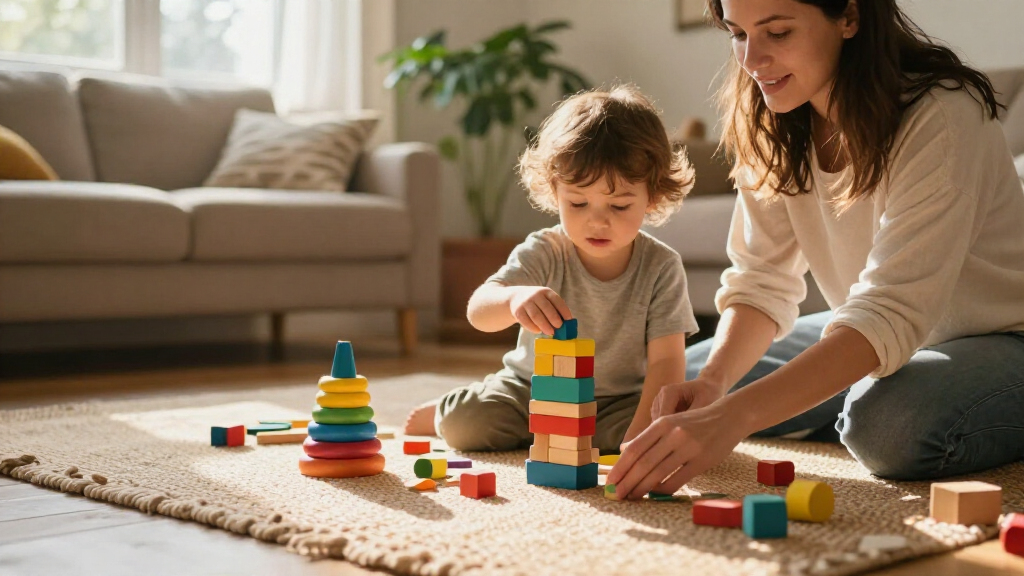
I compared the 15 toys by how directly they support creative play and learning, how much room they leave for a child’s own ideas, and whether the activity is easy to start without substantial adult setup. I also considered the kind of learning each invites—such as spatial reasoning, pattern recognition, fine-motor practice, problem-solving, or imaginative role-play—rather than treating every toy as though it teaches the same skills.
The ranking favors options with lasting play versatility and a clear fit for a range of play sessions. More specialized sets rank lower when their strongest use depends on a particular interest, guided prompts, or a narrower activity. I also weighed age suitability, piece count and likely storage needs, material and maintenance demands, and how well each toy fills a distinct role alongside the others. Because children differ in what holds their attention, the order is a guide to relative flexibility—not a claim that one play style suits every family.
Factors to Consider When Choosing 15 Best Children S Toys For Creative Play And Learning
These toys differ as much in the kind of play they invite as in their materials. I’d start with the child’s habits and your household’s practical limits, then match the toy’s structure to the way they like to learn.
Choose Open-Ended Play or Guided Challenges
Open-ended toys let children decide what to make, while guided sets give them a prompt or a defined task. Neither approach is automatically better: children who enjoy inventing may return often to basic blocks, while those who lose interest without a clear goal may prefer puzzles or design challenges. A common mistake is choosing a highly structured toy for a child who wants to make their own rules, or an unstructured set for someone who thrives on step-by-step prompts. Think about whether the child usually follows an example, adapts it, or ignores it to create something else. For a household with mixed play styles, a flexible set can pair well with occasional activity cards or adult-suggested challenges. Prioritize the kind of play the child already returns to, not just the skill named on the package.
Match the Toy to Age, Dexterity, and Supervision
Age guidance is a starting point, but children’s hand control, patience, and experience with building or puzzles also shape whether a toy feels manageable. Small pieces can frustrate a younger child and call for closer supervision, even when the activity itself is simple. A set with larger, easy-to-handle parts may be a better first building toy than a more intricate kit with a higher piece count. Consider where the child will play and whether an adult can help when a task becomes tricky. If siblings of different ages share toys, check the parts and supervision guidance before relying on one set for everyone. Choosing a toy just beyond a child’s current ability can be motivating, but too much difficulty can turn creative play into repeated requests for help.
Think About Storage Before Buying a Large Set
A large assortment can extend construction possibilities, but only if the pieces are easy to collect and put away. Count the space needed for both the container and the active build: some creations may not fit back in the box when play ends. Loose pieces can also spread into shared rooms, so a dedicated bin or play surface may matter more than the advertised piece total. Check whether storage is included and whether parts can be sorted without a complicated cleanup routine. Families with limited space may get more use from a compact, focused activity than from a larger set that is difficult to keep organized. Before paying more for extra components, ask whether the child will use the added variety often enough to justify the storage burden.
Look Beyond the Learning Label
Educational language is most useful when it points to an activity the child will actually enjoy. A toy may encourage patterning or spatial reasoning, but those benefits depend on the child choosing to play with it. Check what the child physically does: building, matching, manipulating, pretending, or following a sequence. A useful choice often blends a familiar interest with a new challenge, such as construction with color patterns or pretend play with sorting and arranging. Avoid buying several toys that teach in much the same way if your aim is to widen play options. A mix of hands-on building, guided puzzles, and imaginative play can offer more variety than multiple sets built around one skill.
Weigh Cleanup and Maintenance Against Play Variety
Materials affect the work that comes after play. Tactile materials may need a protected surface and prompt cleanup, while small building pieces call for sorting and regular checks that parts have not gone missing. Wooden and plastic construction toys can be easier to put away, but their many components still need a home. Before choosing a messy or sensory activity, decide whether the likely play value fits your household’s cleanup routine. Also check whether the set depends on consumable materials or pieces that could be hard to replace. Paying more can make sense when a toy offers durable, repeatable play that the child will revisit; it is less compelling when the extra features add maintenance without matching the child’s interests.
Frequently Asked Questions
Which type of toy is a good first choice for a child who has not shown a strong play preference?
I’d start with a versatile toy that does not require a child to master one specific activity before play begins. Basic building blocks give room for stacking, sorting, and inventing, so an adult can suggest a small challenge without taking over. If the child prefers a clear endpoint, a puzzle or a guided design activity may be easier to engage with. Watch what they choose during unstructured play before adding a more specialized kit. The best first choice is the one that invites a second play session, not simply the one with the most features.
Are magnetic building sets interchangeable, or should I choose one by age and piece count?
I would not treat magnetic sets as interchangeable based on the word “building” alone. Their piece counts and intended age ranges can change how complex a build feels, how much space it takes, and how easily a young child can manage the parts. A smaller set can be a more approachable introduction, while a larger set offers more pieces for broader constructions but also asks for more storage and sorting. Check the manufacturer’s age and safety guidance, particularly if younger siblings share the play area. Choose by the child’s dexterity and interest in construction rather than assuming the largest set is the best starting point.
Should I choose a toy with instructions or one that is fully open-ended?
Look at how the child responds to examples in other activities. If they enjoy copying a model and then changing it, a guided set can provide a useful starting point without limiting later creativity. If they tend to invent their own games, open-ended materials may hold attention longer than a toy with a fixed sequence. Some children benefit from having both: an instruction or challenge to get started, followed by time to make something different. The goal is not to favor one format, but to avoid buying a toy whose structure clashes with the child’s preferred way to play.
How can I tell whether a toy’s learning benefit is worth its space and cleanup?
Consider how often the child is likely to use it and what the play session asks your household to manage. A toy that offers repeatable activities may justify more storage space than one tied to a single short project. For sensory or modeling play, factor in surface protection, cleanup time, and any materials that may need replenishing. For building sets, think about whether the parts can be stored together and whether unfinished creations can remain out of the way. If cleanup makes it hard to start play, a simpler set may deliver more real use even if it has fewer features.
Is one larger set better than buying several smaller toys with different play styles?
A larger set can provide variety within one activity, especially when a child is deeply interested in building or construction. Several smaller toys can offer a broader mix of experiences, such as puzzles, pretend play, and hands-on art, which may suit children whose interests shift. The tradeoff is that multiple sets can create more separate storage and more opportunities for lost parts. Think about whether the child repeats one type of play or moves between different kinds of activities. If you are unsure, adding variety across play styles may teach you more about the child’s preferences than expanding a single collection.
Conclusion
For the broadest mix of construction and open-ended play, I’d pick the Melissa & Doug 100-Piece Wooden Building Blocks Set as best overall. The Melissa & Doug Pattern Blocks and Boards make a strong value choice for families who want reusable shape and pattern activities, while the 150-Piece Magnetic Building Cube Set is my premium-style pick for shoppers seeking a larger magnetic construction assortment. For beginners, I’d start with the COUOMOXA 42-Piece Magnetic Building Blocks Set, which offers a smaller-scale introduction than the larger magnetic options. For specific interests, choose Gears! Gears! Gears! for moving-part construction, Brainometry Puzzle for structured problem-solving, or the Ice Cream Shop Sensory Bin for tactile pretend play. Match the toy to the child’s preferred play style and your available storage, and the right choice becomes much clearer.