
TL;DR

Turn the school run and nap time into listening time
- Thousands of audiobooks, podcasts and originals
- Listen on your phone, tablet or Echo — also offline
- Cancel anytime
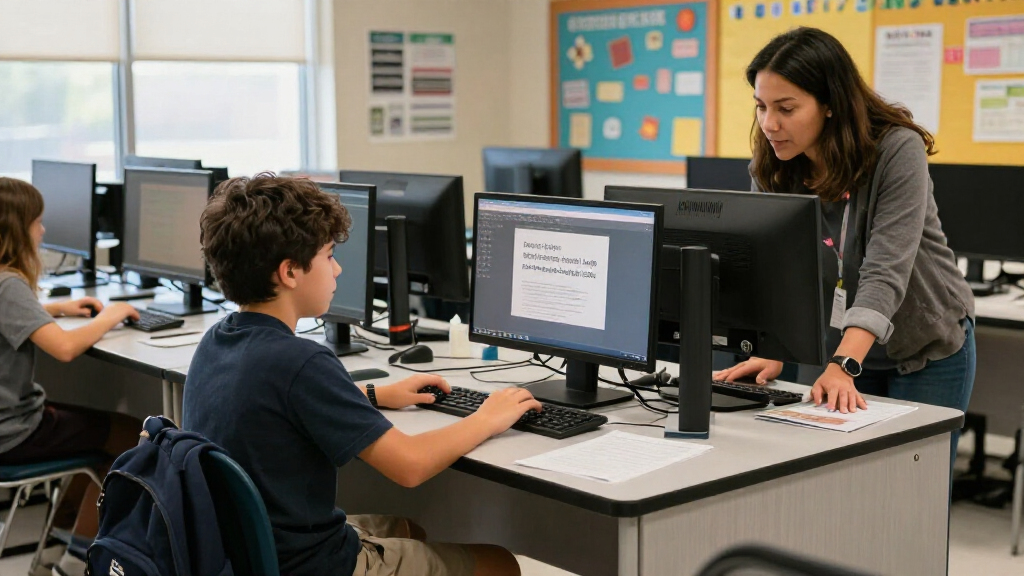
A commentary published by The 74 argues that schools should scale back one-to-one laptop programs and use computer labs or laptop carts instead. Its author cites a survey of more than 2,000 high school students and recent graduates, but the survey describes reported behavior and does not establish that school-issued devices cause lower learning outcomes.
The 74 has published an opinion article calling on school districts to reduce or end routine one-to-one laptop programs and instead provide computers through labs or laptop carts. The author, affiliated with the Thomas B. Fordham Institute, bases the recommendation partly on a survey of more than 2,000 high school students and recent graduates who reported frequent classroom technology misuse; the survey does not show that school devices cause lower academic performance.
The survey was commissioned by the Thomas B. Fordham Institute and conducted by Impact Research and UpONE Insights. According to the author, half of respondents said they scroll social media or message friends in class daily, while about one in three reported daily viewing of unassigned videos or playing video games. Seventy-six percent said they engaged in some kind of technology misuse every day. These figures reflect respondents’ reports, not independent observation of classroom activity.
The author also reports that six in 10 students said they spend most of class on a school-issued device, and nearly one-third said they spend more than three-quarters of class using one. Respondents identified school-issued devices as their main way of accessing AI, games and YouTube at school. The article says 22% reported daily AI use without permission; nearly half said they used AI to solve math problems, and one in four said they had used it to cheat on quizzes or tests.
Based on those findings, the author argues that school leaders should treat computers as tools for specific lessons rather than provide every student with a device for routine use. The proposal leaves decisions to local administrators, school boards and parents, and allows for exceptions such as computer science courses, research needs or students without computers at home.
How Device Access Shapes Classrooms
The proposal matters to districts weighing technology rules because it shifts the debate from student phones alone to devices supplied by schools. If leaders adopt the approach, it could change how students access digital research, learning platforms and AI during lessons, while also affecting spending on hardware and support.
The article presents reduced distraction and cheating as reasons to limit access, but those are the author’s arguments, not demonstrated outcomes of the survey. Schools would need to balance the risks described against the educational uses of devices and the needs of students who depend on school technology. The source does not quantify costs or estimate what a switch to labs and carts would mean for instruction.
Products Worth Considering

Graco Magnum X7 Cart Airless Paint Sprayer

Graco Extend2Fit 2-in-1 Convertible Car Seat, Gotham

LEGO Architecture Statue of Liberty Model Building Set (21042)
As an affiliate, we earn on qualifying purchases.
The Survey Behind the Proposal
The author says the survey was fielded in the spring and included more than 2,000 high school students and recent graduates. The article explicitly acknowledges that its research is not a causal study and cannot settle whether one-to-one device programs improve or harm learning. Its reported figures document students’ accounts of how technology is used, rather than comparing academic results between schools with different device policies.
The commentary also points to policy changes in Los Angeles and New York City. It says Los Angeles imposed daily limits on school-issued device use and blocked YouTube on district devices. New York City adopted screen-time recommendations, which the article says are not mandatory and do not cover high school students. Those examples provide policy context but do not show whether the measures reduced distraction or improved learning.
““Our recent research isn’t a causal study and won’t settle this debate.””
— The article’s author, affiliated with the Thomas B. Fordham Institute
What the Survey Cannot Establish
The supplied article does not provide the survey questionnaire, response rate, detailed methodology or results broken down by school, grade or device policy. It also does not establish whether reported misuse would decline if schools replaced personal devices with labs or carts. No causal link to academic outcomes is established in the material.
It remains unclear how districts would address lessons that require frequent computer access, how they would provide devices to students who lack them at home, or whether the Los Angeles and New York policies described have changed student behavior. The article advocates a policy direction; it does not report a new national rule or a confirmed district-wide shift to computer labs.
Local Leaders Face the Decision
The article identifies local administrators, school boards and parents as the decision-makers, but the supplied material gives no timetable for further policy action or response from districts. Readers should distinguish the author’s recommendation from adopted policy: schools would need to announce any changes to device access, classroom limits or equipment lending.
Further evidence could clarify whether device restrictions affect learning, distraction and academic integrity. For now, the survey supplies self-reported measures of student behavior, while the policy case for returning to labs and carts remains the author’s interpretation.
Key Questions
What change does the opinion article recommend?
It recommends that schools reduce or end routine one-to-one laptop distribution and provide computers through labs or laptop carts for selected activities.
What did the survey report?
According to the author, 76% of respondents reported some form of technology misuse every day. The figures are based on student and recent-graduate reports, not direct classroom monitoring.
Does the survey prove school laptops harm learning?
No. The author says the research is not a causal study and does not settle the debate over device programs’ effect on learning.
Is a national ban on school-issued laptops being proposed?
No national ban is reported. The author argues that decisions should be made by local school leaders, boards and parents, with exceptions for particular courses and student needs.
What policies in Los Angeles and New York are mentioned?
The article says Los Angeles set daily limits on school-device use and blocked YouTube on district devices. It says New York City issued screen-time recommendations that are not mandatory and do not cover high school students.
Source: the74million.org