
For most families, Foldable Flight’s Incredible Paper Airplanes is the best overall pick, pairing step-by-step instructions with video tutorials for flexible learning. National Geographic Paper Airplane Kit is a strong choice for younger builders, while the High-Performance Paper Airplanes Kit stands out for pre-cut models and a catapult launcher. The main tradeoff is between guided, easy assembly and the challenge of folding a wider range of designs yourself. Paper supply, age fit, and extras such as launchers also shape which kit offers the best match. Read on for the full comparison and advice on choosing the right kit for your flyers.

Turn the school run and nap time into listening time
- Thousands of audiobooks, podcasts and originals
- Listen on your phone, tablet or Echo — also offline
- Cancel anytime
Complete the kit


Key Takeaways
- Foldable Flight’s Incredible Paper Airplanes leads for learning support: print instructions and video tutorials give buyers more than one way to follow a fold.
- High-Performance Paper Airplanes Kit is the most flight-focused option here, with 10 pre-cut models and a catapult launcher, but it offers less open-ended folding than paper-and-book kits.
- Kits with larger sheet counts, such as the 100 Planes to Fold & Fly option and AluAbi’s 60-sheet kit, suit repeat play better than compact kits with fewer designs or sheets.
- The lineup splits between guided folding and quick assembly: Rohelm’s 12-design kit and the 16-design origami kit encourage practice, while pre-cut models reduce folding demands.
- Age labels are only a starting point; the best fit depends on whether a child can follow multi-step folds, wants adult help, or prefers immediate flying with a launcher.
| Foldable Flight’s Incredible Paper Airplanes: Step-by-Step Instructions and Video Tutorials | 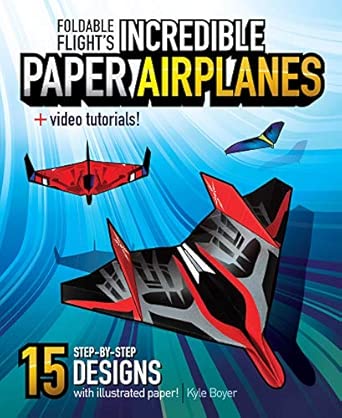 | Best for Learning the Folding Basics | Instruction format: Step-by-step illustrated instructions | Video guidance: Video tutorials | Product type: Paper airplane guide | VIEW LATEST PRICE | See Our Full Breakdown |
| AluAbi Paper Airplane Kit for Kids Ages 6-12, 60 Sheets, Book & Video |  | Best for Portable, Beginner-Friendly Crafting | Brand: AluAbi | Paper quantity: 60 sheets | Paper assortment: 30 printed-pattern sheets and 30 solid-color sheets | VIEW LATEST PRICE | See Our Full Breakdown |
| Paper Airplane Kit: 100 Planes to Fold & Fly with Launcher, Stickers, and Rubber Bands |  | Best for Group Play and Customization | Plane quantity: 100 | Sticker quantity: 1,000 | Rubber band quantity: 100 | VIEW LATEST PRICE | See Our Full Breakdown |
| Rohelm Paper Airplane Origami Kit for Kids, 12 Designs, 36 Sheets |  | Best for Classic Designs and Clear Guidance | Brand: Rohelm | Airplane designs: 12 | Paper sheets: 36 | VIEW LATEST PRICE | See Our Full Breakdown |
| 100 Paper Planes to Fold and Fly |  | Best for Design Variety in a Book | Number of designs: 100 | Activity: Folding and flying paper airplanes | Paper quantity: Not specified | VIEW LATEST PRICE | See Our Full Breakdown |
| Paper Airplane Origami Kit with 16 Designs and 32 Colorful Sheets |  | Best for Design Variety | Brand: Xuoent | Model: ZZ-6566 | Designs: 16 | VIEW LATEST PRICE | See Our Full Breakdown |
| Record-Breaking Paper Airplanes Kit |  | Best for Flight-Focused Designs | Designs: 16 | Included planes: 48 fold-up planes | Contents: Book and paper airplane kit | VIEW LATEST PRICE | See Our Full Breakdown |
| 60-Sheet Paper Airplane Kit with Instruction Book and Video |  | Best Value for Practice | Sheet count: 60 | Paper size: 10 x 7.4 inches | Paper types: 30 preprinted airplane sheets and 30 colored sheets | VIEW LATEST PRICE | See Our Full Breakdown |
| High-Performance Paper Airplanes Kit – 10 Pre-Cut Easy-to-Assemble Models with Pop-Out Cards, Instruction Book, and Catapult Launcher |  | Best for Quick Assembly and Launching | Models: 10 pre-cut paper airplane models | Assembly: Pop-out cards | Launcher: Catapult launcher included | VIEW LATEST PRICE | See Our Full Breakdown |
| National Geographic Paper Airplane Kit for Kids, Ages 6–12 |  | Best for Flight Experiments | Brand: Blue Marble | Age range: 6 years and up | Educational objective: STEM | VIEW LATEST PRICE | See Our Full Breakdown |
| Paper Airplane Craft Kit with 65 Sheets and Illustrated Book |  | Best for Pattern Variety | Brand: KOOL KRAFTS | Material: Paper | Sheet count: 65 | VIEW LATEST PRICE | See Our Full Breakdown |
| Next Generation Paper Airplanes Kit – Engineered for Extreme Performance with Book, 32 Origami Papers and DVD |  | Best for Flight-Focused Folders | Paper count: 32 specialty origami papers | Instruction book: Detailed book included | Video instruction: Instructional DVD included | VIEW LATEST PRICE | See Our Full Breakdown |
| High Flyers: Fold the Best Paper Planes for Sky-High Fun – Includes 60 Planes and 20 Designs |  | Best for Lots of Practice Flights | Plane capacity: Paper for 60 planes | Airplane designs: 20 | Activity: Hands-on folding and flying | VIEW LATEST PRICE | See Our Full Breakdown |
| Fold and Fly Paper Airplane Kit |  | Best for a Simple, Low-Detail Kit | Product type: Paper airplane kit | Activity: Fold and fly | ASIN: 1640308881 | VIEW LATEST PRICE | See Our Full Breakdown |
| The Klutz Book of Paper Airplanes |  | Best Book-and-Paper Set for Curious Beginners | Brand: Klutz | Publisher: Scholastic Inc. | Age range: Children/Juvenile | VIEW LATEST PRICE | See Our Full Breakdown |
More Details on Our Top Picks
Foldable Flight’s Incredible Paper Airplanes: Step-by-Step Instructions and Video Tutorials
Foldable Flight’s Incredible Paper Airplanes makes the most sense for buyers who want guidance on folding rather than a box packed with supplies. Its illustrated steps and video tutorials offer two ways to follow along, which can help beginners who find a sequence of folds hard to interpret on the page alone. Compared with the AluAbi Paper Airplane Kit, it does not have a stated paper count, storage box, age range, or number of designs, so I cannot recommend it as confidently for a planned group activity or repeated crafting sessions. The tradeoff is a focus on instruction: the available details do not say whether paper is included or how many airplane patterns the guide covers. I would choose it for learning support, not for a clearly quantified all-in-one kit.
Pros:- Provides step-by-step folding instructions
- Includes video tutorials as an alternative learning format
- Uses illustrated guidance to clarify folding sequences
Cons:- Available details do not confirm whether paper is included
- No design count or supply quantity is specified
- No storage or portability feature is listed
Best for: Beginners who already have paper and want both illustrated folding guidance and video demonstrations
Not ideal for: Families who need a complete, countable kit with a stated supply of paper, a defined design list, or a storage case
- Instruction format:Step-by-step illustrated instructions
- Video guidance:Video tutorials
- Product type:Paper airplane guide
- Paper included:Not specified
- Number of designs:Not specified
- Storage case:Not specified
Our verdict“Choose Foldable Flight for mixed-format folding guidance, but pick AluAbi if you need paper and kit contents clearly specified.”
AluAbi Paper Airplane Kit for Kids Ages 6-12, 60 Sheets, Book & Video
AluAbi’s 60-sheet kit is a practical pick for children who benefit from clear instruction and a tidy place to keep supplies. It pairs 30 patterned sheets and 30 solid-color sheets with a folding book and QR-code videos, giving beginners more than one way to learn while leaving room to decorate their planes. The reusable box also makes it easier to carry the activity than the Rohelm Paper Airplane Origami Kit, whose listed details focus on paper and instruction rather than storage. AluAbi’s main limit is its ten designs: once a child has learned them, the kit offers less folding variety than the 100-design book-and-accessory set. I’d favor it for guided sessions at home or on the go, not for buyers seeking a large model library.
Pros:- Includes 60 sheets split between printed patterns and solid colors
- Combines a step-by-step book with QR-code video tutorials
- Reusable storage box helps keep supplies together for travel
- Ten listed models give beginners a defined starting point
Cons:- Limited to ten airplane designs
- The 10.04-by-7.44-inch sheets may not suit folders who prefer larger paper
- Paper-based planes can be damaged with rough handling
Best for: Parents of children ages 6–12 who want a portable starter kit with paper, book instructions, and video help
Not ideal for: Experienced folders or groups seeking a large variety of airplane patterns beyond ten designs
- Brand:AluAbi
- Paper quantity:60 sheets
- Paper assortment:30 printed-pattern sheets and 30 solid-color sheets
- Sheet size:10.04 x 7.44 inches
- Airplane designs:10
- Instructions:Step-by-step book and QR-code video tutorials
- Storage:Reusable storage box
- Target age:6–12 years
Our verdict“Choose AluAbi for an organized, portable introduction to paper airplanes; choose the 100-plane kit if design variety matters more.”
Paper Airplane Kit: 100 Planes to Fold & Fly with Launcher, Stickers, and Rubber Bands
This 100-plane kit is the lineup’s activity-first choice: it combines a large supply of colorful sheets with 1,000 stickers, 100 rubber bands, and a launcher. That quantity suits families or groups who want folding to lead into decorating and flying, rather than treating the activity as a short lesson. Compared with 100 Paper Planes to Fold and Fly, this kit lists concrete accessories and materials, so buyers can see how it supports play beyond the designs themselves. The tradeoff is that the product details do not identify instruction formats or explain how the 100 designs are organized, making it less clearly guided than AluAbi or Rohelm. Paper can tear, and rubber bands may wear with repeated use; I’d pick this for shared activity, not for a low-mess, ready-to-fly toy.
Pros:- Lists materials for 100 paper airplanes
- Includes a launcher and 100 rubber bands for flight activities
- 1,000 stickers support extensive decoration
- Large stated quantity suits group or family crafting
Cons:- Folding and setup are needed before flying can begin
- Paper may tear under rough handling
- Rubber bands can snap or wear with frequent use
Best for: Families, classrooms, and activity groups who want many planes to fold, decorate, and launch together
Not ideal for: Buyers who want clearly described step-by-step guidance or planes ready to fly without folding and setup
- Plane quantity:100
- Sticker quantity:1,000
- Rubber band quantity:100
- Launcher:Included
- Recommended age:7 years and up
- Activity:Folding, decorating, and flying paper airplanes
Our verdict“Choose this kit for high-volume group folding and launcher play, but opt for AluAbi or Rohelm if guided instruction is the priority.”
Rohelm Paper Airplane Origami Kit for Kids, 12 Designs, 36 Sheets
Rohelm’s kit offers a focused middle ground: 12 classic airplane designs, 36 colorful sheets, illustrated instructions, and QR-code videos. That is more pattern variety than AluAbi’s ten models, while keeping the project list defined rather than stretching to the 100 designs claimed by 100 Paper Planes to Fold and Fly. Its FSC-certified paper is a useful material detail for buyers who care about paper sourcing, and having both print and video guidance can help children follow the folds. The tradeoff is a modest supply of 36 sheets, which may run short in a group or after repeated attempts. It is listed for ages six and up, despite the title’s broader age wording, and the planes must be folded before flying. I’d choose it for guided, classic origami-style crafting rather than high-volume play.
Pros:- Offers 12 designs, more than AluAbi’s ten listed models
- Includes 36 colorful sheets
- Pairs illustrated instructions with QR-code video tutorials
- Uses FSC-certified paper
Cons:- A 36-sheet supply may be limited for groups or repeated folding
- Planes require folding before they can be flown
- Listed age guidance starts at six, so it is not specified for younger children
Best for: Children age six and older who want guided folding across a dozen classic designs
Not ideal for: Large groups or children who want a substantial reserve of sheets for repeated builds and experiments
- Brand:Rohelm
- Airplane designs:12
- Paper sheets:36
- Paper certification:FSC-certified
- Instructions:Illustrated instructions and QR-code video tutorials
- Recommended age:6 years and up
- Dimensions:11.4 x 8.6 x 0.3 inches
- Model:RHRUS006
Our verdict“Choose Rohelm for guided classic designs and FSC-certified paper, but look to the 100-plane kit for a much larger activity supply.”
100 Paper Planes to Fold and Fly
100 Paper Planes to Fold and Fly stands out for its stated range of 100 airplane designs, making it the strongest fit here for readers who want a broad catalog of folding ideas. Unlike the AluAbi and Rohelm kits, its supplied details do not list paper, video tutorials, or a storage box, so buyers should not assume it is a complete craft kit. It also offers less clearly specified play equipment than the other 100-plane option, which lists a launcher, rubber bands, and stickers. The central tradeoff is range versus certainty: the design count is explicit, but the available product data does not describe the instructions, paper supply, or difficulty levels. I’d choose it when variety in a fold-and-fly collection is the main goal, and skip it if you need materials and teaching support included.
Pros:- Lists 100 airplane designs
- Combines folding with flying as the stated activity
- Offers more listed design variety than the AluAbi and Rohelm kits
Cons:- Available details do not specify whether paper is included
- Instruction format and difficulty range are not provided
- No launcher or decorating accessories are listed
Best for: Paper-airplane enthusiasts who want a large selection of designs to fold and fly
Not ideal for: Parents or teachers who need a confirmed paper supply, detailed instruction format, or included launcher and decorating materials
- Number of designs:100
- Activity:Folding and flying paper airplanes
- Paper quantity:Not specified
- Instruction format:Not specified
- Launcher:Not specified
- Decorating accessories:Not specified
Our verdict“Choose this collection for its stated 100-design range, but select the accessory-packed 100-plane kit if you need a more fully specified activity set.”
Paper Airplane Origami Kit with 16 Designs and 32 Colorful Sheets
Sixteen designs give this kit more model variety than the 10-design 60-Sheet Paper Airplane Kit, making it a good fit for kids who want to try different folding styles rather than repeat a small set. Its 32 double-sided, FSC-certified sheets add colorful surfaces while providing two sheets per design. QR-linked tutorials and videos guide each fold, but the digital-only instructions are less convenient than the printed book included with Record-Breaking Paper Airplanes Kit. The supply is also modest: after a first attempt at each design, there may be little paper left for refining tricky folds or flying favorites again. I’d choose it for variety and guided origami practice, not for a large stockpile of planes.
Pros:- Offers 16 airplane designs, more than the 10 in the 60-Sheet Paper Airplane Kit.
- Double-sided colorful paper gives folded planes patterned surfaces.
- FSC-certified paper supports crisp folds.
- Digital tutorials include step-by-step guidance and videos.
Cons:- No printed instruction manual is included, so tutorials require a device.
- Two sheets per design leave limited room for practice or repeat builds.
- The 32-sheet supply is smaller than kits that include 48 or 60 planes or sheets.
Best for: Children ages 6 and up who want to learn a range of airplane folds and can access the QR-linked tutorials on a device.
Not ideal for: Families who want printed instructions or enough paper for repeated practice; the kit has no manual and only two sheets per design.
- Brand:Xuoent
- Model:ZZ-6566
- Designs:16
- Paper sheets:32 double-sided sheets
- Paper material:FSC-certified paper
- Instructions:Digital tutorials and videos; no printed manual
- Recommended age:6 years and up
- Dimensions:5.91 x 3.94 x 0.12 inches
- Weight:50 g
Our verdict“Choose this kit for a broad selection of folds and digital guidance, but pick a larger paper set if repeat builds matter more than design variety.”
Record-Breaking Paper Airplanes Kit
For kids more interested in how a plane flies than in decorative paper, Record-Breaking Paper Airplanes Kit puts the focus on models inspired by speed and long-distance flight. It pairs instructions for 16 designs with 48 fold-up planes, giving families more attempts than the 32-sheet Paper Airplane Origami Kit with 16 Designs. The included book is a practical advantage over that kit’s QR-only guidance: instructions don’t depend on a device. The tradeoff is that the available details don’t specify paper material, dimensions, or whether the planes are preprinted, so buyers have less information about the build experience. Compared with the National Geographic Paper Airplane Kit, it also lacks a launcher, flight log, and learning poster; its appeal is the straightforward combination of a book and many planes.
Pros:- Includes 48 fold-up planes for multiple attempts.
- Provides instructions for 16 designs.
- Printed book avoids dependence on a phone or QR-linked video.
- Designs center on fast and long-flying plane styles.
Cons:- No launcher or flight-tracking accessories are listed.
- Paper material and sheet dimensions are not specified.
- The product details do not describe the level of folding difficulty.
Best for: Families seeking plenty of planes and a printed guide for trying speed- and distance-inspired folds together.
Not ideal for: Buyers who want a launcher, flight-tracking activities, or detailed information about paper type and format.
- Designs:16
- Included planes:48 fold-up planes
- Contents:Book and paper airplane kit
- Design inspiration:Fast- and long-flying planes
- Instruction format:Book
- Paper material:Not specified
Our verdict“Pick this book-and-plane set for a printed guide and a generous supply of flight-focused models, not for launcher-based play or extra learning accessories.”
60-Sheet Paper Airplane Kit with Instruction Book and Video
Sixty sheets make this the strongest choice in this group for repeated folding practice: it includes 30 preprinted airplane sheets and 30 colored sheets, compared with 32 total sheets in the Paper Airplane Origami Kit with 16 Designs. The preprinted pages tear out without scissors, while the illustrated book and video give children two ways to follow the 10 designs. Thicker paper is intended to hold creases, which can help young folders produce planes that keep their shape. The compromise is fewer models than the 16-design options, including the Record-Breaking Paper Airplanes Kit. Its 10 x 7.4-inch sheets and paper construction also mean outdoor conditions can affect flights, and younger children may need adult help with folds.
Pros:- Includes 60 sheets, split between 30 preprinted and 30 colored sheets.
- Preprinted sheets tear out without scissors.
- Illustrated instructions and a video offer two learning formats.
- Thicker paper is designed to hold creases for indoor or outdoor flying.
Cons:- Includes 10 designs, fewer than the 16 in the Record-Breaking Paper Airplanes Kit.
- Paper planes can be affected by outdoor conditions.
- Some children may need parent guidance while folding.
Best for: Families with children ages 5–12 who want plenty of paper for practice and both printed and video folding guidance.
Not ideal for: Kids seeking the widest range of models or families who need planes that stand up to wet or rough outdoor play.
- Sheet count:60
- Paper size:10 x 7.4 inches
- Paper types:30 preprinted airplane sheets and 30 colored sheets
- Designs:10
- Paper finish:Smooth
- Instructions:Illustrated book and video
- Recommended age:5–12 years
Our verdict“Choose this kit when paper for repeated practice and dual-format instructions matter more than having the largest selection of designs.”
High-Performance Paper Airplanes Kit – 10 Pre-Cut Easy-to-Assemble Models with Pop-Out Cards, Instruction Book, and Catapult Launcher
Pre-cut pop-out cards make this kit a different kind of paper-airplane activity: instead of folding every model from a blank sheet, kids can remove and assemble 10 planes, then use the catapult launcher for repeated takeoffs. That makes it more immediately interactive than the folding-led 60-Sheet Paper Airplane Kit, which supplies more paper but no launcher. A step-by-step book covers building and flying techniques, so the set still offers guided activity rather than only ready-to-assemble models. The tradeoff is the limited count of 10 designs and no stated spare paper or materials for rebuilding. The product information also warns that paper may tear with frequent use. I’d favor it for shared parent-child play, not for learners who want to practice traditional folds.
Pros:- Ten pre-cut models pop out of cards for quicker assembly.
- Catapult launcher adds a repeatable launch activity.
- Instruction book covers building and flying techniques.
- Designed for shared activity between kids and parents.
Cons:- Limited to 10 models, fewer than the 16 designs in the Record-Breaking Paper Airplanes Kit.
- Paper construction may tear with frequent use.
- No spare sheets or replacement parts are specified.
Best for: Parents and children who want a fast-build activity with a launcher and guided flying play.
Not ideal for: Paper-folding learners who want many practice sheets, a larger design library, or models built from ordinary paper.
- Models:10 pre-cut paper airplane models
- Assembly:Pop-out cards
- Launcher:Catapult launcher included
- Instructions:Step-by-step instruction book
- Materials:Paper
- Intended activity:Building and flying with kids and parents
Our verdict“Choose this set for quick assembly and launcher play, but choose a folding kit if learning to crease planes from sheets is the main goal.”
National Geographic Paper Airplane Kit for Kids, Ages 6–12
This kit turns flying into a small activity sequence: fold a plane, launch it, then record the flight. Its 50 sheets, 10 illustrated designs, buildable launcher, poster, and flight log give children more to do than the straightforward book-and-plane Record-Breaking Paper Airplanes Kit. The poster’s runway and flight-learning guide, paired with the log, can help kids compare results rather than simply move on to the next fold. That extra structure comes with setup: the launcher needs assembly, unlike the pre-cut, quick-build approach of High-Performance Paper Airplanes Kit. It also has fewer designs than the 16-model kits, and the listed age range starts at six. I’d pick it for guided flight activities and tracking, not for the simplest possible first plane or the broadest design choice.
Pros:- Fifty sheets support multiple builds and flight attempts.
- Buildable launcher provides a repeatable way to launch planes.
- Two-sided poster adds a runway and flight-learning guide.
- Flight log gives children a place to record their results.
Cons:- Launcher assembly adds setup before flying can begin.
- Ten designs are fewer than the 16 in the Paper Airplane Origami Kit and Record-Breaking kit.
- Designed for children ages 6 and up, limiting its fit for younger kids.
Best for: Children ages 6–12 who enjoy building a launcher, trying repeated flights, and recording how their planes perform.
Not ideal for: Families looking for a no-setup activity, a wider range of designs, or a kit suited to children under six.
- Brand:Blue Marble
- Age range:6 years and up
- Educational objective:STEM
- Paper sheets:50
- Designs:10
- Included components:Launcher, stickers, two-sided poster with runway and learning guide, flight log, paper airplane sheets
- Dimensions:10.98 x 2.99 x 12.01 inches
- Weight:0.63 kg
- Model:NGMEGAFLYER
Our verdict“Choose this kit for launcher-based flights and tracking activities, but skip it if you want a quick, assembly-free folding session.”
Paper Airplane Craft Kit with 65 Sheets and Illustrated Book
I’d choose this kit for families who want the paper itself to add variety to the activity. Its 65 sheets include both colored and patterned options, giving kids room to personalize designs without needing a separate decorating supply. The illustrated book covers 15 airplane designs, a broader design selection than The Klutz Book of Paper Airplanes, which includes 10. The sheets measure 8 × 10.5 inches, so there is space for folding and decoration, though the listed size may not match every familiar paper-plane template. The paper is uncoated, and no scissors, stickers, or launcher are specified; this is a straightforward hand-folding craft rather than a performance-focused kit. I’d skip it if you want sturdier construction or extras beyond paper and instructions.
Pros:- 65 sheets provide plenty of material for repeated folding
- Includes both colored and patterned paper
- Illustrated book teaches 15 airplane designs
- 8 × 10.5-inch sheets leave room for folding and decorating
Cons:- Uncoated paper offers no stated reinforcement for repeated handling
- No additional craft materials or launch accessories are specified
- Hand-folding every airplane may not suit children who want quick assembly
Best for: Families who want a generous mix of colored and patterned sheets for folding and decorating together
Not ideal for: Buyers seeking a launcher, pre-cut parts, or performance-focused materials, since the listed kit centers on paper and hand-folding instructions
- Brand:KOOL KRAFTS
- Material:Paper
- Sheet count:65
- Paper size:8 × 10.5 inches
- Paper finish:Uncoated
- Included sheets:40 colored and 25 patterned
- Included guide:Illustrated book with 15 airplane designs
- Package quantity:1
Our verdict“Pick this kit for family craft sessions where varied paper and a broad set of folding designs matter more than launch accessories.”
Next Generation Paper Airplanes Kit – Engineered for Extreme Performance with Book, 32 Origami Papers and DVD
This kit is the most performance-oriented choice in this group: its designs are presented as high-performance airplanes, and the package pairs a detailed instruction book with specialty origami paper and a DVD. That combination makes it a stronger fit for someone who wants guided folding and flight experiments than High Flyers, which emphasizes a larger supply of paper and 20 designs for general play. The tradeoff is capacity: the 32-sheet supply is smaller than kits built around dozens of planes, so repeated practice can use it up. The product description also warns that the origami papers need careful handling, which may be a poor match for rough play or very young folders. I’d pick it for patient learners seeking technique, not a high-volume family activity.
Pros:- Performance-oriented designs give folding practice a clear flight goal
- Includes a detailed instruction book and instructional DVD
- Specialty origami papers support the kit’s focused folding approach
- Described as suitable for beginners and experienced folders
Cons:- 32 sheets offer less practice capacity than kits supplying 60 planes
- Delicate papers require more careful handling than a casual play kit
- DVD-based guidance may be less convenient on devices without disc playback
Best for: Older children, teens, or adults interested in careful folding and experimenting with performance-oriented designs
Not ideal for: Families who want a large paper supply for casual group play or young children likely to handle delicate origami sheets roughly
- Paper count:32 specialty origami papers
- Instruction book:Detailed book included
- Video instruction:Instructional DVD included
- Design focus:High-performance paper airplanes
- Skill range:Beginners and experienced folders
- Kit contents:Book, 32 origami papers, and DVD
Our verdict“Choose this kit if learning carefully folded, performance-minded designs matters more than getting the largest stack of paper.”
High Flyers: Fold the Best Paper Planes for Sky-High Fun – Includes 60 Planes and 20 Designs
For kids who want to keep folding after a plane crashes or gets misplaced, High Flyers makes a clear case with paper for 60 planes and instructions for 20 designs. That larger supply outpaces The Klutz Book of Paper Airplanes, which includes 40 sheets and 10 designs, making High Flyers better suited to repeated practice or sharing with siblings. Its emphasis is on hands-on building, outdoor play, and STEM learning rather than specialty paper or extra launch equipment. The main compromise is durability: these are paper planes, so rough handling can shorten their life, and the product description lists no materials beyond paper. I’d choose it for a group that values quantity and design variety, but not for anyone expecting reusable models or a launcher.
Pros:- Paper supply covers up to 60 planes
- Instructions include 20 airplane designs
- Supports repeated practice without needing extra paper right away
- Hands-on folding connects play with STEM learning
Cons:- Paper planes are not durable under rough handling
- No launcher or other construction materials are specified
- A large supply may be less appealing to buyers who prefer a compact, design-led book kit
Best for: Parents and educators who want a paper-heavy activity with many designs for repeated folding and outdoor play
Not ideal for: Buyers looking for durable reusable planes, launch accessories, or materials beyond paper
- Plane capacity:Paper for 60 planes
- Airplane designs:20
- Activity:Hands-on folding and flying
- Learning focus:STEM learning
- Intended audience:Kids
- Construction material:Paper
Our verdict“Pick High Flyers when plentiful paper and many designs for repeated kid-led flights matter more than durability or accessories.”
Fold and Fly Paper Airplane Kit
The title suggests a straightforward fold-and-fly activity, but the available product details don’t specify sheet count, designs, instructions, paper type, or accessories. That makes this a harder recommendation to compare with better-documented options such as Paper Airplane Craft Kit with 65 Sheets and Illustrated Book, which states its paper supply and design count, or High Flyers, which lists capacity for 60 planes and 20 designs. I’d only shortlist this kit when its listing or packaging confirms the contents you need; otherwise, there’s too little information to judge how much folding time it provides or whether beginners get adequate guidance. The advantage is simplicity in concept, but the lack of stated specifics is a real buying limitation, not evidence that the kit includes fewer or better materials.
Pros:- The product is explicitly presented as a paper airplane folding and flying kit
- Simple concept may suit buyers who want a basic activity
- Does not claim extra components that a buyer may not need
Cons:- No sheet count or paper size is provided
- Number of airplane designs and instruction format are unspecified
- Included accessories and paper characteristics are not described
Best for: Buyers who have checked the package or seller listing and confirmed it has the basic folding activity they want
Not ideal for: First-time buyers who need a known sheet count, clear design selection, or confirmation of included instructions and accessories
- Product type:Paper airplane kit
- Activity:Fold and fly
- ASIN:1640308881
- Sheet count:Not provided
- Paper size:Not provided
- Instruction details:Not provided
Our verdict“Consider this only after confirming its contents, since the available details are too limited for a confident comparison with more fully specified kits.”
The Klutz Book of Paper Airplanes
I’d favor this book-led kit for beginners who want folding steps plus a little explanation of why planes fly. Its 56-page illustrated guide covers 10 designs, including aerobatic and long-flying options, while 40 custom sheets in 20 patterns give each build a distinct look. Compared with the KOOL KRAFTS kit, it offers fewer designs and sheets, but the science content and clearly defined book format make it a more focused learning pick. The smaller design selection can also make it easier to work through one model at a time rather than choosing from a longer menu. The tradeoff is that every plane still needs to be folded by hand, and the 40-sheet supply is more limited than High Flyers’ stated capacity for 60 planes.
Pros:- 56-page illustrated guide provides step-by-step folding instructions
- Includes 10 designs, including aerobatic and long-flying models
- 40 custom sheets feature 20 colorful patterns
- Explains some of the science behind paper airplane flight
Cons:- 40 sheets provide less capacity than High Flyers’ 60-plane supply
- All models require hand-folding
- Only 10 designs are included, fewer than the KOOL KRAFTS kit’s 15
Best for: Children and caregivers who want a guided folding book with basic flight science and ready-to-fold patterned paper
Not ideal for: Families seeking the highest paper capacity or a launcher and other flight accessories
- Brand:Klutz
- Publisher:Scholastic Inc.
- Age range:Children/Juvenile
- Book length:56 pages
- Airplane designs:10
- Included paper:40 custom-designed sheets
- Paper patterns:20
- Unit count:1
Our verdict“Choose this book-and-paper set for a child who values clear illustrated guidance and simple flight science over maximum sheet count.”

How We Picked
I compared these kits by how well their contents support the full paper-airplane experience: choosing a design, building it, and getting it ready to fly. I gave more weight to clear learning support, useful design variety, practical paper quantity, and extras that meaningfully change play, such as pre-cut pieces or a launcher. Age guidance and the likely level of adult help also mattered, since a kit that frustrates its intended user is a poor fit even if it includes many designs.
The ranking favors versatility and usability over any single headline feature. That puts Foldable Flight’s Incredible Paper Airplanes first for its combination of print and video guidance, while the High-Performance kit earns a distinct place for quick assembly and launch-based play. Larger paper counts, specialized performance themes, and focused beginner options each have a place, but their narrower strengths or more limited learning formats keep them below picks that serve a broader range of buyers.
Factors to Consider When Choosing Best Paper Airplane Kits
The right kit depends less on the biggest sheet count than on how the recipient wants to build and fly. I’d match the format to the user’s patience, available help, and interest in repeating designs before choosing based on extras.
Choose Folding Practice or Ready-to-Assemble Models
Traditional origami-style kits build folding skill and let users repeat a design with ordinary paper later. Pre-cut models can get a first-time builder flying sooner, which is useful for younger children or group activities with limited time. That convenience comes with less practice in measuring, creasing, and reproducing a plane from a flat sheet. A common mistake is buying a quick-assembly set for someone who wants to learn the craft, or a complex folding book for a child who mainly wants immediate flight. Think about whether the goal is making, flying, or both. If the answer is both, favor a kit that pairs approachable projects with instructions for more involved folds.
Look Beyond the Sheet Count
A large paper supply is helpful when several people will build planes or when designs are likely to need a second attempt. Yet sheet count alone says little about how much variety a kit offers: a stack of paper may support repeated practice, while a smaller supply paired with many distinct designs may encourage experimentation. Check whether the listed quantity means individual sheets, plane templates, or completed models. Also consider whether the paper is printed or colored, since markings can make a plane easier to identify but may limit how freely users decorate it. For classrooms and parties, prioritize enough usable material for each participant. For one child learning at home, clear instructions may matter more than a very large stack.
Match the Instructions to the Builder
Written diagrams, illustrated books, and video tutorials support different learning styles. A child who struggles to interpret fold diagrams may benefit from video guidance, while a patient reader may enjoy working from a book at their own pace. More designs are not automatically better if the instructions skip steps or the user cannot tell which model suits their skill level. Before buying, look for a clear progression from simple folds to more demanding projects. Adult involvement can be a feature rather than a drawback for a shared activity, but buyers seeking independent play should favor direct, accessible guidance. Avoid choosing by design count alone; the instructions determine whether those designs are usable.
Treat Launchers as a Play-Style Choice
A catapult or rubber-band launcher changes the activity from hand-throwing practice to repeatable launches. That can add excitement and help children compare flights, but it also adds parts to assemble, store, and supervise. Hand-thrown planes leave more room to adjust grip, release angle, and force, which can teach useful cause and effect. A launcher does not guarantee a longer or straighter flight; paper shape, crease accuracy, and the launch surface still matter. If buying for a small indoor space, check whether the intended play area can accommodate repeated launches. Choose the extra for the kind of play it enables, not as a shortcut to better flight.
Set Expectations for Flight Performance
Paper airplanes respond to small changes in folds, paper weight, and throwing technique, so performance claims should not replace attention to build quality and instructions. Kits framed around records or extreme performance may appeal to older children who enjoy tuning and testing, but can be less satisfying for someone expecting every model to fly well on the first try. More forgiving designs suit casual play and younger builders. A broad mix of plane styles gives users a chance to compare gliders, fast fliers, and other flight behaviors, though not every kit documents that variety equally. Keep enough open space for testing, and expect adjustments rather than treating the first flight as a final result. The best match is the one whose challenge level fits the builder’s interest.
Decide When a Book-Led Kit Is Better Value
Some kits emphasize a book of folding projects, while others bundle paper, stickers, launchers, or pre-cut cards. A book-led option may be a better fit when the recipient wants lasting instructions and can supply ordinary paper for future builds. A bundle can be more convenient for gifting or a first activity, particularly when its pieces are ready to use. Check what the kit includes before assuming supplies are replenishable or that every featured design has its own dedicated sheet. Think about storage too: loose paper and small accessories are easier to misplace than a single book. Pay more attention to useful content and repeat play than to the number of bundled extras.
Frequently Asked Questions
Which paper airplane kit is the best choice if the child needs visual help folding?
I’d start with Foldable Flight’s Incredible Paper Airplanes because it includes both step-by-step instructions and video tutorials. Having two formats can help when a fold is hard to understand from a still diagram alone. The AluAbi kit and the 60-sheet kit also pair an instruction book with video, so they are worth comparing if paper quantity or kit format matters more. For a child who prefers working independently, previewing the instruction style is more useful than choosing by the number of designs. Younger builders may still need an adult to help with tight creases.
Should I choose a kit with a launcher or one that teaches hand-folding?
Choose a launcher kit if the main goal is quick, repeatable launching; the High-Performance Paper Airplanes Kit combines pre-cut models with a catapult launcher. Choose a folding-focused kit if the user wants to learn how paper shape and creases affect flight. The two formats serve different play styles rather than being direct substitutes. A launcher can make play feel more active, but it does not replace careful assembly or provide the same practice in folding. If you are unsure, favor a kit with strong instructions and treat the launcher as a bonus rather than the central reason to buy.
Are kits labeled for ages 6–12 suitable for a six-year-old to use alone?
Not necessarily; an age range is a broad guide, not a promise that every child can complete every design without help. Multi-step folds may require an adult to demonstrate creases or help align edges, especially at the younger end of the range. Kits with video or clear illustrated instructions can make independent attempts easier, while pre-cut models may reduce the folding workload. Consider the child’s experience with paper crafts and patience for retrying a fold. For a gift, a kit that supports shared building is often a safer choice than assuming fully independent use.
Is a kit with 100 planes a better buy than one with more designs and fewer sheets?
It depends on whether the recipient values repeated practice or variety. A larger paper supply gives groups more chances to build and test without running out quickly, while a wider design selection can keep a solo builder interested across multiple sessions. Check what “planes” means in the product listing: it may refer to sheets, templates, or project capacity rather than prebuilt aircraft. Also look at whether the instructions explain each design well enough to make the variety practical. For a classroom or party, quantity often matters more; for a curious learner, useful design progression may matter more.
Which kit should I pick for a child who gets frustrated when a plane does not fly well?
Start with a kit that offers approachable instructions and simple designs rather than one focused on records or extreme performance. National Geographic Paper Airplane Kit is a child-focused option, and video-supported kits can help a young builder spot where a fold went wrong. Explain that flight depends on the crease, balance, and throw, so a plane may need small adjustments before it flies as hoped. A launcher may make launches more consistent, but it cannot fix an uneven build. Short practice sessions with room to retry are more helpful than promising a perfect first flight.
Conclusion
For the widest mix of learning support and usability, I’d choose Foldable Flight’s Incredible Paper Airplanes as the best overall kit. Best value for repeat building: the 100-plane folding-and-flying kit is a practical direction for buyers who want plenty of projects to work through, while AluAbi’s 60-sheet kit suits families who want a book-and-video format. Best for beginners: National Geographic’s child-focused kit is a sensible starting point, especially with adult support for younger users. Best premium or performance-focused pick: the High-Performance kit is the standout for pre-cut models and catapult launches, though it is less suited to buyers seeking traditional folding practice. For design variety and origami practice, compare Rohelm’s 12-design set with the 16-design colorful-paper kit; choose the one whose sheet count and visual style best fit the intended builders.