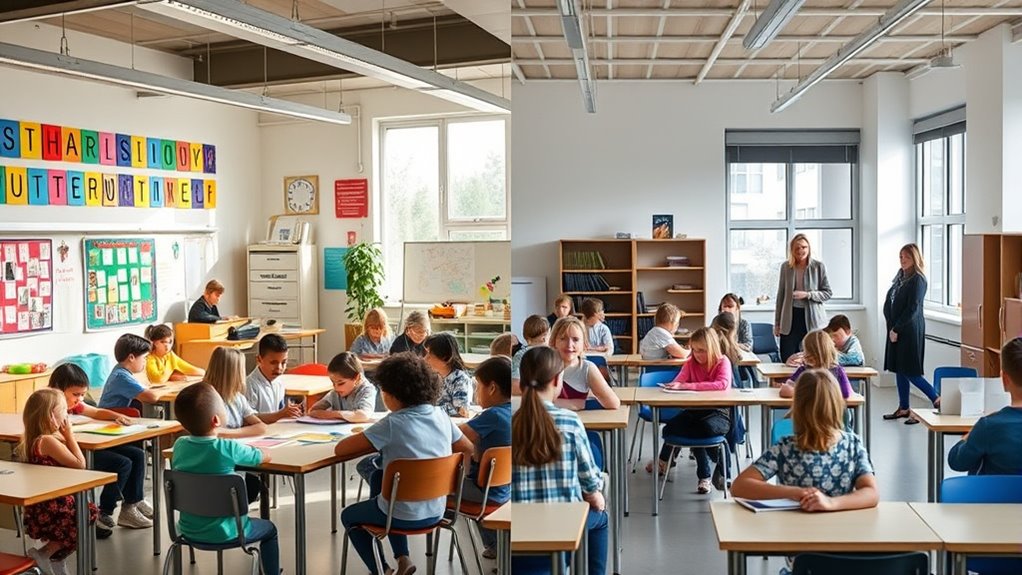

Different countries incorporate parental involvement into their education systems in unique ways. For instance, Finland and Singapore emphasize collaborative engagement, involving parents in decision-making and providing resources to support learning at home. Some nations focus on homework support or volunteering. Strong parental involvement leads to better student outcomes, like higher grades and improved social skills. To understand these diverse approaches and their impacts, keep exploring how various countries integrate family participation into education.
Key Takeaways
- Finland and Singapore prioritize collaborative parent-school relationships through active involvement in decision-making and resource provision.
- Cultural norms influence parental engagement strategies, with some countries emphasizing volunteering and homework support.
- Education systems incorporating regular communication and workshops foster stronger parental participation worldwide.
- Countries with high parental involvement see improvements in academic achievement, social skills, and emotional well-being.
- Parental engagement is recognized globally as a core component of educational success and lifelong learning development.

Education systems around the world recognize that parental involvement plays a crucial role in student success. When you actively engage with your child’s education, it directly influences their learning outcomes. Parental engagement isn’t just about attending parent-teacher conferences; it’s about creating a supportive environment that nurtures curiosity and motivates your child to excel. Schools that foster strong partnerships with parents often see improvements in academic achievement, social skills, and emotional well-being. Your involvement helps reinforce learning at home, making lessons more meaningful and memorable for your child. This connection between home and school creates a foundation where your child’s educational experience is more cohesive and personalized. Recognizing the importance of Inspirational Quotes About Fatherhood can strengthen your motivation to stay involved in your child’s educational journey.
Different countries approach parental involvement in varied ways, and these strategies impact learning outcomes differently. For example, in countries like Finland and Singapore, there’s a cultural emphasis on collaborative engagement between parents and schools. Schools actively invite parents to participate in decision-making processes and provide resources to support learning at home. As a result, students tend to perform better academically and develop stronger motivation to succeed. Conversely, some nations may focus more on parental involvement through homework support or volunteering, which still positively influences students’ progress. The key is that when parents are involved in a meaningful way, students tend to develop better study habits, higher self-esteem, and increased resilience.
Your role as a parent can adapt depending on cultural expectations and school policies, but the goal remains the same: to enhance learning outcomes. Research consistently shows that children whose parents are engaged tend to have higher grades, better attendance, and more positive attitudes toward school. This engagement fosters a sense of accountability and encourages children to take ownership of their learning. Schools that recognize the importance of parental involvement often implement programs that encourage regular communication, offer parenting workshops, and create volunteer opportunities. These efforts help you stay informed about your child’s progress and give you practical tools to support their education at home.
In the end, the level of parental engagement you provide can be a powerful predictor of your child’s academic journey. When you participate actively, you not only improve your child’s immediate learning outcomes but also lay the groundwork for lifelong learning habits. Education systems worldwide acknowledge that parental involvement isn’t a peripheral aspect but a core component of student success. Your involvement makes the difference—shaping your child’s educational experience and helping them reach their full potential.
Frequently Asked Questions
How Do Parental Involvement Policies Differ Between Countries?
You’ll notice that parental involvement policies differ greatly between countries. Some emphasize strong home school partnerships, encouraging regular communication and collaboration. Others focus on parental engagement strategies like workshops and volunteering programs. In certain nations, policies are formalized with specific guidelines, while others rely on community-driven efforts. These differences reflect cultural values and educational priorities, shaping how parents participate in their children’s learning and how schools foster family involvement.
What Cultural Factors Influence Parental Engagement in Education?
Cultural values and parental expectations heavily influence your engagement in your child’s education. In some cultures, academic success is paramount, prompting you to be highly involved and set high standards. In others, you might prioritize social skills or well-being, leading to different types of support. Your cultural background shapes how much you participate, communicate with teachers, and prioritize education, directly impacting your child’s learning experience.
How Is Teacher Training Affected by Parental Involvement Levels?
When parental involvement levels are high, you’ll notice increased teacher motivation because they feel supported and valued. This positively impacts classroom dynamics, making teachers more enthusiastic and engaged. Conversely, low parental involvement can lead to frustration and decreased motivation, which may hinder effective teaching. You can foster better classroom environments by encouraging parental participation, ultimately boosting teacher morale and creating a more collaborative, dynamic learning space.
Are There Measurable Impacts on Student Outcomes From Parental Involvement?
You’ll notice that higher parental involvement often leads to improved student outcomes, especially when homework policies are supportive and parents actively encourage extracurricular participation. When parents stay engaged, students tend to show better academic performance, increased motivation, and stronger social skills. This involvement creates a positive feedback loop, fostering a nurturing environment that boosts overall achievement and well-being, making a noticeable difference in students’ educational journeys.
How Do Socioeconomic Factors Shape Education System Structures Worldwide?
Socioeconomic disparities dramatically shape education systems worldwide, often creating chasms so vast they seem insurmountable. You’ll see resource allocation skewed towards wealthier areas, leaving impoverished communities with crumbling infrastructure and underfunded programs. These disparities dictate everything from curriculum quality to access, reinforcing cycles of inequality. You’re fundamentally witnessing how economic status molds education, making it a mirror of societal divides rather than a tool for equal opportunity.
Conclusion
As you compare education systems across countries, you notice that strong parental involvement often contrasts with less engaged environments. While some nations excel academically, their students benefit from active parent participation; others struggle despite similar resources. This juxtaposition highlights that beyond policies and funding, your involvement as a parent can truly shape educational outcomes. By fostering a home environment of encouragement and support, you can make a lasting difference—proving that parental engagement is key, no matter where you are.