
Family structures differ across cultures, with nuclear families typically comprising parents and children, emphasizing independence and privacy. Extended families include multiple generations living together or maintaining close contact, fostering shared responsibilities, support, and tradition. While nuclear families often offer mobility and personal autonomy, extended families provide emotional security through intergenerational support. These differences reflect societal norms and priorities. Continuing exploration will reveal how these structures uniquely shape daily life, relationships, and cultural values around the world.

Turn the school run and nap time into listening time
- Thousands of audiobooks, podcasts and originals
- Listen on your phone, tablet or Echo — also offline
- Cancel anytime
Key Takeaways
- Extended families include multiple generations living or closely connected, emphasizing collective support; nuclear families usually consist of parents and children with a focus on independence.
- Cultural norms in extended families promote shared responsibility, caregiving, and tradition transmission, while nuclear families prioritize individual autonomy.
- Extended family setups foster strong social bonds and emotional security through frequent intergenerational support; nuclear families may experience more privacy and less daily support.
- Household dynamics differ: extended families involve collective decision-making and shared responsibilities, whereas nuclear families often rely on external networks for support.
- The prevalence of each structure varies culturally and geographically, shaped by societal values, economic factors, and urbanization trends.
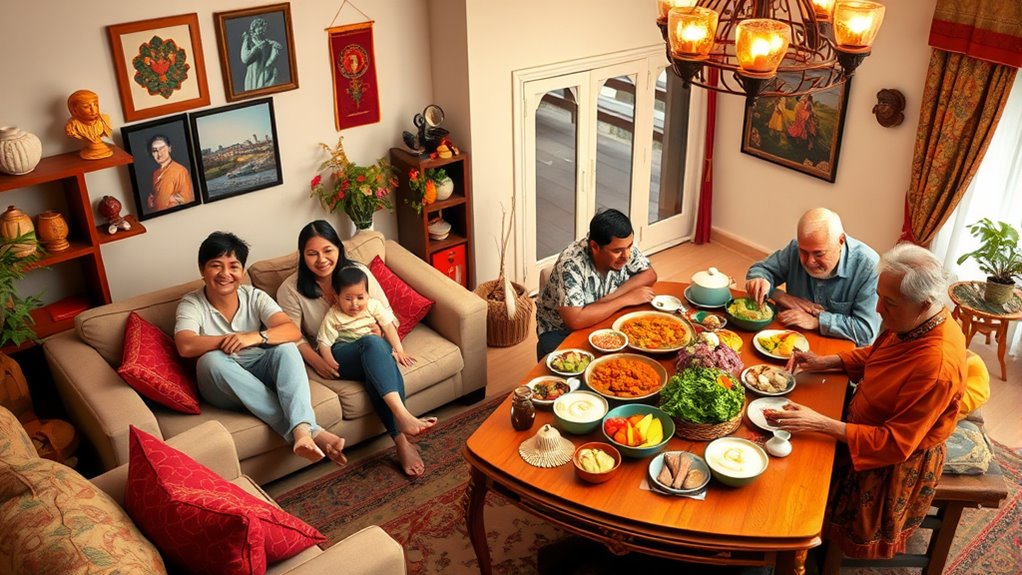
Family structures vary widely across cultures and societies, shaping how people live, work, and support each other. When you look at different communities, you’ll notice how intergenerational support plays a crucial role in maintaining household dynamics. In many cultures, extended families form the core of daily life, with multiple generations living under one roof or maintaining close contact. This setup allows older family members to pass down traditions and wisdom, while younger members benefit from their guidance and care. Household dynamics in these families often emphasize collective well-being over individual pursuits, fostering a sense of unity and shared responsibility. You might find that, in such settings, decisions are made collectively, and caregiving is a shared task among relatives. This interconnected support system helps buffer economic hardships and provides emotional security, especially in societies where social safety nets are limited. Additionally, the presence of high-quality home theatre projectors in these households can enhance shared entertainment experiences, reinforcing family bonds.
In contrast, nuclear families typically consist of just parents and their children, which can influence household dynamics considerably. You’ll notice that in these arrangements, support often comes from outside the immediate family—such as extended relatives, friends, or community resources. The emphasis on independence means that each member may have more privacy, but it can also lead to feelings of isolation or increased pressure on the immediate household. Intergenerational support might be less formal or frequent, especially as societal norms shift toward valuing personal autonomy. This structure often aligns with urban living, where space is limited and economic factors favor smaller households. While it promotes individual achievement and self-reliance, it also shifts the responsibility of caregiving and support to fewer people, sometimes making household dynamics more autonomous but also more strained during times of need.
Understanding these differences helps you see how family structures influence daily life and cultural values. Extended families tend to reinforce a sense of community and shared purpose, with intergenerational support acting as a cornerstone of household dynamics. Nuclear families, meanwhile, often prioritize independence, shaping household interactions around personal choice and self-sufficiency. Both models have strengths and challenges, impacting everything from emotional well-being to economic stability. Recognizing the diversity in family structures reveals that neither is inherently better—they simply reflect different ways societies organize support, care, and social bonds. Whether you’re part of an extended family or a nuclear one, these structures shape your experiences, relationships, and the way you navigate the world around you.
home theatre projector for family rooms
As an affiliate, we earn on qualifying purchases.
As an affiliate, we earn on qualifying purchases.
Frequently Asked Questions
How Do Economic Factors Influence Family Structure Choices?
Economic factors greatly influence your family structure choices. When you have economic stability, you’re more likely to live independently or maintain a nuclear family, enjoying financial independence. However, if finances are uncertain, you might lean toward extended families for shared resources and support, reducing financial dependence. These economic considerations shape whether you prioritize independence or rely on family networks for stability and support.
What Impact Does Migration Have on Family Configurations?
Imagine a family photo, suddenly shifted by migration patterns. You see intergenerational support changing as members move, reshaping family configurations. Migration often disperses extended families, leading to more nuclear setups in new locations. You might find younger generations relying less on elders, yet still maintaining ties through technology. Migration’s impact is dynamic, blending cultures and creating flexible family structures where support adapts to new environments.
How Do Family Structures Affect Child Development and Education?
Your family structure influences your child’s development and education considerably. If you have an extended family, you might offer more diverse parenting styles and shared educational support, enriching your child’s learning environment. In nuclear families, you might need to be more intentional about providing consistent parenting and educational support. Your approach affects your child’s social skills, academic motivation, and emotional well-being, shaping their future success and resilience.
Are There Legal Differences Between Nuclear and Extended Families?
You’ll find legal differences between nuclear and extended families, especially regarding custodial rights and legal inheritance. In nuclear families, the parents usually have straightforward custodial rights, making legal processes simpler. Extended families might face more complex legal considerations for inheritance and custody, as multiple relatives could be involved. These differences impact how family members access legal protections and responsibilities, depending on the family structure you belong to.
How Do Digital Technologies Influence Modern Family Interactions?
Digital technologies considerably influence your family interactions by enabling virtual communication, making it easier to stay connected regardless of distance. Social media influence shapes how you share moments and maintain bonds, especially with extended family members. You can participate in family events through video calls or share updates instantly. These tools foster closer relationships, but they also require mindful boundaries to ensure meaningful connections without feeling overwhelmed or distracted.
intergenerational family support products
As an affiliate, we earn on qualifying purchases.
As an affiliate, we earn on qualifying purchases.
Conclusion
Whether you live in a nuclear or extended family, remember that family shapes who you are. It provides support, teaches values, and creates bonds that last a lifetime. Family is your foundation, your refuge, your shared history. It nurtures your growth and guides your choices. No matter the structure, family’s power lies in connection, care, and love. Embrace your family’s unique form, because in the end, family is where your roots and your wings begin.
family organization and support tools
As an affiliate, we earn on qualifying purchases.
As an affiliate, we earn on qualifying purchases.
privacy screens for small households
As an affiliate, we earn on qualifying purchases.
As an affiliate, we earn on qualifying purchases.
Cold & flu season Picks
humidifiers
As an affiliate, we earn on qualifying purchases.