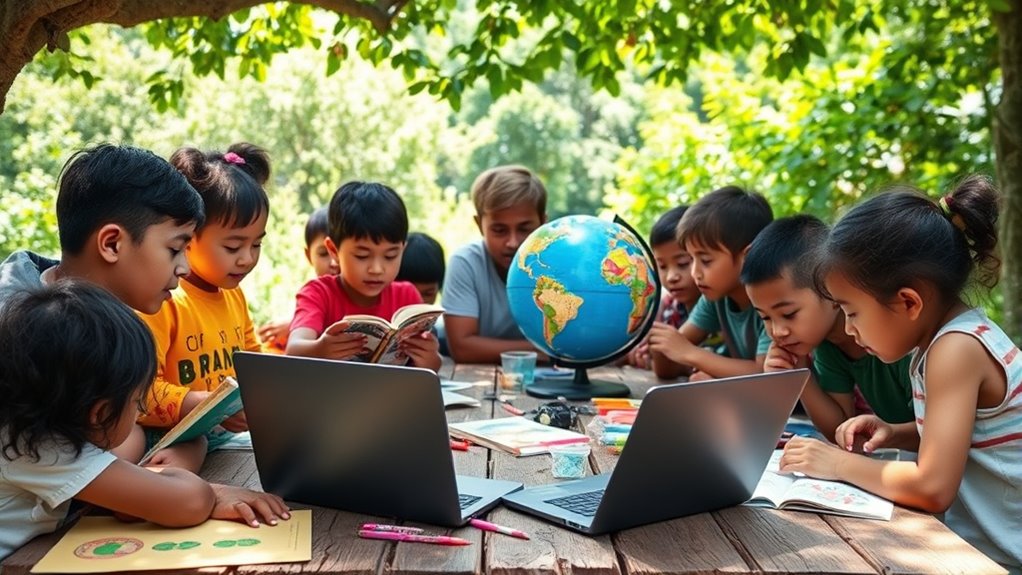

Around the world, many see homeschooling and alternative education as ways to tailor learning to individual needs and cultures. These approaches emphasize curriculum customization, community involvement, and flexible environments that adapt to each child’s interests and strengths. Families value the opportunity to create supportive, well-rounded experiences beyond traditional classrooms. As you explore further, you’ll gain a deeper understanding of how diverse communities personalize education to nurture engaged and adaptable learners.
Key Takeaways
- Countries worldwide recognize homeschooling as a valid educational option, often with varying regulatory requirements and support systems.
- Global perspectives highlight diverse approaches, from highly regulated systems to more flexible, community-based homeschooling models.
- Alternative education emphasizes personalized, curriculum customization to meet individual student needs and cultural values internationally.
- Community involvement, such as co-ops and local resources, enhances socialization and experiential learning in various regions.
- International trends show increasing acceptance and integration of homeschooling and alternative methods as complementary educational pathways.

Home schooling and alternative education have gained popularity as families seek more personalized and flexible learning options. You might find that one of the biggest advantages is curriculum customization. Unlike traditional schools, where you’re often limited to a set syllabus, homeschooling allows you to tailor lessons to your child’s interests, strengths, and learning pace. You can choose materials that resonate with your family’s values or incorporate real-world experiences directly into the curriculum. This flexibility means your child isn’t confined to a one-size-fits-all approach; instead, they receive an education that truly fits their needs. Customization also encourages a more engaging learning process, as you can adapt lessons on the fly, adding hands-on activities or exploring topics in depth when your child shows interest. This approach can foster a love of learning and help your child develop critical thinking skills in a more meaningful way. Incorporating a variety of teaching methods and materials can also enhance engagement and cater to different learning styles, making the educational experience more effective and enjoyable.
In addition to curriculum flexibility, community involvement plays an essential role in many alternative education settings. You might be surprised at how actively your homeschooling journey can connect you with local groups, co-ops, and community resources. Engaging with other families who share similar educational philosophies creates a support network that offers socialization opportunities and shared resources. Participating in community events, field trips, or volunteering projects lets your child learn social skills outside the traditional classroom environment. It also broadens their understanding of the world by exposing them to diverse perspectives and real-life situations. Many families find that community involvement enriches their child’s education by creating a sense of belonging and purpose. It transforms learning from a solitary activity into a collective experience, fostering teamwork, empathy, and civic responsibility. Additionally, these connections can provide valuable mentorship opportunities and access to extracurricular activities that might otherwise be unavailable. Understanding the importance of educational environments can help parents design a well-rounded and supportive learning journey for their children.

The Homeschool Bible: A Practical Guide to Homeschool Curriculum, Lesson Planning, Daily Rhythms, State Laws, and Home Education Success
As an affiliate, we earn on qualifying purchases.
As an affiliate, we earn on qualifying purchases.
Frequently Asked Questions
How Do Alternative Education Methods Affect Students’ Social Skills Globally?
You might notice that alternative education methods impact your peer interaction and social adaptability differently. These approaches often promote more personalized learning, which can enhance your confidence and communication skills. However, limited peer interaction may pose challenges for developing social skills. If you actively seek diverse social opportunities, you’ll likely improve your adaptability and build meaningful relationships, balancing the advantages of alternative education with essential social experiences.
What Legal Requirements Vary for Home Schooling Worldwide?
You need to understand that legal requirements for homeschooling vary worldwide. Some countries demand strict legal compliance, including registration, regular assessments, and adherence to certification standards. Others have more relaxed rules, simply requiring parents to notify authorities or keep educational records. It is vital to research your local laws to guarantee you meet all legal obligations, avoid penalties, and provide your child with a valid, recognized education at home.
How Do Cultural Differences Influence Perceptions of Homeschooling?
You see that cultural values and societal norms shape how people perceive homeschooling. In some cultures, homeschooling aligns with traditional family roles and emphasizes religious or moral teachings, making it more accepted. In others, societal norms favor formal school settings, viewing homeschooling as unconventional or isolated. These differences influence whether communities see homeschooling as a positive alternative or a challenge to established education standards, affecting acceptance and support.
What Are the Long-Term Career Impacts of Alternative Education?
Like a well-tuned instrument, your alternative education can boost your career versatility and skill development. It often allows you to focus on personalized interests, fostering adaptability in various fields. As a result, you may find yourself better equipped to handle diverse job roles and challenges. However, it’s essential to showcase your skills and experiences effectively, as employers value demonstrated competence and initiative, regardless of your educational background.
How Is Technology Integrated Into Global Homeschooling Practices?
You incorporate technology into homeschooling by using digital tools like educational apps, online resources, and virtual classrooms. These tools help you access diverse curricula, connect with teachers worldwide, and participate in interactive lessons. Virtual classrooms enable real-time communication, fostering engagement and personalized learning. By integrating technology, you create a flexible, innovative educational environment that adapts to your child’s needs and prepares them for a digital future.

Creating Learning Communities: Models, Resources, and New Ways of Thinking About Teaching and Learning (Foundations of Holistic Education)
Used Book in Good Condition
As an affiliate, we earn on qualifying purchases.
As an affiliate, we earn on qualifying purchases.
Conclusion
As you explore global views on homeschooling and alternative education, remember that these paths are like uncharted waters—full of potential and discovery. Whether you see them as a beacon of personalized learning or a challenge to traditional systems, they remind us that education is a journey, not just a destination. Embrace the diversity, for in doing so, you’re shaping a world where learning truly belongs to everyone.

Community and Family 6-Book Set
As an affiliate, we earn on qualifying purchases.
As an affiliate, we earn on qualifying purchases.

Homeschooling in the AI Era: A Parent's Practical Guide to Personalized Learning
As an affiliate, we earn on qualifying purchases.
As an affiliate, we earn on qualifying purchases.