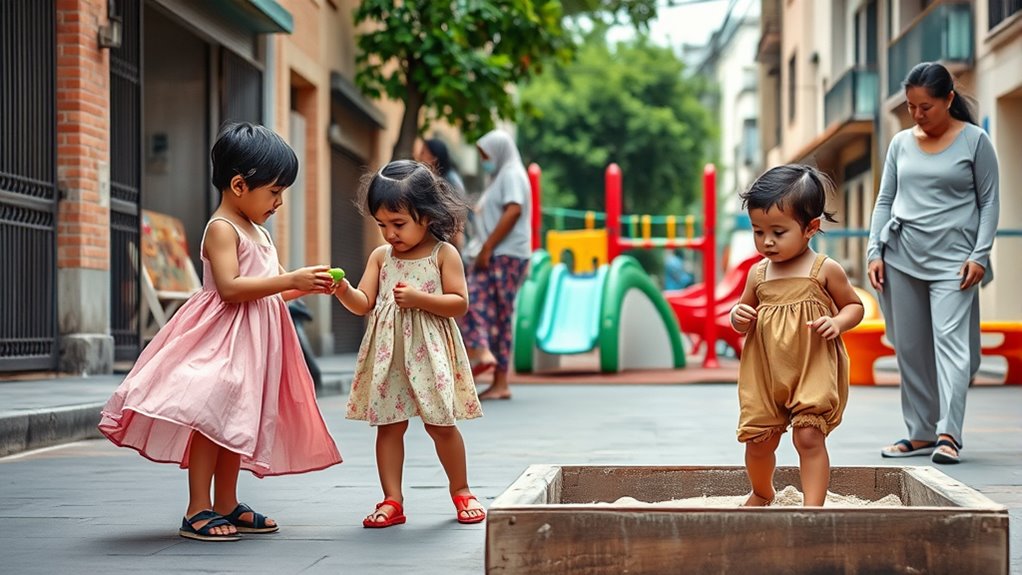

Around the world, gender-neutral parenting encourages you to choose unisex toys, simple clothing, and inclusive social norms that challenge traditional stereotypes. Many countries promote unisex clothing lines, toy libraries, and educational programs to help children express themselves freely. By consciously making these choices, you can foster confidence, individuality, and equality from an early age. If you’re curious about how different cultures approach this, you’ll discover more ways to support balanced development.

Turn the school run and nap time into listening time
- Thousands of audiobooks, podcasts and originals
- Listen on your phone, tablet or Echo — also offline
- Cancel anytime
Key Takeaways
- Countries promote unisex clothing lines and toy libraries emphasizing gender inclusivity.
- Educational programs aim to challenge gender bias from an early age.
- Parents around the world choose gender-neutral toys like wooden blocks and art supplies.
- Home practices include selecting neutral-colored, comfortable clothing to encourage self-expression.
- Cultural efforts focus on reducing stereotypes and fostering open-mindedness in children’s development.
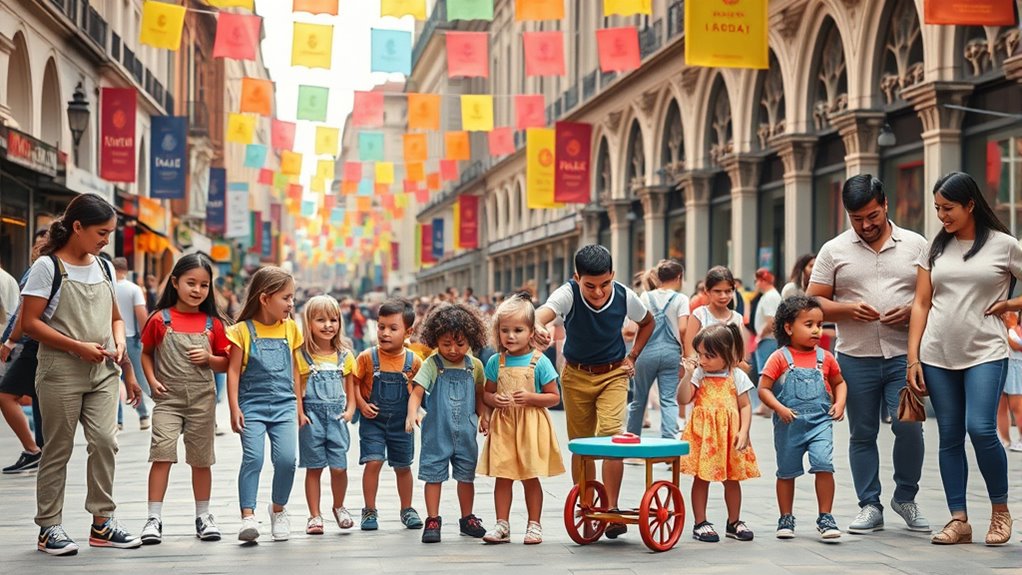
Have you ever wondered if parenting can be truly unbiased by gender? It’s a question many parents ask as they navigate the world of raising children in a society filled with stereotypes. When you start to contemplate how toys and clothing are marketed, it becomes clear how deeply societal expectations influence what’s considered appropriate for boys and girls. For example, you might notice that toy aisles are often divided into “boys’ toys” like action figures and building sets, and “girls’ toys” such as dolls and play kitchens. Similarly, clothing options are often color-coded—blue for boys, pink for girls—reinforcing gender distinctions from a young age. These cues shape children’s perceptions of what they should enjoy or wear, subtly pushing them into predefined roles based on gender.
As a parent interested in gender-neutral parenting, you aim to challenge these norms. You might choose to buy your child unisex toys, such as wooden blocks or art supplies, that promote creativity without gender labels. When it comes to clothing, you might opt for simple, comfortable pieces in neutral colors, encouraging your child to explore personal style without feeling confined by societal expectations. This approach not only fosters a sense of individuality but also helps your child develop confidence outside of gender stereotypes. By intentionally selecting toys and clothing that aren’t tied to traditional gender roles, you’re sending a message that interests and preferences shouldn’t be dictated by societal norms.
Across the globe, parents are adopting similar practices, though cultural influences can shape how gender-neutral parenting manifests. In some countries, there’s a strong push to dismantle gender stereotypes by promoting unisex clothing lines or creating toy libraries that emphasize gender inclusivity. Others might focus more on educational programs that challenge gender bias, encouraging children to question societal expectations from an early age. Despite these differences, the core idea remains the same: you want your child to grow up free from the limiting beliefs that society often imposes. You recognize that societal expectations are powerful, but you also understand that challenging them starts at home. By consciously choosing toys and clothing that break traditional molds, you’re helping your child develop a more open-minded outlook, one that values individuality over conformity. This kind of parenting isn’t about rejecting gender altogether but about giving your child the freedom to define their identity without unnecessary constraints. Additionally, understanding the impact of societal influences such as stereotypes can empower parents to make more informed choices that promote equality and inclusivity.
Products Worth Considering

LEGO Boost Creative Toolbox 17101 Fun Robot Building Set and Educational Coding Kit for Kids

Nanit Smart Baby Monitor System with Floor Stand and 8-Inch Display

Owlet Dream Sock Smart Baby Monitor
As an affiliate, we earn on qualifying purchases.
Frequently Asked Questions
How Do Gender-Neutral Practices Affect Children’s Social Development?
Gender-neutral practices positively impact your child’s social development by encouraging flexible gender roles and open-mindedness. You help foster their gender development, allowing them to explore interests without stereotypes. As a result, they build strong social skills, such as empathy, cooperation, and communication. Your supportive approach creates a safe environment where children feel confident expressing themselves, leading to healthier relationships and more adaptable social behaviors as they grow.
Are There Cultural Differences in Implementing Gender-Neutral Parenting Globally?
You’ll notice that cultural stereotypes and parenting traditions shape how gender-neutral parenting is adopted worldwide. For example, in Scandinavia, over 70% of parents support gender-neutral approaches, while in more traditional societies, practices are less common. These cultural differences influence how openly parents challenge stereotypes, making gender-neutral parenting more accepted in some regions than others. Your awareness of these variations helps you understand the global landscape of gender-neutral parenting.
What Challenges Do Parents Face When Adopting Gender-Neutral Approaches?
When you adopt gender-neutral parenting, you face stereotype challenges that can make social interactions difficult, as others may judge or misunderstand your approach. Parental resistance also emerges, especially if family or community members hold traditional views. You might encounter pressure to conform to gender norms, making it harder to maintain your parenting choices. Despite these challenges, staying consistent helps foster an inclusive environment and supports your child’s authentic identity.
How Do Schools and Communities Support Gender-Neutral Parenting?
Schools and communities support gender-neutral parenting by promoting curriculum diversity and ensuring playground safety. They incorporate inclusive lessons that challenge gender stereotypes, creating a welcoming environment for all children. Playgrounds are designed to be safe and accessible for everyone, regardless of gender expression. These efforts help normalize gender-neutral practices, encouraging children to explore their identities freely while fostering respect and understanding among peers.
What Long-Term Impacts Does Gender-Neutral Parenting Have on Identity?
Gender-neutral parenting helps shape your child’s gender identity, allowing them to explore who they truly are without societal constraints. As a result, they often develop stronger self-esteem because they feel accepted and authentic. This supportive approach encourages openness, resilience, and confidence in their individuality, leading to healthier emotional development long-term. By fostering an environment of acceptance, you empower your child to embrace their unique identity with pride and assurance.
Conclusion
By embracing gender-neutral parenting, you help break down stereotypes and foster equality. Did you know that over 60% of parents worldwide now encourage children to explore interests regardless of gender? This shift not only empowers your kids to be true to themselves but also promotes a more inclusive society. So, keep supporting your child’s unique identity, and remember, small changes today can lead to a more accepting tomorrow.