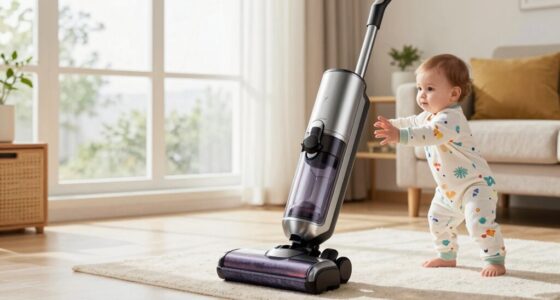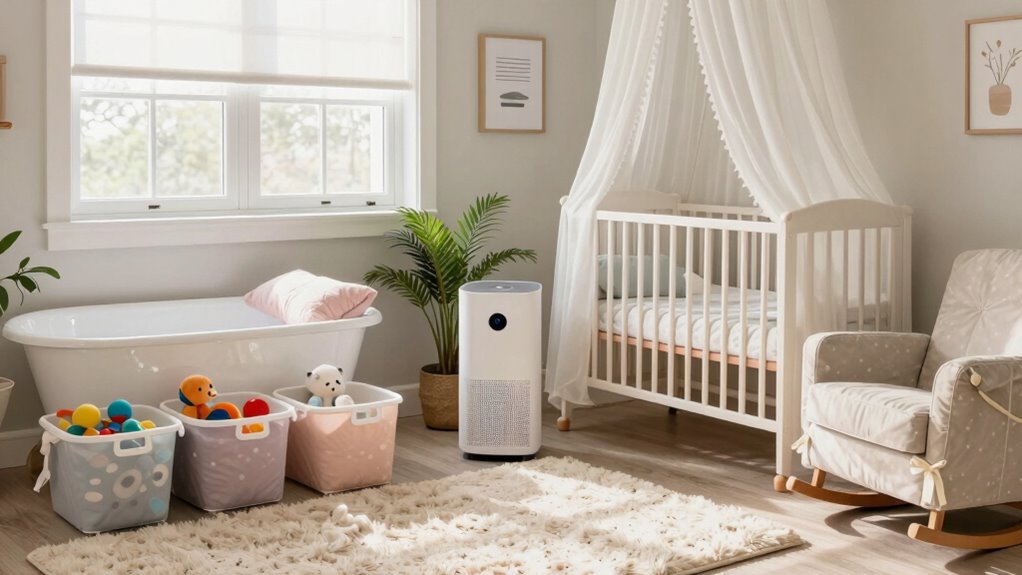

Making your nursery allergy-proof doesn’t mean you need to spend a lot. Choose budget-friendly, hypoallergenic furniture like solid wood or metal pieces and washable fabrics for bedding and curtains. Keep the space clean with regular dusting and vacuuming using HEPA filters. Incorporate affordable air-purifying plants and use mold-resistant paint to prevent mold growth. Smart storage and simple decor help reduce dust traps, and small changes can make a big difference—keep going to learn more tips.
Key Takeaways
- Use washable, hypoallergenic fabrics for bedding, curtains, and soft furnishings to reduce dust and allergens affordably.
- Regularly clean surfaces with a damp cloth and vacuum with a HEPA filter to minimize dust buildup.
- Incorporate budget-friendly, natural air-purifying plants like snake plants and pothos out of baby’s reach.
- Opt for affordable, solid wood or metal furniture with easy-to-clean surfaces instead of pressed wood or particleboard.
- Maintain proper humidity levels below 50% with a budget-friendly dehumidifier and monitor with a hygrometer to prevent mold growth.

ZPECC Toddler Bedding Set – 4 Piece Hypoallergenic Baby Crib Bedding Set for Boys and Girls, Includes Toddler Comforter, Flat Sheet, Fitted Sheet and Pillowcase, Baby Blue
PACKAGE INCLUDE:1 Quilt 42" x 57", 1 Fitted Sheet 28" x 52" + 8", 1 Flat Sheet 45"…
As an affiliate, we earn on qualifying purchases.
As an affiliate, we earn on qualifying purchases.
Why an Allergy-Free Nursery Matters for Your Baby’s Health

Creating an allergy-free nursery is essential because young children have developing immune systems that are highly sensitive to environmental triggers. The nursery decor plays a big role in keeping your baby safe by reducing dust, mold, and allergens. Opt for washable, hypoallergenic fabrics for curtains and bedding, and avoid clutter that can trap dust. Proper ventilation helps prevent mold growth and improves air quality, directly impacting your baby’s health. Using the right bedding materials can further minimize allergen exposure and promote better sleep. You want a space that promotes baby safety and minimizes allergy risks. Small changes, like using non-toxic paints and avoiding plush toys with dust mites, make a significant difference. Incorporating air quality monitors can help you maintain optimal conditions in the nursery. Ensuring proper humidity control can significantly reduce mold growth and dust mites, creating a healthier environment for your little one. Maintaining cleanliness standards is also vital to keep allergens at bay and support your baby’s health. Regularly checking ventilation systems can help maintain fresh air and reduce indoor pollutants. An allergy-proof nursery not only protects your little one’s health but also provides peace of mind as they grow and explore their environment.
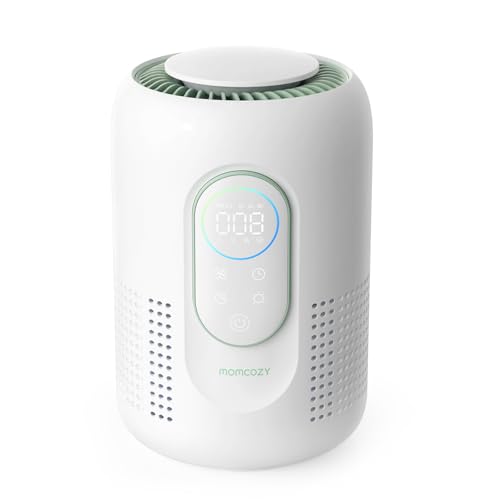
Momcozy Nursery Air Purifier, 4-Filter System with H13 HEPA & Carbon, Real-Time PM2.5 Air Quality Monitor & Display with 3-Color Status, Baby Air Purifier with 21 dB Sleep Mode, Dimmable Night Light
Quad-Layer Filtration System: Prefilter and H13 HEPA capture fine particles and pet dander, activated carbon reduces nursery and…
As an affiliate, we earn on qualifying purchases.
As an affiliate, we earn on qualifying purchases.
How to Choose Budget-Friendly, Hypoallergenic Furniture for Your Nursery

When selecting furniture for your nursery, prioritizing hypoallergenic options can make a big difference in maintaining a healthy environment for your baby. Look for budget-friendly decor that combines affordability with safety. Opt for cribs, dressers, and chairs made from solid wood or metal, avoiding pressed wood or particleboard, which often contain formaldehyde. Choose hypoallergenic textiles for bedding, cushions, and curtains—these materials resist dust mites and mold better than traditional fabrics. You can find affordable pieces at secondhand stores or online marketplaces, and many brands now offer budget-friendly, hypoallergenic furniture lines. Always check for certifications or labels indicating hypoallergenic qualities. Considering the horsepower of electric dirt bikes can be useful if you’re interested in versatile, lightweight furniture options that are easier to move and clean. Additionally, selecting furniture with anti-allergen coatings can help reduce allergen buildup on surfaces, and choosing pieces with airtight seals can prevent the accumulation of dust and other allergens. Incorporating air purification systems into your nursery can further improve air quality and reduce allergens, creating a safer environment for your baby. Research shows that natural materials used in furniture tend to be less likely to harbor allergens, which helps create a safe, clean space without breaking the bank.

Zinsser 02774 PERMA-WHITE Mold & Mildew Proof Interior Paint, Quart, Eggshell White
Self-Priming formula – requires no sanding
As an affiliate, we earn on qualifying purchases.
As an affiliate, we earn on qualifying purchases.
Easy Cleaning Habits to Keep Dust and Allergens Out of the Nursery
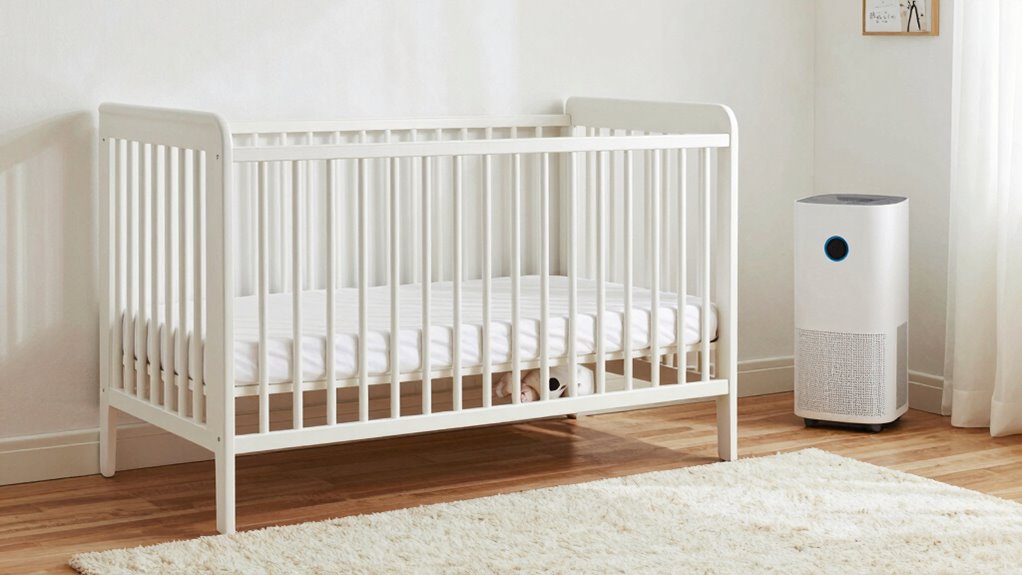
Maintaining a clean nursery is essential for reducing dust and allergens that can affect your baby’s health. Establishing a consistent cleaning schedule helps ensure that dust and allergens are regularly removed from the environment. Regularly dust surfaces with a damp cloth to trap allergens instead of spreading them. Vacuum often using a HEPA filter to remove airborne irritants. Pay attention to air purifier maintenance—clean or replace filters as recommended to guarantee superior performance. Consider using allergen-proof paint on walls to prevent dust buildup. Keep clutter minimal to reduce dust traps. Also, wipe down stuffed animals and soft toys frequently, and wash bedding weekly in hot water. Incorporating color accuracy in your nursery decor can help create a visually soothing environment that minimizes visual clutter and stress. Additionally, understanding how flywheels and engine upgrades impact performance can inspire you to make thoughtful choices in other areas of home improvement. Regularly monitoring air quality levels in the nursery can further help in maintaining a healthy environment. Exploring regional flavors and chicory/coffee insights can inspire you to create a comforting environment in your nursery. These habits create a healthier environment and help keep dust and allergens out of your nursery, supporting your baby’s well-being.

Child Craft Scout 4-in-1 Convertible Baby Crib Nursery Furniture Set – Baby Bed, Dresser with Changing Table Topper, Glider Chair, and Toy Box for Babies, Toddlers and Kids (4 Piece – Matte White)
COMPLETE NURSERY FURNITURE SET: The Child Craft Scout 4-Piece Nursery Furnisture Set includes a 4-in-1 convertible crib, dresser…
As an affiliate, we earn on qualifying purchases.
As an affiliate, we earn on qualifying purchases.
Affordable Air-Purifying Plants to Improve Nursery Air Quality

If you’re looking for budget-friendly ways to improve your nursery’s air quality, adding affordable air-purifying plants is an excellent option. Incorporate these plants into your nursery decor to naturally filter toxins and boost air freshness. Snake plants, pothos, and peace lilies are great choices—they’re easy to care for and help remove common indoor pollutants. These plants also align with baby proofing tips by keeping them out of reach or using secure planters to prevent accidents. Not only do they enhance the nursery’s aesthetic, but they also create a healthier environment for your little one. Remember to choose non-toxic varieties and maintain regular watering and cleaning to ensure your nursery stays safe, fresh, and inviting.
Best Budget Bedding and Mattress Covers to Minimize Allergens

Choosing budget-friendly bedding and mattress covers can considerably reduce allergens in your nursery without breaking the bank. Look for affordable options that keep dust mites, pet dander, and pollen out of your baby’s sleep area. Budget bedding made from tightly woven fabrics prevents allergens from settling deep into the fibers. Pair it with mattress covers designed to be dust-mite proof—these create a barrier that’s easy to clean and maintain. Visualize:
Affordable, tightly woven bedding and dust-mite-proof mattress covers help keep your nursery allergen-free.
- Soft, hypoallergenic sheets in neutral tones
- Tight-weave mattress covers sealing out irritants
- Washable, allergen-proof pillowcases and protectors
These items help create a cleaner sleeping environment, reduce allergy triggers, and stay within your budget. With the right budget bedding and mattress covers, you can keep your nursery safe and allergy-free without overspending.
Simple Ways to Control Humidity and Prevent Mold on a Budget
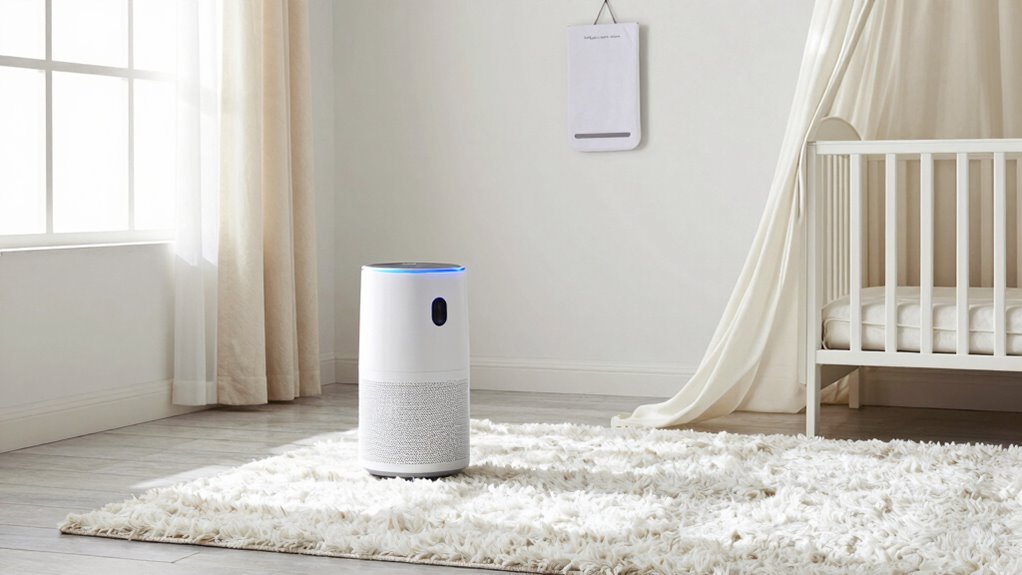
Controlling humidity is key to preventing mold, and you can do this without spending a lot. Use dehumidifiers wisely, improve airflow with simple ventilation tricks, and make sure to clean and dry the nursery regularly. These easy steps help keep the environment safe and comfortable for your little one. Additionally, monitoring indoor air quality and reducing sources of microplastics in dust can contribute to a healthier nursery environment microplastics in dust. Incorporating environmental health practices can further enhance the safety of your nursery space. Regularly checking indoor air quality levels can help identify potential issues early and ensure a safe environment. Being aware of portable oil radiator safety tips can also help prevent humidity-related problems and improve overall safety. For added protection, consider using humidity monitors to keep track of moisture levels and maintain optimal conditions.
Use Dehumidifiers Effectively
Dehumidifiers are an effective and budget-friendly way to keep humidity levels in check and prevent mold growth in your nursery. To maximize their effectiveness, guarantee proper humidifier maintenance by regularly cleaning filters and tanks. Position the dehumidifier in a central spot away from walls and furniture for ideal airflow. Use allergen-proof curtains to block dust mites and mold spores from settling around windows. Keep the nursery dry by:
- Monitoring humidity levels with a hygrometer
- Running the dehumidifier consistently, especially during humid days
- Clearing any obstructions that hinder airflow around the unit
Implementing smart home automation features, such as remote humidity monitoring or automatic dehumidifier controls, can further enhance your efforts. This approach helps maintain a healthier environment, reducing allergens and mold risk without breaking the bank. Proper use of dehumidifiers, combined with other simple measures like humidity control techniques, keeps your nursery safe and comfortable for your little one.
Improve Ventilation Strategies
Good ventilation is key to keeping humidity levels in check and preventing mold growth in your nursery. To enhance airflow, open windows regularly, especially on dry, breezy days. Use exhaust fans in adjacent bathrooms or kitchens to improve ventilation maintenance and reduce moisture buildup. Position a small, inexpensive oscillating fan to circulate air without creating drafts. Keep vents unobstructed and clean to guarantee proper airflow. Consider installing adjustable window vents or using vent covers that promote air exchange. Regularly inspect and maintain your ventilation systems to prevent blockages. Proper airflow enhancement helps dry out excess moisture and prevents mold spores from settling. Consistent ventilation maintenance is a simple, budget-friendly way to create a healthier environment for your little one.
Regularly Clean and Dry
Keeping your nursery clean and dry is one of the simplest ways to prevent mold and control humidity without spending much money. Establish regular vacuum routines to remove dust and allergens from carpets and furniture. Keep laundry schedules consistent by promptly washing and drying bedding, soft toys, and clothing that can harbor mold or dust mites. To help dry out moisture, open windows when weather allows and use fans to improve air circulation. Keep an eye on humidity levels with a hygrometer, aiming for below 50%. Avoid clutter that traps dust and moisture. Regularly wipe down surfaces with a damp cloth to prevent mold buildup. These simple steps help maintain a dry environment, reducing allergy triggers and creating a safer nursery for your little one.
Smart Storage Solutions to Reduce Dust and Keep the Nursery Safe
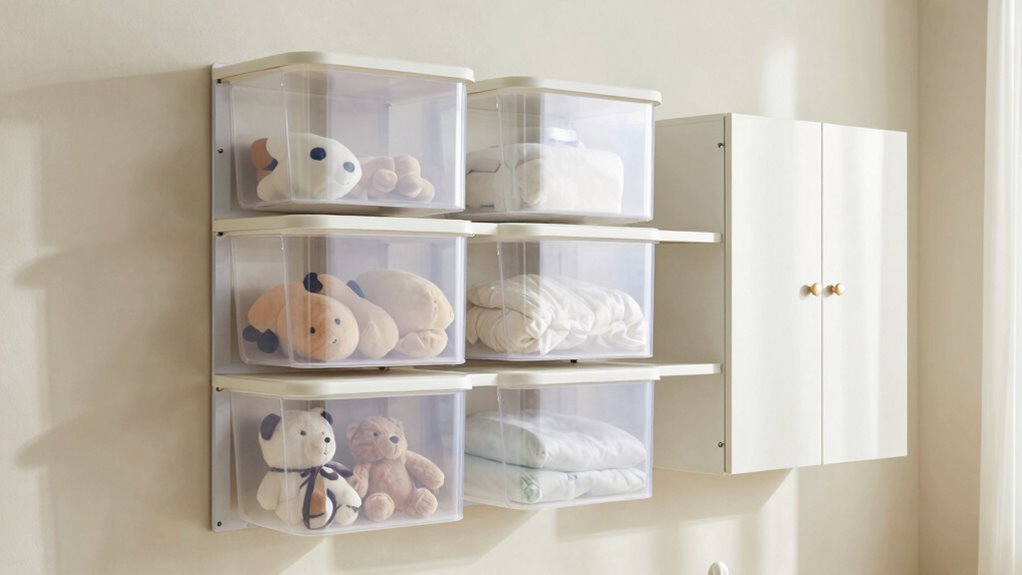
Choosing multi-functional storage keeps your nursery organized without cluttering the space. Using dust-resistant materials for bins and furniture helps prevent allergens from settling. These smart solutions make it easier to maintain a safe, allergy-friendly environment for your little one.
Opt for Multi-Functional Storage
Opting for multi-functional storage solutions can substantially reduce dust buildup in your nursery while maximizing space. Choose furniture that combines storage with style, helping you maintain a neat, allergen-free environment. For example, consider:
- A crib with built-in drawers for bedding and essentials
- A changing table with hidden compartments for diapers and wipes
- A cozy storage bench that doubles as seating and toy storage
These pieces can blend decorative accents with your aesthetic themes, creating a harmonious look. By consolidating storage into versatile furniture, you minimize clutter and dust-harboring surfaces. This approach keeps your nursery tidy and safe, all while enhancing its visual appeal. Multi-functional storage is a smart, budget-friendly way to streamline organization and reduce allergens effectively.
Use Dust-Resistant Materials
Have you considered how the materials of your nursery furniture can impact dust accumulation? Choosing allergen-resistant paint helps create a barrier that prevents dust from settling on walls, making cleanup easier. For windows, opt for dust-proof curtains that are easy to wash and reduce dust buildup in the room. Look for furniture made with smooth, non-porous surfaces, which are less likely to trap dust and allergens. Regularly wipe down furniture and surfaces with a damp cloth to keep dust at bay. Using dust-resistant materials not only minimizes allergen accumulation but also simplifies cleaning routines. These small updates can make a big difference in creating a safer, healthier nursery environment for your little one.
How to Keep Dust and Mold From Building up in Your Nursery

To prevent dust and mold from accumulating in your nursery, regular cleaning is essential. Keep dust at bay by dusting surfaces with a damp cloth and vacuuming floors frequently. Use an air purifier and remember to perform regular air purifier maintenance to ensure it works effectively. Applying mold resistant paint on walls helps prevent mold growth in humid areas. Additionally, reduce humidity levels with a dehumidifier or proper ventilation. Visualize a nursery with:
Keep your nursery clean and fresh by dusting, vacuuming, and using mold-resistant paint.
- Dust-free shelves gleaming in sunlight
- Walls painted with mold resistant paint, untouched by mold
- An air purifier quietly filtering the air
These steps create a cleaner, healthier environment for your little one. Consistent maintenance and smart choices keep dust and mold from building up, making your nursery safer and more comfortable.
Common Mistakes to Avoid When Allergy-Proofing Your Nursery on a Budget
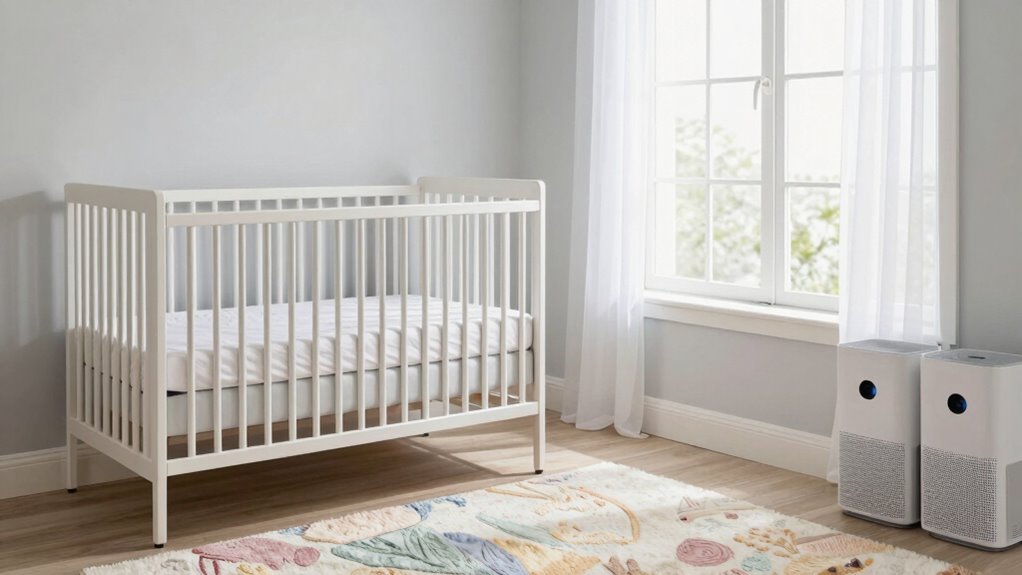
Many parents overlook the importance of air quality and allergen-friendly materials when allergy-proofing on a budget. Skipping these steps can make your efforts less effective and leave your nursery vulnerable to allergens. Paying attention to these details helps create a safer, healthier space without overspending.
Overlooking Air Quality Factors
Ignoring air quality factors can substantially undermine your efforts to allergy-proof the nursery, especially when working on a budget. Poor air quality can trap dust, mold spores, and allergens, making your space less safe. To improve air purification and mold prevention, consider:
- Using a HEPA air purifier to filter airborne allergens effectively
- Ensuring proper ventilation by opening windows regularly
- Keeping humidity levels low with a dehumidifier to inhibit mold growth
These simple steps help reduce airborne allergens and prevent mold buildup without breaking the bank. Regularly changing filters and cleaning surfaces also contribute to cleaner air. Remember, neglecting air quality can negate all your efforts, so stay vigilant and proactive to create a healthier nursery environment.
Ignoring Allergen-Friendly Materials
Overlooking allergen-friendly materials when furnishing your nursery can inadvertently introduce sources of allergens that are difficult to eliminate later. Choosing non allergen textiles for bedding, curtains, and upholstery helps reduce dust mites and pet dander. Additionally, using chemical-free paints prevents volatile organic compounds (VOCs) from irritating sensitive respiratory systems.
| Allergen-Friendly Material | Benefit |
|---|---|
| Non allergen textiles | Minimize dust and dander accumulation |
| Chemical-free paints | Reduce airborne irritants and toxins |
| Hypoallergenic furniture | Prevent allergic reactions and improve air quality |
Final Tips for Creating a Healthy, Affordable Nursery Environment
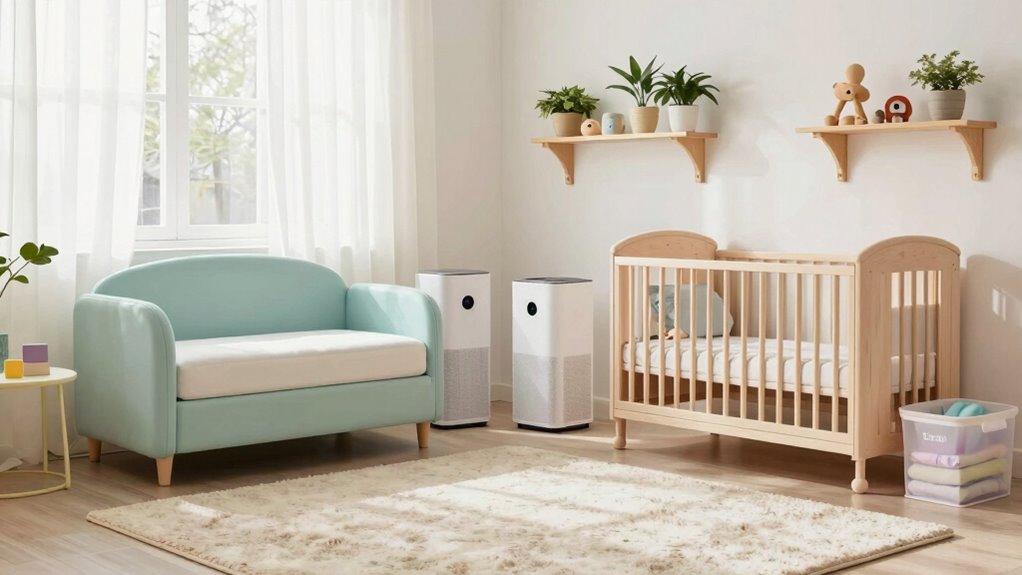
Creating a healthy, affordable nursery doesn’t have to be complex or costly. Focus on simple, effective strategies to make the space safe and inviting. Start with choosing nursery decor that’s easy to clean, like washable wall decals or non-toxic paint. Use decorative accessories sparingly—opt for items like soft plush toys or fabric-covered storage bins that don’t trap dust. Keep the environment fresh with proper ventilation and regular cleaning, especially of soft furnishings. Incorporate natural elements such as potted plants or wooden furniture to add warmth without added allergens. Remember, you don’t need expensive or elaborate decor to create a cozy, allergy-friendly nursery. Small, thoughtful choices can make a big difference in maintaining a healthy environment for your little one.
Frequently Asked Questions
Are There Natural Remedies to Reduce Allergens in a Nursery?
Yes, you can use natural remedies for allergen reduction in a nursery. Regularly dust surfaces with a damp cloth, as it traps allergens better than dry dusting. Use natural air purifiers like houseplants, which help filter airborne allergens. Ventilate the room daily to reduce indoor allergens and reduce dust mites. Wash bedding frequently in hot water, and avoid synthetic fabrics. These simple steps help lower allergens naturally and safely.
How Often Should I Replace Nursery Textiles for Allergy Prevention?
Did you know that replacing nursery textiles every 3 to 6 months can substantially reduce allergen buildup? You should replace textiles like crib sheets, curtains, and stuffed animals regularly to maintain childproofing safety and a healthy environment. Frequent washing also helps. Updating nursery decoration with allergy-friendly fabrics minimizes dust mites and mold, creating a safer space. Stay proactive to protect your child’s health and ensure a safe, allergen-free nursery.
Can Essential Oils Help or Harm a Baby’s Allergy-Prone Nursery?
Essential oils can harm a baby’s allergy-prone nursery, so it’s best to avoid them. They may trigger allergic reactions or irritate sensitive skin and airways. Instead, consider using nursery plants known for air-purifying qualities, like peace lilies or spider plants, which can help improve air quality naturally. Always consult your pediatrician before introducing any new elements, ensuring a safe environment for your little one.
What Are Cost-Effective Ways to Identify Specific Allergies in My Baby?
You can uncover your baby’s allergies without breaking the bank by starting with symptom tracking—note every reaction to foods, pets, or environments. Then, consider affordable options like in-home allergy testing kits or consulting your pediatrician for guidance. These simple steps help you pinpoint specific allergies efficiently, saving money and stress. Keep a detailed log, and you’ll quickly identify triggers, making allergy management more manageable and less costly.
Are DIY Solutions Effective for Allergy-Proofing a Nursery on a Budget?
DIY solutions can be quite effective for allergy-proofing your nursery on a budget. Regular DIY cleaning with gentle, allergy-friendly solutions helps reduce dust and allergens. Improving budget ventilation by opening windows daily or using DIY air purifiers with activated charcoal can also improve air quality. These simple, cost-effective steps make a noticeable difference in creating a healthier environment for your baby without breaking the bank.
Conclusion
By taking these budget-friendly steps, you’re creating a healthier space for your little one. But don’t stop here—there are even more secrets to uncover that could make your nursery completely allergy-proof. Are you ready to discover the final, game-changing tips that will transform your nursery into the safest haven possible? Keep going—your baby’s health depends on it, and the best is yet to come.