To spot mold in your nursery early, regularly check for visible signs like discoloration, fuzzy patches, or musty odors around windows, walls, or behind furniture. Keep an eye on soft toys, bedding, and damp spots. Notice skin irritations or coughing in your baby, which could be subtle clues. Use tools like flashlights or air quality monitors for hidden mold. Staying vigilant helps you protect your little one’s health—more tips follow to keep mold at bay.

Turn the school run and nap time into listening time
- Thousands of audiobooks, podcasts and originals
- Listen on your phone, tablet or Echo — also offline
- Cancel anytime
Key Takeaways
- Regularly inspect hidden areas like behind furniture, walls, and under carpets for discoloration or moldy odors.
- Monitor indoor humidity levels, keeping them between 30-50% to prevent mold growth.
- Look for visible signs such as fuzzy patches, peeling paint, or musty smells in the nursery.
- Observe your baby for early symptoms like skin irritation, persistent cough, or nasal congestion.
- Use air quality testing and visual checks to detect mold before your baby shows any signs.
air quality monitor for mold detection
As an affiliate, we earn on qualifying purchases.
As an affiliate, we earn on qualifying purchases.
Why Mold in Your Baby’s Nursery Is a Hidden Health Risk
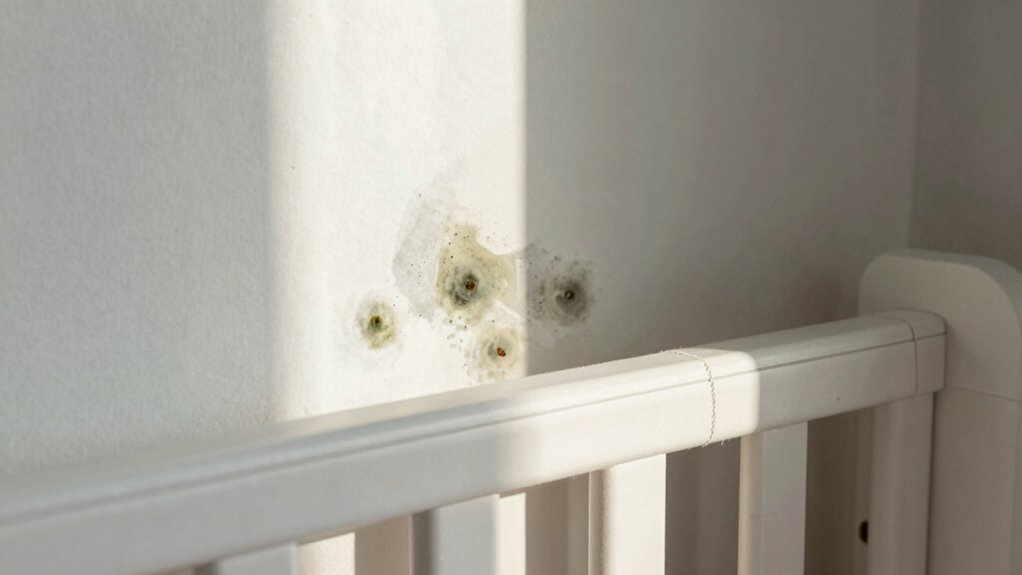
Mold in your baby’s nursery often goes unnoticed, but it can pose serious health risks. If your baby has a mold allergy, exposure can trigger symptoms like coughing, wheezing, or skin irritation. Even without allergies, poor air quality caused by mold spores can affect your baby’s breathing and overall health. Mold releases microscopic particles into the air that are easily inhaled, especially in confined spaces like a nursery. Over time, this exposure can weaken your baby’s immune system or worsen existing respiratory issues. Recognizing that mold isn’t just a surface problem but a hidden threat is essential. Maintaining proper ventilation and controlling excess moisture helps prevent mold growth and ensures better air quality. Regular air quality testing can help detect mold presence early, allowing for prompt remediation. Keeping the nursery free of mold helps ensure better air quality, reducing health risks and creating a safer environment for your little one. Monitoring indoor air quality and controlling excess moisture are key steps in preventing mold growth and safeguarding your baby’s health. Proper humidity control also plays a crucial role in reducing mold development in the nursery. Additionally, understanding that natural filtration methods can contribute to healthier indoor environments is beneficial for long-term prevention.
As an affiliate, we earn on qualifying purchases.
Common Places Where Mold Can Grow Behind Walls and Around Windows
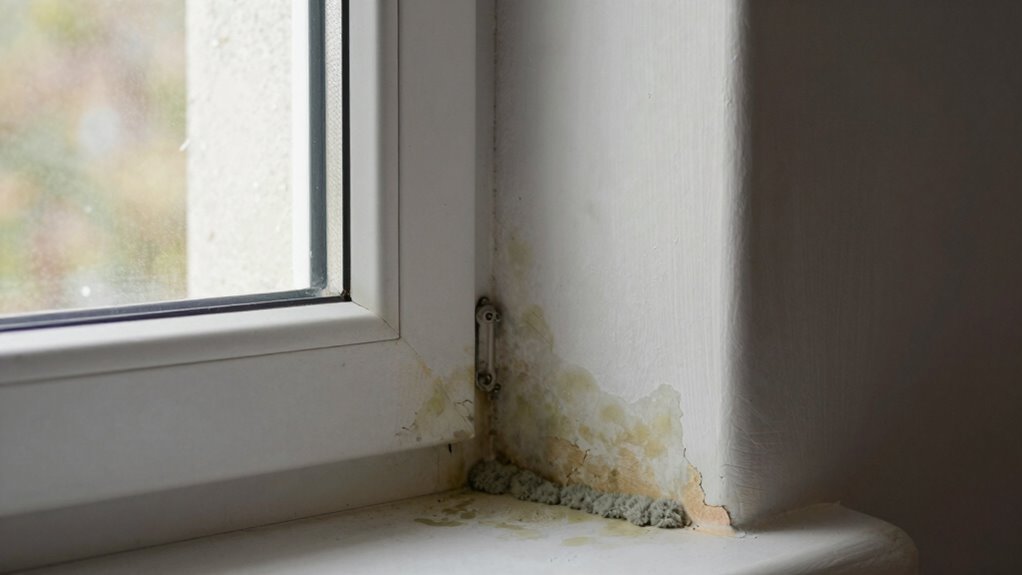
While mold often hides behind walls and around windows, these areas are prime spots for its growth. Poor air quality can cause mold spores to settle and thrive, especially where moisture accumulates. Understanding these hidden spots helps you prevent mold from affecting your baby’s health. Monitoring humidity levels in these areas can significantly reduce the risk of mold growth, ensuring a safer environment for your little one. Additionally, proper ventilation plays a crucial role in maintaining low humidity and preventing mold development. Being aware of moisture accumulation tendencies in these spots can further aid in early detection and prevention efforts.
As an affiliate, we earn on qualifying purchases.
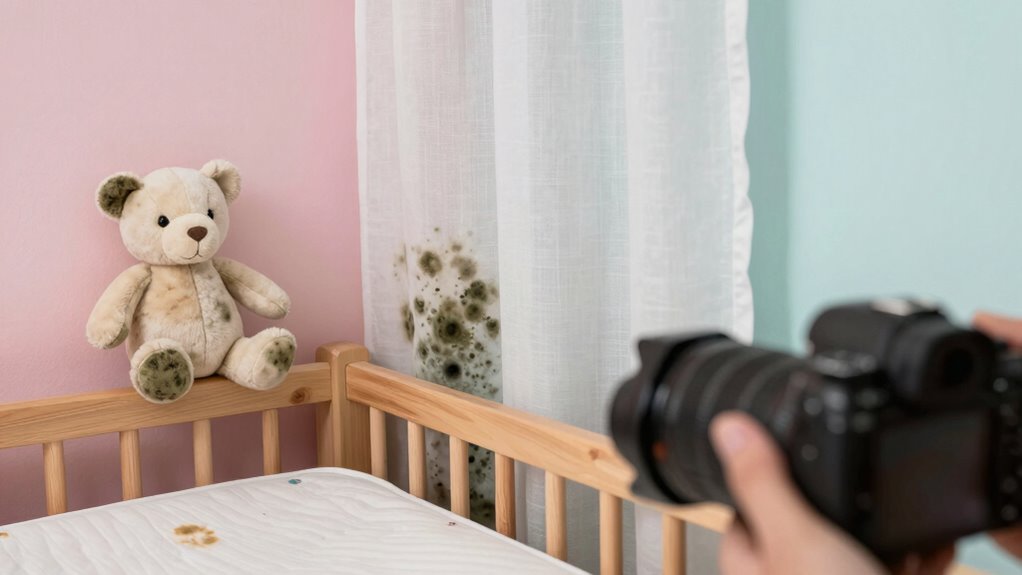
You can spot mold by looking for visible signs like discoloration, fuzzy patches, or a musty smell in your nursery. Don’t forget to check hidden areas such as behind furniture, under carpets, or near vents, where moisture might hide. Recognizing these visual clues and moisture spots helps catch mold early before it spreads. Additionally, understanding proper ventilation techniques can help you better prepare your living spaces when traveling, reducing the risk of mold exposure. Maintaining adequate airflow in the nursery is also essential to prevent moisture buildup that fosters mold growth. Ensuring correct humidity levels can further inhibit mold development and keep your nursery safe.
Visual Mold Indicators
Detecting mold in your nursery starts with paying close attention to visible signs and hidden spots. Look for discoloration, especially on walls or ceilings, which may indicate mold growth. Persistent stains or fuzzy patches can also signal mold presence. Check for peeling or bubbling paint; using mold resistant paint can help prevent future issues. Notice musty odors that linger despite cleaning, as they often point to hidden mold behind walls or furniture. Inspect areas around allergen free bedding and soft toys for any signs of mold or dampness. Remember, mold can hide behind picture frames, around windows, or beneath baseboards. The presence of smart locks and other security gear can help protect your home from unauthorized entry, but they won’t prevent hidden mold issues. Staying vigilant with visual cues helps you catch early signs, ensuring a safer environment for your baby. Additionally, understanding mold growth conditions can aid in preventing outbreaks before they start. Proper ventilation and controlling humidity levels are crucial components of mold prevention strategies, which can significantly reduce the risk of mold development in your nursery.
Hidden Moisture Spots
Hidden moisture spots often lie behind the scenes, making them harder to spot but just as essential to find. These areas can harbor mold growth even if no visible signs appear. Check behind furniture, along baseboards, and inside walls for subtle dampness or discoloration. Using mold resistant paint on walls and ceilings can help prevent mold from taking hold, especially in areas prone to humidity. Installing moisture barriers during renovation or repair can also reduce moisture seepage from outside or plumbing leaks. Be alert for musty odors or peeling paint, which may indicate hidden moisture behind surfaces. Regularly inspecting these concealed spots is crucial. Addressing moisture early prevents mold spores from spreading and keeps your nursery safe for your baby. Incorporating moisture control strategies can further reduce the risk of mold development.
As an affiliate, we earn on qualifying purchases.
Recognizing Subtle Signs of Mold Exposure in Your Baby
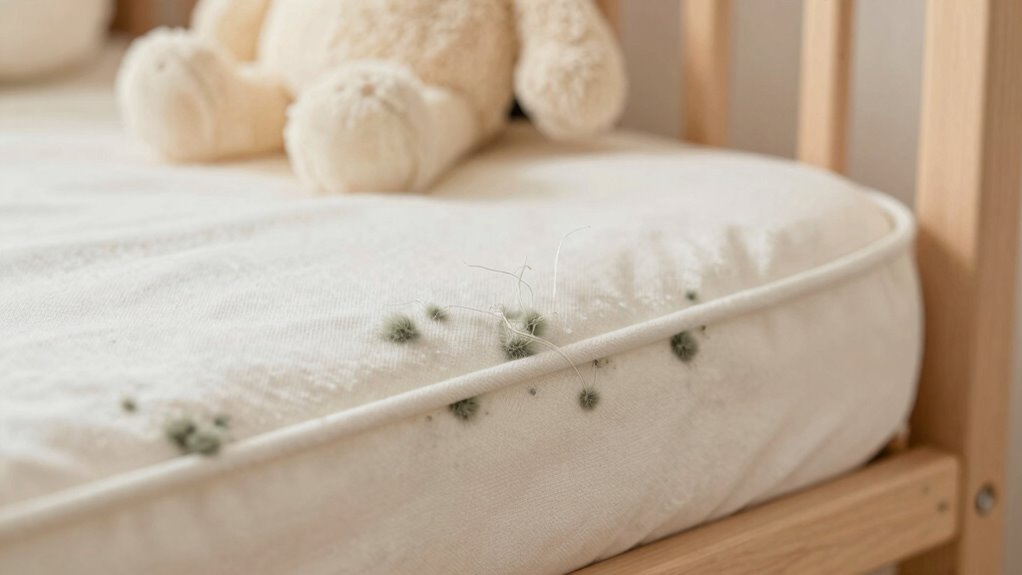
You should watch for any unusual respiratory symptoms in your baby, like coughing or wheezing, which could signal mold exposure. Skin irritation, such as redness or rashes, might also be a subtle sign. Paying attention to these clues helps you catch mold-related issues early before they worsen. Additionally, being aware of common indoor air quality concerns, like allergens and odors, can help you create a healthier environment for your child. Ensuring proper air purifier maintenance can significantly reduce the presence of airborne mold spores and other pollutants. Maintaining optimal humidity levels is also crucial, as mold thrives in damp conditions and controlling humidity can prevent its growth. Monitoring indoor air quality reports can help identify hidden mold sources that might not be immediately visible. Regularly inspecting ventilation systems can further improve air circulation and reduce mold development.
Unusual Respiratory Symptoms
Have you noticed subtle changes in your baby’s breathing patterns? These unusual respiratory symptoms could indicate mold exposure affecting their respiratory health. Mold allergy symptoms often go unnoticed but can escalate quickly. Be alert to:
- Persistent coughing or wheezing even when they’re not sick
- Shortness of breath during routine activities
- Frequent nasal congestion or runny nose
- Unexplained chest tightness or discomfort
These signs suggest your baby might be reacting to mold spores, which can compromise respiratory health. Mold exposure can weaken immune responses and trigger allergic reactions. Ensuring proper air quality in your nursery can significantly reduce mold growth and improve indoor health. If you observe these symptoms consistently, it’s essential to investigate your nursery environment for mold. Early detection helps protect your baby from more severe respiratory issues and ensures a healthier, mold-free space.
Skin Irritation Signs
Unexplained skin irritation in your baby can be a subtle sign that mold exposure is affecting their health. Mold releases allergy triggers that may cause redness, rashes, or persistent itching. If your baby develops skin irritation without a clear reason, it’s worth considering mold as a possible cause, especially if it coincides with other symptoms like respiratory issues. Mold-related skin problems often appear as patches of redness or eczema-like spots that don’t respond to typical treatments. Keep an eye out for areas that seem itchy or inflamed, particularly around the face, neck, or diaper area. Recognizing these skin irritation signs early can help you identify mold exposure before it worsens, ensuring you take swift action to protect your baby’s health.
How to Check for Mold Yourself : Tools and Tips
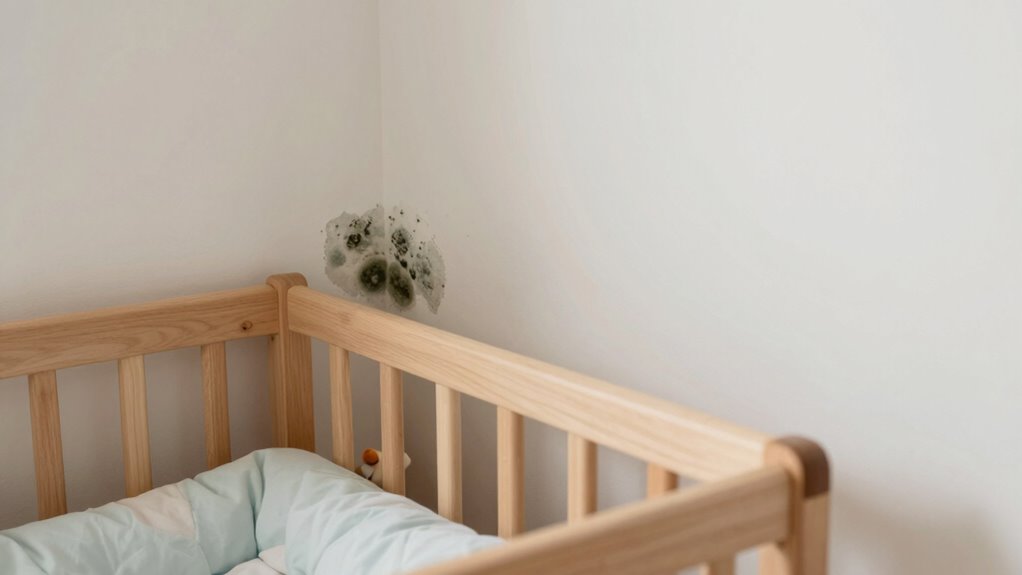
Detecting mold in your nursery doesn’t require specialized training, but using the right tools makes it easier. Start with a basic checklist to assess air quality and spot potential mold problems early.
Detect mold early with simple tools and regular checks to keep your nursery safe and healthy.
- Flashlight – Use a bright light to inspect hidden areas like behind furniture and under carpets for visible mold or discoloration.
- Mirror – A small mirror helps you see into tight spots and corners where mold can hide.
- Air Quality Monitor – Invest in a device that detects mold spores and humidity levels, promoting mold prevention.
- Visual Checklist – Regularly examine walls, ceilings, and vents for stains, musty odors, or fuzzy growths.
These tools help maintain a healthy environment for your baby and catch mold issues before they become serious.
Preventing Mold Growth in Your Nursery : Easy Steps
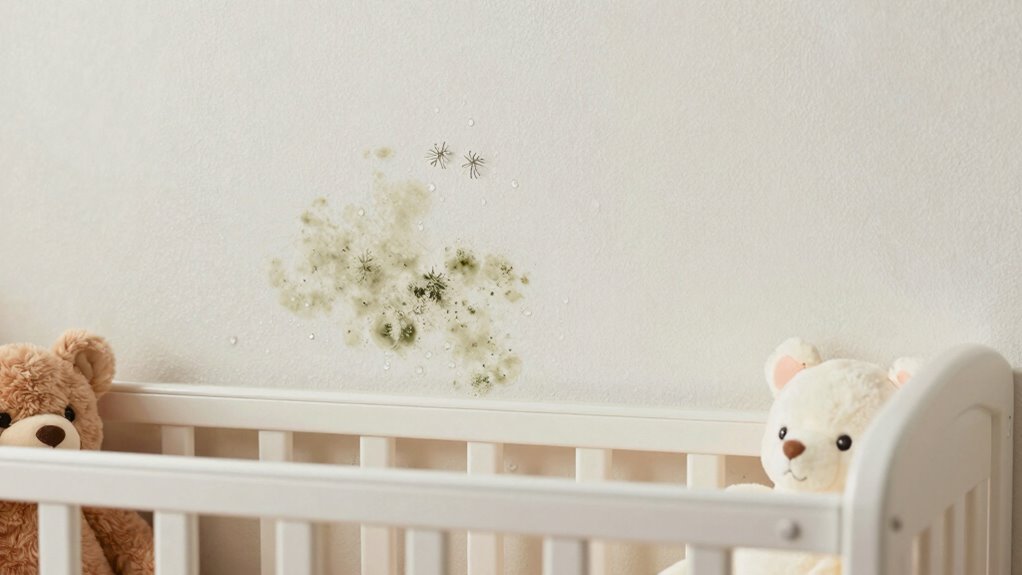
To prevent mold from taking hold in your nursery, you need to keep the air moving and control moisture. Make sure your space has proper ventilation and use a dehumidifier if needed. Regularly clean surfaces to remove mold spores and keep your nursery safe for your little one.
Maintain Proper Ventilation
Proper ventilation is essential for preventing mold growth in your nursery. Good air circulation helps keep moisture levels low and reduces mold spores’ chances to settle. To guarantee effective ventilation, consider these steps:
- Use ventilation systems like exhaust fans or air purifiers to improve airflow.
- Open windows regularly to promote natural air exchange.
- Keep doors slightly ajar when possible to enhance circulation.
- Avoid overcrowding the space, which can trap moisture and hinder air movement.
Control Humidity Levels
Controlling humidity levels is essential for preventing mold growth in your nursery. Too much moisture encourages mold, while too little can harm your baby’s comfort. Use a dehumidifier or air conditioner to maintain humidity control between 30-50%. Proper moisture management reduces the risk of mold spores settling and thriving. Keep an eye on humidity levels with a hygrometer, and adjust as needed. Here’s a quick guide:
| Humidity Level | Action Needed | Effect |
|---|---|---|
| Below 30% | Use a humidifier | Keeps environment comfortable |
| 30-50% | Ideal range | Prevents mold growth |
| Above 50% | Use a dehumidifier | Stops mold from developing |
This approach ensures your nursery remains dry, safe, and mold-free.
Regularly Clean Surfaces
Regularly cleaning surfaces in your nursery is one of the most effective ways to prevent mold from taking hold. Use a mixture of water and mild detergent to wipe down furniture, walls, and shelves weekly. Pay special attention to areas prone to moisture, like near windows or vents. Consider applying mold-resistant paint to walls for added protection. An air purifier with a HEPA filter can help reduce airborne mold spores, keeping the environment safer for your baby. Additionally, regularly inspect and clean stuffed animals and bedding to prevent hidden mold growth. For stubborn spots, use a solution of vinegar and water to disinfect. These steps create a cleaner, healthier nursery environment, notably reducing the risk of mold developing unnoticed.
Safe Ways to Remove Mold From Your Baby’s Room
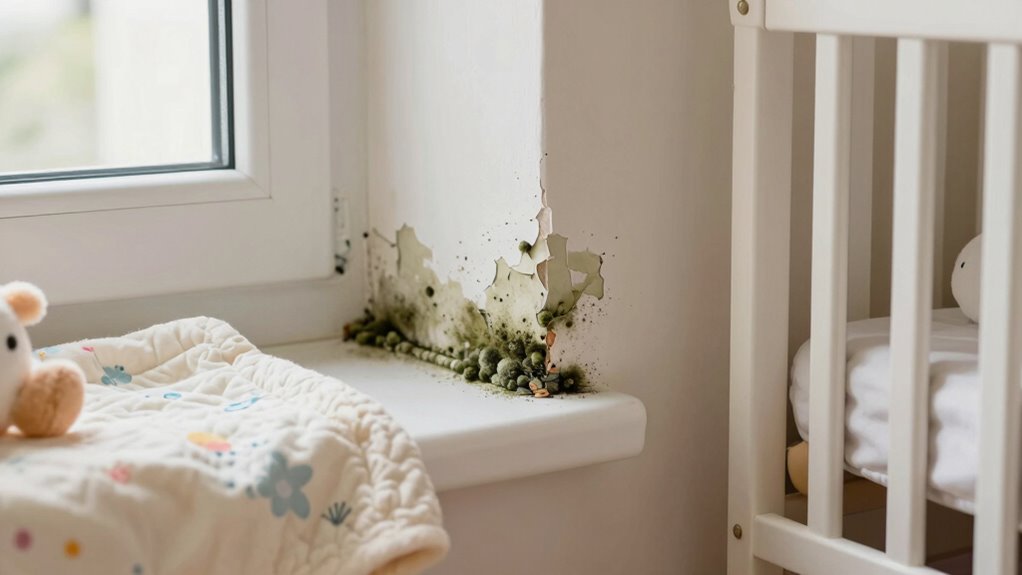
When removing mold from your baby’s room, safety should be your top priority. Start by ventilating the space with an open window and use an air purifier benefits to improve air quality and reduce mold spores. Wear protective gear like gloves and a mask to avoid inhaling mold particles. For small areas, clean surfaces with a mixture of water and detergent or a mild mold remover. Once cleaned, consider applying mold resistant paint to prevent future growth. Avoid harsh chemicals that could harm your baby. Remember, always dry the area thoroughly after cleaning. Using an air purifier with a HEPA filter can help trap remaining spores, creating a safer environment. These steps ensure you remove mold effectively while prioritizing your baby’s health.
When to Call a Professional for Mold Inspection and Remediation
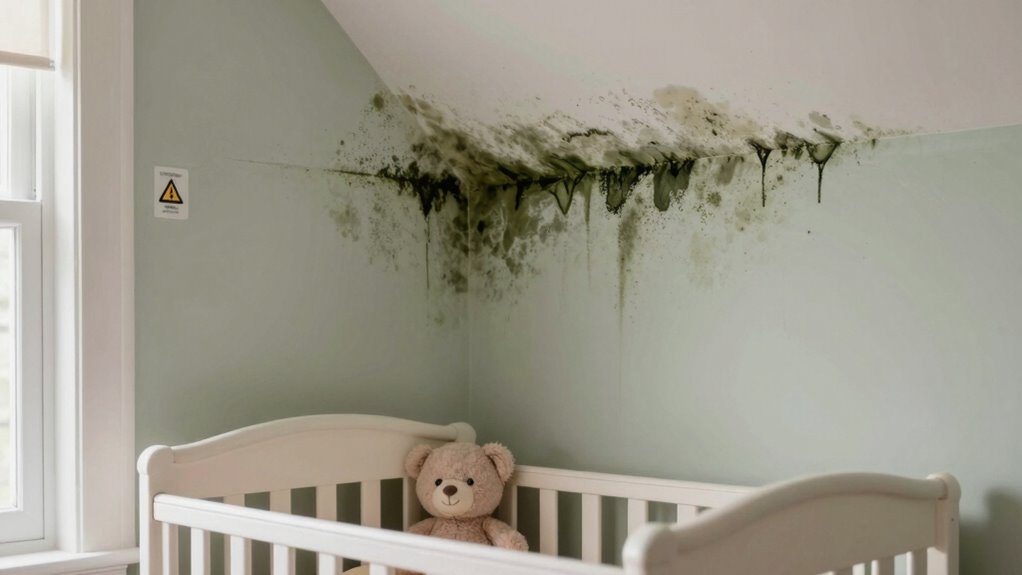
Even after cleaning mold from your baby’s room, some situations call for professional help. If you notice persistent mold growth, it could be due to hidden mold types or ongoing moisture problems. You should call a professional if:
- Mold reappears despite cleaning efforts.
- You suspect hidden mold behind walls or in ventilation systems.
- Your baby shows allergy symptoms like sneezing or coughing that worsen.
- There’s extensive visible mold, especially in hard-to-reach areas.
Professionals can accurately identify mold types and assess if these are allergy triggers. They also use specialized equipment to detect hidden mold, ensuring thorough remediation. Don’t risk ongoing health issues; expert intervention is essential when mold persists or if you’re unsure about the extent.
Tips for Keeping Your Nursery Mold-Free Long-Term
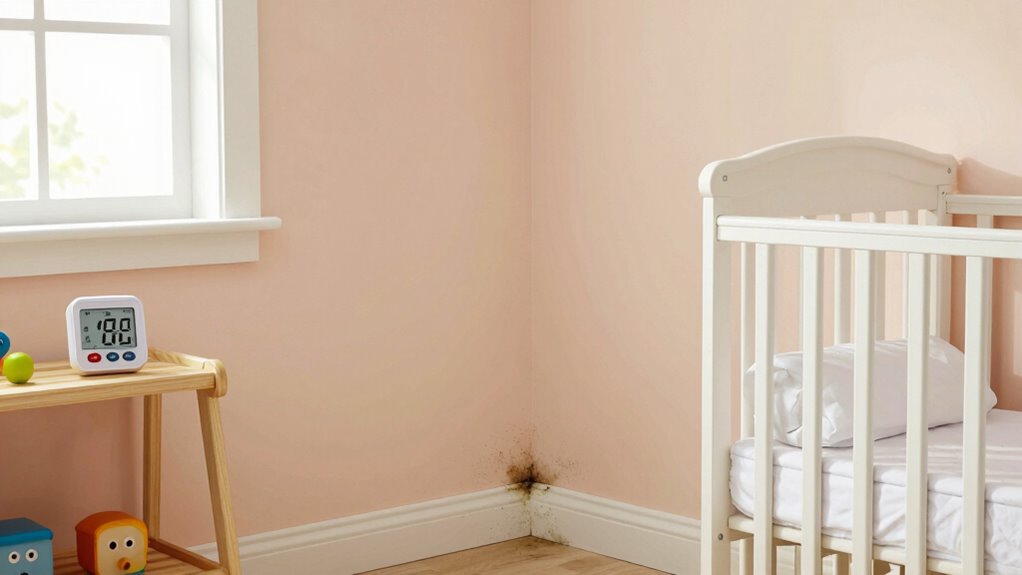
To keep your nursery mold-free over the long term, maintaining a dry and well-ventilated environment is essential. Regularly check for leaks, use a dehumidifier, and ensure proper airflow. Keep nursery decor and baby furniture dry by wiping down surfaces and avoiding excess moisture. Proper organization helps prevent mold growth by reducing clutter that traps humidity.
| Action | Example |
|---|---|
| Control humidity | Use a dehumidifier or air conditioner |
| Regular cleaning | Wipe down nursery decor and furniture weekly |
| Proper ventilation | Open windows or use fans to improve airflow |
Implement these tips consistently, and you’ll create a safe, mold-resistant nursery environment for your baby.
How Protecting Your Baby From Mold Supports Healthy Development
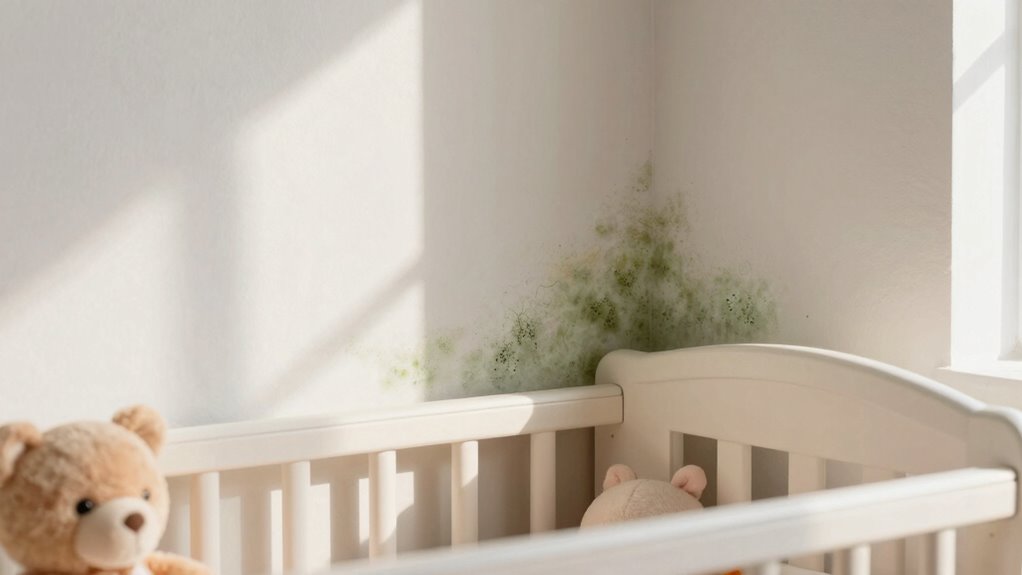
Protecting your baby from mold is vital because exposure can interfere with healthy development. Mold spores in the air can trigger allergies, respiratory issues, and weaken the immune system. Maintaining good air quality ensures your baby breathes cleaner air, supporting ideal growth. Here are four ways protecting against mold benefits your child’s development:
- Improves lung function by reducing inhalation of mold spores
- Supports healthy immune system responses
- Prevents allergies that could hinder learning and social interaction
- Promotes better sleep, which is indispensable for growth and brain development
Frequently Asked Questions
Can Mold Exposure Affect My Baby’s Immune System Development?
Yes, mold exposure can impact your baby’s immune response, potentially making them more vulnerable to infections. It may also increase the risk of allergy development as their immune system is still developing. By identifying and removing mold early, you help protect your baby’s health and support a strong immune system. Regularly check for mold and guarantee proper ventilation to minimize exposure and safeguard your little one’s well-being.
Are Certain Types of Mold More Dangerous for Babies?
Certain types of mold, especially toxic molds like Stachybotrys, pose greater risks to your baby’s health. These molds produce mycotoxins that can cause respiratory issues and worsen mold allergies. Since babies have developing immune systems, exposure to these dangerous molds can lead to more severe health problems. Always monitor your nursery for signs of toxic molds and seek professional help if you suspect mold growth to protect your little one’s health.
How Often Should I Inspect My Nursery for Mold?
You should inspect your nursery for mold at least once a month. Focus on areas with poor ventilation and high humidity, as these are common mold hotspots. Improve ventilation by opening windows or using fans, and control humidity with a dehumidifier or air conditioner. Regular inspections help you catch mold early, protecting your baby’s health. Keep an eye on hidden spots like corners, behind furniture, and near windows.
What Are Natural Methods to Prevent Mold Growth?
Think of mold prevention like keeping a garden healthy. You can use air purifiers to filter out excess moisture and improve air quality, and moisture control is key—use dehumidifiers or fix leaks promptly. Regularly airing out the nursery helps prevent dampness. These natural methods create an environment less friendly to mold growth, keeping your baby’s space safe and healthy without harsh chemicals.
Can Mold Spores Cause Long-Term Respiratory Issues in Infants?
Yes, mold spores can cause long-term respiratory issues in infants. When your baby inhales mold spores, it can lead to persistent coughing, wheezing, or even asthma development later in life. Young children are especially vulnerable because their lungs are still developing. To protect your baby, keep the nursery dry and well-ventilated, and regularly check for mold signs, preventing spores from affecting your child’s health over time.
Conclusion
By staying vigilant and regularly inspecting your nursery, you create a safe haven where your baby can grow and thrive. Imagine a cozy, mold-free sanctuary, free of hidden dangers lurking behind walls or around windows. With your careful eye and proactive steps, you prevent tiny invisible threats from turning into health hazards. Keep your nursery bright, clean, and mold-free, ensuring your little one’s healthy development blossoms in a safe, nurturing space.
Fall Picks
fall essentials
As an affiliate, we earn on qualifying purchases.