When your baby has their first cold, start by observing their symptoms carefully. For mild signs like a runny nose or fussiness, home care with fluids, a humidifier, and gentle remedies can help. However, if you notice difficulty breathing, a high or persistent fever, or signs of dehydration, it’s time to see a doctor. Knowing when to manage at home or seek medical help is key—continue on to find out more about safe care tips and when to consult a healthcare professional.
Key Takeaways
- Recognize symptoms indicating mild cold versus signs needing urgent medical attention.
- Manage mild symptoms at home with hydration, humidifiers, and gentle fever reducers.
- Seek a doctor if your baby has difficulty breathing, high fever, or refuses feeding.
- Follow age-specific guidelines for home remedies, especially under three months.
- Prepare for medical visits by documenting symptoms and asking relevant questions.
Recognizing Common Cold Symptoms in Babies
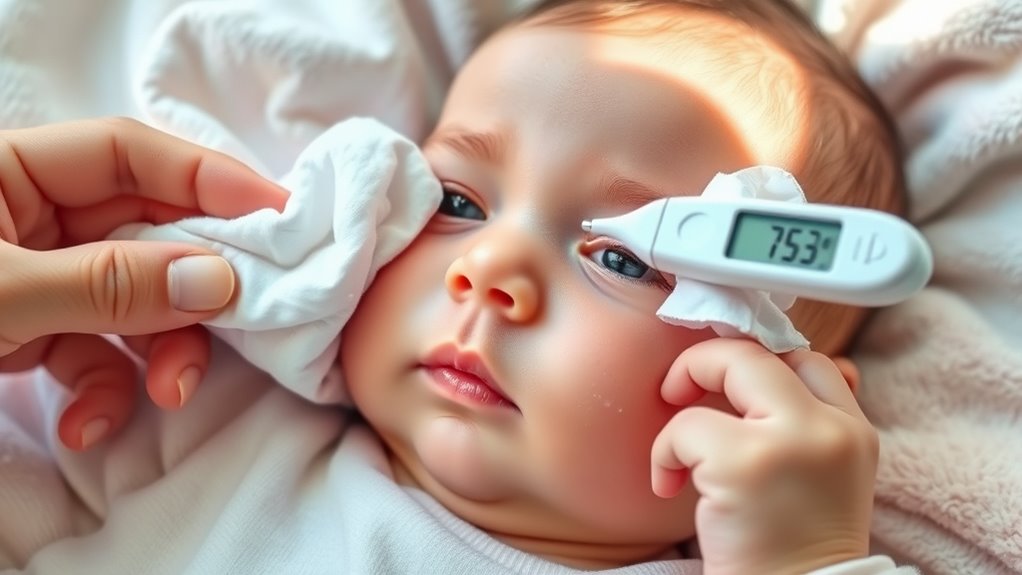
Since babies can’t tell you how they feel, it’s important to recognize the common signs of a cold early on. You might notice your baby sneezing more than usual or having a runny nose that’s clear and watery. They may also have trouble sleeping or seem fussier than normal. Watch for coughing, which can be mild or persistent, and listen for their breathing to ensure it’s not labored. A slight fever is common, so take their temperature if they seem warmer than usual. Additionally, you might see decreased appetite or fussiness during feeding. Recognizing these symptoms early helps you decide whether to monitor at home or seek medical advice, ensuring your baby gets the care they need. Data privacy challenges are also relevant, as monitoring symptoms often involves sharing health information with healthcare providers.
When to Try Home Remedies for Your Baby
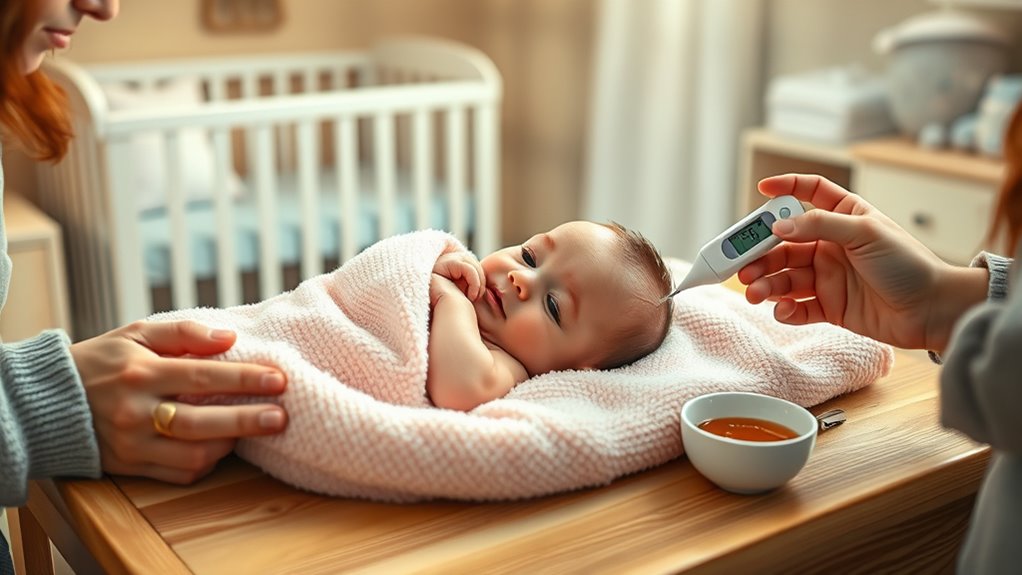
If your baby shows only mild cold symptoms, home remedies might help ease their discomfort. Keep in mind, their age and immune system play a role in how they respond, so younger babies may need extra care. Watch closely, and know when it’s time to seek medical advice instead of trying remedies at home. For example, gentle home care can be effective in managing minor symptoms, but always prioritize safety and monitor for any signs of worsening condition.
Mild Symptoms Observation
When your baby shows mild cold symptoms like a runny nose or slight cough, it’s usually safe to try gentle home remedies first. Keep an eye on their behavior—if your baby remains playful, eats well, and sleeps comfortably, it’s a good sign they’re managing the cold. Use a humidifier to add moisture to the air, helping ease congestion. Saline drops and a bulb syringe can clear nasal passages safely. Offer plenty of fluids to stay hydrated, and use a warm, damp cloth to soothe a minor fever or discomfort. Remember, mild symptoms often resolve on their own within a few days. However, monitor your baby closely, and if symptoms worsen or persist, don’t hesitate to seek medical advice. Incorporating appropriate home care can support your baby’s recovery and comfort during this time.
Age and Immunity
At what age can you safely start using home remedies for your baby’s cold? Typically, around six months old, your baby’s immune system is more developed, making gentle home care options safer. Before this age, it’s best to consult your pediatrician before trying anything at home. Babies under three months are especially vulnerable, and their immune systems aren’t fully mature. During this early stage, even mild symptoms require professional guidance. As your baby grows, their immunity strengthens, and simple remedies like saline drops or humidifiers can help ease discomfort. It’s also important to recognize trust in healthcare and seek medical advice when necessary. Always monitor your baby closely and trust your healthcare provider’s advice. Remember, each baby develops at their own pace, so use your best judgment and prioritize safety when considering home treatments.
Signs That Warrant a Pediatrician Visit
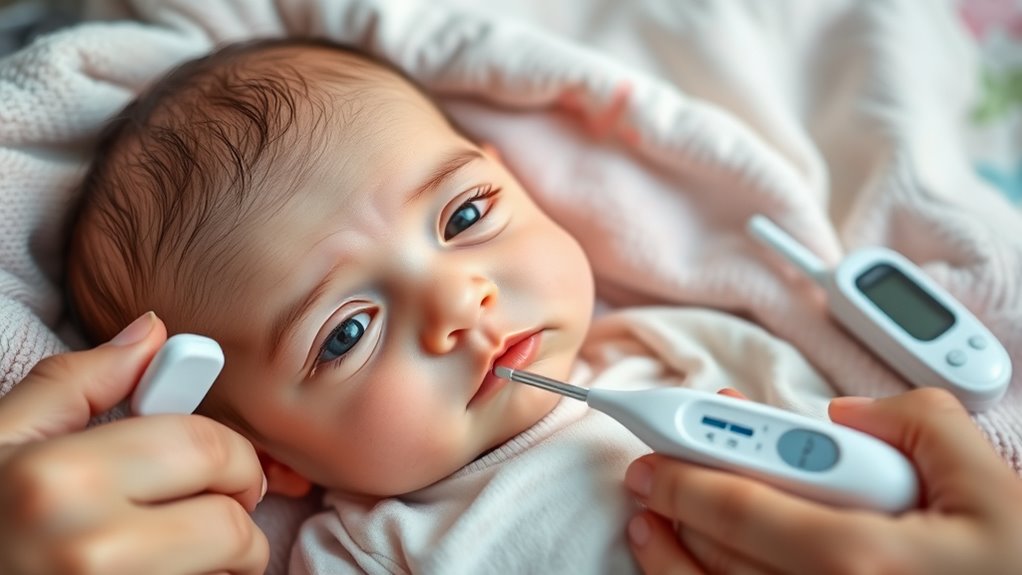
While most colds in babies resolve on their own, certain signs indicate it’s time to see a pediatrician. If your baby has difficulty breathing, wheezing, or persistent coughing, seek medical advice promptly. Watch for high fever (over 100.4°F or 38°C) that lasts more than a day or two, as it could signal a bacterial infection. If your baby refuses to feed, shows signs of dehydration like dry mouth or fewer wet diapers, or becomes unusually lethargic, don’t delay in consulting a healthcare professional. Also, if your baby develops bluish lips or face, it indicates a lack of oxygen and requires immediate attention. Trust your instincts—if something feels off or worsening, it’s best to get expert guidance to ensure your baby’s safety. Monitoring color accuracy and other symptoms can help determine the urgency of medical care.
Managing Fever and Discomfort at Home
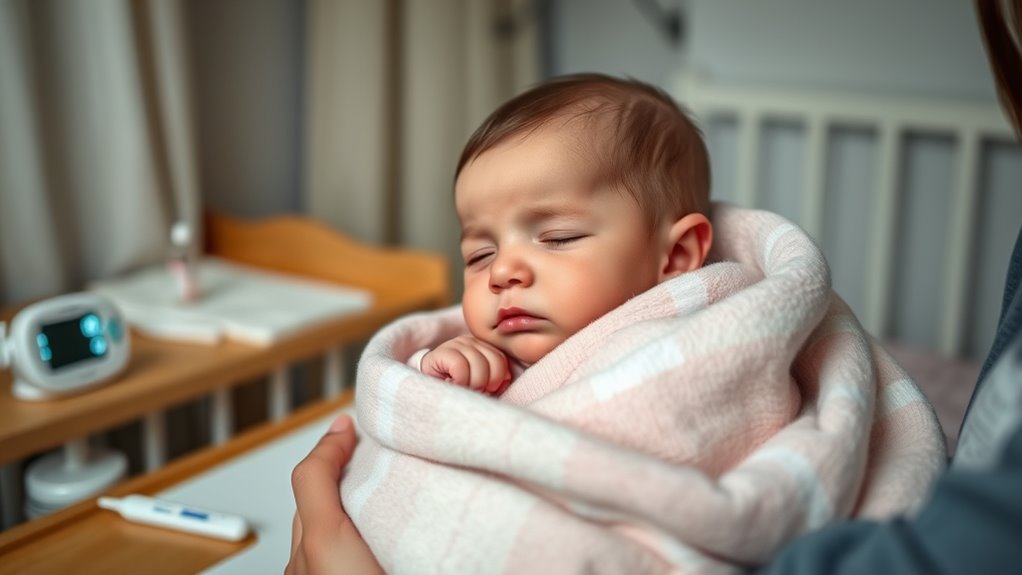
Managing your baby’s fever and discomfort at home involves simple, effective steps to help them feel better. First, verify they stay hydrated by offering plenty of fluids like breast milk, formula, or water if age-appropriate. Use a soft, damp cloth to gently wipe their forehead or neck to help reduce their temperature. Keep the room comfortably cool and avoid overdressing your baby. You can give age-appropriate doses of acetaminophen or ibuprofen to help reduce fever and relieve pain, but always follow dosing instructions carefully. Offer extra cuddles and comfort to soothe your baby, and verify they rest as much as needed. Maintaining a comfortable environment can also help in managing their symptoms. If their fever persists or worsens, or if they show signs of distress, consult your healthcare provider promptly.
Monitoring Breathing and Respiratory Symptoms
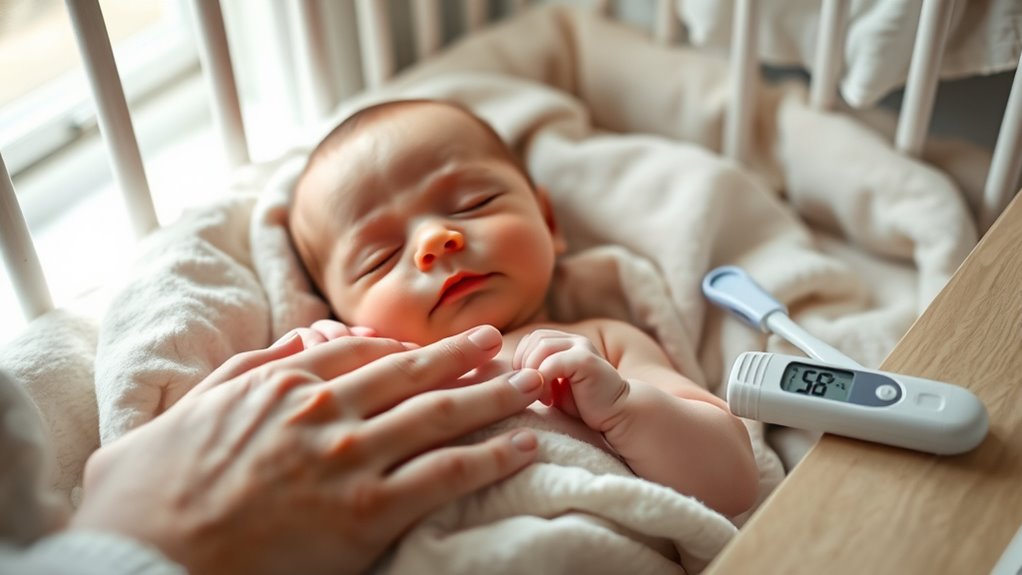
Monitoring your baby’s breathing is essential when they have a cold, as respiratory symptoms can indicate the severity of their illness. Watch for signs like rapid or shallow breathing, nostril flaring, or chest retractions—when the skin pulls in between the ribs or above the collarbone. Keep an eye on your baby’s cough and listen for wheezing or noisy breathing, which can suggest airway obstruction or congestion. Count their breaths for a full minute if you notice any unusual patterns. Check if they’re struggling to breathe or if their skin appears bluish around the lips or face. Staying observant helps you recognize early warning signs and decide if medical attention is needed. Prompt detection of breathing difficulties can prevent complications and ensure your baby gets proper care. Incorporating data-driven strategies can help you better understand your child’s symptoms and improve your response.
When to Seek Emergency Care for Your Baby

Knowing when to seek emergency care for your baby is crucial, especially if their symptoms worsen rapidly or don’t improve. Look for signs like difficulty breathing, persistent high fever, bluish lips or face, or unresponsiveness. If your baby is choking, having seizures, or refuses to wake despite gentle stimulation, these are urgent signals. Also, if your baby is extremely irritable, inconsolable, or shows signs of dehydration such as a sunken soft spot or very few wet diapers, seek help immediately. Trust your instincts—if something feels seriously wrong or you’re worried, don’t hesitate to go to the emergency room. Prompt action can be lifesaving, so always prioritize your baby’s safety when symptoms escalate or become severe. Being aware of symptoms like respiratory distress can help you act swiftly in critical situations.
Preventative Measures to Reduce Cold Risks

To help keep your baby healthy, wash your hands frequently and encourage others to do the same. Avoid taking your baby to crowded places where germs spread easily. Dress your little one in proper layers to keep them warm and protect against the cold. Ensuring your baby receives nutritional support from a balanced diet can also help strengthen their immune system.
Hand Hygiene Practices
Have you ever wondered how simple hand hygiene can substantially reduce your baby’s risk of catching a cold? Regularly washing your hands with soap and water for at least 20 seconds removes germs that you might transfer unknowingly. Always wash your hands before touching your baby, especially after coughing, sneezing, or being in public places. Use hand sanitizer with at least 60% alcohol if soap and water aren’t available. Encourage others in your household to follow the same practices. Keep your baby’s hands clean by gently wiping them with a damp cloth if needed. Proper hand hygiene creates a barrier against germs, markedly lowering your baby’s chances of getting sick and helping to keep your home healthier overall. Glycolic acid benefits can also help in maintaining healthy skin, which is essential for your baby’s comfort and protection.
Avoid Crowded Places
Keeping your baby safe from colds involves more than just good hand hygiene; avoiding crowded places can substantially lower their exposure to germs. When you take your baby to busy locations like malls, markets, or crowded events, they come into contact with more people carrying potential viruses. These germs can spread quickly through sneezes, coughs, or even touching shared surfaces. Whenever possible, opt for quieter, less populated environments, especially during cold season. If you must visit crowded spots, try to go during off-peak hours and keep your baby close, avoiding touching surfaces or objects others have handled. Limiting exposure to crowded areas reduces the likelihood of your baby catching a cold from airborne droplets or contaminated surfaces, helping them stay healthier and more comfortable.
Proper Clothing Layers
Dressing your baby in proper clothing layers is an effective way to prevent cold risks. Layering helps regulate body temperature and prevents overheating or chilling. Start with a moisture-wicking base layer to keep sweat away from the skin. Add an insulating layer like a fleece or wool sweater for warmth. Finish with a waterproof or windproof outer layer if going outside. Use the table below to choose appropriate clothing based on weather conditions:
| Weather Condition | Inner Layer | Outer Layer |
|---|---|---|
| Cold & Windy | Cotton onesie | Waterproof jacket |
| Mild & Sunny | Light cotton shirt | Light sweater |
| Cool & Breezy | Thermal underwear | Windbreaker |
| Indoor | Lightweight cotton onesie | None or light blanket |
Adjust layers as needed to keep your baby comfortable and safe.
Choosing Safe and Effective Home Treatments

When your baby catches a cold, choosing safe and effective home treatments is essential to help them feel better without risking harm. Start by ensuring they get plenty of rest and stay well-hydrated with breast milk, formula, or fluids suitable for their age. You can use a humidifier in their room to add moisture to the air, easing congestion and helping them breathe more comfortably. Saline drops and a bulb syringe can clear nasal passages safely. Use a gentle, baby-safe fever reducer if needed, but always follow dosing instructions carefully. Avoid home remedies that haven’t been proven safe for infants, like honey or herbal treatments. Focus on comfort, keeping your baby clean, and monitoring their symptoms closely. If their condition worsens, seek medical advice promptly.
Communicating With Healthcare Providers About Your Baby’S Condition

Effective communication with your healthcare provider is crucial when caring for a sick baby. Clearly describe your baby’s symptoms, including how long they’ve lasted, their severity, and any changes you’ve noticed. Mention if your baby has a fever, difficulty breathing, refusal to eat, or unusual lethargy. Keep track of your observations so you can provide accurate information. Don’t hesitate to ask questions, like when to seek medical attention or how to manage symptoms at home. Be honest about any treatments you’ve tried and how your baby responded. If your baby’s condition worsens, contact your provider immediately. Good communication ensures you receive the right guidance and support, giving you confidence to care effectively for your little one.
Preparing for Your Pediatric Visit If Needed

If you decide a visit to the pediatrician is necessary, preparing ahead can make the appointment more efficient and less stressful. To get ready, consider these steps:
- Gather your baby’s medical history and note any recent symptoms or changes.
- List questions or concerns you want to discuss to ensure nothing is forgotten.
- Bring a list of medications your baby is currently taking, including dosages.
- Have your baby’s health records and insurance information ready for quick reference.
Being organized helps the doctor understand your baby’s condition better and makes the visit smoother. Remember to bring a comfort item for your baby and arrive early to avoid unnecessary stress. Proper preparation allows you to focus on your baby’s needs during the appointment.
Frequently Asked Questions
How Can I Differentiate Between a Cold and Other Illnesses in Babies?
You wonder how to tell a cold from other illnesses in your baby. Focus on common cold signs like a runny nose, mild cough, and slight fever. If symptoms worsen, like high fever, difficulty breathing, persistent vomiting, or lethargy, seek medical advice. Trust your instincts and monitor your baby closely. When in doubt, consulting a healthcare professional guarantees your little one gets the right care promptly.
Are There Specific Foods or Fluids That Help Soothe a Baby’s Cold?
When your baby’s feeling under the weather, you want to help them feel better fast. Warm fluids like breast milk, formula, or diluted apple juice can soothe their throat and keep them hydrated. Chest rubs and saline drops also work wonders. Think of it as hitting two birds with one stone—comfort and hydration. Just remember, always check with your pediatrician before trying new foods or remedies.
What Are the Risks of Delaying a Doctor’s Visit for a Cold?
If you delay taking your baby to the doctor for a cold, you risk missing signs of a more serious illness, like dehydration or bronchitis. Symptoms such as high fever, persistent cough, or difficulty breathing need prompt medical attention. Ignoring these could lead to complications. So, always monitor your baby closely and seek medical care if symptoms worsen or don’t improve within a few days.
How Long Should a Typical Baby Cold Last Before Seeking Medical Advice?
Ever notice how your baby’s cold seems to linger? Usually, a cold lasts about 7 to 10 days. If it drags on beyond that, or if symptoms worsen—like difficulty breathing, high fever, or refusal to eat—it’s time to see a doctor. Trust your instincts; if something feels off, don’t hesitate. Catching issues early keeps your little one healthy and reassures you.
Can My Baby Catch a Cold From Siblings or Daycare Environments?
Yes, your baby can catch a cold from siblings or daycare environments because viruses spread easily through coughs, sneezes, and contact. To reduce the risk, encourage good hygiene, like handwashing and avoiding close contact with sick individuals. Keep your baby’s environment clean, and monitor for symptoms. If your baby shows difficulty breathing, high fever, or lethargy, seek medical advice promptly.
Conclusion
Remember, your baby’s health is the lighthouse guiding your way through the storm of a cold. Trust your instincts, watch for signs, and don’t hesitate to seek help if needed. With careful care and vigilant monitoring, you’re steering through choppy waters toward calmer seas. Your attentive hands and loving heart are the best maps to keep your little one safe, ensuring they sail smoothly back to health.