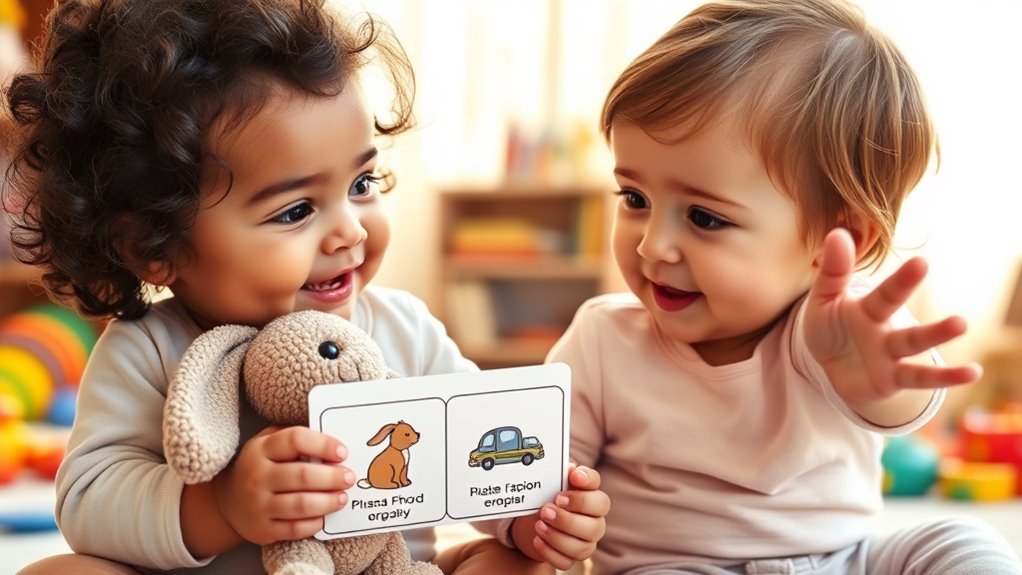

When your baby is exposed to multiple languages early on, they gain cognitive benefits like enhanced problem-solving, multitasking, and mental flexibility. This early experience helps develop neural connections in the brain, boosting overall growth. Managing two languages also supports cultural identity and social skills. If you keep exploring this topic, you’ll discover how fostering bilingual development can set your child up for long-term success and confidence in diverse environments.

Turn the school run and nap time into listening time
- Thousands of audiobooks, podcasts and originals
- Listen on your phone, tablet or Echo — also offline
- Cancel anytime
Key Takeaways
- Early exposure to multiple languages enhances cognitive flexibility and problem-solving skills in babies.
- Bilingual development strengthens neural connections, supporting overall brain growth and mental agility.
- Code switching in young children improves executive functions like multitasking and adaptability.
- Learning two languages from infancy broadens cultural understanding and fosters empathy.
- Bilingual babies develop better language management skills, contributing to advanced communication abilities.
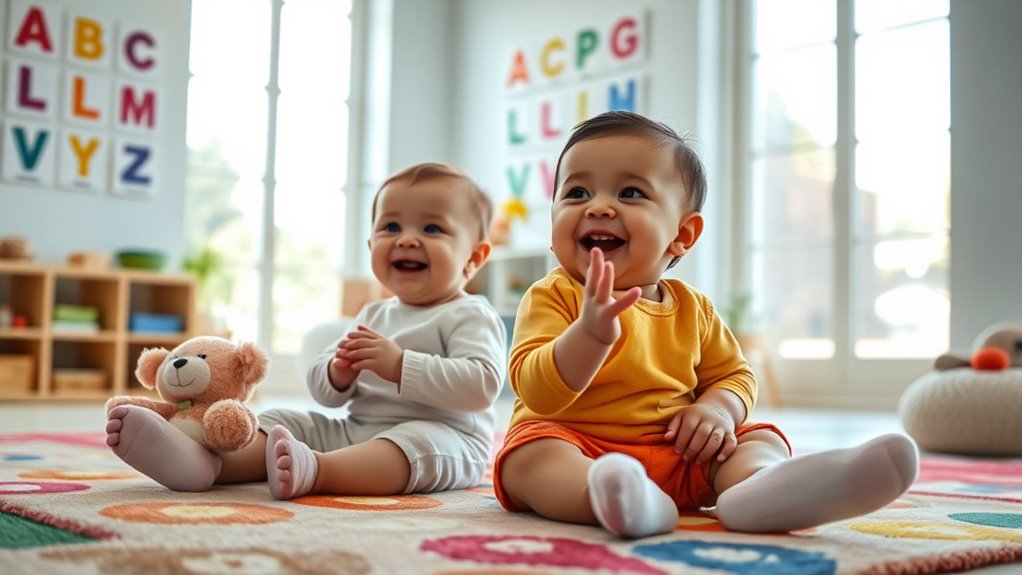
Have you ever wondered how babies become bilingual? It’s a fascinating process, driven by their natural ability to pick up multiple languages early on. When you expose your baby to more than one language from a young age, you’re setting the stage for numerous cognitive benefits. One key aspect of early bilingual development is code switching, which is when children switch between languages within a conversation or even a sentence. While it might seem like a sign of confusion, it actually offers significant advantages. Code switching helps children steer their linguistic worlds more flexibly and demonstrates their ability to manage multiple language systems simultaneously. This skill enhances their cognitive flexibility, allowing them to switch tasks and perspectives more easily as they grow. Beyond the cognitive edge, code switching also plays a indispensable role in cultural identity development. When children fluidly move between languages, they’re not just learning words—they’re embracing their cultural roots. This process helps them forge a strong sense of belonging and pride in their heritage, fostering a deeper connection to their community and traditions. As they develop their bilingual abilities, they become more aware of different cultural contexts, which broadens their worldview and nurtures empathy. The early exposure to multiple languages fosters a rich cultural identity that’s rooted in understanding and appreciation. It’s important to recognize that this cultural identity development isn’t static; it evolves as children grow and encounter new experiences. Supporting this process means encouraging your child to use both languages in meaningful ways, helping them see value in their cultural backgrounds. Additionally, exposing children to multiple languages can enhance neural connections in the brain, further supporting their cognitive growth. The advantages of code switching extend beyond cultural pride—they also contribute to better executive function skills, such as problem-solving and multitasking. Bilingual children learn to manage two language systems, which strengthens their overall mental agility. This mental workout prepares them for future academic achievements and social interactions, where switching perspectives and understanding different viewpoints are essential. When you create an environment that nurtures bilingual development, you’re not just helping your child learn new words; you’re giving them tools that benefit their entire cognitive and emotional development. They learn to adapt, to communicate across cultures, and to see their identity as a blend of worlds. In essence, early language exposure does more than teach vocabulary—it shapes how your child perceives themselves and the world around them. By fostering bilingualism, you’re empowering your child with skills that will serve them throughout life, from building relationships to navigating diverse environments with confidence.
As an affiliate, we earn on qualifying purchases.
Frequently Asked Questions
How Early Should I Introduce a Second Language to My Baby?
You should introduce a second language to your baby as early as possible, ideally during the first year. Early language immersion helps your little one pick up sounds and pronunciation naturally, while cultural exposure enriches their understanding and appreciation. Consistent, playful interactions with bilingual speakers or media create a supportive environment, making language learning enjoyable and effective. The sooner you start, the stronger your child’s bilingual abilities will become.
Are There Specific Languages That Benefit More From Early Exposure?
Certain languages may benefit more from early exposure depending on your child’s language dominance and cultural context. If your family or community emphasizes specific languages, early exposure helps strengthen those ties and enhances cultural identity. For example, exposing your baby to a minority language can boost cognitive skills and cultural understanding. Ultimately, integrating languages relevant to your environment provides a richer, more meaningful bilingual experience, fostering both cognitive development and cultural connection.
How Can I Support My Child’s Bilingual Development at Home?
You can support your child’s bilingual development at home by creating language immersion experiences, like speaking both languages regularly and encouraging your child to do the same. Incorporate cultural exposure through stories, music, and traditions, making learning fun and meaningful. Use everyday moments to practice, and be patient, offering positive reinforcement. Consistent exposure helps your child become confident and fluent in both languages, enriching their cognitive and cultural understanding.
Do Bilingual Babies Experience Delays in Speech Development?
You might worry about speech delay or language confusion, but bilingual babies rarely face delays in speech development. While they sometimes take a bit longer to speak, they usually catch up quickly. Remember, their language skills develop differently, blending both languages naturally. Instead of seeing confusion, recognize this as a sign of advanced cognitive flexibility. Supporting their bilingual journey encourages healthy development without causing unnecessary concern over delays.
What Are Effective Strategies for Balancing Two Languages in Daily Routines?
To balance two languages daily, try implementing code switching strategies, switching naturally between languages during conversations. Incorporate cultural integration techniques by including songs, stories, and activities from both cultures. Set specific times for each language, like reading books or speaking at meals, to guarantee equal exposure. Consistency helps your child develop strong skills in both languages, making communication natural and enriching their cultural understanding.
As an affiliate, we earn on qualifying purchases.
Conclusion
As you’ve seen, exposing your baby to two languages from an early age boosts their cognitive skills and opens doors to new cultural worlds. Imagine your little one confidently switching between languages, thinking critically, and adapting easily — isn’t that a gift worth giving? Early bilingual exposure shapes a bright, adaptable mind that thrives in our interconnected world. So, why not start today and watch your child uncover endless possibilities through the power of bilingualism?
As an affiliate, we earn on qualifying purchases.
dual language learning flashcards
As an affiliate, we earn on qualifying purchases.
As an affiliate, we earn on qualifying purchases.
Fall Picks
fall essentials
As an affiliate, we earn on qualifying purchases.