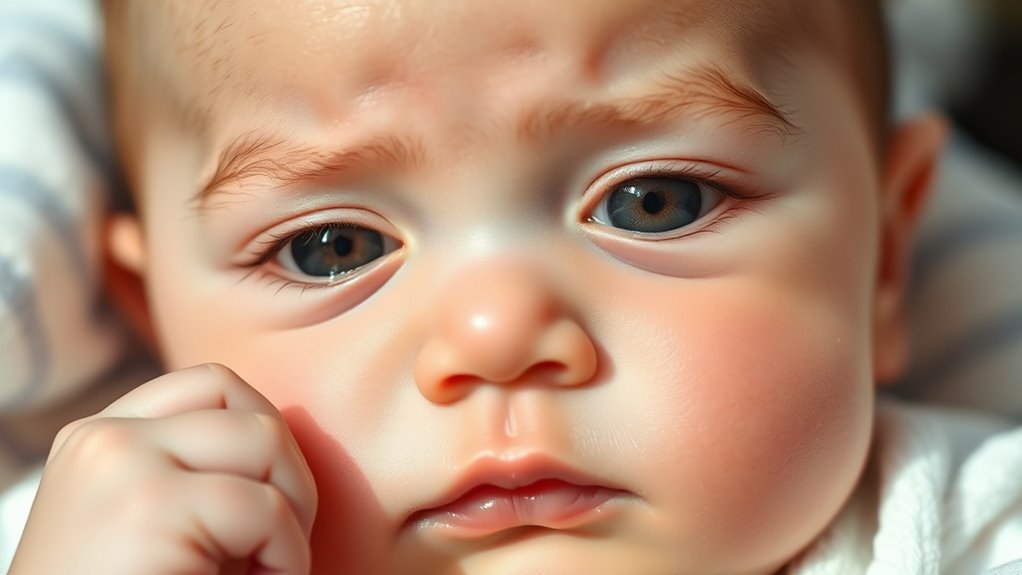

If you’re noticing your infant reacts strongly to loud sounds, bright lights, or new sights, they might be highly sensitive. They could get overwhelmed by sensory input, need extra reassurance, or become upset when routines change. Pay attention if your baby is easily startled, shows a deep focus on details, or seeks comfort in familiar surroundings. Recognizing these signs early can help you support their unique needs—more details await if you keep exploring.
Key Takeaways
- Look for signs of sensory overload, such as distress from loud noises or bright lights.
- Notice if your infant reacts intensely to new stimuli or small details others overlook.
- Observe emotional responses like frequent meltdowns, withdrawal, or heightened reactivity to tactile or auditory input.
- Watch for discomfort or anxiety when routines change or in unfamiliar environments.
- Recognize that these behaviors are natural and can be supported with a calm, predictable environment.
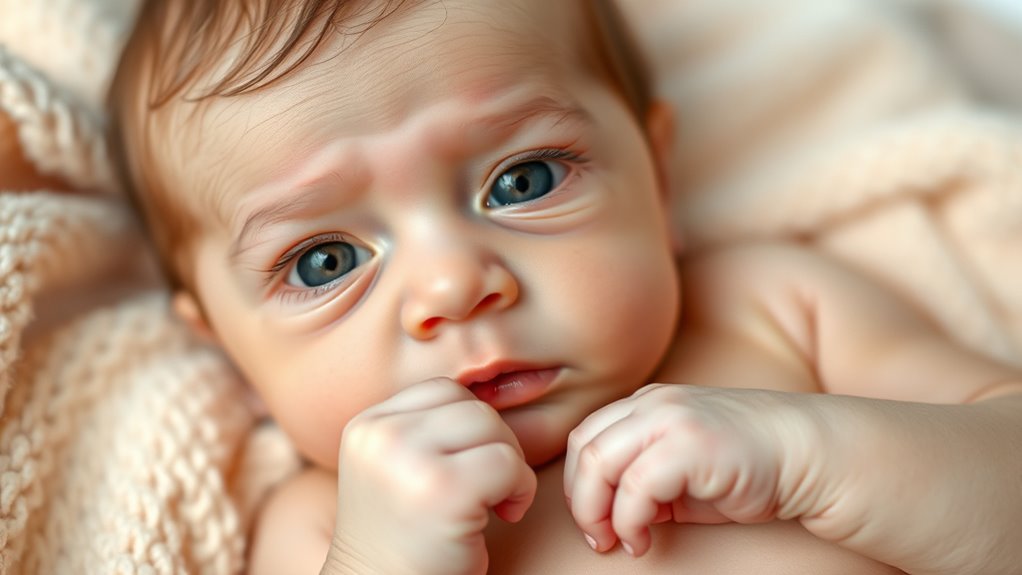
Recognizing high sensitivity in infants can be challenging, but certain early signs often stand out. As a parent or caregiver, you might notice specific behavioral cues that set a highly sensitive infant apart from others. These cues can include how your baby reacts to new environments or stimuli, and they often reveal a deeper level of processing of sensory input. For example, your infant may seem overwhelmed by loud noises or bright lights, showing signs of heightened sensory responses. They might turn away abruptly or become visibly distressed when faced with unfamiliar sights, sounds, or textures. These reactions aren’t just typical fussiness; they reflect an intense sensitivity to their surroundings.
Highly sensitive infants react strongly to new sights, sounds, and textures, showing deep sensory processing from an early age.
You might also observe that your infant is particularly alert and attentive to small details that others might overlook. For instance, they could respond strongly to a change in your tone of voice or a new smell in the room. Their sensory responses tend to be more intense, meaning they may need longer to adjust to changes in their environment. When touched, they might pull away or become more reactive than what’s usual for their age. These sensory responses can sometimes lead to meltdowns or withdrawal, especially when overstimulated. If you notice your baby is easily startled or reacts strongly to tactile, auditory, or visual stimuli, it’s a sign they’re processing sensory information differently.
Behaviorally, highly sensitive infants often show a preference for routines and familiar settings. They may become upset or anxious when routines are disrupted, or when they encounter unfamiliar people or places. This isn’t stubbornness but a reflection of their need for predictability to feel secure. They might also be more clingy or seek extra comfort, especially in noisy or chaotic environments. You could notice that they cry more easily or take longer to calm down after being upset, indicating a heightened emotional response tied to their sensitivity.
It’s important to remember that these signs are part of a natural variation in infant temperament. Recognizing these early behavioral cues and sensory responses can help you better understand your baby’s needs. Providing a calm, predictable environment and gentle reassurance can make a significant difference. Keep in mind that highly sensitive infants often grow into empathetic and thoughtful individuals. By paying close attention to these early signs, you’re laying the foundation for supporting your child’s development and helping them feel safe and understood as they navigate their world.

Baby Montessori Sensory Teething Toy 0-6 6-12 Months, Teether Ball & Rattle
- Multi-Sensory Stimulation: 12 bright colors and textured silicone balls
- Safe Silicone Teether: Made of soft silicone and ABS plastic
- Developmental Montessori Toy: Encourages grasping and reaching skills
As an affiliate, we earn on qualifying purchases.
As an affiliate, we earn on qualifying purchases.
Frequently Asked Questions
Can High Sensitivity in Infants Predict Future Behavioral Traits?
High sensitivity in infants can suggest future behavioral tendencies, aiding in temperament prediction. If your baby reacts strongly to stimuli or becomes easily overwhelmed, it may indicate a more sensitive temperament that could influence their future emotional responses. Recognizing these early signs helps you understand their unique needs and supports tailored approaches to their development, potentially shaping how they handle stress, social interactions, and learning as they grow.
How Does High Sensitivity Affect an Infant’s Sleep Patterns?
When your infant is highly sensitive, you might notice sleep disturbances and frequent night waking. They often react strongly to changes in their environment, which can make settling down difficult. You’ll see them wake more often or have trouble falling asleep initially. To help, create a calm bedtime routine and maintain a consistent sleep environment. Patience and gentle reassurance can gradually help improve their sleep patterns and reduce night waking episodes.
Are There Specific Feeding Strategies for Sensitive Infants?
You’ll want to tailor your feeding techniques to soothe and connect with your sensitive baby. Use calming methods like gentle rocking, dim lighting, and soft voices during feedings to create a peaceful environment. Offer smaller, more frequent feedings if your infant gets overwhelmed easily. Paying close attention to cues and maintaining a calm, consistent routine helps your baby feel secure, making feeding a gentle, bonding experience rather than a stressful one.
What Environmental Factors Influence High Sensitivity Development?
Environmental influences, like loud noises, bright lights, and chaotic settings, can heighten your infant’s sensitivity over time. Parental interactions also play a key role; gentle, consistent responses help your baby feel secure and reduce overstimulation. Creating a calm, predictable environment supports their development, while overstimulating surroundings may increase sensitivity. By understanding these factors, you can better nurture your infant’s unique needs and promote healthy emotional growth.
How Can Parents Support a Highly Sensitive Infant Effectively?
Imagine your baby becomes overwhelmed during noisy gatherings; you can support them by reducing sensory overstimulation. Use soothing techniques like gentle rocking, soft music, or a calm voice to help your infant feel secure. Pay attention to their cues, and create a quiet, cozy environment when needed. Consistent routines and patience help your highly sensitive baby develop confidence and comfort in new situations.
As an affiliate, we earn on qualifying purchases.
Conclusion
By paying close attention to your infant’s reactions, you can uncover the early signs of high sensitivity. Just as a delicate flower needs gentle care, your baby’s unique temperament deserves understanding and patience. Recognizing these signals isn’t just about observation; it’s about nurturing a bond rooted in empathy. So, stay attentive and compassionate—because in the delicate dance of parenthood, your awareness transforms challenges into heartfelt connections that last a lifetime.
As an affiliate, we earn on qualifying purchases.
infant comfort and reassurance products
As an affiliate, we earn on qualifying purchases.
As an affiliate, we earn on qualifying purchases.