
TL;DR
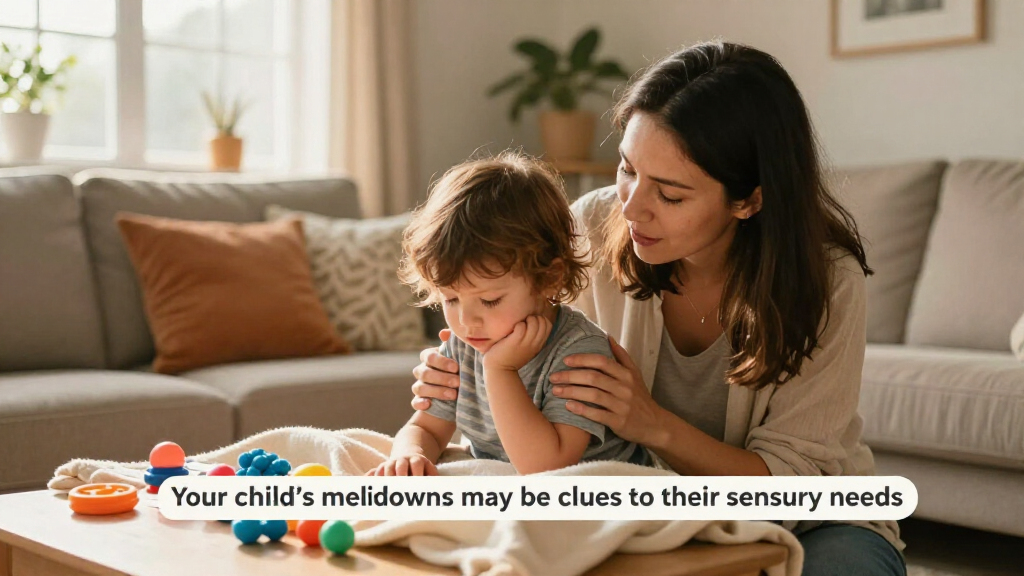
Recent studies indicate that children’s meltdowns may be signs of sensory processing challenges. Recognizing these cues can help parents provide targeted support. The link between meltdowns and sensory needs is gaining attention among experts.
Recent insights from child development experts reveal that meltdowns in children may be more than typical behavioral outbursts—they could be signs of sensory processing needs. This emerging understanding aims to help parents and caregivers better interpret these episodes and support their child’s sensory regulation.
Multiple child development specialists have noted that children often display meltdowns when overwhelmed by sensory stimuli such as loud noises, bright lights, or tactile discomfort. According to Dr. Susan Lee, a pediatric occupational therapist, ‘Children may not have the words to express sensory overload, so their meltdowns become a way to communicate their distress.’ Recent research suggests that these behaviors could be indicators of sensory processing difficulties, which are common in children with neurodivergent conditions like autism spectrum disorder (ASD) but can also occur in neurotypical children.
Experts emphasize that understanding the sensory basis of meltdowns can lead to more effective support strategies. For example, reducing environmental stimuli or providing sensory-friendly spaces might help prevent or de-escalate episodes. While the connection between sensory needs and meltdowns is gaining recognition, it is still an area of ongoing research, and not all behaviors labeled as meltdowns are necessarily linked to sensory issues.
Implications for Parenting and Child Support Strategies
This development is significant because it shifts the perspective on children’s challenging behaviors, encouraging parents and caregivers to view meltdowns as potential signals of sensory overload rather than mere misbehavior. Recognizing these cues can lead to earlier interventions, tailored sensory accommodations, and improved emotional regulation for children. It also promotes greater empathy and patience, especially for children with undiagnosed sensory processing challenges, potentially reducing frustration for both children and adults.
sensory processing disorder sensory toys for children
As an affiliate, we earn on qualifying purchases.
As an affiliate, we earn on qualifying purchases.
Recent Advances in Understanding Child Sensory Processing Cues
Over the past decade, research into sensory processing has expanded, particularly in relation to neurodivergent populations. Studies have shown that sensory sensitivities are common in children with autism but can also affect neurotypical children. The idea that meltdowns could be linked to sensory overload is not entirely new but has gained renewed attention as awareness of sensory issues increases. Experts like Dr. Lee and others have been advocating for more sensory-friendly environments and better training for parents and educators to recognize sensory cues.
This approach contrasts with traditional views that often interpret meltdowns purely as behavioral problems, emphasizing the importance of understanding the sensory context to support children effectively.
“Understanding sensory needs can transform how we support children during challenging episodes, making interventions more effective and compassionate.”
— Jane Miller, Child Development Expert
calming sensory room equipment for kids
As an affiliate, we earn on qualifying purchases.
As an affiliate, we earn on qualifying purchases.
What Aspects of Meltdowns and Sensory Needs Remain Unclear
While the link between meltdowns and sensory processing is supported by emerging research and expert opinion, it is not yet fully established how consistently meltdowns can be attributed to sensory overload across different children. It remains unclear how to differentiate between sensory-related meltdowns and those caused by other factors such as emotional regulation issues or behavioral challenges. Further studies are needed to develop reliable assessment tools and guidelines for identifying sensory-driven meltdowns.

Dr.meter EM100 Noise Cancelling Headphones for Kids Adults, Ear Muffs
- Comfortable Ear Cushions: Soft memory foam with PU leather padding
- Effective Noise Reduction: Reduces noise by 27.4dB, not mute
- Suitable for All Ages: Adjustable headband fits kids to adults
As an affiliate, we earn on qualifying purchases.
As an affiliate, we earn on qualifying purchases.
Future Research and Practical Applications in Child Support
Researchers plan to conduct longitudinal studies to better understand the sensory-meltdown connection and develop standardized assessment methods. Meanwhile, child development organizations are working on training programs for parents, teachers, and therapists to recognize sensory cues more accurately. In the coming months, increased awareness and practical tools are expected to help caregivers implement sensory-friendly strategies more widely, potentially reducing the frequency and severity of meltdowns.
sensory-friendly lighting for kids
As an affiliate, we earn on qualifying purchases.
As an affiliate, we earn on qualifying purchases.
Key Questions
Can all meltdowns be linked to sensory needs?
No, not all meltdowns are caused by sensory overload. Some may result from emotional or behavioral factors, and further assessment is needed to determine the cause in each case.
How can parents tell if a meltdown is sensory-related?
Indicators include triggers like loud noises, bright lights, or tactile discomfort, and behaviors such as covering ears, avoiding touch, or seeking sensory input. Consulting a specialist can help clarify the cause.
What strategies can help children during sensory overload?
Creating a calm, sensory-friendly environment, offering a quiet space, and providing sensory tools like noise-canceling headphones or textured objects can help manage overload.
Is this approach applicable to neurotypical children?
Yes, sensory processing issues can affect both neurodivergent and neurotypical children, making this understanding broadly relevant for supporting all children.
Will this change how schools handle challenging behaviors?
Potentially. Increased awareness of sensory needs may lead schools to adopt more sensory-friendly environments and training, improving support for children during meltdowns.
Source: rss