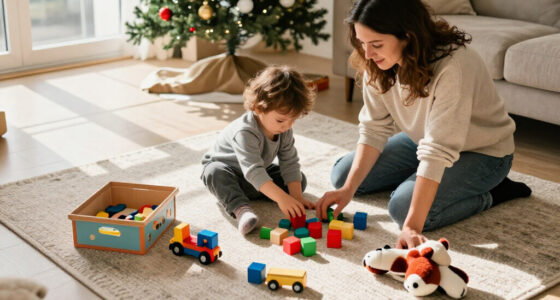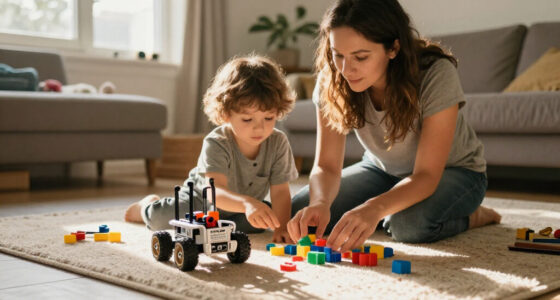

Parents choosing educational toys for preschoolers often face a choice between Montessori-style toys and STEM-focused toys. Both can support learning through play, but they emphasize different kinds of learning. Montessori-style options typically leave room for children to repeat practical activities at their own pace; STEM toys more often provide a defined challenge, such as sorting shapes, building a structure, or exploring a simple cause and effect.

Turn the school run and nap time into listening time
- Thousands of audiobooks, podcasts and originals
- Listen on your phone, tablet or Echo — also offline
- Cancel anytime
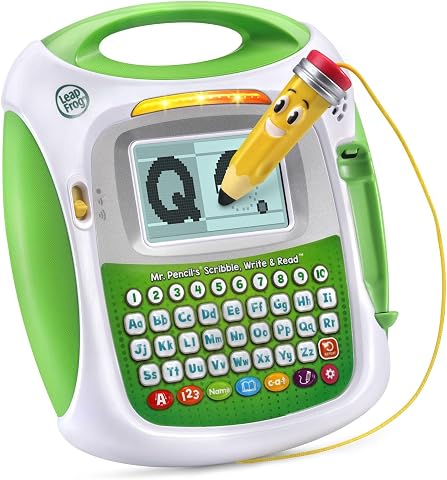
LeapFrog Mr. Pencil’s Scribble, Write and Read
- ✔ Recommended age: 3+ years
- ✔ Learning activities: Letter writing, numbers, spelling, word building, counting, guided and free drawing
- ✔ Writing practice: Uppercase and lowercase letters, plus name practice

BEESTECH Alphabet Learning Toy with Wooden Letters and Flash Cards
- ✔ Recommended age: 3–4 years
- ✔ Flash cards: 28
- ✔ Wooden letters: 52 (two blocks for each letter)
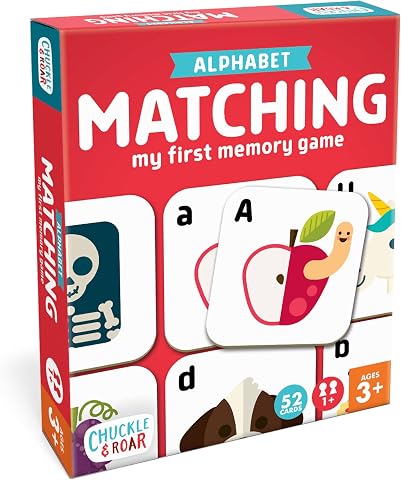
Chuckle & Roar Alphabet Matching Memory Game for Ages 3+
- ✔ Recommended age: 3–5 years
- ✔ Learning focus: Uppercase and lowercase matching, memory, and concentration
- ✔ Tile material: Cardboard
The difference matters most in how a child likes to play and what skills a family wants to encourage. Montessori toys can suit children who enjoy everyday tasks and open-ended exploration. STEM toys can be a better fit for children drawn to puzzles, construction, and guided challenges. Neither label guarantees quality, so the strongest choice is a safe, age-appropriate toy that invites repeated play without doing the thinking for the child.
At a Glance
| Criteria | Montessori-style educational toys | STEM-focused educational toys | Winner |
|---|---|---|---|
| Typical play style | Open-ended activities such as sorting, threading, stacking, and pretend household tasks | Often centers on a challenge, build, puzzle, or simple experiment | Depends |
| Skills emphasized | Fine motor control, practical routines, concentration, and sensory exploration | Early math, spatial reasoning, sequencing, construction, and cause and effect | Depends |
| Independence and replay | Often supports repetition and multiple ways to use familiar materials | Replay depends on whether the set offers new challenges or can be used creatively | A |
| Adult involvement | Usually low after a brief demonstration, though supervision remains necessary | May need more setup or adult help, especially for instructions and small pieces | A |
| Age and difficulty fit | Ranges from simple toddler materials to more complex preschool activities; check age guidance | Difficulty varies widely; choose a level that invites effort without frustration | Depends |
| Price and value | Can be good value when sturdy, versatile pieces support years of varied play | Prices range widely; extra pieces or guided features are worth paying for only if used | A |
| Best fit | Children who enjoy self-directed, practical, tactile activities | Children who enjoy solving puzzles, building, and working toward a visible result | Depends |
LeapFrog Mr. Pencil’s Scribble, Write and Read
For families who want one toy to cover several preschool skills, Mr. Pencil’s Scribble, Write and Read is the most versatile option in this group. Its stylus activities include uppercase and lowercase letters, numbers, name practice, word building, spelling, counting, and drawing. That breadth gives children several ways to engage when letter tracing alone is not holding their interest. Compared with BEESTECH’s letter-and-card matching or Chuckle & Roar’s uppercase/lowercase game, LeapFrog moves further into early writing and broader practice.That range comes with a different play style: the child follows activities on an electronic toy with a stylus rather than arranging physical letter pieces or cardboard tiles. It is better suited to children ready to practice controlled strokes and follow prompts. Families seeking open-ended, screen-free-feeling manipulatives may prefer BEESTECH’s wooden pieces. The product requires three AA batteries, and demo batteries are included with new ones recommended for regular use. It also has a stated 90-day warranty, so it is sensible to consider whether guided electronic activities suit your household before choosing it as the main learning toy.
Pros:
- Practices uppercase and lowercase letter writing and numbers
- Adds word building, spelling, counting, and guided drawing
- Includes personalized name practice and free drawing
- Offers more activity variety than either alphabet matching game
Cons:
- Requires three AA batteries for regular use
- Demo batteries are included, but new batteries are recommended
- Stylus-led activities may be less appealing than physical letter pieces for some children
Best for: Preschoolers ready to practice letter formation who benefit from guided activities across writing, numbers, spelling, counting, and drawing.
Not ideal for: Families who prefer a fully tactile matching activity, or children who are not yet interested in stylus-based prompts and tracing.
Bottom line: Choose LeapFrog when you want the broadest mix of guided preschool skills in this comparison and are comfortable with a battery-powered format.
“Choose LeapFrog when you want the broadest mix of guided preschool skills in this comparison and are comfortable with a battery-powered format.”
BEESTECH Alphabet Learning Toy with Wooden Letters and Flash Cards
BEESTECH’s wooden letters and flash cards make the alphabet concrete: children select a letter and match it to a card showing a letter or word prompt. This direct, physical task is a strong fit for preschoolers who like handling pieces and working through a visible challenge. The set includes 52 wooden letters, with two blocks for each letter, and 28 flash cards. Compared with LeapFrog, it keeps attention on letter and word matching rather than extending into writing, counting, or drawing; compared with Chuckle & Roar, it uses separate letter pieces and cards rather than a memory-game format.The polished wooden pieces are described as having no sharp corners, and a storage bag gives the pieces a place to go between sessions. Those details support a more hands-on setup, though the number of small pieces means adults may need to help keep the set organized. Its recommended age is 3–4 years, narrower than the other picks’ stated ranges, so children who are already moving beyond basic letter recognition may want a toy with more varied or advanced activities. Choose this one when tactile matching is the priority; skip it if portability, minimal pieces, or skill variety matters more.
Pros:
- Pairs physical wooden letters with flash-card prompts
- Includes two blocks for each letter
- Polished pieces are described as having no sharp corners
- Storage bag helps contain the set
Cons:
- Recommended age range of 3–4 may limit its usefulness as skills advance
- Focused on letters and word matching rather than a broad set of activities
- Many separate pieces require organization after play
Best for: Ages 3–4, especially children who enjoy handling letters and matching them to printed cards with an adult nearby.
Not ideal for: Older preschoolers seeking varied activities, or families who want a compact game with fewer separate pieces to keep track of.
Bottom line: Pick BEESTECH for a tactile introduction to letter and word matching, particularly when the child is within its 3–4 age guidance.
“Pick BEESTECH for a tactile introduction to letter and word matching, particularly when the child is within its 3–4 age guidance.”
Chuckle & Roar Alphabet Matching Memory Game for Ages 3+
Chuckle & Roar’s Alphabet Matching Memory Game turns letter practice into a straightforward pairing challenge. Children work on connecting uppercase and lowercase forms while also exercising memory and concentration. Because it can be played solo or with others, it offers a simple way to adapt the activity to a quiet turn or shared play. Its travel-friendly format makes it the most natural choice here for outings: unlike BEESTECH’s set of wooden letters and flash cards, it centers on a tile game, and unlike LeapFrog, it does not depend on batteries or a stylus.The tradeoff is focus. This game centers on alphabet matching, so children looking for writing instruction, counting, or drawing will get more range from LeapFrog. It also does not provide BEESTECH’s physical wooden alphabet blocks for matching to word cards. Sturdy cardboard tiles are described as designed for little hands, but families should still expect a game that depends on keeping a set of tiles together. We rank it third because it supports a useful but narrower slice of preschool learning; choose it when portable repetition and memory play matter more than broad skill coverage.
Pros:
- Practices uppercase and lowercase letter pairing
- Combines alphabet recognition with memory and concentration
- Supports solo or group play
- Portable format suits trips and outings
Cons:
- Learning focus is largely limited to alphabet matching
- Does not offer writing, counting, spelling, or drawing activities
- Cardboard tiles need to be kept together between sessions
Best for: Preschoolers who enjoy memory games and families wanting a compact alphabet activity that works alone or with a play partner.
Not ideal for: Children who need direct letter-writing practice or families seeking activities beyond alphabet matching.
Bottom line: Choose Chuckle & Roar when a portable matching game is the goal and a narrow, repeatable alphabet activity is enough.
“Choose Chuckle & Roar when a portable matching game is the goal and a narrow, repeatable alphabet activity is enough.”
As an Amazon Associate we earn from qualifying purchases.
Key Differences
The clearest difference is how much direction the toy gives. Montessori-style toys tend to offer a material or practical task and let the child decide how long to repeat it. A set of wooden shapes might become a sorting activity one day and part of an imagined scene the next. STEM toys more often present a problem to solve, such as making a bridge hold weight or matching pieces to complete a sequence. That structure can make a learning goal easier to see, but it may also narrow play if the set has only one intended answer.
That difference shapes value. A simple, durable set that can be used in several ways may earn regular play without requiring add-ons. A STEM kit can be worth more when a preschooler is motivated by its specific challenges and can use it independently or with a willing adult. Paying extra for electronic features, elaborate packaging, or a large piece count does not automatically add learning value. Check whether the toy is safe for the child’s age, whether the pieces invite repeated use, and whether the child can do enough of the activity without frustration.
Detailed Comparison
Typical play style (major difference)
Montessori-style toys usually support self-directed repetition: a child can stack, sort, pour, or thread without completing a single fixed project. STEM toys more often frame play around a puzzle, build, or experiment with a visible goal. Neither approach is automatically more educational. Montessori has a moderate advantage for children who prefer to set their own pace; STEM has the advantage for children who enjoy a clear challenge and a finish point.
Skills emphasized (moderate difference)
Montessori-style choices commonly exercise fine motor skills, concentration, sensory awareness, and practical routines. STEM toys more directly foreground early math, spatial reasoning, sequencing, and basic engineering ideas. The gap is moderate, and it reflects emphasis rather than an exclusive benefit: children can count with Montessori materials and practice careful hand movements while building a STEM set. Pick according to the skill or interest the child is ready to explore.
Independence and replay (Montessori-style educational toys wins — moderate)
Many Montessori materials are simple to start and easy to repeat, which gives them a moderate edge for independent play. A child can return to the same activity and gradually change how carefully or quickly they do it. Some STEM toys offer the same freedom, but others rely on a sequence of instructions or one completed design. Look for sets that allow rebuilding and experimentation if long-term replay is a priority.
Adult involvement (Montessori-style educational toys wins — minor)
Montessori-style activities often need an adult to introduce the material and keep an eye on safe use, then allow the child to continue alone. STEM kits can require more setup, explanation, or help interpreting instructions. Montessori has a minor practical advantage for families seeking low-preparation play, although the difference depends on the particular toy and the child’s familiarity with it. A collaborative STEM activity may be a benefit if shared play is the goal.
Age and difficulty fit (major difference)
Both categories span a wide difficulty range, so the label is less useful than the age guidance and the actual task. Montessori sorting or transfer activities can be too easy for an older preschooler; a complex STEM kit can be too frustrating for a younger one. This is a genuine tie: choose materials the child can handle safely and mostly use successfully, with a small amount of room to grow. Check for small parts and adult supervision requirements.
Price and value (Montessori-style educational toys wins — moderate)
Montessori-style toys can offer strong value when durable, versatile pieces remain useful across different kinds of play. STEM toys range from inexpensive puzzles to costly kits, and a higher price may reflect specialized components rather than more learning. Montessori has a moderate value edge for households prioritizing open-ended reuse. Pay more for a STEM set when its challenges match a sustained interest and the child will use its pieces often.
Montessori-style educational toys: Pros and Cons
Pros:
- Encourages repetition and child-led exploration
- Often works well for practical, tactile activities
- Simple, versatile materials can support independent play
Cons:
- Some activities may feel too unstructured for children who want a clear goal
- A Montessori label alone says little about safety, durability, or learning quality
- Basic tasks may not hold an older preschooler’s interest
STEM-focused educational toys: Pros and Cons
Pros:
- Makes building, patterns, and problem-solving goals easy to see
- Can engage children who enjoy puzzles and construction
- Some sets encourage experimentation by changing designs or conditions
Cons:
- Instructions and setup may require adult time
- A fixed solution can limit creative reuse
- More pieces or electronic features can raise cost without improving play
Who Should Choose What
Choose Montessori-style educational toys if:
- Your child likes sorting, stacking, threading, practical tasks, or repeating an activity independently.
- You want a versatile toy that can support open-ended play over time.
- You prefer a simple activity with little setup after showing the child how to use it.
Choose STEM-focused educational toys if:
- Your child is eager to build, solve puzzles, explore patterns, or see how a simple mechanism works.
- You want a toy with a defined challenge and are comfortable helping with setup or instructions.
- A particular STEM interest is strong enough that the child is likely to revisit the set.
Skip both if: Skip either category if the toy has unsafe parts for your child’s age, requires help the family cannot provide, or is too difficult or repetitive to hold the child’s interest. Everyday pretend play, books, art supplies, and time outdoors can also support preschool learning.
Value for Money
Price alone does not predict educational value. For many families, a sturdy Montessori-style toy with pieces that can be sorted, stacked, or used in pretend play is the safer value because it can serve several purposes. Paying more for a STEM kit makes sense when its specific challenge fits a child’s interest, the pieces are reusable, and the family welcomes any adult involvement it needs. Skip a premium set if its extra features add complexity without giving the child more ways to play.
Final Verdict
Choose Montessori-style educational toys for a preschooler who enjoys hands-on repetition, practical activities, and setting their own pace; they are the stronger default for versatile play and value. Choose a STEM-focused toy when the child actively seeks puzzles, construction, or a defined problem to solve, and the set matches their current ability. The deciding factor is the child’s play style: a well-matched simple toy will usually get more use than a more expensive set chosen for its label.
Frequently Asked Questions
Are Montessori toys better than STEM toys for preschoolers?
Neither category is better for every child. Montessori-style toys tend to suit self-directed, repetitive play, while STEM toys can suit children who enjoy defined puzzles or building challenges. Match the toy to the child’s interests, ability, and safe use.
Do preschoolers need electronic STEM toys?
No. Building pieces, shape puzzles, counting materials, and simple cause-and-effect toys can introduce STEM ideas without screens or electronics. Choose electronics only when they add a play experience the child will use.
How much should I spend on an educational toy?
Set a budget around durability, age fit, and likely replay. A more expensive toy is worth it only when its materials or challenges add repeated, engaging play; a higher price or educational label alone is not evidence of better learning.
What should I check before buying?
Check the recommended age, small parts, materials, supervision notes, and whether the child can complete much of the activity. Consider storage and setup too, especially for sets with many pieces or instructions.
Evergreen bestsellers Picks

Ninja Mega Kitchen System Blender and Food Processor, 1500W, 72 oz Pitcher, 8-Cup Bowl, Black (BL770)

TCL F8D Series 75-Inch 4K QLED Smart Fire TV, 144Hz, HDR (75F8D, 2026)

Ninja Foodi 6-in-1 DualZone FlexBasket Air Fryer, 7-Qt MegaZone, Black, DZ071
As an affiliate, we earn on qualifying purchases.