
Use this guide to choose educational toys that a preschooler can safely enjoy and return to over time. It is for parents, caregivers, and gift buyers who want to support play and learning without relying on age labels or marketing claims alone. You will compare the child’s interests and current skills with a toy’s play options, safety information, and practical fit at home. The task takes about 30-45 minutes, including time to review product details and compare a short list.

Turn the school run and nap time into listening time
- Thousands of audiobooks, podcasts and originals
- Listen on your phone, tablet or Echo — also offline
- Cancel anytime
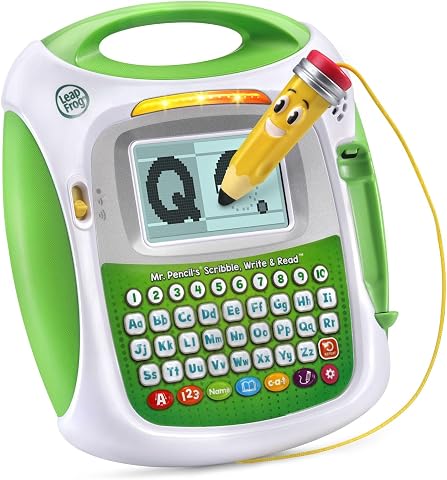
LeapFrog Mr. Pencil’s Scribble, Write and Read
- ✔ Brand: LeapFrog
- ✔ Age range: 3+ years
- ✔ Writing practice: Uppercase and lowercase letters, numbers, and names

BEESTECH Alphabet Learning Toy with Wooden Letters and Flash Cards
- ✔ Recommended age: 3–4 years
- ✔ Flash cards: 28
- ✔ Wooden letters: 52 (two blocks for each letter)
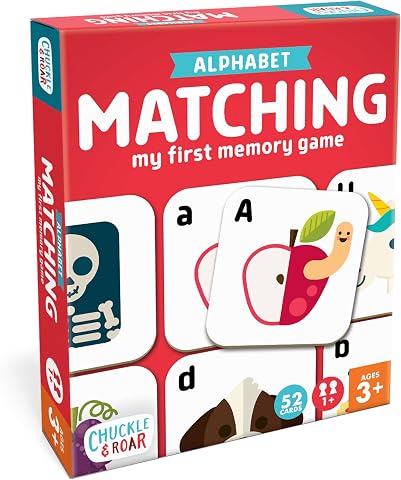
Chuckle & Roar Alphabet Matching Memory Game for Ages 3+
- ✔ Recommended age: 3–5 years
- ✔ Learning focus: Uppercase and lowercase letter matching, memory, and concentration
- ✔ Tile material: Cardboard
Difficulty: Beginner | Time: 30-45 minutes
What You’ll Need
Tools & Materials:
- A short list of toys or a place to browse toy options
- The child’s age and any relevant safety or accessibility needs
- A note or phone to record useful features and questions
Knowledge:
- A general sense of what the child enjoys doing
- The child’s approximate ability to handle small pieces, follow simple directions, and play independently or with an adult
Check the child’s age and any health, sensory, mobility, or developmental needs before shopping. If a clinician or educator has suggested specific play materials, include that guidance. For a gift, ask the caregiver about household rules, toys the child already owns, and storage space.
LeapFrog Mr. Pencil’s Scribble, Write and Read
For families who want one toy to cover several preschool skills, Mr. Pencil’s guided stylus activities make this the most versatile pick in our comparison. Children can practice uppercase and lowercase letters, numbers, and their names, then move into word building, spelling, counting, guided drawing, or free drawing. That mix makes it a stronger fit for a child who is ready to shift between structured practice and more open-ended activity than either alphabet-matching game.The added range comes with a practical cost: this toy requires three AA batteries, and new batteries are recommended for regular use because the included ones are demo batteries. Its interactive, screen-like format may appeal to children who enjoy following prompts, but it is less tactile than BEESTECH’s separate wooden letters and cards. Compared with Chuckle & Roar, it offers more types of practice, while the memory game is simpler to pick up and easier to take along. We rank LeapFrog first for breadth, not because every preschooler needs a guided writing toy.We would choose it for a child interested in tracing and drawing who can benefit from short, guided activities. If your priority is a low-tech matching game, physical letter pieces, or a compact activity for outings, one of the other picks may fit better.
Pros:
- Practices uppercase and lowercase letter writing and numbers
- Adds word building, spelling, counting, and drawing activities
- Includes personalized name practice
- Offers both guided and free drawing
Cons:
- Requires three AA batteries; new batteries are recommended for regular use
- Guided stylus play is less tactile than handling wooden letters or cardboard tiles
Best for: Preschoolers who are ready to practice writing letters and numbers and enjoy guided activities with several skill areas.
Not ideal for: Families looking for a battery-free toy, a primarily tactile alphabet activity, or a simple travel game.
Bottom line: We rank Mr. Pencil first for its range of preschool activities, provided the child enjoys guided stylus practice and the battery requirement suits the household.
“We rank Mr. Pencil first for its range of preschool activities, provided the child enjoys guided stylus practice and the battery requirement suits the household.”
BEESTECH Alphabet Learning Toy with Wooden Letters and Flash Cards
BEESTECH is the pick for preschoolers who benefit from handling letters while connecting them to words. Children match wooden letters to flash cards, giving caregivers a concrete way to talk about letter shapes and how they appear in simple words. Its 52 wooden pieces include two blocks for each letter, and 28 cards provide prompts for matching. That makes it more tactile than LeapFrog’s stylus-led practice and more focused on letters and words than Chuckle & Roar’s memory pairs.The wooden pieces are described as polished with no sharp corners, and the set includes a storage bag for keeping the components together. Those details are useful for a toy with many small pieces, though families should still account for the need to sort and put them away. The activity has a narrower scope than Mr. Pencil: there is no stated writing, number, or drawing practice. Its recommended age range of 3–4 also makes the fit less obvious for older preschoolers than Chuckle & Roar, which is listed for ages 3–5.We place BEESTECH second because it offers a clear, hands-on route into letter and word recognition, but it is not as broad as the overall pick. Choose it when matching physical pieces is the goal; look elsewhere if you want a portable group game or a toy that also practices numbers and writing.
Pros:
- Pairs hands-on wooden letters with word flash cards
- Includes two wooden blocks for each letter
- Polished pieces are described as having no sharp corners
- Comes with a storage bag and gift box
Cons:
- Recommended for ages 3–4, limiting its stated fit for older children
- Focuses on letter and word matching rather than a broader set of skills
- Many separate pieces need to be stored together
Best for: Younger preschoolers who enjoy sorting and matching physical letters to word cards with an adult nearby.
Not ideal for: Older preschoolers who need a wider age range, or families seeking number, writing, or drawing activities.
Bottom line: We recommend BEESTECH when tactile alphabet and word matching matters more than broad activities or an older preschool age range.
“We recommend BEESTECH when tactile alphabet and word matching matters more than broad activities or an older preschool age range.”
Chuckle & Roar Alphabet Matching Memory Game for Ages 3+
Chuckle & Roar makes sense when a preschooler is drawn to games and turn-taking. Its uppercase and lowercase matching gives children a specific alphabet task, while the memory format adds practice with concentration. The game can be played solo or with others, so it works for quiet independent play as well as a shared activity. Compared with BEESTECH, it puts the matching into a game structure rather than asking children to build a word from individual wooden letters; compared with LeapFrog, it is more compact in concept and requires no stated battery power.The cardboard tiles are described as sturdy and designed for little hands, and the travel-friendly format makes this the clearest choice for outings among the three. The tradeoff is limited subject variety: the supplied details focus on alphabet matching, with no writing, spelling, number, or drawing activities listed. It can make letter practice playful, but it does not cover as many learning areas as the LeapFrog toy, nor does it connect letters to word cards in the way BEESTECH does.We rank it third because it is the most focused option, not because its format lacks value. For a child who enjoys memory games or for caregivers seeking an activity to bring along, that focus can be an advantage. Families wanting a broader learning set should start with LeapFrog; those seeking tangible letter blocks and word prompts should consider BEESTECH.
Pros:
- Practices uppercase and lowercase letter matching
- Combines alphabet practice with memory and concentration
- Supports solo or group play
- Portable format with cardboard tiles designed for little hands
Cons:
- Alphabet matching is the main stated learning focus
- Does not list writing, number, or drawing activities
- Cardboard tiles offer a different tactile experience from BEESTECH’s wooden pieces
Best for: Preschoolers who enjoy memory games and families wanting a portable alphabet activity for solo or shared play.
Not ideal for: Children ready for letter-writing, number practice, or a wider set of learning activities.
Bottom line: We would choose Chuckle & Roar for portable game-based letter practice, while recognizing that its learning scope is narrower than the other two picks.
“We would choose Chuckle & Roar for portable game-based letter practice, while recognizing that its learning scope is narrower than the other two picks.”
As an Amazon Associate we earn from qualifying purchases.
Before You Start
Set a budget and decide whether you are buying one toy or comparing several. Keep the child’s actual age in mind: toys with small parts can pose a choking risk for children under three, and some older preschoolers still need close supervision with small components. Read the age grading, warnings, and care instructions on the package or product listing. Age labels are a starting point, not a guarantee that a toy suits a particular child.
Think of “educational” as a quality of play, not a promise that a toy will teach a skill by itself. Blocks, pretend-play materials, puzzles, art supplies, and simple games can support learning when the child has room to explore, repeat, and invent. A toy does not need lights, sound, or a long list of advertised skills to be useful.
Step-by-Step Instructions
Step 1: Name the play you want to support
Write down two or three kinds of play the child enjoys or could use more chances to try. Examples include building, sorting, drawing, pretend cooking, storytelling, music, movement, and taking turns. Describe actions rather than school subjects: “likes to stack and knock down” gives you more to work with than “needs a math toy.”
Use recent observations. Notice what holds the child’s attention, what they repeat, and what they attempt with help. If the child is drawn to vehicles, for example, a set of vehicles and blocks may invite building routes, naming colors, and make-believe. Choose an interest the child already shows instead of buying a toy to correct a perceived weakness.
Tip: Keep the list short. A toy that connects with a familiar interest is more likely to get used.
Check: You have two or three observable play interests or actions to use when comparing toys.
Step 2: Set a budget and practical limits
Choose a spending limit before browsing. Add any practical constraints, such as limited storage, a preference for washable materials, shared play with siblings, or a need for quiet play. Decide whether batteries, replacement pieces, or special accessories are acceptable. These details help you compare the full cost and daily use of a toy, rather than focusing only on its listed price.
Consider where the child will play and who will help with cleanup. A large building set may offer many play possibilities but take up more floor and shelf space than a compact set of interlocking pieces. If several children will use the toy, think about whether they can share it comfortably and whether the parts are easy to sort and store.
Tip: Include cleanup in the decision. A storage container that fits the parts can make regular use easier.
Check: You have a clear spending limit and a short list of household requirements.
Step 3: Check age, safety, and accessibility
Read the manufacturer’s age recommendation and every warning. Check for small parts, long cords, sharp edges, strong magnets, button batteries, or other hazards relevant to the child. Follow the product instructions for assembly, supervision, and care. For a child under three, avoid toys with small detachable parts that could fit in the mouth. If you are uncertain about a toy’s safety, choose another product or ask the manufacturer for details.
Check whether the child can comfortably use the toy. Consider the size and weight of pieces, how much hand control is needed, whether the toy makes sudden sounds or flashes, and whether instructions rely on spoken language, print, or color alone. Look for options that match the child’s access needs, such as larger pieces, adjustable volume, or play that does not depend on reading.
Tip: For secondhand toys, inspect for broken pieces, loose parts, peeling paint, damaged cords, and missing safety information before offering the toy.
Check: You can describe how the toy fits the child’s age, supervision needs, and ability to handle it.
Step 4: Compare how the toy invites play
Look for toys that let the child make choices, try ideas, and use the materials in more than one way. Open-ended materials such as blocks, play dough, dress-up items, toy animals, and art supplies can support building, storytelling, sorting, and problem solving. A puzzle or simple game can also be a good choice when it matches the child’s current interests and offers a manageable challenge.
Read the product description carefully. Ask what the child will physically do with the toy, whether play can change from one session to another, and whether an adult must operate it. Be cautious about claims that a toy guarantees a particular learning result. Prefer a clear description of play actions over vague claims about intelligence or school readiness.
Tip: A simple toy can support rich play when the child can combine it with household items or invent new uses.
Check: You can name at least two ways the child might use the toy, with or without an adult.
Step 5: Match the challenge to the child
Compare the toy’s required actions with what the child can do now and what they are beginning to try. Look at puzzle-piece size and count, the number of game rules, the amount of setup, and how precisely the child must manipulate pieces. A toy that is too easy may lose its appeal quickly; one that is too difficult may lead to frustration unless an adult can adapt the play.
Choose a reasonable next challenge. For example, a child who enjoys stacking a few large blocks may be ready for a larger set that can form walls or simple buildings. A child who enjoys matching pictures may be ready for a basic memory game played with an adult. Think about whether the toy can be simplified or made more challenging as the child’s abilities change.
Tip: When possible, let the child try a sample in a shop, library, classroom, or play group before buying.
Check: The toy offers a reachable next step and a way to make play easier or harder.
Step 6: Compare product details and choose
Review the product listing or package for materials, dimensions, included parts, cleaning directions, and replacement-part information. Check whether batteries or extra supplies are required and whether they are included. Read care instructions before choosing messy materials such as paint or clay. For online purchases, check the seller, return policy, and recent product feedback for repeated reports of missing pieces, weak construction, or unclear instructions.
Compare your strongest two or three options against the interest list, budget, safety needs, play possibilities, challenge level, and household limits. Choose the one that fits most of the child’s needs without depending on accessories you do not plan to buy. If no option fits well, wait, borrow, or look for a different category of toy.
Tip: Do not treat a high price or a long feature list as proof that a toy is a better fit.
Check: You have selected a toy that fits the child and your household, and you know what comes in the package.
Step 7: Set up the toy and observe the first play
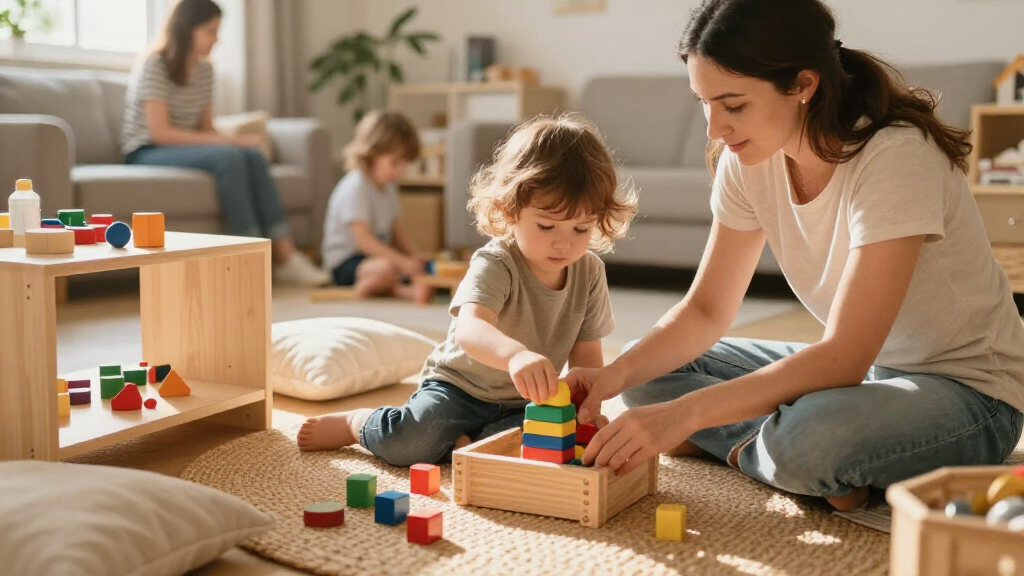
Read the instructions, assemble the toy, and check each piece before giving it to the child. Remove packaging, keep small parts away from children who could mouth them, and set up a suitable play space. Show the child how to start, then let them take over. Offer a simple prompt such as “What could you build?” or “Who might live here?” rather than demonstrating every possible use.
Watch how the child responds over several play sessions. Notice whether they return to the toy, stay engaged, try new actions, or need help at a particular point. Store pieces as directed and inspect the toy regularly for damage. If it no longer suits the child, put it away, adapt the activity, or pass it on safely when appropriate.
Tip: Short, relaxed play sessions can reveal more than a single demonstration. Allow time for the child to explore without adult direction.
Check: The toy is assembled and safe to use, and the child can begin playing with an appropriate amount of support.
Common Mistakes to Avoid
- Choosing a toy because its packaging promises broad learning benefits. — Focus on what the child will do with the toy, whether play can vary, and whether those actions connect with the child’s interests.
- Buying a toy that is too advanced because the child is close to the recommended age. — Check the actual rules, piece size, setup, and hand skills the toy requires. Pick a manageable next challenge and plan how an adult can help.
- Overlooking small parts or other hazards when buying a gift. — Confirm the child’s age, read warnings, and ask the caregiver about supervision and household safety needs before purchase.
- Buying a toy with many accessories that are hard to store or replace. — Check the part count, storage needs, and whether play still works if a piece goes missing. Choose a set that fits the available space.
Troubleshooting
Problem: The child ignores the toy after opening it.
Solution: Put it away for a short time, then offer it alongside a familiar interest or join for a brief demonstration. Avoid insisting that the child use it. If they still show no interest, exchange or pass it on if possible.
Problem: The toy frustrates the child.
Solution: Reduce the challenge: remove some puzzle pieces, play a shorter round, model one action, or use fewer materials. Add difficulty gradually when the child is ready.
Problem: The toy needs supplies or batteries that were not expected.
Solution: Check the package and instructions for required extras. Buy only supplies that fit your budget and household rules, or choose a toy that works as supplied.
Problem: A piece breaks, goes missing, or seems unsafe.
Solution: Stop play and remove the toy from the child’s reach. Contact the manufacturer about replacement parts or safety guidance. Do not improvise a repair that could create a choking, sharp-edge, or electrical hazard.
What Success Looks Like
You have chosen a toy that fits the preschooler’s age, interests, current abilities, and safety needs. It offers clear opportunities for the child to explore or repeat play, fits your budget and available space, and does not depend on unexpected supplies. After setup, the child can start playing with a suitable level of adult support. Continued interest may appear over several sessions; a toy does not need to teach a measurable skill in one sitting to be a useful choice.
Next Steps
Offer the toy in short sessions and let the child lead. Join in when invited, ask open prompts, and leave room for the child to invent their own use. Rotate toys if too many are out at once, and store pieces in a container that the child can manage. Check condition and age suitability over time, especially as small parts become accessible to younger siblings. When the child no longer uses the toy, donate it only if it is complete, clean, and safe, or recycle it according to local guidance.
Frequently Asked Questions
What makes a toy educational for a preschooler?
A toy can support learning when it invites the child to explore, create, solve simple problems, communicate, move, or play with others. Blocks, pretend-play materials, art supplies, and simple games can all support learning. A special label is less useful than a clear fit with the child’s play and abilities.
Should I follow the age on the package?
Use the age recommendation as a starting point and read the safety warnings. Then consider the child’s interests, experience, hand skills, and need for adult help. Contact the manufacturer if a warning or product detail is unclear.
Are electronic toys a good choice?
They can be, if the child enjoys them and the toy is safe and easy to use. Check volume controls, battery access, screen use, and whether the child can make choices beyond pressing a button. Compare its play options with simpler toys the child can use without an electronic feature.
How many toys should I buy?
Choose the number that fits your budget, storage, and the child’s attention. One well-matched toy can support repeated play. You can also borrow toys from a library or play group to see what the child enjoys before buying.
What should I do if my child uses a toy differently than intended?
First check that the new use is safe and follows the product’s warnings. If it is safe, allow the child to explore; flexible play is often part of the value. Redirect only when the child could hurt themselves, another person, or damage something.
Fall Picks
fall essentials
As an affiliate, we earn on qualifying purchases.